
The right beach access mat for US sites is a roll-out, slip-resistant surface that creates a firm path across soft sand, sized to your route and anchored to suit your beach and local rules. Here’s the problem it solves. A city installs accessible parking and a ramp, then watches wheelchair users, strollers and older visitors stall where the concrete meets loose sand. A beach access mat USA buyers specify well bridges that last stretch, and this guide covers types, sizing, layout, permits, installation, care, costs and buying.
We supply roll-out access mats alongside our beach chairs and walkers. We’ll focus on practical choices and leave site permits to your local authority.
What Is a Beach Access Mat USA Sites Install?

A beach access mat USA sites install is a portable, roll-out surface that gives wheels and feet a firm path over soft sand. It rolls up for storage. It can be moved as the beach changes.
Who uses access mats?
Also, wheelchair users, beach chair helpers, parents with strollers and older visitors. Ask yourself this: how many people turn back at the end of your boardwalk today? Review current public accessibility guidance before launch.
- Wheelchair and beach chair users
- Families with strollers
- Older and ambulant visitors
How does a mat differ from a boardwalk?
Mats are portable, cheaper and quicker to install. Boardwalks are permanent structures.
At a US beach-mat project, verify how a mat differs from a boardwalk during a normal operating period and photograph each relevant surface, slope or access point. Attach those observations to the operating plan so staff can review actual conditions before opening.
| Feature | Mat | Boardwalk |
|---|---|---|
| Portability | Roll-out | Fixed |
| Install time | Short | Long |
| Permits | Project-specific | Project-specific |
| Seasonal removal | Easy | Not practical |
Mats suit sites that need flexibility.
Key Takeaway: Use access mats where you need a firm, movable path across sand.
Which Beach Access Mat USA Type Should You Choose?
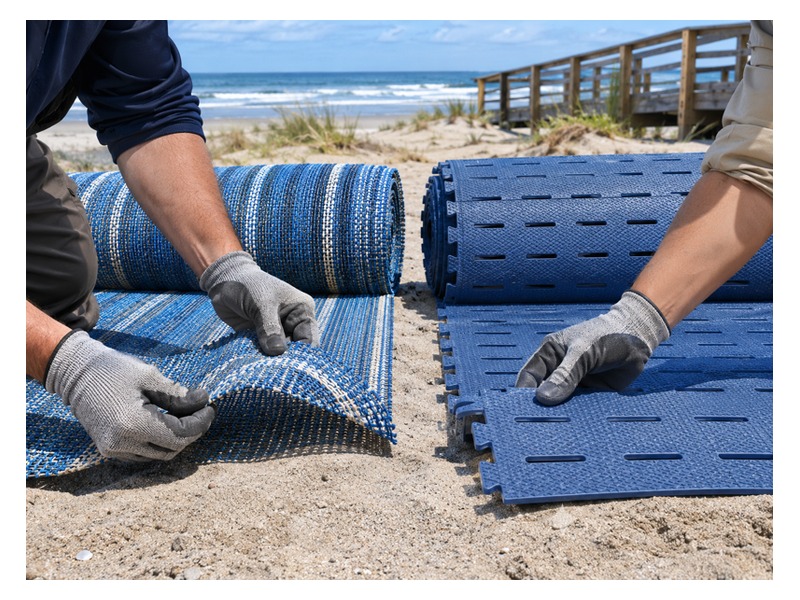
The beach access mat USA type you should choose depends on traffic, wheel use, sand type and whether you’ll remove it seasonally. Woven and modular styles are common. Ask for samples.
What should the surface offer?
Also, slip resistance, firmness under wheels and comfort for bare feet. Here’s the deal: a mat that’s hot or rough underfoot gets avoided.
- Slip-resistant surface
- Firm under wheels
- Comfortable in sun
Which details should suppliers confirm?
Width, roll length, material, UV resistance and anchoring method, in writing.
At a US beach-mat project, verify which details suppliers should confirm during a normal operating period and photograph each relevant surface, slope or access point. Attach those observations to the operating plan so staff can review actual conditions before opening.
| Factor | Why it matters |
|---|---|
| Width | Wheelchair passing |
| Material | Durability |
| UV resistance | Life in sun |
| Anchoring | Stability |
Clear specs help you compare like with like.
Key Takeaway: Choose mats on surface, width and UV life, and get specs in writing.
How Wide Should a Beach Access Mat USA Route Be?
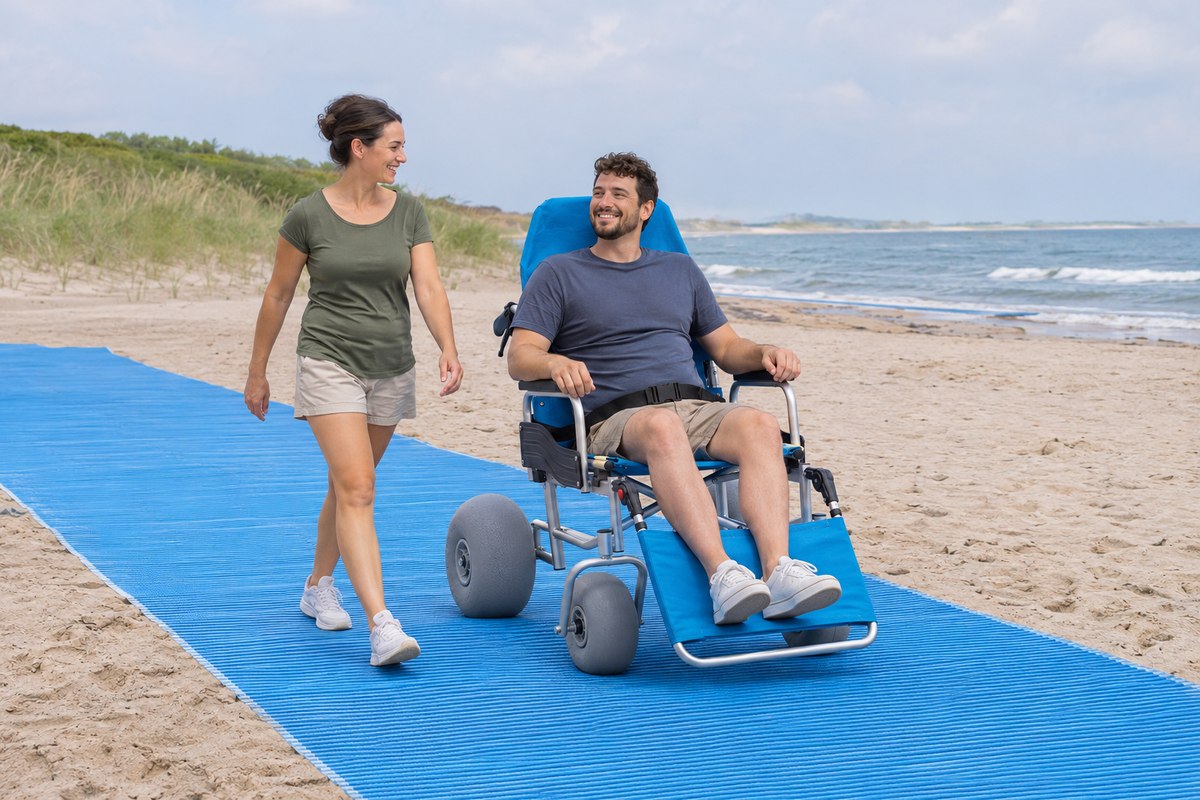
A beach access mat USA route should be wide enough for a wheelchair and a companion, with turning or passing spots on longer runs. Check accessibility guidance for your project. Your designer or authority can confirm.
Why does width matter?
Also, narrow mats force users off the edge into soft sand. Think about it: two people walking side by side need more room than one.
- Room for a wheelchair
- Room for a companion
- Passing and turning spots
How long should the run be?
Long enough to reach firm sand or a rest area, adjusted as tides and seasons shift sand.
At a US beach-mat project, verify how long should the run be during a normal operating period and photograph each relevant surface, slope or access point. Attach those observations to the operating plan so staff can review actual conditions before opening.
| Route element | Purpose |
|---|---|
| Main width | Wheelchair and helper |
| Passing spot | Two-way traffic |
| Turning area | Direction change |
| End point | Firm sand or rest |
Getting width right makes the route usable.
Key Takeaway: Size the mat for a wheelchair plus companion and add passing spots.
Where Should a Beach Access Mat USA Route Go?
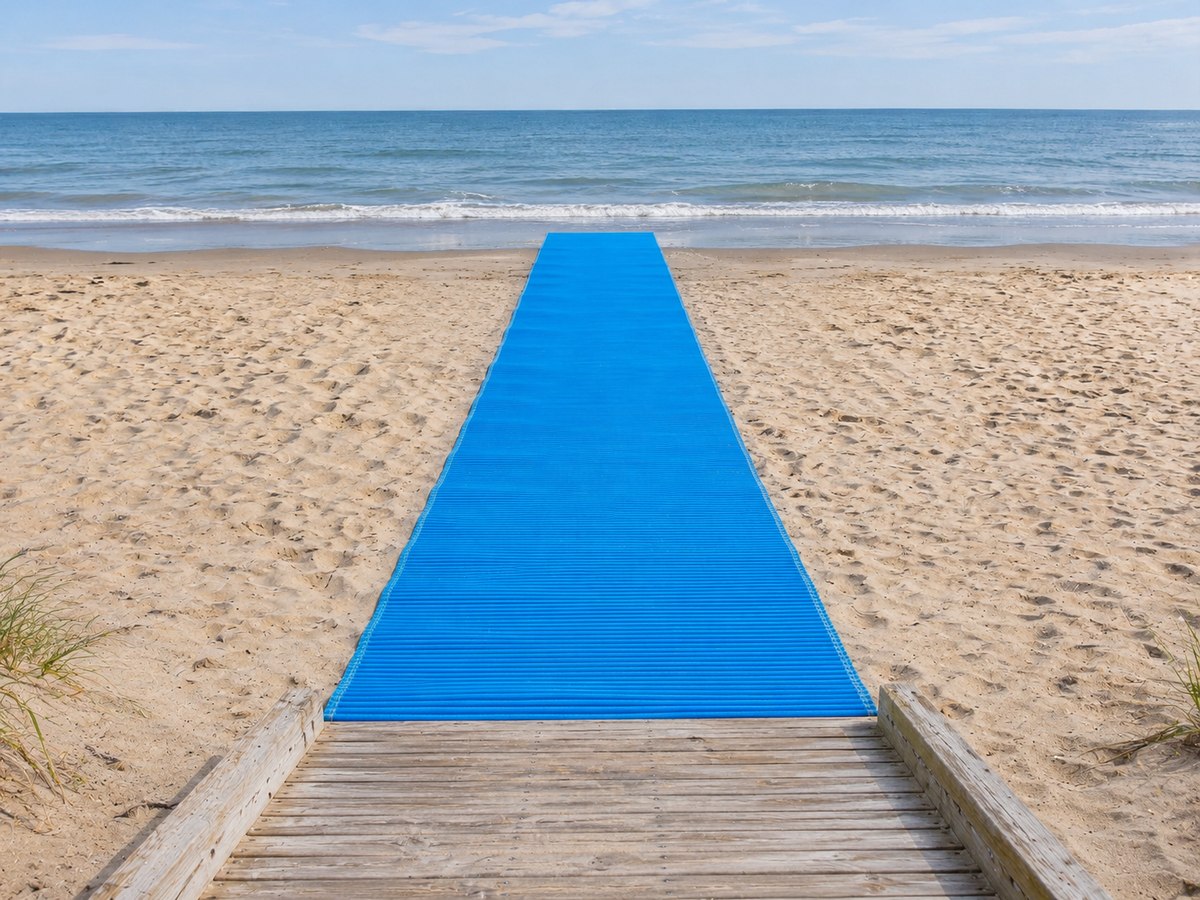
A beach access mat USA route should start at accessible parking or a ramp and run along the most direct approved path toward the water or a rest area. Avoid steep dunes. Follow habitat rules.
How do you plan the layout?
Also, walk the site, mark barriers and check slope. But here’s the kicker: the shortest line isn’t always the flattest.
- Start at the accessible ramp
- Follow approved paths
- End at a rest or shade point
How do tides affect placement?
Mats near the high-tide line may need moving after storms or seasonal changes.
At a US beach-mat project, verify how tides affect placement during a normal operating period and photograph each relevant surface, slope or access point. Attach those observations to the operating plan so staff can review actual conditions before opening.
| Layout factor | Check |
|---|---|
| Start point | Ramp or parking |
| Slope | Gentle |
| Habitat | Approved path |
| End point | Rest area |
Smart layout keeps the mat safe and useful.
Key Takeaway: Start at the ramp, follow approved paths and plan for shifting sand.
Do You Need Permits for a Beach Access Mat USA Install?

Approval may be required for a beach access mat USA install, especially in dune, habitat or coastal zones. Rules vary by state and site. Ask the relevant local authority early.
Who should you contact?
Also, your city or county, state coastal agency and any land manager. Here’s why that matters: turtle nesting or dune rules can change timing and placement.
- City or county staff
- State coastal agency
- Land or park manager
What should you prepare?
A site plan, product details, install method and removal plan.
At a US beach-mat project, verify what the team should prepare during a normal operating period and photograph each relevant surface, slope or access point. Attach those observations to the operating plan so staff can review actual conditions before opening.
| Document | Purpose |
|---|---|
| Site plan | Location |
| Product sheet | Materials |
| Install method | Anchoring |
| Removal plan | Seasonal rules |
Early contact avoids delays.
Key Takeaway: Check coastal and habitat rules before ordering mats.
How Do You Install a Beach Access Mat USA Route?
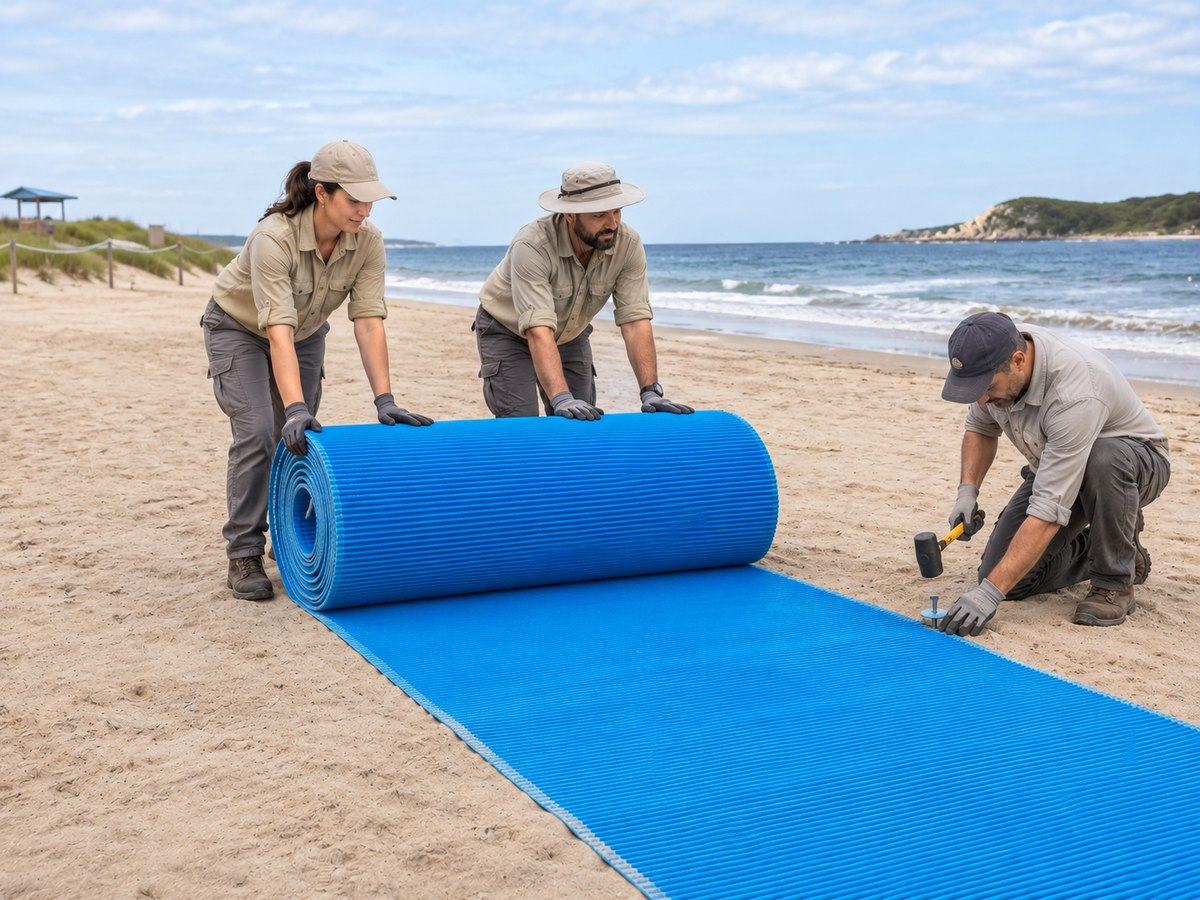
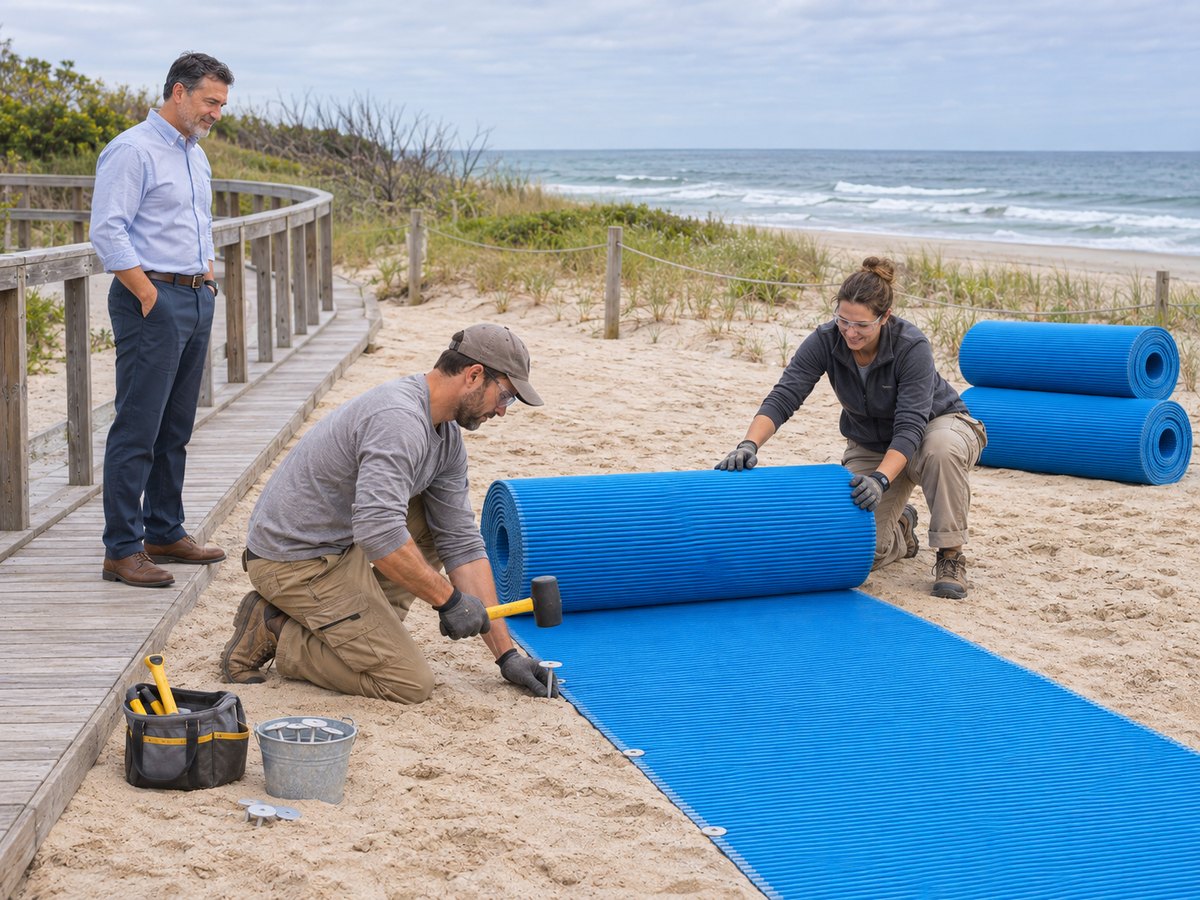
You install a beach access mat USA route by grading the sand, unrolling the mat along the marked line and anchoring it with the method the supplier recommends. A small crew can do it. Practice helps.
What tools do you need?
Also, rakes, approved anchors, a mallet and a measuring tape. Check the surface: uneven or shifting sand can change the planned installation sequence.
- Rakes for leveling
- Anchors and mallet
- Measuring tape
How do you join sections?
Use the supplier’s connectors and check joins are flat and secure.
At a US beach-mat project, verify how staff will join sections during a normal operating period and photograph each relevant surface, slope or access point. Attach those observations to the operating plan so staff can review actual conditions before opening.
| Step | Check |
|---|---|
| Level sand | Even base |
| Unroll | Straight line |
| Anchor | Secure |
| Join | Flat seams |
A careful install lasts longer and stays safe.
Key Takeaway: Level the sand, anchor well and keep joins flat.
How Do You Maintain a Beach Access Mat USA Install?
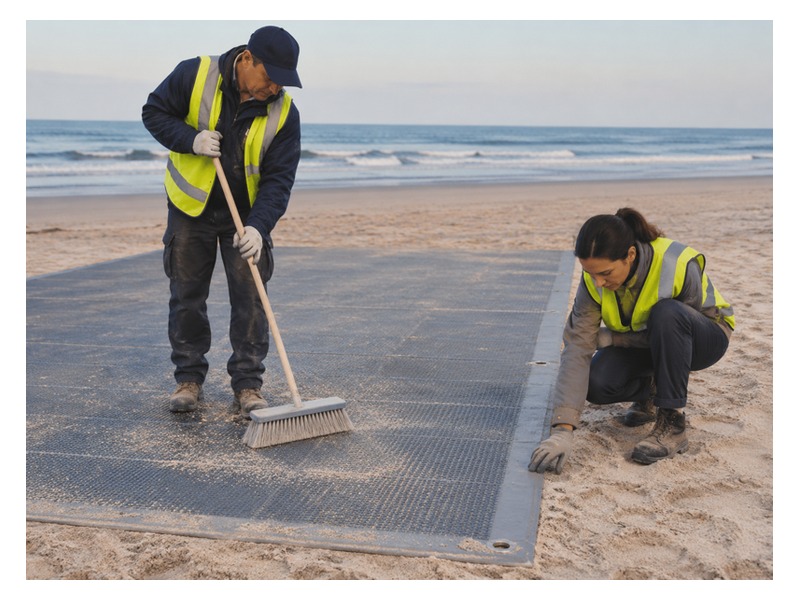
You maintain a beach access mat USA install by sweeping off sand, checking anchors and edges, and resetting sections after storms. Regular checks keep it safe. Damage should be fixed quickly.
How often should you inspect it?
Also, daily on busy sites, weekly on quieter ones. Now here’s the twist: wind can bury a mat overnight.
- Sweep sand
- Check anchors
- Check edges and joins
What about storms?
Also, roll up mats before major storms if you can, and reset them after.
In a US beach-mat project, document how the plan handles storms, assign a named role and keep a dated record beside the maintenance area. Recurring wear then becomes visible early, while purchasing staff gain a clearer basis for ordering only the parts the site uses.
| Task | Frequency |
|---|---|
| Sweep | Daily or weekly |
| Anchor check | Weekly |
| Edge repair | As needed |
| Storm reset | After events |
Routine care keeps routes open.
Key Takeaway: Sweep, check anchors and reset mats after storms.
What Does a Beach Access Mat USA Project Cost?
A beach access mat USA project costs the mat, anchors, freight, installation labor and ongoing upkeep. Length drives cost. Labor varies by site.
Which costs come up front?
Also, mat, anchors, freight and installation. Here’s the thing: permits and design time can add to the timeline and budget.
- Mat and anchors
- Freight
- Installation labor
Which costs recur?
Also, sweeping, storm resets and section replacement.
For a US beach-mat project, document which costs recur with its source, owner, date and local assumption. That record separates a current project estimate from a standing rule and gives reviewers a clear reason for each budget choice.
| Cost line | Type |
|---|---|
| Mat | One-off |
| Freight | One-off |
| Install | One-off |
| Upkeep | Ongoing |
Full costs help you plan budgets and grants.
Key Takeaway: Budget for installation and upkeep along with the mat.
Should You Pair a Beach Access Mat USA Route With Chairs?
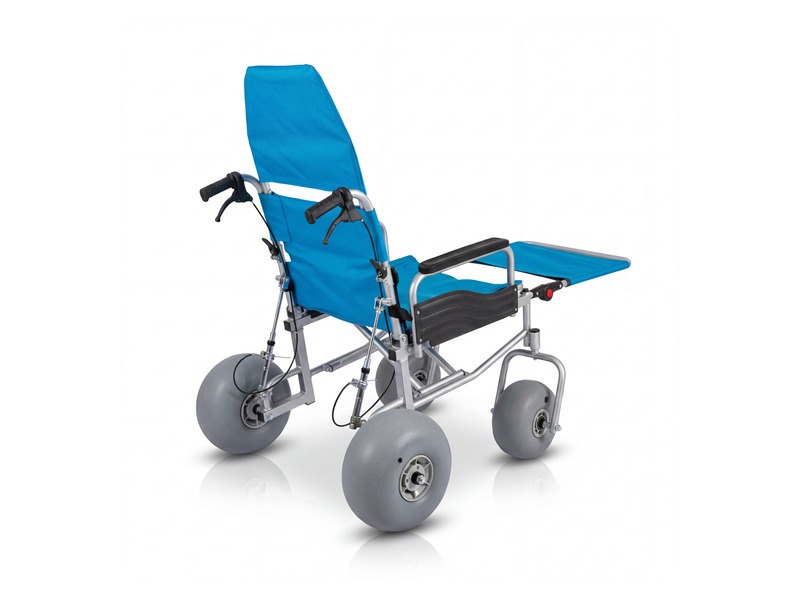
Yes, pairing a beach access mat USA route with beach chairs gives users a firm path and a chair that handles the sand beyond it. Each helps the other. Together they reach more people.
Why combine them?
Also, mats get people to the sand, and chairs carry them further. The short version? Mats cover the path, chairs cover the beach.
- Mats for the path
- Chairs for open sand
- Floating chairs for supervised water
Which chairs suit matted routes?
Also, all-terrain chairs work on mats and sand alike.
At a US beach-mat project, verify which chairs suit matted routes during a normal operating period and photograph each relevant surface, slope or access point. Attach those observations to the operating plan so staff can review actual conditions before opening.
| Equipment | Role |
|---|---|
| Mat | Firm path |
| All-terrain chair | Sand travel |
| Floating chair | Supervised water |
| Beach walker | Ambulant users |
Combined equipment creates a complete access route.
Key Takeaway: Pair mats with all-terrain chairs for the widest access.
How Do You Buy a Beach Access Mat USA Supply?
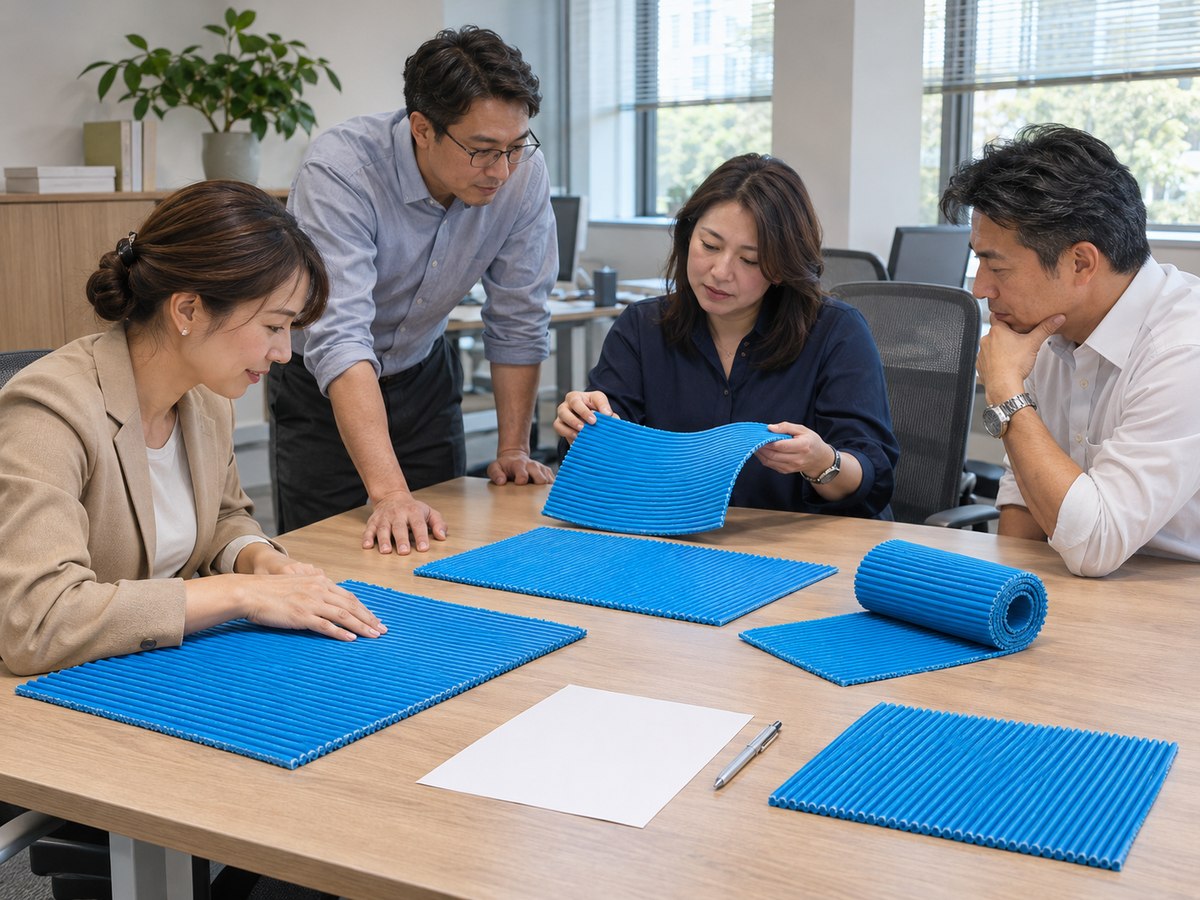
You buy a beach access mat USA supply by confirming width, length, material, anchoring and lead time in writing and comparing landed-cost quotes. Samples help. Ask about replacement sections.
What should you ask suppliers?
Also, specs, anchoring kit, warranty and replacement sections. This is where it gets interesting: matching sections later can be hard if you don’t order spares.
- Width and length
- Material and UV resistance
- Spare sections
How do you compare quotes?
Also, use one template with landed cost, specs, warranty and lead time.
For a US beach-mat project, use one written checklist when deciding how staff will compare quotes. Also, cover documents, packing, delivery, spare parts and support. Ask bidders to answer the same questions so a low unit price cannot hide a missing service or cost line.
| Check | Why |
|---|---|
| Specs | Fit |
| Landed cost | Budget |
| Spares | Repairs |
| Lead time | Season timing |
Careful buying avoids mismatched sections later.
Key Takeaway: Get specs in writing and order spare sections with your mat.
Final Thoughts
An access mat can turn a dead end at the sand into a path to the water. You’ve seen what mats are, types, width, layout, permits, installation, maintenance, costs, pairing with chairs and buying. With those steps, your site can open up to many more visitors.
If you’re planning a matting project, we can share product details and quotes for mats and beach chairs. Contact us today with your route length and site details. We believe the path to the water should be open to everyone. Also, we supply our mats to help build it.
FAQ
Can I install a beach mat myself?
A small crew may complete installation by following the current supplier instructions. Confirm permits and site controls before work starts.
What’s the best mat width?
The best width fits a wheelchair and a companion. Check accessibility guidance for your project.
How do I know if I need a permit?
Ask the relevant local authority and coastal agency. Dune and habitat zones may require added review or approval.
Can I leave mats out all year?
Sometimes, but storms and rules may require removal. Plan seasonal storage.
How do I know if a mat is worn out?
Look for tears, curled edges and loose joins. Replace sections that could trip users.