
The right beach wheelchair for state parks is a tough all-terrain chair lent through a simple reservation or walk-up system, supported by accessible routes, secure storage and a clear maintenance owner. Here’s a common story. A park superintendent gets a letter from a visitor who drove three hours to a state beach, found the access path ended at loose sand, and turned around. A planned beach wheelchair for state parks program answers that letter, and this guide covers chair types, routes, loans, staffing, storage, care, funding and buying.
We build all-terrain, folding and floating beach chairs, walkers and access mats for public buyers. The steps below reflect how park teams work, with limited staff and long seasons.
Why Add a Beach Wheelchair for State Parks Visitors Can Borrow?
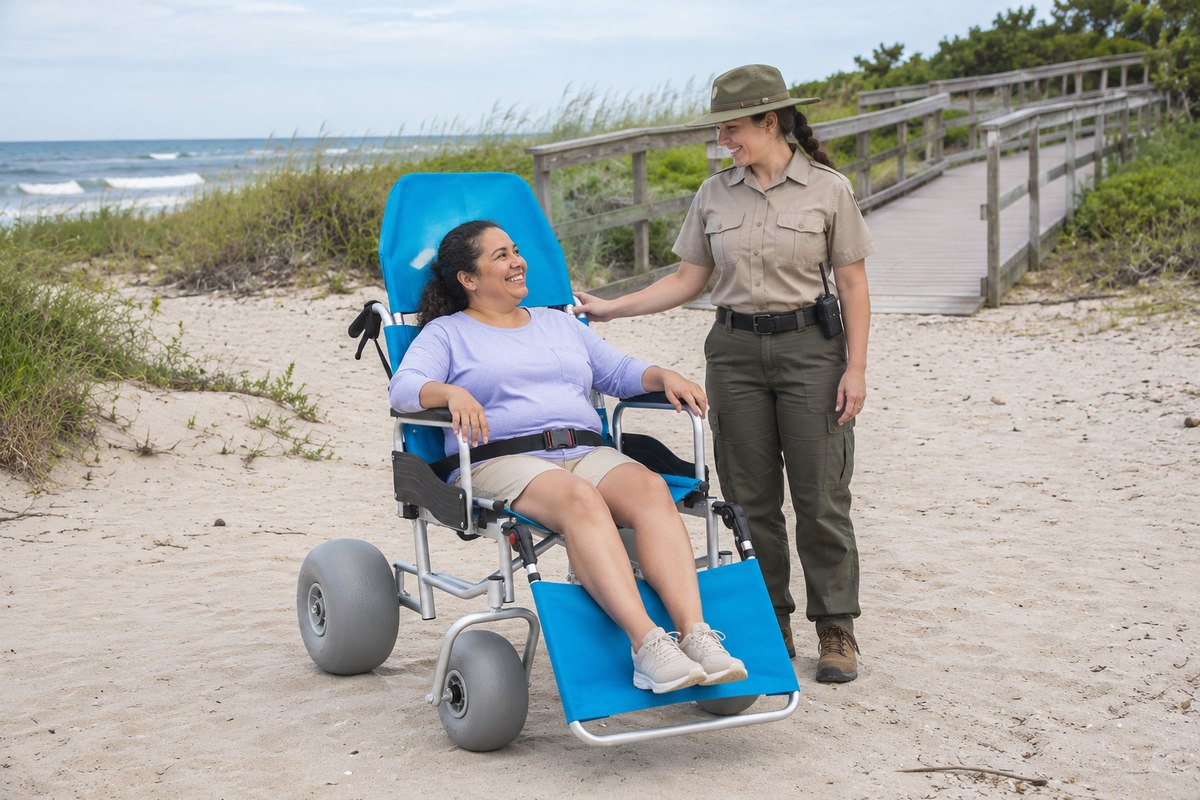
A beach wheelchair for state parks visitors can borrow opens public beaches to people who can’t cross soft sand in a standard wheelchair. Parks serve everyone. Loan chairs make that promise real at the shoreline.
Who benefits from park loan chairs?
Also, wheelchair users, older visitors and people recovering from injury. Here’s the deal: a published access service lets families judge whether the park can support their group. Review current public accessibility guidance before launch.
- Wheelchair users
- Older visitors
- People with temporary injuries
What does the park gain?
Meanwhile, stronger community support, positive feedback and a better case for future accessibility funding.
For a state-park loan program, use current manuals and written specifications to decide what benefits the park expects. Match each feature or quantity to a named user, route or staff task rather than choosing from a showroom impression.
| Benefit | Who notices |
|---|---|
| Wider access | Visitors |
| Positive feedback | Park leadership |
| Funding case | Grant makers |
| Community support | Local groups |
In fact, loan chairs are a visible, low-tech way to widen access.
Key Takeaway: Loan chairs turn an accessible parking lot into an accessible beach.
Which Beach Wheelchair for State Parks Use Lasts Longest?
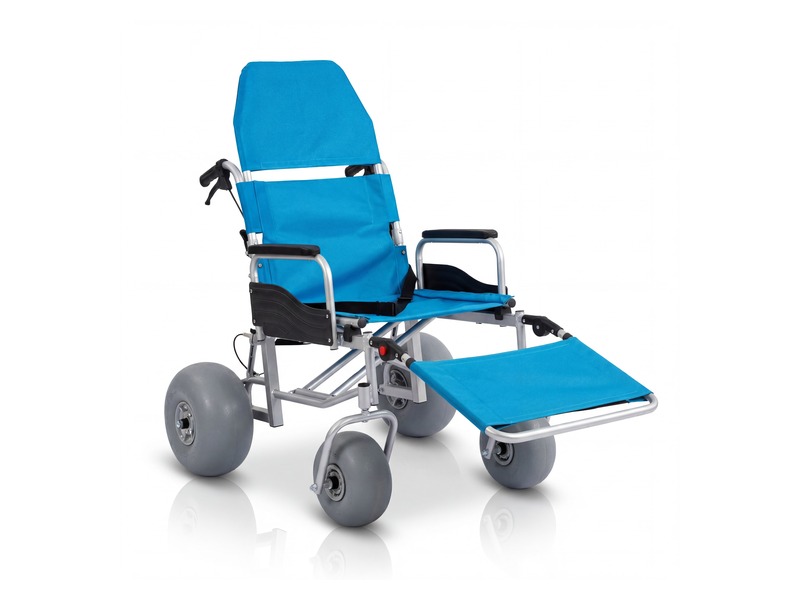
The beach wheelchair for state parks use that lasts longest is a corrosion-resistant all-terrain chair with replaceable balloon wheels and fabric. Parks need rugged equipment. Spares keep chairs in service.
Which features matter in a park?
Also, durable frame, simple brakes and parts you can replace on site. Think about it: a ranger shouldn’t need special tools to fix a wheel.
- Replaceable wheels and fabric
- Simple brakes
- Corrosion-resistant frame
Should parks add floating chairs?
Only at calm, lifeguarded swim areas with trained staff to supervise.
For a state-park loan program, use current manuals and written specifications to decide whether a supervised floating-chair service belongs at the site. Match each feature or quantity to a named user, route or staff task rather than choosing from a showroom impression.
| Chair type | Park use |
|---|---|
| All-terrain | General loans |
| Folding | Transport between sites |
| Floating | Supervised swim areas |
| Beach walker | Ambulant visitors |
Still, rugged chairs with spares keep loans running all season.
Key Takeaway: Choose rugged chairs with parts staff can replace without special tools.
What Route Does a Beach Wheelchair for State Parks Program Need?
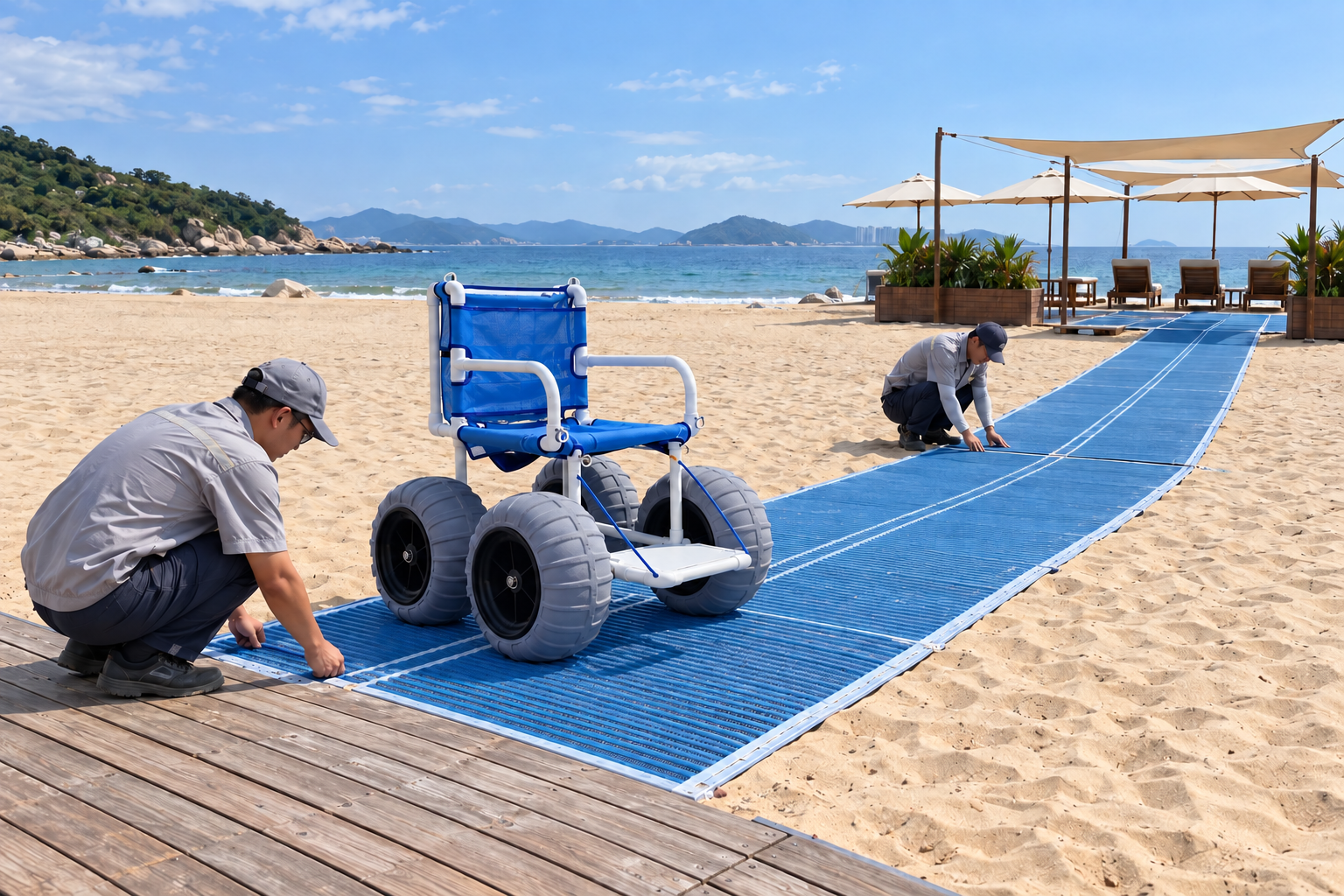
A beach wheelchair for state parks program needs accessible parking, a step-free path and matting or firm sand toward the water. The chair covers the last stretch. The route covers the rest.
How do you audit the route?
Also, walk it with a chair from parking to shoreline and note every barrier. But here’s the kicker: dune protection rules may limit where matting can go.
- Parking and curbs
- Boardwalks and ramps
- Soft sand sections
Where should matting go?
Along approved paths, following dune and habitat rules.
For example, at a state-park loan program, verify where matting should go during a normal operating period and photograph each relevant surface, slope or access point. Attach those observations to the operating plan so staff can review actual conditions before opening.
| Route section | Common fix |
|---|---|
| Curb | Ramp |
| Boardwalk end | Matting |
| Dune path | Approved route only |
| Shoreline | Firm wet sand |
A good route makes every loan more useful.
Key Takeaway: Audit the full route and place matting only where habitat rules allow.
How Do Beach Wheelchair for State Parks Loans Work?
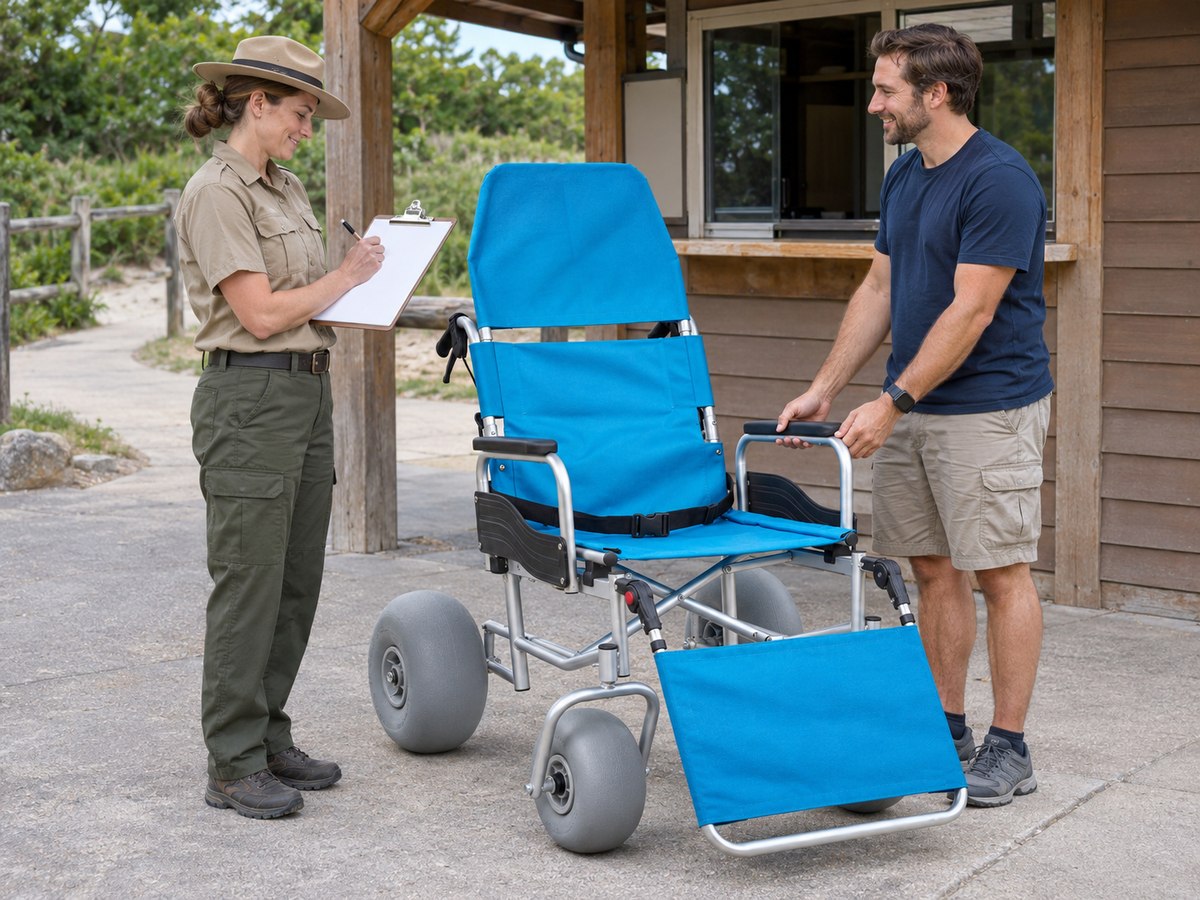
Beach wheelchair for state parks loans may use reservations, a ranger or contact station, or a controlled locker. Each park should set its own fee, identity, supervision and return rules in writing.
Which loan model fits your park?
Also, busy parks benefit from reservations, while quiet ones can use walk-up loans. Here’s why that matters: the wrong model either wastes chairs or turns visitors away.
- Reservations for busy beaches
- Walk-up at quiet sites
- Lockers for unstaffed hours
What should loan terms say?
Meanwhile, time limits, return point, cleaning rules and a contact for help.
Before launch, staff in a state-park loan program should agree on what loan terms should say. Rehearse one handoff and one exception under real site conditions. Then, revise any step that two staff members interpret differently.
| Loan model | Best for |
|---|---|
| Reservation | High demand |
| Walk-up | Low demand |
| Locker | Limited staff |
Matching loans to demand keeps chairs available.
Key Takeaway: Pick a loan model that fits your demand and staffing.
Who Staffs a Beach Wheelchair for State Parks Service?
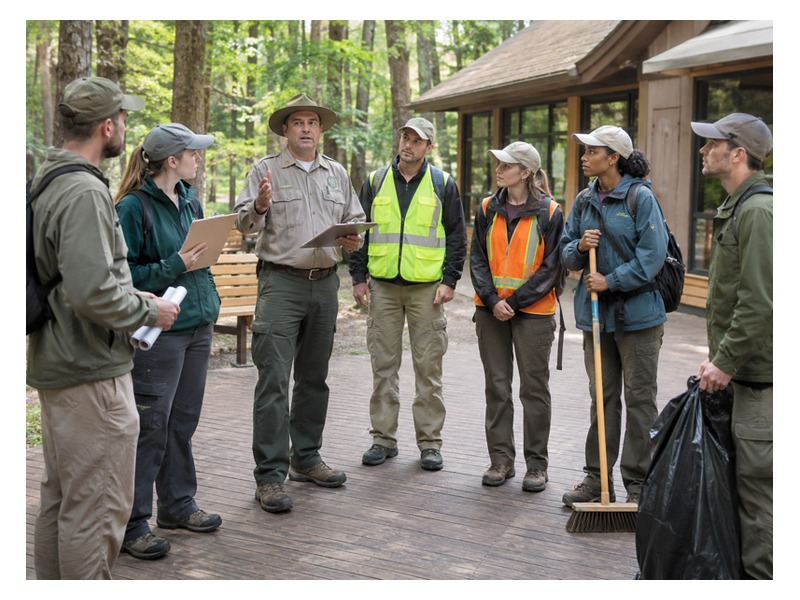
A beach wheelchair for state parks service is staffed by rangers, seasonal aides, park friends groups or volunteers, depending on the site. One person should own it. Volunteers extend capacity.
How do volunteers help?
Also, they handle check-outs, cleaning and visitor help on busy days. Sounds simple, right? A trained friends group can run the whole service on weekends.
- Check-outs and returns
- Cleaning and storage
- Visitor support
What training should staff get?
In fact, brakes, routes, cleaning and how to report damage.
For a state-park loan program, document what training should staff get, assign a named role on every shift and identify a backup. The same procedure should state who may approve a loan, pause service or call for added support.
| Role | Task |
|---|---|
| Ranger | Owner and oversight |
| Seasonal aide | Daily loans |
| Volunteer | Weekend support |
| Maintenance | Repairs |
Still, clear roles keep the service steady through the season.
Key Takeaway: Name one owner and use volunteers to extend coverage.
Where Should a Beach Wheelchair for State Parks Fleet Be Stored?
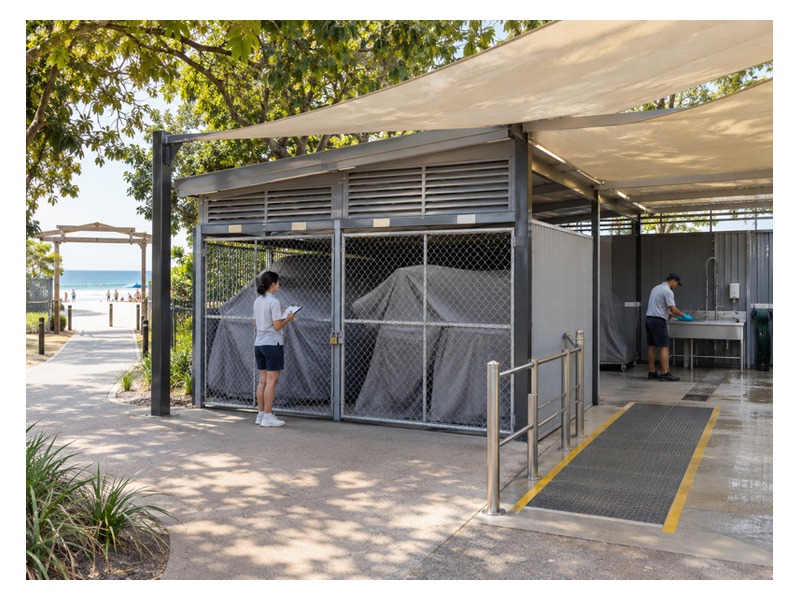
A beach wheelchair for state parks fleet should be stored in a shaded, lockable shed or locker near the beach access, with rinse water close by. Close storage increases use. Locks reduce loss.
What should storage include?
Also, shade, ventilation, a lock and a hose. Now here’s the twist: self-service lockers can extend loan hours without extra staff.
- Shade and airflow
- Lock or code access
- Rinse hose
How do you protect chairs in winter?
Deep clean, dry and move chairs indoors for the off season.
However, for a state-park loan program, plan how staff will protect chairs in winter around numbered positions, inspection space, airflow and a direct route to the cleaning point. Staff should be able to find a missing part or damp item without shifting an entire row.
| Storage option | Best for |
|---|---|
| Staffed shed | Busy parks |
| Code locker | Unstaffed hours |
| Indoor store | Off season |
Good storage keeps chairs safe and ready.
Key Takeaway: Store chairs close to the beach and secure them for unstaffed hours.
How Do You Maintain a Beach Wheelchair for State Parks Fleet?
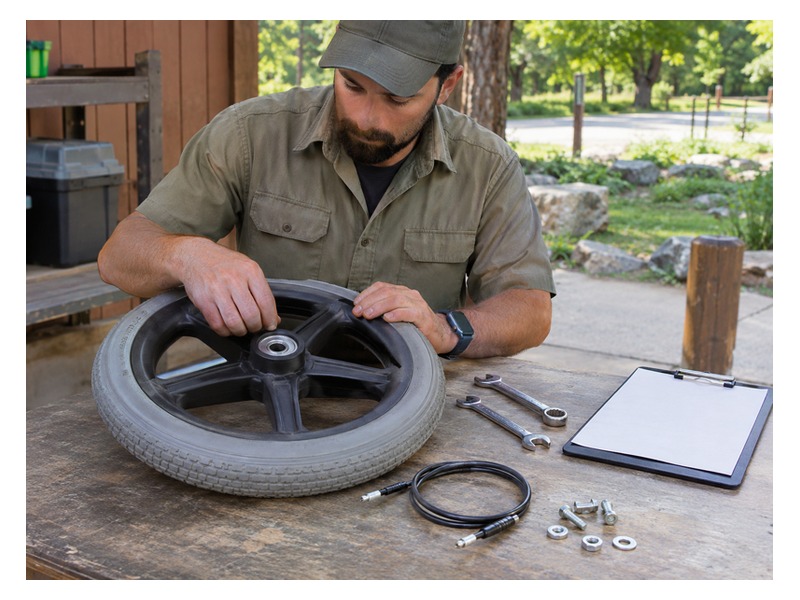
You maintain a beach wheelchair for state parks fleet with a rinse after each loan, weekly wheel and brake checks and an off-season service. Spares keep chairs in use. Records support budgets.
What’s the routine?
Also, rinse, check wheels and brakes, and log damage. Assign the work: trained staff should follow the current checklist and report exceptions.
- Rinse after each loan
- Wheel and brake check
- Damage log
Which spares should you stock?
Also, balloon wheels, fabric sets, brakes and fasteners.
However, in a state-park loan program, document which spares the team should stock, assign a named role and keep a dated record beside the maintenance area. Recurring wear then becomes visible early, while purchasing staff gain a clearer basis for ordering only the parts the site uses.
| Task | Frequency |
|---|---|
| Rinse | After each loan |
| Wheels and brakes | Weekly |
| Fabric | Monthly |
| Full service | Off season |
Routine care extends chair life across many seasons.
Key Takeaway: Use a simple checklist and keep core spares on site.
How Do You Fund a Beach Wheelchair for State Parks Program?
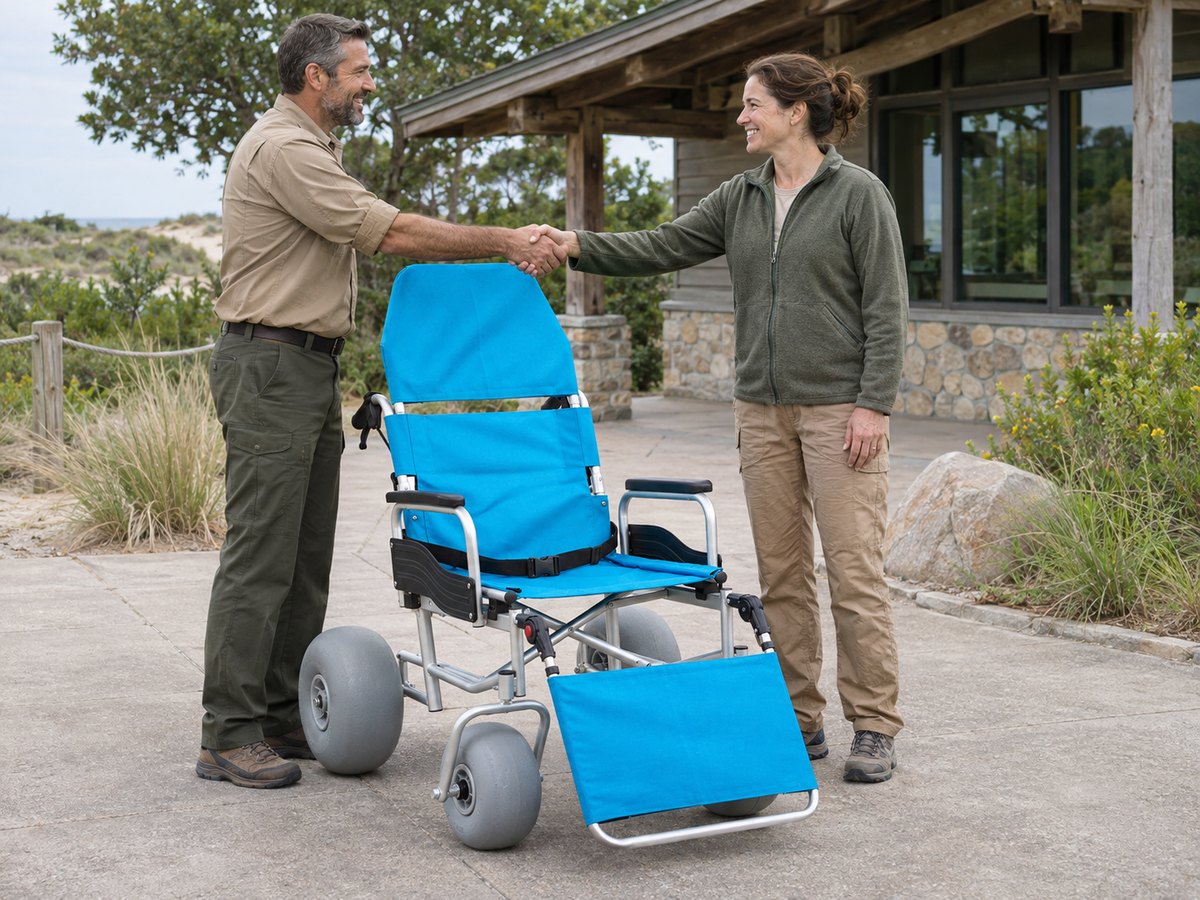
You can fund a beach wheelchair for state parks program through an approved park budget, eligible grants, partner groups or documented donations. Confirm every source before including it in a procurement schedule.
Which sources work well?
Also, friends groups, service clubs and community foundations. Here’s the thing: donors like equipment they can see on the beach.
- Park operating budget
- Friends group fundraising
- Grants and local sponsors
What should a funding request show?
Also, need, cost, use plan and how chairs will be maintained.
For a state-park loan program, document what a funding request should show with its source, owner, date and local assumption. That record separates a current project estimate from a standing rule and gives reviewers a clear reason for each budget choice.
| Source | Typical use |
|---|---|
| Park budget | Staff time |
| Friends group | Chairs |
| Grants | Chairs and mats |
| Sponsors | Signage and storage |
In fact, combining sources spreads cost and builds support.
Key Takeaway: Combine budget, friends groups and grants, and show a maintenance plan.
How Do You Buy a Beach Wheelchair for State Parks Use?

You buy a beach wheelchair for state parks use by writing a clear spec, following your state procurement rules and comparing landed-cost quotes with spares and support. Specs prevent surprises. Rules set the path.
What should the spec include?
Also, chair type, weight limit from the current manual, materials, spares and delivery. The short version? A clear spec gets quotes you can compare.
- Chair type and wheel style
- Weight limit and materials
- Spares and lead times
How do you compare quotes?
Also, score them on spec match, landed cost, spares and warranty.
For a state-park loan program, use one written checklist when deciding how staff will compare quotes. Also, cover documents, packing, delivery, spare parts and support. Ask bidders to answer the same questions so a low unit price cannot hide a missing service or cost line.
| Criterion | Weight |
|---|---|
| Spec match | High |
| Landed cost | High |
| Spares | High |
| Warranty | Medium |
Still, a clear process gives decision makers confidence.
Key Takeaway: Write a functional spec and score quotes on the full landed cost.
How Do You Measure a Beach Wheelchair for State Parks Program?
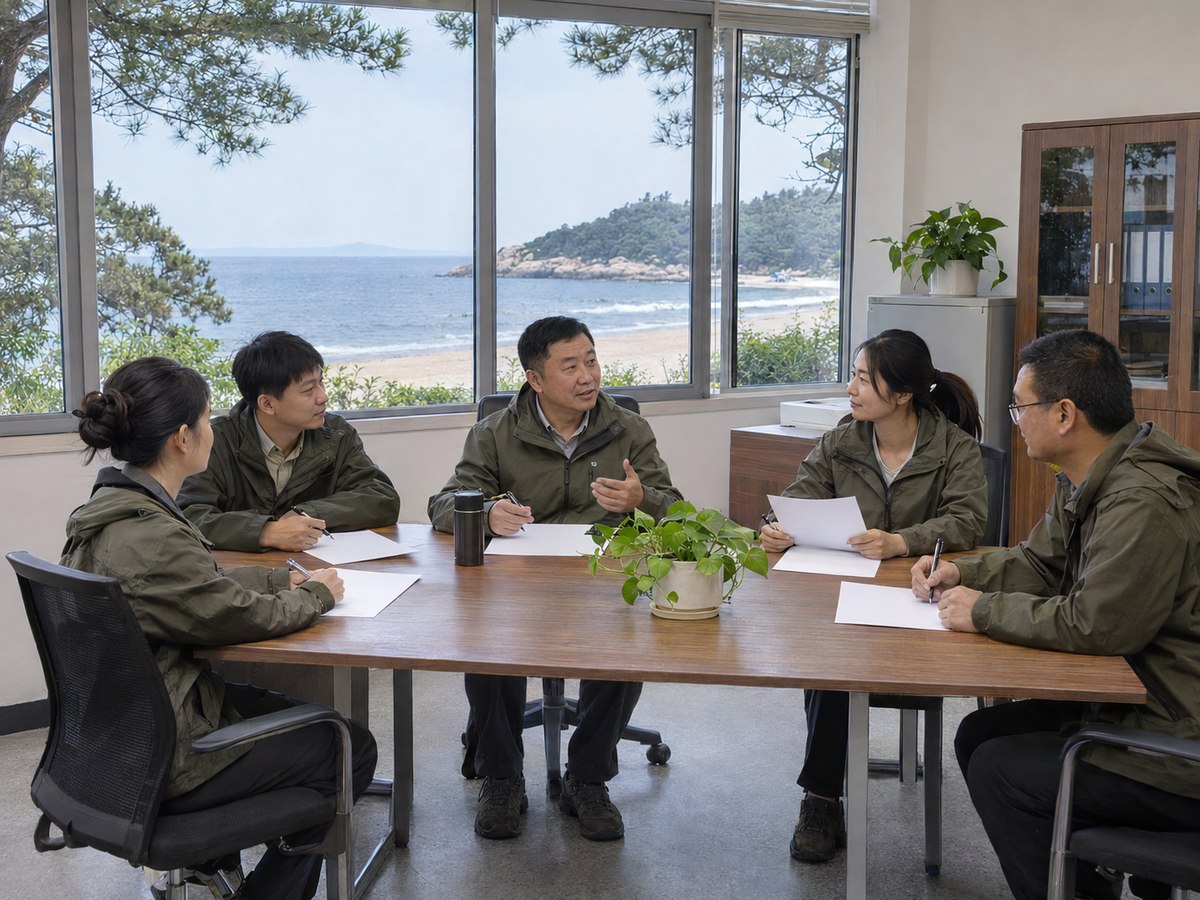
You measure a beach wheelchair for state parks program by tracking loans, turned-away requests, repairs and visitor feedback each season. Data supports budgets. It also guides expansion to other beaches.
What should you track?
Also, loans per day, unmet requests and repair costs. This is where it gets interesting: unmet requests make the strongest case for more chairs.
- Loans per day
- Unmet requests
- Repairs and parts
Who should see the results?
Also, park leadership, friends groups, funders and accessibility advisors.
Before launch, staff in a state-park loan program should agree on who should see the results. Rehearse one handoff and one exception under real site conditions. Then, revise any step that two staff members interpret differently.
| Metric | Use |
|---|---|
| Loans | Demand |
| Unmet requests | Expansion case |
| Repairs | Spares planning |
| Feedback | Improvements |
Also, measuring results keeps the program funded and growing.
Key Takeaway: Track loans and unmet demand and share results with funders.
Final Thoughts
State parks can open their beaches to many more visitors with loan chairs and a clear plan. You’ve seen why parks add chairs, which models last, routes, loans, staffing, storage, maintenance, funding, buying and measurement. With those steps, your program can launch and grow season by season.
If you’re planning a park beach chair program, we can share manuals, spares lists and quotes for public buyers. Contact us today with your beaches and expected demand. We believe public beaches belong to everyone, and we build our chairs to help parks prove it.
FAQ
Can I start a park program with one chair?
Yes, many parks start small. Track loans and add chairs as demand grows.
What’s the best chair for a state park?
A rugged all-terrain chair can suit a park’s land-based loan service. Compare route conditions, replaceable parts and current manuals before buying.
How do I know if we need reservations?
Meanwhile, watch for busy days with turned-away visitors. Regular demand means reservations help.
Can I use volunteers to run loans?
Yes, if the park defines training, authority and a named staff owner. A partner group can help within those written boundaries.
How do I know where matting is allowed?
Also, check with your park’s natural resources team. Dune and habitat rules decide placement.