You get a wheelchair on the beach by using specialized all-terrain equipment featuring low-pressure balloon tires that glide over soft sand instead of sinking. For many families, a trip to the shore is a dream that often turns into a logistical nightmare because standard mobility aids simply aren’t built for coastal environments. You might feel the frustration of tires digging into the dunes or the exhaustion of trying to drag a heavy chair through the tide line. This struggle ruins the experience for everyone involved and often leads to skipping the beach altogether. Understanding how to get a wheelchair on the beach with an internal link to Ary Beach Accessibility Solutions easily is the first step toward reclaiming your summer freedom and ensuring no one is left behind on the boardwalk. By choosing the right gear and following a few simple steps, you can transform a difficult trek into a seamless transition from the parking lot to the water’s edge.
Why is sand a struggle for wheelchairs?
Standard wheelchairs have narrow tires that sink instantly into soft sand because the weight is concentrated on a very small surface area. Learning how to get a wheelchair on the beach requires understanding the physics of flotation versus sinking. You need a design that spreads the weight across a broader footprint to stay on top of the grains.
Do narrow tires sink in sand?
Narrow tires exert high pressure on the ground, causing them to knife through loose surfaces. This creates immense friction and makes it nearly impossible to push or pull the chair. You will find that even the strongest assistant struggles to move more than a few inches in these conditions.
Think about it:
Is the frame weight an issue?
Heavy steel frames contribute to the sinking problem by adding unnecessary load to the already struggling wheels. Lightweight aluminum or specialized alloys are preferred because they reduce the total downward force. When you combine a light frame with wide tires, the mobility experience changes completely.
- High ground pressure from small wheels.
- Lack of traction on shifting surfaces.
- Resistance from deep sand ruts.
- Corrosion risks from salt air.
What is the main sand obstacle?
The primary obstacle is the lack of a stable path for traditional wheels to grip. Soft, dry sand behaves almost like a fluid, flowing around objects rather than supporting them. You must overcome this by using wheels designed specifically for “flotation” over the surface.
| Obstacle Type | Impact Level | Recommended Solution |
|---|---|---|
| Soft Dry Sand | High | Balloon Tires |
| Wet Sand | Medium | All-Terrain Tires |
| Compact Gravel | Low | Standard Rugged Tires |
The data indicates that soft sand requires the most specialized equipment to ensure successful mobility.
Key Takeaway: Standard wheelchairs are unsuitable for sand because their high-pressure tires sink, requiring a shift to wide-profile “flotation” technology for easy beach access.
Which wheelchair works best on sand?
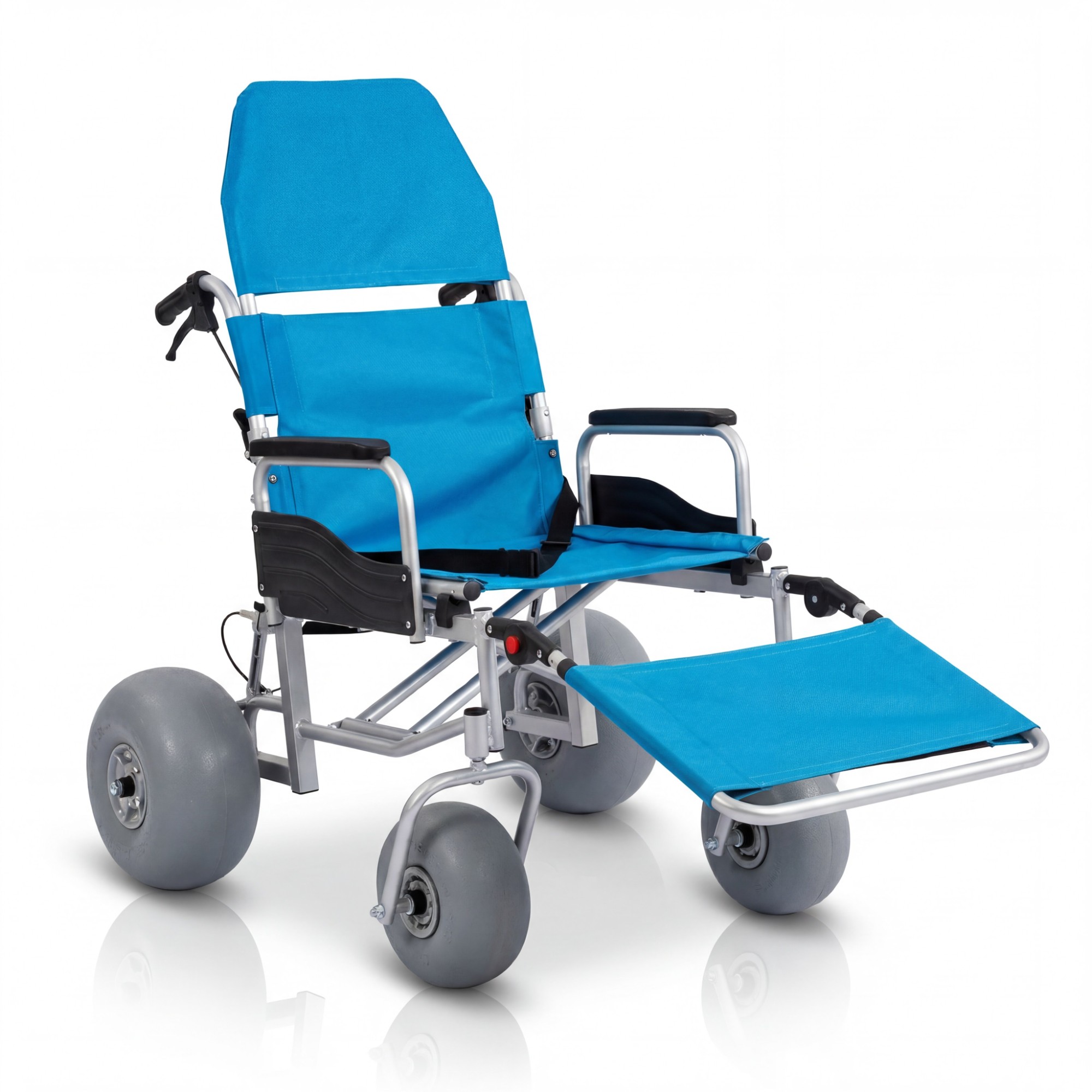
All-terrain models with wide, pneumatic tires are the superior choice for coastal environments because they provide the necessary surface area to prevent sinking. Choosing how to get a wheelchair on the beach involves selecting a chair with large, soft wheels that can handle uneven dunes and loose grains. These chairs are engineered for durability and user comfort in harsh marine conditions.
Are all-terrain models durable?
Professional-grade all-terrain chairs use marine-grade materials like 316 stainless steel or powder-coated aluminum to resist rust. You want a chair that can withstand constant exposure to saltwater and high humidity without seizing up. The best models also feature breathable, UV-resistant fabric to ensure the seat stays cool and intact for years.
The best part?
Do these chairs offer comfort?
Ergonomic seating and adjustable footrests make these chairs comfortable for long periods under the sun. You should look for models that offer supportive cushions and secure harnesses for safety on sloped terrains. Comfort ensures that the user can enjoy the beach scenery without physical strain or discomfort.
- Corrosion-resistant metal frames.
- UV-stabilized seating materials.
- Adjustable armrests and footplates.
- Quick-release wheels for storage.
Which model should you choose?
Selecting the right model depends on whether you plan to stay on the sand or enter the water. For primary sand use, a standard all-terrain chair with heavy-duty balloon tires is most efficient. If you want a versatile experience, consider a hybrid that balances weight and stability.
| Feature | All-Terrain | Standard Wheelchair |
|---|---|---|
| Tire Surface Area | 400% Larger | Minimal |
| Frame Material | Anti-Corrosive | Prone to Rust |
| Sand Performance | Excellent | Fails |
This comparison highlights why specialized all-terrain equipment is non-negotiable for anyone serious about beach mobility.
Key Takeaway: All-terrain wheelchairs with large pneumatic tires and anti-corrosive frames are the most effective tools for navigating soft coastal sands.
How do balloon tires change the game?
Balloon tires revolutionize beach access by distributing weight over a massive surface area, allowing the chair to “float” on top of the sand. When you learn how to get a wheelchair on the beach, the tires are the most critical component of the entire setup. These low-pressure wheels absorb shocks and bumps, providing a smooth ride even on the roughest dunes.
How does low pressure help?
Low-pressure tires, typically kept between 2 and 4 PSI, allow the rubber to deform and wrap around obstacles. This deformation creates a larger contact patch with the sand, which drastically reduces the pressure exerted on any single point. You will find that pushing a chair with these tires feels significantly lighter than traditional options.
Check this out:
Can balloon tires handle dunes?
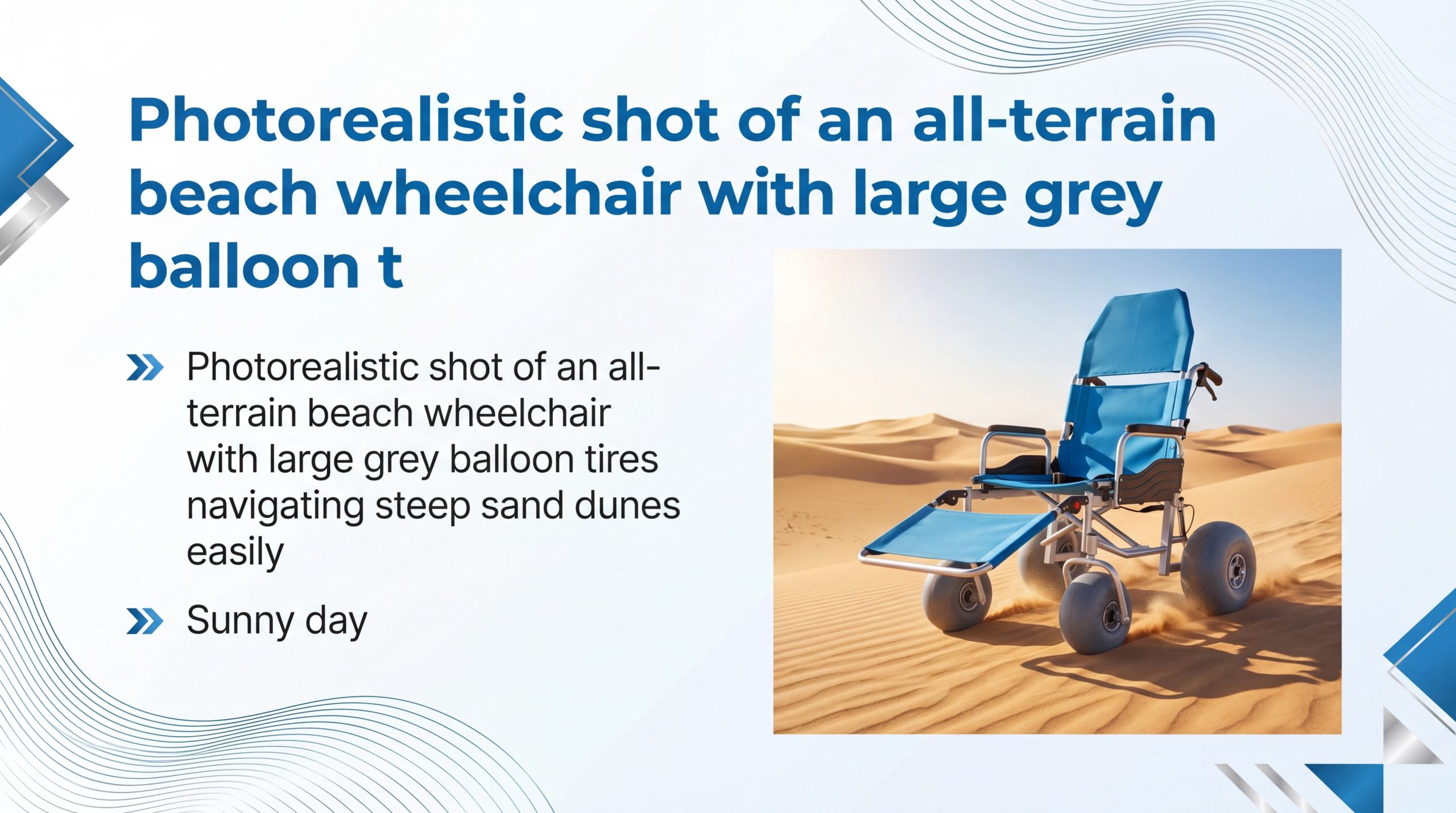
The wide track of balloon tires provides exceptional stability on the uneven inclines of sand dunes. You can navigate slopes up to 15 degrees with confidence, knowing the chair won’t tip or dig in. This allows you to explore areas of the beach that were previously off-limits to standard mobility aids.
- Enhanced stability on inclines.
- Shock absorption for better comfort.
- Minimal rolling resistance on sand.
- Reduced physical effort for attendants.
Are balloon tires easy to maintain?
While they are highly effective, these tires do require occasional pressure checks to ensure they remain at the optimal level. You should also rinse them with fresh water after every use to prevent salt buildup around the axles. Simple maintenance keeps the bearings spinning freely and the rubber in peak condition.
| PSI Range | Surface Suitability | Performance Effect |
|---|---|---|
| 2-3 PSI | Extremely Soft Sand | Maximum Flotation |
| 4-5 PSI | Packed Sand/Gravel | Faster Rolling |
| >6 PSI | Pavement Only | High Risk of Sinking |
Maintaining the correct air pressure is the secret to unlocking the full potential of your beach wheelchair’s mobility.
Key Takeaway: Balloon tires are the “secret sauce” of beach accessibility, using low pressure and wide surface area to glide effortlessly over soft sand.
Can wheelchairs actually go into the water?
Floating wheelchairs are specifically designed to enter the sea, allowing users to experience the waves safely with the help of an attendant. Discovering how to get a wheelchair on the beach and into the surf opens up a whole new world of recreation. These chairs feature buoyant armrests and frames that keep the user upright and stable in shallow water.
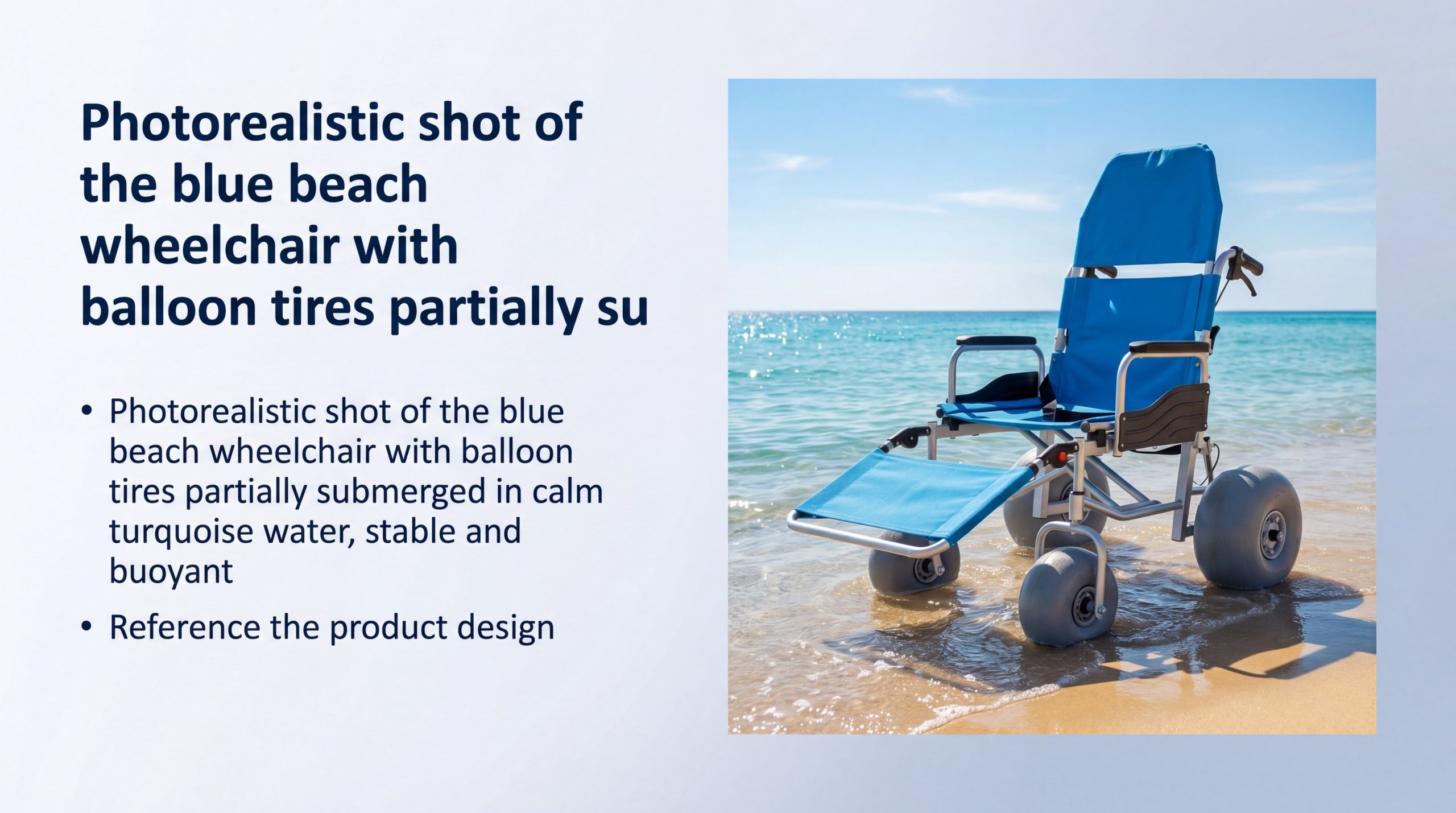
How does the flotation work?
The armrests and tires are often filled with air or buoyant foam to provide lift when submerged. This ensures the chair does not sink to the ocean floor, but instead floats at a comfortable level. You must always use these chairs with a dedicated assistant to manage the movement and ensure safety against tides.
But wait, there is more:
Is saltwater safe for the chair?
Floating models are built with enhanced protection against saltwater corrosion, utilizing high-grade aluminum and plastic components. You don’t have to worry about the internal mechanisms as long as the chair is rinsed thoroughly after each dip. The design prioritizes both aquatic performance and long-term durability in saline environments.
- Buoyant armrests for water stability.
- Safety harnesses for aquatic use.
- Non-corrosive aquatic bearings.
- Easy-to-clean mesh seating.
What are the water safety rules?
Safety is paramount when using a floating wheelchair, starting with a mandatory life jacket for the user in most cases. You should never use these chairs in high surf or strong rip currents that could overwhelm an attendant. Always check the local weather and tide reports before planning your water entry.
| Safety Gear | Purpose | Necessity |
|---|---|---|
| Life Jacket | Buoyancy Support | Mandatory |
| Chest Harness | Secure Positioning | Highly Recommended |
| Attendant | Control & Stability | Mandatory |
Following strict safety protocols ensures that water access remains a joyful and hazard-free part of your beach day.
Key Takeaway: Floating wheelchairs allow for safe water immersion by combining buoyant components with corrosion-resistant frames, provided a trained attendant is present.
What are the benefits of beach access mats?
Beach access mats provide a firm, stable pathway over the sand, allowing both standard and beach wheelchairs to move with much less resistance. If you are looking at how to get a wheelchair on the beach for a large group or public event, mats are an excellent infrastructure solution. They create a “temporary sidewalk” that can be rolled out and removed as needed.
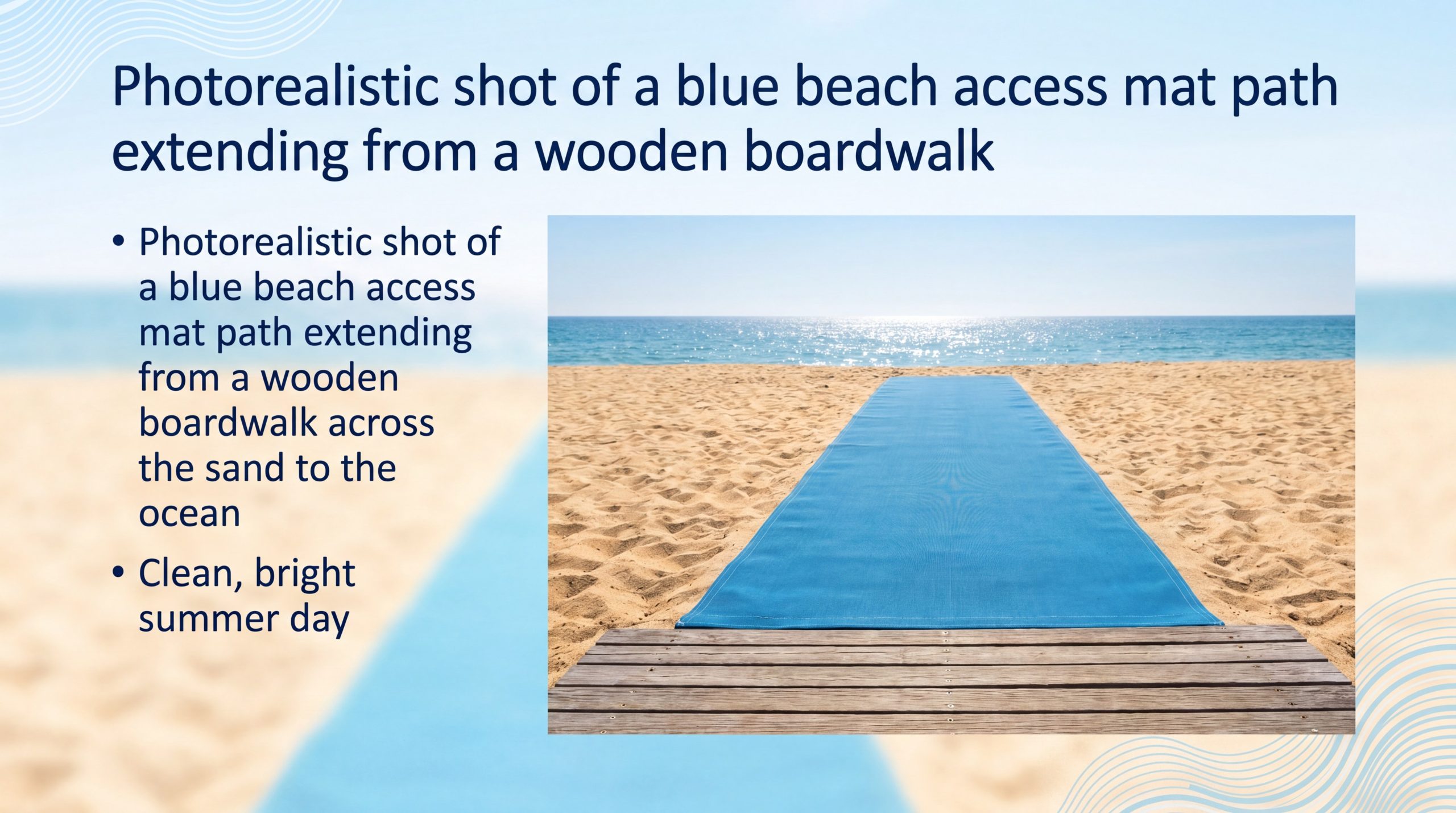
Do mats work for everyone?
Mats benefit everyone, including people with strollers, walkers, or those who simply find walking on sand difficult. You will see that a high-quality mat creates a clear transition from the boardwalk to the shoreline. They are usually made from UV-stabilized recycled materials that can withstand heavy foot traffic and coastal weather.
It gets better:
Are mats easy to install?
Most beach access mats come in sections that can be quickly pinned down to the sand using specialized stakes. You can customize the length and shape of the path to navigate around dunes or vegetation. Because they are lightweight and portable, they can be stored during the off-season to protect the coastal ecosystem.
- Non-slip surface for safety.
- High visibility for easy navigation.
- Resistant to sand buildup.
- Environmentally friendly materials.
How do you maintain beach mats?
Maintenance is as simple as sweeping off excess sand with a stiff broom or rinsing the mat with a hose. You should check the stakes periodically to ensure the mat remains tight and flat against the ground. Properly maintained mats can last for many seasons, providing reliable access year after year.
| Mat Property | Standard Mesh | Heavy-Duty Mat |
|---|---|---|
| Load Capacity | 1,000 lbs | 5,000 lbs+ |
| Sand Drainage | High | Very High |
| Portability | Excellent | Moderate |
The data shows that for permanent or high-traffic areas, investing in heavy-duty mats provides the best long-term accessibility results.
Key Takeaway: Beach access mats are a versatile solution that creates a stable, traversable path for all types of mobility devices across soft sand surfaces.
How do you prepare for a beach trip?
Preparation involves checking the beach’s accessibility features, such as the availability of ramps, mats, and rental equipment. Planning how to get a wheelchair on the beach before you leave home ensures that you won’t encounter unexpected barriers. Many modern resorts and public parks now offer dedicated “Accessible Beach” zones with specialized staff.
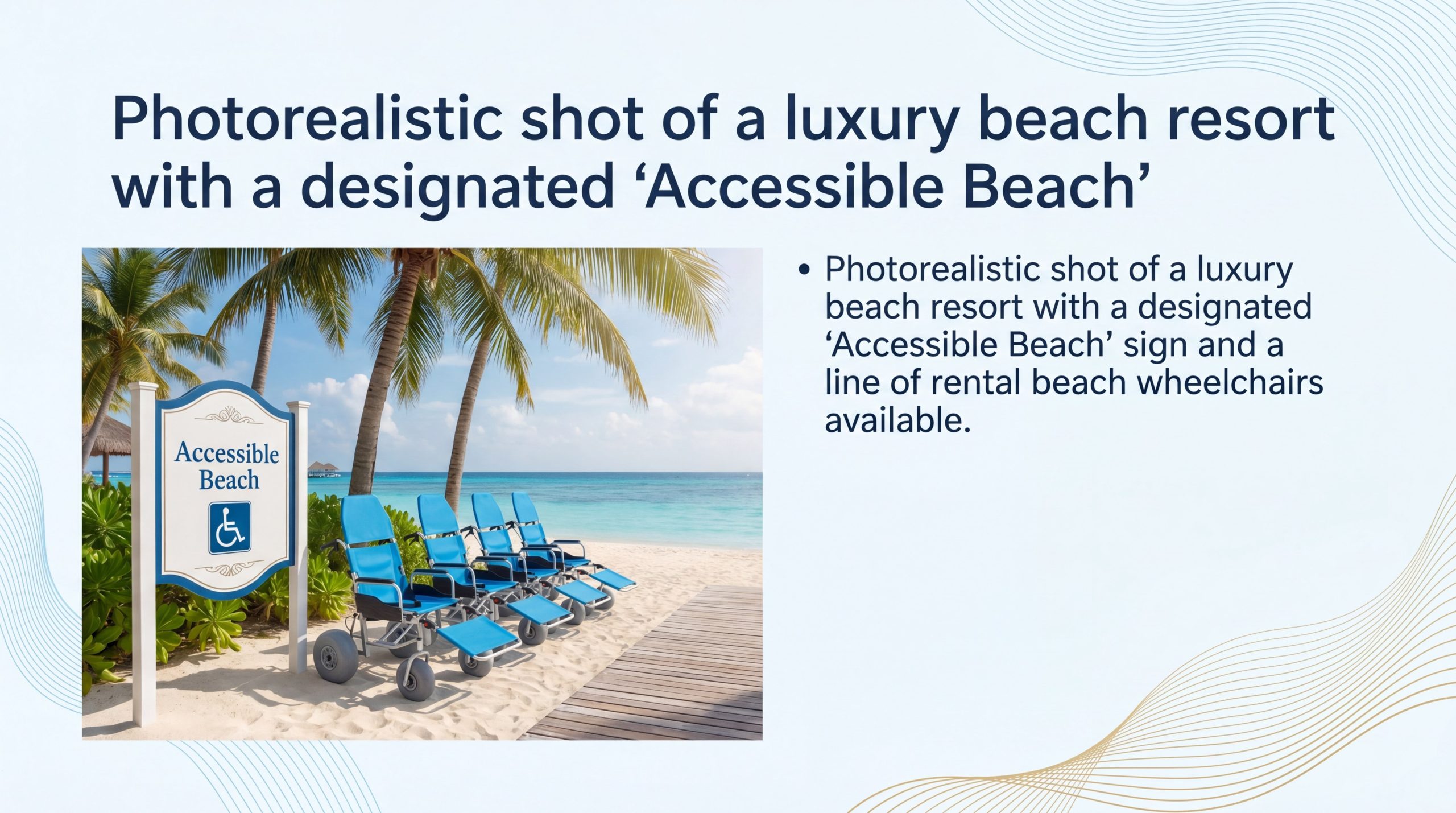
What should you check first?
You should start by calling the local lifeguard station or resort concierge to ask about their wheelchair facilities. Verify if they have all-terrain chairs available for rent or if the boardwalk has mats that lead all the way to the water. Knowing these details ahead of time allows you to pack the right accessories and manage your timing.
Listen to this:
Is transportation a major factor?
Transporting a beach wheelchair requires a vehicle with enough cargo space, as these chairs are often larger than standard models. You might need to disassemble the wheels or fold the frame to fit it into an SUV or van. If you are flying, check with the airline regarding their policies for oversized medical equipment.
- Confirm mat availability at the site.
- Check for accessible parking nearby.
- Verify the slope of the beach access.
- Inquire about dedicated beach attendants.
What essentials should you pack?
Beyond the chair, you should bring sun protection, plenty of water, and a fresh water source for rinsing the chair later. A small toolkit for minor adjustments to the tire pressure or footrests can also be a lifesaver. Being self-sufficient ensures that your day remains focused on relaxation rather than troubleshooting equipment.
| Checklist Item | Purpose | Importance |
|---|---|---|
| Pressure Gauge | Check Balloon Tires | High |
| Fresh Water Bottle | Hydration & Rinsing | Critical |
| Portable Ramp | Vehicle Transitions | High |
A well-prepared kit significantly reduces stress and ensures that the accessibility equipment performs at its best throughout the day.
Key Takeaway: Successful beach access starts with pre-trip research and logistics planning to ensure the destination and equipment are fully compatible.
Is maintenance for beach wheelchairs hard?
Maintenance is straightforward but essential, primarily involving a thorough freshwater rinse to remove salt and sand from moving parts. Learning how to get a wheelchair on the beach is only half the battle; you must also know how to preserve it. Saltwater is highly corrosive and can damage even the best-protected frames if left to sit.
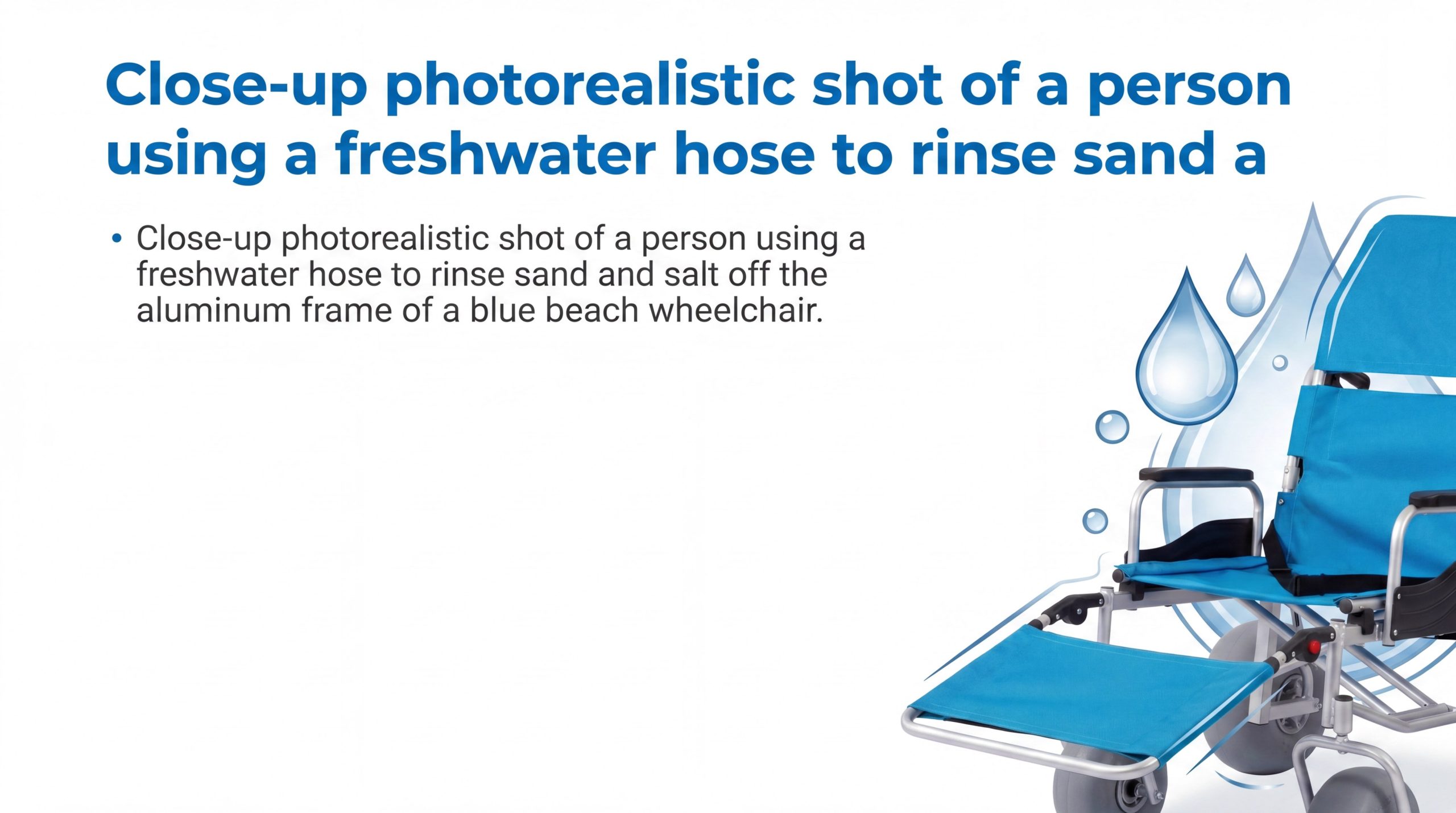
Why is rinsing so important?
Salt crystals can get inside bearings and joints, causing friction that leads to premature wear and rust. You should spray the entire chair—frame, wheels, and fabric—after every single visit to the coast. This simple five-minute task can add years to the lifespan of your investment.
Here is the kicker:
How do you store the chair?
Storing the chair in a dry, shaded area prevents UV damage to the fabric and keeps the tires from becoming brittle. You should avoid leaving it in a damp garage where salt air can still reach it during the off-season. Many users prefer to cover their chairs with a breathable tarp for extra protection.
- Spray all joints and axles.
- Wash the seat fabric with mild soap.
- Inspect tires for punctures or leaks.
- Dry the frame with a soft cloth.
Do you need professional servicing?
Most beach wheelchairs are designed for user-friendly maintenance, requiring only basic tools for most repairs. However, you should inspect the bearings and tire valves annually to ensure everything is still airtight and smooth. Replacing small parts like pins or straps early prevents larger failures later on.
| Maintenance Task | Frequency | Time Required |
|---|---|---|
| Freshwater Rinse | After Every Use | 5 Minutes |
| Tire Pressure Check | Monthly | 2 Minutes |
| Deep Clean & Lube | Every 6 Months | 30 Minutes |
Consistent post-use care is the most effective way to protect your equipment and ensure it is ready for the next adventure.
Key Takeaway: Routine freshwater rinsing and dry storage are the most critical maintenance steps for keeping a beach wheelchair operational and rust-free.
Where can you find professional solutions?
Professional accessibility solutions are found through specialized manufacturers who focus exclusively on all-terrain and aquatic mobility equipment. When researching how to get a wheelchair on the beach , you should look for companies with a proven track record in R&D and global supply. Buying direct from a factory-certified source ensures you get the latest engineering and full warranty support.

Why choose specialized manufacturers?
Specialized manufacturers understand the unique challenges of coastal environments, such as salinity and sand density. They offer equipment that has been tested in real-world scenarios rather than just modified from indoor designs. You benefit from their expertise in material science and ergonomic design specifically for outdoor use.
The best part?
Can you get custom options?
Many top suppliers offer customization, allowing you to choose colors, branding, or specific wheel configurations for your local terrain. This is particularly useful for resort owners or municipal parks looking to create a unified fleet. Professional solutions often include detailed user manuals and assembly videos to help you get started quickly.
- Factory-direct pricing and support.
- ISO-certified quality standards.
- Comprehensive warranty coverage.
- Access to genuine spare parts.
How do you verify quality?
Look for certifications such as ISO 9001 and CE marking, which indicate that the product meets international safety and manufacturing standards. You should also check for client testimonials from other resorts or rehabilitation centers. A reputable supplier will be transparent about their testing processes, including salt spray and load tests.
| Credential | Meaning | Value to Buyer |
|---|---|---|
| ISO 9001 | Quality Management | Consistency |
| CE Marking | Safety Compliance | Legal Security |
| Salt Spray Test | Corrosion Resistance | Long Lifespan |
Choosing a certified professional ensures that the equipment you receive is safe, durable, and capable of handling the rigors of the beach.
Key Takeaway: Investing in equipment from specialized, certified manufacturers guarantees access to high-performance tools designed specifically for coastal challenges.
Are lightweight models easy to transport?
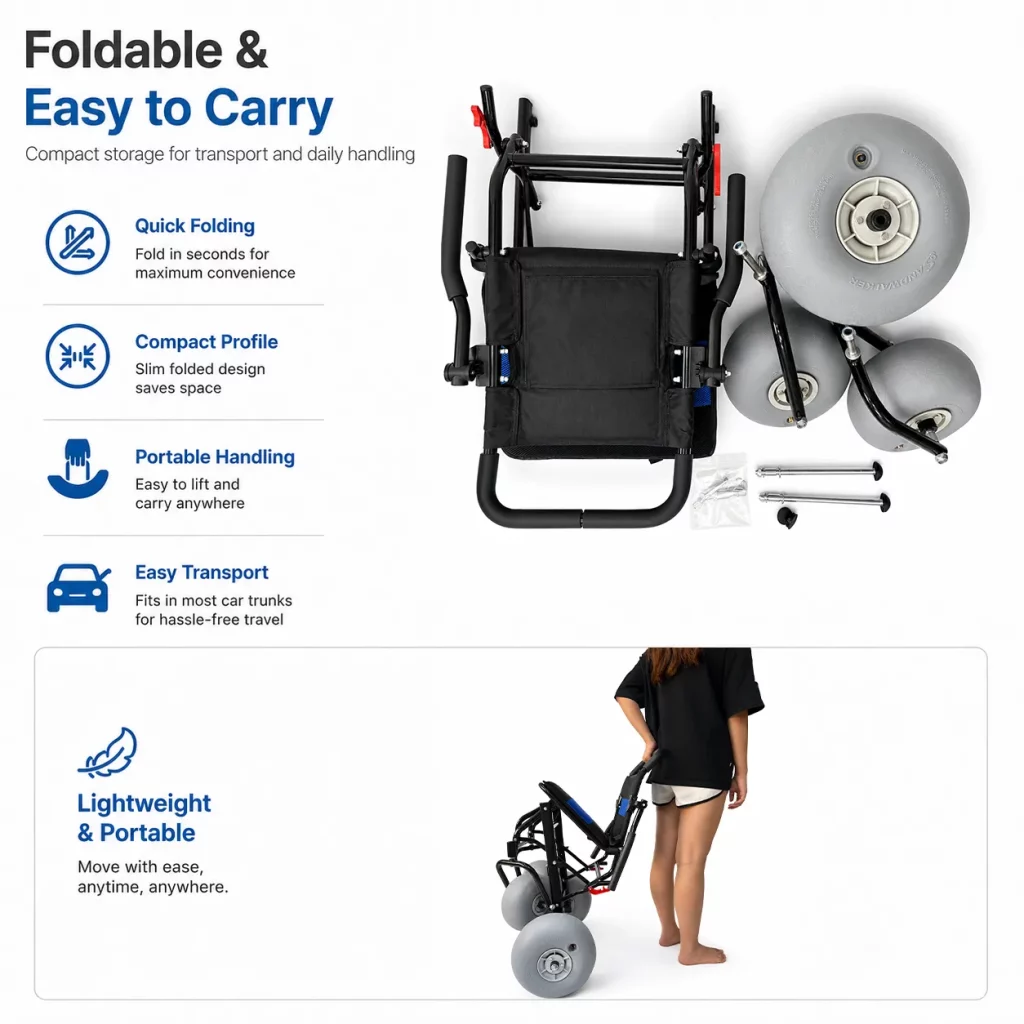
Lightweight beach wheelchairs are designed for portability, featuring folding frames and quick-release wheels that fit into standard vehicles. For families who travel frequently, finding how to get a wheelchair on the beach often means prioritizing models that don’t require a trailer. Modern aluminum alloys allow these chairs to be incredibly strong while remaining manageable for a single person to lift.
Do they fold compactly?
Most lightweight models feature a simple folding mechanism that reduces the chair’s footprint by up to 60%. You can easily slide the folded frame into a trunk or back seat without needing specialized ramps. This convenience makes spontaneous beach trips much more feasible and less stressful for everyone involved.
Think about it:
Is the strength compromised?
Despite their low weight, these chairs are engineered to support adult weights up to 250 lbs or more. The use of aircraft-grade aluminum ensures that the frame remains rigid and stable under load. You get the benefit of a portable design without sacrificing the safety or durability required for sand navigation.
- Tool-free assembly and disassembly.
- Lightweight aluminum alloy frames.
- Fits in most passenger car trunks.
- Ideal for air and train travel.
Which transport method is best?
If you are using a car, a folding model is usually sufficient for most needs. For those who need to carry extra gear, a roof rack or a hitch-mounted carrier can also be used for non-folding all-terrain chairs. The goal is to choose a transport method that minimizes physical strain during the loading and unloading process.
| Property | Lightweight Model | Heavy-Duty Model |
|---|---|---|
| Weight | 25-35 lbs | 50-70 lbs |
| Portability | Very High | Moderate |
| Max Load | 250 lbs | 400 lbs+ |
The analysis suggests that lightweight models are the optimal choice for independent travelers, while heavy-duty models are better for permanent facility use.
Key Takeaway: Lightweight, folding beach wheelchairs offer the perfect balance of strength and portability, making coastal travel accessible for families on the go.
What’s the secret to effortless mobility?
The secret to effortless mobility is a combination of high-quality equipment and the right operational techniques for specific sand types. When you master how to get a wheelchair on the beach , you realize that pushing with steady, even pressure is more effective than jerky movements. Using the chair’s momentum and choosing the flatter parts of the beach near the waterline can make the job much easier.
Should you push or pull?
In very soft sand, pulling the chair backward can sometimes be easier than pushing it forward, as it prevents the front wheels from digging in. You should experiment with both methods to see which works best for your specific chair and sand conditions. Most attendants find that a combination of both techniques works best for different sections of the beach.
Check this out:
Is timing the tide important?
The sand near the water is usually more compact and easier to traverse after the tide goes out. You will find that navigating during low tide provides a wider “highway” of firm sand for the wheels. Strategic timing can turn a difficult trek into a smooth stroll along the shoreline.
- Pulling backward in soft dunes.
- Pushing forward on wet sand.
- Utilizing tide timing for firmness.
- Maintaining a consistent pace.
How do you optimize the ride?
Optimizing the ride involves adjusting the tire pressure slightly depending on the sand’s density that day. You should also ensure the user is seated comfortably with their weight balanced over the rear wheels to maximize traction. These small adjustments can significantly reduce the effort required by the assistant.
| Variable | Adjustment | Result |
|---|---|---|
| Sand Type | Move to Wet Sand | Less Resistance |
| Direction | Pulling Backward | Better Front Clearance |
| Weight | Center over Rear | Improved Traction |
Minor operational adjustments combined with professional-grade equipment result in the most effortless beach experience possible.
Key Takeaway: Effortless mobility is achieved by combining specialized gear with smart techniques like pulling in soft sand and utilizing firm, wet sand at low tide.
Reclaim Your Shoreline Freedom
At Ary Beach Accessibility Solutions, we believe that everyone deserves the right to feel the sand beneath their feet and the salt on their skin. Our mission is to bridge the gap between desire and access through world-class engineering and a commitment to inclusivity. We stand at the forefront of the industry, pushing the boundaries of what’s possible in beach mobility so that “no access” becomes a thing of the past.
Ready to transform your beach operations or plan your next family getaway? contact us to discuss your specific needs and receive a tailored quote within 24 hours. Let’s make every beach accessible together.
Frequently Asked Questions
Can I use a regular wheelchair on the beach with a mat?Yes, but only if the mat extends all the way to your destination, as standard wheels will still sink the moment you step off the path.
What’s the best tire pressure for soft sand?Low pressure is best, typically between 2 and 4 PSI, to allow the tire to spread out and “float” on the surface.
Can one person push a beach wheelchair alone?Usually, yes, professional models with balloon tires are designed to be pushed by a single attendant with minimal effort.
Is it safe to leave a beach wheelchair in the sun?Yes, provided the materials are UV-stabilized, though storing it in the shade when not in use will extend the lifespan of the fabric.
How do I know if a beach is truly accessible?Direct judgment is best, so call the local lifeguard or visit the park’s official website to confirm the presence of mats and rental chairs.