
A beach wheelchair rental program gives visitors a clear way to request, collect, use, and return sand-ready equipment. A family may arrive after a long drive and find that the boardwalk stops before the shoreline. Standard wheels can sink in loose sand. Staff may not know who should assist. A planned rental service connects suitable chairs, a checked route, trained attendants, clear booking, and after-use care.
What Makes a Beach Wheelchair Rental Program Work?
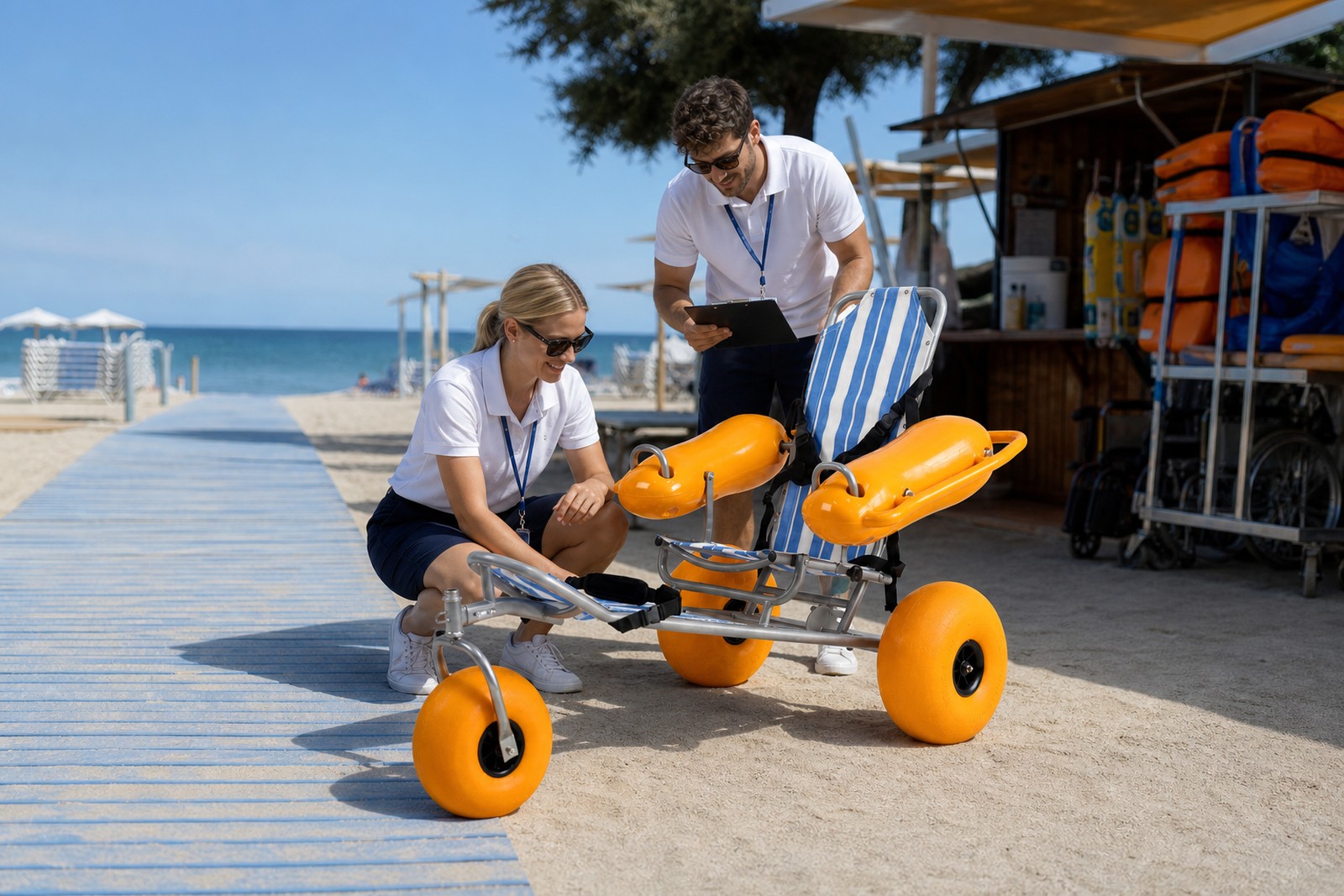
A beach wheelchair rental program works when the chair, booking process, route, staff roles, and return routine operate as one service. So, link this step to the route, chair, guest, and responsible staff.
The California Coastal Commission directory shows how loan programs differ in reservations, identification rules, pickup points, and time limits. Each operator should publish its own local process clearly.
Which parts must be planned together?
Start with the complete journey: A chair stored behind a locked door does not create access. Visitors need to know the service exists, where to request it, who handles the handoff, and how they reach the intended beach zone.
- Visible request information.
- A defined pickup point.
- A tested sand route.
- A documented return check.
Why is equipment alone not enough?
Here is the operational truth: Even a capable chair can sit unused when staff lack ownership or guests cannot find the service. Treat the program as a visitor experience with a beginning, middle, and end.
Key Takeaway: A rental program succeeds when every handoff is easy to understand.
| Planning Area | Practical Check |
|---|---|
| Equipment | Matches users and terrain |
| Process | Simple request and return |
| People | Named staff responsibility |
This framework keeps procurement connected to real visitor use.
Why Do Public Beaches Offer Rental Chairs?
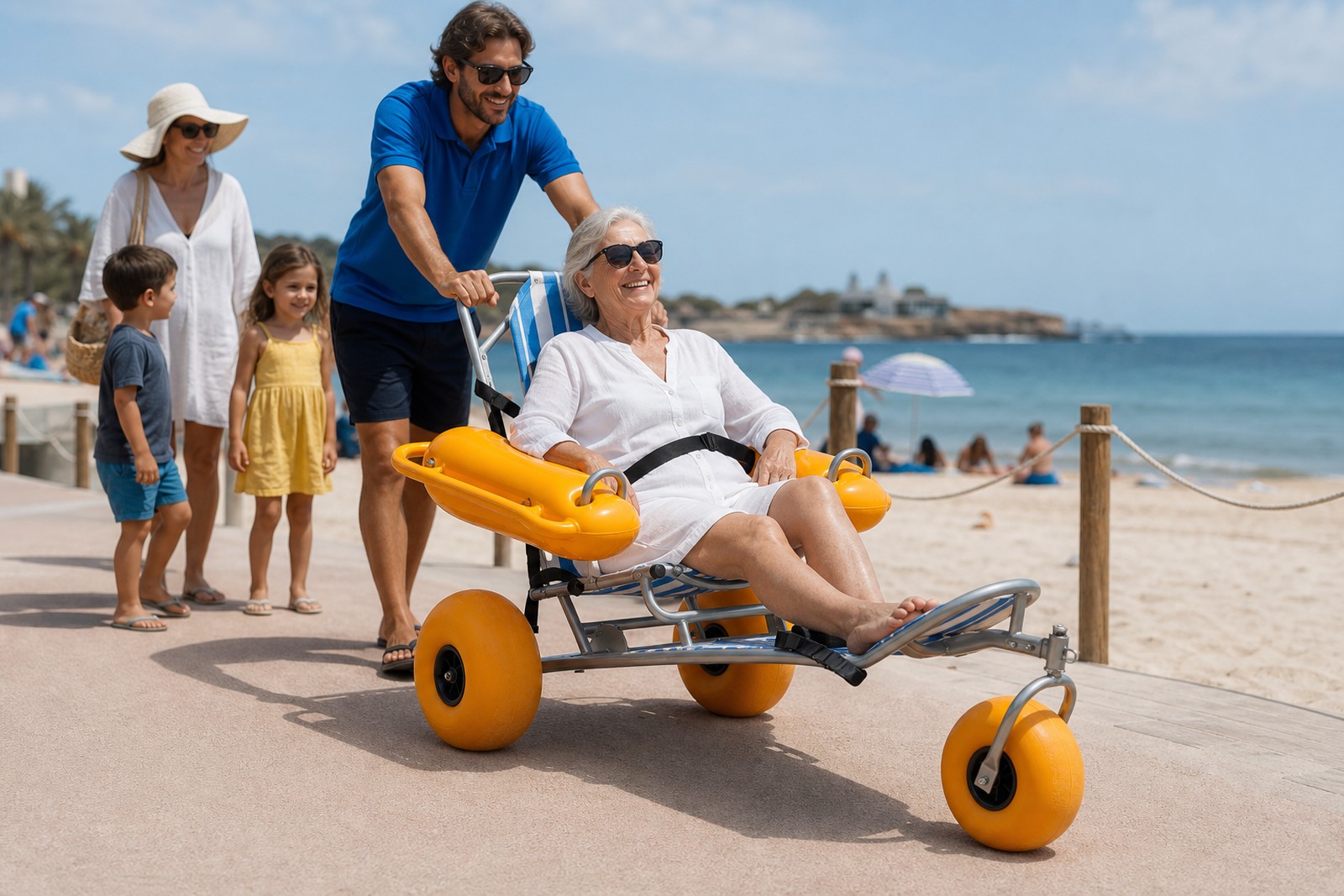
A beach wheelchair rental program helps public beaches extend access beyond paved paths without asking each visitor to own specialized equipment. Next, name the owner and record when service must pause.
What public value does the service create?
Think beyond one booking: A shared chair can support residents, tourists, seniors, rehabilitation visitors, and community events. It also gives the site a practical response when families ask how a mobility user can reach the sand.
- Shared access to specialized equipment.
- More inclusive public events.
- A visible accessibility service.
- Better continuity from path to beach.
How does it support destination planning?
This is where policy becomes practical: The site’s beach wheelchair overview can help teams compare dry-sand, floating, lightweight, and all-terrain options before they decide what the rental fleet should include.
Key Takeaway: Public rental converts an access commitment into equipment people can actually use.
| Planning Area | Practical Check |
|---|---|
| Visitor Need | Program Response |
| Soft sand | Sand-ready chair |
| Water contact | Approved floating model |
The service becomes stronger when the fleet reflects different destinations.
How Should You Select Rental Equipment?
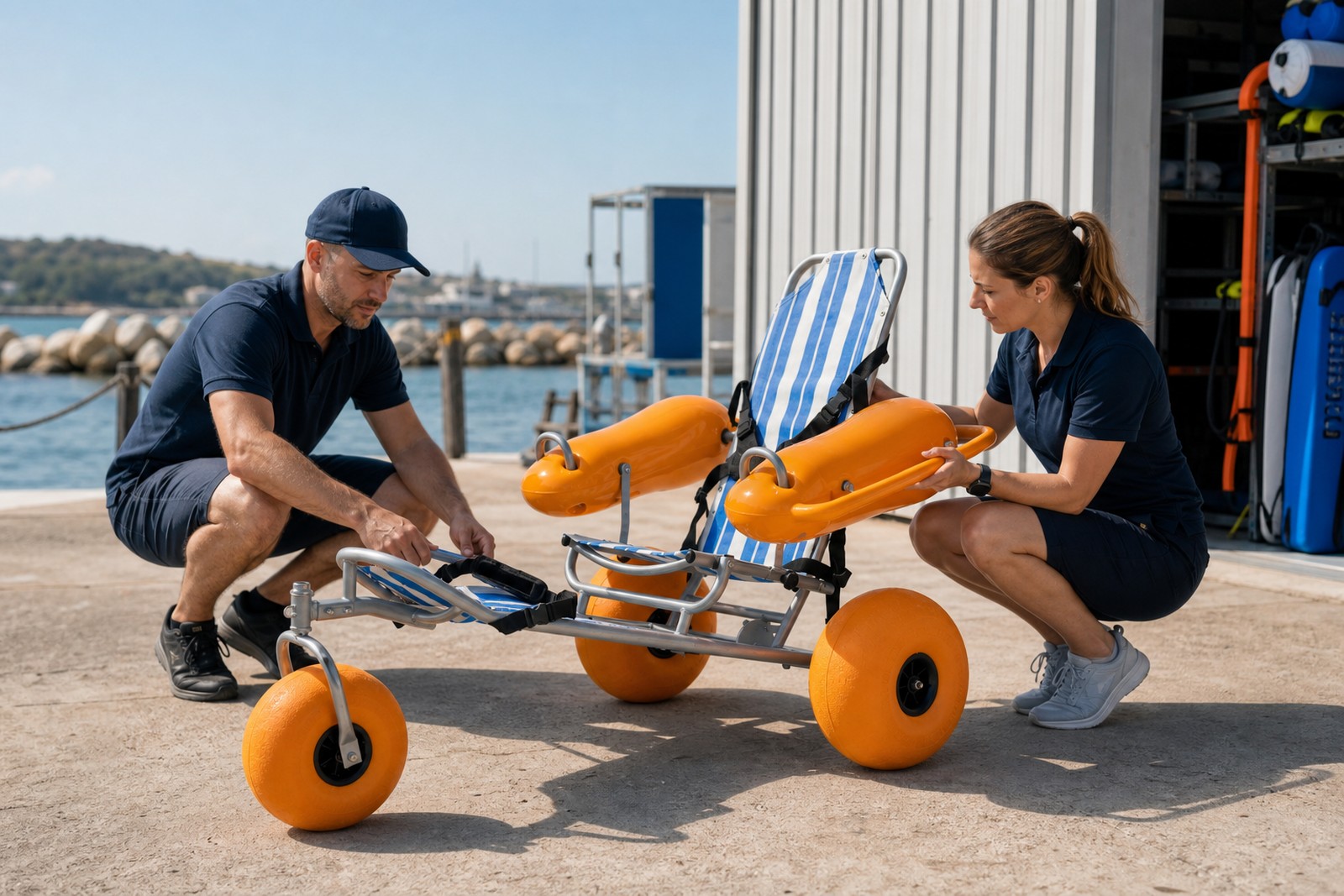
A beach wheelchair rental program should use chairs selected for local terrain, expected users, staff handling, storage, and approved operating conditions. Then, match the chair and assistance plan to local conditions.
If supervised water access belongs in the service scope, evaluate a floating beach wheelchair separately from dry-sand chairs.
What should buyers compare first?
Use the site as the test bench: Compare wheel type, seating support, transfer space, attendant controls, folded size, cleaning needs, and replacement parts. A feature matters only when it improves the route or daily workflow.
- Terrain and destination.
- User fit and transfer needs.
- Staff handling capacity.
- Storage and maintenance space.
Can one chair serve every request?
The honest answer is no: A dry-sand chair, a lightweight travel model, and a floating chair solve different problems. Use the all-terrain chair page to clarify where a broad-wheel attendant chair fits.
Key Takeaway: Choose a small, purposeful fleet instead of forcing one model into every situation.
| Planning Area | Practical Check |
|---|---|
| Chair Type | Primary Use |
| Dry-sand chair | Shoreline transport |
| Floating chair | Managed shallow water |
A needs-based comparison reduces unsuitable bookings and staff improvisation.
Who Can Use a Rental Beach Wheelchair?
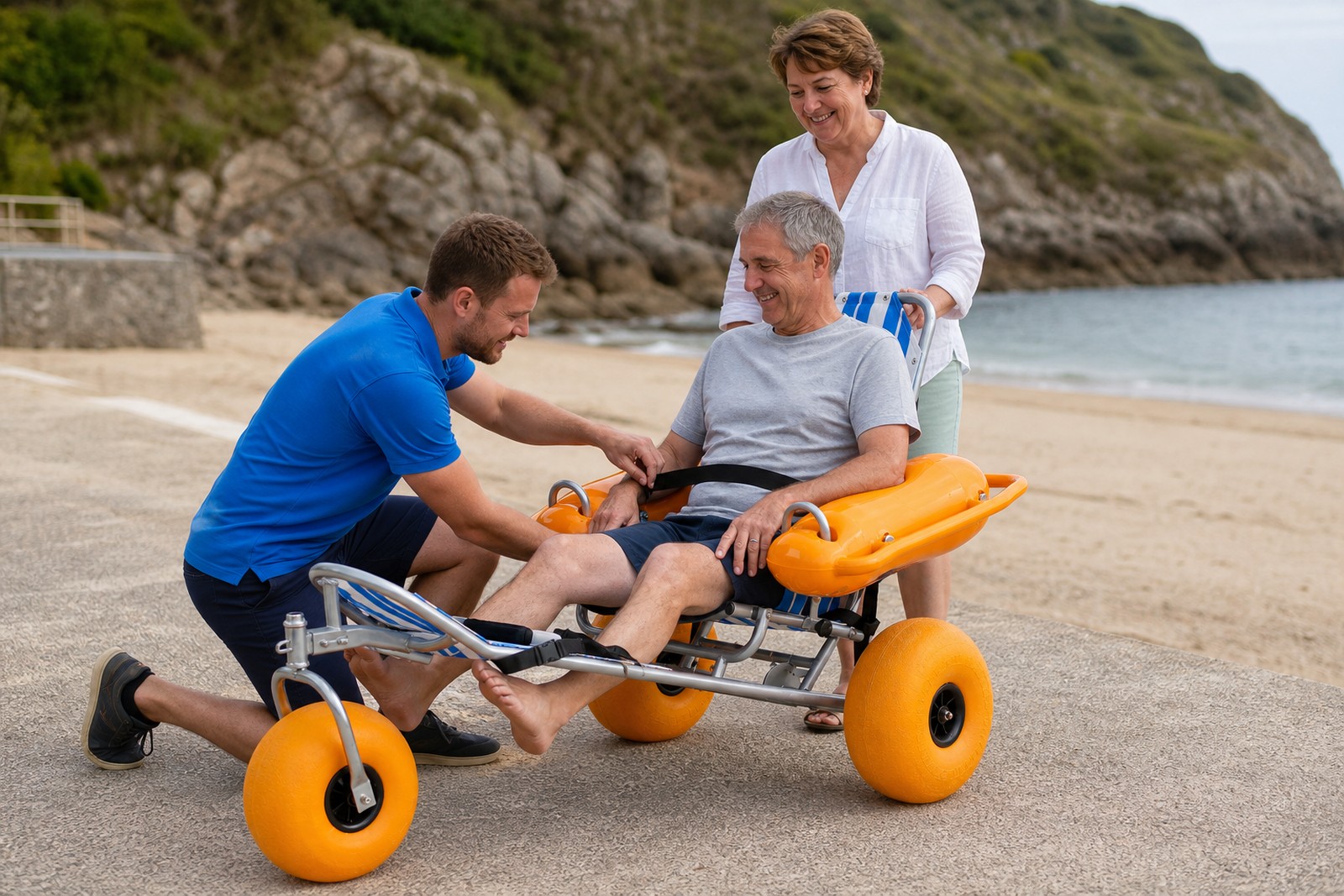
A beach wheelchair rental program can support adults, seniors, and visitors with limited mobility when the chair, route, and assistance plan fit the individual. However, stop when fit, route, or staffing remains unclear.
For visitors who can walk with support, a beach walker may fit the service better than seated transport.
What should staff ask before the handoff?
Begin with consent and preference: Ask how the guest prefers to transfer, what seating support feels comfortable, whether a companion will participate, and where the guest wants to go. These questions keep the person in control.
- Preferred transfer method.
- Posture and foot support needs.
- Comfort with attendant assistance.
- Desired beach destination.
When should staff suggest another option?
Matching matters more than availability: If the user cannot be positioned comfortably, the route exceeds the chair’s approved use, or trained support is unavailable, pause and offer another plan rather than pushing forward.
Key Takeaway: The right booking matches the person, equipment, support team, and route.
| Planning Area | Practical Check |
|---|---|
| Fit Question | Staff Action |
| Transfer | Agree before moving |
| Destination | Confirm route suitability |
A short conversation prevents rushed decisions at the sand edge.
How Should Guests Book and Collect a Chair?
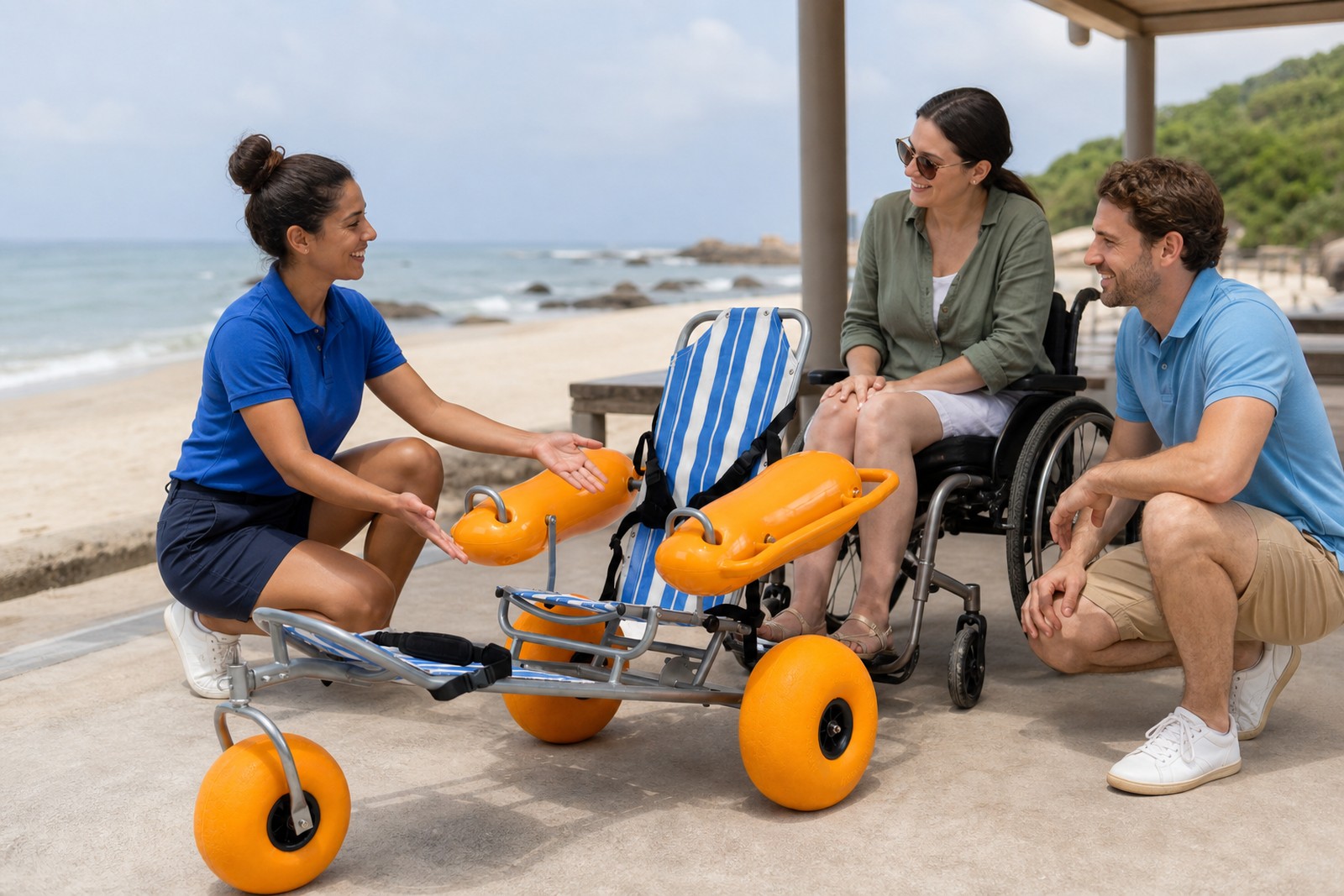
A beach wheelchair rental program should offer a booking and collection process that is visible, simple, accessible, and confirmed before the visitor reaches the beach. For example, record the pickup point and return deadline before booking.
What information belongs in the request form?
Collect only useful details: Ask for date, time, contact method, chair type, transfer considerations, destination, and companion information. Avoid turning an accessibility request into an unnecessary medical interview.
- Requested date and time.
- Preferred chair or destination.
- Transfer and support preferences.
- Contact and arrival details.
How should the handoff work?
Make arrival predictable: Use a firm, level pickup area near the accessible route, review controls with the user, and confirm the planned return time. The rental project example shows why handoff and return deserve explicit planning.
Key Takeaway: A clear booking protects the guest’s time and helps staff prepare the correct setup.
| Planning Area | Practical Check |
|---|---|
| Booking Stage | Confirmation |
| Request | Equipment and time |
| Pickup | Fit, route, and support |
The fewer surprises at arrival, the calmer the beach experience becomes.
What Safety Checks Belong Before Each Rental?
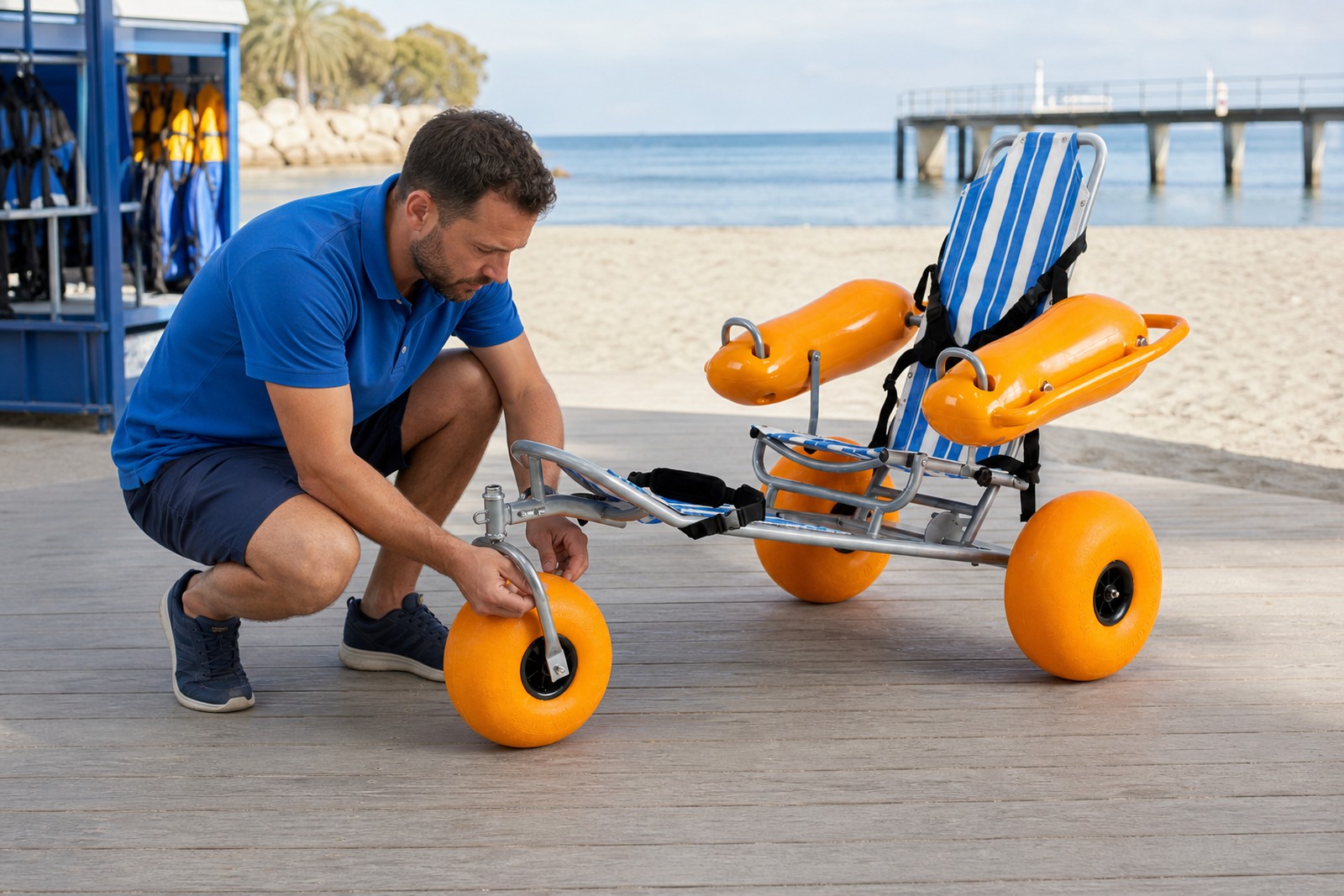
A beach wheelchair rental program needs a repeatable pre-use check covering the chair, route, weather, staffing, and guest comfort. Meanwhile, keep condition checks tied to the exact chair.
What should the chair inspection cover?
Use the same sequence every time: Inspect wheels, attachment points, frame locks, seat materials, belts, foot support, brakes, and attendant handles. Record faults and remove equipment from service when controlled movement is uncertain.
- Wheel condition and attachment.
- Frame joints and fasteners.
- Seat, belt, and footrest.
- Brakes and attendant controls.
What should stop a rental?
Create a calm pause rule: Pause for damaged equipment, unsafe heat, storms, severe surf, blocked routes, insufficient trained staff, or guest discomfort. A respectful delay is better than improvising after the guest is seated.
Key Takeaway: A brief documented check gives every staff member the same go-or-pause standard.
| Planning Area | Practical Check |
|---|---|
| Check Area | Pause Signal |
| Chair | Loose or damaged part |
| Route | Hazard cannot be bypassed |
Consistent checks protect visitors and make maintenance records more useful.
How Should Staff Support Sand Travel?
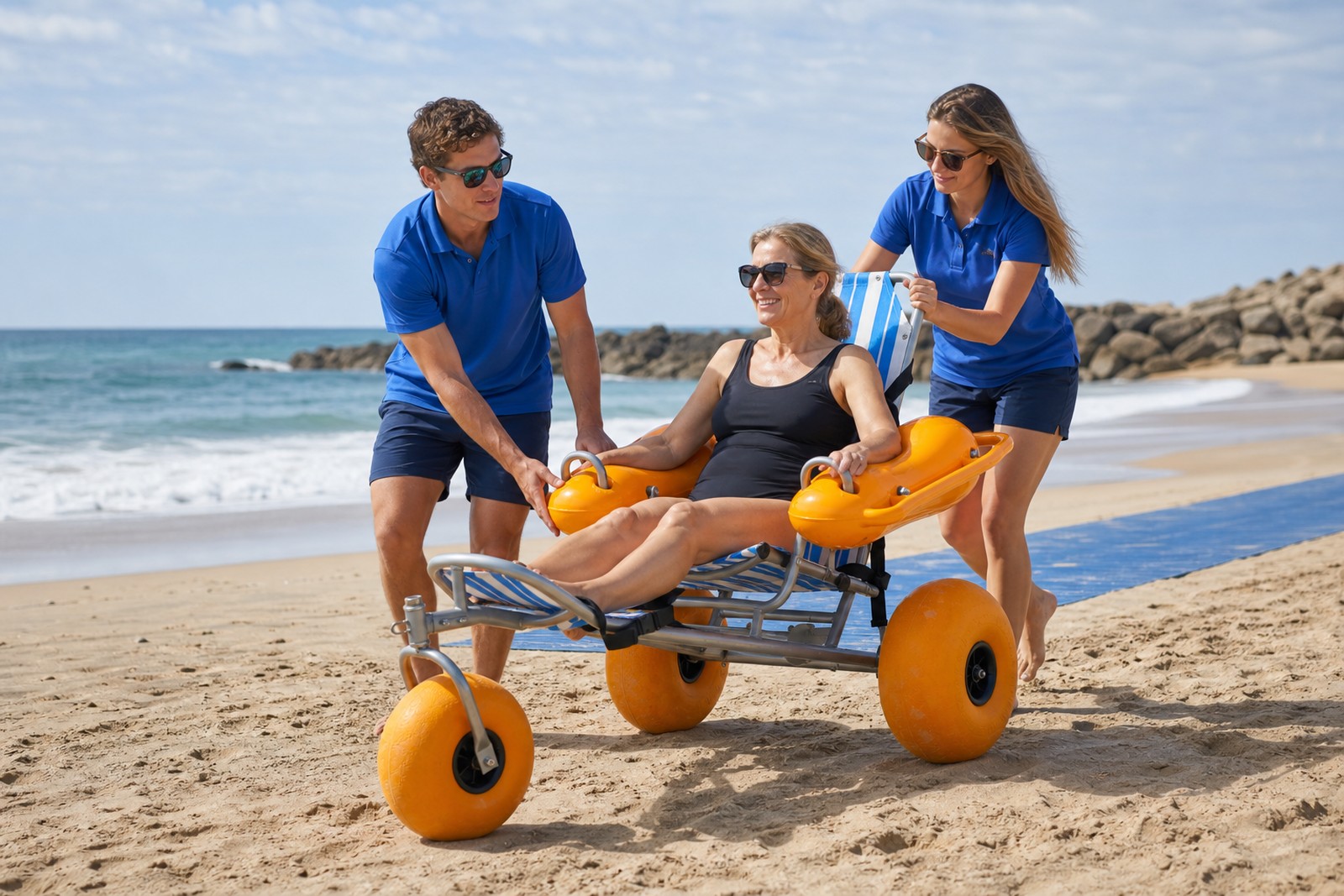
A beach wheelchair rental program works best when staff choose the firmest route, communicate each movement, use broad turns, and add a second attendant when conditions require it. As a result, each handoff has a clear owner and stop rule.
Where possible, connect pickup and beach staging through an accessible beach mat or another defined firm route.
What handling habits reduce effort?
Smooth movement beats force: Keep a steady walking pace, avoid pivoting in deep sand, approach gentle slopes straight on, and tell the passenger before changing direction. Route choice often matters more than pushing strength.
- Use broad turning arcs.
- Avoid steep side slopes.
- Pause before direction changes.
- Assign a spotter in busy areas.
When is a second attendant useful?
Set the threshold before opening: Long sand routes, mild gradients, crowded access points, heavier loads, or complex transfers may justify two trained attendants. Local operating rules should define this before bookings begin.
Key Takeaway: Planned technique makes movement more predictable for both guest and staff.
| Planning Area | Practical Check |
|---|---|
| Terrain Move | Preferred Method |
| Turn | Use a broad arc |
| Slope | Approach straight with support |
A written handling method reduces variation between staff shifts.
How Do You Store and Transport Rental Chairs?
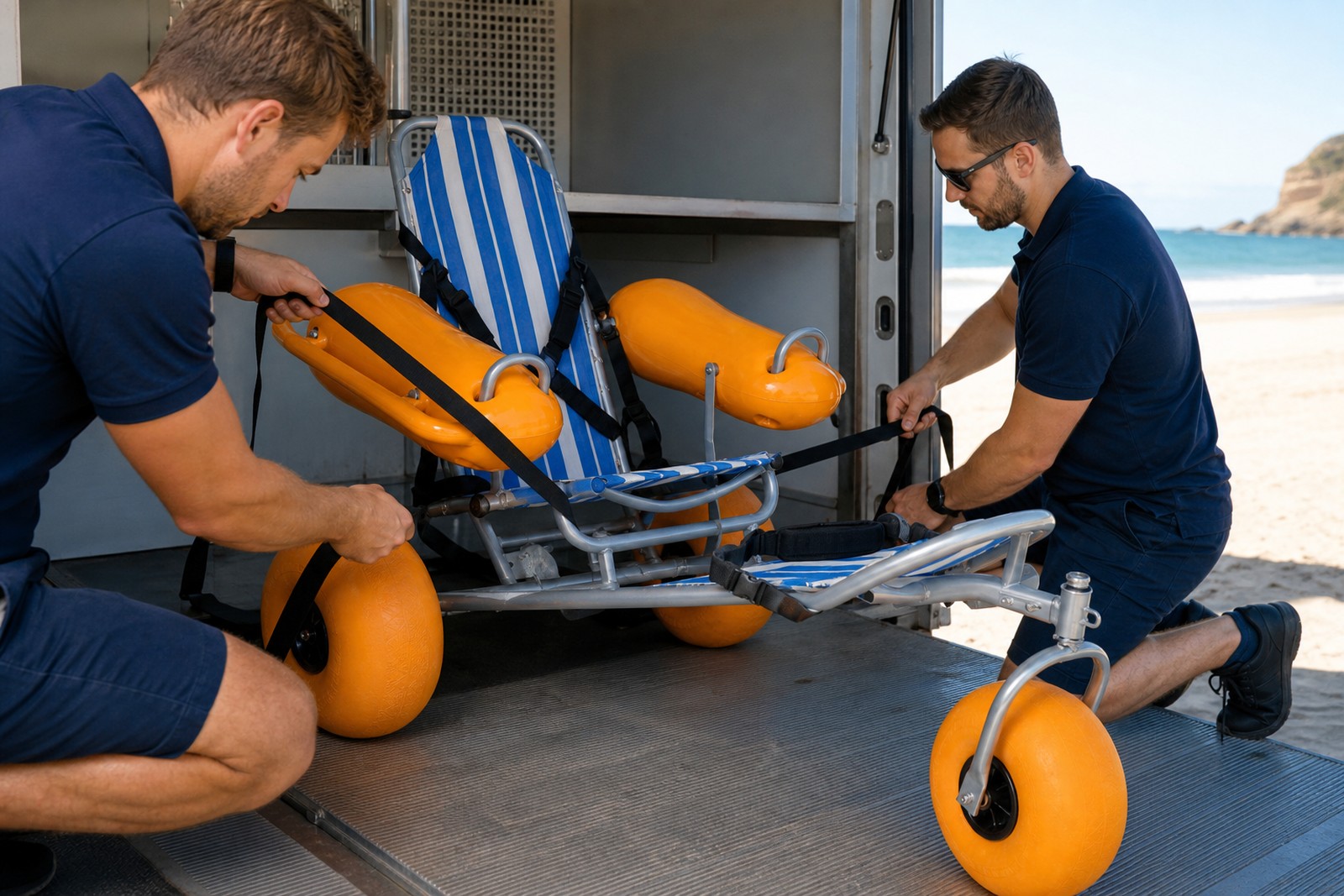
A beach wheelchair rental program should store chairs clean, dry, secure, and close enough to the service point for reliable daily deployment. Afterward, record damage, cleaning, and storage status.
For smaller vehicles or seasonal sites, compare storage needs with a lightweight folding beach wheelchair.
What should happen before transport?
Prepare the chair in stages: Remove loose sand, secure detachable parts, protect controls from cargo movement, and follow safe lifting practice. Measure vehicle openings and storage racks before choosing a fleet.
- Brush away loose sand.
- Secure wheels and folding sections.
- Protect straps and controls.
- Use team lifting when required.
What makes a practical storage area?
Readiness matters every morning: Choose a shaded, ventilated location with room for inspection, rinsing supplies, booking records, and out-of-service tags. Equipment should never block the accessible route.
Key Takeaway: Good storage protects equipment while shortening opening and closing routines.
| Planning Area | Practical Check |
|---|---|
| Storage Factor | Preferred Setup |
| Moisture | Dry before enclosure |
| Access | Near the pickup point |
The right storage room supports both protection and fast service.
How Do You Maintain a Rental Fleet?
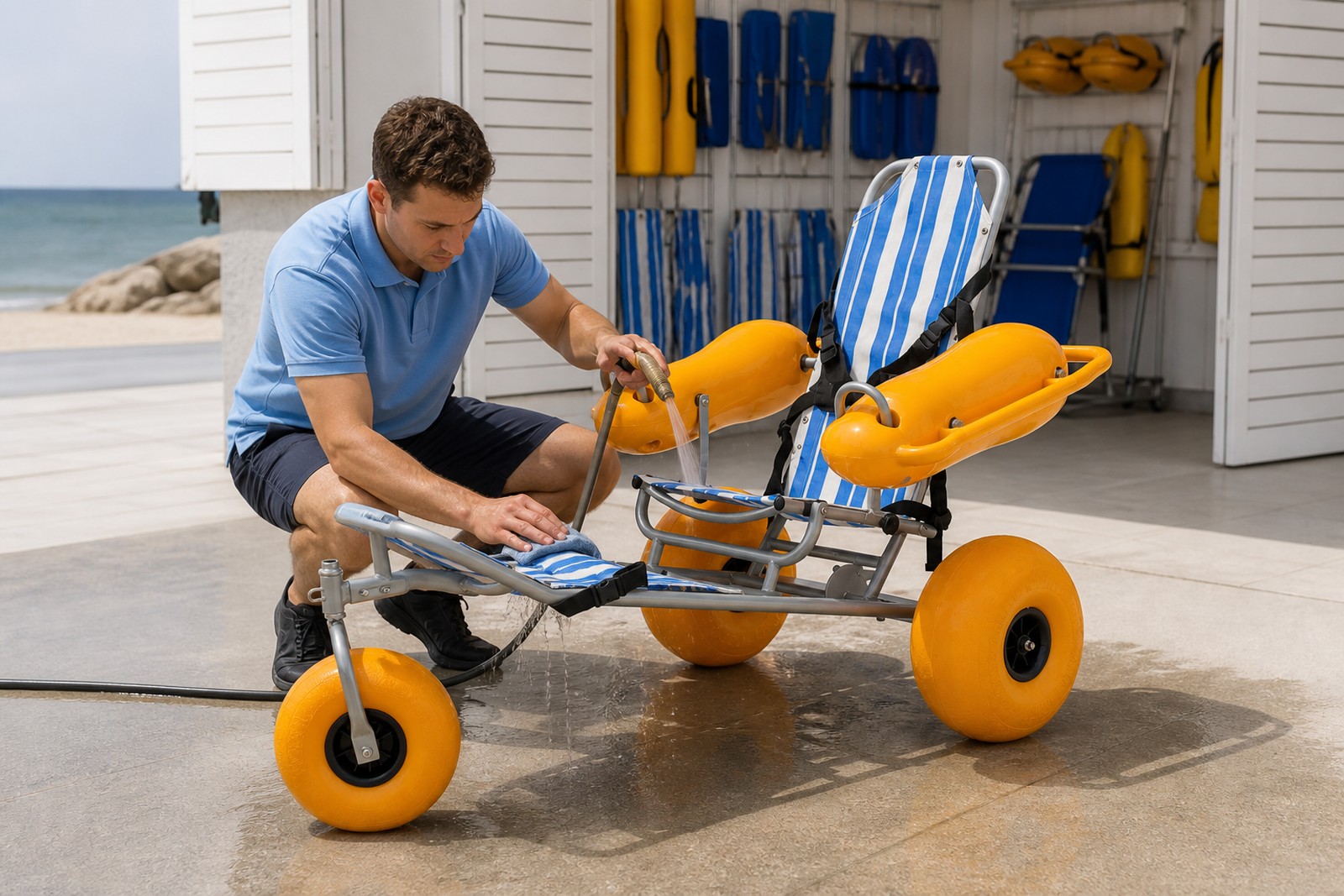
A beach wheelchair rental program needs fresh-water rinsing, drying, inspection records, scheduled service, and clear rules for removing damaged chairs from use. Also, review repairs and downtime before returning a chair to service.
What belongs in the return routine?
Make care part of every booking: Rinse salt and sand from wheels, lower frames, joints, floats, and fabric areas as appropriate. Dry the chair, inspect high-contact parts, and record anything that changed during use.
- Rinse coastal residue.
- Dry frame and seating surfaces.
- Check fasteners and moving parts.
- Record faults before storage.
How should managers track condition?
Simple records reveal patterns: Use a chair ID, date, user session, inspection result, repair action, and return-to-service approval. The maintenance guide offers useful context for coastal care planning.
Key Takeaway: A documented return routine reduces surprise downtime during busy periods.
| Planning Area | Practical Check |
|---|---|
| Record | Operational Value |
| Inspection log | Shows recurring wear |
| Service status | Prevents accidental use |
Maintenance data helps managers plan parts, staffing, and fleet replacement.
How Do You Launch a Better Rental Program?
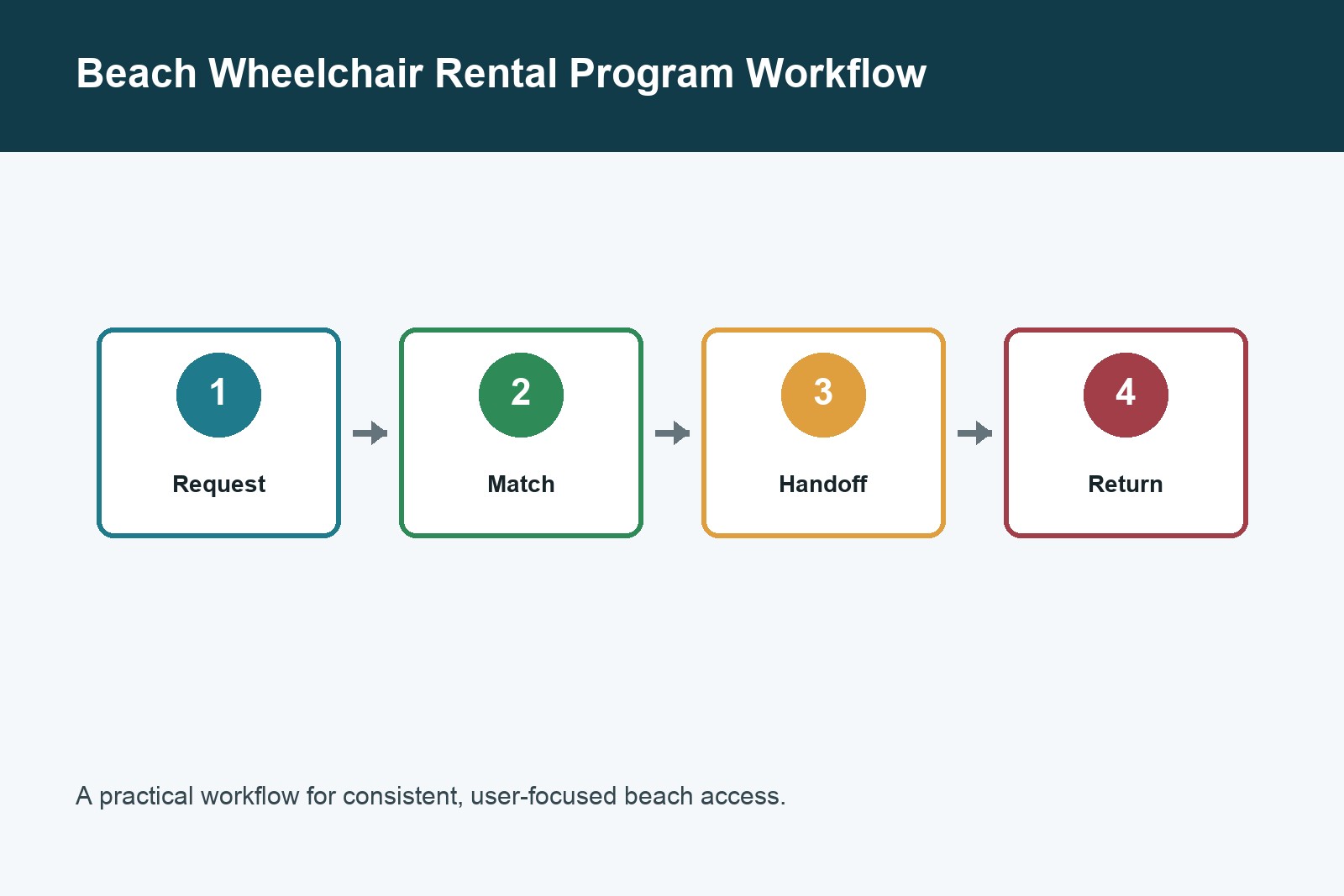
A beach wheelchair rental program should launch with a mapped route, suitable fleet, trained team, visible booking method, maintenance plan, and feedback process. Finally, use real service records to improve the next operating cycle.
What belongs in the launch checklist?
Test the whole experience first: Run a staff rehearsal from parking and pickup through sand travel, return, rinsing, and storage. Invite accessibility advisers or users to identify barriers that equipment-focused testing may miss.
- Route and pickup test.
- Equipment and transfer rehearsal.
- Booking communication review.
- Return and maintenance drill.
What should managers improve over time?
Use every season as evidence: Review missed requests, route changes, repair logs, staff feedback, and user comments. You can contact us today to discuss a fleet and operating plan. Better beach access should be measured by confident participation, not equipment sitting in storage.
Key Takeaway: A complete launch solves access, operations, communication, and equipment care together.
| Planning Area | Practical Check |
|---|---|
| Program Area | Success Signal |
| Guest access | Clear, usable request |
| Operations | Repeatable staff workflow |
This final review keeps the program centered on people and dependable service.
FAQ
Can I reserve a beach wheelchair before arriving?
Yes, when the site offers advance booking. Confirm the chair type, pickup location, support arrangements, operating hours, and return time before travel.
What’s the best chair for a public rental program?
The best fleet matches local terrain and user needs. Many sites combine dry-sand, lightweight, or floating models instead of relying on one chair.
How do I know if two attendants are needed?
Use a written site rule. Route length, slopes, user support needs, chair handling, and staff capability should guide the decision.
Can rental chairs be used in seawater?
Only approved water models should enter water. Dry-sand chairs and floating chairs have different operating limits, so follow the product instructions.