
A requisition for a “12-inch beach wheel” can produce two different inflated envelopes before the supplier even asks about the axle. Start with the wheel position and cart revision. If the old tire is worn out, retain the hub, insert and hardware as references. Photograph each side before removing anything under the equipment’s instructions.
Read the two 12-inch listings side by side
| Manufacturer’s listed field | 12-inch PU | 12-inch PVC |
|---|---|---|
| Inflated outside diameter | 315 mm | 300 mm |
| Tire width | 162 mm | 140 mm |
| Bore information | 8.5 mm listed, with bushing options | Bore options listed without a numerical range for this size |
| Wheel load information | 80 kg in the wheel table | No numerical wheel rating in this row |
| Still needed for a purchase | Finished bore with ordered insert, axial hub length, offset, hardware and host approval | Finished bore and hub drawing, load conditions, hardware and host approval |
These figures come from the manufacturer’s current beach balloon wheel specification table. Tire width is measured across the tire. It does not tell you the distance between the two hub seating faces. The manufacturer notes that inflated dimensions can vary with pressure and temperature. Ask for the applicable dimensions and tolerances on the offered wheel drawing.
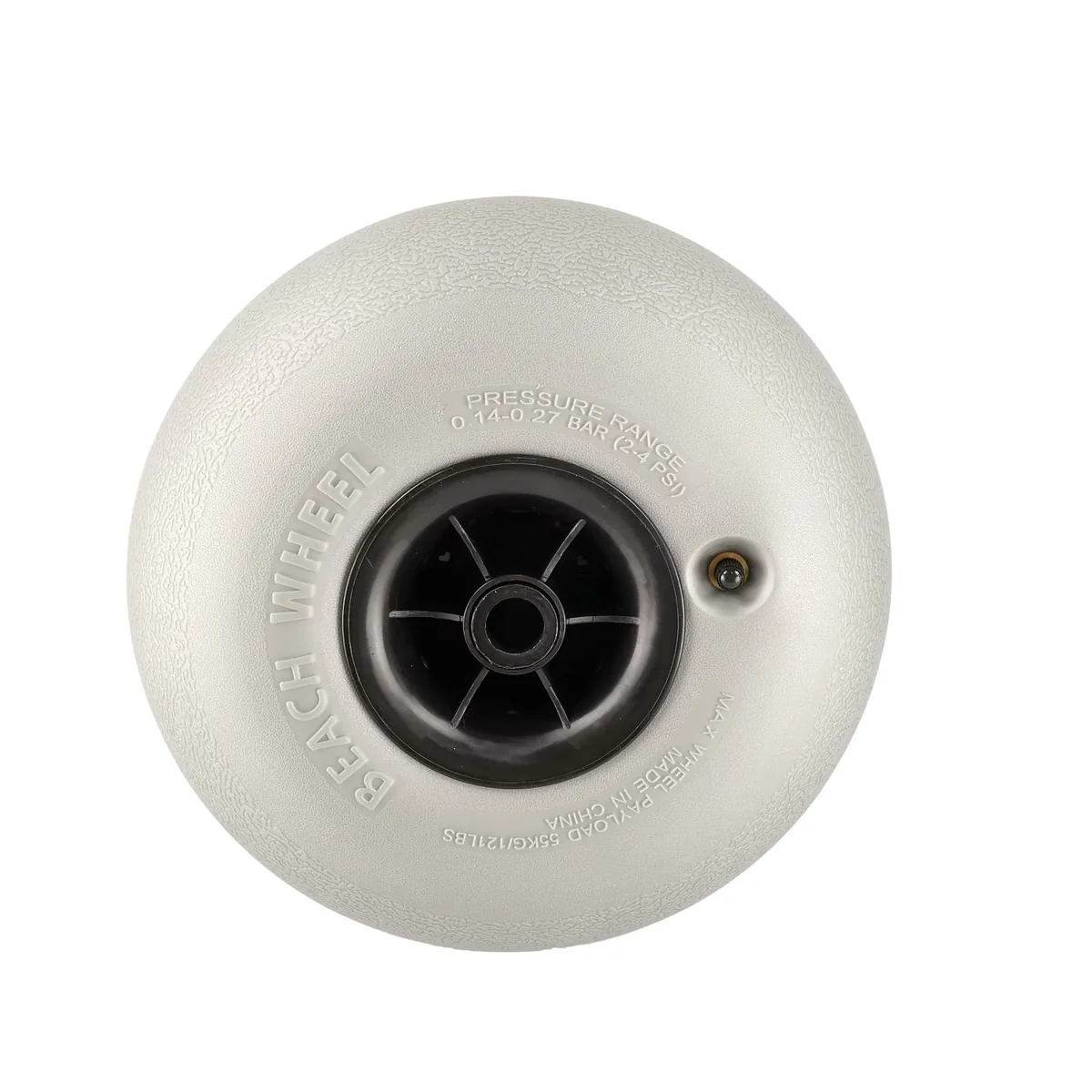
Check the space before choosing a material
The listed PU tire is 22 mm wider and 15 mm larger in diameter than the listed PVC tire. If both tire centerlines occupy exactly the same position, the extra width would extend about 11 mm farther on each side. A hub with a different offset changes that distribution. Use the calculation to identify where to measure, then verify the actual tire position at the tub, frame, fork or moving part.
Measure the nearest obstruction at the point the tire passes it, through the movements permitted for that equipment. Check the assembled cart’s outer width at its narrowest entrance. A wheel can clear the tub while putting the outside of the cart too close to the gate. Inspect a sample empty using the intended insert and hardware. If it rubs, leaves insufficient clearance or cannot be retained as documented, stop the check and refer the discrepancy.
Check the axle, insert and retainer as one stack
Measure the axle diameter on the mounting surface and the usable distance from the inner locating face to the retention feature. Identify any sleeve or bearing, washers and spacers and the order they occupy. Request the proposed wheel’s axial hub length and seating faces from the supplier. A quoted 8.5 mm bore with an unspecified bushing option is not confirmation for a different measured axle. The axle-fit guide sets out the measurement record.
Finally, compare the finished drawing with the actual equipment order. The standard two-wheel beach cargo cart is advertised with 12-inch balloon wheels and a 75 kg cargo rating. Its page does not establish that either loose wheel above fits every revision. Nor does the 80 kg PU wheel figure alter the complete cart’s rating. Order against the cart ID, wheel position, material, matching hub and supplier-confirmed assembly reference.