
A public works inspector can accept the mat sections on the delivery list and still reject the installed entrance. The boardwalk may end above the supported mat, a runoff channel may undercut its edge, or a service vehicle may need to cross the join. Write the work order around the ground and the connections the crew must deliver. Reserve acceptance of the finished reach until the inspector can see it in place.
Set out the works before the rolls arrive
Fix the start and finish to landmarks the crew can find after the sand has shifted. Record levels, slopes, surfaces, drainage, fixed points, utilities and shore change. Mark the direction of travel and service crossings. Where the site has underground services, a protected area or a drainage outlet, have the responsible authority confirm the limits before specifying ground disturbance or fixings.
Obtain the offered mat and connector detail. A purchase description such as “modular beach mat” does not establish the permitted fixing method, any need for support at a timber edge or the tolerance for the completed joint. Ask the designer or supplier to resolve those points on the drawing. Put sand preparation, threshold work, drainage responsibility, installation and reinstatement on separate cost lines. Assign any scope gap before tenders close.
Inspect what will be covered and what visitors will cross
| Inspection point | Evidence for the public works file |
|---|---|
| Existing ground and runoff | Dated survey and photos of discharge points, rutting, ponding or past scour. Identify unknown conditions and the person authorized to revise the detail. |
| Prepared approach | Before-covering photo and check against the approved support profile, footprint and any buried-work restrictions. |
| Boardwalk-to-mat connection | Installed end detail, actual surface levels and contact across the width, checked from the beach and the landward approach. |
| Joints and service crossing | Mat section IDs, connection reference and any agreed crossing protection. Record how traffic will be controlled during and after the work. |
| Final extent | As-installed plan, finished endpoint, observed defects and the party responsible for the next inspection. |
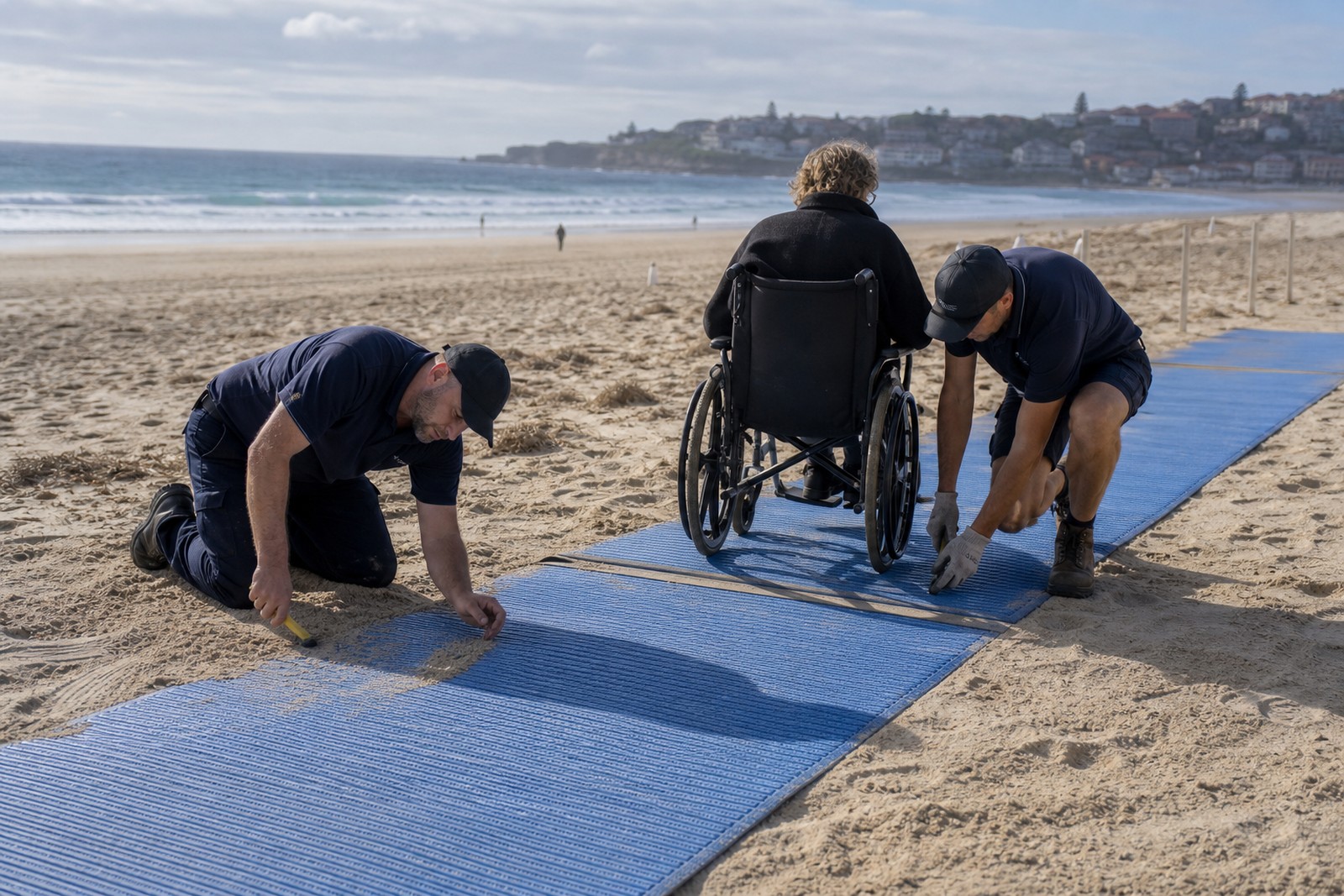
Time inspections so the crew can still correct concealed work. If runoff crosses the proposed line after rain, record its path and ask the project lead whether drainage or alignment needs revision. Laying another section over a washed-out patch leaves the underlying loss of support unresolved. Keep the public detour and work barriers in place while the responsible team reviews the condition. The boardwalk connection design brief lists the details a revised drawing should identify.
Separate the defect notice from public release
For example, suppose the landward end was installed to the agreed drawing but the outer edge now moves where a maintenance cart turns. Mark the affected reach on the plan, photograph the movement from a stable reference and record the traffic arrangement in effect. Ask the contractor and designer to examine the support and joint. Set a reinspection after the agreed correction. A new photograph of the rolled replacement in the yard does not close an installed defect.
At handover, give parks staff the accepted reach, unresolved work and any conditions that trigger an inspection after rainfall or vehicle access. Identify who handles a new civil works defect and who can suspend visitor use while it is examined. Attach the inspection record and approved revisions to the operating handover. Parks can then make its opening decision against the actual installation and its own staffing and site conditions.