
A lightweight beach wheelchair is easy to move when its approved handling method, folded form, removable parts, route access, vehicle fit, storage layout, and staff checks work as one repeatable system. Weight language alone does not show where staff can grip the frame, how many people a local policy assigns, whether wheels travel separately, or whether the folded chair clears a doorway. Those details matter to resort, rental, municipal, distributor, and recreation teams that move equipment between storage, vehicles, boardwalks, and sand. This guide shows how to review a lightweight beach wheelchair through observable tasks and current supplier records without inventing dimensions, capacities, or labor claims.
What does lightweight mean for a coastal fleet?
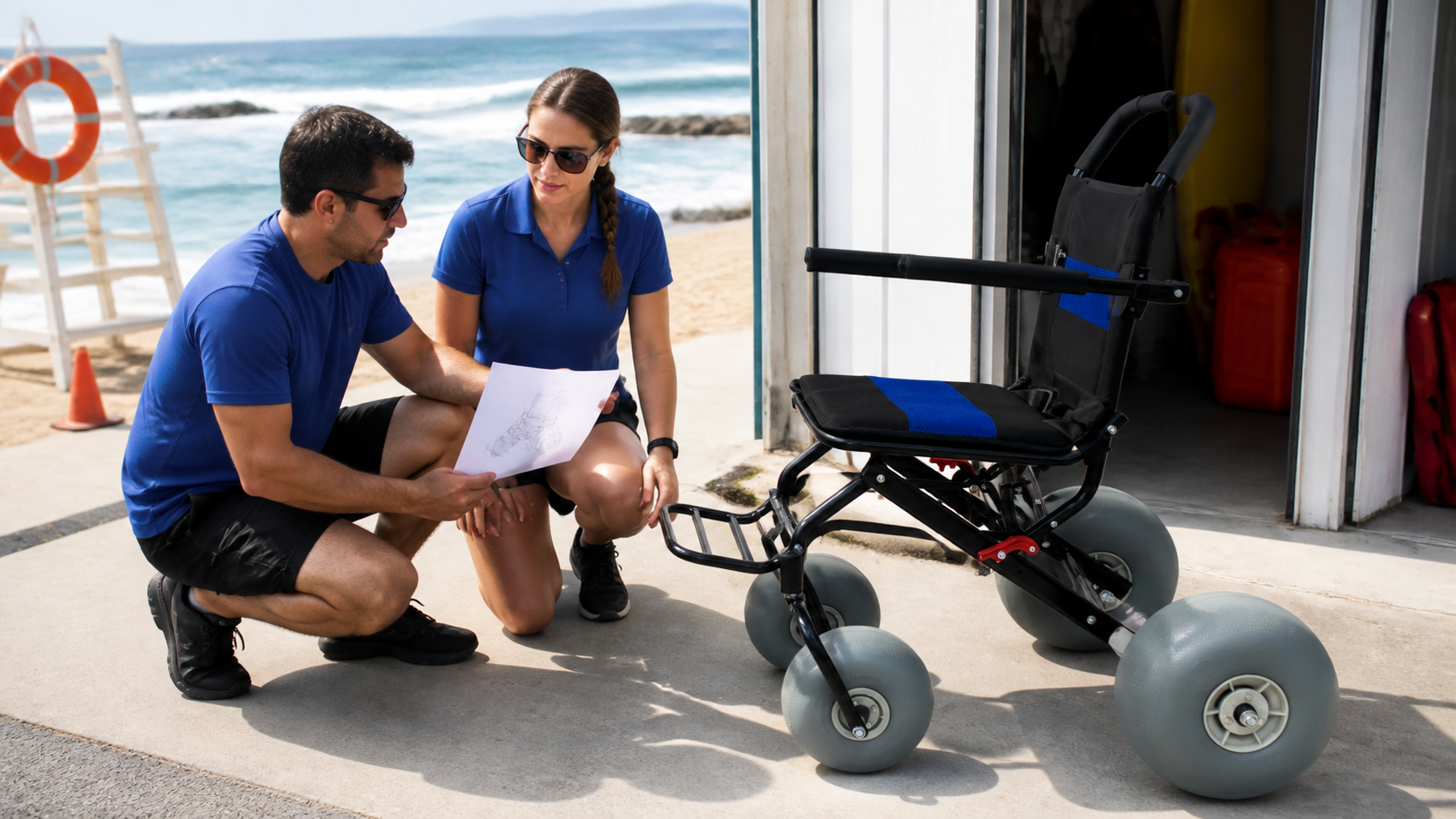
A lightweight beach wheelchair should be treated as a model-specific equipment claim that must connect with lifting points, folded dimensions, balance, removable parts, staff roles, and route conditions. A lower stated mass may help one task yet say little about bulky wheels, awkward turns, loading height, wet returns, or the space required to unfold and check the chair. For example, the Padre Island guidance shows why local device and route limits matter.
Translate weight language into staff tasks
Here’s the practical point: request the exact configuration weight and the state in which it was measured, then compare that record with the real workflow. A chair may move assembled, folded, or partly disassembled at different points. Write down who handles each state, which tools or parts are involved, and where the task happens.
- Match every figure to model and configuration.
- List assembled, folded, and approved removed-part states.
- Record grip points, route, and staff role for each state.
- Keep any unsupported handling claim out of the buying brief.
Key Takeaway: Lightweight language becomes useful only when it maps to observable fleet tasks.
| Review area | Working record |
|---|---|
| Product record | Model, configuration, and measured state |
| Task record | Grip, route, staff role, and chair state |
| Decision | Suitable, question, change, or hold |
The task map reveals whether lower mass addresses the facility’s real bottleneck.
How should teams verify carry and lift instructions?
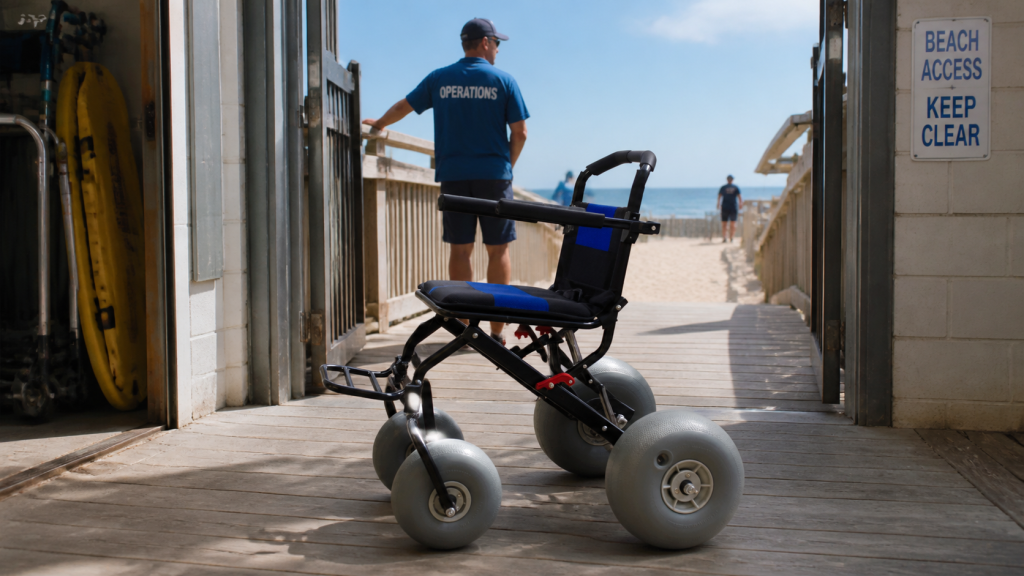
A lightweight beach wheelchair should be carried or lifted only through grip and support points named for the exact model, using staff roles that match current instructions and local workplace rules. Armrests, foot supports, wheels, fabric, or folding tubes may look convenient, yet appearance does not establish that they are approved lifting points.
Test approved grip points on firm ground
The handling test: start with a clean, empty chair on level firm ground. Review the sequence line by line, identify pinch areas and loose parts, then conduct a controlled dry practice. Stop when balance, hand placement, visibility, or team coordination becomes unclear. Record the question and obtain a written answer before adding the method to training.
- Identify approved grip and support points.
- Name chair state and staff roles before movement.
- Check hand clearance, balance, and loose components.
- Record a pass, change, question, or hold result.
Key Takeaway: A dry practice turns handling language into a repeatable workplace method.
| Review area | Working record |
|---|---|
| Carry detail | Review |
| Grip | Approved points and hand clearance |
| Chair state | Open, folded, or approved parts removed |
| People | Named roles and stop signal |
The review should favor clarity and control rather than speed.
What folded dimensions matter for vehicles and doors?
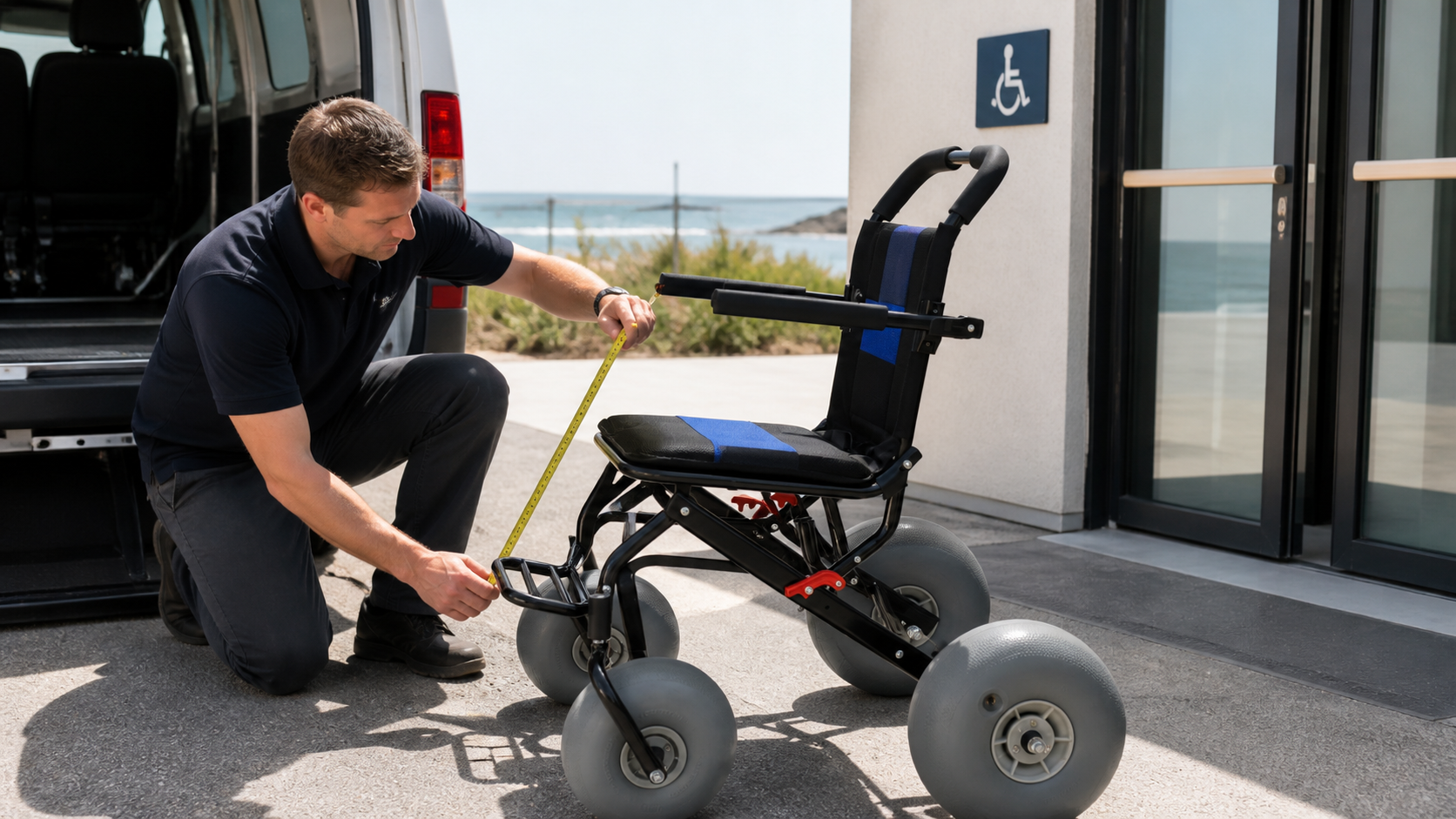
A lightweight beach wheelchair needs folded dimensions that work with doors, turns, lifts, vehicle openings, cargo space, restraint access, and staff hand clearance. A width or length value alone may miss protruding wheels, handles, foot supports, packaging, and the space needed to rotate or place the chair without impact.
Measure the whole movement envelope
The space rule: use current product drawings and measure the real path from storage bay to final unloading point. The portable beach wheelchair application provides a helpful setting for the discussion, while each facility still needs its own measurements. Record the chair state tied to every value and leave room for handling, protection, and inspection.
- Measure doors, corners, lifts, ramps, and vehicle openings.
- Record the approved chair state at each handoff.
- Include hand clearance and turning space.
- Check unloading and setup space at the destination.
Key Takeaway: Folded fit is a route calculation, not one product dimension.
| Review area | Working record |
|---|---|
| Space group | Record |
| Product | Folded form and protruding parts |
| Facility | Door, corner, lift, and bay |
| Vehicle | Opening, cargo, restraint, and unload path |
A movement envelope catches conflicts that a storage footprint can hide.
How do removable parts change the handling plan?
A lightweight beach wheelchair with removable parts needs a handling plan that covers the approved removal order, part identification, protected storage, transport, reinstallation, and release check. Taking off a wheel may reduce package size, but it creates work around retainers, axle protection, orientation, contamination, mixed parts, and post-transport inspection.
Control removal, storage, and reassembly
The parts view: keep each removed wheel, support, retainer, tool, or accessory linked with the chair ID. Use closed labeled containers where small hardware could be lost, and avoid wrapping damp parts in a way that traps moisture. Staff should not substitute a similar-looking component unless supplier records confirm compatibility.
- Follow the stated removal and reinstallation sequence.
- Label every removed item by chair ID.
- Protect hubs, axles, valves, and contact surfaces.
- Complete the documented setup check after transport.
Key Takeaway: Removable parts help portability only when control and reassembly remain dependable.
| Review area | Working record |
|---|---|
| Handoff | Control |
| Removal | Order, tools, retainers, and chair ID |
| Transport | Protection and part location |
| Reassembly | Fit, inspection, and release status |
A smaller package can create a larger process if parts control is weak.
What route details affect day-to-day movement?
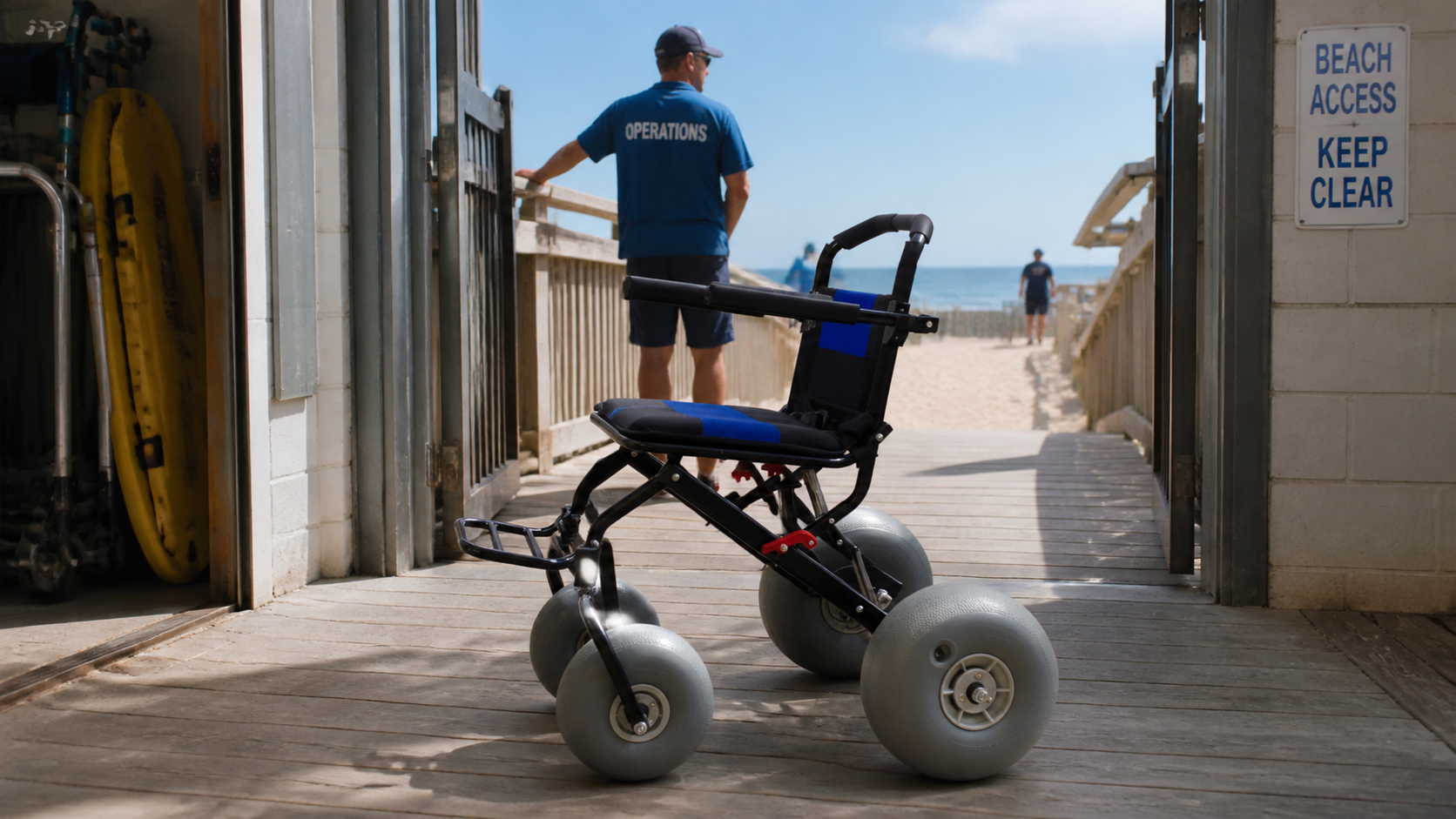
A lightweight beach wheelchair moves more easily when the planned route accounts for door width, turns, ramps, boardwalk joints, gates, loose sand, wet sand, slopes, pause points, vehicle handoffs, rinse access, and the return to storage. Portability across a corridor does not prove suitable movement across a beach route. Then record each join with an accessible beach mat.
Walk the full equipment path
What does that mean on site? map every state change: stored, carried, rolled, loaded, unloaded, assembled, checked, used, returned, cleaned, and stored again. The lightweight travel project offers relevant program context. Local measurements and controlled practice should still define the operating method.
- Map surfaces, turns, gates, ramps, and handoffs.
- Mark where the chair changes state.
- Name pause, cleaning, drying, and hold areas.
- Record route changes that trigger a new review.
Key Takeaway: Route mapping connects portability claims with the actual daily equipment path.
| Review area | Working record |
|---|---|
| Route point | Question |
| Storage exit | Can staff approach and turn? |
| Vehicle handoff | Can the chair be protected and restrained? |
| Beach access | Does the planned method match the surface? |
The complete loop often reveals more than the outbound trip alone.
How should storage support quick deployment?
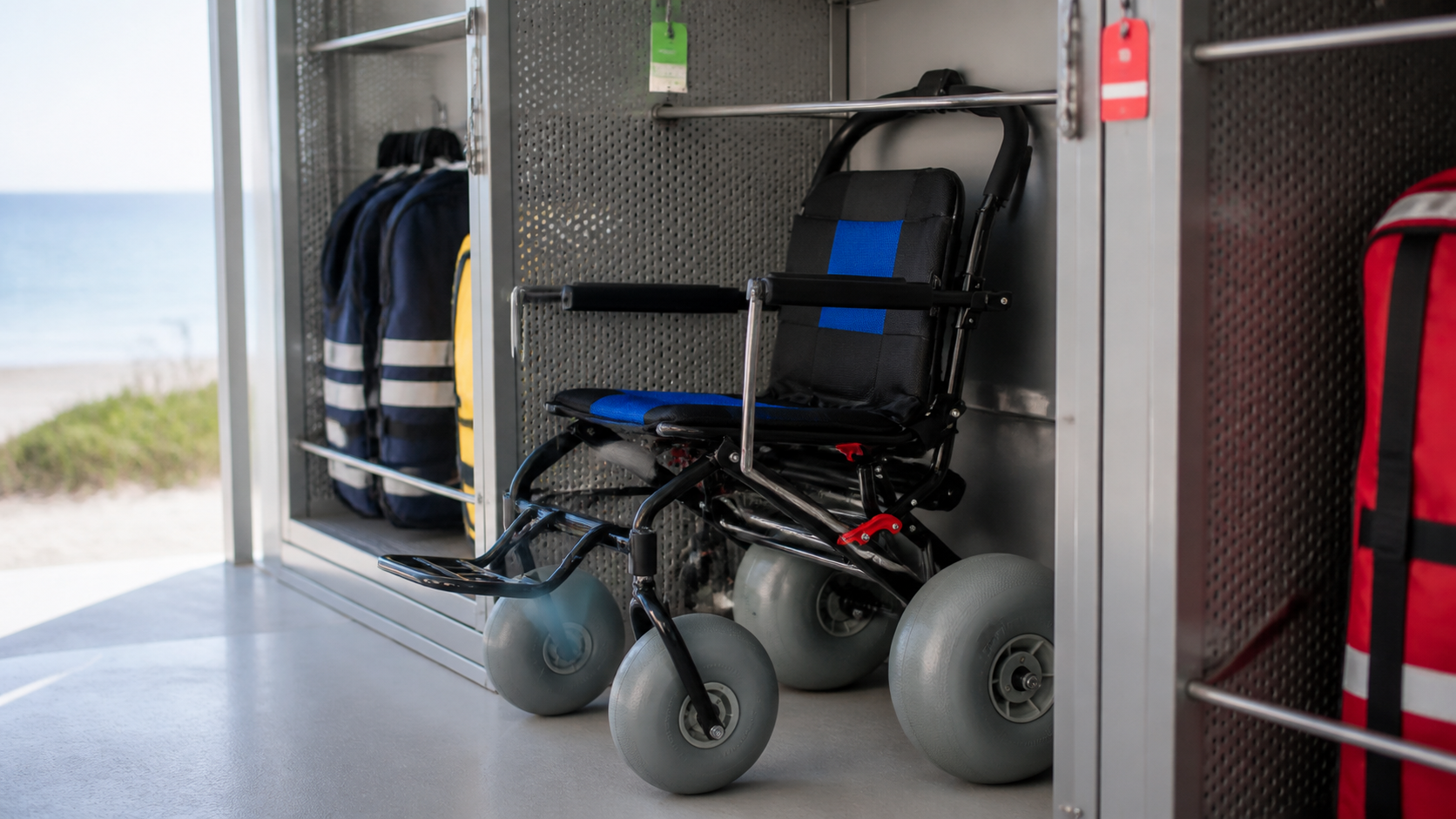
A lightweight beach wheelchair should be stored in an approved state that is clean, dry, stable, protected, easy to identify, and accessible for retrieval and inspection. Tight stacking may save floor space while slowing staff, hiding status tags, pressing cables or fabric, mixing parts, or making the chair hard to remove without shifting other equipment.
Create a chair-specific ready bay
The storage test: place the complete chair set in its proposed bay and rehearse retrieval, setup, inspection, and return. The bay should support ventilation and keep wheels, frame, armrests, handles, foot platform, hardware, documents, and removed parts protected. A visible ready, hold, cleaning, or service status prevents guesswork during a busy handoff.
- Support the chair only at stated points.
- Keep ID, status, and inspection access visible.
- Store removed parts with the matching chair.
- Separate clean-ready equipment from wet returns.
Key Takeaway: A ready bay should support retrieval and inspection, not merely compact placement.
| Review area | Working record |
|---|---|
| Bay feature | Operational use |
| Access | Approach, grip, turn, and retrieval |
| Protection | Stable support and part separation |
| Status | Ready, hold, cleaning, or service |
A short retrieval rehearsal can expose layout problems before the busy season.
What receiving checks confirm the supplied setup?
A lightweight beach wheelchair receiving check should confirm model, configuration, visible condition, components, documents, folding sequence, wheel fit, locks, supports, controls, and empty-chair movement before fleet release. A shipping label and complete carton count cannot show whether the delivered options match the handling plan.
Match delivery with the exact order
The receiving detail: assign each chair an ID as the package is opened, then keep parts and records with that ID. Compare the delivered chair with the quotation and drawing. Assemble and fold only through current instructions. Photograph visible discrepancies for the internal record and place the chair on hold when a part, step, or document does not match.
- Match model, options, and visible identifiers.
- Account for wheels, retainers, supports, tools, and records.
- Run stated opening, folding, and empty-chair checks.
- Record ready, hold, or service status.
Key Takeaway: Receiving checks confirm that the delivered chair matches the planned workflow.
| Review area | Working record |
|---|---|
| Check group | Evidence |
| Order | Model, configuration, options, and quantity |
| Product | Visible condition, parts, and functions |
| Release | Chair ID, reviewer, and status |
This baseline also makes later service records easier to interpret.
How can teams track parts and service records?
A lightweight beach wheelchair fleet should track chair ID, model, revision, wheels, retainers, supports, straps, tools, inspections, cleaning, faults, service actions, and release decisions. Similar-looking parts may differ by model or revision, and a compact chair can be stored away from its wheels or accessories during transport.
Give every chair a durable history
The record rule: keep the product, its removed parts, and its history linked through every handoff. The user manual page can support document access, but the fleet register should also show which revision governs each chair. Record who changed status and what evidence supported the change.
- Assign a chair ID and labeled part locations.
- Link document revision with the equipment record.
- Record faults, actions, dates, and release roles.
- Do not mix parts without confirmed compatibility.
Key Takeaway: A durable history protects portability from becoming part confusion.
| Review area | Working record |
|---|---|
| Record area | Entry |
| Identity | Chair, model, revision, and configuration |
| Parts | Wheel, retainer, support, tool, and location |
| Service | Fault, action, date, and release |
The register should follow the chair even when components travel separately.
What supplier questions reduce handling guesswork?
A lightweight beach wheelchair supplier should be asked for model-specific evidence covering weight state, dimensions, folding, locks, grip points, lifting method, wheel removal, reassembly, transport, storage, inspection, cleaning, parts, and service. Broad words such as portable or compact do not tell staff how to perform a task. Use the supplier overview to frame model-specific questions.
Ask for evidence tied to each task
For purchasing teams: frame questions around the daily sequence and request an answer that cites a current record. Ask what state the chair is in when a dimension is measured, which parts may be removed, what staff must check after reassembly, and where the chair can be supported during storage or travel. Keep unresolved replies visible in the buying file.
- Tie weight and dimensions to configuration and chair state.
- Request folding, grip, and wheel-removal instructions.
- Clarify storage, transport, parts, and service boundaries.
- Record answer source, revision, owner, and date.
Key Takeaway: Task-based supplier questions replace assumptions with usable fleet evidence.
| Review area | Working record |
|---|---|
| Task | Supplier evidence |
| Move | Grip points, chair state, and method |
| Fit | Current dimensions and drawings |
| Care | Inspection, cleaning, storage, and parts |
A clear question list also makes competing quotations easier to compare.
What workflow keeps transport steps repeatable?
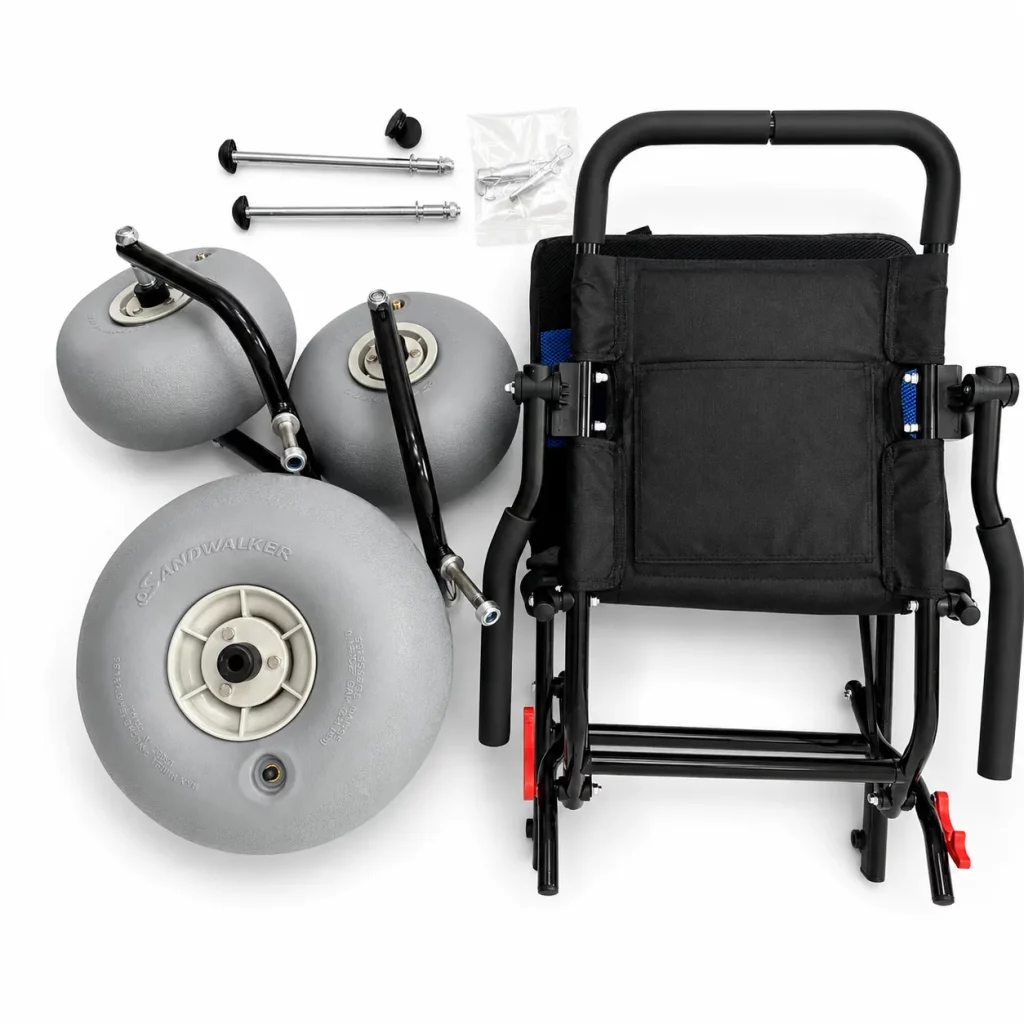
A lightweight beach wheelchair transport workflow stays repeatable when it moves through booking, retrieval, setup, release, folding, part control, loading, restraint, unloading, reassembly, inspection, use, return, care, and storage with a visible status at each handoff. The same staff member may perform several tasks, but the checks should not disappear. Also compare an all-terrain chair only through its own route trial.
Connect status with every chair state
The process point: define the chair state, owner, evidence, and stop rule for every stage. Keep ready equipment separate from returned or held equipment. A change in vehicle, chair configuration, route, storage bay, supplier instruction, or staff method should trigger a focused workflow review before the new method becomes routine.
- Name chair state and owner at each handoff.
- Link removed parts with the chair ID.
- Repeat setup and release checks after travel.
- Record changes that trigger a workflow review.
Key Takeaway: A status-based workflow makes portable equipment dependable across handoffs.
| Review area | Working record |
|---|---|
| Stage | Required status |
| Load | Checked, folded, protected, and complete |
| Unload | Reassembled and inspected |
| Return | Tagged for care before ready storage |
The diagram exposes gaps that a single portability figure cannot show.
Closing Notes
Easy movement comes from the full operating chain: documented handling, verified fit, controlled parts, mapped access, prepared storage, receiving records, service tracking, clear supplier answers, and repeatable handoffs. Treat every weight or folded-size figure as model-specific data from a current source. For help matching a chair with your route and transport setting, contact us with your door, vehicle, storage, handling, and document questions.
Frequently Asked Questions
Can I judge portability from product weight alone?
No. Review grip points, folded shape, balance, removed parts, staff roles, doorways, vehicle fit, and setup work.
What’s the best way to check vehicle fit?
Measure the real opening, cargo area, loading path, restraint access, and handling clearance against current product data.
How do I know if wheels can be removed for transport?
Check the exact model instructions. Use only the stated removal, storage, reinstallation, and inspection method.
Can one employee move the folded chair?
Only if current instructions and local workplace rules support that method after a controlled task review.
What’s the best setup record after transport?
Record frame opening, locks, wheels, retainers, supports, visible hardware, empty-chair movement, and ready or hold status.