The best floating beach wheelchair workflow connects site limits, current product instructions, trained staff roles, pre-use checks, guest communication, controlled water entry, return care, and recorded release. A floating chair is not a self-running water service. Shoreline conditions change, equipment states change, and each handoff needs a clear owner and stop decision. Resorts, water parks, municipalities, rental operators, and recreation programs can reduce uncertainty by mapping the complete service loop before accepting bookings. This guide explains how to plan a floating beach wheelchair program without inventing flotation ratings, medical outcomes, staffing ratios, or water-condition limits. The exact chair manual, local policy, venue rules, and current conditions must govern each session.
What site conditions shape a floating beach wheelchair program?
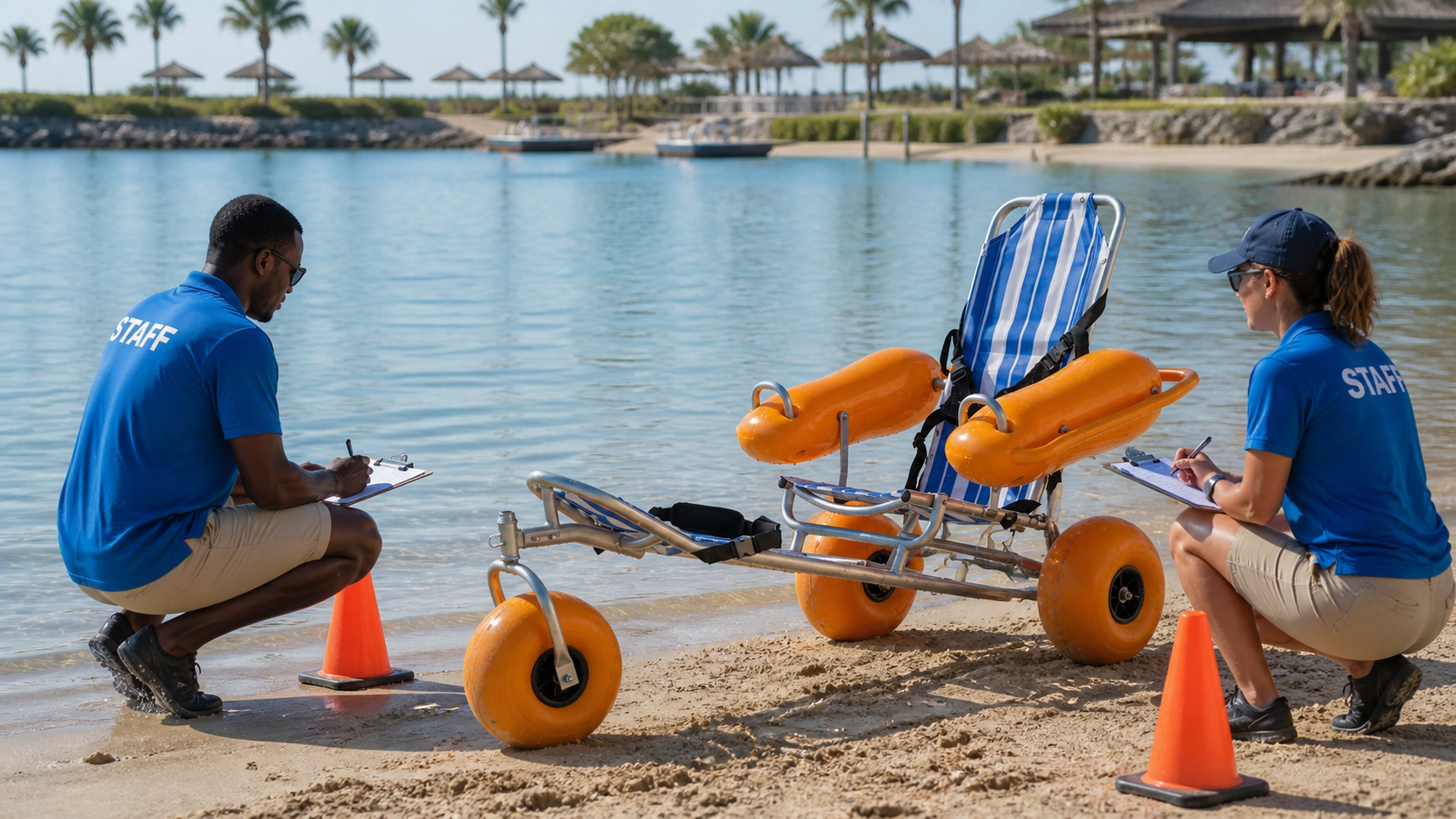
A floating beach wheelchair program should operate only within site conditions supported by current product instructions, venue rules, local policy, trained staff, and a same-session condition review. The service area includes storage, transfer space, firm paths, sand, water entry, the managed water zone, exit, care station, and return route. For U.S. sites, NOAA tide predictions can inform a timed review, while present conditions still control service.
Map the complete land-and-water service area
Here’s the practical point: map fixed features and changing conditions separately. Fixed items include gates, ramps, surface changes, steps, access width, drainage, and storage. Changing items include wind, waves, tide, water level, visibility, crowding, debris, closures, and staff availability. The water-park application page offers relevant planning context without replacing a venue review.
- Next, Map storage, transfer, entry, water zone, exit, and care areas.
- Then, Record venue rules and chair instructions used.
- Meanwhile, List changing conditions checked for every session.
- For example, Name who can change or stop the service.
Key Takeaway: A complete site map gives equipment, staff, and condition decisions one shared reference.
| Review area | Working record |
|---|---|
| Condition group | Program record |
| Fixed | Route, surfaces, access, entry, and care space |
| Changing | Weather, water, crowd, debris, and closures |
| Decision | Proceed, change, postpone, or stop |
The map shows where a water session can fail before the chair reaches shore.
How should staff plan water entry and exit points?
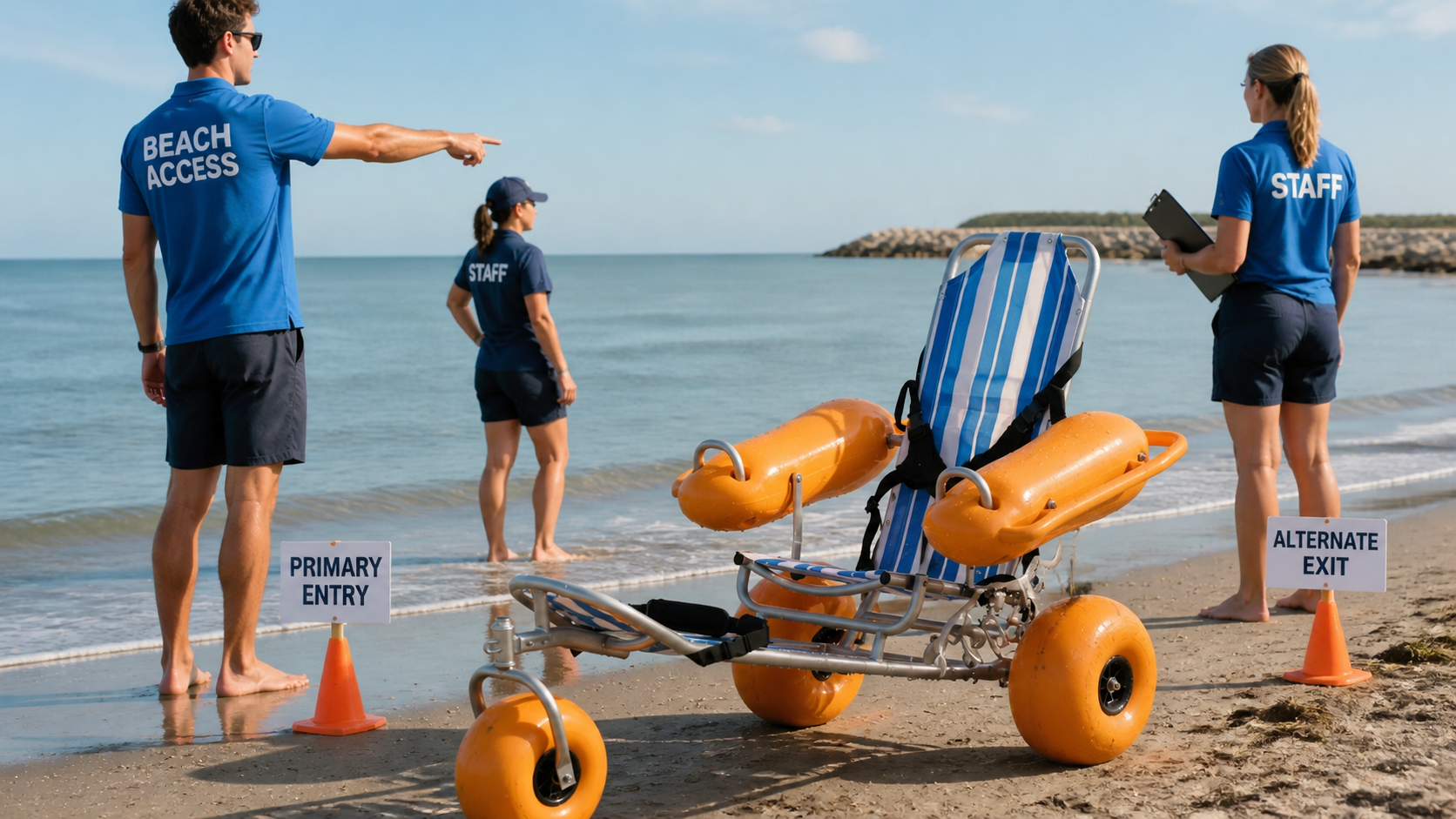
A floating beach wheelchair needs water entry and exit points that match its stated operating method, venue rules, current shoreline, staff positioning, guest handoff, and a clear return path. A convenient entry can become unsuitable if the exit is blocked, the slope changes, waves build, crowds gather, or staff cannot maintain their assigned positions. Then record any accessible beach mat as a separate route segment.
Review entry and exit as one route
The route test: review the entry and exit during the same condition window in which the session may occur. Mark the land approach, shoreline handoff, staff stations, managed water boundary, alternate exit, and stop signals. Do not invent a depth, wave, or wind limit; use current model instructions and venue policy, then postpone when the available evidence does not support operation.
- However, Check approach, shoreline handoff, entry, water zone, and exit.
- As a result, Name staff positions and stop signals.
- Afterward, Keep an alternate return path under review.
- Also, Repeat the check when conditions change.
Key Takeaway: Entry and exit belong to one controlled route, not separate decisions.
| Review area | Working record |
|---|---|
| Route point | Review |
| Approach | Surface, width, slope, and crowding |
| Water | Staff positions, boundary, and condition status |
| Exit | Primary path, alternate path, and care handoff |
A strong entry plan always has a clear way back to firm ground.
What pre-use checks belong before guest transfer?
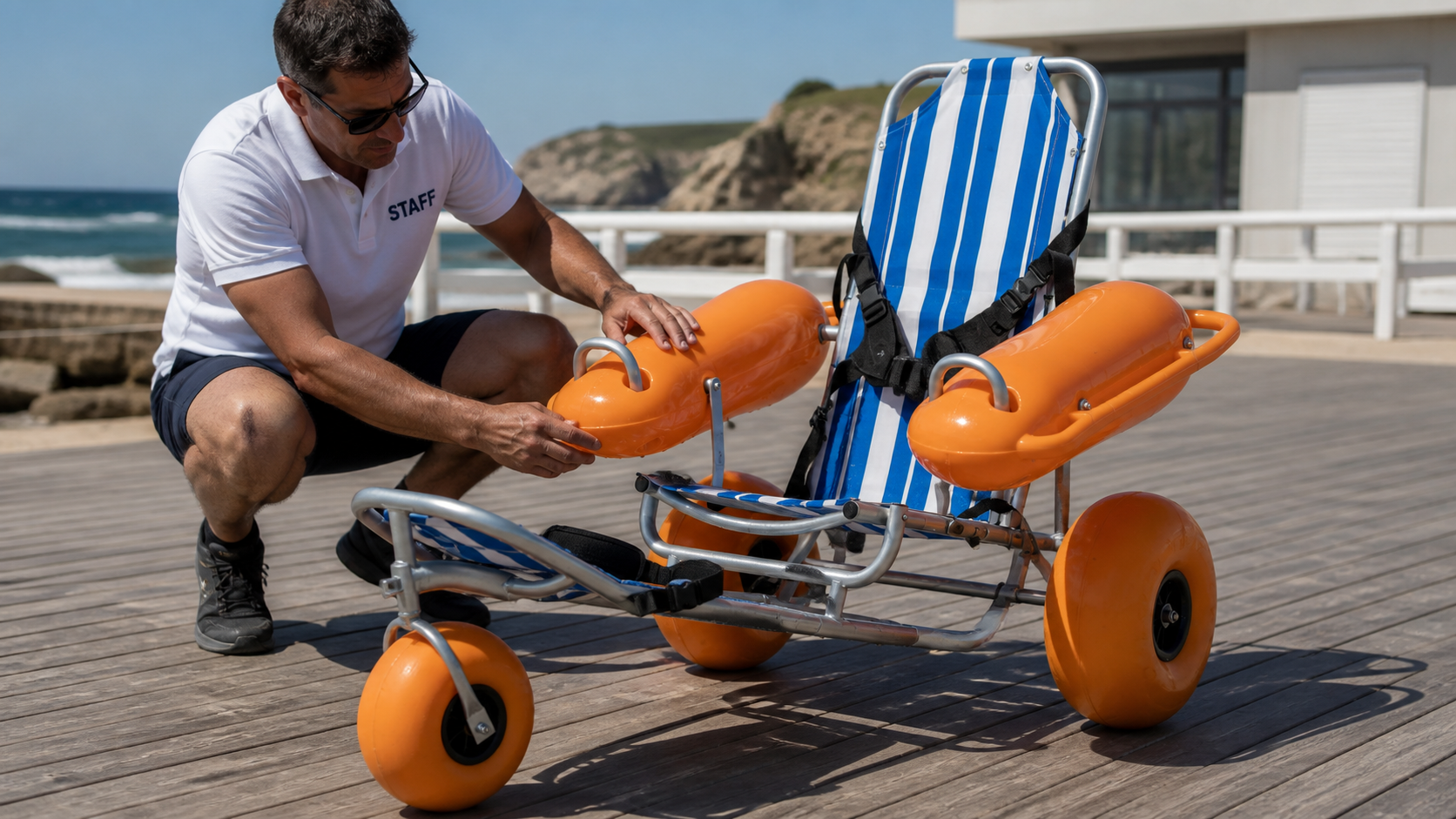
A floating beach wheelchair needs a pre-use check covering identity, frame, orange buoyant arm pontoons, grab handles, three wheels, attachment points, seat and back fabric, straps, foot support, visible hardware, cleanliness, and normal empty-chair movement under the current manual. The chair should stay on hold when any part, step, or condition is unclear.
Inspect the exact chair before every session
The ready check: inspect in good light on firm ground before the guest arrives at the transfer point. Match components with the model record and verify that care from the prior session is complete. The new floating chair page can help distinguish the product form, while current instructions should supply the actual inspection and setup method.
- Next, Confirm chair ID, model, and document revision.
- Then, Inspect frame, pontoons, handles, wheels, fabric, straps, and support.
- Meanwhile, Check cleanliness and empty-chair movement as stated.
- For example, Record ready, hold, or service status.
Key Takeaway: Guest transfer should begin only after equipment and site release are recorded.
| Review area | Working record |
|---|---|
| Check group | Pass question |
| Identity | Correct model and complete record? |
| Components | Present, fitted, and visibly sound? |
| Release | Current site and chair status recorded? |
The pre-use record links prior care with the upcoming session.
How can attendants coordinate roles near the water?
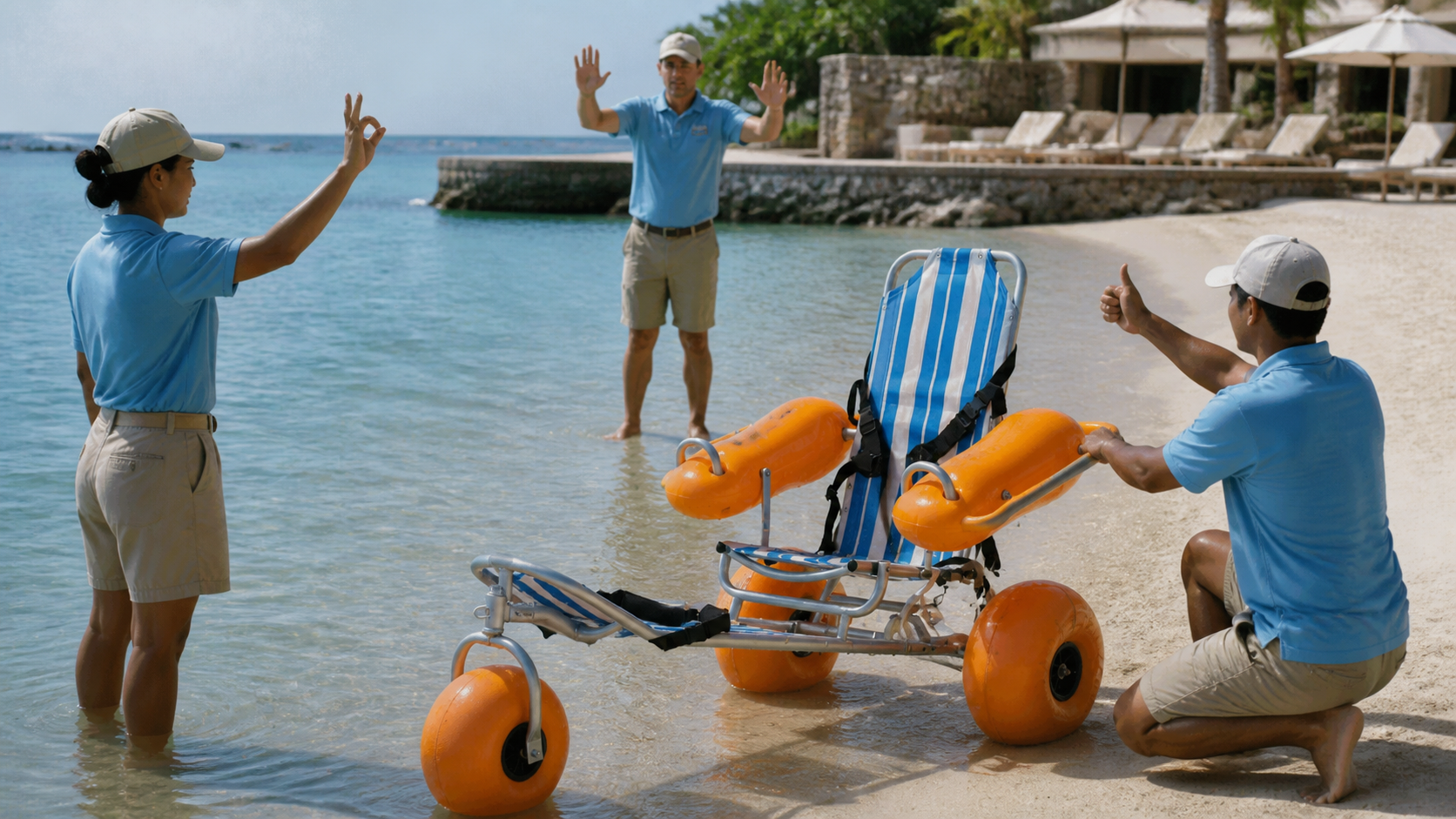
A floating beach wheelchair session should give attendants named roles for chair release, guest briefing, transfer support, movement, water-side positioning, condition watch, communication, exit, and return care. The chair design does not set a universal staffing number, so the program must use current instructions, venue policy, risk review, and the needs of the planned service.
Assign positions, calls, and stop authority
The coordination rule: practice the complete route with an empty chair and agreed verbal calls before accepting a session. Every team member should know who leads movement, who watches conditions, who maintains the agreed water-side position, and who can stop. Role changes during breaks or shift handoffs need a short documented transfer rather than an assumption.
- However, Name lead, condition-watch, movement, and return roles.
- As a result, Agree on start, slow, stop, and exit calls.
- Afterward, Practice the route without a guest.
- Also, Record role handoffs and any open question.
Key Takeaway: Named roles and common calls keep the team aligned when conditions change.
| Review area | Working record |
|---|---|
| Role | Primary task |
| Lead | Release decision and guest communication |
| Movement | Chair handling under the stated method |
| Condition watch | Site status and stop call |
The role plan should remain understandable even when staff rotate.
What guest communication supports a clear handoff?
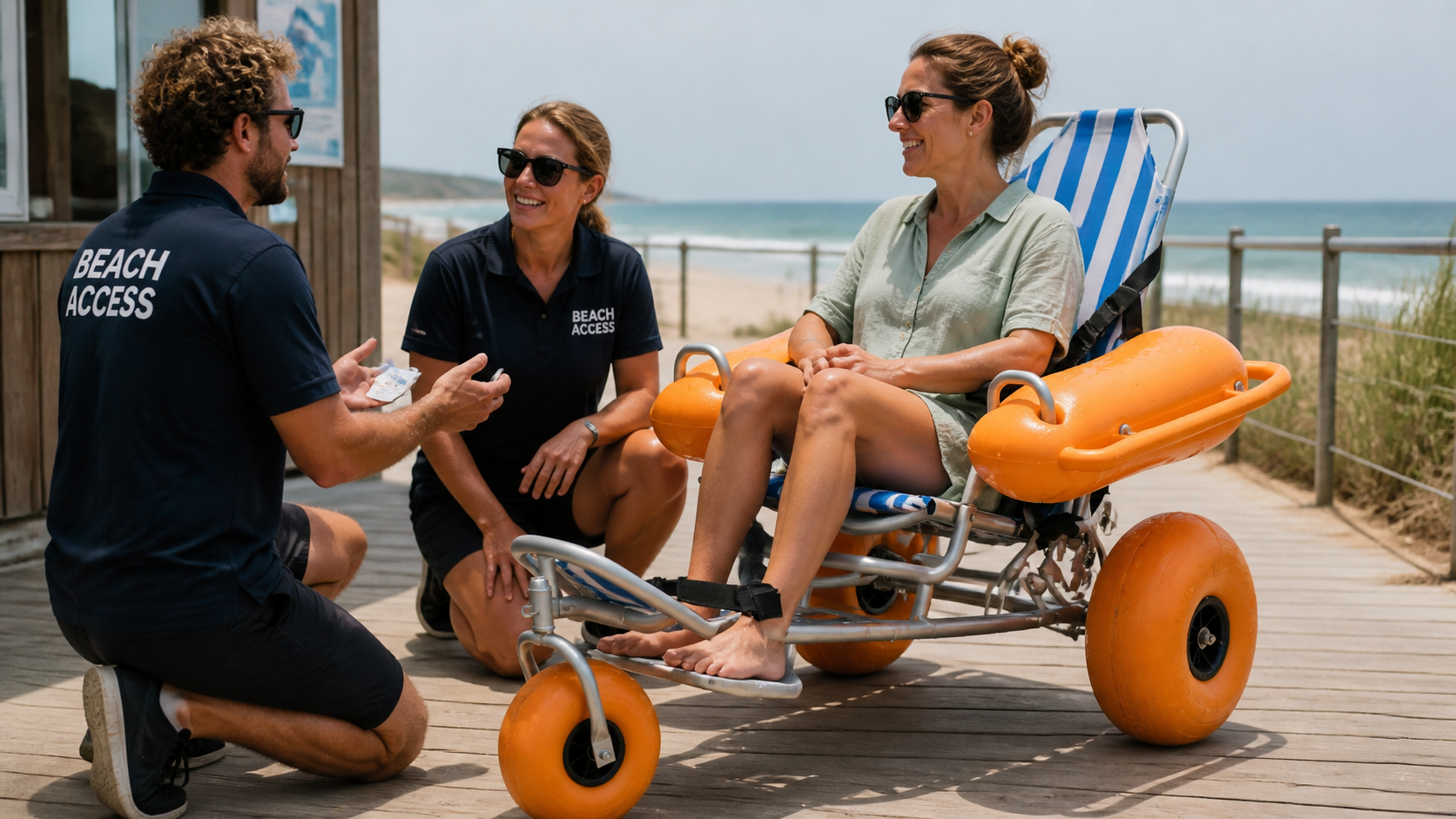
A floating beach wheelchair guest handoff should cover the planned route, chair features relevant to use, transfer method under local policy, attendant roles, communication signals, expected water zone, exit method, stop requests, and what happens if conditions change. Staff should use clear language and invite questions without making medical or outcome promises.
Explain the service before transfer
The communication point: give the briefing while everyone can hear and before the transfer starts. Confirm the guest’s preferences within the program’s scope and explain that staff may change or stop the session under the documented process. Keep privacy in mind and record only the operational information that the program is permitted to retain.
- Next, Describe route, roles, signals, and expected sequence.
- Then, Explain how a guest can request pause or exit.
- Meanwhile, State that conditions may change the plan.
- For example, Record consent and operational notes under local policy.
Key Takeaway: A clear briefing turns the transfer into a shared, managed handoff.
| Review area | Working record |
|---|---|
| Briefing topic | Plain-language message |
| Route | Where the session starts, goes, and returns |
| Communication | Pause, stop, and exit signals |
| Change | Who decides and what happens next |
Good communication supports choice without promising a particular experience.
How should teams handle wind, waves, and changing water?
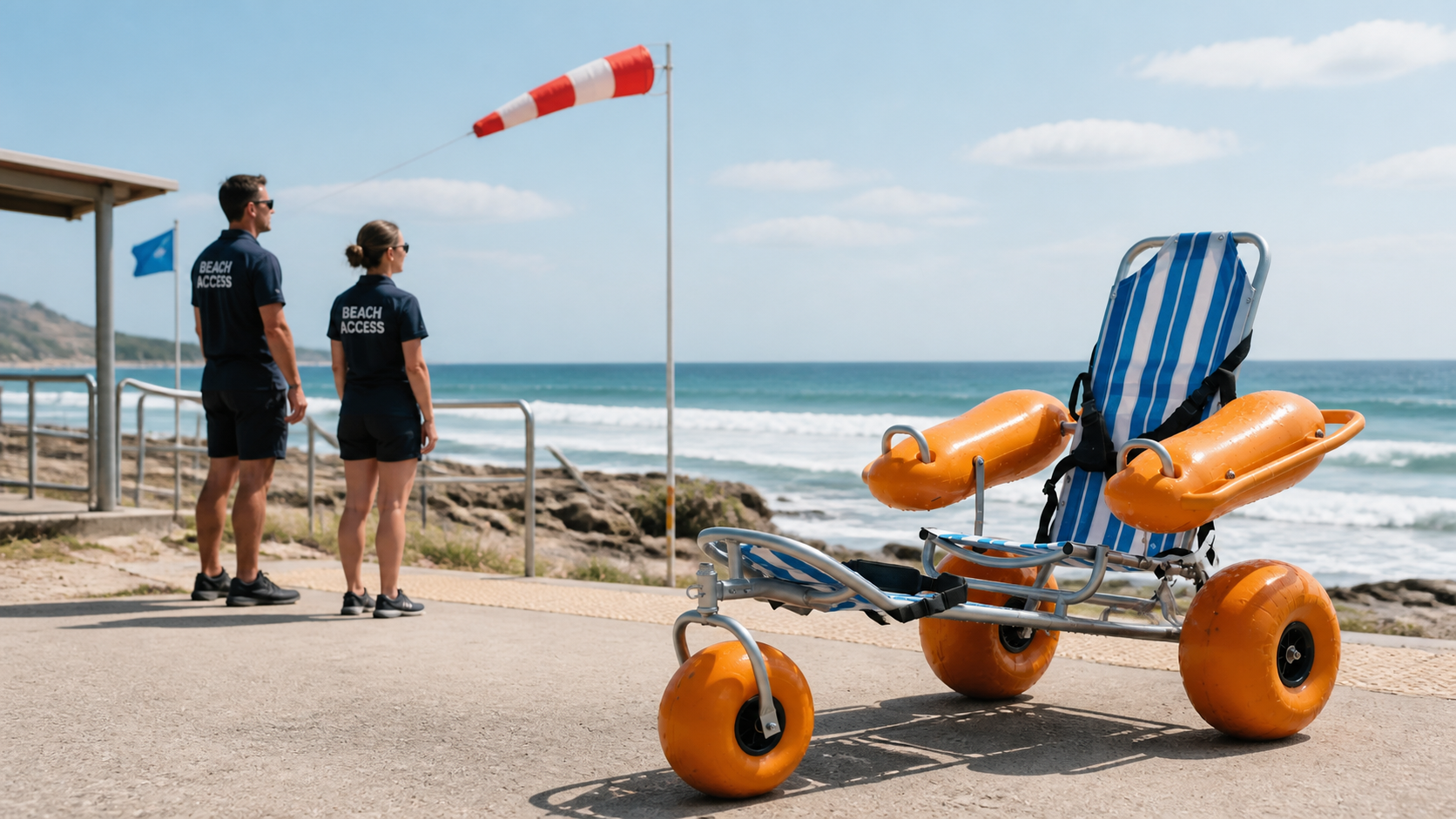
A floating beach wheelchair session should proceed only when wind, waves, water movement, visibility, weather, crowding, debris, temperature policy, venue status, equipment, and staffing fit the written operating limits in force at that time. Conditions can change after booking or briefing, so the release decision must remain active through entry, water use, and exit.
Use a same-session condition decision
The condition rule: use sources named by venue policy and combine them with direct site observation. Do not replace model limits with a generic online forecast or invented threshold. Give one role authority to call pause, change, exit, postpone, or stop, and make that decision easy to communicate to staff and the guest.
- However, Check venue status and approved information sources.
- As a result, Observe water, weather, crowd, visibility, and debris.
- Afterward, Compare findings with current written limits.
- Also, Record the decision and any later change.
Key Takeaway: A live condition review matters more than a booking made under older information.
| Review area | Working record |
|---|---|
| Review point | Decision record |
| Before entry | Proceed, change, postpone, or stop |
| During session | Continue, pause, or exit |
| After exit | Closeout notes and any follow-up |
The process should make a cautious stop easy, not exceptional.
What rinse and drying steps follow each session?
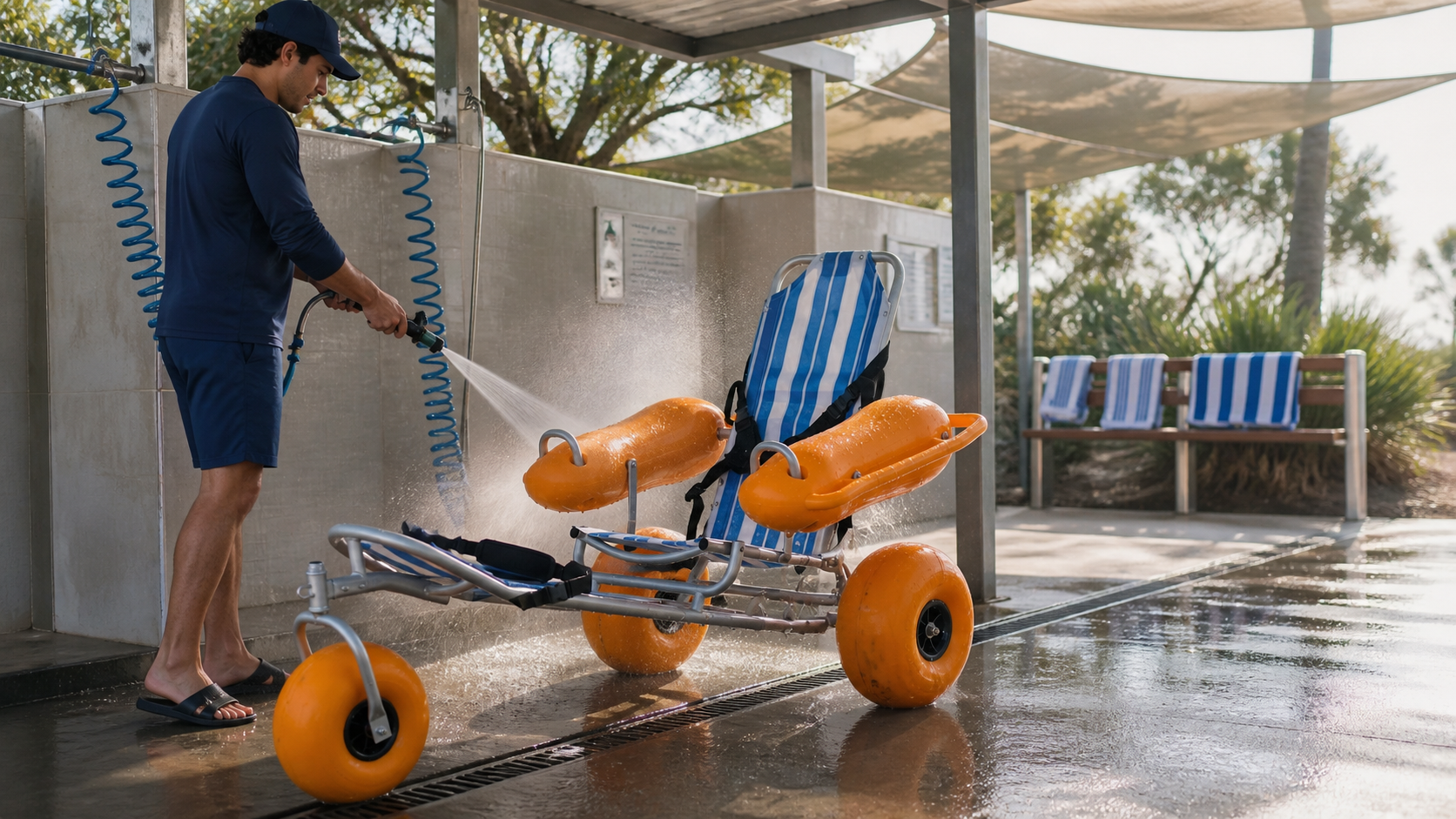
A floating beach wheelchair should move from return to supplier-approved cleaning, drainage, drying, inspection, and recorded release before storage or another session. Water, sand, salt, sunscreen, and debris can remain around pontoons, grab handles, wheel hubs, frame tubes, fabric, straps, fasteners, and the foot support.
Move the chair through a visible care sequence
Here’s the care view: create separate returned, cleaning, drying, hold, and ready states. Use only the cleaning agents, water exposure, tools, and disassembly steps named for the model. Inspect in good light after drying, since retained water or sand can be harder to see while surfaces are still wet. Keep faults linked with the chair ID.
- Next, Remove loose material through the stated method.
- Then, Clean and drain each named component.
- Meanwhile, Dry fully before inspection and storage.
- For example, Record ready, hold, or service status.
Key Takeaway: Post-use care ends with inspection and release, not with the rinse itself.
| Review area | Working record |
|---|---|
| Care state | Meaning |
| Returned | Used chair awaiting care |
| Drying | Release check still open |
| Ready | Care and inspection recorded |
Visible states stop a wet chair from returning to the booking pool.
How should storage protect the chair between sessions?
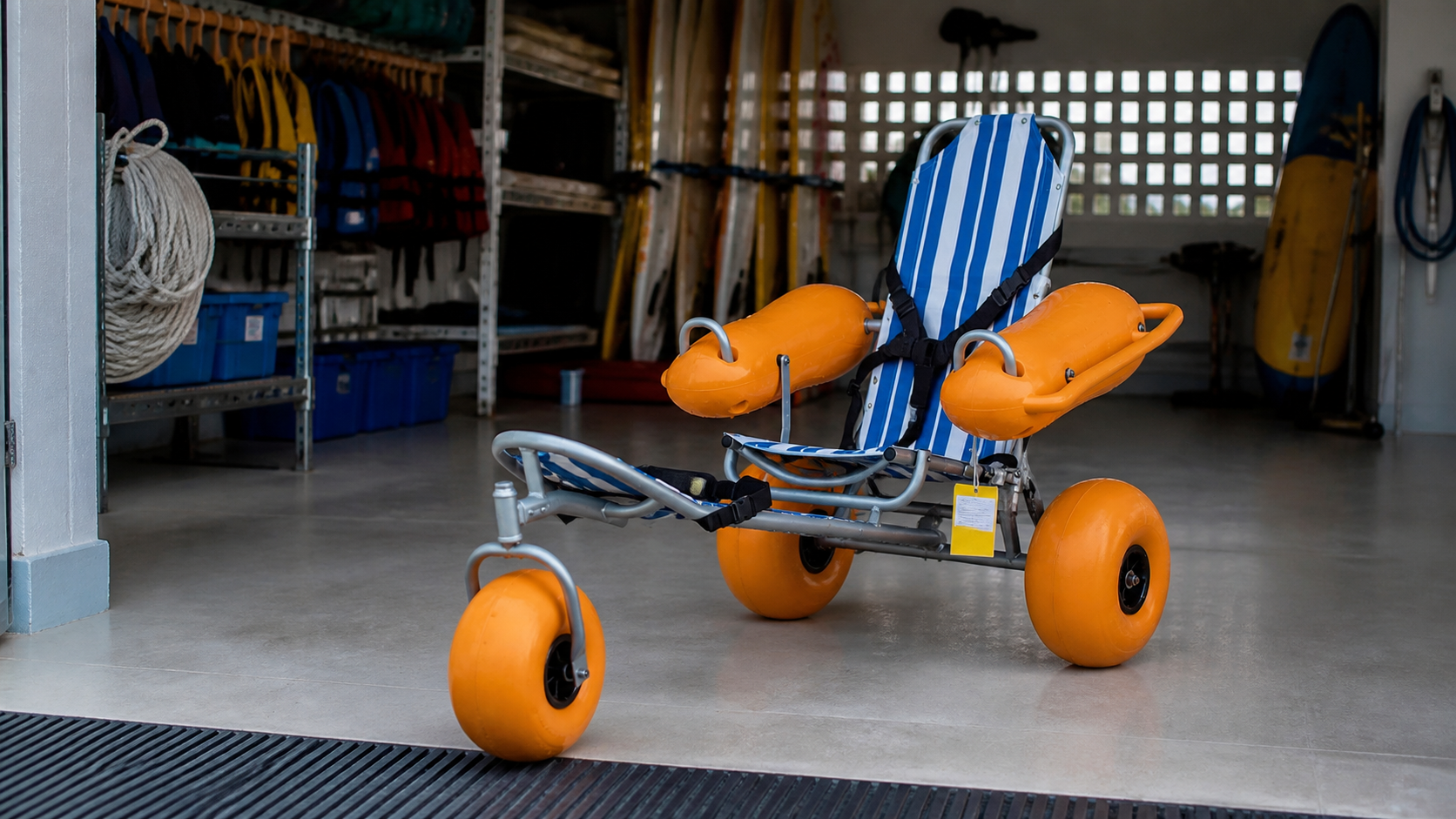
A floating beach wheelchair should be stored in the state and orientation named by current instructions, with dry ventilation, stable support, protected pontoons, wheels, fabric, straps, frame, handles, foot support, and readable status. An exposed beach shed or crowded rack may invite impact, heat, moisture, contamination, or mixed components.
Build a dry, stable, accessible bay
The bay test: place the clean and dry chair in the proposed location, then rehearse inspection, retrieval, and return. The floating chair resort project provides a relevant fleet setting, while the exact storage method still comes from model records and local conditions. Keep held or wet equipment apart from ready units.
- However, Use only approved support points and orientation.
- As a result, Protect pontoons, wheels, fabric, straps, and controls.
- Afterward, Keep chair ID and status easy to read.
- Also, Leave room for inspection and retrieval.
Key Takeaway: Storage should preserve condition, identity, and release status between sessions.
| Review area | Working record |
|---|---|
| Bay feature | Purpose |
| Dry environment | Supports care closeout |
| Stable support | Limits movement and contact |
| Clear status | Separates ready, hold, and service |
A retrieval rehearsal tests whether the bay works during real operations.
What supplier records guide inspection and service?
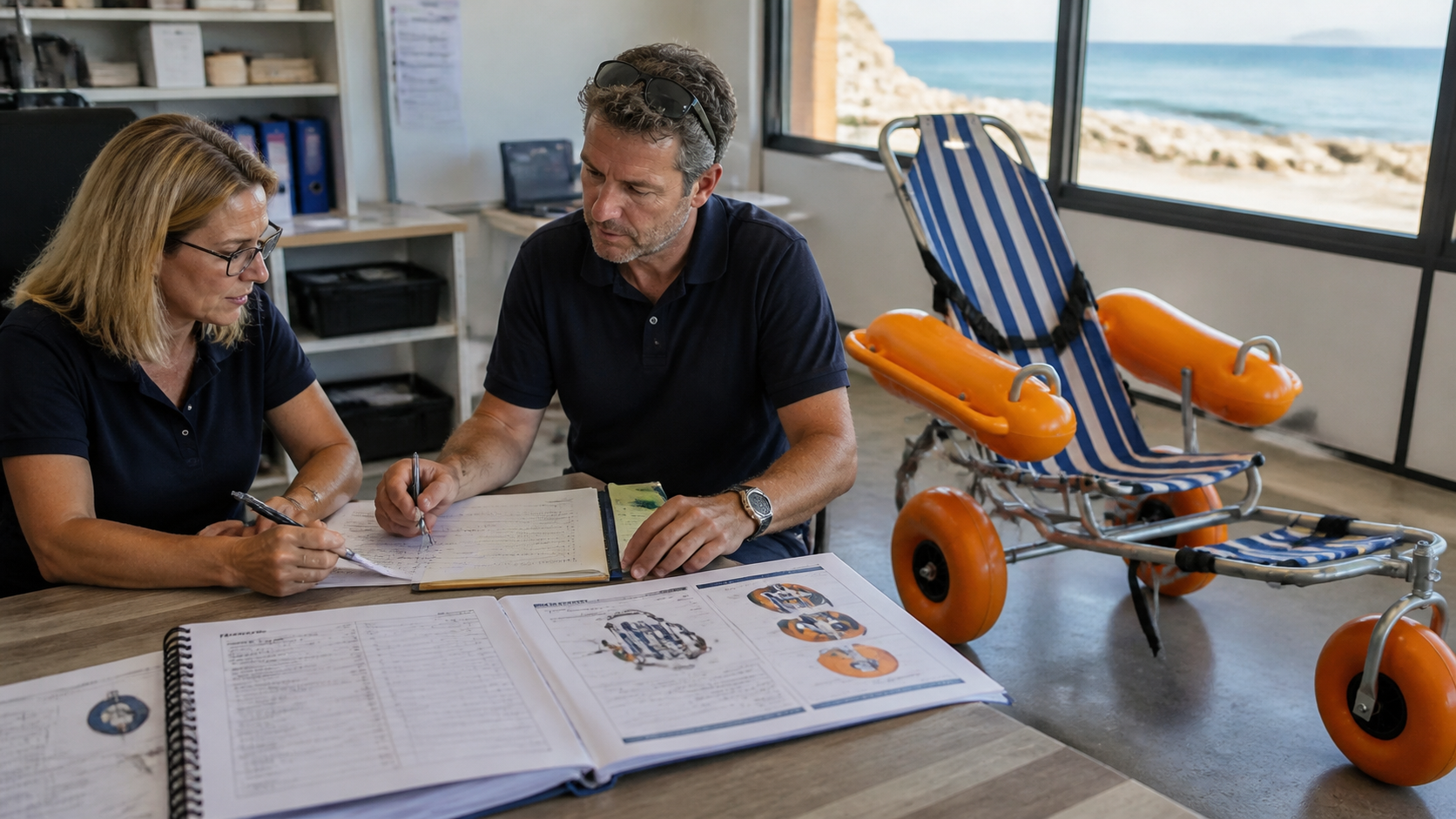
A floating beach wheelchair needs current supplier records for configuration, assembly, intended use, operating limits, inspection, pontoon and wheel checks, straps, supports, cleaning, drying, storage, parts, and service. General floating-chair content cannot replace instructions tied to the exact model and revision. Use the supplier overview to prepare questions.
Keep a model-specific operating file
The document test: ask whether staff can perform every booking-to-storage task without guessing. Match the manual, drawing, parts list, service contact, and quotation with the chair ID. Record any open issue about buoyant parts, hardware, wheel attachment, straps, frame, fabric, or care, and keep the chair on hold when the written method is missing.
- Next, Match records to model, revision, and options.
- Then, List inspection, operating, care, and storage steps.
- Meanwhile, Identify replacement parts and service boundaries.
- For example, Track questions, answer sources, owners, and dates.
Key Takeaway: Model-specific records give inspection and service a reliable reference.
| Review area | Working record |
|---|---|
| Record | Program use |
| Manual | Setup, operation, limits, and care |
| Drawing | Configuration and component identity |
| Parts and service | Fault handling and approved replacements |
A current operating file keeps verbal advice from becoming an undocumented rule.
What workflow connects booking, use, and return?
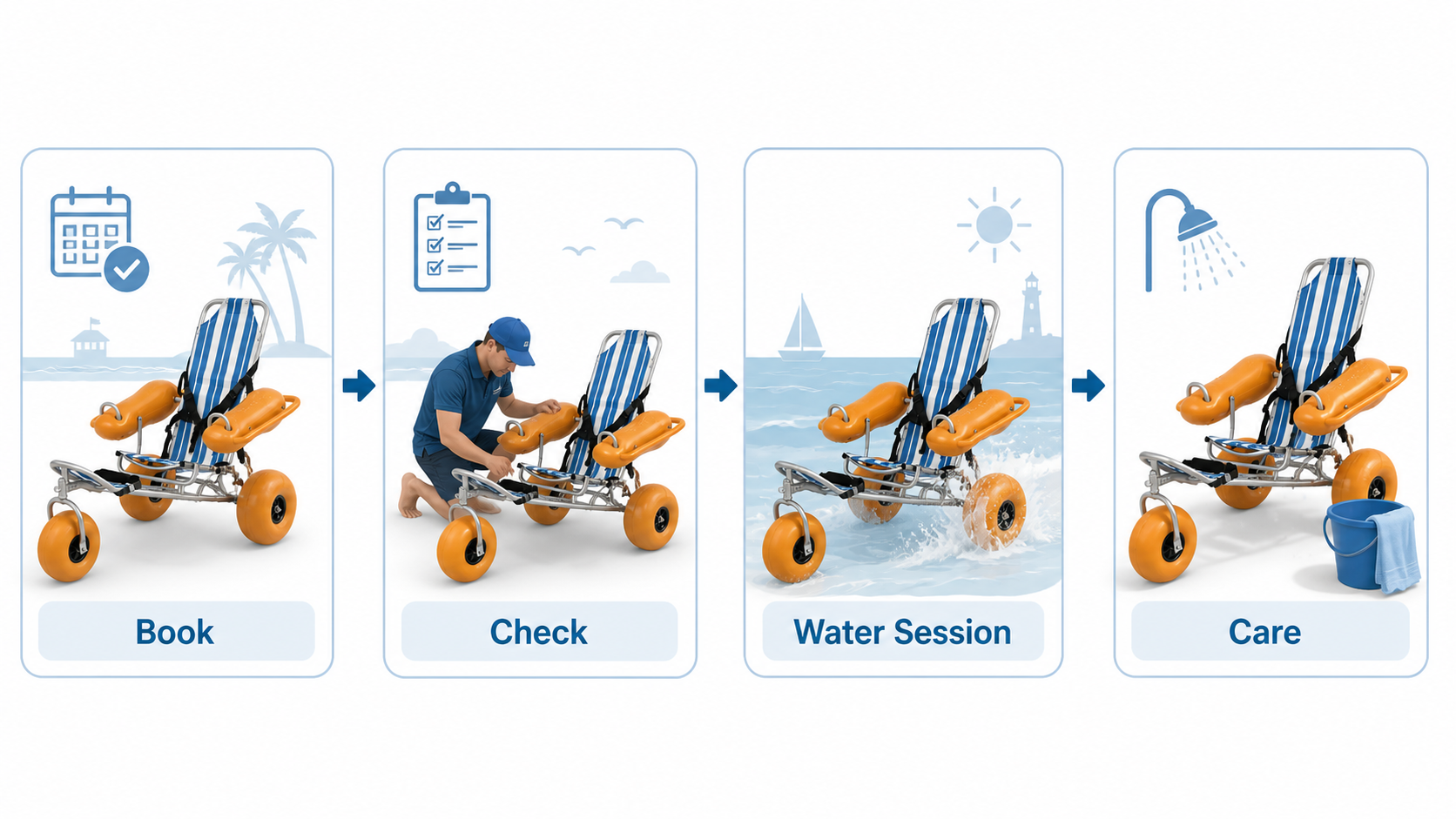
A floating beach wheelchair workflow connects inquiry, booking review, site and staffing check, chair inspection, guest briefing, transfer, entry, managed water use, exit, return, care, inspection, storage, and record closeout. Each handoff needs a named owner, current status, and stop rule so booking pressure cannot bypass equipment or condition checks. Also keep the user manual resource with the model record.
Give every handoff a status and owner
The process point: use a small set of visible states such as requested, planned, ready, changed, postponed, active, returned, drying, hold, and closed. Venue policy can define the final labels. Link the booking record with chair ID, session team, site decision, and care closeout while retaining only permitted guest information.
- However, Connect booking with site, staff, and equipment checks.
- As a result, Record chair ID and named session roles.
- Afterward, Keep condition decisions active through exit.
- Also, Close the record after care and release status.
Key Takeaway: A connected workflow prevents gaps between the front desk, shoreline team, and care station.
| Review area | Working record |
|---|---|
| Stage | Status evidence |
| Plan | Site, staff, chair, and guest handoff ready |
| Use | Live condition decision and named roles |
| Return | Care, inspection, storage, and closeout |
The workflow makes every pause or stop traceable without slowing clear handoffs.
Closing Notes
A managed water-access service works when site review, entry planning, equipment checks, attendant roles, guest communication, condition decisions, post-use care, storage, supplier records, and booking handoffs stay connected. Keep operating limits tied to the exact model, venue policy, and current conditions. To discuss a program brief, contact us today with your shoreline, entry route, storage, staffing, care station, and document needs.
Frequently Asked Questions
Can I use a floating chair without trained attendants?
No. Build the service around the chair instructions, venue policy, named staff roles, current conditions, and a clear stop process.
What’s the best place for water entry?
Use a venue-approved point reviewed for the current shoreline, access path, depth change, exit route, staff position, and local rules.
How do I know if a session should proceed?
Use a documented go, change, or stop review covering equipment, staffing, guest handoff, venue status, weather, and water conditions.
Can the chair be left wet after a session?
No. Follow the stated return, cleaning, drainage, drying, inspection, and storage method before ready status.
What’s the best pre-use record?
Record chair ID, model, inspection result, staff roles, site status, guest briefing, and the named release decision.