A beach walker is a specialized mobility aid designed to navigate soft, uneven coastal terrain without sinking into the sand. Imagine arriving at the shoreline, the sun warming your face, only to realize that your standard mobility device is completely useless on the dunes. It is frustrating to be sidelined while others enjoy the surf, feeling restricted by equipment that wasn’t built for the outdoors. Fortunately, beach walkers solve this problem by utilizing oversized tires and lightweight frames to give you back your freedom.
Can Rollators Tackle Beach Sand?
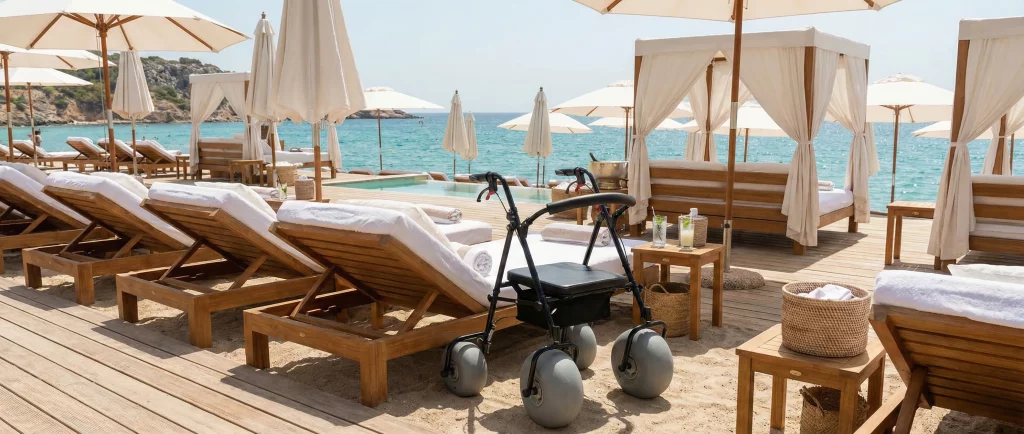
Yes, specialized rollators can tackle beach sand provided they are engineered with high-flotation tires that distribute your weight across a wider surface area. When you use dedicated beach walkers, you no longer have to worry about the wheels digging into the loose ground. These devices are specifically designed to bridge the gap between paved boardwalks and the water’s edge. You can find a variety of these heavy-duty options in our latest products catalog.
Are all-terrain wheels enough?
Standard wheels are simply too narrow to handle the shifting nature of coastal dunes. You need a design that prioritizes surface area to keep you moving forward.
- Oversized tire diameter.
- Low-pressure air inflation.
- Broad tread patterns.
How do they handle the surf?
Believe it or not.
These walkers are often made with marine-grade materials to resist the harsh effects of salt spray. This ensures that you can walk near the damp shoreline without immediate fear of equipment failure.
Key Takeaway: High-flotation tires are the primary factor that allows a rollator to function on a beach.
| Feature | Performance | Benefit |
|---|---|---|
| Wide Tires | High Flotation | Prevents sinking |
| Rugged Frame | High Stability | Safety on dunes |
A wider footprint is the most effective way to manage the low density of dry, soft sand.
Why Skip Traditional Rollators?
You should skip traditional rollators for the beach because their small, hard wheels act like anchors in the sand, creating a dangerous tipping hazard. Most standard beach walkers alternatives found in nursing homes are only meant for flat, indoor floors. Using them outdoors often leads to immense physical strain as you try to force the device through the terrain.
Why do small wheels fail?
Small wheels lack the necessary displacement to stay on top of loose granules. They quickly become submerged, leaving you stuck and exhausted.
- Narrow profiles cut deep.
- Hard plastic offers no grip.
- Low clearance hits obstacles.
Is the risk worth taking?
The answer is no.
Attempting to use an indoor walker on the beach can lead to falls or joint pain from overexertion. Your safety is far more important than trying to make the wrong tool work.
Key Takeaway: Indoor rollators are physically incapable of navigating sand and present a significant safety risk.
| Walker Type | Surface Suitability | Risk Level |
|---|---|---|
| Traditional | Hard Floors | High on sand |
| All-Terrain | Mixed Outdoors | Low on sand |
Standard mobility aids are optimized for friction on tile, not flotation on coastal soil.
What Wheel Size for Soft Sand?
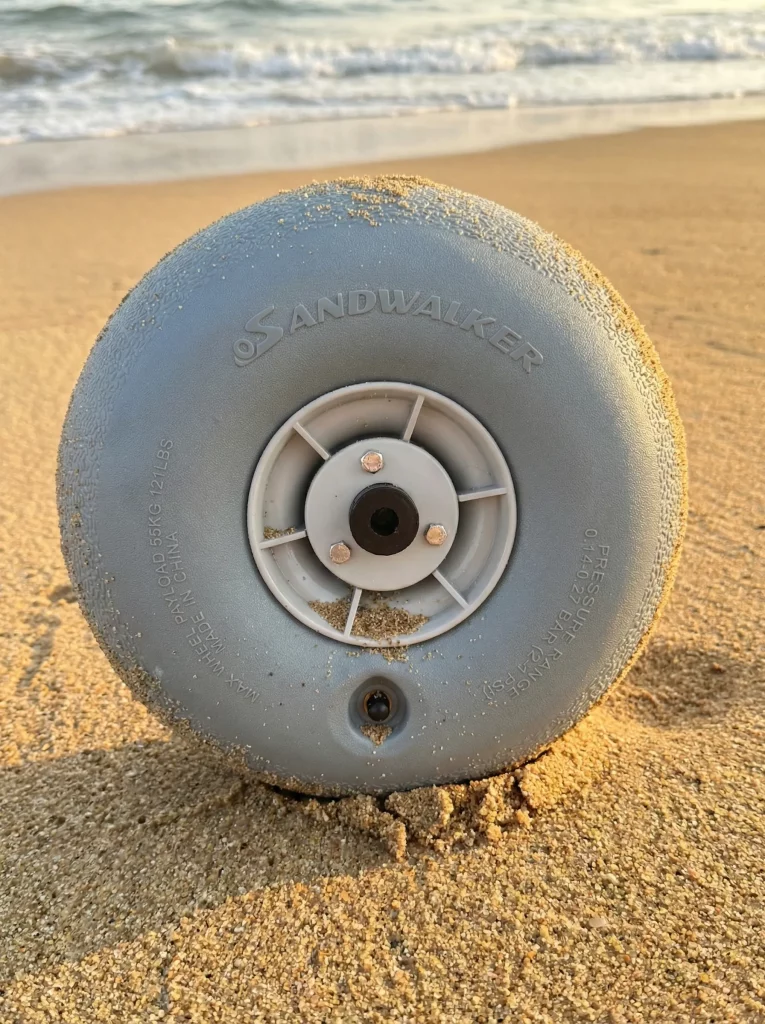
For soft sand, you generally need wheels that are at least 12 inches in diameter or specialized balloon tires that can “float” over the surface. Large-diameter wheels allow beach walkers to roll over obstacles rather than hitting them and stopping. This mechanical advantage is crucial when you are trying to keep a steady pace on the products you use for daily exercise.
Why is 12 inches the minimum?
Smaller wheels hit a “wall” when they encounter even small ruts in the sand. A larger diameter provides a shallower angle of attack, making it easier to push.
- Better obstacle clearance.
- Reduced rolling resistance.
- Improved user balance.
What about balloon tires?
Here is the deal.
Balloon tires are the gold standard for pure sand walking because they can be under-inflated to maximize their contact patch. This creates a cushion that glides effortlessly over the most difficult dunes.
Key Takeaway: Larger wheel diameters and balloon tire technology are essential for effortless sand mobility.
| Tire Type | Sand Performance | Best Use Case |
|---|---|---|
| 12-inch Rubber | Good | Hard sand/paths |
| Balloon Tires | Excellent | Soft/deep sand |
Balloon wheels provide superior flotation by spreading the load over a massive, pressurized surface.
How to Fold for Beach Trips?
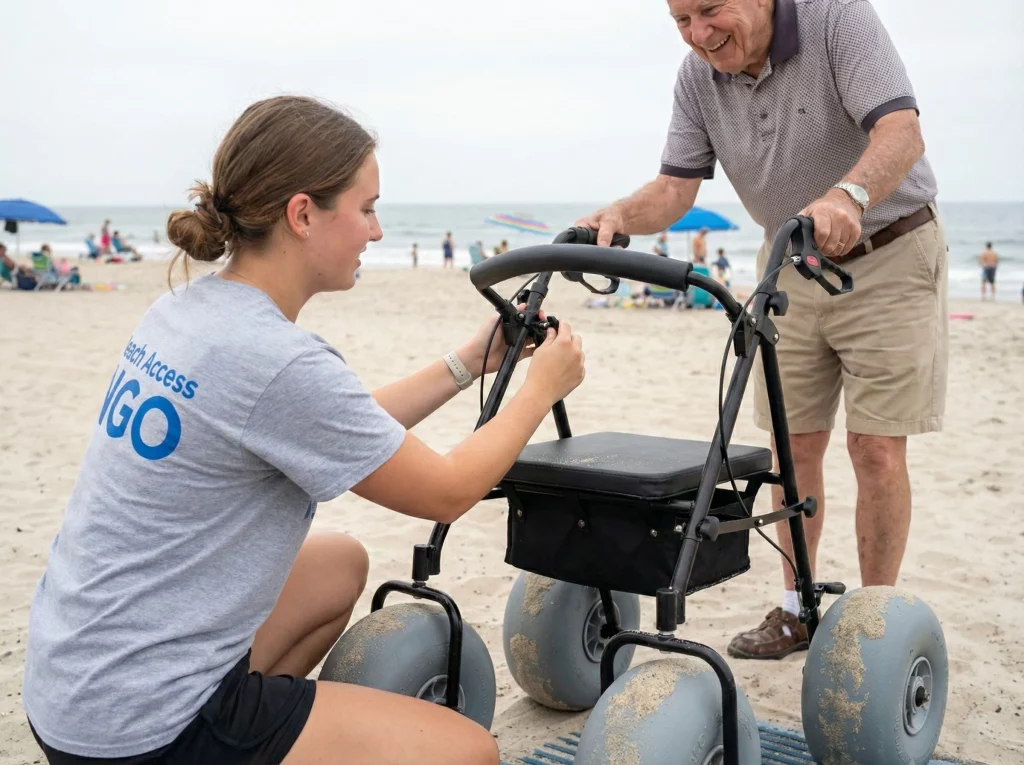
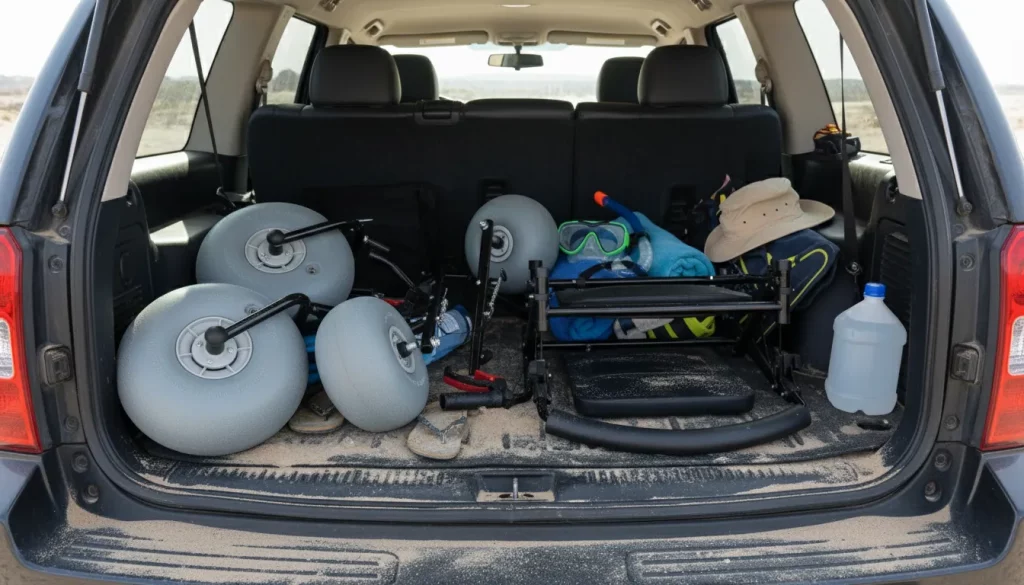
Most modern beach walkers utilize tool-free folding mechanisms that allow you to collapse the frame into a compact size for easy car transport. Since these beach walkers are often wider than standard models, the ability to fold them is vital for fitting them into a trunk or SUV. You should look for models that allow the wheels to be removed quickly if space is at a premium.
Is it hard to collapse?
Manufacturers design these units to be user-friendly, typically requiring only the pull of a strap or the release of a lever. You won’t need a toolbox to get ready for your trip.
- Single-hand folding pull.
- Secure locking clips.
- Removable storage bags.
Can they fit in a small car?
The truth is clear.
While all-terrain models are bulkier, their folding dimensions are surprisingly manageable for most mid-sized vehicles. This portability ensures you can take your adventure anywhere without needing a specialized van.
Key Takeaway: Portability through tool-free folding is a standard feature for high-quality outdoor mobility aids.
| Folding Type | Ease of Use | Storage Space |
|---|---|---|
| Side-Fold | Very Easy | Slim profile |
| Wheel-Removal | Moderate | Minimum volume |
Efficient folding designs allow for spontaneous seaside trips without logistics-related stress.
Need All-Terrain Versatility?
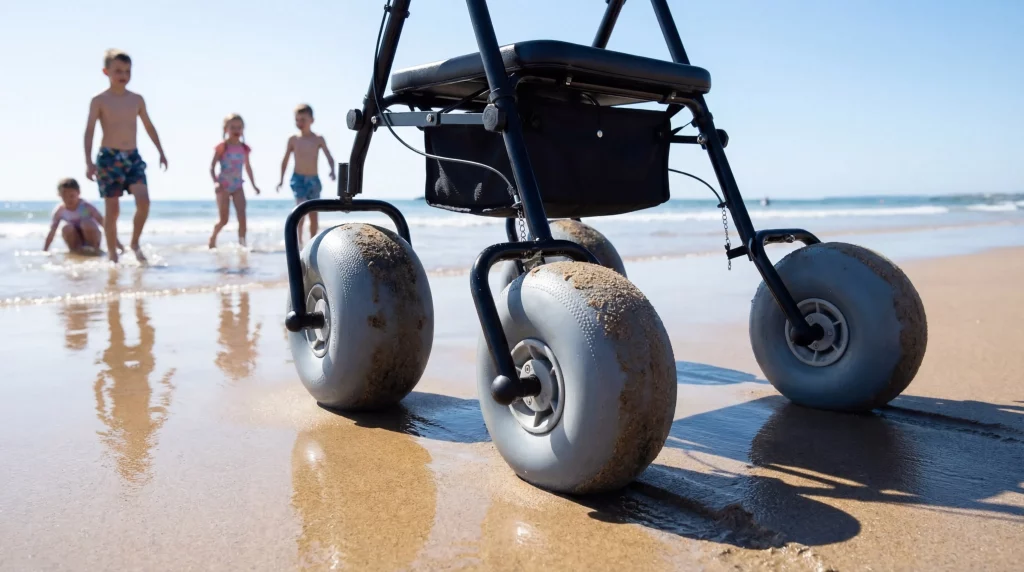
You should consider an all-terrain model because it provides value year-round, allowing you to navigate grass, gravel, and forest paths in addition to the beach. Investing in high-quality beach walkers means you are buying a tool that handles every bump in the products of your outdoor life. This versatility prevents the device from becoming a “luxury” item that only gets used during summer vacations.
Why go beyond the beach?
A dedicated sand-only device might sit in the garage for nine months of the year. An all-terrain version ensures you stay active regardless of the season or setting.
- Park trail capability.
- Stability on cobblestones.
- Safety on wet grass.
Is it worth the cost?
Think about this.
The cost-per-use drops significantly when you can use your walker for every outdoor excursion. It becomes a reliable partner for your independence, not just a seasonal accessory.
Key Takeaway: Versatility is the key to getting the most long-term value from your mobility investment.
| Terrain | Compatibility | Stability |
|---|---|---|
| Sand | High | Excellent |
| Forest Paths | High | Very Good |
Multi-surface capability ensures that your investment supports your mobility in every environment.
Best Frame Materials for Beach?
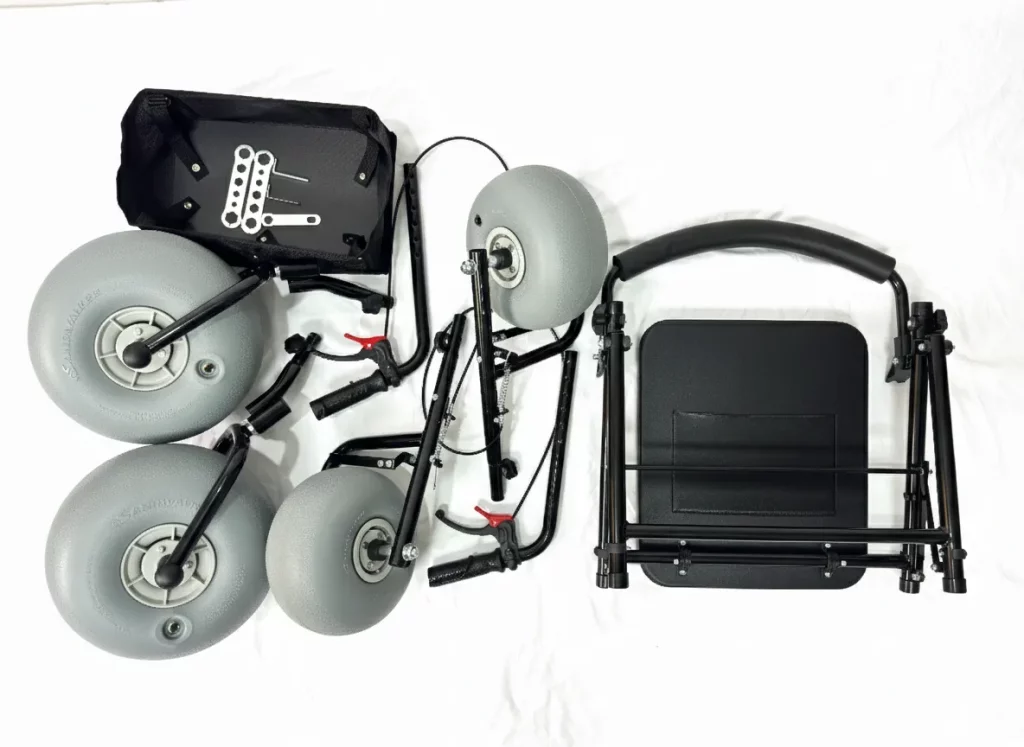
The best frame materials for beach walkers are lightweight aluminum or marine-grade stainless steel because they offer the best resistance to saltwater corrosion. When using beach walkers, the frame is constantly exposed to moisture and salt, which can quickly degrade cheaper metals. Aluminum is particularly popular because it keeps the overall weight low while maintaining high structural integrity.
Why is aluminum preferred?
Aluminum provides a high strength-to-weight ratio, which is essential when you have to push the device across soft surfaces. It also naturally forms a protective oxide layer that resists rust.
- Naturally rust-resistant.
- Easy to lift and load.
- High weight capacity.
Does steel have a place?
It depends on the goal.
Stainless steel is incredibly durable and heavy, which can provide extra stability in high winds. However, for most users, the weight penalty of steel makes aluminum the smarter choice for portability.
Key Takeaway: Marine-grade aluminum is the optimal choice for combining durability with lightweight maneuverability.
| Material | Weight | Corrosion Resistance |
|---|---|---|
| 6061 Aluminum | Light | Very High |
| Stainless Steel | Heavy | Extreme |
Choosing the right material ensures your walker survives the harsh coastal environment for many years.
What Are Top Pros of Sand Rollators?
The top pros of sand rollators include restored independence, improved safety on uneven ground, and the ability to enjoy outdoor social activities with family. These beach walkers act as a bridge to a world that was previously inaccessible to those with limited mobility. You can explore our full range of products to see how these features integrate into a seamless user experience.
Can you walk alone?
Yes, the stability provided by four oversized wheels gives you the confidence to navigate the beach without needing someone to hold your arm. This independence is often the most cited benefit by users.
- Enhanced self-reliance.
- Reduced fall anxiety.
- Access to remote spots.
Does it help with fitness?
You bet it does.
Walking on sand is excellent for cardiovascular health and muscle tone. Having a supportive device allows you to stay active for longer periods without tiring out prematurely.
Key Takeaway: The primary benefits are increased independence, physical health, and social inclusion.
| Benefit | Impact | Duration |
|---|---|---|
| Independence | High | Permanent |
| Muscle Tone | Moderate | Progressive |
Restoring the ability to visit the beach has profound effects on mental and physical well-being.
Common Cons of Beach Rollators?
Common cons of beach rollators include their higher price point compared to standard models and their increased physical bulk during transport. Because beach walkers require specialized tires and anti-corrosive materials, the manufacturing costs are naturally higher. You may also find that they take up more room in your hallway or garage when not in use.
Are they too expensive?
While the initial investment is higher, you are paying for specialized engineering that standard walkers lack. It is often a choice between spending more or not being able to visit the beach at all.
- Higher upfront cost.
- Specialized tire maintenance.
- Larger storage footprint.
Is the bulk manageable?
Don’t be discouraged.
Even though they are larger, the folding features mentioned earlier go a long way in mitigating the size issues. Most users find the trade-off for beach access is well worth the extra storage space.
Key Takeaway: Cost and size are the primary hurdles, but they are balanced by the unique access these devices provide.
| Challenge | Mitigation | Outcome |
|---|---|---|
| Price | Long-term durability | Lower cost-per-use |
| Bulk | Folding mechanisms | Easy transport |
The disadvantages are largely logistical and are outweighed by the functional freedom provided.
User Tips for Sand Walking?
One of the best tips for sand walking is to stick to the firmer “wet” sand near the waterline where the surface is more packed and easier to roll over. Your beach walkers will perform best when you maintain a steady, forward momentum rather than stopping and starting in deep, loose patches. If you find yourself struggling, check the products manual for the recommended tire pressure for your specific terrain.
How to handle slopes?
Always approach dunes and inclines directly rather than at an angle to maintain the best center of gravity. Use your brakes to control your descent when moving back toward the boardwalk.
- Approach dunes head-on.
- Maintain a firm grip.
- Watch for hidden ruts.
Should you clean it?
Absolutely.
Rinsing your walker with fresh water after every trip is the single most important maintenance step. Salt and sand can act as abrasives that wear down moving parts and joints over time.
Key Takeaway: Proper technique and consistent cleaning are vital for a safe and long-lasting experience.
| Tip | Action | Result |
|---|---|---|
| Walk wet sand | Stay near water | Easier rolling |
| Rinse daily | Fresh water spray | No corrosion |
Small adjustments in where and how you walk can make your beach day much more enjoyable.
How to Pick Your Beach Rollator?
To pick the right beach rollator, you must first assess your typical terrain and choose a wheel type that matches the softness of the sand you frequent. You should prioritize comfort features like ergonomic handles and a padded seat for when you need to take a break. For more detailed guidance, you can consult our what does a beach wheelchair look like guide to understand the design elements that matter most.
Does height adjustment matter?
Proper posture is essential for preventing back pain during long walks. Ensure the model you choose has a wide range of handle adjustments to fit your specific height.
- Adjustable handle height.
- Breathable seat fabric.
- Weight capacity check.
What accessories are best?
Look for convenience.
A cane holder or an insulated bag for water can make your trip much more comfortable. These small additions allow you to spend the whole day outdoors without needing to return to the car.
Key Takeaway: Selection should be based on wheel suitability, user height, and necessary accessories.
| Selection Criteria | Importance | User Impact |
|---|---|---|
| Wheel Type | Critical | Ease of movement |
| Adjustability | High | Comfort/Posture |
The right choice will feel like a natural extension of your body, enabling rather than hindering your movement.
Frequently Asked Questions
Can I use a beach walker on the street?Yes, most beach walkers are designed as all-terrain vehicles that excel on pavement and gravel. The large tires provide excellent shock absorption on bumpy city sidewalks.
What’s the best way to clean sand out of the brakes?A simple garden hose is the most effective tool for removing debris. You should spray the brake housing and wheel hubs thoroughly with fresh water after every beach session.
Can I fly with my beach rollator?Yes, these devices are typically treated as necessary medical equipment by airlines. You should check the folded dimensions and consider a protective travel bag to prevent damage in the cargo hold.
What is the weight limit for most models?Most high-quality beach walkers support between 250 and 350 pounds. You must verify the specific weight capacity of your chosen model to ensure long-term structural safety.
Do balloon tires need special pumps?Not necessarily, but they do require low-pressure gauges. You should use a manual pump to avoid over-inflating, as standard gas station compressors can easily pop low-pressure tires.
We believe that mobility is a fundamental right, not a privilege reserved for those who stay on paved paths. By choosing the right equipment, you solve the problem of geographic isolation and reclaim the joy of the seaside. Whether you are navigating deep dunes or walking the damp shoreline, our vision is to provide the engineering that makes every beach accessible. If you are ready to take your first step back onto the sand, contact us today to find the perfect fit for your next adventure.