
A better floating beach wheelchair operating procedure sets a clear service boundary and assigns trained roles. It also covers site checks, guest communication, water entry, exit, care, and stop authority. Shore and water conditions change, so a generic chair handoff cannot guide the service.
Local policy, product instructions, aquatic rules, and trained judgment control each activity. This B2B guide organizes ten operating questions without claiming medical outcomes, universal water limits, or unsupervised use. Each question links an observable condition with a named decision role.
What service boundary should the procedure define?
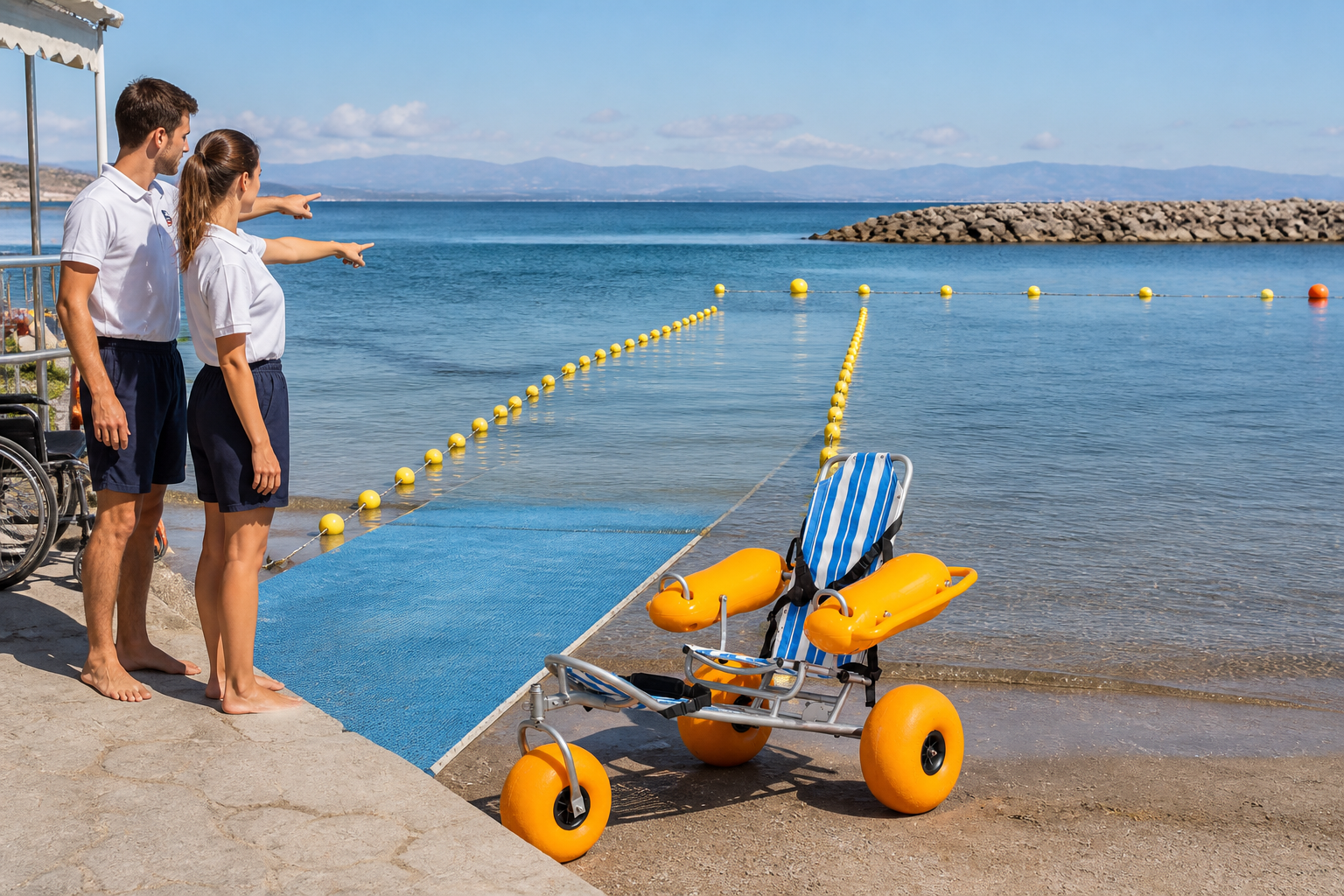
Floating beach wheelchair operating procedure should state where service starts and ends, who attends it, and which local rules control it. The boundary can name the storage point, staging area, approved shore entry, operating zone, return point, supervision rule, and stop authority. It should avoid promising access outside the checked service area. For U.S. coastal locations, NOAA tide predictions can inform a timed review, while present local conditions still control the decision.
Next, staff review approved route and zone, trained attendant rule, and stop and return authority. For example, they compare each point with current product guidance and site policy. As a result, if a point is unclear, the authorized role records the decision.
Name the approved activity
Here is the working point: Write the boundary in plain language and brief every role that accepts bookings or performs handoffs. The assigned role records the procedure version, approved boundary, and responsible owner. If the location, staffing, or controlling rule is unclear, pause service. Meanwhile, the named owner records the next action. Then the booking team can follow the saved boundary.
- Check approved route and zone
- Confirm trained attendant rule
- Record stop and return authority
Key Takeaway: A defined service boundary prevents a floating chair from being treated as general unsupervised equipment.
| Review point | Working response |
|---|---|
| Observe | Record the current condition |
| Decide | Assign the next action and owner |
Then test the boundary language with every booking and handoff role.
Which site and water checks happen before opening?

Floating beach wheelchair operating procedure should require an opening check of the approved route, entry, water area, traffic, weather, and return path. Conditions can change after a schedule was written. The authorized site role should apply local aquatic policy and communicate one current service state to booking, beach, and attendant teams. Review a floating chair resort example when drafting local staffing and staging questions. Then compare the full land route with the broader beach wheelchair range before opening water service.
Then, staff review shore route, entry and return area, and weather and water observation. However, they compare each point with current product guidance and site policy. Afterward, if a point is unclear, the authorized role records the decision.
Check current shore and water conditions
What should staff see: Walk the route, observe the operating zone, consult local authority, and set ready, paused, or closed. The assigned role records the check time, observations, decision, authority, and review. If any current condition falls outside the approved operating boundary, pause service. For example, the named owner records the next action. Next shift staff can read the current opening state.
- Check shore route
- Confirm entry and return area
- Record weather and water observation
Key Takeaway: A current site decision controls service more reliably than a calendar assumption.
| Review point | Working response |
|---|---|
| Observe | Record the current condition |
| Decide | Assign the next action and owner |
Next, repeat the opening check whenever site or water conditions change.
What chair inspection belongs before guest arrival?
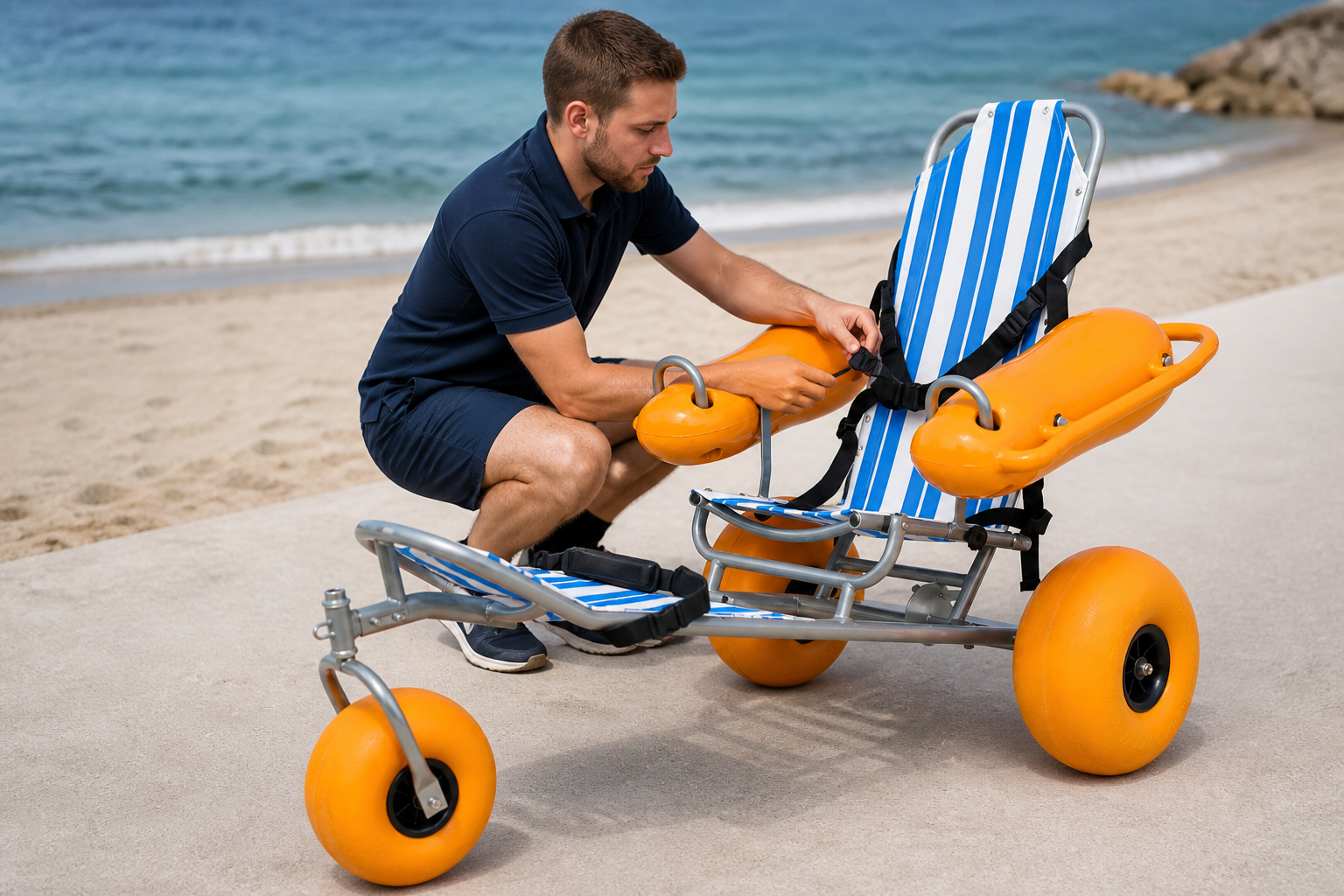
Floating beach wheelchair operating procedure should confirm visible frame, striped seating, restraints, foot support, orange side pods, three wheels, fittings, cleanliness, and current status. Staff should follow the product manual in a fixed sequence and place the chair on hold when a part differs from the documented ready condition. The check is not a substitute for technical service.
Meanwhile, staff review frame and seating, straps and supports, and pods, three wheels, and fittings. As a result, they compare each point with current product guidance and site policy. Also, if a point is unclear, the authorized role records the decision.
Use a model-specific opening check
Use this field cue: Walk around the chair, touch approved checkpoints, and record pass or hold. The assigned role records the chair identity, result, condition, and technical owner. If damage, looseness, missing parts, contamination, or uncertainty appears, pause service. However, the named owner records the next action. Then the next inspector can follow the chair status.
- Check frame and seating
- Confirm straps and supports
- Record pods, three wheels, and fittings
Key Takeaway: A model-specific check keeps product readiness separate from general site readiness.
| Review point | Working response |
|---|---|
| Observe | Record the current condition |
| Decide | Assign the next action and owner |
Then record the chair status before a guest arrives.
How should attendants divide their roles?
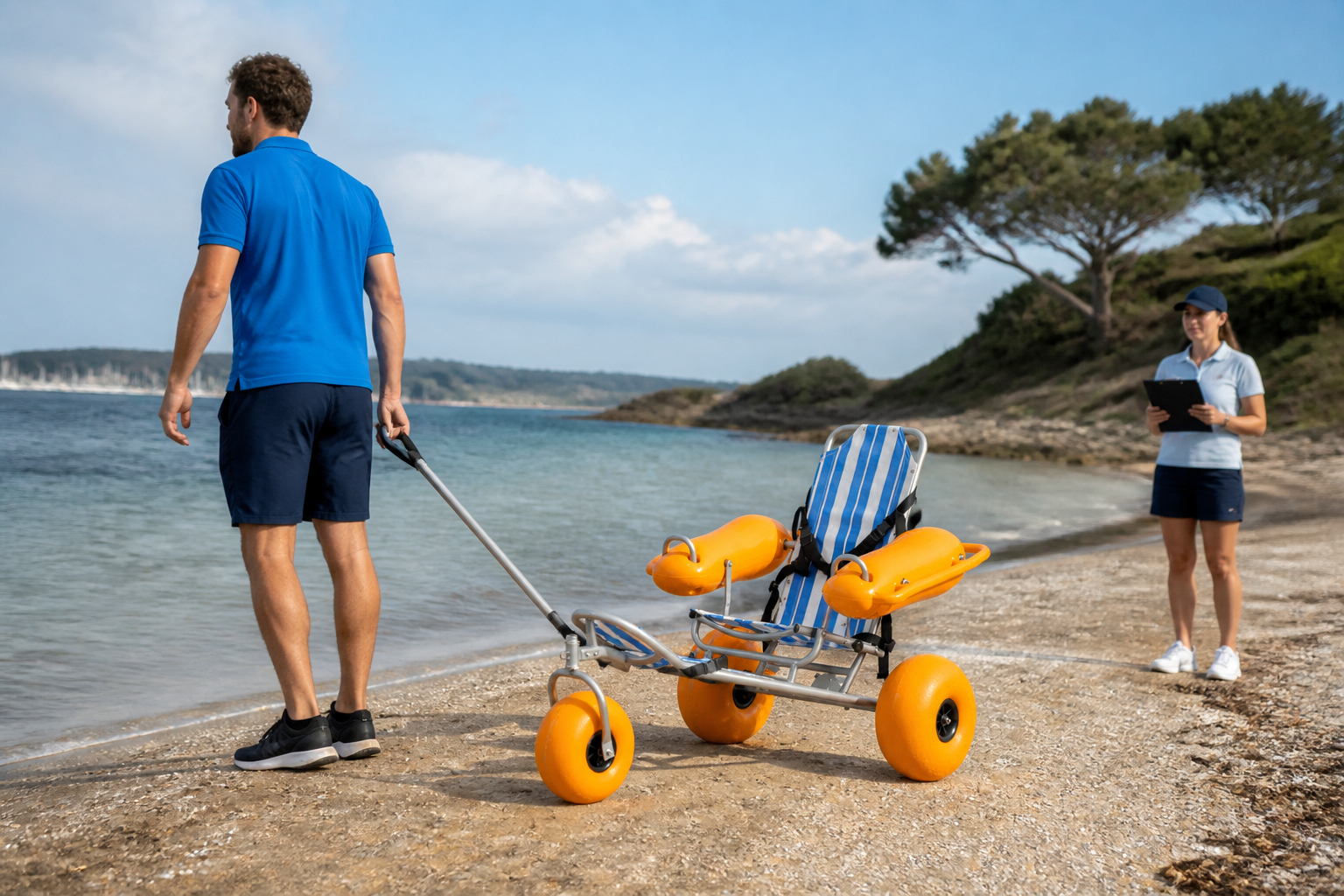
Floating beach wheelchair operating procedure should assign the guest conversation, chair handling, water-position support, shore observation, and stop decision to trained roles. The exact team structure must follow product guidance and local aquatic policy. Staff should use brief verbal cues and know who leads if conditions or guest preferences change.
For example, staff review lead attendant, support attendant, and site decision authority. Afterward, they compare each point with current product guidance and site policy. Then, if a point is unclear, the authorized role records the decision.
Assign lead, support, and site authority
The practical test: Rehearse the complete route without a guest and practice handoffs between roles. The assigned role records the assigned team, role check, and any change. If staffing falls below the approved arrangement or role communication breaks down, pause service. As a result, the named owner records the next action. The saved roster gives the next team a clear handoff.
- Check lead attendant
- Confirm support attendant
- Record site decision authority
Key Takeaway: Defined roles make supervision and stop decisions visible during the service.
| Review point | Working response |
|---|---|
| Observe | Record the current condition |
| Decide | Assign the next action and owner |
Meanwhile, rehearse each attendant role with the normal shift team.
What should the guest briefing cover?

Floating beach wheelchair operating procedure should cover the chair, attendant roles, restraint and support checks, approved route, communication cues, stop conditions, return plan, and guest preferences. Staff should invite questions and confirm the guest understands how attendants will guide the activity. They must avoid medical advice or a promise that conditions will remain unchanged.
However, staff review chair and roles, communication cues, and go, pause, and return plan. Also, they compare each point with current product guidance and site policy. Next, if a point is unclear, the authorized role records the decision.
Explain the service in plain language
Keep the response simple: Use a short briefing card, ask the guest to confirm key cues, and record acceptance under policy. The assigned role records the briefing, preferences, attendant lead, and decision. If the guest arrangement or service boundary remains unclear, pause service. Afterward, the named owner records the next action. Then the next attendant can repeat the agreed briefing.
- Check chair and roles
- Confirm communication cues
- Record go, pause, and return plan
Key Takeaway: A calm briefing gives everyone the same plan before movement begins.
| Review point | Working response |
|---|---|
| Observe | Record the current condition |
| Decide | Assign the next action and owner |
For example, practice the guest briefing before service opens.
How should teams approach water entry?
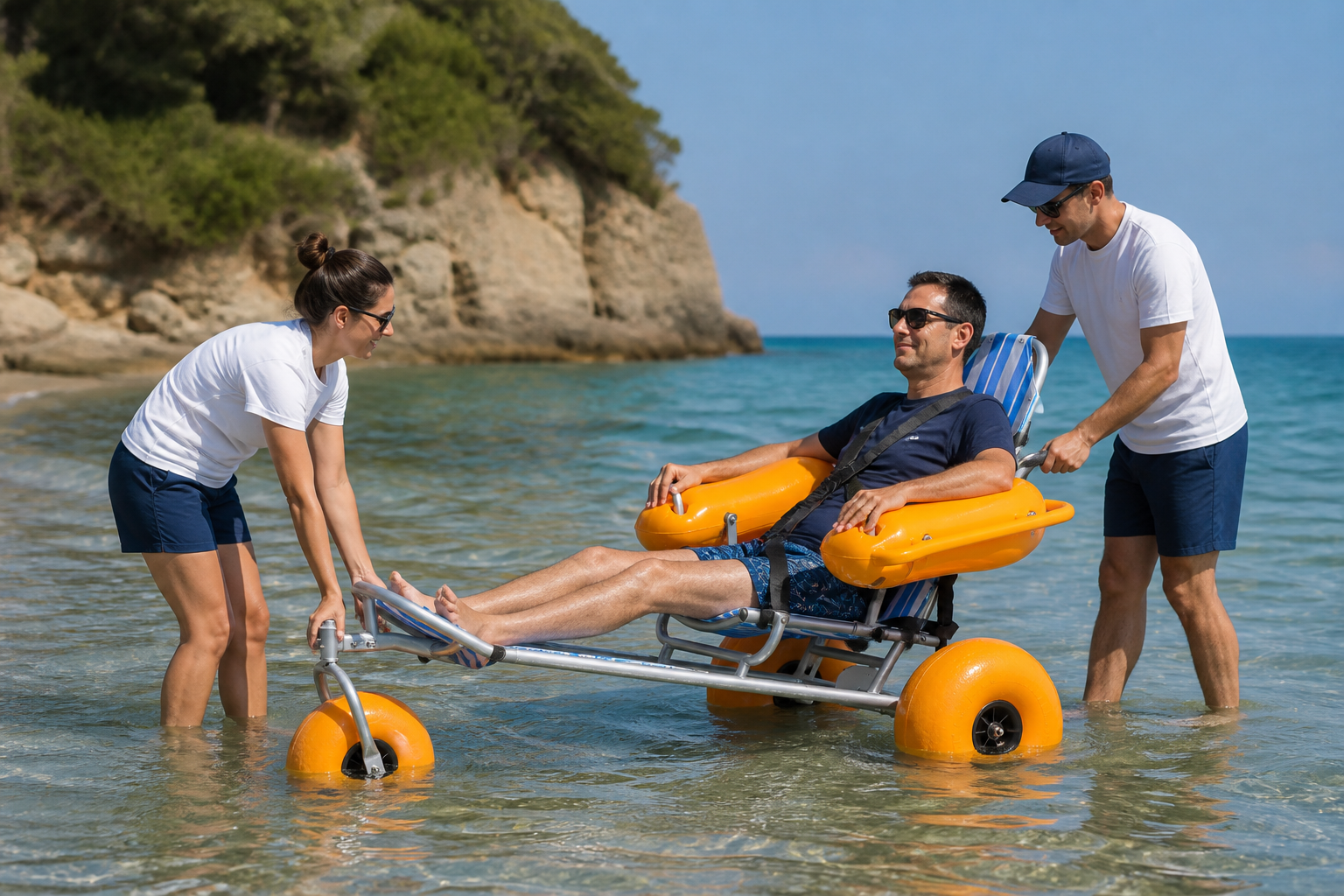
Floating beach wheelchair operating procedure should treat water entry as a staffed, reversible sequence. Attendants can move from dry staging through the checked shore approach, pause at the boundary, reconfirm conditions, enter only through the approved point, and maintain the positions stated by local procedure and product guidance. The water-park application page can prompt questions about controlled operating zones. An accessible beach mat may support part of the approach, but staff must record every route join.
As a result, staff review clear approach, boundary pause, and attendant control. Then, they compare each point with current product guidance and site policy. Next, if a point is unclear, the authorized role records the decision.
Follow the approved route under direct control
This is the operating move: Rehearse each cue, maintain agreed positions, and keep the return route open. The assigned role records the entry decision, attendants, current condition, and any pause. If conditions, traffic, guest preference, or team position changes, pause service. Also, the named owner records the next action. The route note gives the next team a clear starting point.
- Check clear approach
- Confirm boundary pause
- Record attendant control
Key Takeaway: A staged entry gives the team repeated opportunities to stop or return.
| Review point | Working response |
|---|---|
| Observe | Record the current condition |
| Decide | Assign the next action and owner |
Then rehearse the approach and return path under current conditions.
What conditions require a pause or return?
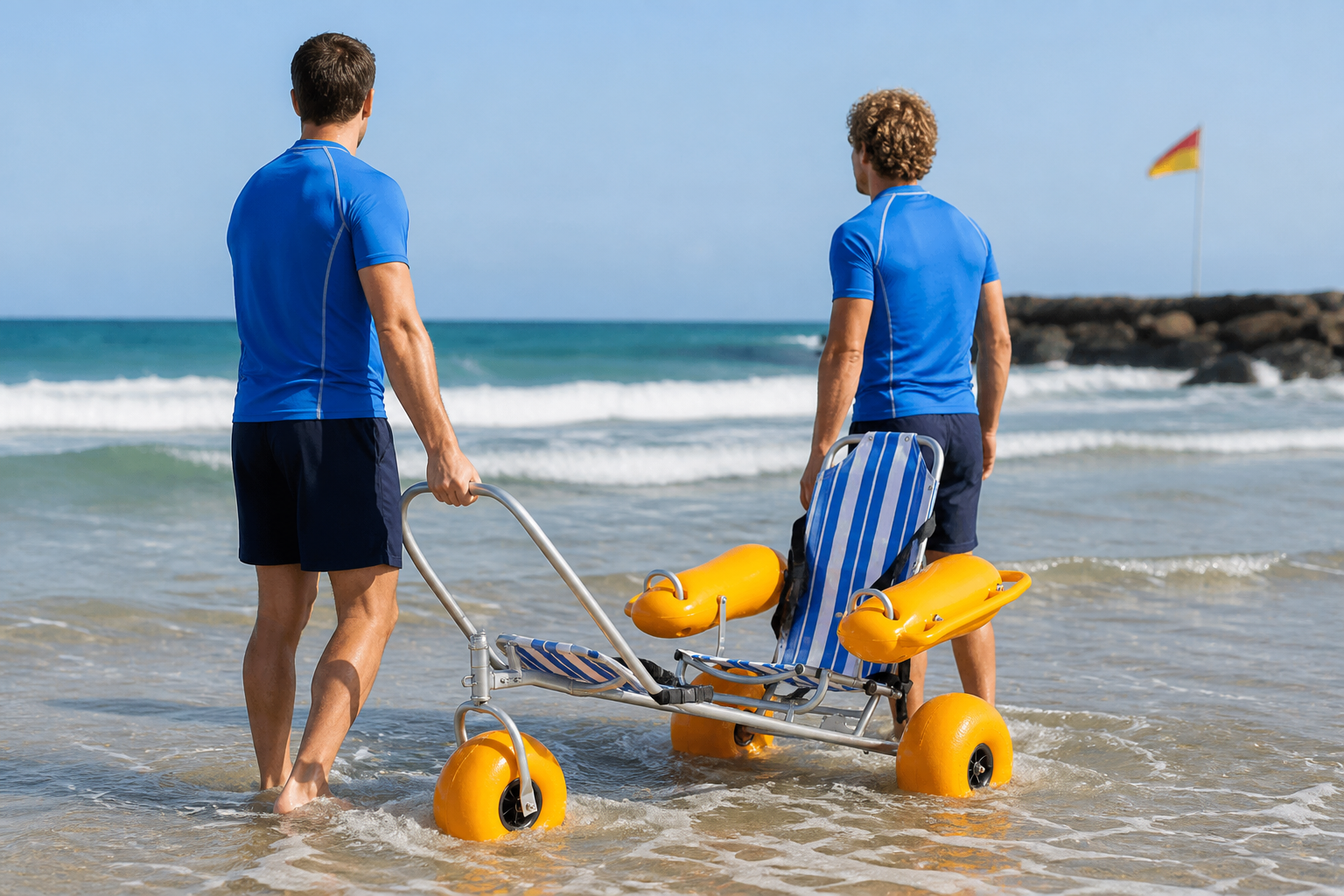
Floating beach wheelchair operating procedure should define observable reasons to pause, return, or close the activity. Local policy may cover weather, water movement, traffic, route obstruction, staff availability, chair condition, guest request, communication loss, or any situation outside the agreed boundary. Staff should act without debating a technical cause in the water.
Afterward, staff review site or weather change, chair or staffing change, and guest request or communication. Next, they compare each point with current product guidance and site policy. Then, if a point is unclear, the authorized role records the decision.
Give every trained role stop authority
Watch the handoff: Signal the pause, stabilize the team under trained procedure, use the approved return path, and notify site authority. The assigned role records the trigger, action, decision role, and service state. If any part of the approved plan cannot be maintained, pause service. Then, the named owner records the next action. Then every shift can apply the same pause decision.
- Check site or weather change
- Confirm chair or staffing change
- Record guest request or communication
Key Takeaway: Clear stop authority keeps response focused on a controlled return.
| Review point | Working response |
|---|---|
| Observe | Record the current condition |
| Decide | Assign the next action and owner |
Next, give every pause condition a named decision owner.
How should teams complete water exit and handoff?
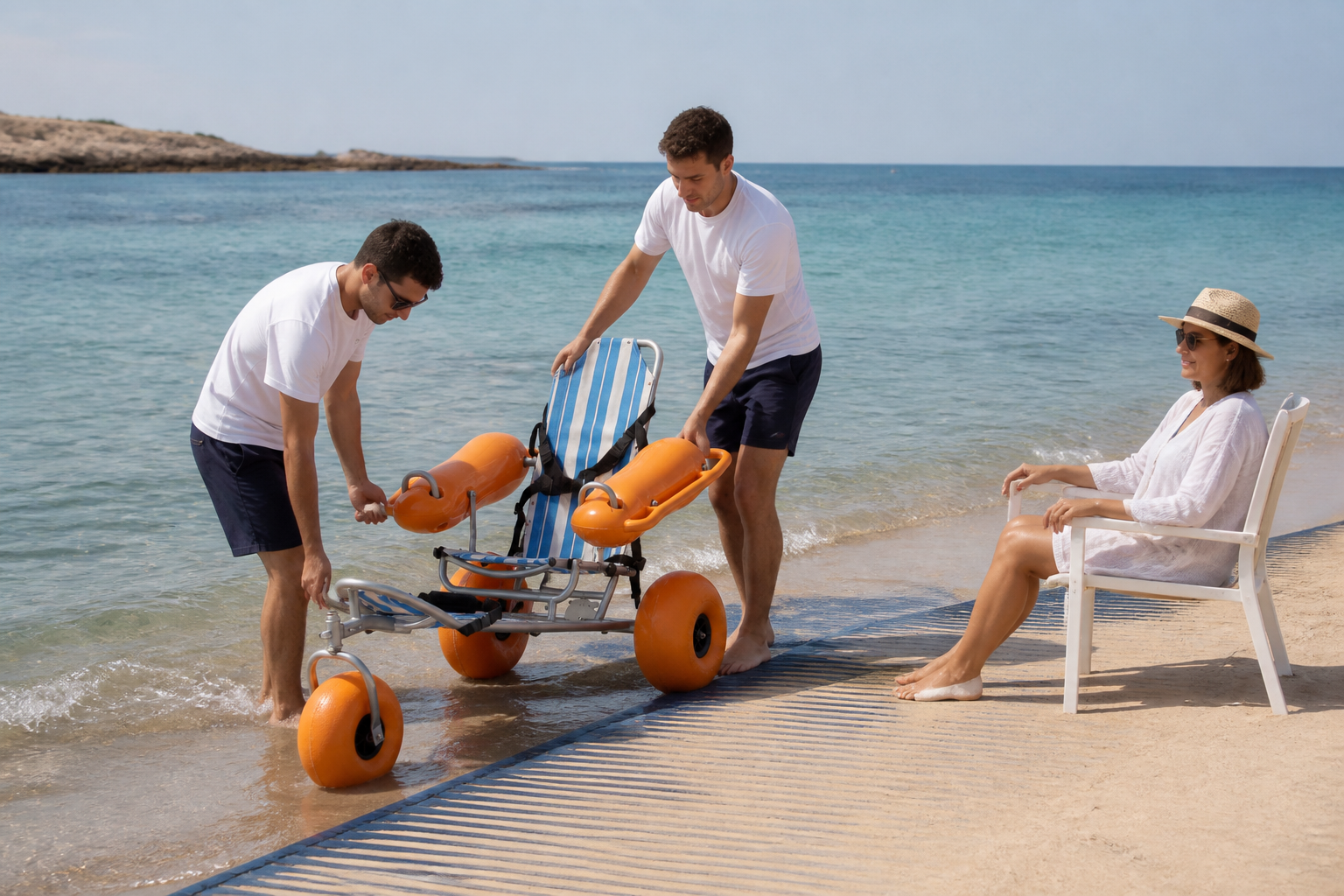
Floating beach wheelchair operating procedure should guide the chair through the approved exit, stable staging point, guest handoff, and service-status update. The route should remain clear before the team approaches shore. Staff can communicate each movement, pause at the stable point, support the agreed guest move under policy, and keep wet equipment outside the ready zone.
Also, staff review clear exit route, stable staging, and guest and chair handoff. Next, they compare each point with current product guidance and site policy. Meanwhile, if a point is unclear, the authorized role records the decision.
Use a planned exit sequence
Use one clear rule: Reconfirm shore conditions, use the trained positions, complete the handoff, and mark the chair returned. The assigned role records the exit time, attendants, chair state, and guest handoff completion. If the exit route, staffing, or staging area is not ready, pause service. Next, the named owner records the next action. The handoff record shows when care work begins.
- Check clear exit route
- Confirm stable staging
- Record guest and chair handoff
Key Takeaway: A planned exit closes the guest activity before equipment care begins.
| Review point | Working response |
|---|---|
| Observe | Record the current condition |
| Decide | Assign the next action and owner |
Afterward, close the exit and guest handoff record.
What rinse, drying, and storage steps follow use?
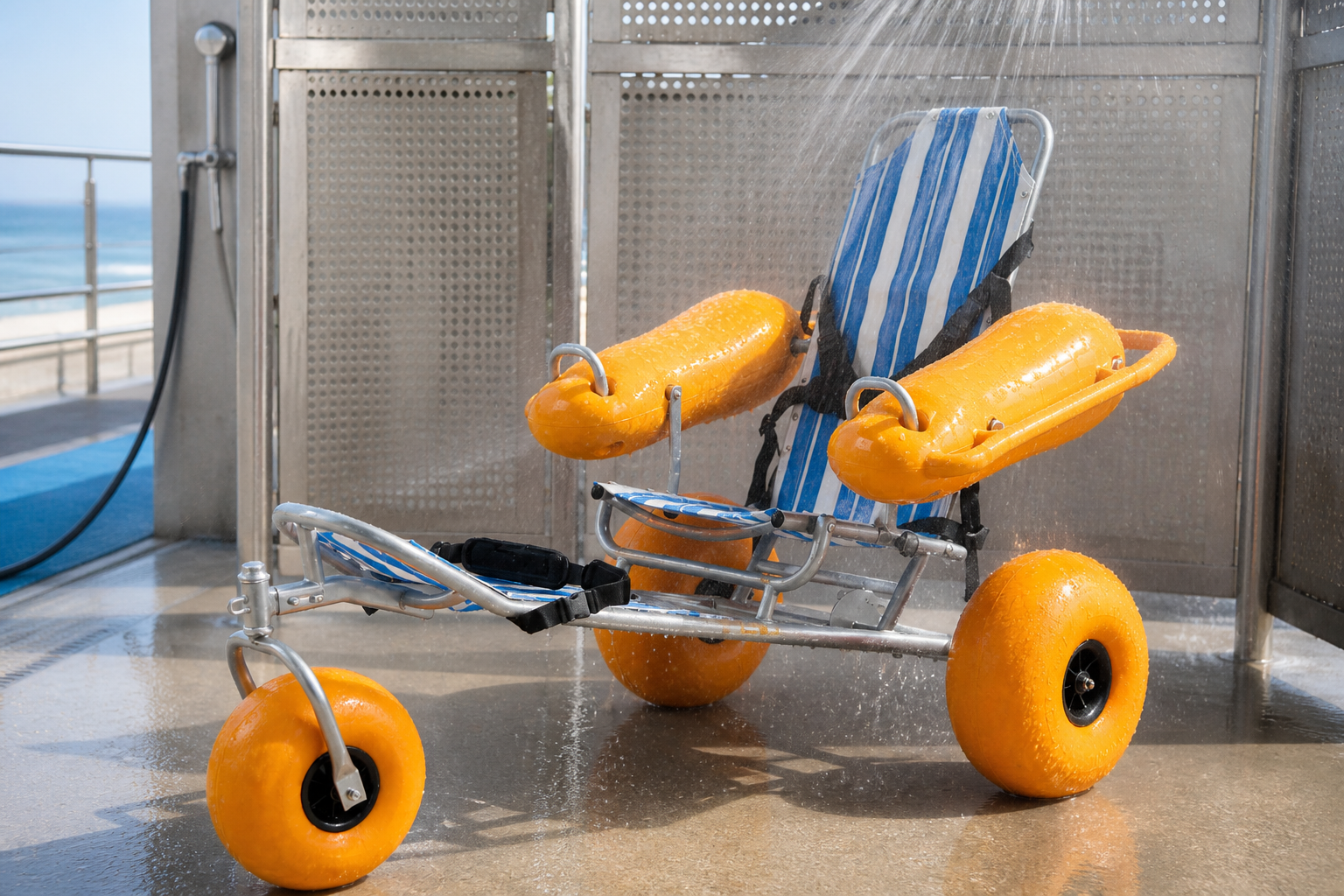
Floating beach wheelchair operating procedure should send every returned chair through approved fresh-water rinse, cleaning, drying, inspection, and assigned storage. Salt, sand, and moisture need a visible process controlled by the product instructions. Wet equipment should stay separated from ready stock, and any unclear condition should move to a held area.
Then, staff review return status, approved rinse and drying, and inspection before ready. Then, they compare each point with current product guidance and site policy. For example, if a point is unclear, the authorized role records the decision.
Move through one wet-to-dry workflow
Make the status visible: Move the chair in one direction through care zones and release it only after the documented check. The assigned role records the care completion, hold reason, storage bay, and owner. If cleaning is incomplete or a part needs technical review, pause service. Next, the named owner records the next action. Then storage staff can see whether the chair is ready.
- Check return status
- Confirm approved rinse and drying
- Record inspection before ready
Key Takeaway: A wet-to-dry workflow makes post-use chair status clear to every shift.
| Review point | Working response |
|---|---|
| Observe | Record the current condition |
| Decide | Assign the next action and owner |
Then confirm rinse, drying, inspection, and storage before release.
Which records keep the procedure usable?
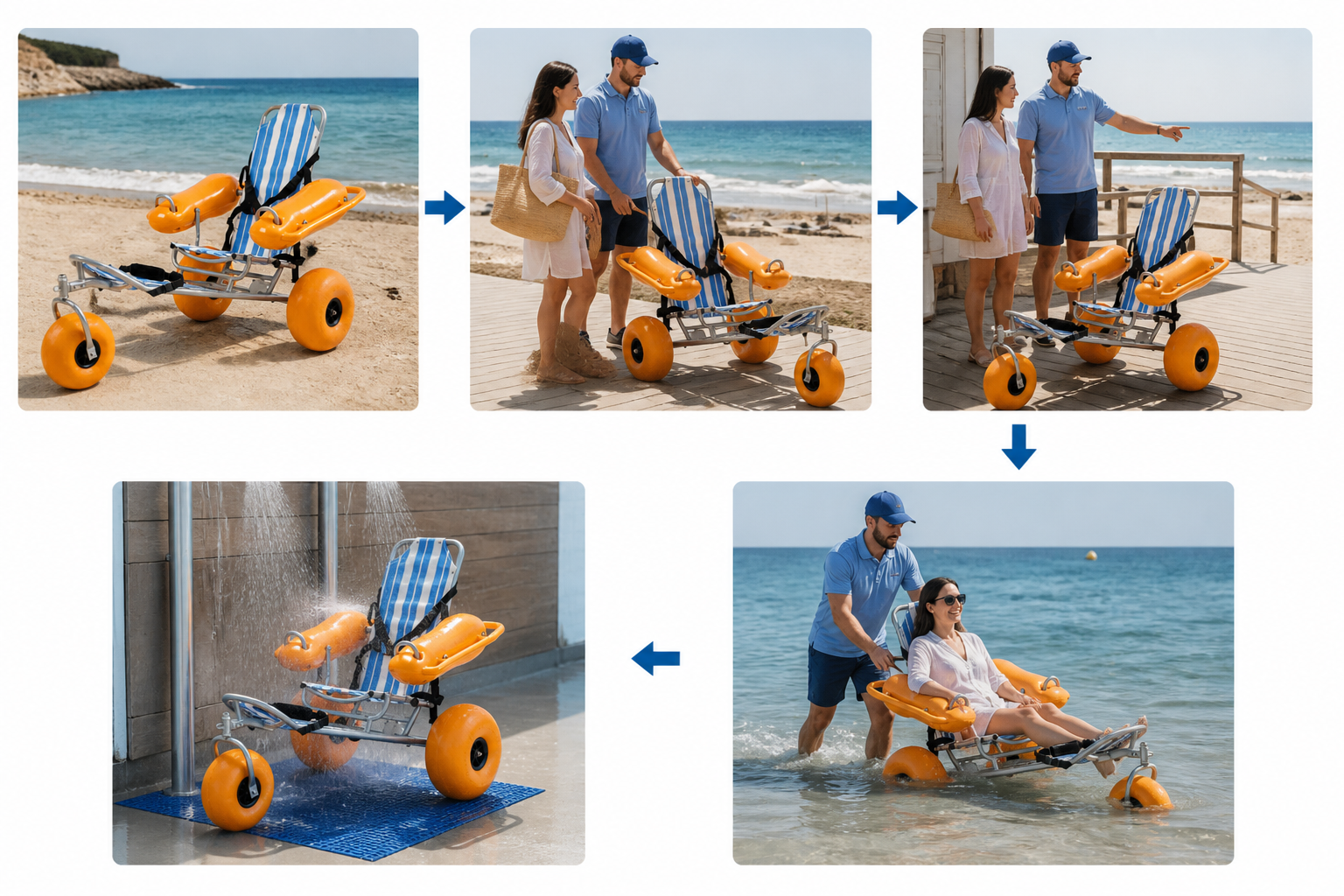
Floating beach wheelchair operating procedure should record opening state, chair check, assigned attendants, guest briefing, entry and exit, pauses, care completion, holds, and procedure changes. The log should help the next shift act, not collect private detail without purpose. Managers can group repeat events and revise one unclear cue, staffing step, or route checkpoint. Keep the current user manual page linked in staff records so product guidance remains easy to reach. Use the supplier overview to frame questions, then keep model instructions with the procedure.
Next, staff review service decision, chair and role state, and action owner. Meanwhile, they compare each point with current product guidance and site policy. However, if a point is unclear, the authorized role records the decision.
Record decisions and role ownership
Close the decision loop: Record events at the point of work, review repeat friction, assign a change, and observe the revised cycle. The assigned role records the event, decision, owner, version, and follow-up. If records conflict with the actual procedure or no owner closes a hold, pause service. Then, the named owner records the next action. The saved version gives managers a clear review trail.
- Check service decision
- Confirm chair and role state
- Record action owner
Key Takeaway: Decision-linked records keep the written procedure aligned with supervised service.
| Review point | Working response |
|---|---|
| Observe | Record the current condition |
| Decide | Assign the next action and owner |
As a result, each procedure change remains tied to an owner and version.
Answer common operating questions
FAQs
Can I use a floating chair without attendants?
No. A floating service should follow the maker’s instructions and local rules for trained attendants and direct supervision.
What’s the best place for water entry?
Use only the locally approved entry point after trained staff check the shore, water, route, traffic, and return path.
How do I know if conditions are suitable?
The authorized local role decides from current observations and written policy. A prior check does not replace a current one.
Can the chair replace a flotation device?
Do not make that assumption. Use the product only as described by its instructions and follow all local aquatic requirements.
What should staff record after use?
Record the chair identity, attendants, site decision, release and return, service pause if any, care completion, and current status.
Closing perspective
A better floating service procedure begins with a defined boundary and ends only after exit, guest handoff, rinsing, drying, inspection, storage, and records. Keep attendants within their trained roles and let current site conditions, local aquatic policy, and product instructions control every go, pause, and return decision. Teams planning supervised water access can contact us today with their site and equipment questions.