
A floating beach wheelchair in Florida lets a supervised user roll across the sand and into calm, shallow Gulf or Atlantic water on the same chair. Here’s a scene we hear about every summer. A teenager who uses a wheelchair watches cousins splash in the surf at a state park, the beach chair stops at the waterline, and staff can’t go further. A floating beach wheelchair Florida program changes that moment, and this guide covers how the chairs float, where they work, what supervision they need and how to buy them well.
Teams can connect this topic with beach wheelchair USA shipping and floating beach wheelchair care.
For broader destination-level context, consult the UN Tourism accessibility publications and guidelines. Apply local requirements and current product documents to the specific project.
We design and build floating beach chairs in our own factory and ship them to coastal buyers in the US and abroad. Everything here reflects real model details and real buyer questions, with no promises we can’t back up.
What Is a Floating Beach Wheelchair Florida Buyers Should Know?
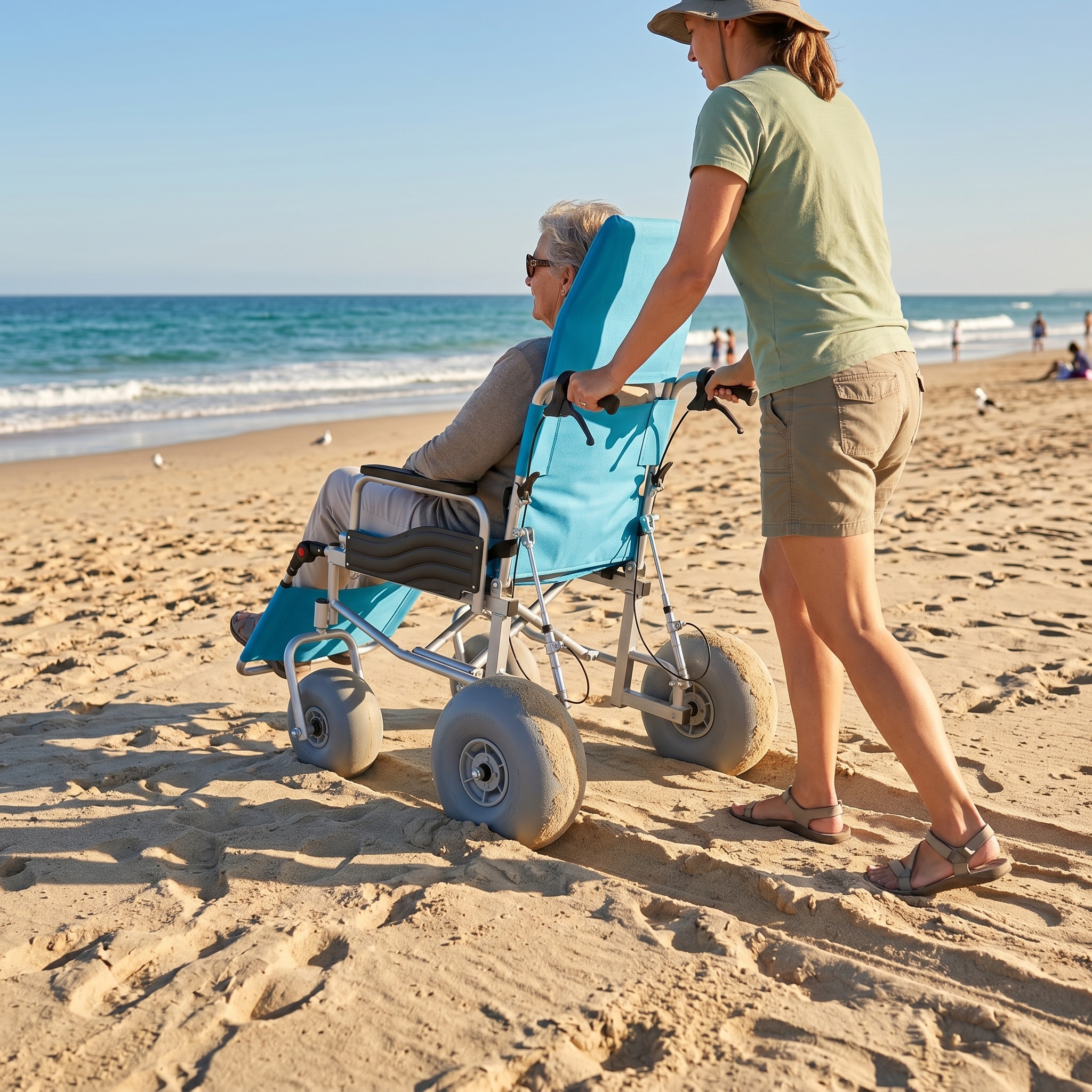
A floating beach wheelchair Florida buyers can use is a manual chair with balloon wheels for sand and built-in floats that keep it buoyant in shallow water. It’s pushed by an attendant on land and stays with that attendant in the water. It isn’t a swim aid or a rescue device.
How is it different from a land beach chair?
A land chair rolls on sand but stops at the waterline. A floating chair adds flotation so the user can stay seated in calm water. Here’s the deal: that one feature changes staffing, cleaning and planning.
- Flotation built into the arms or frame
- Sling fabric that drains and dries fast
- Wheels sized for soft, wet sand
What does our floating model look like?
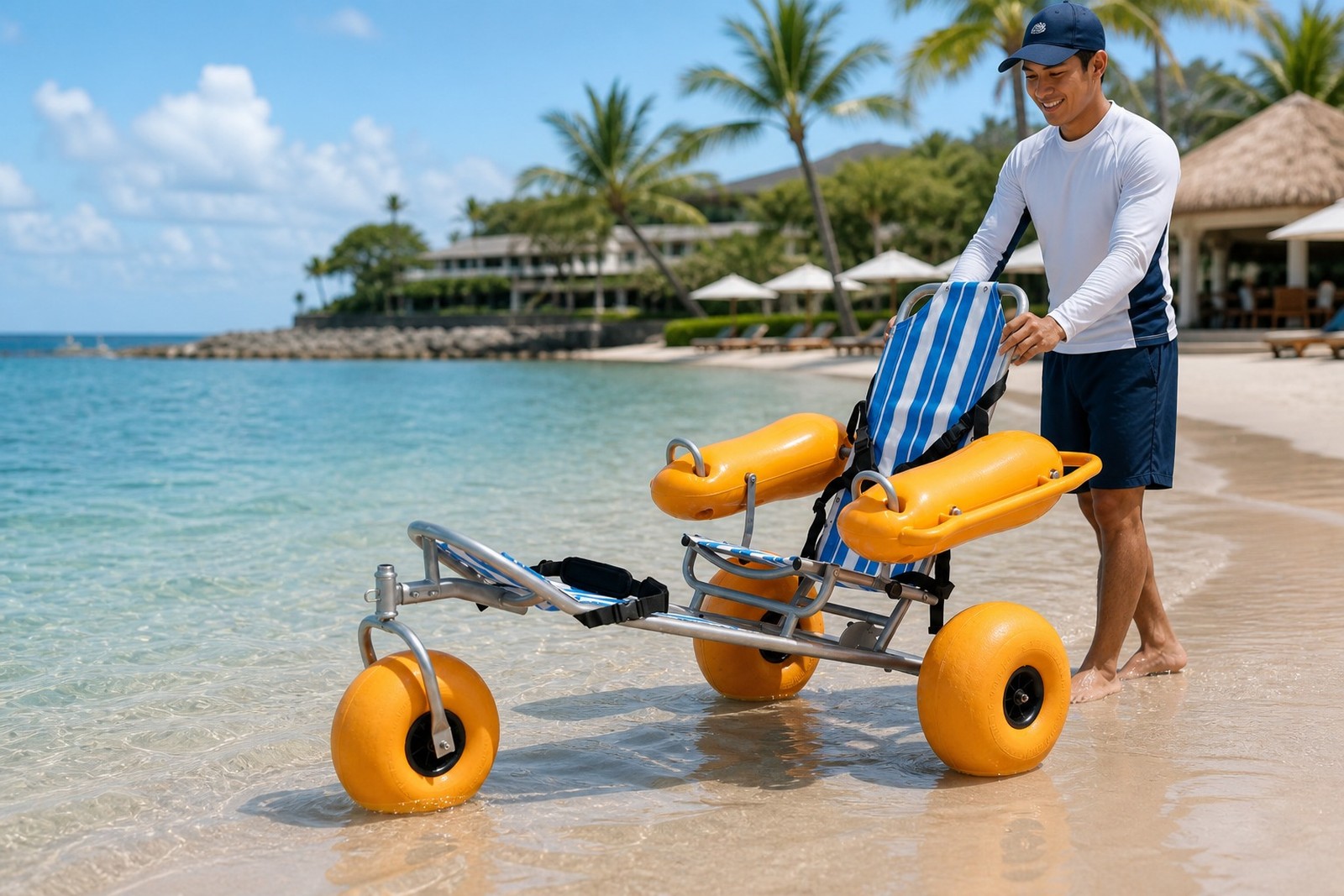
Our floating model uses three wheels, side flotation armrests and a fabric sling seat and back. The backrest adjusts, and the chair is a distinct design from our four-wheel land chairs.
| Feature | Land beach chair | Floating beach chair |
|---|---|---|
| Sand travel | Yes | Yes |
| Shallow water | No | Yes, supervised |
| Flotation | None | Side floats |
| Staffing | Basic | Trained attendants |
The water feature is the reason to buy, and also the reason to plan carefully.
Key Takeaway: Treat a floating chair as a supervised water experience, not just another beach chair.
Who Usually Orders a Floating Beach Wheelchair Florida Fleet?
Florida orders for a floating beach wheelchair Florida fleet usually come from state and county parks, city beach departments, resorts, nonprofits and rental companies. Many Florida state parks have already added floating chairs through partnership programs. Private buyers often follow once guests start asking.
Why are public parks buying them?
Parks want visitors to enjoy the water, not just look at it. Think about it: a beach that offers water access gets talked about and visited again.
Why are resorts and rentals interested?
Resorts see guest satisfaction and repeat bookings. Rental firms see a premium item that families plan trips around.
- Resorts: guest experience and reviews
- Rental firms: higher-value rentals
- Nonprofits: inclusive beach events
| Buyer | Main goal | Main concern |
|---|---|---|
| State or county park | Public access | Staff supervision |
| City beach | Community use | Liability and rules |
| Resort | Guest service | Brand reputation |
| Rental company | Revenue | Damage and returns |
Every buyer type shares one concern, supervising water use properly.
Key Takeaway: Know your buyer role, because it shapes rules, staffing and how you’ll fund the chair.
How Does a Floating Beach Wheelchair Florida Model Actually Float?
A floating beach wheelchair Florida model floats because its sealed floats add buoyancy as the water rises, while balloon wheels keep it moving on wet sand. The design keeps the seat stable in calm water. Waves, currents and deep water are a different story.
What keeps the user seated and stable?
Wide floats on each side spread buoyancy evenly, and the attendant controls the chair at all times. But here’s the kicker: stability depends on calm conditions and a hand on the chair.
- Floats on both sides balance the chair
- The sling seat drains water quickly
- An attendant steadies and guides it
What are the limits of flotation?
Flotation doesn’t make surf safe. Choppy water, rip currents and depth all call for staying on shore. Your water-safety team should set the limits.
| Condition | Floating chair use | Who decides |
|---|---|---|
| Calm shallow water | Possible with attendant | Water-safety lead |
| Moderate waves | Usually not | Lifeguards |
| Rip current warning | No | Lifeguards |
| Deep water | No | Program rules |
Clear condition rules turn a great feature into a safe one.
Key Takeaway: Floats give buoyancy in calm shallows, and your safety team decides when the chair stays on sand.
Where Can a Floating Beach Wheelchair Florida Program Operate?
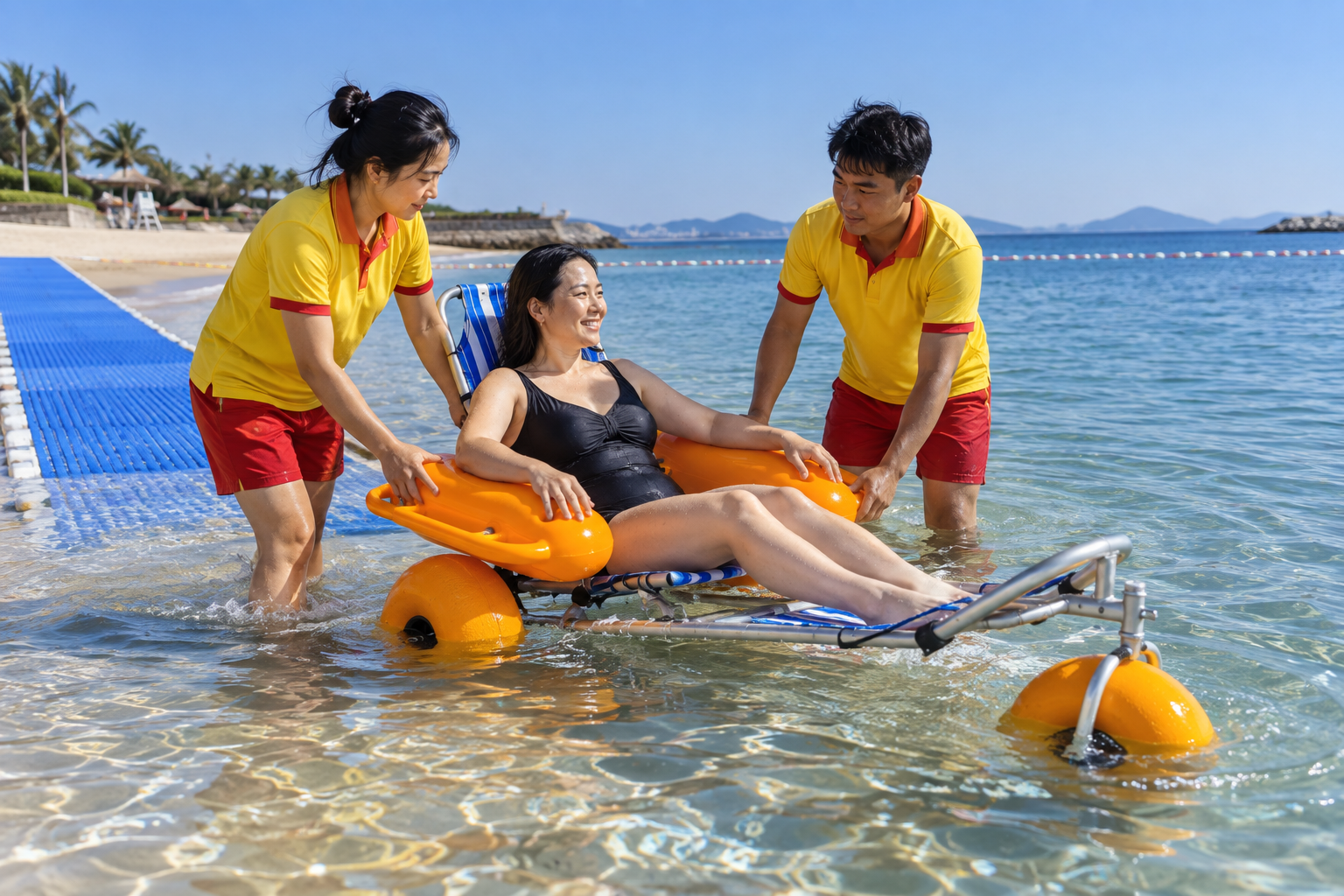
A floating beach wheelchair Florida program can operate where water is calm and shallow, swim areas are marked and trained staff or lifeguards are close by. Many Gulf beaches offer gentle conditions on good days. Atlantic beaches can be rougher, so rules matter even more.
What makes a good launch spot?
A firm path to the shoreline, gentle slope into the water and nearby rinse station all help. Now here’s the twist: the best spot on the map isn’t always the best spot on a windy afternoon.
- Gentle beach slope at the waterline
- Marked swim area with supervision
- Shade and rinse water near the exit
Can it work outside the ocean?
Floating chairs also suit calm lakes, lagoons and some pools with gradual entries. Check each site’s rules before you plan.
| Site type | Typical conditions | Planning note |
|---|---|---|
| Gulf beach | Often calm | Watch wind and tide |
| Atlantic beach | More surf | Stricter limits |
| Lake or lagoon | Calm | Check depth changes |
| Pool with ramp | Controlled | Check pool rules |
Choosing the right site does half of your safety work for you.
Key Takeaway: Pick calm, supervised water with an easy route in and out.
What Supervision Does a Floating Beach Wheelchair Florida Plan Need?
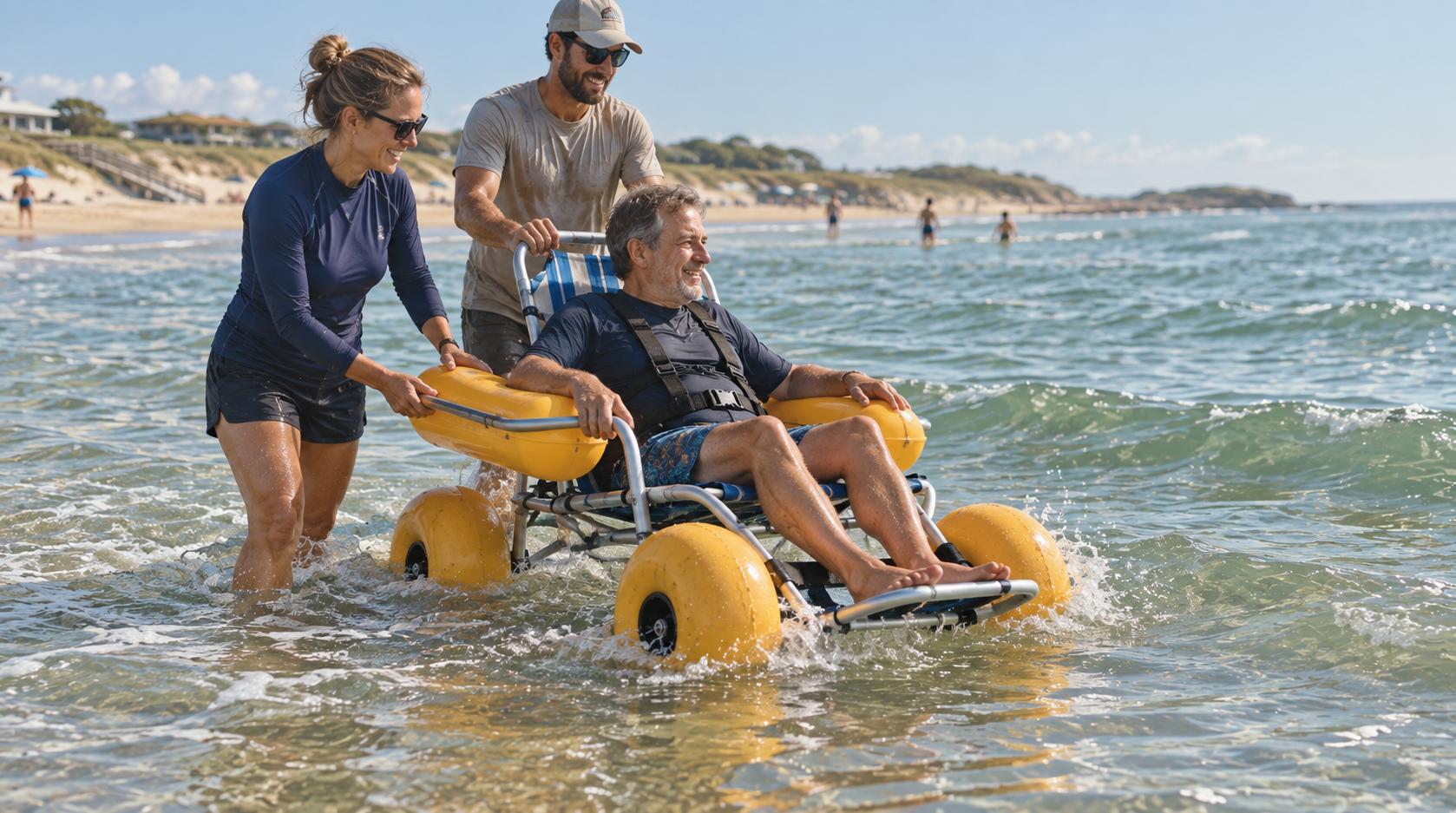
A floating beach wheelchair Florida plan needs at least one trained attendant with the user in the water at all times, plus lifeguard awareness and clear stop rules. Many programs use two attendants for water entry. Your insurer and local authority may set their own rules.
Who should train your attendants?
Your water-safety lead, lifeguard team or local aquatic professionals should run the training. Sounds simple, right? It gets real quickly when conditions change mid-visit.
- How to enter and exit the water
- When to stop and return to shore
- How to communicate with lifeguards
What rules should users and families know?
Explain the limits before every water visit. Families should know the attendant has the final say.
| Rule | Purpose |
|---|---|
| Attendant always with user | Constant control |
| Life jacket as program requires | Added protection |
| Stay in marked area | Lifeguard coverage |
| Stop on staff instruction | Fast response |
Clear rules protect users, staff and your program’s reputation.
Key Takeaway: Build your supervision plan with water-safety professionals before you launch.
How Do Heat and Salt Affect a Floating Beach Wheelchair Florida Fleet?
Heat, UV and salt wear on a floating beach wheelchair Florida fleet faster than in cooler climates, mostly through fabric fading, salt crust and hot surfaces. Daily rinsing and shaded storage slow that wear a lot. Skipping them shortens the chair’s working life.
What wears out quickest in Florida?
Fabric, wheel surfaces and fasteners take most of the beating. Here’s why that matters: they’re also the parts users touch and notice.
- Sun-faded or brittle fabric
- Salt build-up on joints and bolts
- Hot armrests after hours in the sun
How do you protect the chair day to day?
Rinse with fresh water after every water visit, dry it in the shade and store it out of direct sun. Check floats and fabric weekly.
| Stress | Effect | Simple fix |
|---|---|---|
| UV | Fabric fading | Shade storage |
| Salt | Corrosion on fasteners | Fresh-water rinse |
| Heat | Hot surfaces | Park in shade |
| Sand | Grit in moving parts | Brush and rinse |
A few minutes of care each day keeps the fleet ready all season.
Key Takeaway: Rinse, dry and shade every floating chair daily in Florida’s climate.
What Should a Floating Beach Wheelchair Florida Spec Sheet Include?
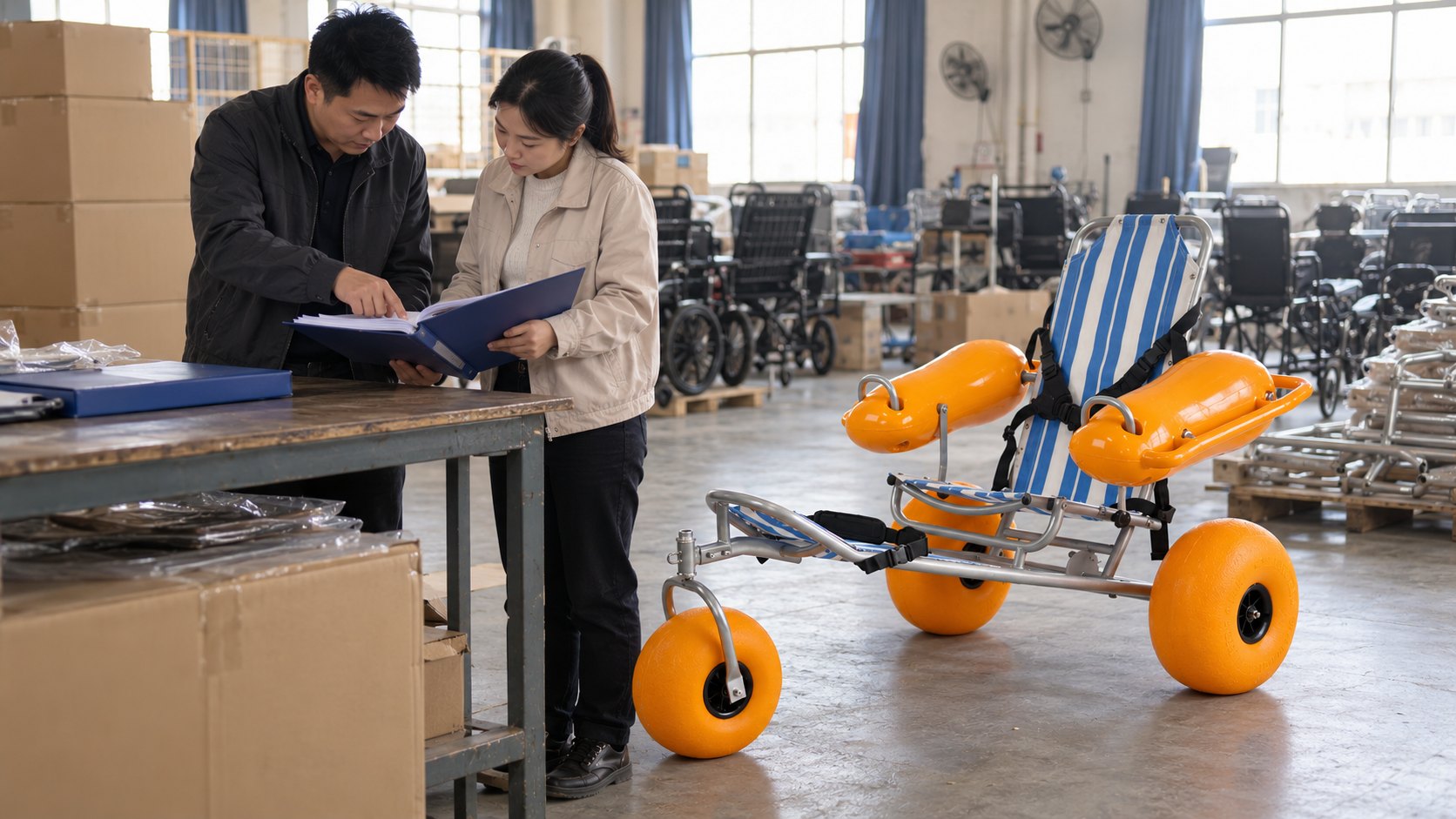
A floating beach wheelchair Florida spec sheet should include the exact model, user weight limit, frame material, float design, wheel size and spare parts list. Each figure should come from the current manual for that model. If two documents disagree, ask before ordering.
Why do specs need double-checking?
Brochures, manuals and web pages sometimes list different numbers for the same model. Want to know the best part? One clear question to your supplier usually settles it.
- Ask for the current manual
- Confirm weight limit and dimensions
- Get the answer in writing
Which extras should you request?
Request spare floats or float parts, replacement fabric and wheel spares. Ask about headrests or positioning accessories if your users need them.
| Spec item | Why it matters | Source |
|---|---|---|
| User weight limit | User safety | Current manual |
| Frame material | Corrosion life | Written confirmation |
| Float design | Buoyancy and repair | Model drawing |
| Spare parts | Uptime | Parts list |
Written, model-specific specs protect you if anything goes wrong.
Key Takeaway: Approve a spec sheet only when every key figure is confirmed in writing for your exact model.
How Much Does a Floating Beach Wheelchair Florida Program Cost?
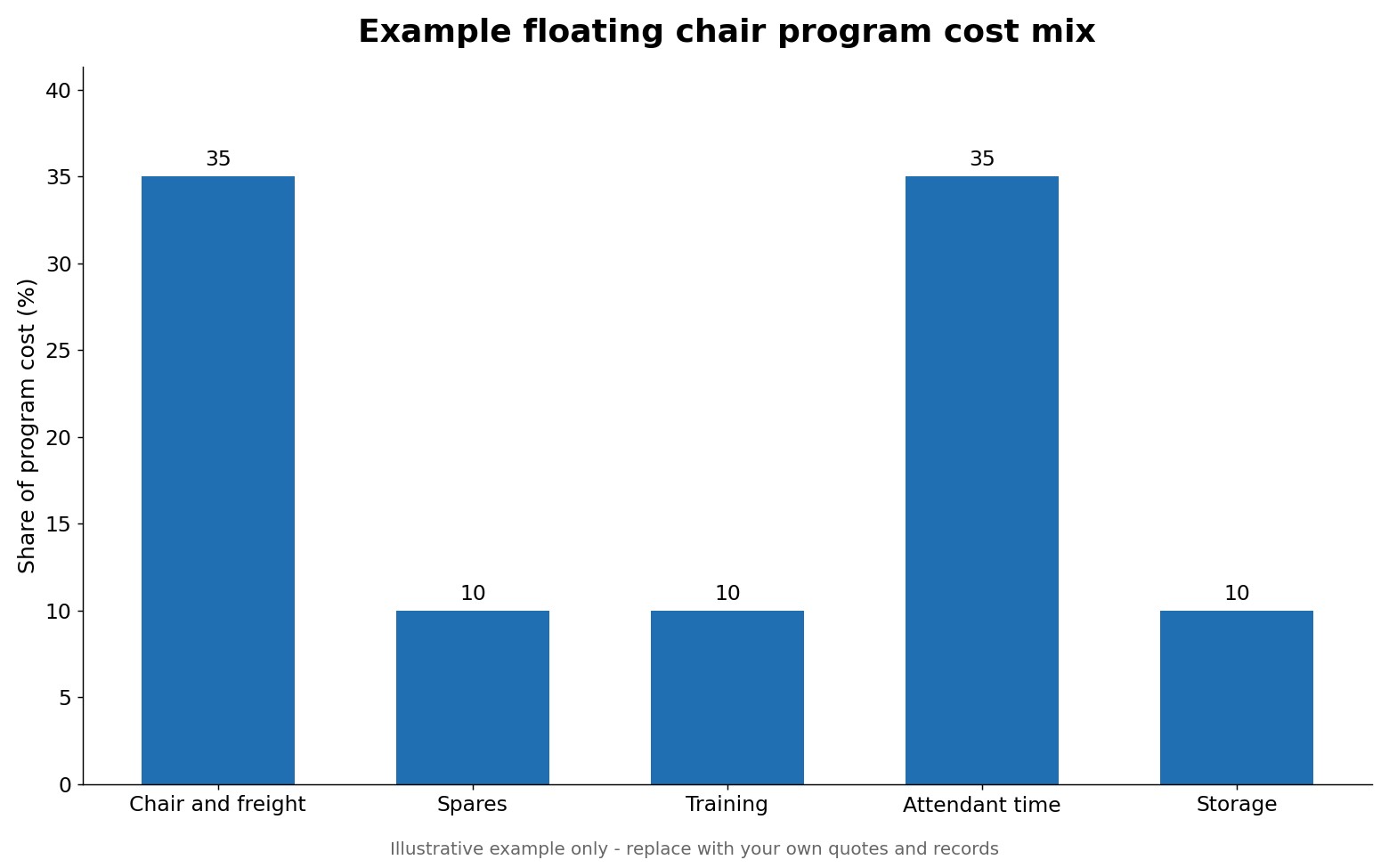
A floating beach wheelchair Florida program costs the chair price plus freight, spares, staff training, attendant hours, storage and cleaning. Staff time is often the largest ongoing cost. The chair itself is usually a one-time line.
What hidden costs show up later?
Training refreshers, replacement fabric and insurance reviews tend to appear after launch. Here’s the thing: planning for them early keeps the program alive in year two.
- Attendant hours during water visits
- Spare parts and fabric replacements
- Insurance or permit reviews
How do programs fund the chairs?
Many Florida programs combine park budgets, foundation grants, local business sponsors and community fundraising. Sponsors often like a visible, positive project.
| Cost line | Type | Planning tip |
|---|---|---|
| Chair and freight | One-time | Order early |
| Spares | Ongoing | Ship with main order |
| Training | Yearly | Refresh before season |
| Attendant time | Ongoing | Book water sessions |
Ongoing costs decide whether a program lasts, so budget for them up front.
Key Takeaway: Budget for staff time and spares, not just the chair price.
How Do You Launch a Floating Beach Wheelchair Florida Service?
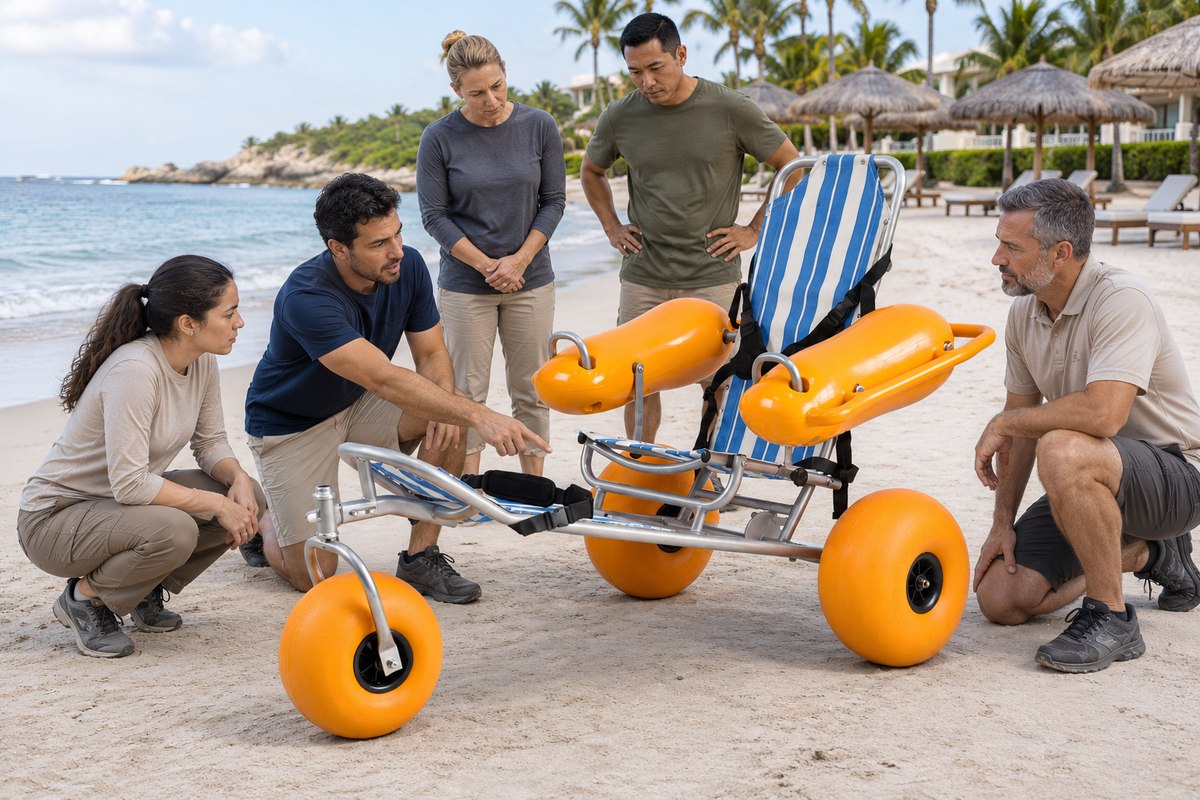
You launch a floating beach wheelchair Florida service by setting rules, training staff, testing your site and then opening bookings with clear information. A soft launch with a few users helps you fix problems early. Then you scale up.
What should a booking system cover?
Bookings help you schedule trained attendants. The short version? Water sessions need staff, so walk-ups don’t always work.
- Session times and length
- Attendant availability
- Contact details and user needs
How do you tell the public?
Post clear details on your website and at the beach: where to go, how to book, and what the limits are. Honest information builds trust.
| Launch step | Owner | Done when |
|---|---|---|
| Rules written | Program lead | Approved by safety team |
| Staff trained | Water-safety lead | Practice sessions complete |
| Site tested | Beach team | Route and exit checked |
| Bookings open | Front desk | Info posted online |
A step-by-step launch keeps the opening weeks calm and positive.
Key Takeaway: Launch small, adjust fast and scale once your team feels confident.
How Do You Source a Floating Beach Wheelchair Florida Buyers Trust?
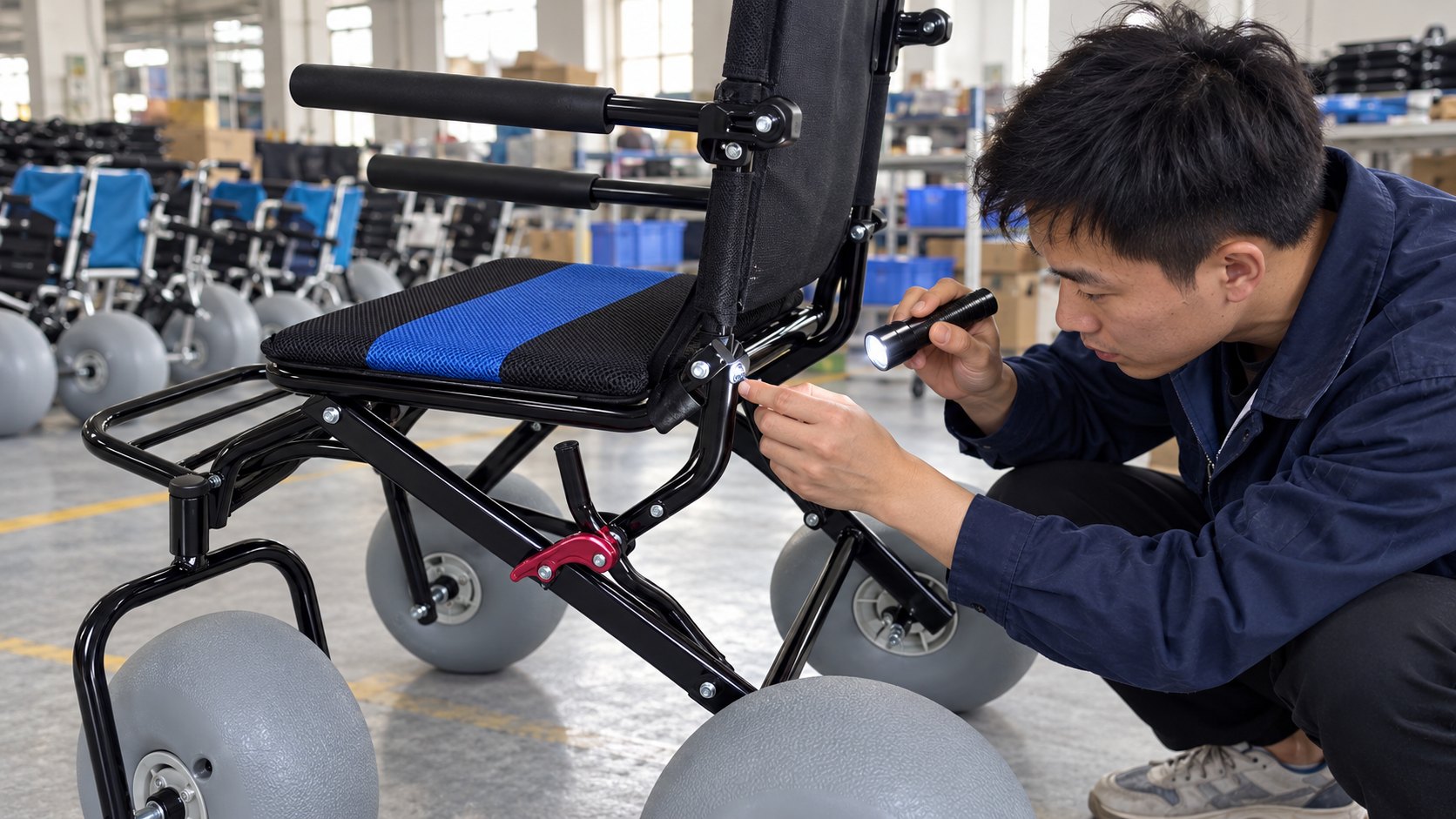
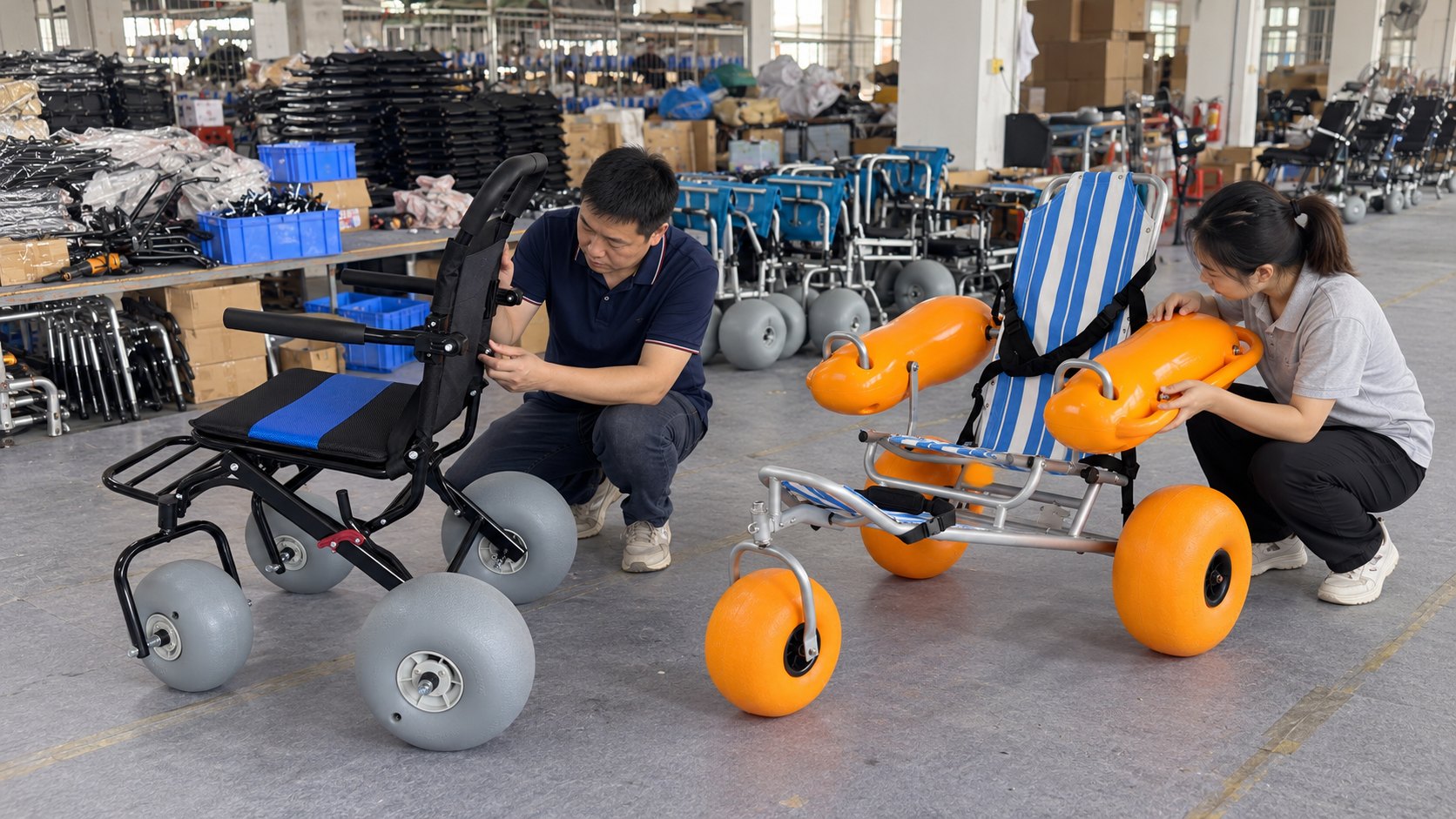
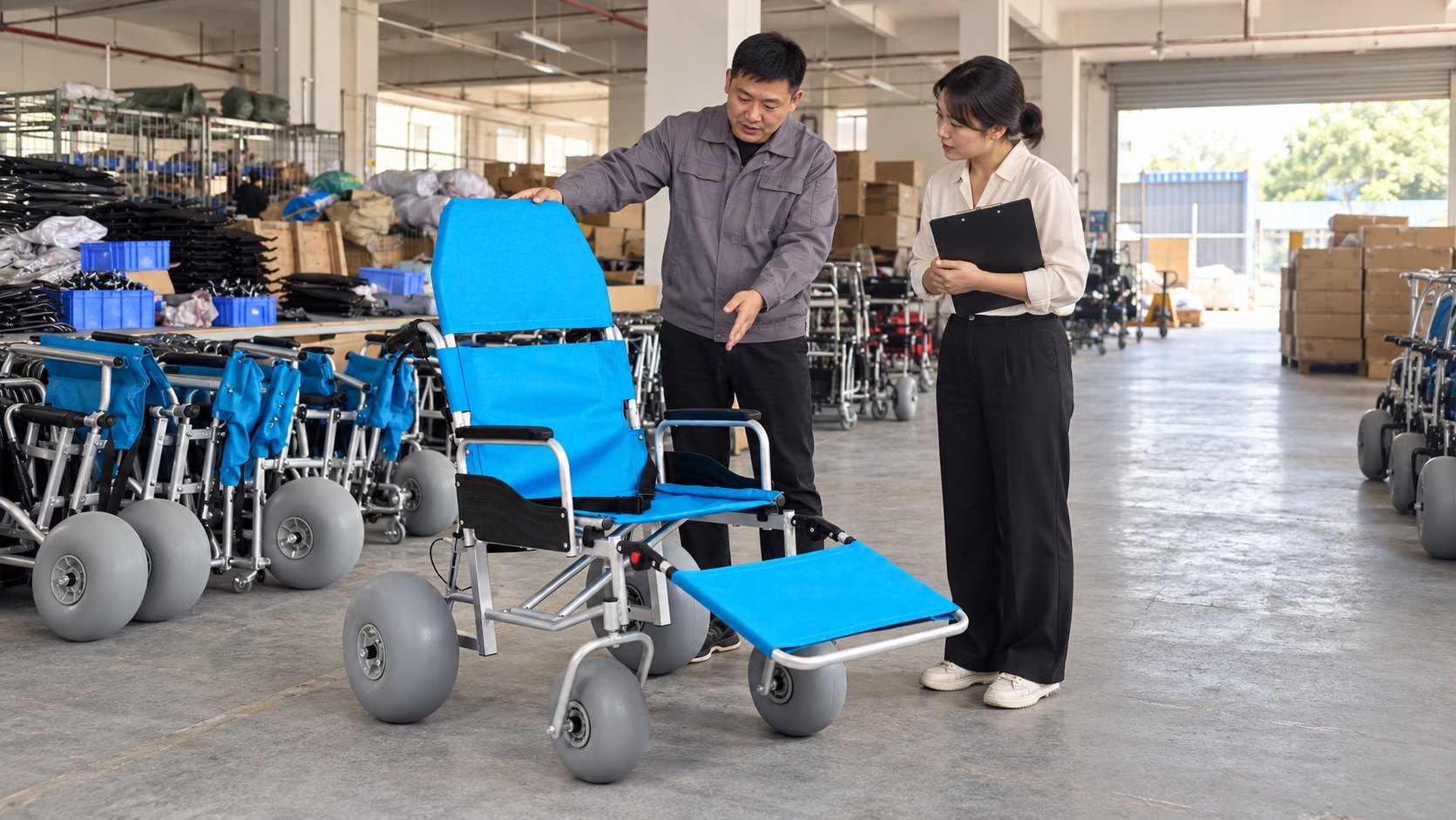
You source a floating beach wheelchair Florida buyers trust by choosing a maker who documents each model, answers spec questions clearly and supplies parts for years. Ask for production photos and manuals. Compare suppliers on support, not just price.
What should you ask a manufacturer?
Ask who builds the chair, how floats are made and how parts are shipped. This is where it gets interesting: the answers tell you how the supplier behaves after the sale.
- Factory and production photos
- Current manual and spec sheet
- Spare parts list and shipping options
How do you compare offers?
Use one template for every quote, with the same model details and shipping terms. Then compare total cost and support side by side.
| Check | Good sign | Warning sign |
|---|---|---|
| Production | Own factory | Unclear source |
| Specs | Consistent and model-specific | Conflicting numbers |
| Parts | Listed and available | Not mentioned |
| Contact | Named person | Generic replies |
These checks quickly separate reliable makers from resellers.
Key Takeaway: Pick the supplier who documents everything clearly and stands behind spare parts.
Final Thoughts
Floating chairs can give Florida visitors something unforgettable, the feel of the water from their own seat. You’ve seen how these chairs float, where they work, what supervision they need, how Florida’s climate affects them, what to put in your spec sheet, how to budget, how to launch and how to choose a supplier. With those pieces in place, your program can run safely and happily for many seasons.
If you’re planning a floating chair program in Florida, we’d be glad to help you match the model and spares to your beach. Contact us today with your site details and expected users. We believe the shoreline shouldn’t be the end of anyone’s beach day, and we build our chairs with that in mind.
FAQ
Can I take a floating beach chair into the surf?
No, not into real surf. Floating chairs suit calm, shallow water with a trained attendant, and lifeguards should decide when conditions are unsuitable.
What’s the best place to start a floating chair program in Florida?
A calm, supervised beach with an easy route is best. Many Gulf beaches offer gentle water on good days.
How do I know if my staff are ready?
They’re ready when your water-safety lead has trained them and they’ve practiced entries and exits. Practice sessions before launch show any gaps.
Can I use one chair for both sand and water?
Yes. A floating chair rolls on sand and floats in calm shallows, though it needs rinsing after every water visit.
How do I know if the weight limit is right for my users?
Check the current manual for your exact model and confirm the figure in writing. Don’t rely on a brochure number alone.