
Floating beach wheelchair care in Florida comes down to a fresh-water rinse after every use, shaded drying, weekly checks and proper storage during storm season. Here’s what happens without it. A resort buys two floating chairs in March, staff park them wet behind the pool bar, and by August the fabric is chalky, the bolts are crusted and one float has a crack nobody noticed. Good floating beach wheelchair care Florida habits stop that slide, and this guide gives you the routine, the checklists and the parts plan.
For a connected planning step, compare floating beach wheelchair Florida with beach wheelchair supplier USA.
For broader destination-level context, consult the UN Tourism accessibility publications and guidelines. Apply local requirements and current product documents to the specific project.
We build floating chairs in our own factory and talk with Florida operators about wear every season. The steps below come from those conversations and from how our chairs are actually put together.
What Does Floating Beach Wheelchair Care Florida Owners Need Daily?
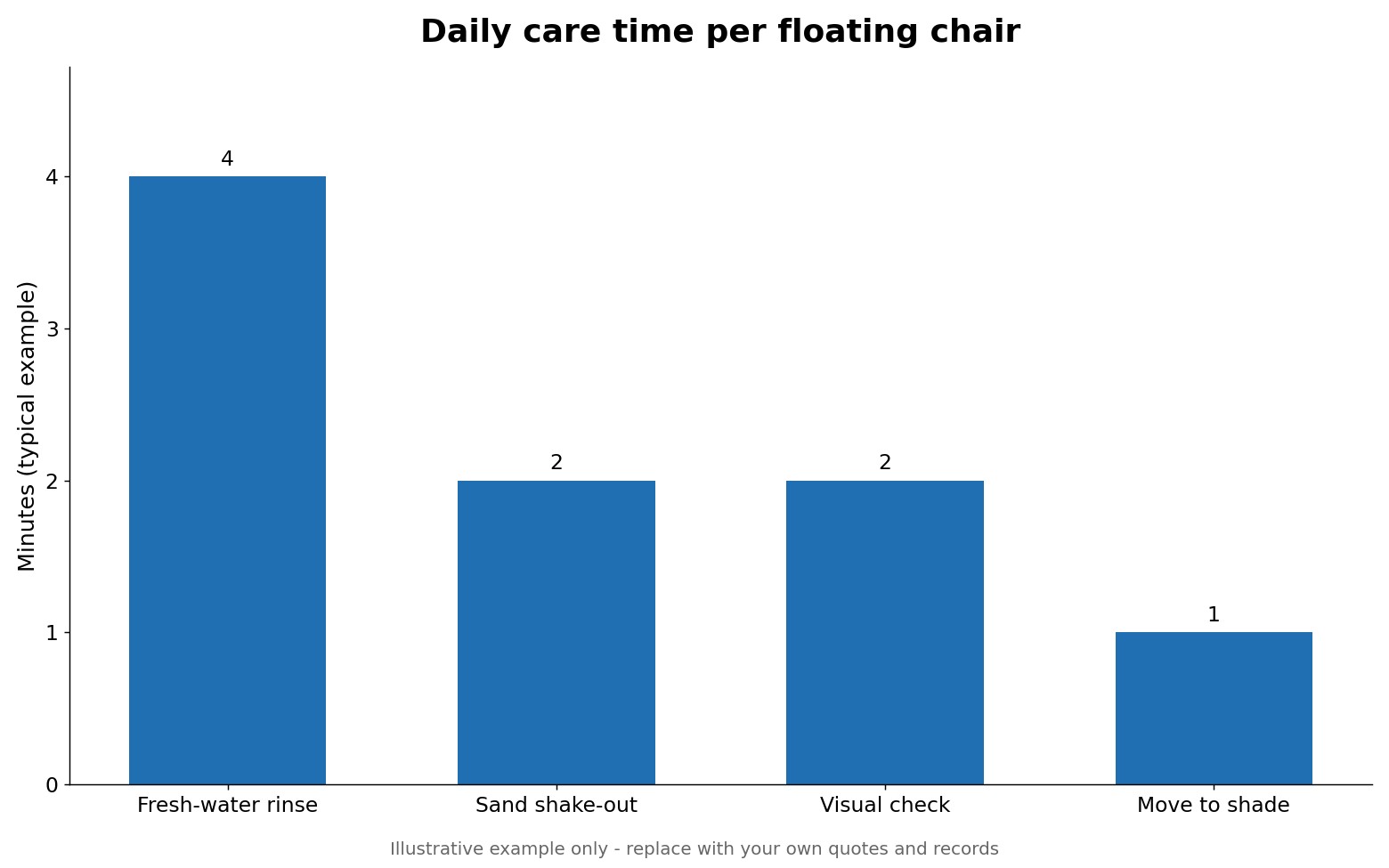
Daily floating beach wheelchair care Florida owners need is simple: rinse with fresh water, shake out sand, dry in the shade and do a quick visual check. It takes about ten minutes per chair. That small habit protects every part that wears.
Why does fresh water matter so much?
Salt left to dry forms a crust that eats at fasteners and stiffens fabric. Here’s the deal: salt never takes a day off, so your rinse can’t either.
- Rinse frame, wheels, floats and fabric
- Flush joints and axle areas
- Let water drain from the sling seat
What should the quick check cover?
Look for loose bolts, cuts in the fabric, soft wheels and any damage to the floats. Tag the chair out if something looks wrong.
| Daily step | Time needed | Goal |
|---|---|---|
| Fresh-water rinse | 3 to 4 minutes | Remove salt |
| Sand shake-out | 1 to 2 minutes | Clear grit |
| Shaded drying | Passive | Protect fabric |
| Visual check | 2 minutes | Spot damage early |
Ten minutes a day is far cheaper than replacing parts mid-season.
Key Takeaway: Rinse, dry and check every floating chair after every use day.
How Does Sun Change Floating Beach Wheelchair Care Florida Plans?
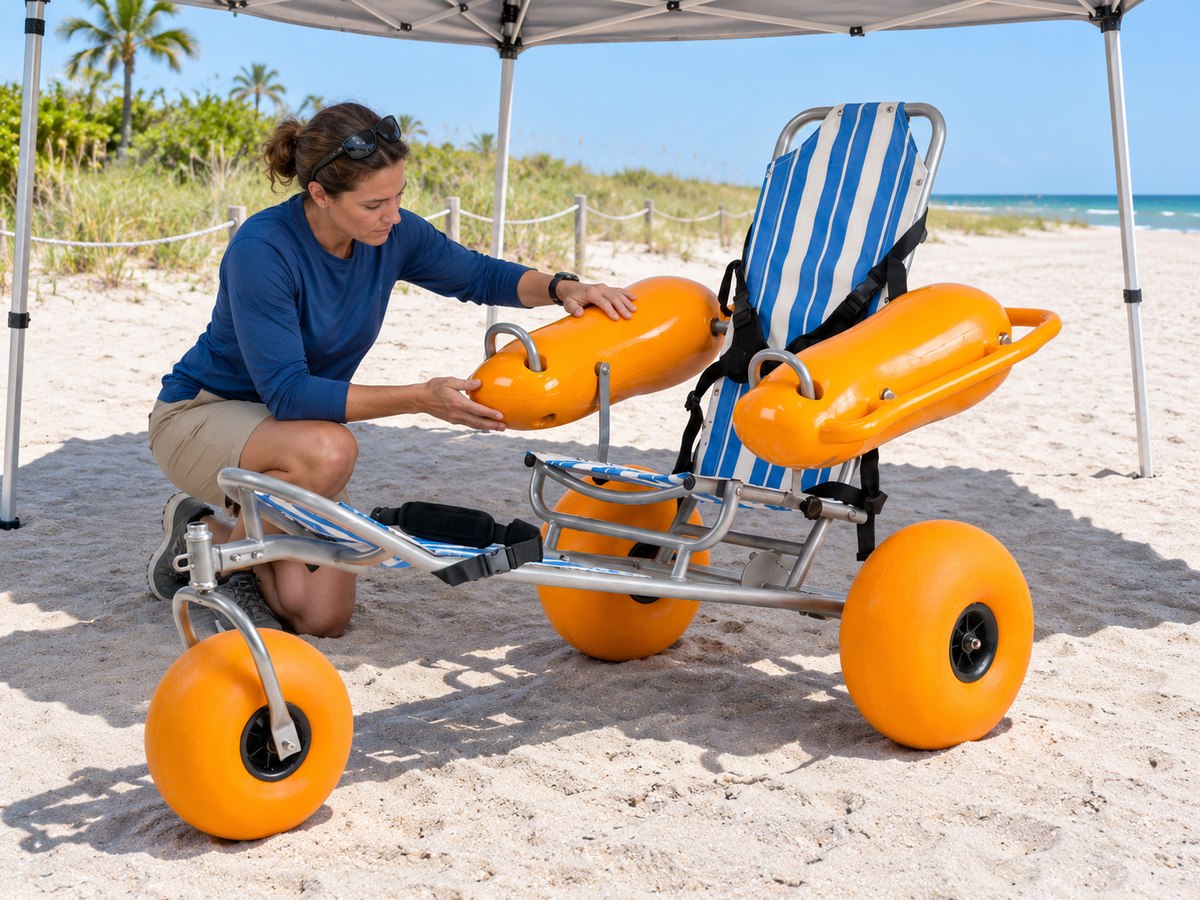
Florida sun changes floating beach wheelchair care Florida plans by making shade storage and fabric checks a daily priority, not an occasional one. UV fades fabric and can make plastics brittle over time. Hot surfaces also matter for user comfort.
How do you limit UV damage?
Park chairs in shade between uses and store them indoors overnight. Think about it: a chair that sits in the sun all day ages much faster than one that rests under cover.
- Use shade sails or umbrellas at the station
- Store indoors overnight when possible
- Rotate chairs so wear spreads evenly
What about hot armrests and seats?
Dark surfaces can get hot in direct sun. Feel armrests and seats before a user sits, and cool them with water if needed.
| UV risk | Sign to watch | Response |
|---|---|---|
| Fabric fade | Color loss | Plan replacement |
| Brittle plastics | Small cracks | Inspect closely |
| Hot surfaces | Warm to touch | Shade or rinse |
Sun damage is slow, so you’ll only catch it if you look for it.
Key Takeaway: Make shade part of your standard routine for every floating chair.
What Needs Floating Beach Wheelchair Care Florida Checks Weekly?
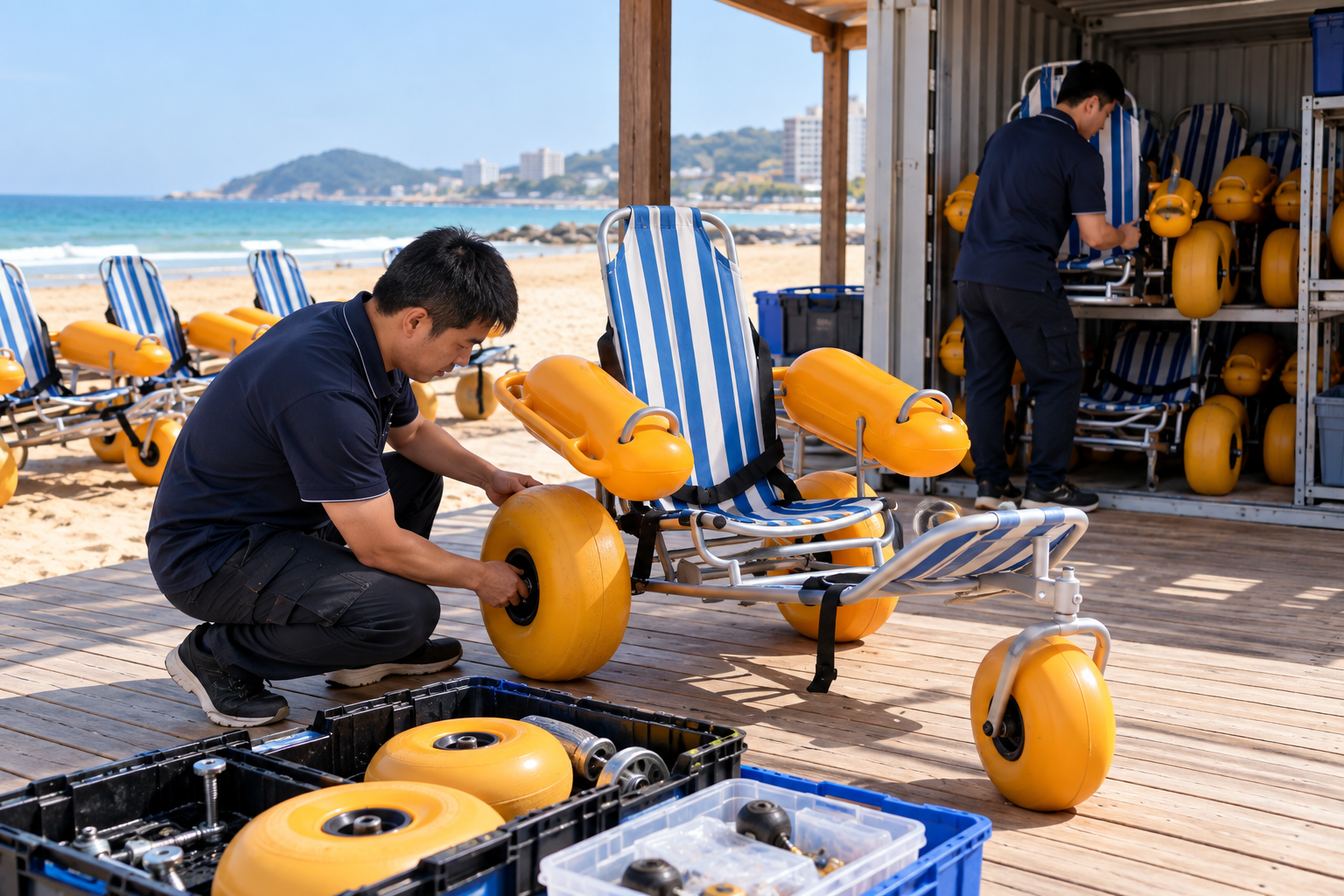
Weekly floating beach wheelchair care Florida attention should go to floats, wheels, fasteners, fabric attachment points and the backrest adjustment. These parts carry load or keep the chair buoyant. A weekly look catches problems before users do.
How do you check the floats?
Look for cracks, punctures, loose mounts and water inside. But here’s the kicker: a small float issue can hide until the chair sits lower in the water.
- Inspect float surfaces and seams
- Check float mounting points
- Note any change in how the chair floats
How do you check wheels and fasteners?
Press each balloon wheel to feel pressure, spin it for grit and check axle bolts. Tighten or replace anything loose or corroded.
| Part | Weekly check | Action if poor |
|---|---|---|
| Floats | Cracks and mounts | Remove from service |
| Balloon wheels | Pressure and spin | Inflate or replace |
| Fasteners | Tightness and rust | Tighten or replace |
| Fabric | Tears and stitching | Repair or replace |
A weekly checklist turns guesswork into a quick, repeatable task.
Key Takeaway: Inspect floats, wheels, bolts and fabric every week and log what you find.
How Should Floating Beach Wheelchair Care Florida Teams Clean Fabric?
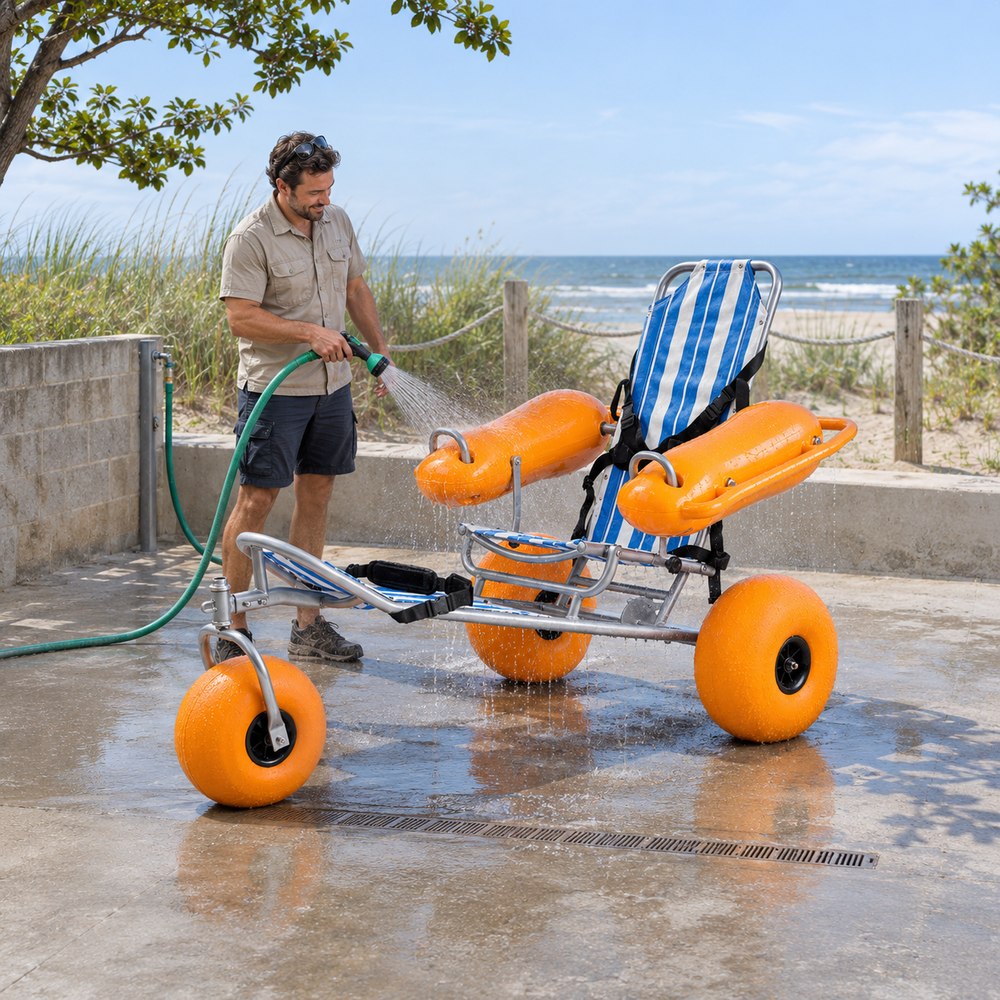
Floating beach wheelchair care Florida teams should clean fabric with fresh water and mild soap, then rinse well and dry it fully in the shade. Harsh cleaners can weaken fabric. Shared chairs also need a clear hygiene routine between users.
What cleaning products are safe?
Mild soap and soft brushes work for most sling fabrics. Here’s why that matters: strong chemicals can fade or weaken the fibers you’re trying to protect.
- Mild soap and fresh water
- Soft brush for sand and stains
- Follow your manual’s guidance
How often should fabric be replaced?
Replace fabric when it tears, sags or won’t come clean. Keep spare sets so a chair isn’t out of service for weeks.
| Fabric issue | Likely cause | Fix |
|---|---|---|
| Fading | UV | Shade, plan replacement |
| Sagging | Wear and load | Replace set |
| Stains | Sunscreen, sand | Soap and rinse |
| Tears | Wear or sharp objects | Replace panel |
Spare fabric sets keep chairs earning their keep all season.
Key Takeaway: Clean gently, dry fully and keep spare fabric on the shelf.
How Do Storms Shape Floating Beach Wheelchair Care Florida?
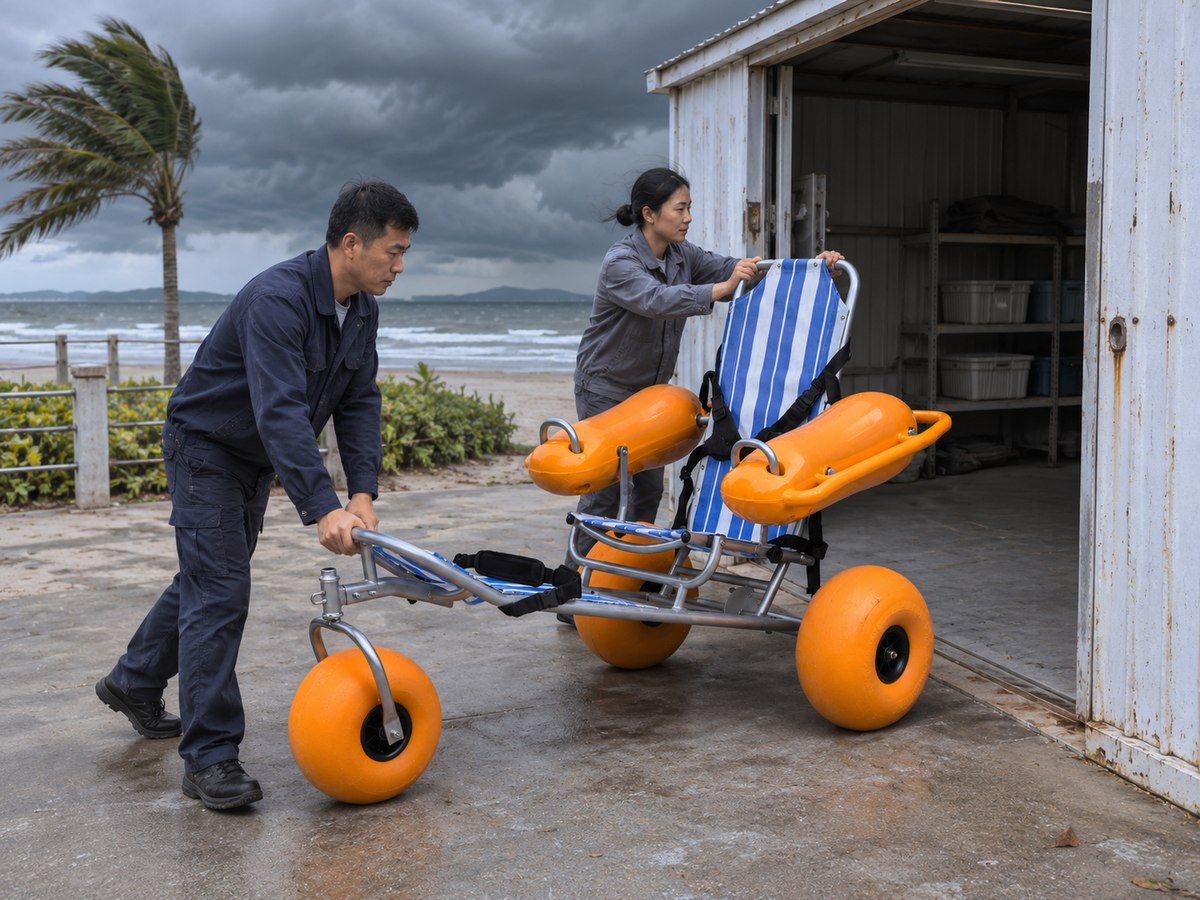
Storm season affects floating beach wheelchair care Florida routines by adding secure indoor storage, tie-downs and a pre-storm checklist. Chairs left on the beach can blow away or get damaged. A plan written in June saves chaos in September.
What should a pre-storm checklist include?
Move chairs indoors, strap them down and secure spares and tools. Sounds simple, right? It is, if everyone knows their job before the warning comes.
- Move all chairs to secure storage
- Strap chairs to fixed points
- Photograph condition for insurance
What should you do after the storm?
Inspect each chair before reuse. Check for impact damage, water inside floats and debris in wheels.
| Stage | Task | Owner |
|---|---|---|
| Before season | Write storm plan | Program lead |
| Storm warning | Move and secure chairs | Beach staff |
| After storm | Inspect every chair | Equipment lead |
A written storm plan protects your fleet and your budget.
Key Takeaway: Write your storm-season plan before hurricane season starts.
Which Spares Support Floating Beach Wheelchair Care Florida?
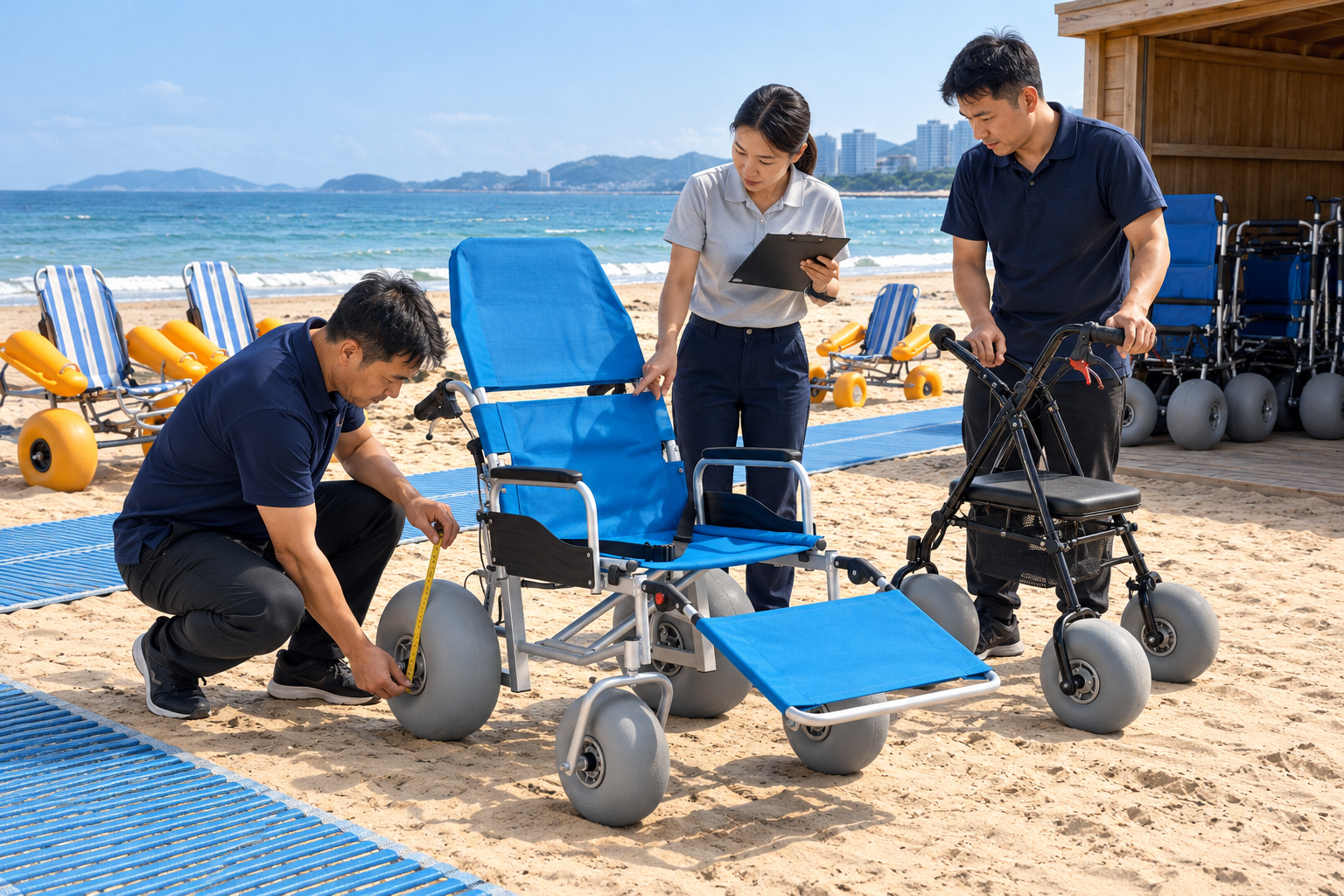
Spare parts that support floating beach wheelchair care Florida fleets include balloon wheels, fabric sets, fastener kits and float parts for each model. Having them on hand keeps chairs in service. Waiting weeks for a part can cost you a season.
Which spares matter most?
Wheels and fabric wear fastest, followed by fasteners. Now here’s the twist: the cheapest spares usually save the most downtime.
- Balloon wheels for each chair model
- Seat and back fabric sets
- Bolt, nut and pin kits
How many spares should you keep?
Base numbers on fleet size and how often chairs are used. Larger fleets should hold more spare wheels and fabric sets.
| Spare | Why needed | Reorder trigger |
|---|---|---|
| Wheels | Punctures and wear | Stock below plan |
| Fabric | Tears and fading | One set left |
| Fasteners | Corrosion and loss | Kit opened |
| Float parts | Impact damage | Any use |
Ordering spares with your chairs is cheaper than rush-shipping them later.
Key Takeaway: Keep a labeled spares shelf for every model you own.
How Should Floating Beach Wheelchair Care Florida Records Be Kept?
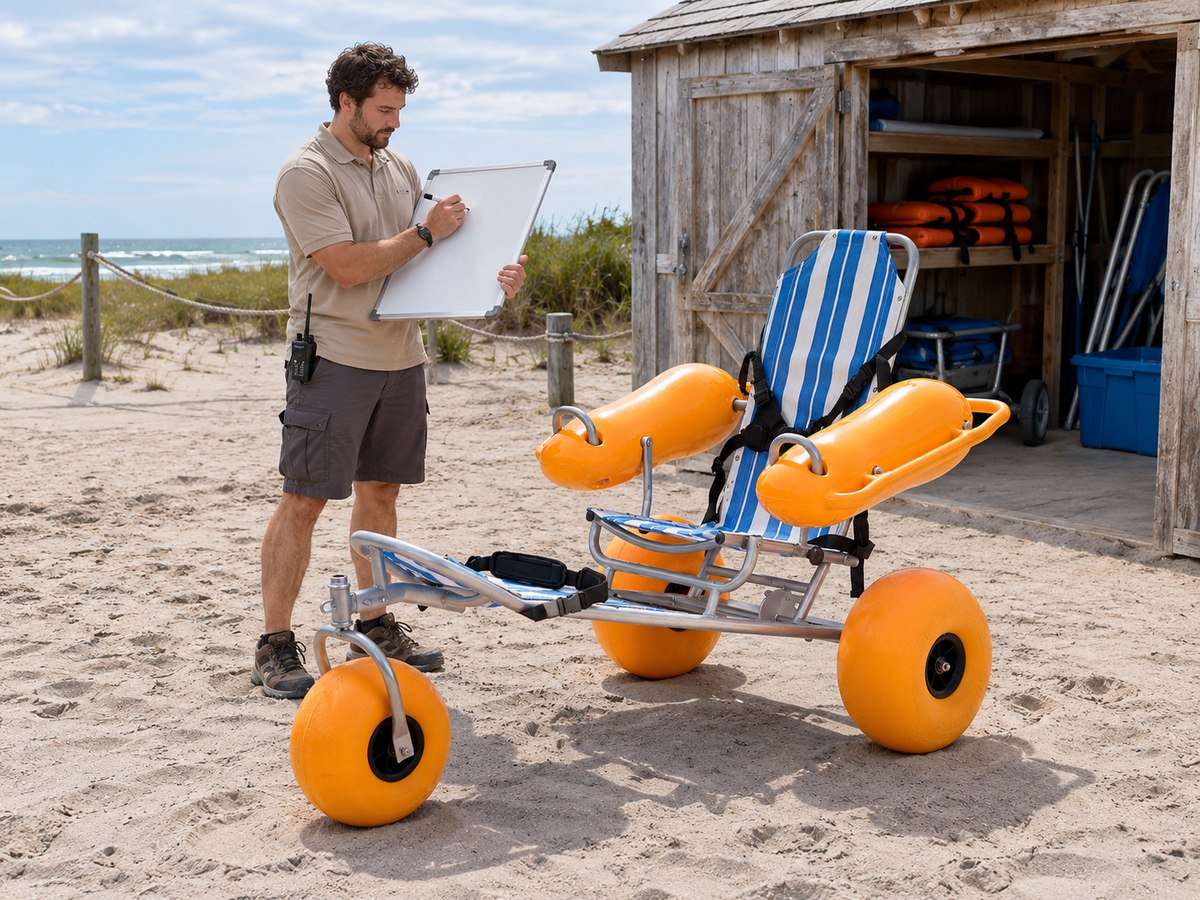
Floating beach wheelchair care Florida records should log each chair’s checks, repairs, parts used and any issues users report. A simple sheet or spreadsheet works. Records show you patterns and support insurance or warranty questions.
What should each log entry include?
Note the date, chair number, task done and who did it. Want to know the best part? Patterns jump out within a few weeks.
- Chair ID and date
- Task or repair completed
- Parts used and staff initials
How do records help decisions?
They show which chairs need more care, which parts fail soonest and when to reorder. They also help when you plan next year’s budget.
| Record | Use |
|---|---|
| Daily checks | Proof of care |
| Repairs | Failure patterns |
| Parts used | Reorder planning |
| User reports | Comfort and safety issues |
Good records turn maintenance into planning, not firefighting.
Key Takeaway: Log every check and repair so data guides your next decision.
How Do You Train Staff in Floating Beach Wheelchair Care Florida?
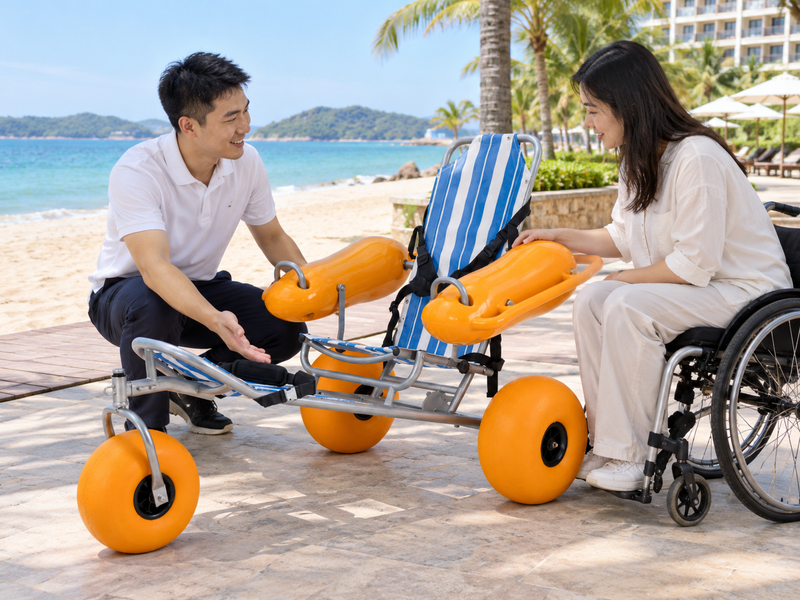
You train staff for floating beach wheelchair care Florida tasks with a short hands-on session, a printed checklist and a named person who answers questions. Seasonal staff change often, so training must be quick and repeatable. Show, don’t just tell.
What should a training session cover?
Cover rinsing, drying, weekly checks and what to do with a damaged chair. Here’s the thing: staff need to know when to stop using a chair, not just how to clean it.
- Daily rinse and dry routine
- How to spot float or wheel damage
- How to tag a chair out of service
How do you keep standards steady?
Post the checklist at the wash station and review logs weekly. Refresh training at the start of each season.
| Training item | Format | Frequency |
|---|---|---|
| Daily care | Hands-on demo | Start of season |
| Weekly checks | Checklist walkthrough | Start of season |
| Damage reporting | Short briefing | Each new hire |
| Log review | Supervisor check | Weekly |
Simple, repeated training keeps care consistent across a changing team.
Key Takeaway: Train every new staff member on care and damage reporting before they handle chairs.
Why Is Storage Part of Floating Beach Wheelchair Care Florida?
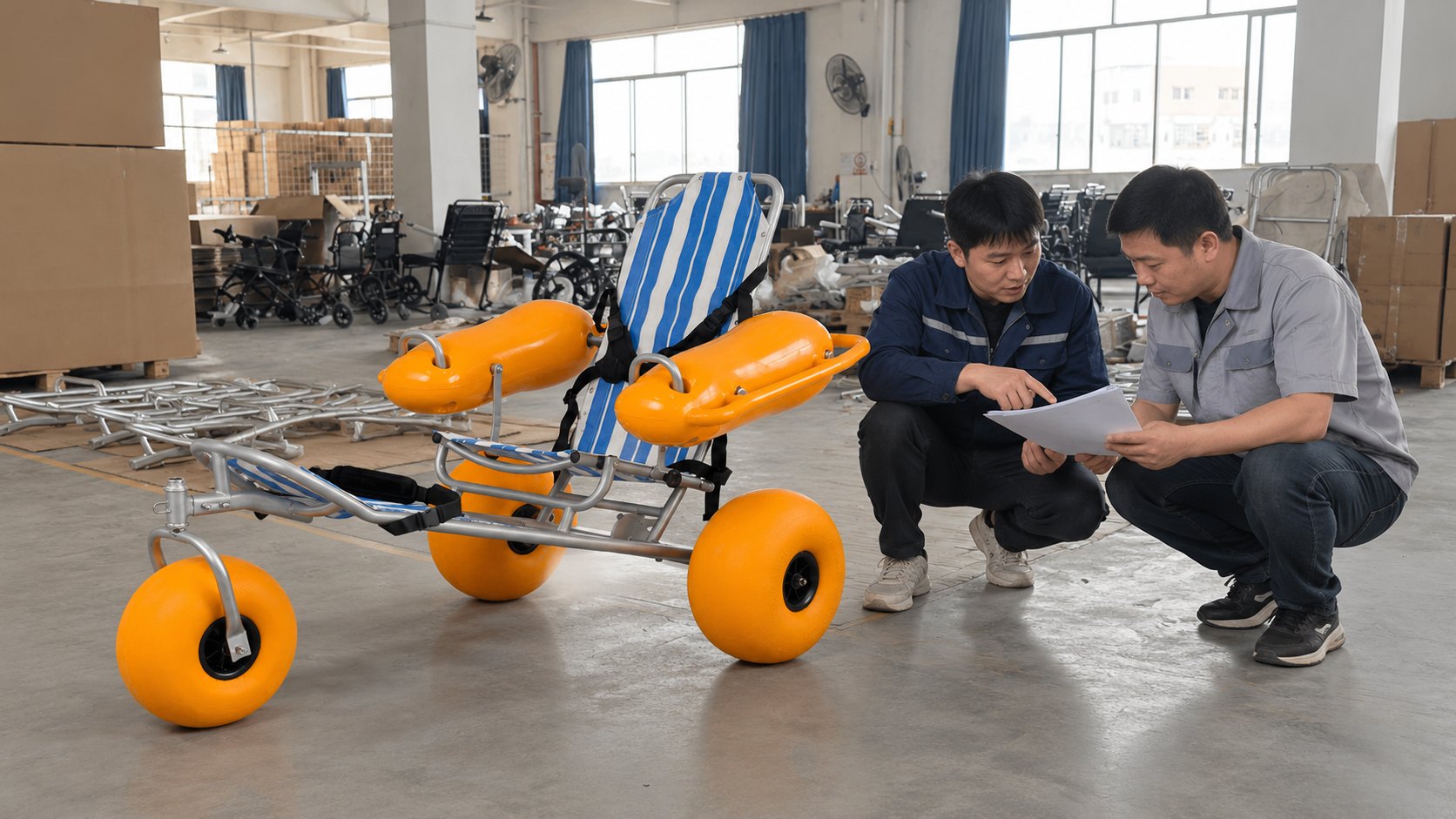
Off-season storage for floating beach wheelchair care Florida means a deep clean, full drying, a parts check and covered indoor storage. Chairs stored clean come back ready. Chairs stored dirty come back with problems.
What does a deep clean involve?
Rinse thoroughly, wash fabric, brush wheels and check every fastener. The short version? Store the chair the way you want to find it.
- Full rinse and fabric wash
- Dry completely before covering
- Replace worn parts before storage
Where should chairs be stored?
Use a dry, ventilated room away from sun and moisture. Cover chairs lightly so air can still move.
| Storage step | Purpose |
|---|---|
| Deep clean | Remove salt and sand |
| Full drying | Prevent mold |
| Parts check | Fix issues early |
| Covered storage | Protect from dust and sun |
Off-season care sets up a smooth start next spring.
Key Takeaway: Clean, dry and fix chairs before storage so they’re ready on day one.
When Does Floating Beach Wheelchair Care Florida Mean Replacing?
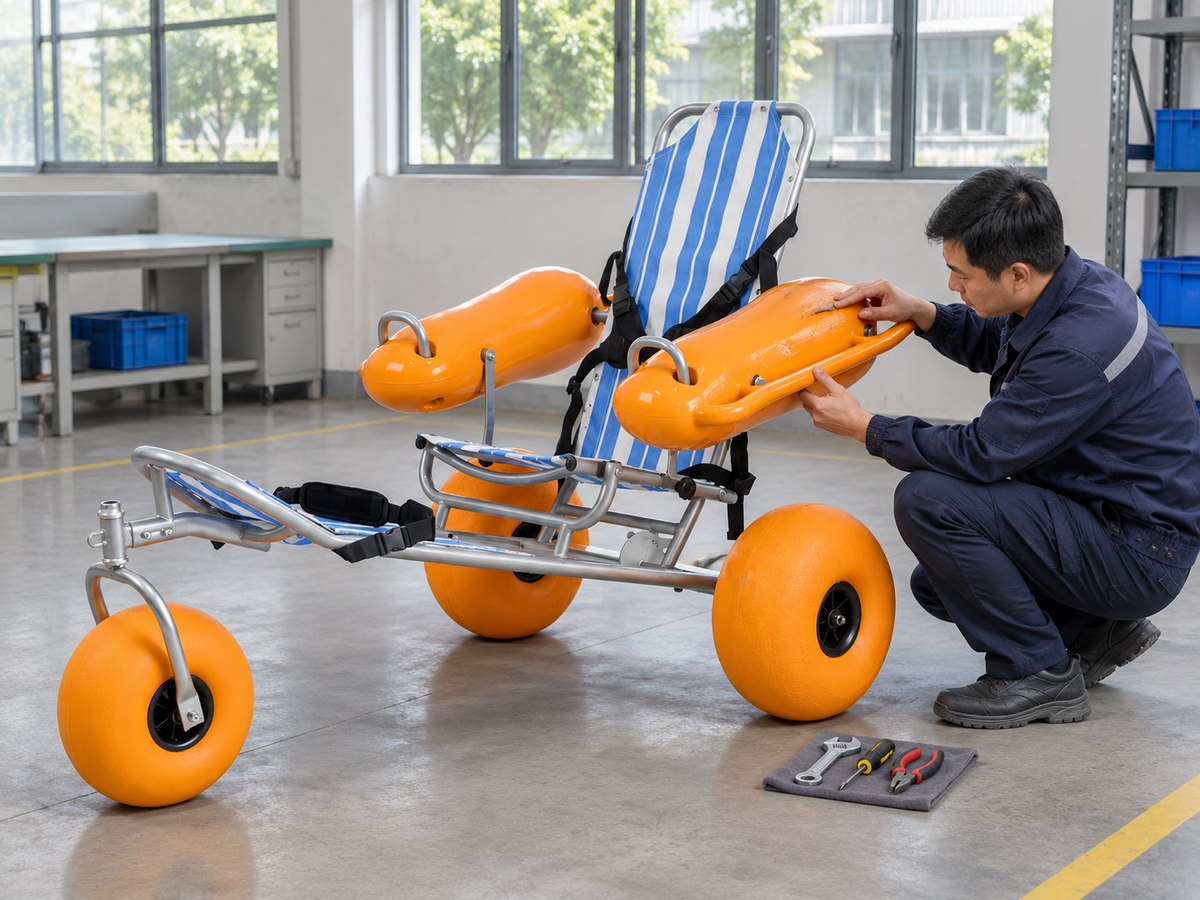
Floating beach wheelchair care Florida owners should replace a chair when the frame or floats are damaged, repairs keep repeating or parts are no longer available. Safety comes before saving money. Records help you make that call.
What signs point to replacement?
Look for frame cracks, float damage that can’t be repaired and corrosion in load-bearing parts. This is where it gets interesting: repeated small repairs often cost more than a new chair.
- Cracks or bends in the frame
- Damaged floats that can’t be fixed
- Repairs repeating every few weeks
How do you plan replacements?
Use records to predict which chairs will need replacing next year. Budget for them before the season starts.
| Condition | Decision |
|---|---|
| Minor wear | Repair and keep |
| Repeating repairs | Plan replacement |
| Frame or float damage | Replace now |
| No parts available | Replace soon |
Planned replacement beats emergency buying every time.
Key Takeaway: Replace chairs on a plan, guided by records and safety, not by surprise breakdowns.
Final Thoughts
Florida is tough on beach equipment, but a steady routine keeps floating chairs safe and comfortable for years. You’ve seen the daily rinse, sun protection, weekly checks, fabric cleaning, storm planning, spare parts, record keeping, staff training, off-season storage and replacement planning. Put them together and your chairs stay ready for every visitor.
If you’re setting up a care plan or need spare parts for floating chairs, we can help you build a kit and checklist for your fleet. Contact us today with your chair models and fleet size. We believe a well-kept chair is a promise kept to every visitor who’s waited to feel the water.
FAQ
Can I clean a floating chair with ocean water?
No, use fresh water. Ocean water leaves salt behind, and salt speeds up corrosion and fabric wear.
What’s the best way to store floating chairs overnight?
Indoors, dry and out of the sun is best. If indoor space is short, use a covered, shaded area with airflow.
How do I know if a float is damaged?
Look for cracks, loose mounts or water inside, and notice if the chair sits lower in the water. If in doubt, take it out of service and inspect it.
Can I replace fabric myself?
Often yes, if your model uses replaceable fabric sets. Check your manual and order the correct set for your exact model.
How do I know if a chair should be retired?
Retire it when the frame or floats are damaged or repairs keep repeating. Your maintenance records will usually show the pattern.