
A floating beach wheelchair in Australia lets a supervised user roll across the sand and sit in calm, shallow water, usually in a bay, estuary, harbour beach or patrolled flat-water area. Here’s a common story from an Australian summer. A young woman who uses a wheelchair comes to the beach with friends, the matting gets her to the sand, but the water’s edge is as far as she goes while everyone else swims. A floating beach wheelchair Australia program can change that, and this guide covers how the chairs work, where they suit, supervision, hire terms, care and buying.
For procurement context, use beach wheelchair hire Australia together with amphibious beach wheelchair Australia.
For broader destination-level context, consult the UN Tourism accessibility publications and guidelines. Apply local requirements and current product documents to the specific project.
We design and manufacture floating chairs alongside our land beach chairs and supply councils, clubs and operators in Australia. Everything here reflects real model details and the questions Australian buyers ask, with no promises about surf or water safety we can’t back.
What Is a Floating Beach Wheelchair Australia Programs Use?
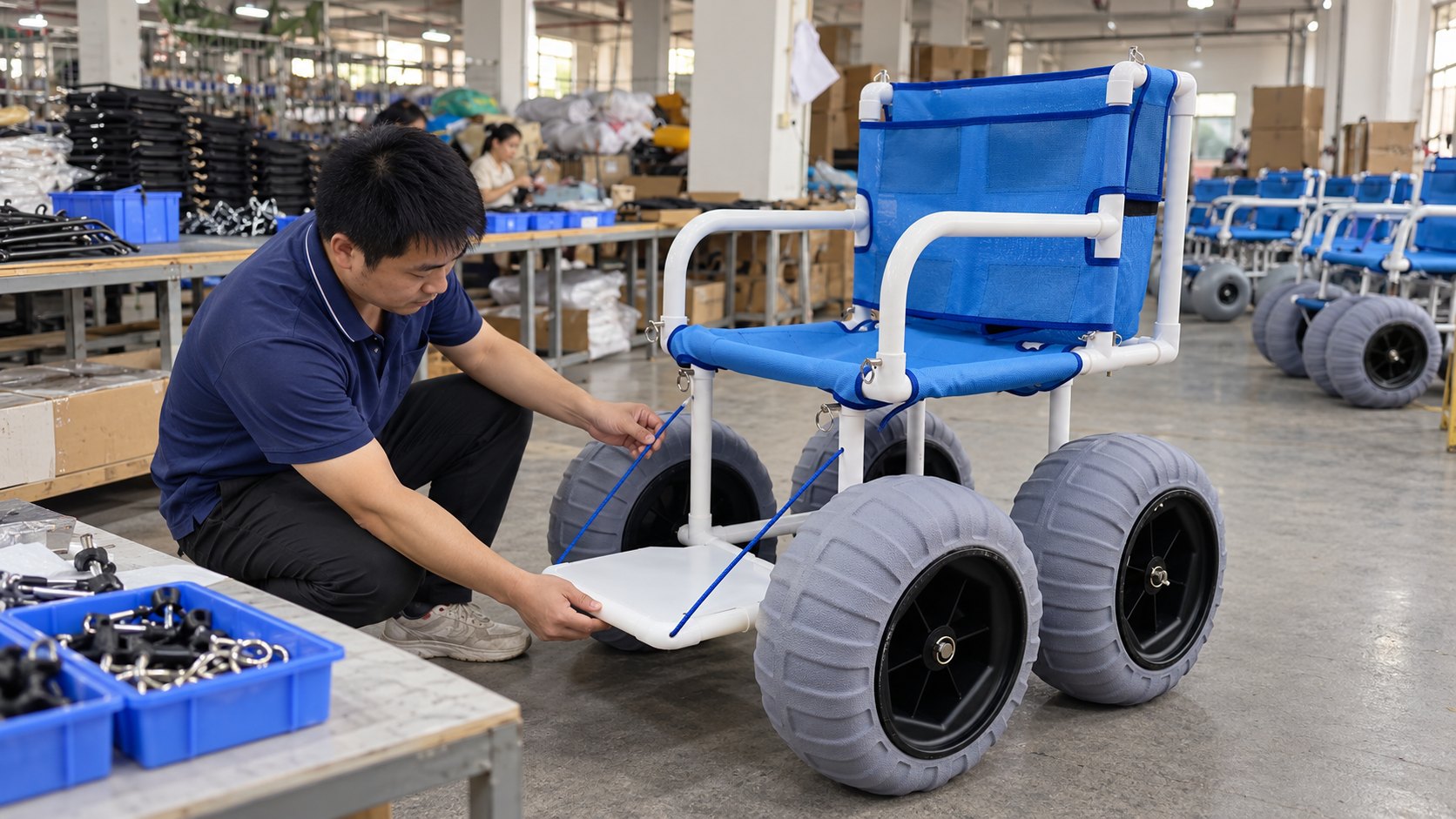
A floating beach wheelchair Australia program uses is a manual chair with balloon wheels for sand and floats that keep it buoyant in shallow, calm water. A support person stays with the user at all times. It isn’t a flotation aid or rescue device.
How does it differ from a land beach chair?
A land chair stops at the water’s edge, while a floating chair can continue into calm shallows. Here’s the deal: that one difference changes your staffing, rules and cleaning.
- Floats built into the armrests
- Sling seat that drains quickly
- Wheels sized for wet sand
What does our floating model include?
Our floating model has three wheels, side flotation armrests and a fabric sling seat and back with an adjustable backrest. It’s a separate design from our four-wheel land chairs.
| Feature | Land chair | Floating chair |
|---|---|---|
| Sand | Yes | Yes |
| Calm shallow water | No | Yes, supervised |
| Floats | None | Side armrests |
| Support | Basic | Trained support persons |
The water feature is the reason to buy, and the reason to plan carefully.
Key Takeaway: Treat a floating chair as a supervised water program, not just another beach chair.
Where Does a Floating Beach Wheelchair Australia Program Suit?
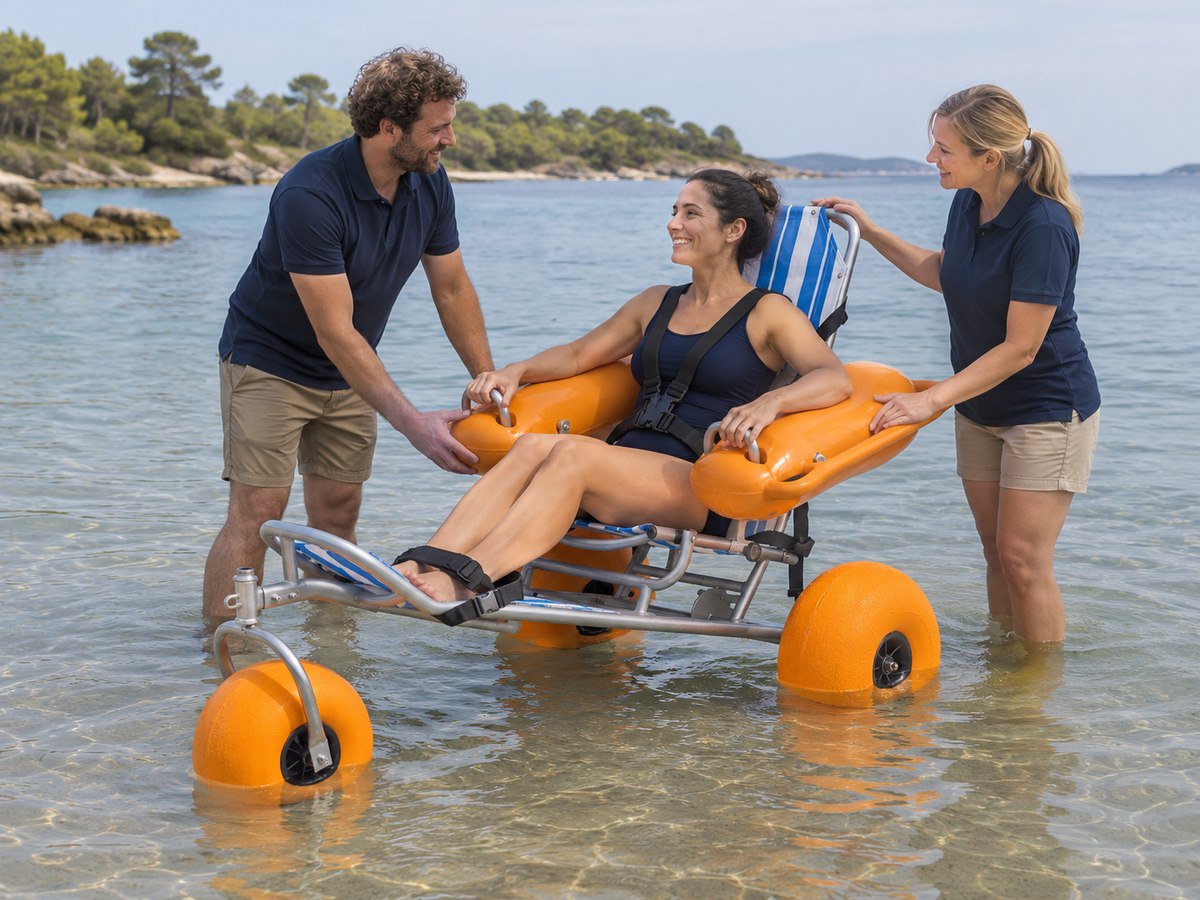
A floating beach wheelchair Australia program suits calm bays, harbour and estuary beaches, sheltered coves and some aquatic centres with ramp entries. Open surf beaches are usually unsuitable. Local conditions change daily, so your water-safety lead decides.
Why avoid surf beaches?
Waves, rips and dumping shore breaks make floating chair use unsafe. Think about it: a chair that floats nicely in a bay can tip or drift in surf.
- Prefer sheltered, calm water
- Avoid surf, rips and strong currents
- Check tides and wind each session
What about regional hazards?
Some northern waters have stinger seasons and other local hazards. Follow local warnings and patrol advice every time.
| Site type | Suitability | Note |
|---|---|---|
| Calm bay | Good | Check wind |
| Harbour beach | Good | Watch boat traffic |
| Estuary | Possible | Check currents |
| Open surf | Usually not | Rips and waves |
Picking the right site does much of your safety work.
Key Takeaway: Run floating chair sessions only in calm, sheltered, supervised water.
How Does a Floating Beach Wheelchair Australia Model Float?
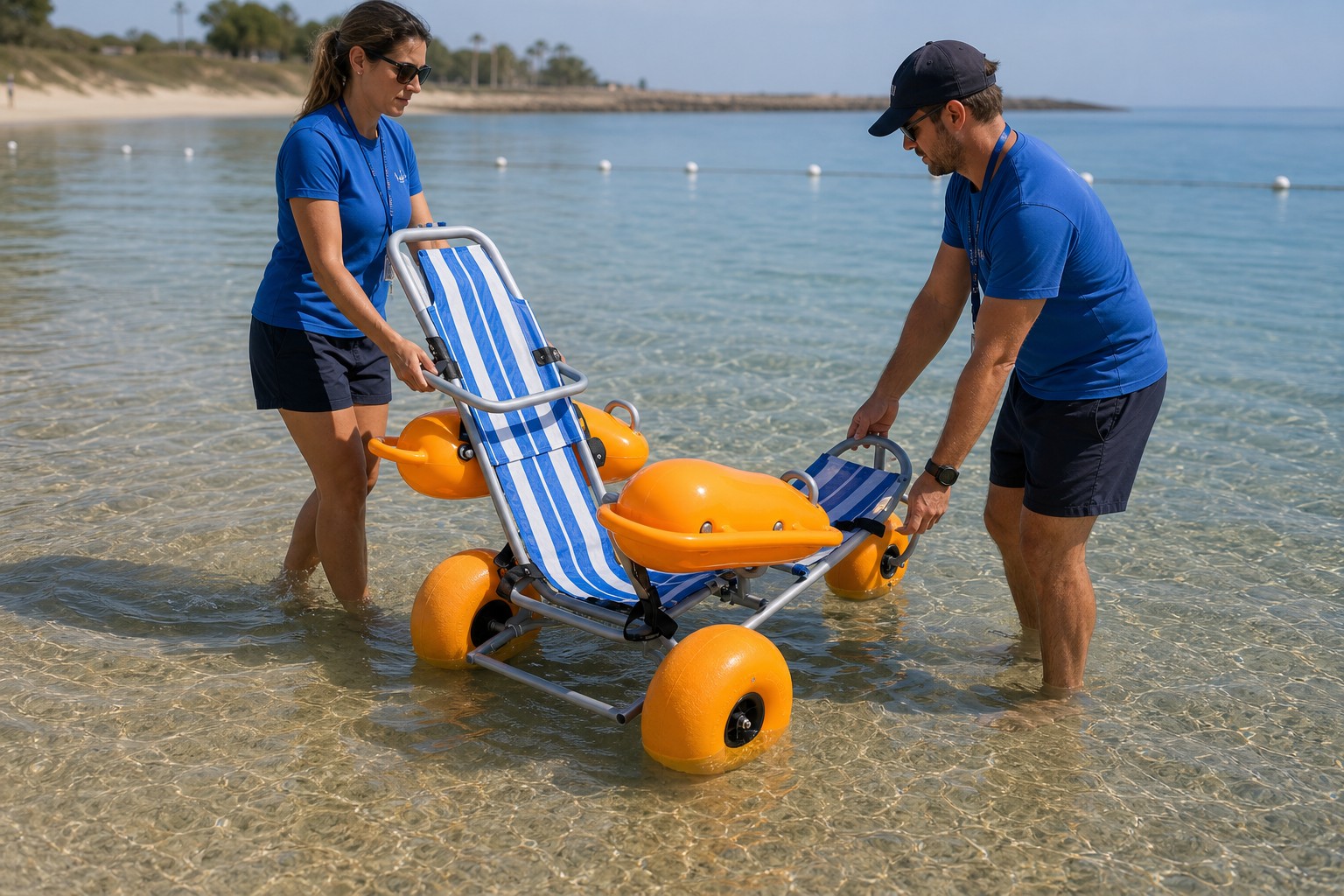
A floating beach wheelchair Australia model floats because sealed floats on each side add buoyancy as the water deepens, keeping the seat level in calm shallows. Balloon wheels move it across wet sand. The support person controls it throughout.
What keeps it stable?
Floats on both sides spread buoyancy, and the support person steadies the chair. But here’s the kicker: stability depends on calm water and constant hands-on support.
- Even floats on both sides
- Low, stable seat position
- Support person guiding the chair
What are the limits?
Flotation doesn’t make deep or rough water safe. Your program sets depth and condition limits.
| Condition | Use |
|---|---|
| Calm, waist-deep or less | Possible with support |
| Choppy water | Usually not |
| Rip or current | No |
| Deep water | No |
Clear condition rules keep the experience safe and enjoyable.
Key Takeaway: Floats add buoyancy in calm shallows, and your rules decide when the chair stays on sand.
What Supervision Does a Floating Beach Wheelchair Australia Need?
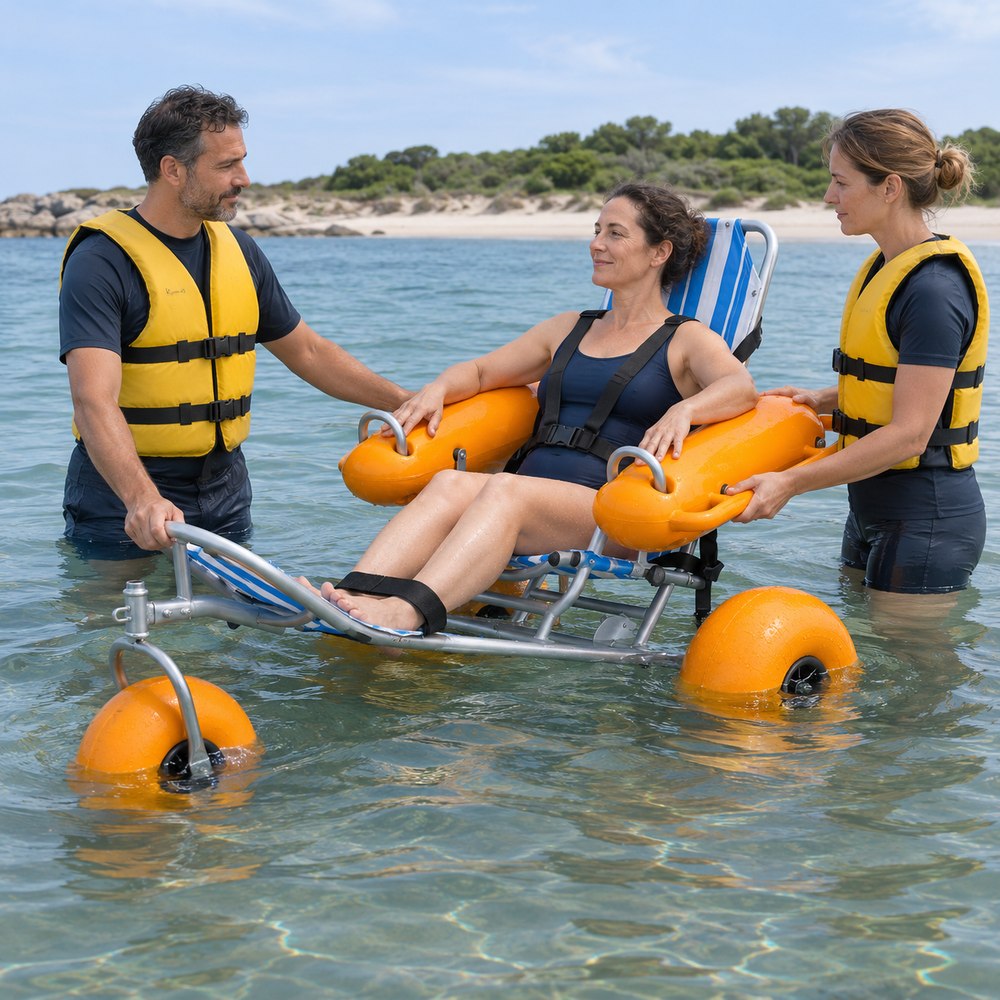
A floating beach wheelchair Australia program needs trained support persons in the water with every user, life jackets as your program requires and lifeguard or patrol awareness. Many programs require two adults who are confident swimmers. Your insurer and council may set extra rules.
Who should train support persons?
Your water-safety lead, surf club or aquatic professionals should train them. Here’s why that matters: conditions change, and support persons must know when to come back.
- Entering and exiting the water
- When to stop and return
- Communicating with patrols
What should users and families hear beforehand?
Explain the limits, the role of support persons and when sessions stop. The support person has the final say.
| Rule | Purpose |
|---|---|
| Support person always present | Constant control |
| Life jacket as required | Added protection |
| Stay in patrolled area | Patrol coverage |
| Stop when told | Fast response |
Clear rules protect users, volunteers and your program.
Key Takeaway: Build supervision rules with water-safety professionals before your opening session.
How Do Councils Hire a Floating Beach Wheelchair Australia Users Book?
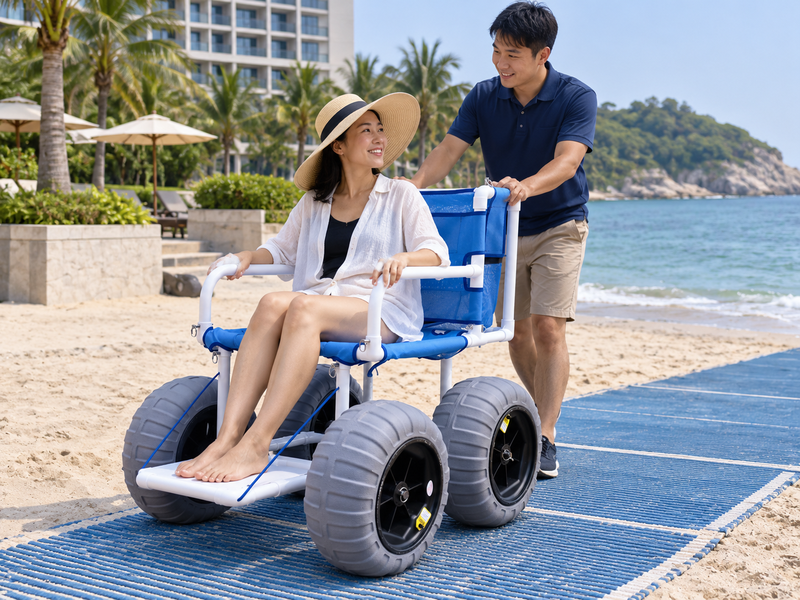
Councils hire a floating beach wheelchair Australia users book through an application or booking form, often free, with named support persons and agreed terms. Bookings help match chairs to trained helpers. Terms set out use, care and responsibilities.
What do hire forms usually ask?
Forms often ask for the hirer, the user, support persons and the session time. Sounds simple, right? It keeps everyone clear on who’s responsible.
- Hirer and user details
- Support person names
- Date, time and location
What should the terms cover?
Cover supervision, life jackets, where the chair can go, cleaning and return times. Keep them short and plain.
| Term | Purpose |
|---|---|
| Support persons | Safety |
| Life jackets | Protection |
| Location limits | Patrolled areas |
| Cleaning and return | Chair care |
Simple, clear hire terms make bookings smooth and safe.
Key Takeaway: Use a short booking form with named support persons and plain terms.
How Should You Store a Floating Beach Wheelchair Australia Fleet?
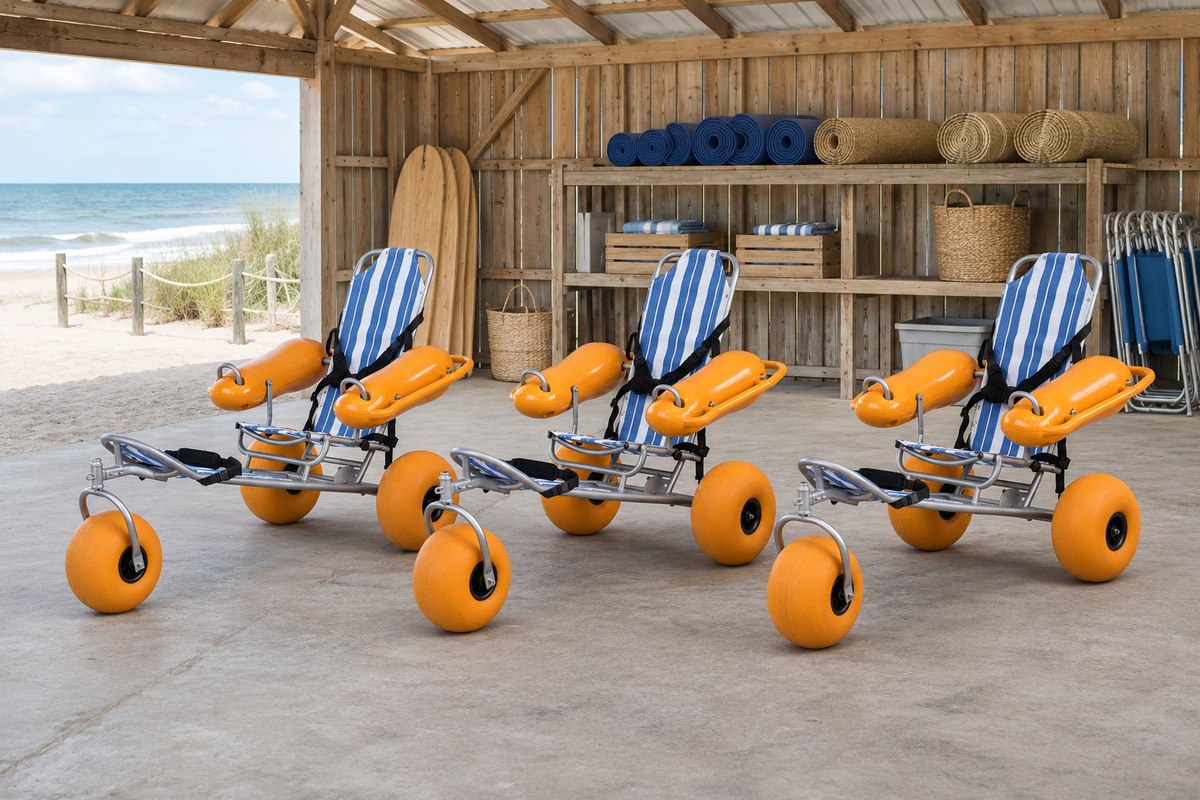
You should store a floating beach wheelchair Australia fleet clean, dry, shaded and secure, ideally in a club shed or council building near the beach. UV and salt are the main enemies. Good storage adds years.
What makes good storage?
It’s close to the launch point, shaded, ventilated and lockable. Now here’s the twist: a chair stored far away often isn’t used on borderline days.
- Close to the beach entry
- Shaded and ventilated
- Lockable
What about the off-season?
Deep clean, dry fully, check floats and store covered indoors. Replace worn parts before spring.
| Storage need | Benefit |
|---|---|
| Shade | Less UV damage |
| Ventilation | No mould |
| Security | Less loss |
| Nearby | More use |
Thoughtful storage keeps chairs ready and safe.
Key Takeaway: Store floating chairs shaded, dry and secure, close to the water.
How Do You Clean a Floating Beach Wheelchair Australia Chair?
You clean a floating beach wheelchair Australia chair with a fresh-water rinse after every water session, then dry it in shade and check floats, wheels and fabric. Salt left on the chair speeds wear. Cleaning takes minutes.
What’s the routine after each session?
Rinse everything, drain the seat and dry in shade. Want to know the best part? This routine prevents most early failures.
- Rinse frame, floats, wheels and fabric
- Drain and dry the seat
- Check floats for damage
What weekly checks matter?
Check floats, wheel pressure, bolts and fabric. Log findings and remove any damaged chair from use.
| Check | Frequency |
|---|---|
| Rinse | Every session |
| Float inspection | Weekly |
| Wheels and bolts | Weekly |
| Fabric | Weekly |
Regular checks catch float damage before it becomes a safety issue.
Key Takeaway: Rinse after every session and inspect floats weekly.
What Does a Floating Beach Wheelchair Australia Program Cost?
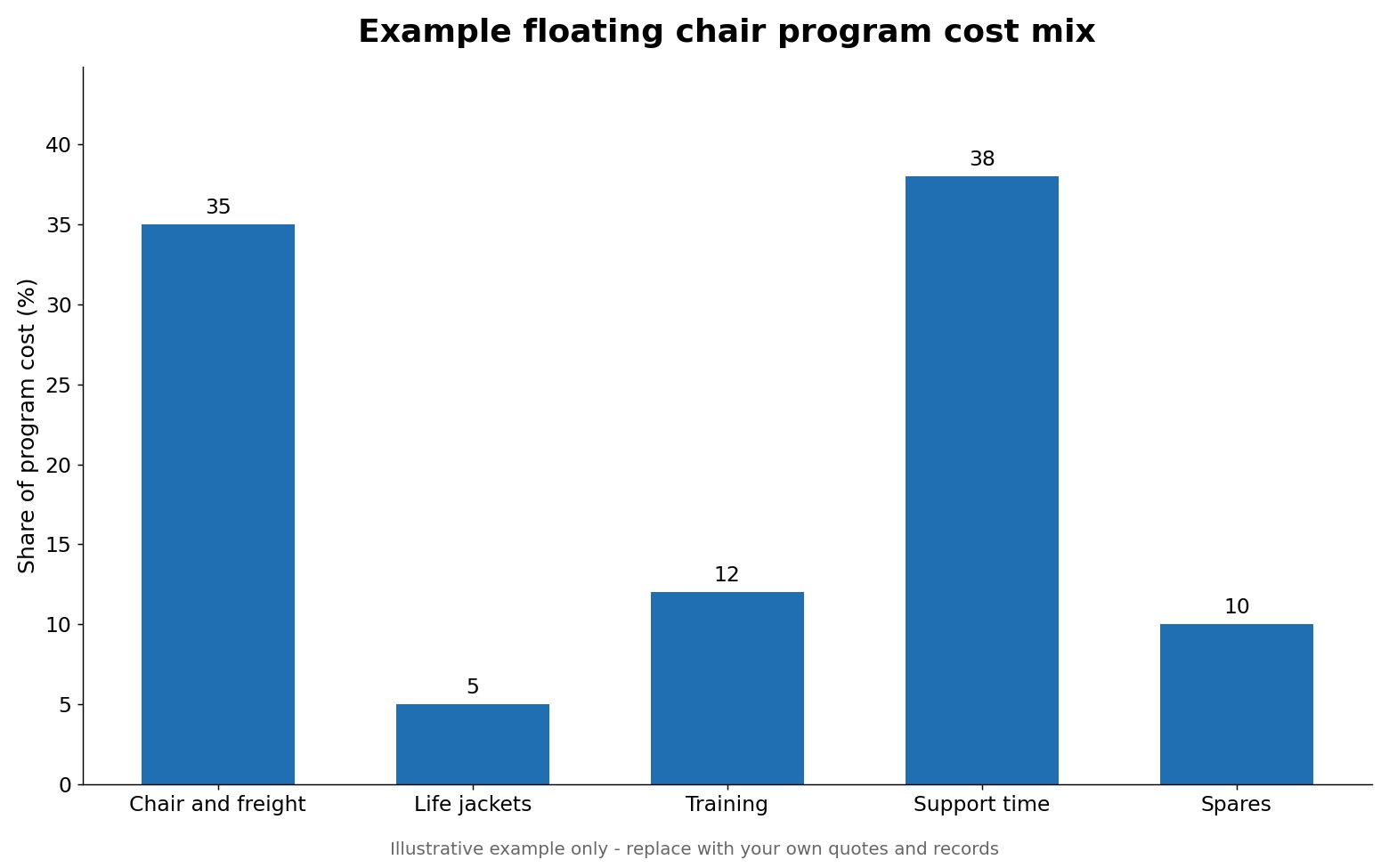
A floating beach wheelchair Australia program costs the chair, freight, spares, storage, life jackets, training and support person time. Volunteer or staff time is usually the biggest ongoing cost. The chair is mostly a one-off.
Which costs come later?
Spare parts, fabric, training refreshers and insurance reviews appear after launch. Here’s the thing: budgeting for them keeps the program alive in year two.
- Spare floats, wheels and fabric
- Training refreshers
- Insurance reviews
How do programs fund it?
Programs combine council budgets, government inclusive-beach funding, sponsors and community fundraising. Check current rounds with your state.
| Cost line | Type |
|---|---|
| Chair and freight | One-off |
| Spares | Ongoing |
| Training | Yearly |
| Support time | Ongoing |
Planning ongoing costs is what keeps programs running.
Key Takeaway: Budget for training, spares and support time, not just the chair.
What Spec Should a Floating Beach Wheelchair Australia Order Include?
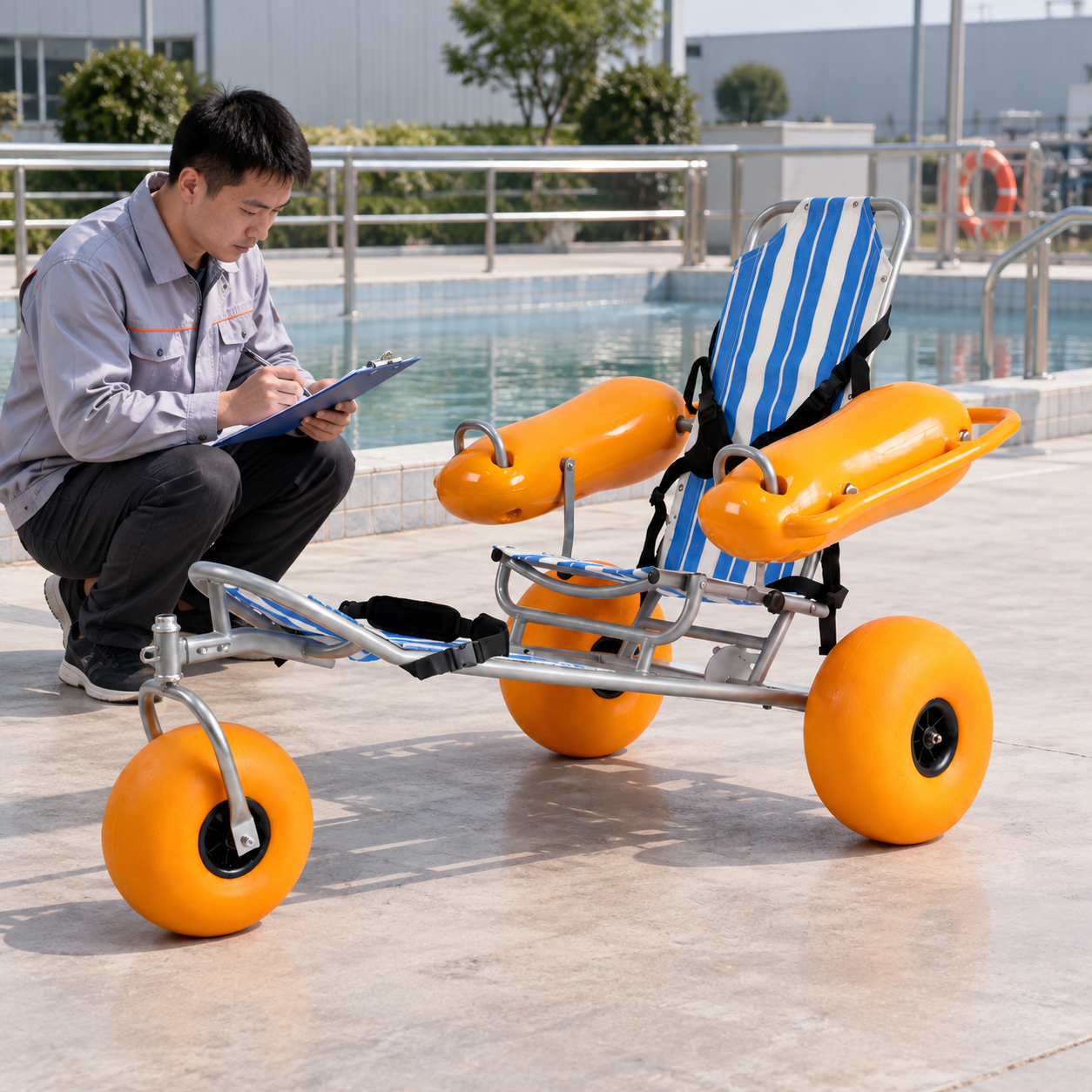
A floating beach wheelchair Australia order should include the exact model, user weight limit, float design, frame material, wheel size and spare parts. Each figure should come from the current manual. If documents disagree, ask before ordering.
Why confirm every figure?
Brochures and manuals sometimes list different numbers for one model. The short version? Get the current figure in writing.
- Current manual for your model
- Confirmed weight limit
- Spare parts list
Which accessories help?
Spare floats or float parts, fabric sets and wheels are worth ordering. Ask about positioning accessories if users need them.
| Spec item | Source |
|---|---|
| Weight limit | Current manual |
| Float design | Model drawing |
| Frame material | Written confirmation |
| Spares | Parts list |
Written, model-specific specs protect your program.
Key Takeaway: Approve your order only when key figures are confirmed in writing.
How Do You Pick a Floating Beach Wheelchair Australia Supplier?
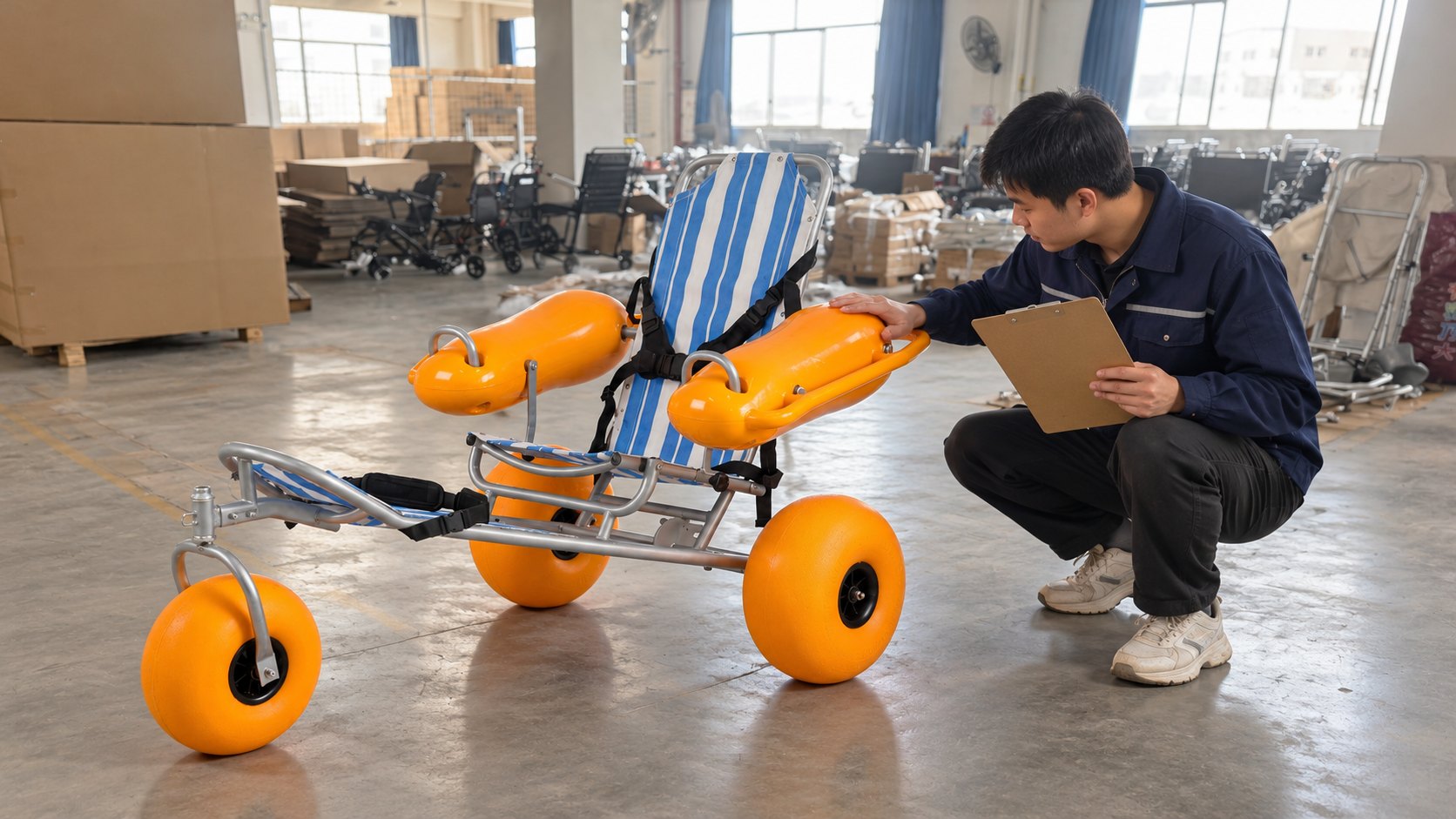
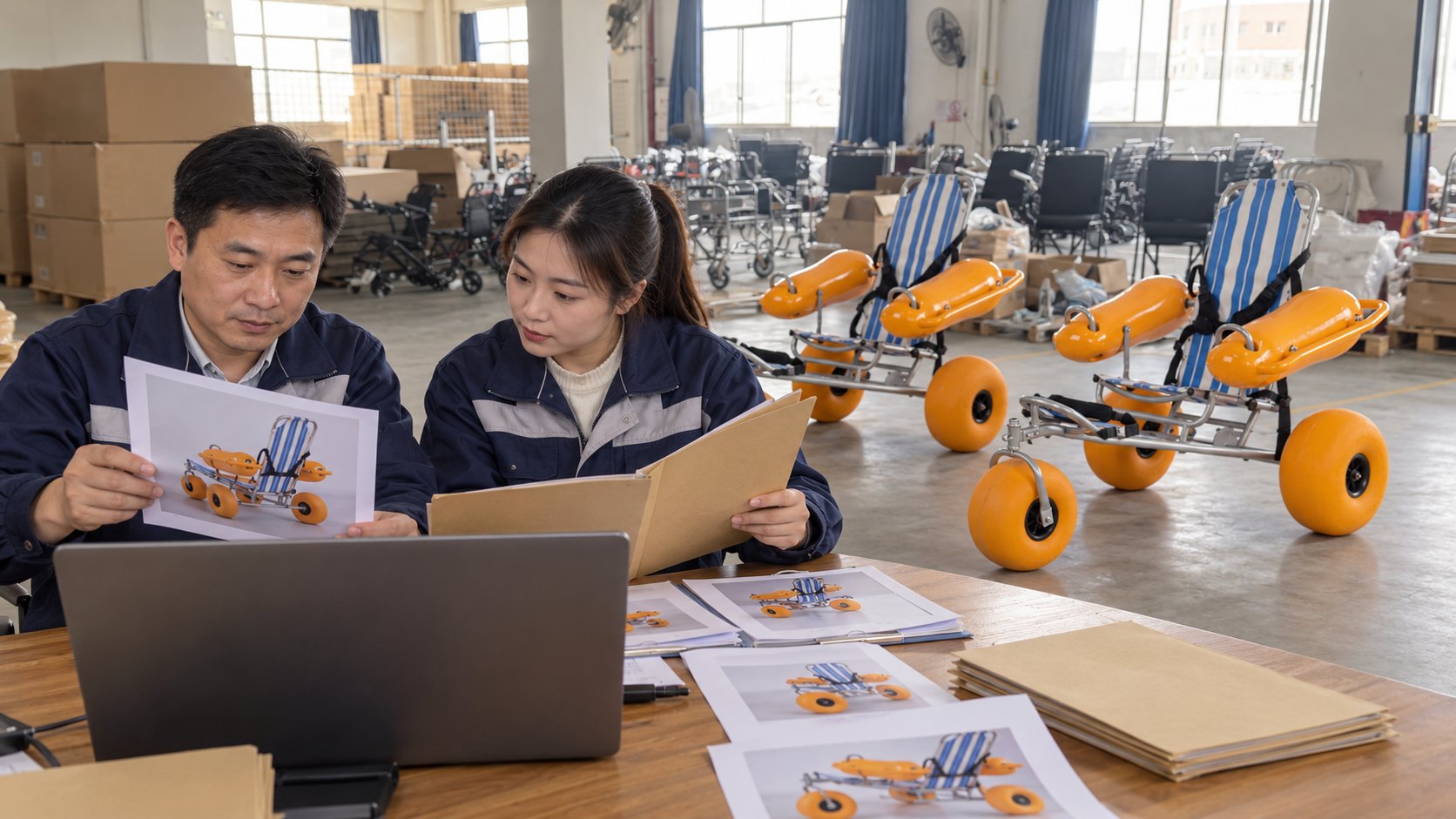
You pick a floating beach wheelchair Australia supplier by checking production control, consistent model documents, spare parts supply and clear answers on shipping and support. Price matters, but support decides long-term value. Ask lots of questions.
What should you ask suppliers?
Ask who builds the chair, how floats are made and how parts are shipped to Australia. This is where it gets interesting: clear answers before purchase predict good support after.
- Factory and production photos
- Current manual and specs
- Spare parts and freight options
How do you compare offers?
Use one template for all quotes, including freight, import charges, spares and warranty.
| Check | Good sign |
|---|---|
| Production | Own factory |
| Specs | Consistent |
| Spares | Listed and stocked |
| Support | Named contact |
The right supplier keeps your program running for years.
Key Takeaway: Choose a supplier who documents everything and stands behind parts supply.
Final Thoughts
Floating chairs can give Australians a moment many have waited years for, sitting in the water with family and friends. You’ve seen what these chairs are, where they suit, how they float, supervision, hire, storage, cleaning, costs, specs and suppliers. With those in place, your program can run safely for many summers.
If you’re planning a floating chair program, we can help match the model and spares to your site. Contact us today with your beach and expected users. We believe the water’s edge shouldn’t be the end of anyone’s beach day, and we build our chairs with that in mind.
FAQ
Can I use a floating chair at a surf beach?
Usually not. Surf, rips and shore breaks make it unsafe, so choose calm, sheltered, supervised water.
What’s the best site for a floating chair program?
A calm bay or harbour beach with patrols is best. Check wind, tide and local warnings each session.
How do I know if support persons are ready?
They’re ready when trained by your water-safety lead and confident with entries and exits. Practise before opening bookings.
Can I hire a floating chair from my council?
Many councils offer floating chair hire, often free with a booking form. Check your local council’s website.
How do I know if the chair suits a user’s weight?
Check the current manual for your exact model and confirm the limit in writing. Don’t rely on brochure figures alone.