
An amphibious beach wheelchair in Australia is a chair built to travel on sand and sit in calm, shallow water, and most buyers use the term for floating beach chairs with built-in floats. The confusion starts early. A surf club committee asks for quotes on an amphibious chair, receives three very different products, and spends a month arguing about whether any of them can actually go in the water. This guide explains what an amphibious beach wheelchair Australia buyers want really is, how it compares with all-terrain and floating chairs, and how to choose the right one.
The next useful comparisons are floating beach wheelchair Australia and beach wheelchair supplier Australia.
For broader destination-level context, consult the UN Tourism accessibility publications and guidelines. Apply local requirements and current product documents to the specific project.
We build all-terrain, folding and floating beach chairs in our own factory and see these terms mixed up in tender documents every year. We’ll help you cut through the labels and focus on what the chair actually does.
What Is an Amphibious Beach Wheelchair Australia Buyers Mean?
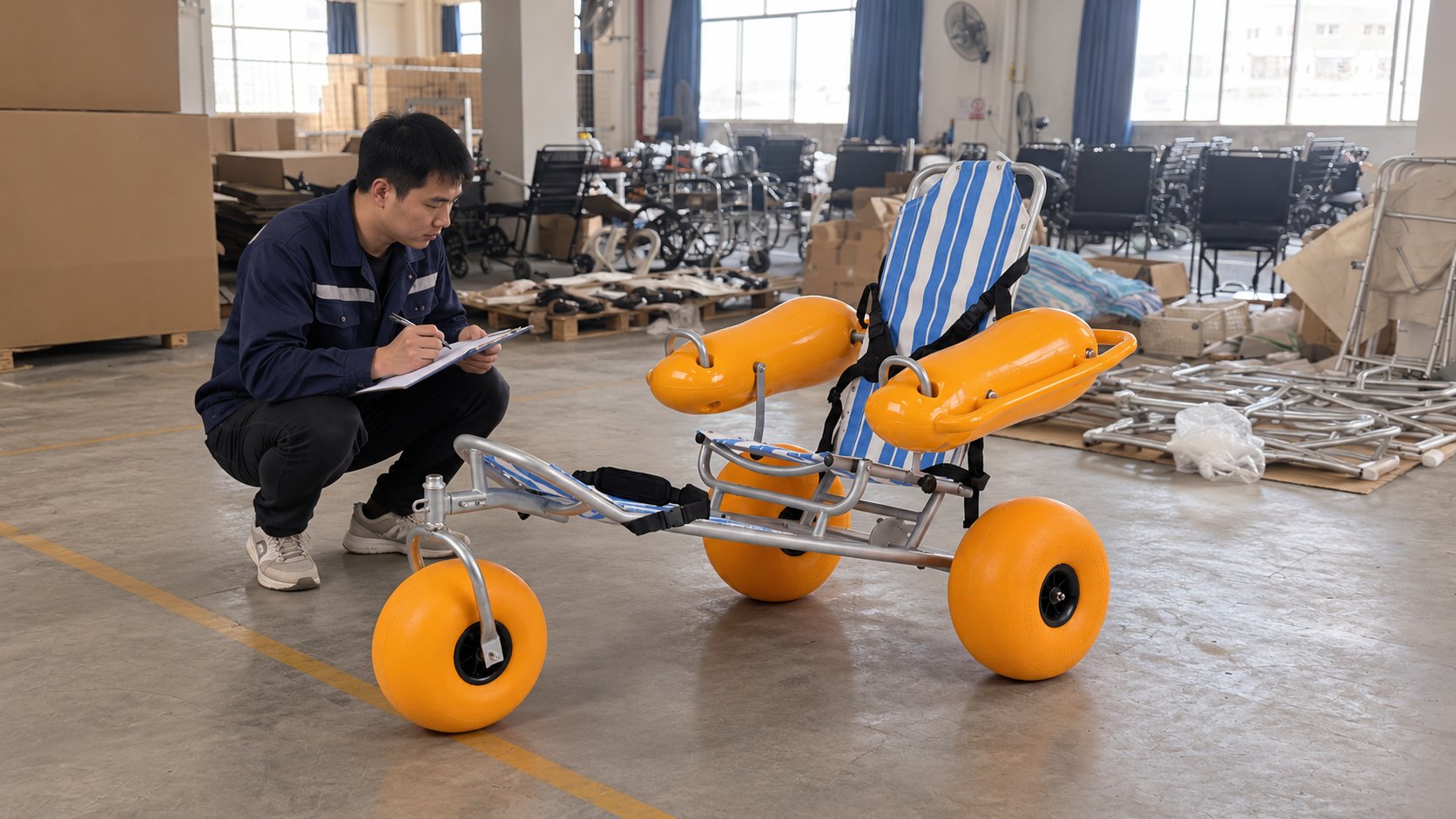
An amphibious beach wheelchair Australia buyers mean is usually a chair that rolls on sand and floats in calm shallows, with a support person controlling it at all times. Some sellers use the word loosely for any beach chair. Always check whether the chair actually floats.
Why does the term get confusing?
“Amphibious”, “floating” and “all-terrain” are used differently by different sellers. Here’s the deal: the label matters less than what the manual says the chair can do.
- Amphibious: sand and calm water
- Floating: chair with built-in floats
- All-terrain: land only, sand and grass
How do you confirm water use?
Ask the supplier whether the chair is designed for water entry and what the manual says about it. Get the answer in writing.
| Term | Typical meaning | Water entry |
|---|---|---|
| Amphibious | Sand and shallow water | Yes, supervised |
| Floating | Has floats for buoyancy | Yes, supervised |
| All-terrain | Sand, grass, gravel | No |
Clear definitions stop the wrong chair landing on your beach.
Key Takeaway: Confirm in writing whether a chair is designed for water entry, whatever it’s called.
How Does an Amphibious Beach Wheelchair Australia Model Work?
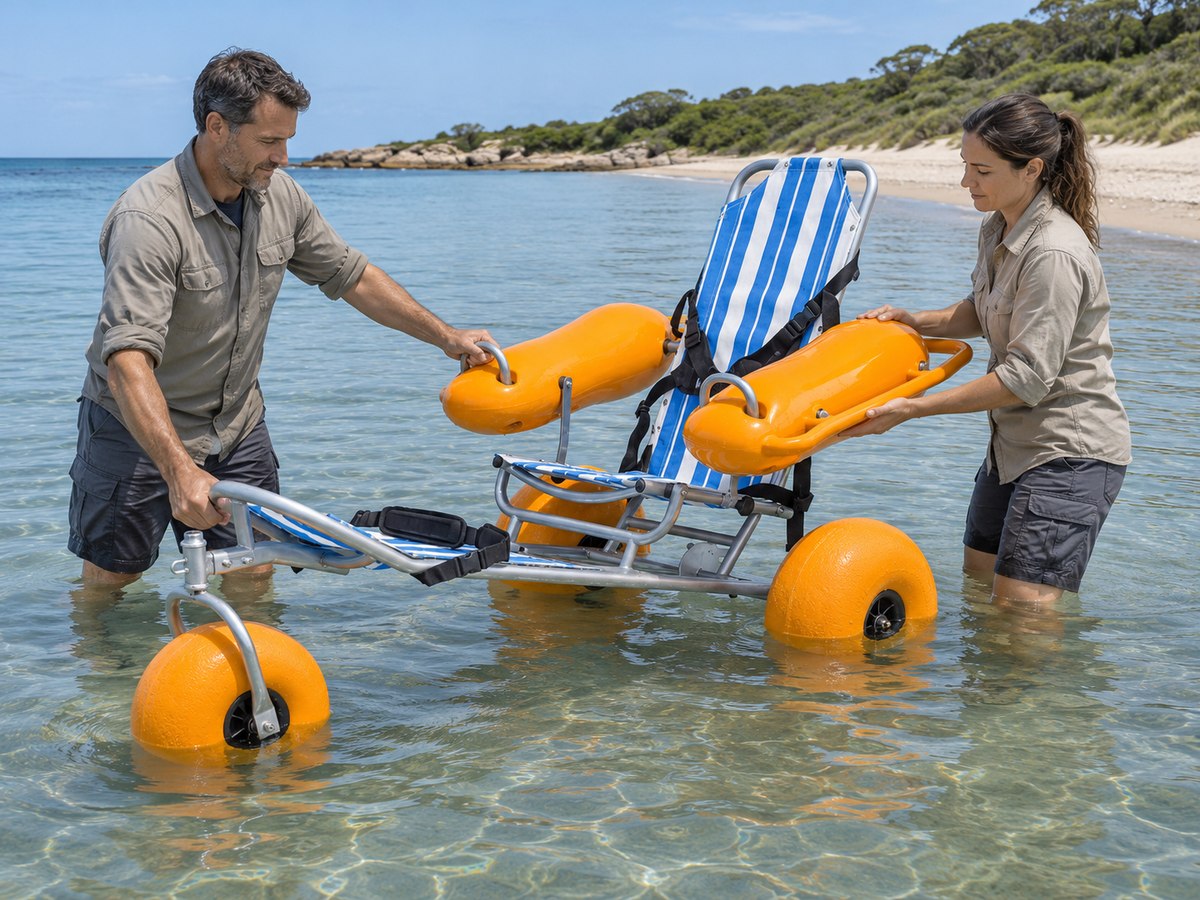
An amphibious beach wheelchair Australia model works by combining balloon wheels for sand with floats that add buoyancy as water deepens. A sling seat drains water quickly. The support person steers and steadies it.
Which parts make it amphibious?
Floats, drainable seating and corrosion-resistant parts. Think about it: every part has to cope with salt water, not just salt air.
- Side floats or float armrests
- Drainable sling seat
- Rinse-friendly frame and wheels
What does our floating model use?
Our floating model has three wheels, side flotation armrests and a fabric sling seat and back with an adjustable backrest.
| Part | Purpose |
|---|---|
| Floats | Buoyancy in shallows |
| Sling seat | Drains and dries |
| Balloon wheels | Sand travel |
| Adjustable backrest | Comfort |
Each part plays a role on both sand and water.
Key Takeaway: Look for floats, drainable seating and salt-ready parts in any amphibious chair.
Is an Amphibious Beach Wheelchair Australia Better Than All-Terrain?
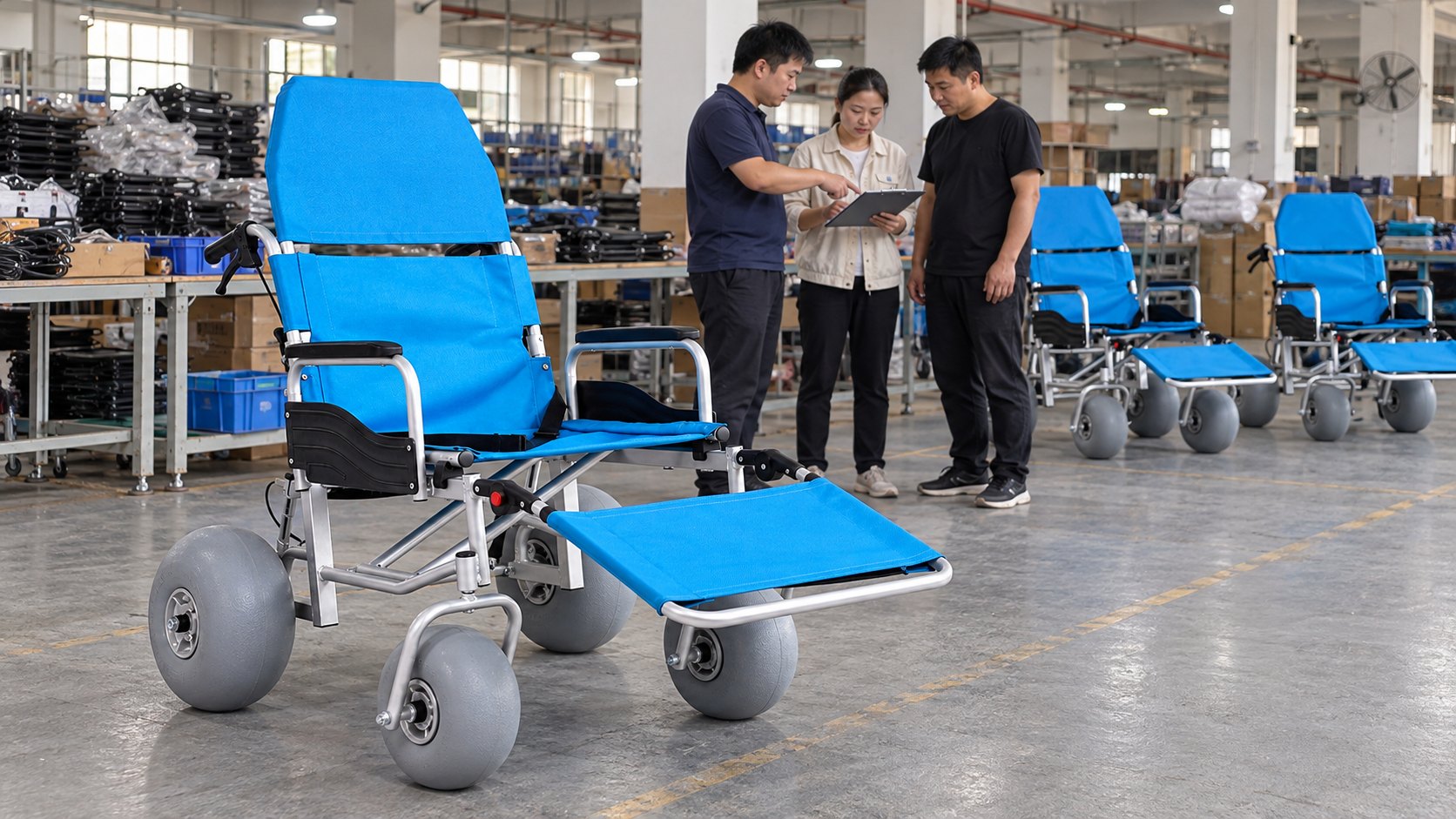
An amphibious beach wheelchair Australia model adds calm-water access, while an all-terrain chair offers simpler, land-only use with less supervision. Many programs need both. Your users’ goals decide.
When is all-terrain the better choice?
When users mainly want to reach the sand, watch the water or join family on the beach. But here’s the kicker: all-terrain chairs are simpler to lend because they stay on dry sand.
When is amphibious the better choice?
When users want to sit in the water and you can provide trained support persons and calm conditions.
- All-terrain: easier lending, sand only
- Amphibious: water access, more supervision
- Mixed fleet: covers both needs
| Factor | All-terrain | Amphibious |
|---|---|---|
| Water entry | No | Calm shallows |
| Supervision | Basic | Trained support |
| Lending | Simple | Booked sessions |
| Cleaning | Rinse | Rinse and float checks |
Most Australian programs end up with both types.
Key Takeaway: Choose all-terrain for easy sand access and amphibious for supervised water access.
Who Should Buy an Amphibious Beach Wheelchair Australia Program Uses?
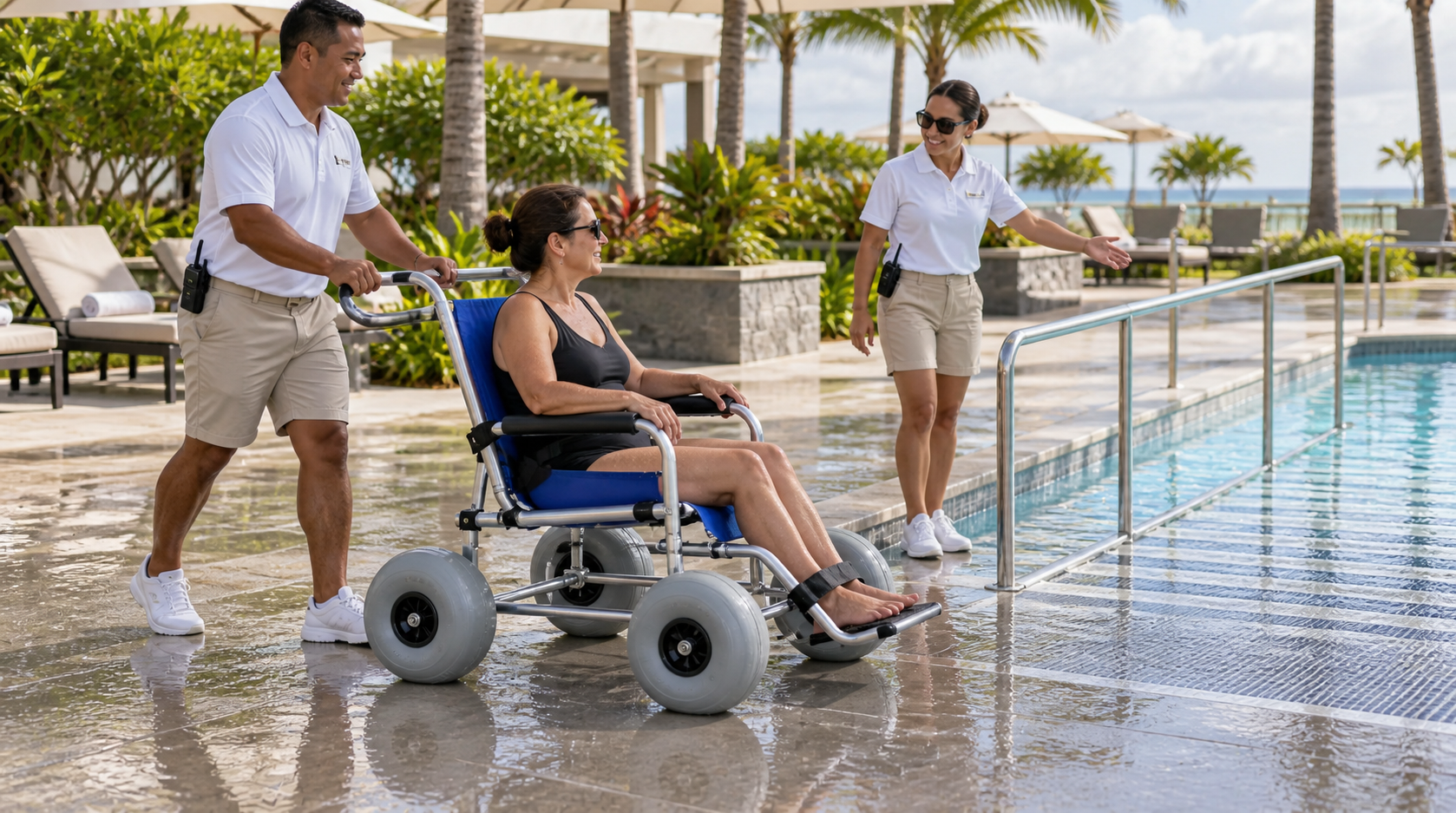
Councils, surf lifesaving clubs, aquatic centres, disability services and resorts with calm water should buy an amphibious beach wheelchair Australia program uses. They have the staff or volunteers to supervise. Individuals sometimes buy for family use too.
What do organisations need in place?
Trained support persons, a calm site and clear rules. Here’s why that matters: the chair is only as safe as the program around it.
- Trained support persons
- Suitable calm water
- Booking and hire terms
What about individual buyers?
Families who visit calm beaches often may buy one. They should still follow local rules and patrol advice.
| Buyer | Typical use |
|---|---|
| Council | Free hire program |
| Surf club | Accessible swim days |
| Aquatic centre | Pool sessions |
| Resort | Guest water access |
| Family | Private use |
Buyers with supervision in place get the most from these chairs.
Key Takeaway: Buy an amphibious chair when you can supervise water use properly.
Where Can an Amphibious Beach Wheelchair Australia User Go?
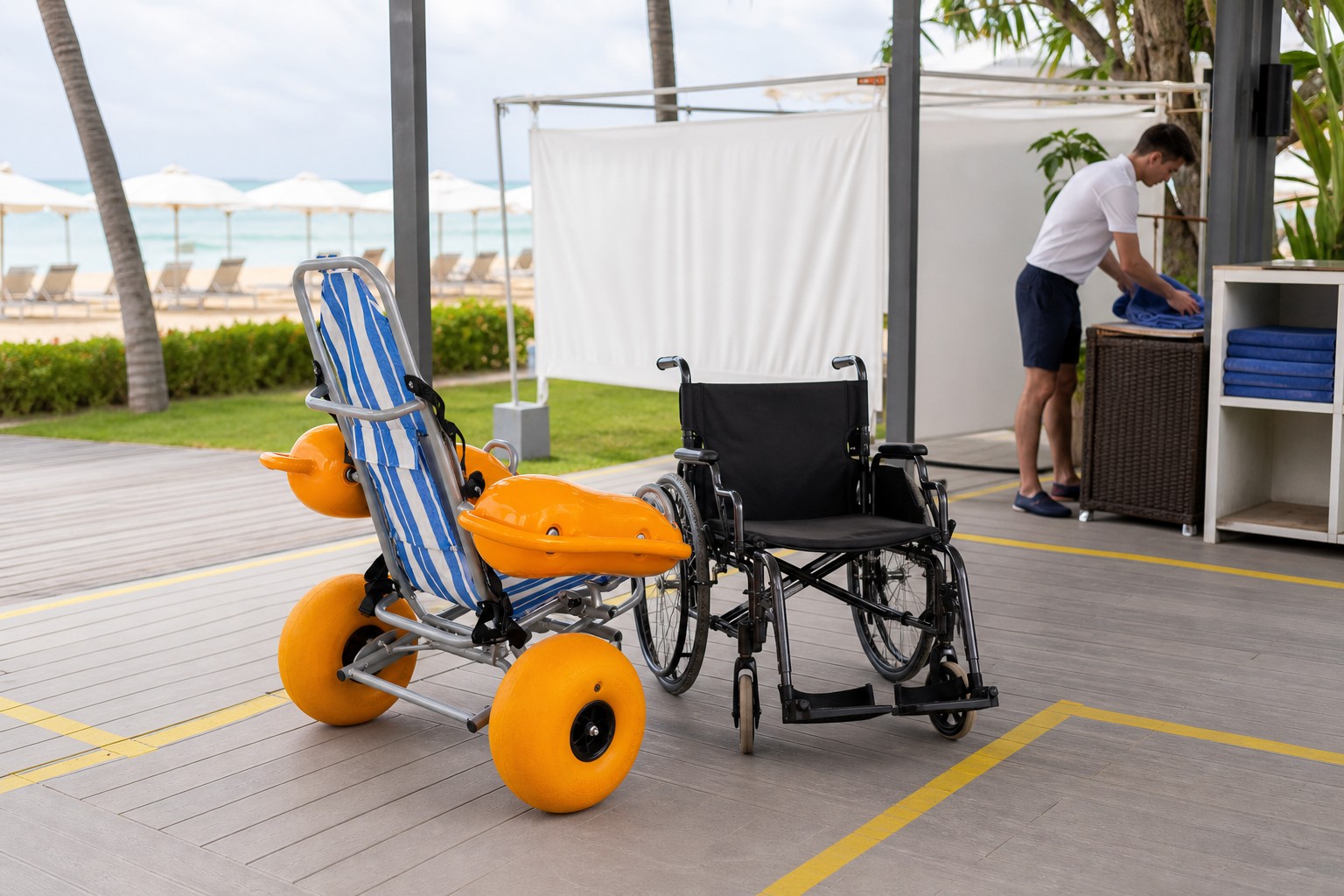
An amphibious beach wheelchair Australia user can go into calm bays, harbour beaches, estuaries and some pools with ramp entries, always with support. Surf beaches are generally unsuitable. Local patrols should guide each day’s decision.
Which sites work well?
Calm, shallow, patrolled water with an easy entry slope. Sounds simple, right? Conditions can still change within an hour.
- Calm bays and harbours
- Estuaries with gentle currents
- Pools with ramp entries
Which sites should be avoided?
Surf beaches, rips, strong currents and deep drop-offs. Follow local warnings, including seasonal marine stinger advice in northern waters.
| Site | Suitability |
|---|---|
| Calm bay | Good |
| Harbour beach | Good |
| Surf beach | Usually not |
| Pool with ramp | Good, check pool rules |
The right site is the foundation of a safe session.
Key Takeaway: Use amphibious chairs only in calm, supervised water with easy entry.
How Do Transfers Work for an Amphibious Beach Wheelchair Australia?
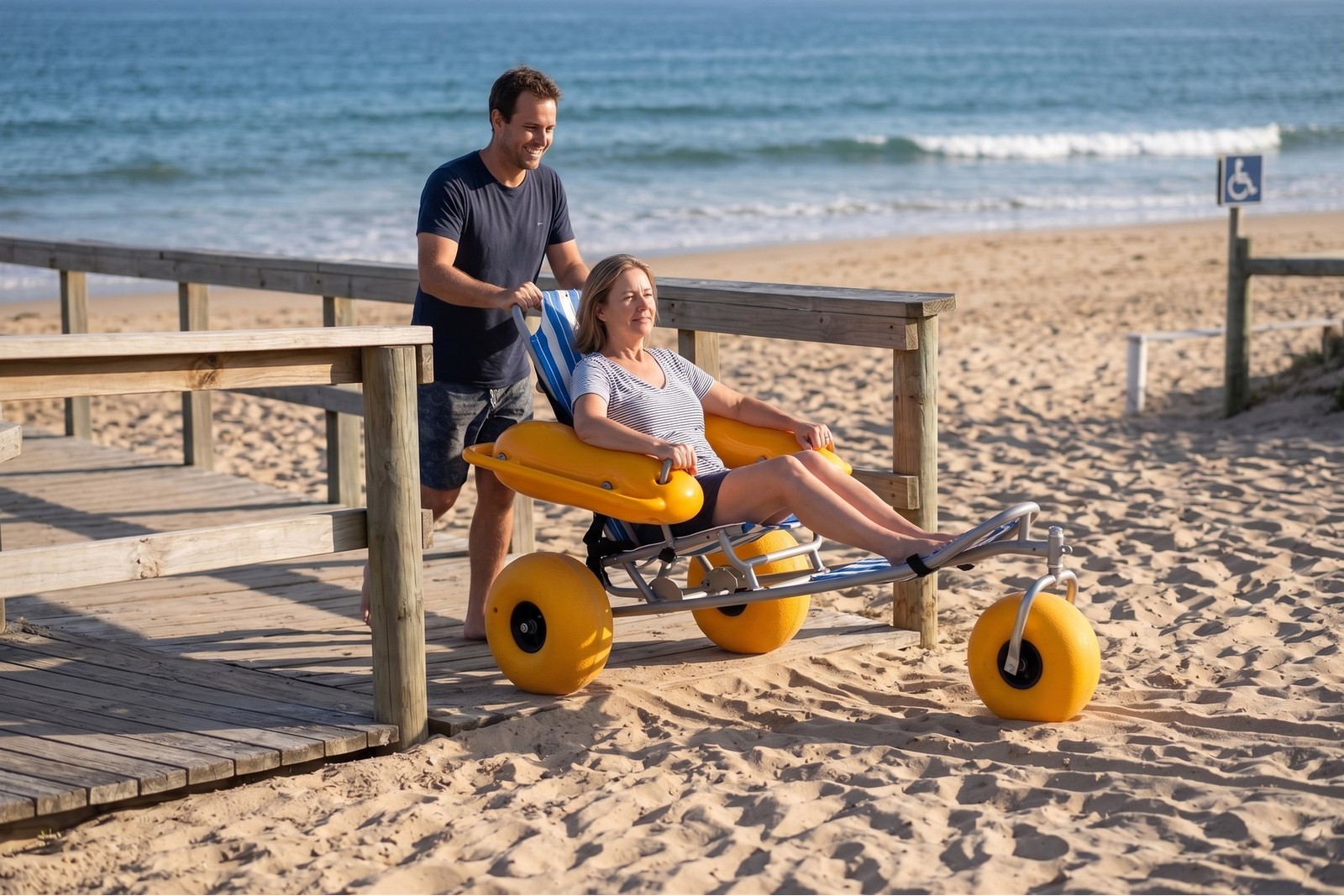
Transfers with an amphibious beach wheelchair Australia chair are done on firm ground before reaching the water, using techniques the user’s carers or trained staff already know. The chair should be braked and stable. Some programs use hoists at the beach.
Who should help with transfers?
The user’s carers or trained staff who know safe transfer techniques. Now here’s the twist: many programs place a transfer spot at the end of the matting for easier access.
- Firm, level transfer spot
- Brakes applied
- Trained helpers present
What equipment helps?
Matting, shade and sometimes a beach hoist. Ask your council or club what’s available.
| Transfer aid | Benefit |
|---|---|
| Matting | Firm ground |
| Shade | Comfort |
| Hoist | Safer lifts |
| Trained helpers | User safety |
Good transfer planning makes the whole visit smoother.
Key Takeaway: Plan a firm, shaded transfer spot and use trained helpers.
What Care Does an Amphibious Beach Wheelchair Australia Fleet Need?
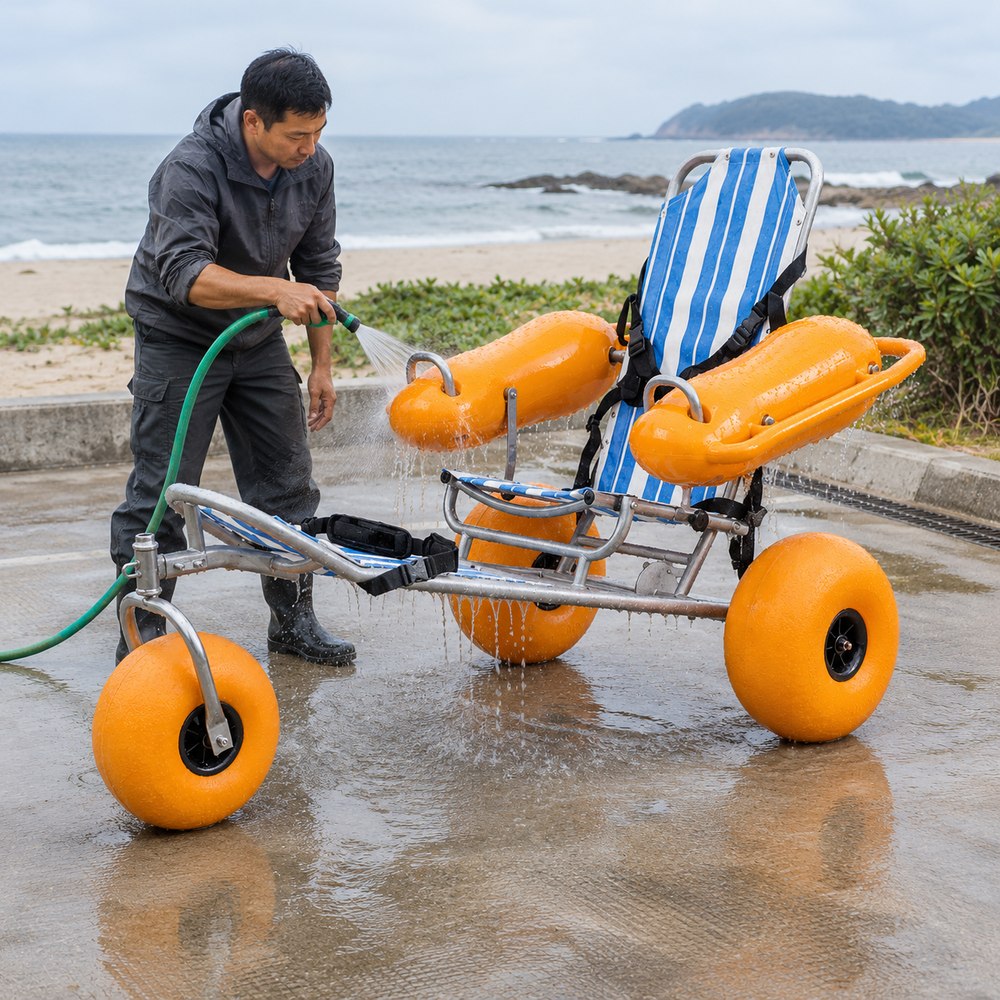
An amphibious beach wheelchair Australia fleet needs a fresh-water rinse after every water session, shaded drying and weekly checks of floats, wheels, bolts and fabric. Salt water is harder on chairs than sand alone. Regular care keeps them safe.
What’s the daily routine?
Rinse, drain and dry in shade. Want to know the best part? It only takes a few minutes per chair.
- Rinse floats, frame and wheels
- Drain the seat
- Dry in shade
What’s the weekly routine?
Check floats for cracks, wheels for pressure, bolts for rust and fabric for wear. Log results.
| Check | Frequency |
|---|---|
| Rinse | After each session |
| Floats | Weekly |
| Wheels and bolts | Weekly |
| Fabric | Weekly |
Steady care prevents surprises in the water.
Key Takeaway: Rinse after every session and check floats every week.
What Does an Amphibious Beach Wheelchair Australia Purchase Cost?
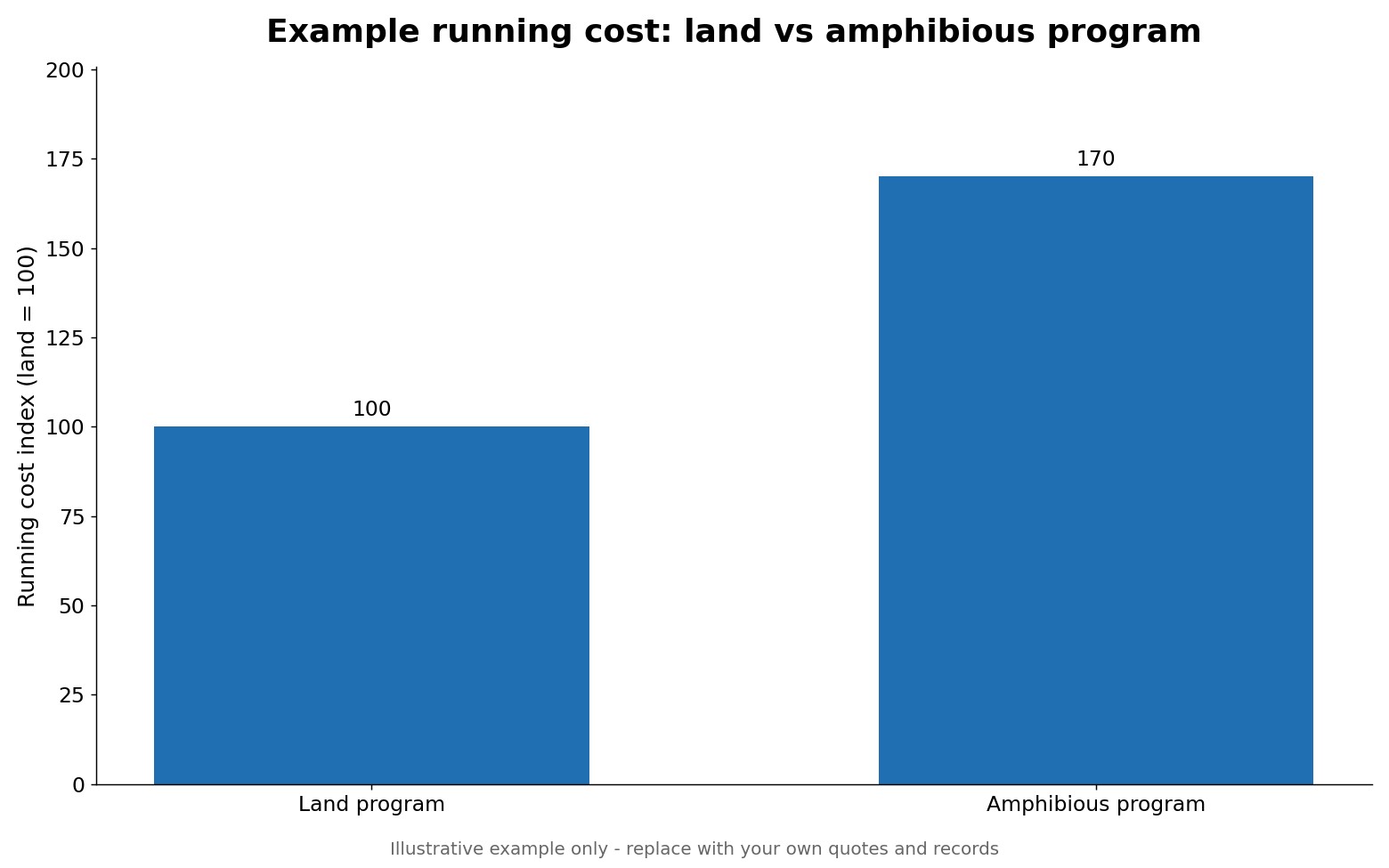
An amphibious beach wheelchair Australia purchase costs the chair plus freight, import charges, spares, life jackets, training and support time. Amphibious programs cost more to run than land programs. Staff time is the main difference.
Why do running costs differ?
Water sessions need trained support persons and more cleaning. Here’s the thing: the chair price is often the smallest part of the long-term cost.
- Support person time
- Training and refreshers
- Float and fabric spares
How do programs fund them?
Councils and clubs combine budgets, government inclusive-beach funding, sponsors and fundraising.
| Cost line | Land program | Amphibious program |
|---|---|---|
| Chair | Lower | Higher |
| Staff time | Basic | Higher |
| Training | Basic | More |
| Spares | Wheels, fabric | Plus floats |
Planning the full cost keeps programs sustainable.
Key Takeaway: Budget for support time and training, which drive amphibious program costs.
What Should an Amphibious Beach Wheelchair Australia Tender Specify?
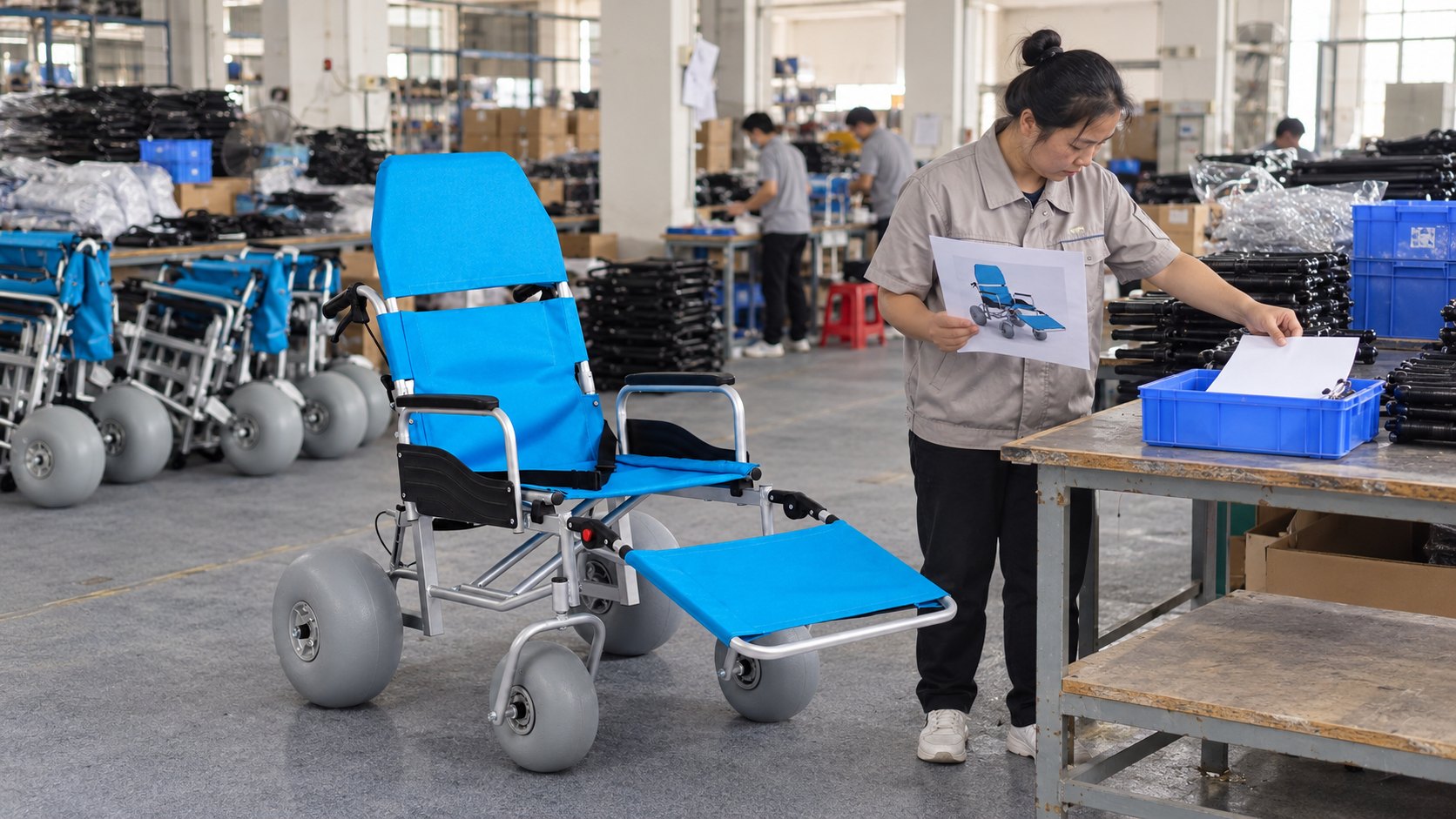
An amphibious beach wheelchair Australia tender should specify water-entry design, user weight limit, float design, frame material, wheel size, spares and documentation. Clear specs prevent mismatched quotes. Ask for the current manual.
Which specs matter most?
Water-entry design and weight limit matter most. The short version? If it doesn’t float, it isn’t amphibious for your purposes.
- Designed for water entry
- Weight limit from current manual
- Float and frame details
How do you score responses?
Score on specs, landed cost, spares, warranty and support. Request photos or video of the chair in water.
| Spec item | Must include |
|---|---|
| Water entry | Written confirmation |
| Weight limit | Current manual |
| Floats | Design and spares |
| Documents | Manual and parts list |
A clear spec gets you comparable quotes and the right chair.
Key Takeaway: Specify water-entry design clearly and ask for proof from each supplier.
How Do You Choose an Amphibious Beach Wheelchair Australia Supplier?
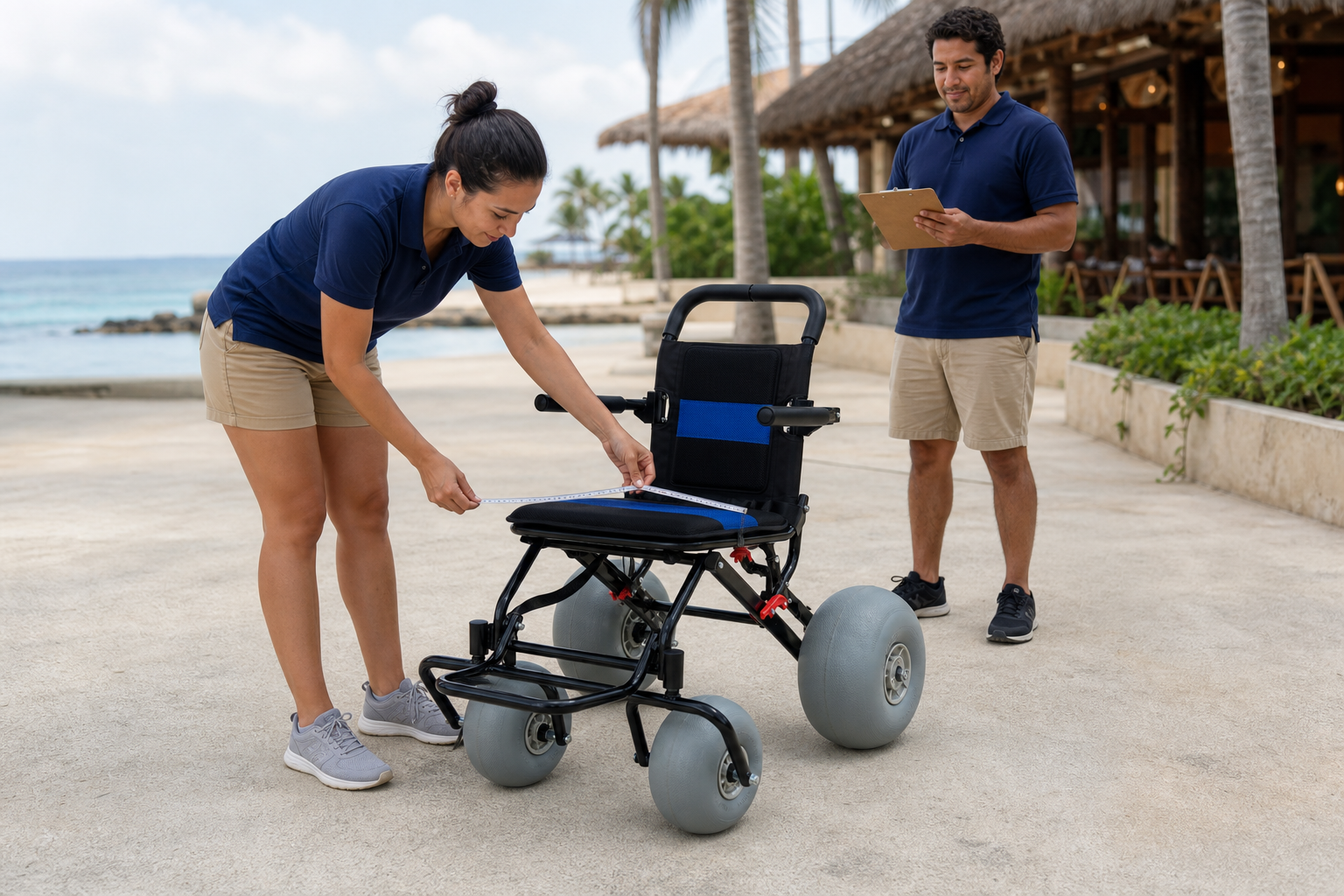
You choose an amphibious beach wheelchair Australia supplier by checking production control, model documents, spare float supply and clear freight and support terms. Ask for real water photos or video. Support after sale matters most.
What should you ask?
Ask who builds it, how floats are made and how spares reach Australia. This is where it gets interesting: float spares are what most buyers forget.
- Production photos
- Current manual
- Float and wheel spares
How do you compare suppliers?
Use one template with landed cost, spares, warranty and contact details.
| Check | Good sign |
|---|---|
| Production | Own factory |
| Water proof | Photos or video |
| Spares | Floats listed |
| Support | Named contact |
The right supplier keeps your water program afloat for years.
Key Takeaway: Choose a supplier who proves water use and supplies float spares.
Final Thoughts
Amphibious chairs can give people the joy of sitting in the sea again, as long as the right chair meets the right program. You’ve seen what the term means, how these chairs work, how they compare with all-terrain chairs, who should buy them, where they suit, transfers, care, costs, tender specs and supplier choice. With that clarity, your program can buy with confidence.
If you’re writing a quote request or comparing chairs, we can help clarify specs for your site. Contact us today with your beach and program details. We believe the sea belongs to everyone, and we build chairs that help programs share it safely.
FAQ
Can I use an amphibious chair in the surf?
Usually not. These chairs suit calm, shallow, supervised water, so avoid surf and rips.
What’s the best way to tell if a chair is amphibious?
Check the manual for water-entry design and ask for photos or video in water. Labels alone aren’t reliable.
How do I know if my program needs an amphibious chair?
If users want water access and you have trained support persons and calm water, it’s worth adding. Otherwise, start with all-terrain chairs.
Can I use one chair for sand and water?
Yes, if it’s designed for water entry. It needs a fresh-water rinse after each session.
How do I know if the weight limit suits my users?
Check the current manual for your exact model and confirm it in writing.