
A beach wheelchair transport workflow tracks one chair from storage, through a trip, and back. It covers chair identity, current instructions, vehicle fit, staff roles, loading, loose parts, care, inspection, and release. Even a short trip can fail when the fold state, cargo space, route, or handoff owner remains unclear.
Resorts, public programs, rental fleets, distributors, and event teams need one record for the full cycle. This beach wheelchair transport guide keeps handling steps tied to current documents. It does not invent lifting methods, securement rules, vehicle fit, staff limits, delivery promises, or product performance.
What should a transport brief define?
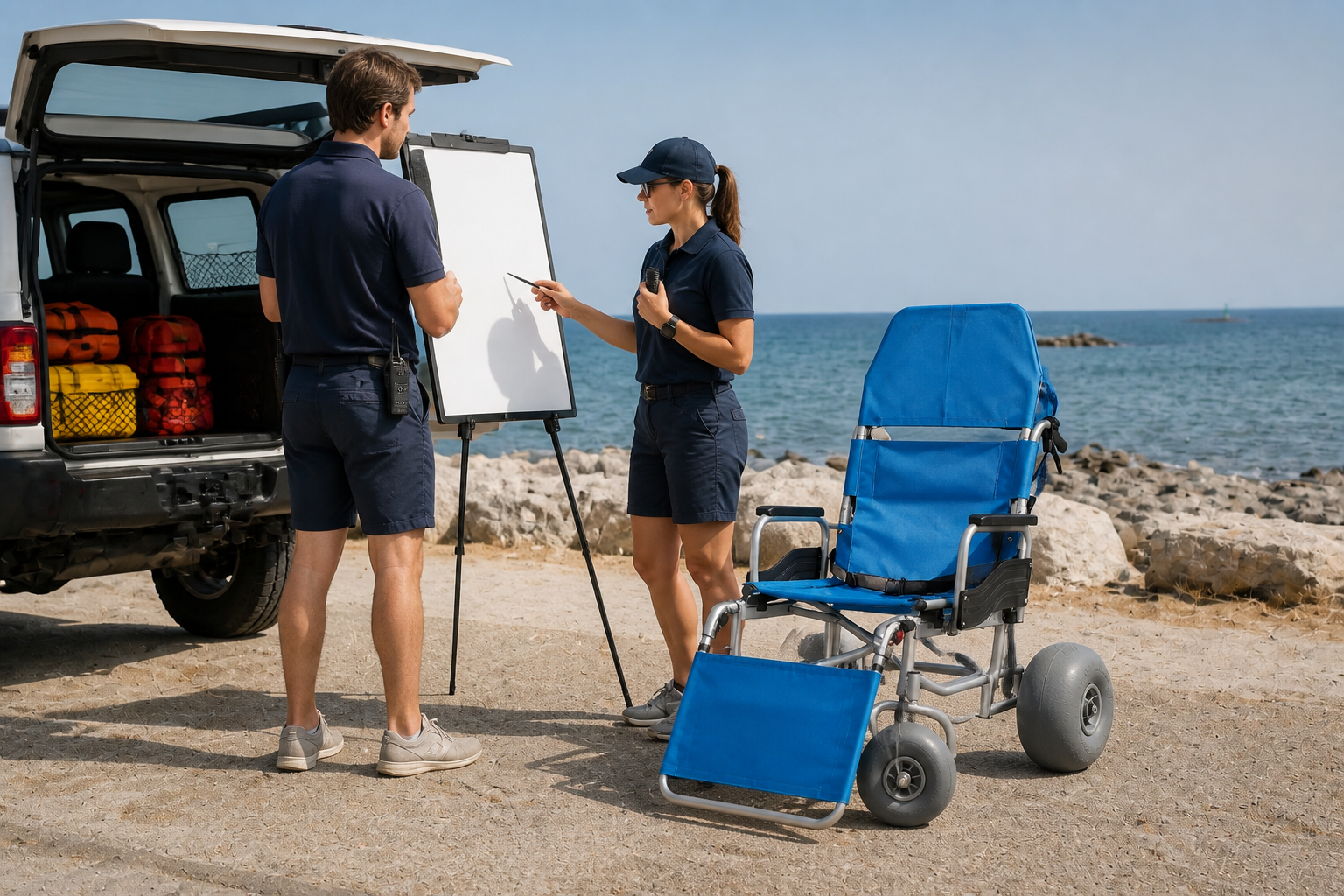
Beach wheelchair transport should define origin, destination, chair state, vehicle, route, staff roles, loading space, delivery, return, care, and storage. This decision connects equipment identity with every physical and document handoff. Product photos can show frame, wheels, handles, seat, belt, arms, and foot support, yet they cannot confirm approved folding, lifting, securement, vehicle fit, or release method. Record chair ID, trip ID, state, vehicle, route, staff, source instructions, handoffs, faults, and closeout against the exact model identity before approval.
Write the full storage-to-destination cycle
Start with one trip identity: Map the whole cycle before assigning a vehicle or time window. Then save the trip brief. If a source is missing, pause the plan and ask the document owner.
- Name origin, destination, route, and return.
- Record chair and vehicle configurations.
- Assign loading, driving, and handoff roles.
- Set hold rules for missing instructions.
Key Takeaway: A transport brief follows one chair through one complete trip.
| Review area | Working record |
|---|---|
| Trip scope | Origin, destination, route, and timing |
| Equipment | Chair state, vehicle, and parts |
| Control | Roles, records, faults, and release |
The brief exposes gaps before equipment reaches a loading area.
Which chair state should teams document?
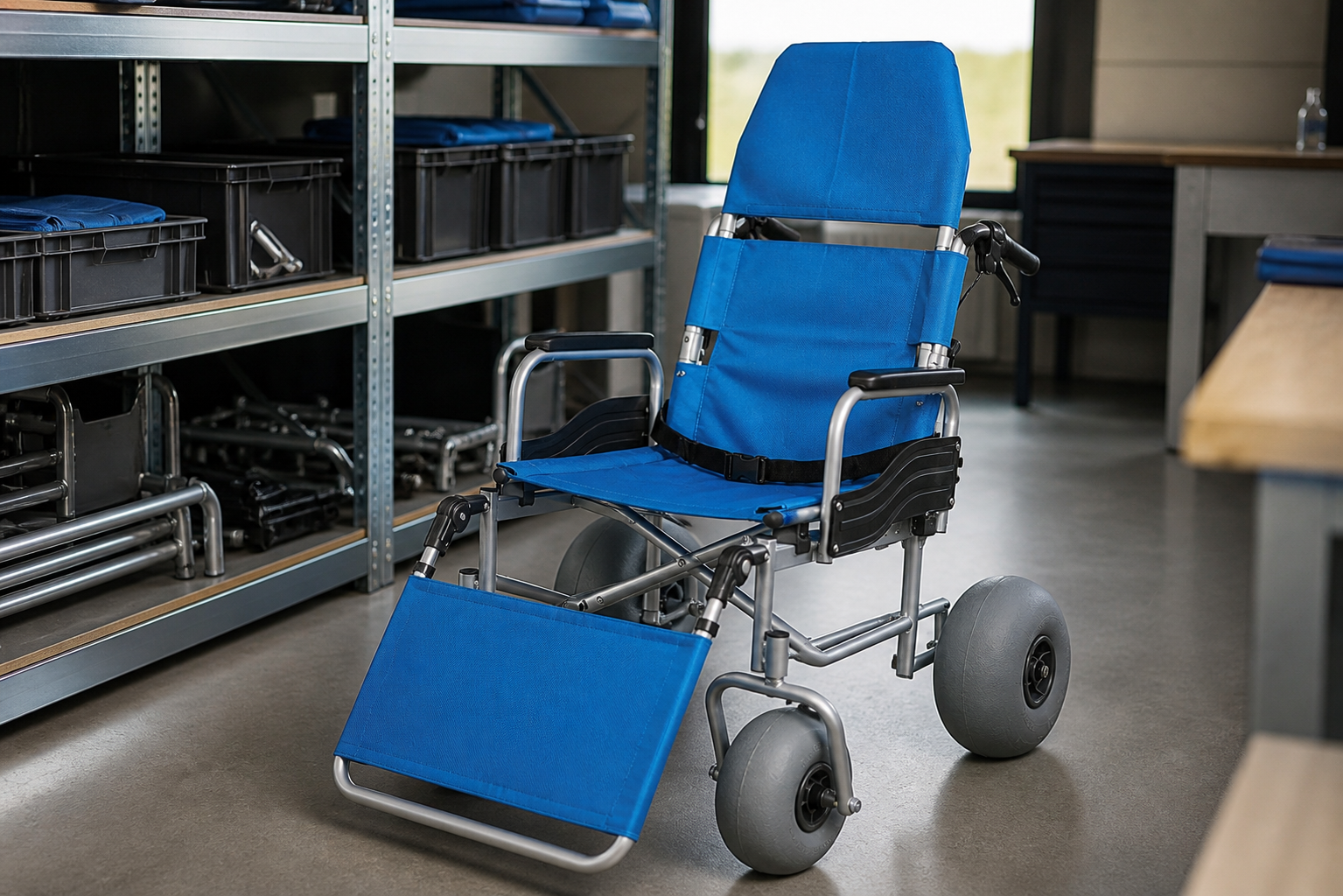
Beach wheelchair transport should use a documented assembled, folded, or packed state that matches current model instructions and the planned vehicle. This decision connects folding sequence, retained parts, setup, inspection, and destination release. Product photos can show cross-braced frame, movable foot support, handles, wheels, and fabric panels, yet they cannot confirm approved state, removal sequence, support points, or post-trip setup. Record state name, instruction revision, removed items, responsible staff, before photo, destination check, and release status against the exact model identity before approval. For example, the Padre Island National Seashore guidance places local limits on moving its beach wheelchairs and walkers.
Review chair state through one record
Use the state named in the source: Practice the empty-chair sequence under current instructions and stop when a joint or component does not match the record. Next, update the chair-state record. If one part is unclear, hold the unit for review.
- Name the state before movement begins.
- Keep removed items with chair identity.
- Record setup and inspection at destination.
- Reopen the plan after model changes.
Key Takeaway: Transport state joins chair geometry with handling and release records.
| Review area | Working record |
|---|---|
| State | Assembled, folded, packed, or stored |
| Parts | Attached, removed, protected, and counted |
| Closeout | Setup, inspection, and release |
A named state prevents vehicle fit from resting on an unclear photo.
How should teams review vehicle fit?
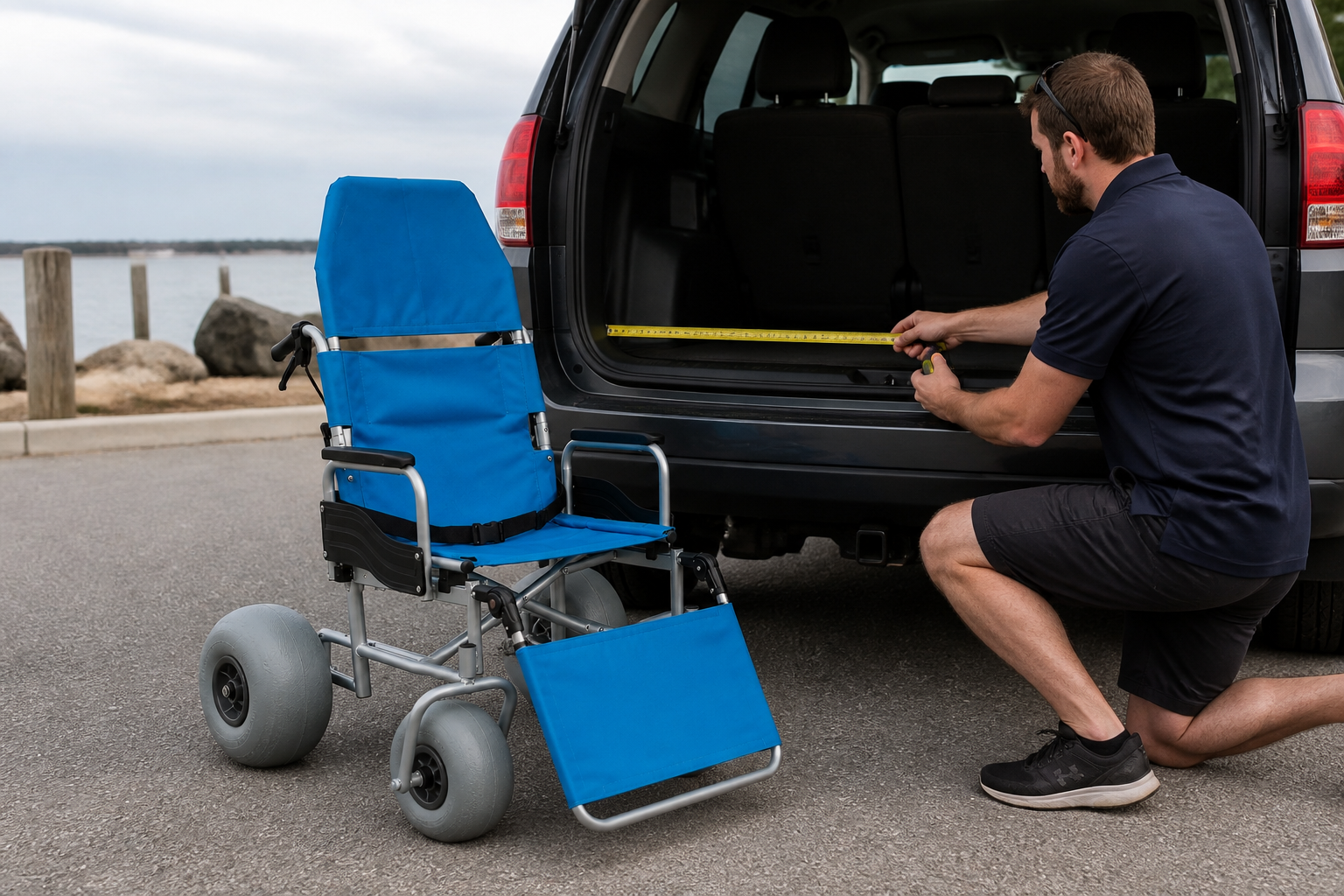
Beach wheelchair transport should be planned through usable opening and cargo space, chair state, route access, other cargo, and current vehicle guidance. This decision connects product dimensions with loading environment and destination access. Product photos can show wheel stance, frame envelope, handles, arms, and foot support, yet they cannot confirm clear cargo fit, loading path, staff clearance, or permitted placement. Record vehicle ID, usable opening, interior envelope, chair state, other cargo, source guidance, finding, and decision against the exact model identity before approval. Then test a lightweight beach wheelchair against the actual loading opening rather than a product photo.
Review vehicle fit through one record
Measure usable space rather than brochure space: Compare the stated chair envelope with the real vehicle and the beach wheelchair catalog for configuration context. Then file the vehicle check. If the opening or lift path changes, repeat the fit review.
- Measure clear openings and usable interior space.
- Include staff and other cargo clearance.
- Check destination unloading access.
- Record one chair-vehicle configuration pair.
Key Takeaway: Vehicle fit needs exact chair and cargo states rather than a generic vehicle class.
| Review area | Working record |
|---|---|
| Vehicle record | Opening, interior, access, and cargo state |
| Chair record | Model, state, envelope, and parts |
| Decision | Match, change, question, or hold |
The paired record can be reviewed again after any configuration change.
What belongs in a loading-area review?
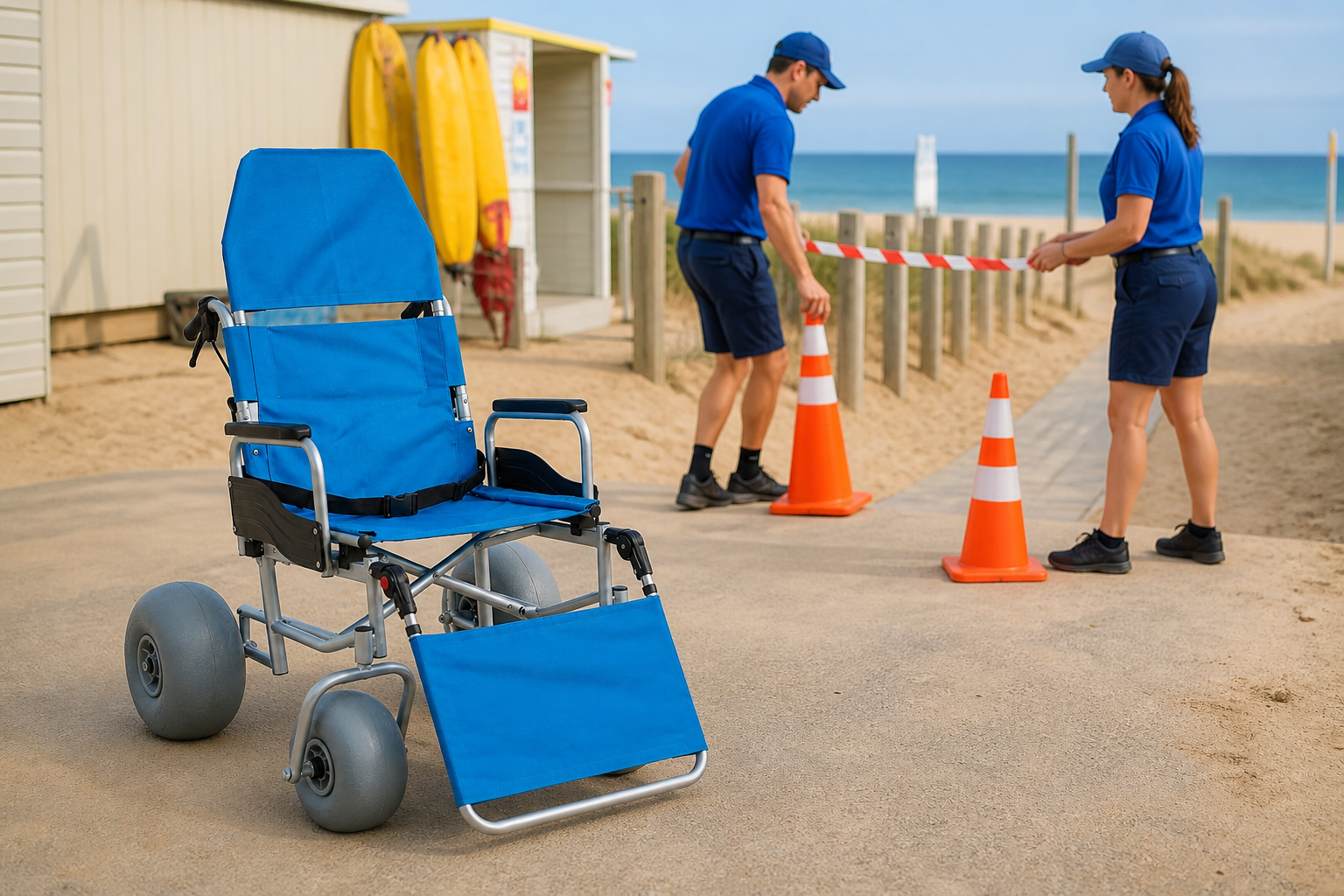
Beach wheelchair transport should use a clear loading-area review covering surface, space, traffic, weather exposure, staff positions, chair state, and stop conditions. This decision connects worksite control with equipment handling and route access. Product photos can show vehicle opening, chair wheels, frame, handles, foot support, and nearby obstacles, yet they cannot confirm safe local work method, staff capability, approved lifting steps, or weather suitability. Record location, surface, lighting, traffic control, staff roles, chair state, instruction source, and stop rule against the exact model identity before approval. An all-terrain beach wheelchair needs its own beach wheelchair transport space and handling record.
Review loading area through one record
Control the space before moving equipment: Choose a stable area under local policy and keep unrelated people or cargo outside the work zone. Meanwhile, record the loading-area owner. If the lane is blocked, move the task before loading.
- Check surface, space, light, and traffic.
- Assign staff positions and communication cues.
- Keep parts and tools inside the trip record.
- Stop when conditions or instructions change.
Key Takeaway: Loading begins with a controlled area and a shared stop rule.
| Review area | Working record |
|---|---|
| Area | Surface, space, traffic, and exposure |
| Roles | Lead, support, observer, and stop authority |
| Equipment | Chair state, parts, vehicle, and tools |
The area review separates local work controls from product claims.
How should securement questions be handled?
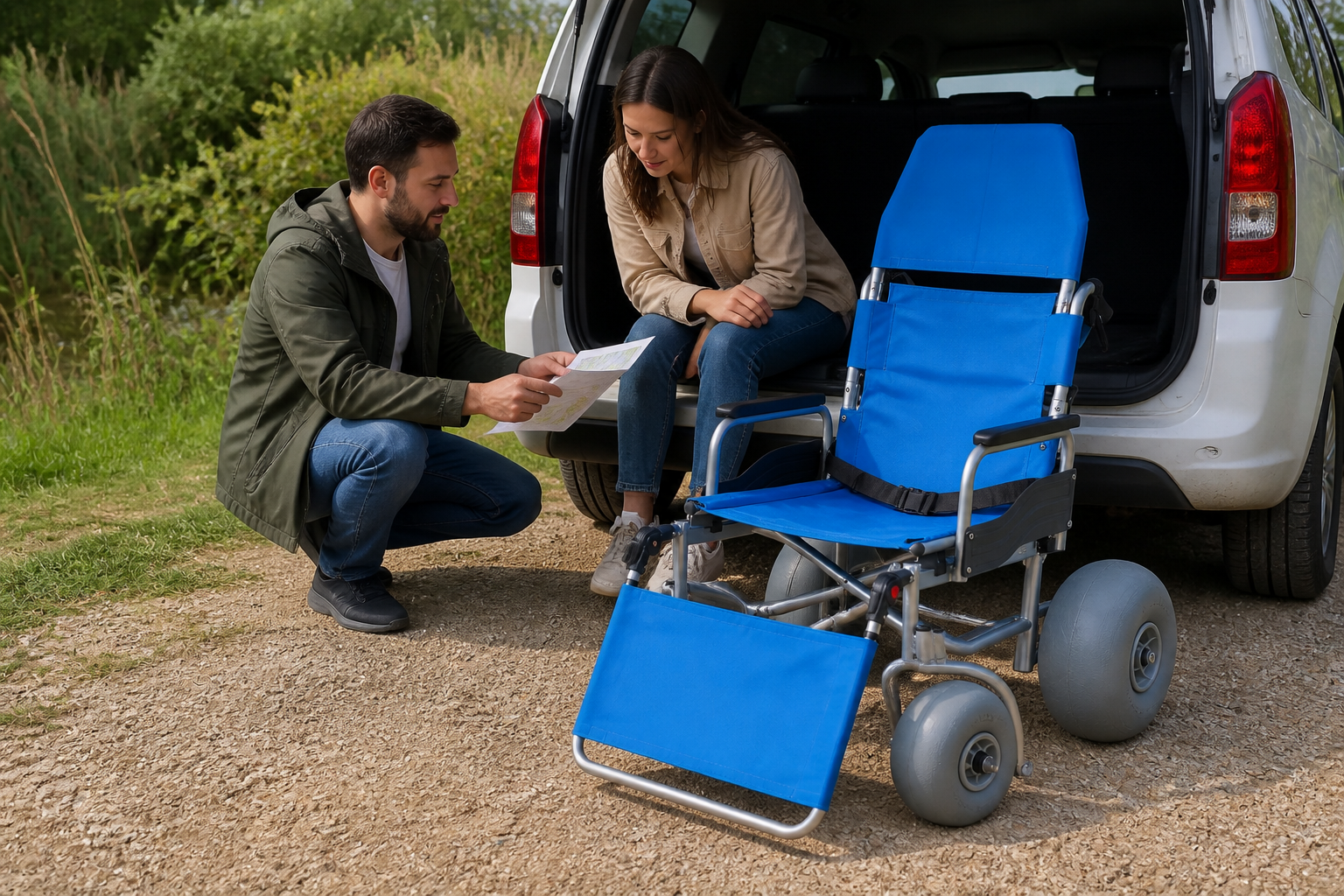
Beach wheelchair transport should handle securement through current chair and vehicle guidance tied to the exact configuration, never through an improvised universal method. This decision connects cargo placement, approved contact points, component protection, and trip conditions. Product photos can show frame tubes, wheels, handles, seat fabric, belt, arms, and foot support, yet they cannot confirm approved tie points, restraint type, force limits, orientation, or vehicle compatibility. Record chair model, vehicle ID, source document, named point, method, inspection, owner, and unresolved question against the exact model identity before approval.
Review securement source through one record
Do not turn a photo into an instruction: Request written model guidance and route vehicle-specific questions through the responsible fleet process. For example, save each securement question with the exact source reply. If no reply exists, stop the plan.
- Identify the chair and vehicle configuration.
- Use only current named guidance.
- Protect fabric and movable components.
- Place unresolved securement on hold.
Key Takeaway: Securement belongs to exact source documents rather than visual guesswork.
| Review area | Working record |
|---|---|
| Source | Chair guidance and vehicle guidance |
| Configuration | State, position, parts, and cargo |
| Status | Approved, question, change, or hold |
A source-led review prevents a convenient method from becoming an unsupported rule.
What staff roles belong in the trip plan?
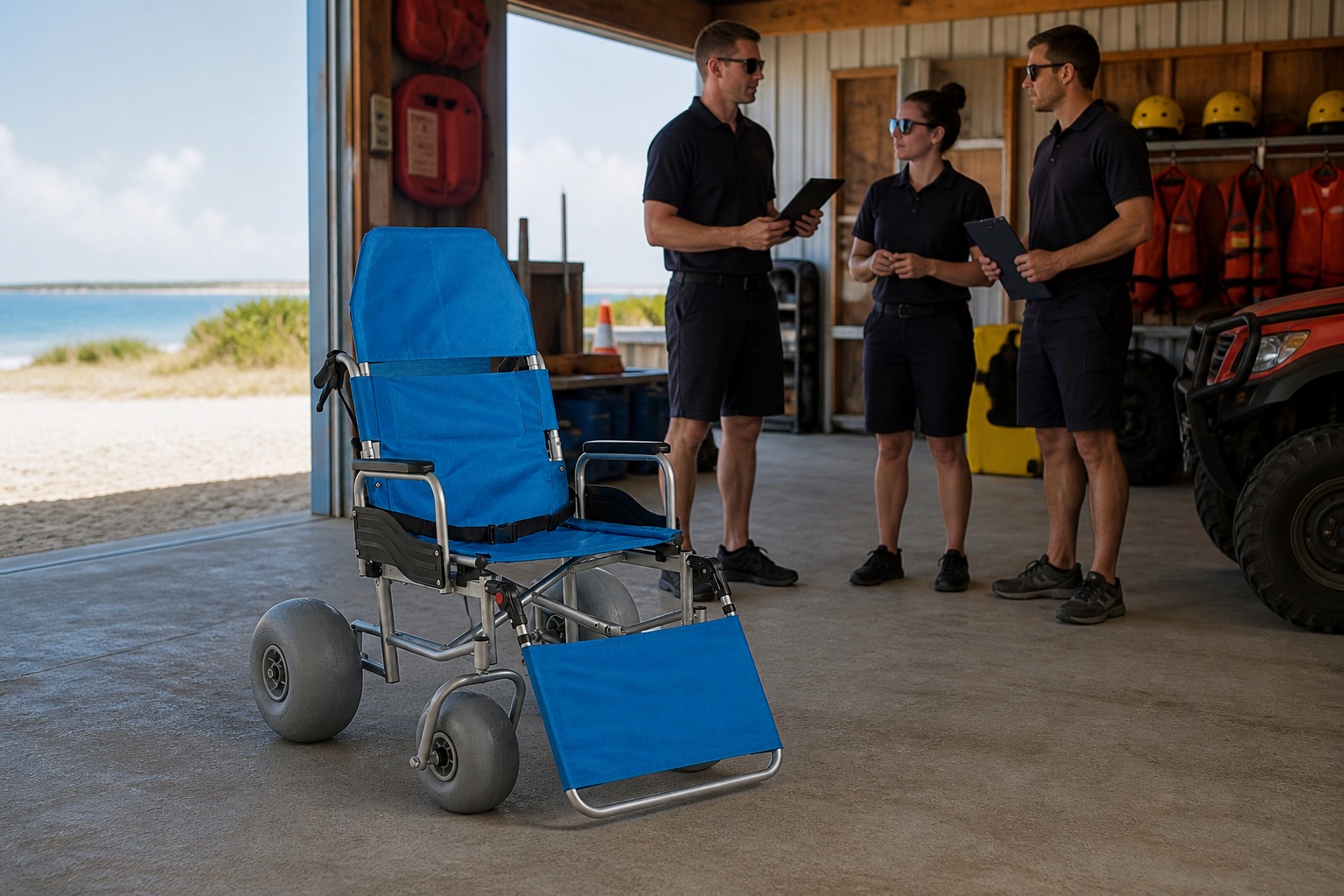
Beach wheelchair transport needs named roles for chair release, vehicle review, loading-area control, equipment movement, trip records, delivery, return, care, and fault escalation. This decision connects shift handoffs with local policy and current product instructions. Product photos can show push handles, wheels, folding frame, foot support, and parts, yet they cannot confirm who may perform each task or who can release a held chair. Record task, authorized role, source, communication cue, stop authority, completed check, and next owner against the exact model identity before approval.
Review staff roles through one record
Give every status one owner: Rehearse an empty-chair cycle across shift boundaries and revise the role card where ownership becomes unclear. Then name each staff role. If a handoff owner is absent, delay the trip.
- Assign release, loading, trip, and handoff roles.
- Name one stop authority at each stage.
- Record shift changes and unfinished checks.
- Route faults to a named owner.
Key Takeaway: Named roles keep chair status intact across several handoffs.
| Review area | Working record |
|---|---|
| Stage | Release, load, trip, delivery, return, or care |
| Role | Owner, support, observer, and stop authority |
| Record | Check, finding, status, and next handoff |
A role map reduces silent assumptions between front desk, fleet, and care teams.
How should delivery and collection be recorded?
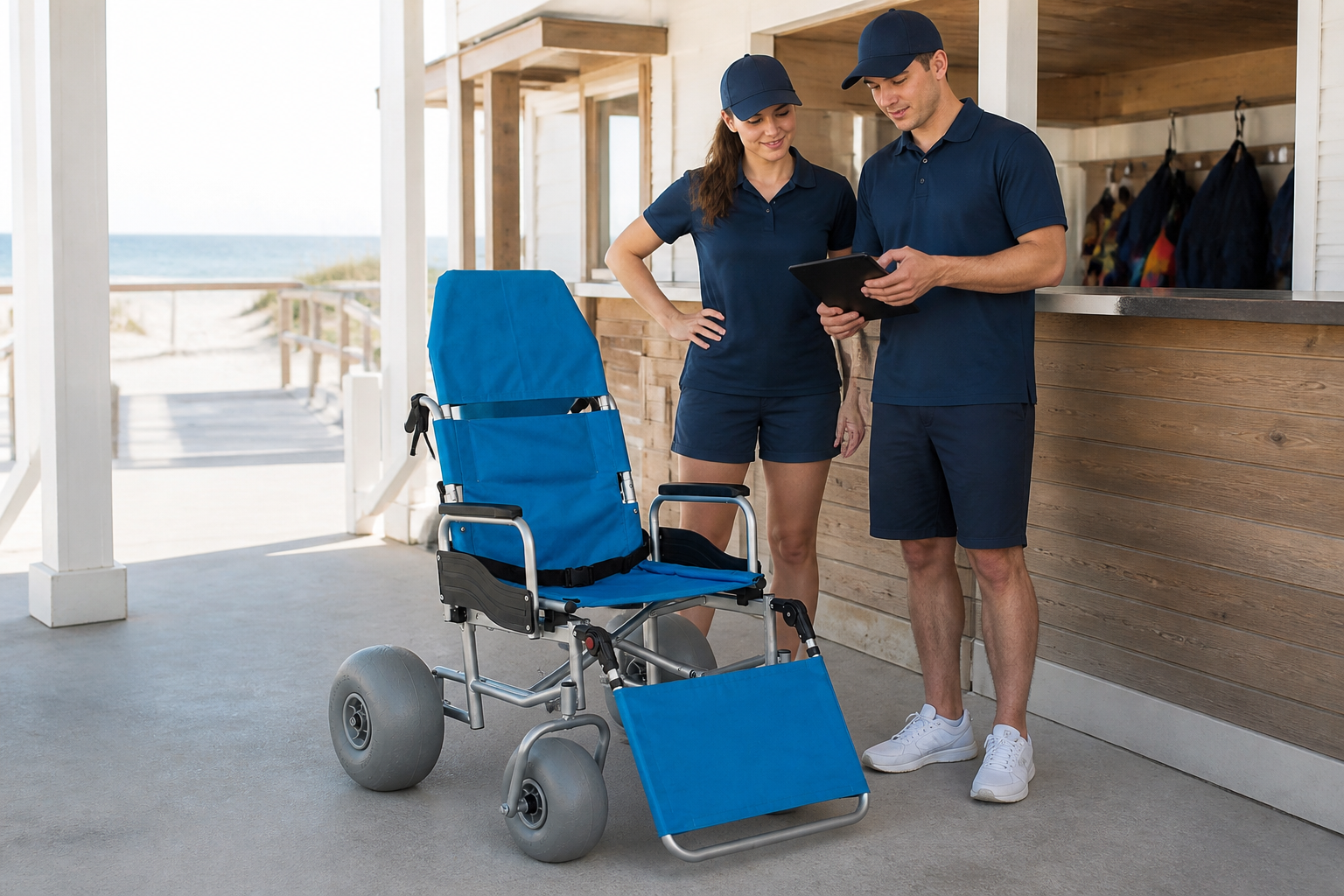
Beach wheelchair transport should record delivery and collection through chair identity, condition, parts count, destination contact, route status, handoff time, open issues, and acceptance state. This decision connects origin and destination responsibility with a shared equipment record. Product photos can show chair form and visible components at each handoff, yet they cannot confirm hidden condition, completed care, receiver authority, or permission for changed use. Record trip ID, chair ID, parts, condition, sender, receiver, location, time, finding, and acceptance state against the exact model identity before approval. So record where the vehicle meets any beach access mat and who owns the handoff.
Review delivery collection through one record
Close one handoff before opening another: Use the rental project as service context while the trip record governs the actual exchange. Next, close the delivery record. If the receiving team reports a fault, hold the chair.
- Confirm sender and receiver identities.
- Count parts at both handoffs.
- Record condition and open issues.
- Use accepted, changed, declined, or hold status.
Key Takeaway: A delivery record transfers equipment facts and responsibility at the same moment.
| Review area | Working record |
|---|---|
| Handoff | Sender, receiver, location, and time |
| Equipment | Chair state, parts, and condition |
| Outcome | Accepted, changed, declined, or hold |
The same structure also supports collection and return reconciliation.
How can teams protect components during movement?
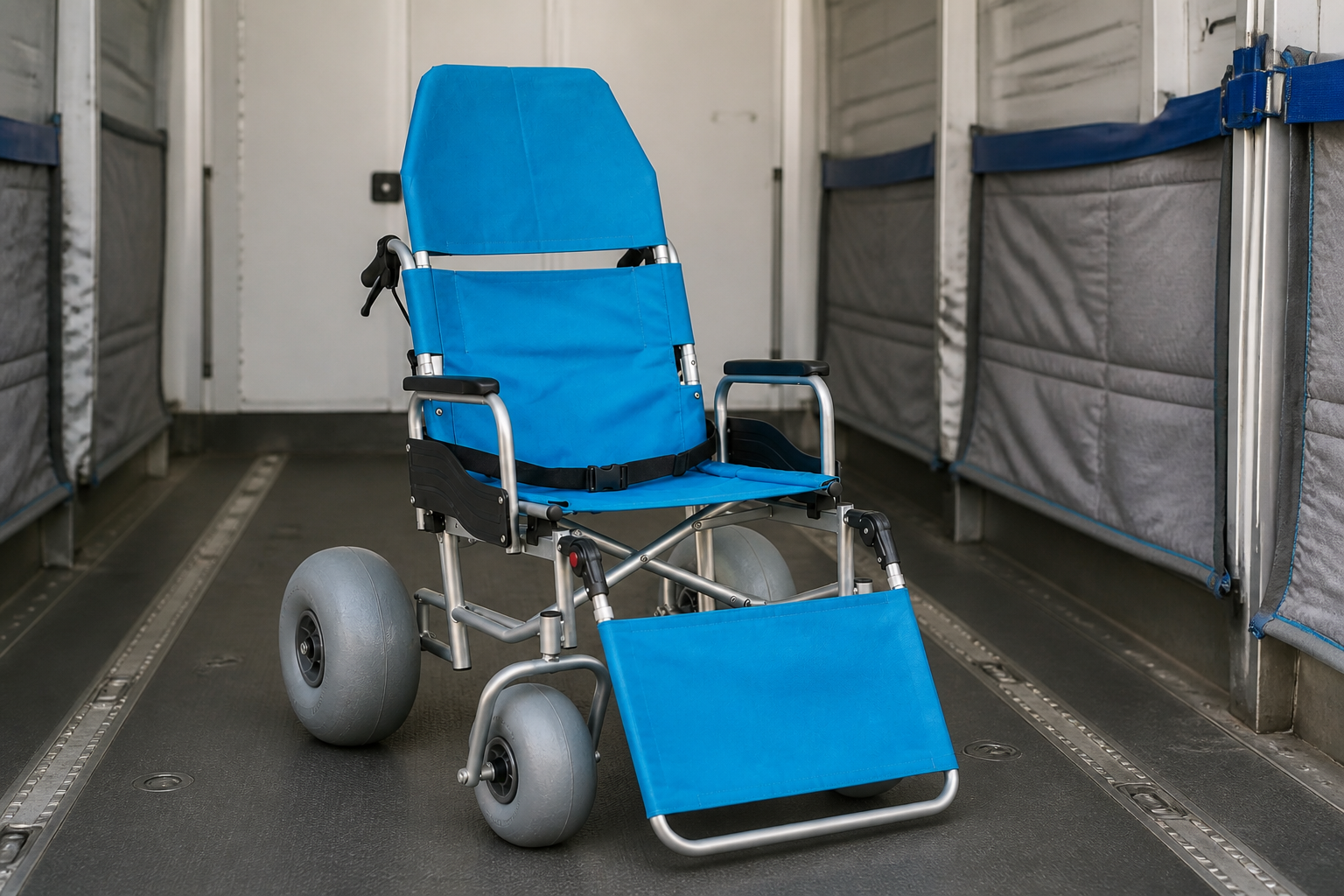
Beach wheelchair transport should protect components through stated folding, placement, support, separation, cover, and handling guidance for the exact chair. This decision connects wheel, frame, fabric, arm, belt, handle, brake, and foot-support condition. Product photos can show which parts project, fold, flex, detach, or contact nearby cargo, yet they cannot confirm approved contact surfaces, cover materials, stack limits, or serviceability after impact. Record component, risk point, source guidance, protection step, inspection point, and fault status against the exact model identity before approval.
Review component protection through one record
Map every contact point: Review where the chair touches hands, floor, vehicle, cover, or adjacent cargo and connect each point with current instructions. Afterward, file the component check. If a loose part lacks a marked place, revise the packing plan.
- List exposed and movable components.
- Separate fabric from sharp or dirty cargo.
- Keep detached items identified and contained.
- Inspect after every loading and unloading cycle.
Key Takeaway: Protection planning follows contact points from origin through return.
| Review area | Working record |
|---|---|
| Component | Wheel, frame, fabric, arm, handle, or foot support |
| Contact | Hands, floor, vehicle, cover, or cargo |
| Control | Source, protection, inspection, and status |
A contact map makes post-trip inspection more focused and repeatable.
What care follows a transport cycle?
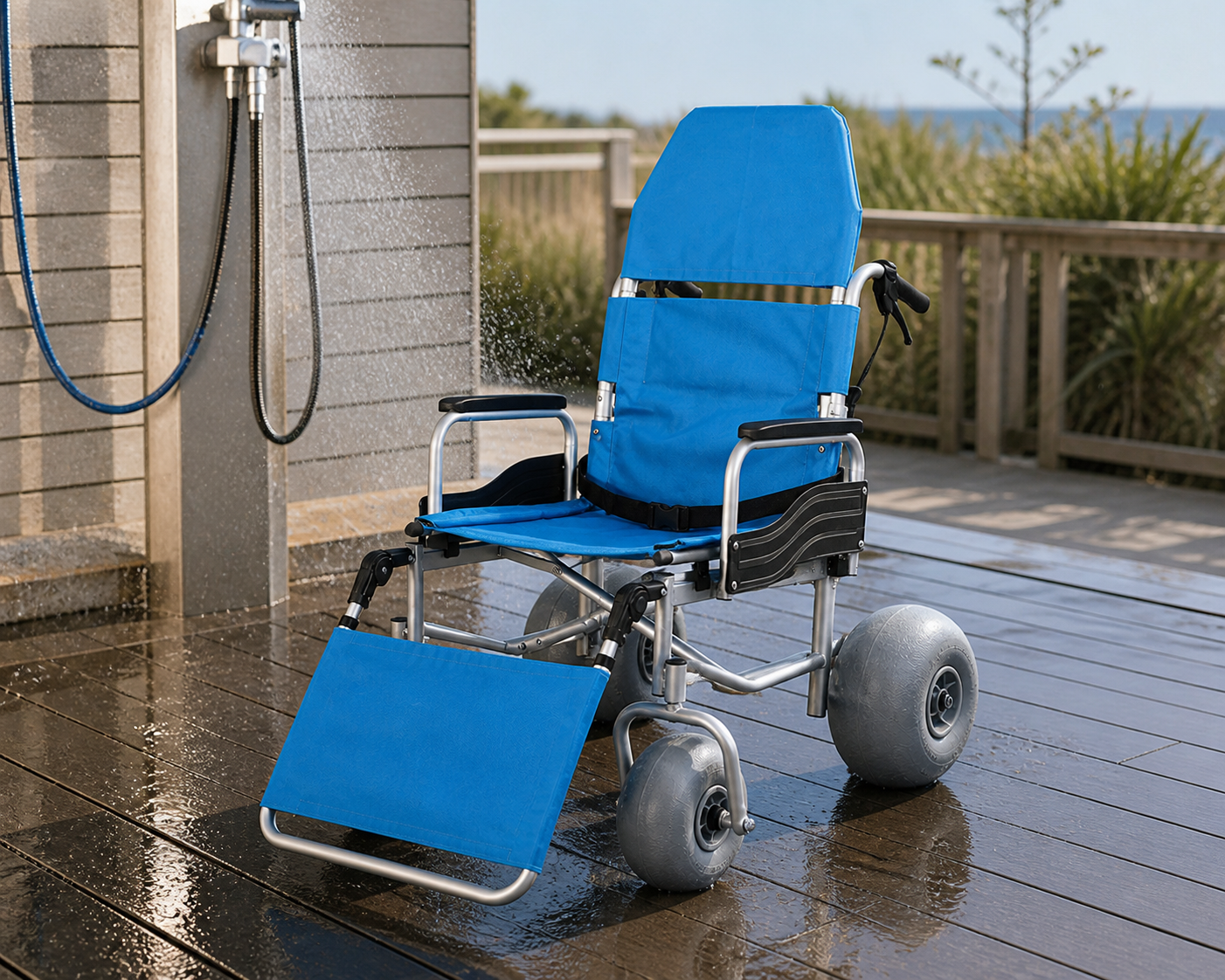
Beach wheelchair transport should end with return identity, loose-material removal, stated cleaning, drying, inspection, parts reconciliation, fault review, storage, and release. This decision connects trip closeout with the user manual page and model-level care instructions. Product photos can show sand, moisture, frame surfaces, fabric, wheels, hubs, handles, belt, and foot support, yet they cannot confirm approved cleaners, water exposure, drying method, hidden damage, or ready status. Record trip ID, return time, care source, completed steps, parts count, finding, fault owner, and release state against the exact model identity before approval.
Review post trip care through one record
Returned does not mean ready: Move the chair through named care states and keep it unavailable until drying, inspection, and fault review close. As a result, care status follows the same chair. If cleaning remains open, do not release it.
- Reconcile chair and parts after return.
- Follow current cleaning and drying guidance.
- Inspect contact and movement points.
- Record ready, hold, or service status.
Key Takeaway: Transport closes only after care and a documented release decision.
| Review area | Working record |
|---|---|
| State | Returned, cleaning, drying, checking, or ready |
| Evidence | Source, completed step, finding, and owner |
| Release | Ready, hold, service, or retirement review |
Visible states keep an unreviewed chair out of the next trip.
How can teams build an end-to-end transport flow?
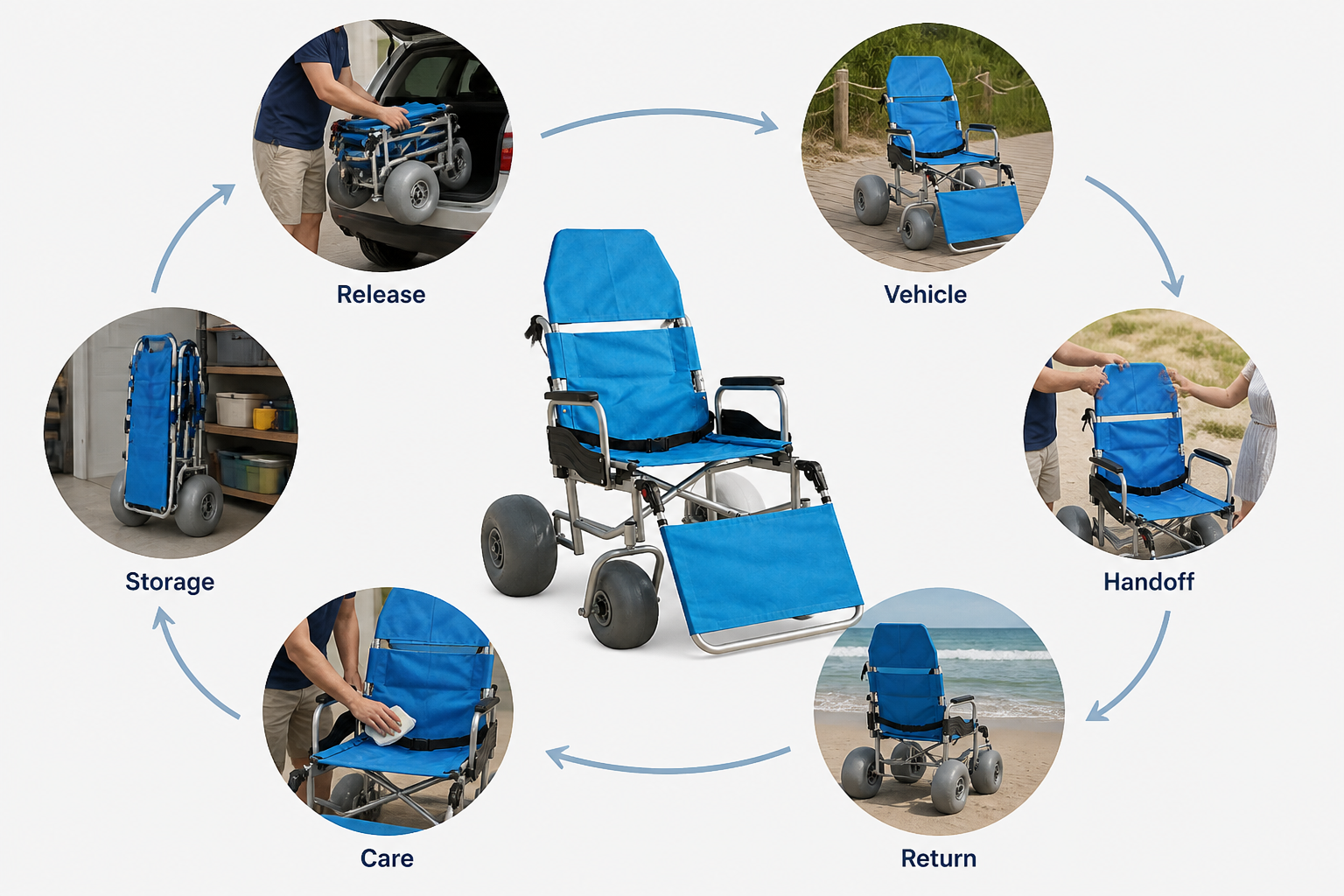
Beach wheelchair transport can form an end-to-end flow from request through chair release, vehicle fit, loading review, movement, handoff, return, care, and storage. This decision connects people, equipment, documents, locations, and status changes. Product photos can show chair identity at every stage and each planned environment, yet they cannot confirm permission to skip an unclear source or replay a completed mutation. Record request, chair, vehicle, route, owner, check, status, fault, next action, and closeout against the exact model identity before approval.
Review transport flow through one record
Make every handoff visible: Use one process map and pause the trip when chair, vehicle, route, staff, or source evidence no longer matches. Then close the cycle record. If one action remains, assign it before another trip.
- Open one trip record before chair release.
- Confirm each state before the next handoff.
- Carry faults and questions forward visibly.
- Close only after care and storage release.
Key Takeaway: A visible flow protects equipment identity across the whole trip.
| Review area | Working record |
|---|---|
| Open | Request, chair, vehicle, route, and roles |
| Move | Load, trip, handoff, return, and faults |
| Close | Care, inspection, storage, and release |
The process view reveals the exact stage where another answer or action remains due.
Closing Notes
A dependable transport plan keeps chair identity, approved state, vehicle fit, staff roles, parts, loading, securement source, delivery, return, care, faults, and release in one evidence chain. Reopen the plan when chair or vehicle configuration changes. To discuss a documented fleet brief, contact us today with your vehicle, route, storage, care station, staff handoffs, and supplier questions.
Frequently Asked Questions
Can I transport a beach chair in any vehicle?
No. Compare the exact chair state with usable cargo space, openings, current vehicle guidance, and supplier instructions.
What’s the best state for transport?
Use only the assembled, folded, or packed state named for that model and local method.
How do I know if loose parts are controlled?
Give every removed item the same chair identity and verify the complete set at both handoffs.
Can staff invent a securement method?
No. Follow current chair and vehicle guidance, then place unclear points on hold for review.
What’s the best post-trip record?
Record return condition, care, drying, inspection, faults, owner, and ready or hold status.