
Beach walker procurement becomes easier to audit when each requirement points to a site need, a sample observation, and a dated approval record. Product pages alone may not answer questions about support, sand routes, cleaning, storage, packing, or parts.
Next, turn user, route, staff, and storage needs into one comparison sheet. This guide gives resorts, parks, distributors, care programs, and rental teams a practical beach walker procurement framework without invented figures or broad performance promises.
Who should define the beach walker procurement brief?
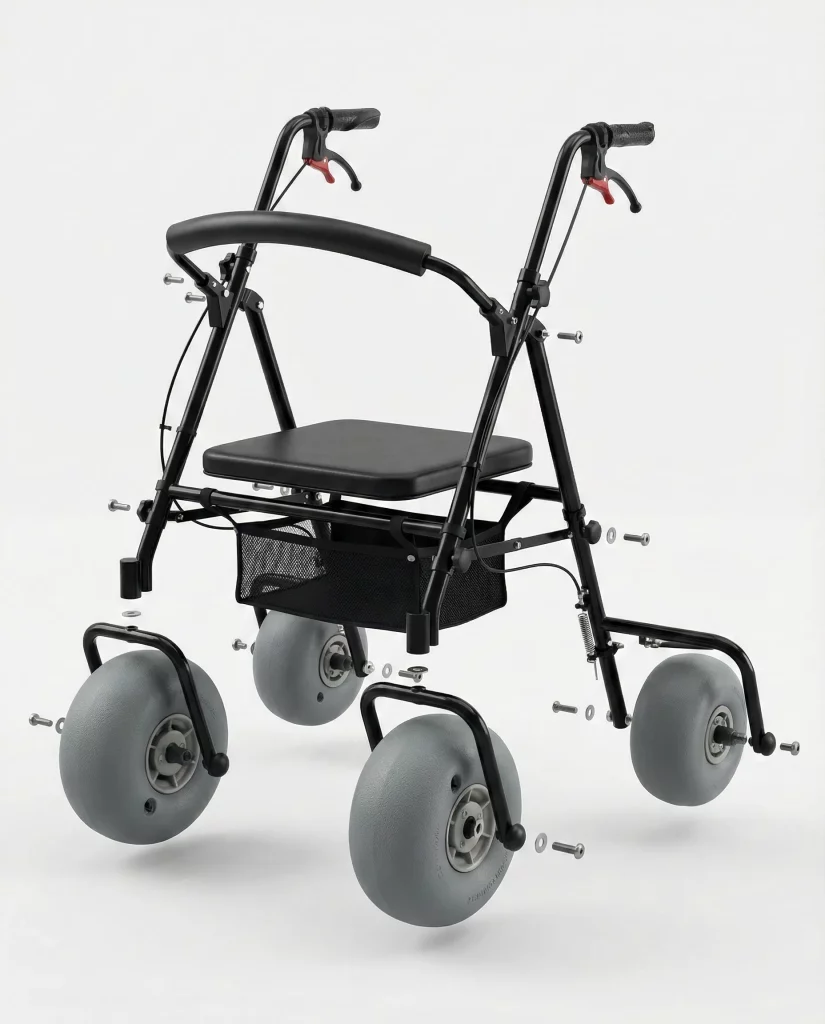
Next, Beach walker procurement requirements should be defined jointly by purchasing, site operations, staff trainers, storage teams, and people familiar with intended users. For example, the Padre Island National Seashore guidance treats beach walkers and beach wheelchairs as distinct devices with local limits.
How can a mixed team write one practical brief?
Start with real work, not catalog labels: ask each group what could make use, handoff, cleaning, or storage difficult. Purchasing can control the response format, while operators describe route surfaces and staffing. Trainers can flag hand position, seat use, adjustment, and stopping checks that need observation. Storage staff can review folded or stacked form, lifting points, and aisle access. A senior-care setting may also review the beach walker application page for context, then adapt questions to local policy rather than copy claims.
- Next, Name one owner for the shared brief and version history.
- Then, Ask operators to map each surface and route change.
- Meanwhile, Ask trainers to list actions that need a repeatable demonstration.
- For example, Ask receiving staff what labels and packing records they need.
Key Takeaway: A mixed team catches operating questions that a purchasing-only brief can miss.
| Team role | Main input | Audit record |
|---|---|---|
| Purchasing | Response format | Controlled brief |
| Operations | Route and staffing | Site-use notes |
| Training | Repeatable actions | Demonstration checklist |
Then, Read conflicting team inputs early so the sample review can settle them with evidence.
What user and route details should buyers record?
Then, Beach walker procurement planning should record intended user support, staff involvement, route length, surface changes, resting points, weather exposure, and storage access. Then compare the route with the wider beach mobility range before selecting a device.
How can buyers describe use without medical promises?
Keep the description functional: record what an intended operator or user must do rather than predict health outcomes. Note whether a person will walk with staff nearby, whether a seat may be used only at designated stops, and where the route changes from firm ground to sand. Buyers can record hand-height range needs, turning space, braking workflow, and maximum planned route without claiming that a device suits every person. Local staff should apply their own eligibility and supervision policy.
- However, Describe walking, resting, turning, and stopping tasks.
- As a result, Mark soft sand, packed sand, ramps, mats, and paved areas.
- Afterward, Record where staff assistance begins and ends.
- Also, Note heat, salt spray, sand, and rinse-water exposure.
Key Takeaway: Functional route notes support product comparison without turning procurement copy into medical advice.
| Use detail | Local question | Sample observation |
|---|---|---|
| Hand support | Can users grip the bar securely? | Grip position and feel |
| Rest point | Where may the seat be used? | Stability on approved surface |
| Surface change | Where does sand begin? | Empty-unit handling |
Meanwhile, Treat any user-fit uncertainty as a local review item before service deployment.
How should buyers compare frames and contact points?
Meanwhile, Beach walker procurement teams should compare frame geometry and user-contact points through measured drawings, sample observations, and documented adjustment steps.
Which sample details deserve a close look?
Small details shape daily use: inspect handle width and texture, seat attachment, frame joints, fasteners, feet or wheels, adjustment locks, and any brake controls. Look for exposed edges or pinch points during folding, nesting, and storage. Ask suppliers to identify materials by component and show how cleaning reaches joints. If an adjustment exists, request its operating range and locking method for the quoted model. Record what staff actually do during the sample review.
- Then, Photograph every user-contact point from several angles.
- Next, Check whether controls remain readable after normal handling.
- Next, Record adjustment steps and the tool requirement, if any.
- Then, Compare left and right joints for matching alignment.
Key Takeaway: Frame review works best when buyers connect geometry, contact, adjustment, and cleaning in one sample record.
| Review point | Evidence | Buyer question |
|---|---|---|
| Handle | Drawing and sample | Does grip fit the use plan? |
| Seat | Attachment detail | Can staff inspect it easily? |
| Joint | Material and fastener list | Can sand be cleared? |
For example, Study each contact point during folding and storage, not only while the walker stands open.
What should a controlled sand trial show?
For example, Beach walker procurement sand trials should show how the empty sample moves, turns, stops, and remains cleanable on a defined route under supervised test conditions.
How can a trial avoid exaggerated claims?
Make the route repeatable: mark a short controlled path with firm ground, a mat edge, packed sand, and soft sand only where site policy permits. Begin with an empty unit and trained staff. Record the surface, weather, operator, configuration, and observations in plain language. Do not turn one trial into a universal claim about every beach or user. If the product uses wide feet rather than wheels, create a test that fits that design. If it uses balloon tires, note steering effort and sand pickup without publishing invented force values.
- Meanwhile, Use the same route for every sample under comparison.
- For example, Keep tire setup or adjustment consistent with supplier instructions.
- However, Record turns, stops, visible sink, and cleaning needs.
- As a result, Stop the trial when the route or product falls outside the brief.
Key Takeaway: A controlled route creates comparable observations while keeping product boundaries visible.
| Trial stage | Observation field | Review use |
|---|---|---|
| Firm surface | Tracking and control | Baseline handling |
| Sand entry | Change in effort or sink | Route fit |
| Post-trial | Sand and moisture points | Cleaning plan |
However, Compare differences across samples without converting observations into unsupported ratings.
How can suppliers present comparable evidence?
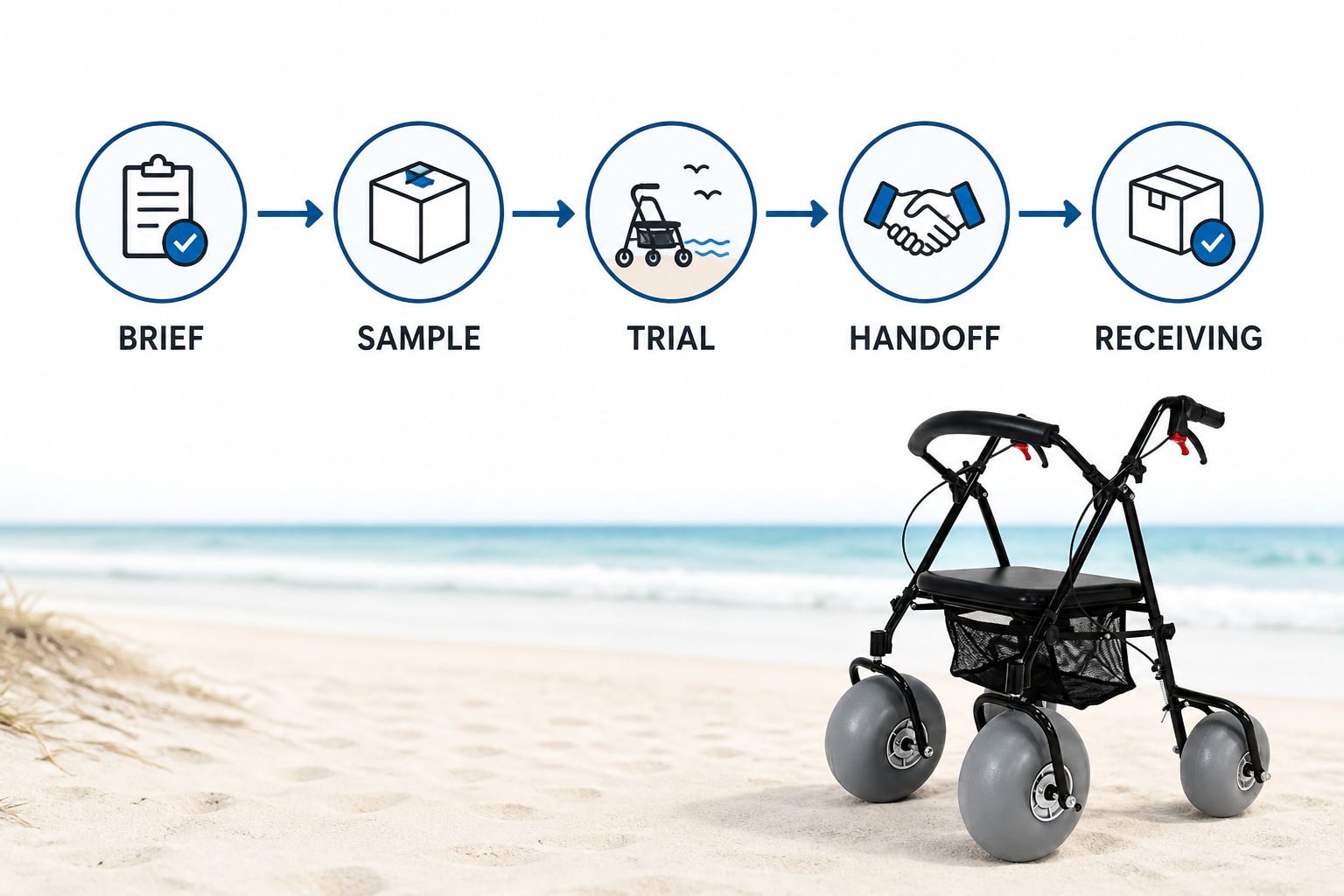
However, Beach walker procurement suppliers should present evidence in a shared template covering model identity, materials, dimensions, adjustment, packing, care, spare parts, and sample status. Use the supplier overview to frame questions, then request exact model records.
What response format keeps the audit clear?
One row per requirement works well: give each question an evidence field and a response owner. Suppliers can attach drawings, care sheets, packing photos, and part lists using consistent file names. Buyers should mark received evidence separately from accepted evidence. A document may belong to another model or an earlier revision, so identity checks matter. Ask suppliers to flag custom options rather than hiding them inside a general product description.
- Afterward, Require model name and revision on every technical attachment.
- Also, Keep option differences visible beside the base configuration.
- Then, Use separate statuses for received, reviewed, accepted, and open.
- Next, Record clarification responses in the same controlled file.
Key Takeaway: A shared evidence template limits sales-language drift and gives auditors a clear review trail.
| Evidence field | Supplier entry | Buyer status |
|---|---|---|
| Model identity | Name and revision | Match or query |
| Requirement response | Fact and attachment | Accept or open |
| Custom option | Changed component | Review impact |
As a result, Inspect accepted evidence for model scope before awarding points in a comparison matrix.
What should a sample handoff session include?
As a result, Beach walker procurement sample handoff should include unpacking, assembly or opening, adjustment, empty-route handling, cleaning, drying, storage, and part identification.
How can staff document the handoff for later training?
Record actions while the sample is present: capture short notes and photos for every step, then compare them with supplied instructions. Ask staff to repeat the workflow without coaching after the supplier demonstration. This reveals unclear labels, awkward sequences, or missing tools. Keep training records product-specific and avoid promises such as no training required. The beach walker project example can prompt operational questions, while the local handoff record remains the authority for your site.
- Next, List each action in the order staff will perform it.
- Then, Photograph adjustment locks, folding points, and part labels.
- Meanwhile, Note two-person tasks or local lifting limits.
- For example, Record questions that remain after an independent repeat.
Key Takeaway: A repeated handoff shows whether written instructions support real staff work without supplier coaching.
| Handoff task | Evidence | Follow-up |
|---|---|---|
| Open or assemble | Action notes | Clarify missed step |
| Adjust | Lock photos | Confirm allowed range |
| Store | Final position | Check space and labeling |
Afterward, Use repeated staff questions to improve both training and supplier documentation.
How should buyers review cleaning and storage?
Afterward, Beach walker procurement review should connect every sand, salt, moisture, fabric, joint, wheel, and storage point with a practical care step. Also keep the user manual resource with the inspection record.
What belongs in a coastal care check?
Follow the contamination path: observe where wet sand gathers after a controlled trial, then check whether staff can rinse, wipe, inspect, and dry those areas. Ask the supplier which components should move during cleaning and which should remain fixed. Record approved cleaning products without substituting harsher chemicals. Storage should keep the walker dry, identified, and protected from accidental impact while allowing staff to inspect it before the next issue.
- However, Map sand traps around joints, feet, wheels, brakes, and seat mounts.
- As a result, Confirm rinse, wipe, drying, and inspection steps in writing.
- Afterward, Mark the storage position and aisle or rack location.
- Also, Keep held units physically separate from available units.
Key Takeaway: Cleaning and storage belong in procurement because both affect staff time, record quality, and service readiness.
| Care point | Staff action | Record |
|---|---|---|
| Sand removal | Rinse or brush per instructions | Cleaning log |
| Drying | Open-air dry in approved position | Completion check |
| Storage | Tag and place in named location | Availability status |
Also, Review repeated contamination points before setting a large fleet layout.
What packaging helps receiving teams work faster?
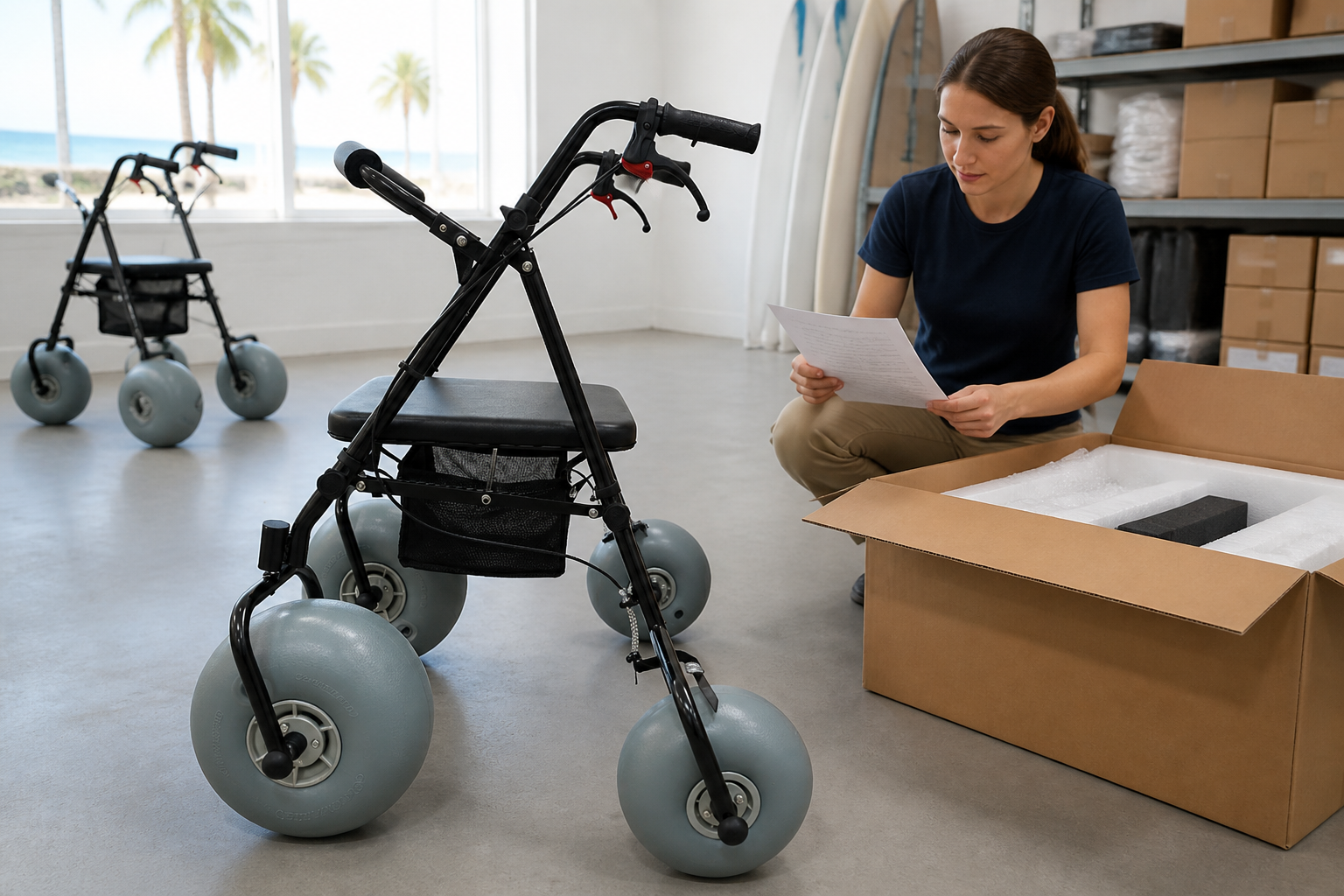
Also, Beach walker procurement packaging should let receiving teams identify the model, configuration, parts, and condition without losing small items or mixing units.
How can packing support a clean receiving record?
Design the label from the buyer’s view: carton marks should match purchase-order lines and internal storage names. If walkers nest, fold, or ship partly assembled, the packing record should show the expected state. Loose hardware and instructions need sealed identification. Buyers can request photos of a packed sample and compare them with the arrival unit. A damage process should say what staff photograph, whom they notify, and where affected items wait.
- Then, Match carton labels with model, option, quantity, and order line.
- Next, Keep instruction sheets and small parts in a named pack.
- Next, Photograph packaging before and after opening.
- Then, Tag pass, hold, shortage, and damage as separate receiving states.
Key Takeaway: Clear packaging turns receiving from a memory-based task into a short evidence check.
| Packing detail | Arrival check | Status use |
|---|---|---|
| Carton mark | Match order line | Route correctly |
| Part pack | Confirm count | Hold if missing |
| Protective material | Compare condition | Record damage |
Then, Trace one carton through receiving and storage before accepting the bulk packing plan.
How can procurement records support repeat orders?
Then, Beach walker procurement records should support repeat orders by linking use feedback, service events, part demand, packing issues, and model revisions.
Which records should remain easy to retrieve?
Keep the file small but connected: save the approved brief, supplier response, sample record, final configuration, receiving report, and service log under one naming convention. Each record should identify model and date. When a reorder begins, teams can review recurring adjustment questions, damaged packing, cleaning workload, and unavailable parts. A change log helps buyers see whether a new quote matches the current fleet or introduces a new configuration that needs another sample.
- Meanwhile, Store approved evidence apart from draft supplier files.
- For example, Link service events with part codes and model revision.
- However, Record packing or label issues from each shipment.
- As a result, Review route or staffing changes before copying quantities.
Key Takeaway: Connected records let a repeat order respond to field evidence instead of relying on memory.
| Record | Reorder question | Possible action |
|---|---|---|
| Service log | What failed or went missing? | Adjust parts plan |
| Receiving report | What caused delay? | Revise packing rule |
| Use feedback | Where was fit weak? | Request new sample |
Next, Study patterns across sites before treating one isolated note as a design fault.
What do buyers ask before approving a beach walker order?
Next, Beach walker procurement buyers usually ask about intended users, route fit, sample evidence, adjustment, cleaning, storage, parts, and arrival checks.
Which procurement FAQs should be answered in writing?
Use concise answers that name the evidence: this keeps purchasing, operations, and training aligned.
- Afterward, Identify the exact model and quoted options.
- Also, Record sample route and staff observations.
- Then, Name cleaning, storage, and part references.
- Next, Define the arrival hold and clarification process.
Can I select a beach walker from dimensions alone? No. Dimensions help narrow options, yet a sample review also shows contact points, adjustment, handling, cleaning access, and storage behavior.
What’s the best way to compare walkers for different beaches? Use one site brief per route. Compare each sample against its intended setting rather than declaring one product suitable everywhere.
How do I know if staff can repeat the setup? Ask staff to perform the workflow without supplier coaching, then record unclear steps, labels, tools, and two-person tasks.
Can I combine a walker with a beach access route? Yes, when local planning supports it. A firm accessible beach mat may cover an arrival zone while the walker serves approved sand areas.
Key Takeaway: Approval should rest on a defined route, a verified sample, controlled evidence, and a receiving plan.
| Buyer question | Evidence to keep | Approval signal |
|---|---|---|
| Does it fit the route? | Site map and sample record | Observed match |
| Can staff manage it? | Repeated handoff notes | Clear workflow |
| Can the fleet support it? | Care and parts plan | Named ownership |
Compare the remaining open items with local operating risk, then contact us today when your route brief and sample questions are ready.