
Before volunteers start filling beach cleanup bags, ask who will take them at the end of the cart route. The waste contractor might collect from a gated vehicle bay at noon while the litter team intends to work past the last accessible crossing until one. Establish the accepted waste streams, handover point, closing time and person responsible for the last load before assigning a collection zone.
Decide what can enter the cart
Use the waste arrangements for the particular event or municipality. Tell the team which ordinary litter it can collect, which materials the receiver accepts separately and who handles a rejected item. An unattended bag whose contents cannot be identified should not automatically go into the general litter load. Make the reporting contact available at the collection point.
The U.S. NOAA Marine Debris Program advises leaving unknown or potentially hazardous objects undisturbed, including chemical drums or cylinders, and reporting them to the appropriate local authorities. Give local staff the applicable contact and a way to identify the location without handling the object. A cargo cart and an empty corner in its tub do not make such a find routine waste. NOAA Marine Debris Handling Guidelines
Work from the receiving point back towards the shoreline
Walk from the designated container or staffed transfer bay to the planned pickup zones. Check where volunteers can place closed bags clear of public access, where a loaded cart can turn and whether the return over sand is still usable. Schedule pickups before staged bags obstruct the path. Keep staging away from moving water and follow local land-manager limits on where crews can work.
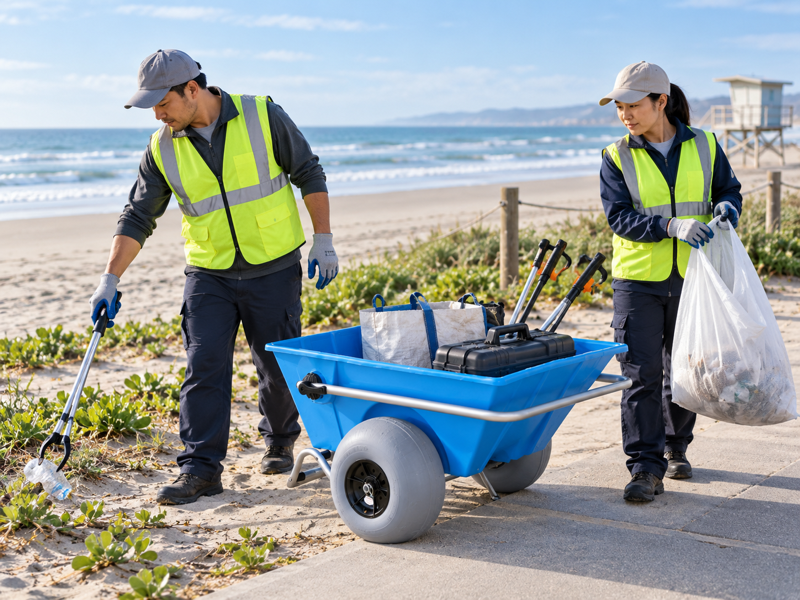
A half-filled bag may contain wet material or broken items and may be heavier or more difficult to contain than a full bag of light litter. Use the site’s approved bags or containers and handling method. Assess the actual mass, containment, stability and operator’s route. Do not compress an unknown bag by hand to make room. Give filled bags a separate journey if another bag would rest on the rim or obscure the approach to the disposal point. Planning loads for a beach cargo cart
Keep a rejected load out of the wrong container
Suppose the contractor accepts two identified streams at a vehicle gate and will take the last consignment at 13:00. At 12:45 the team has closed general litter bags at its near zone and another marked recycling bag at the farther zone. Confirm which can be returned in time and where the contractor or land manager permits anything remaining to be held. A convenient public litter bin may be outside the collection agreement.
If a bag leaks, tears or is refused, keep the issue with the crew lead. Identify the zone, the container and the reason given. Use the approved arrangement for the material and obtain confirmation of the new handoff. Never record a rejected bag as disposed of simply because it reached the gate.
Close the site as well as the cart
A crew can report the bags or weighed quantities actually accepted, the streams involved, any items reported in place and where they were reported. Count a bag once even if it traveled on two cart runs. Use a receiving or scale record when reporting weight. A total estimated from the number of trips gives a misleading picture of what left the beach.
Have the lead revisit marked staging spots for forgotten bags. Send the emptied tub and any approved accessories through the cart cleaning procedure. If contamination or damage remains unresolved, identify the cart and keep it out of the next supply run.