
If someone needs help on a beach access mat, attend to the person and use the site’s emergency arrangements first. Have another authorised team member control the affected approach and keep the return route in mind for people already beyond it. Start the incident record when doing so is compatible with those immediate duties.
Use the site’s process for injuries, near misses, reported difficulties and equipment damage. Identify which events need a separate restricted report or referral under the organisation’s applicable obligations. A beach mat incident form should help a colleague locate the event and inspect the right pieces even after a shift change.
Locate the event from the visitor’s direction of travel
Write down the route name, entrance, destination, segment or section ID, time, and direction the visitor was travelling. “At the left edge of the second joint when returning towards the west boardwalk” is more useful than “on the beach mat.” Add the adjoining section references, weather, supporting sand, debris, water and any recent maintenance work that might matter.
Distinguish what the person reported from what staff saw. If a visitor says a front wheel caught, record that in their words. If the duty lead subsequently sees an edge raised above the adjacent section, record the location and time of that observation. A raised edge inspected later does not by itself establish why the wheel caught.
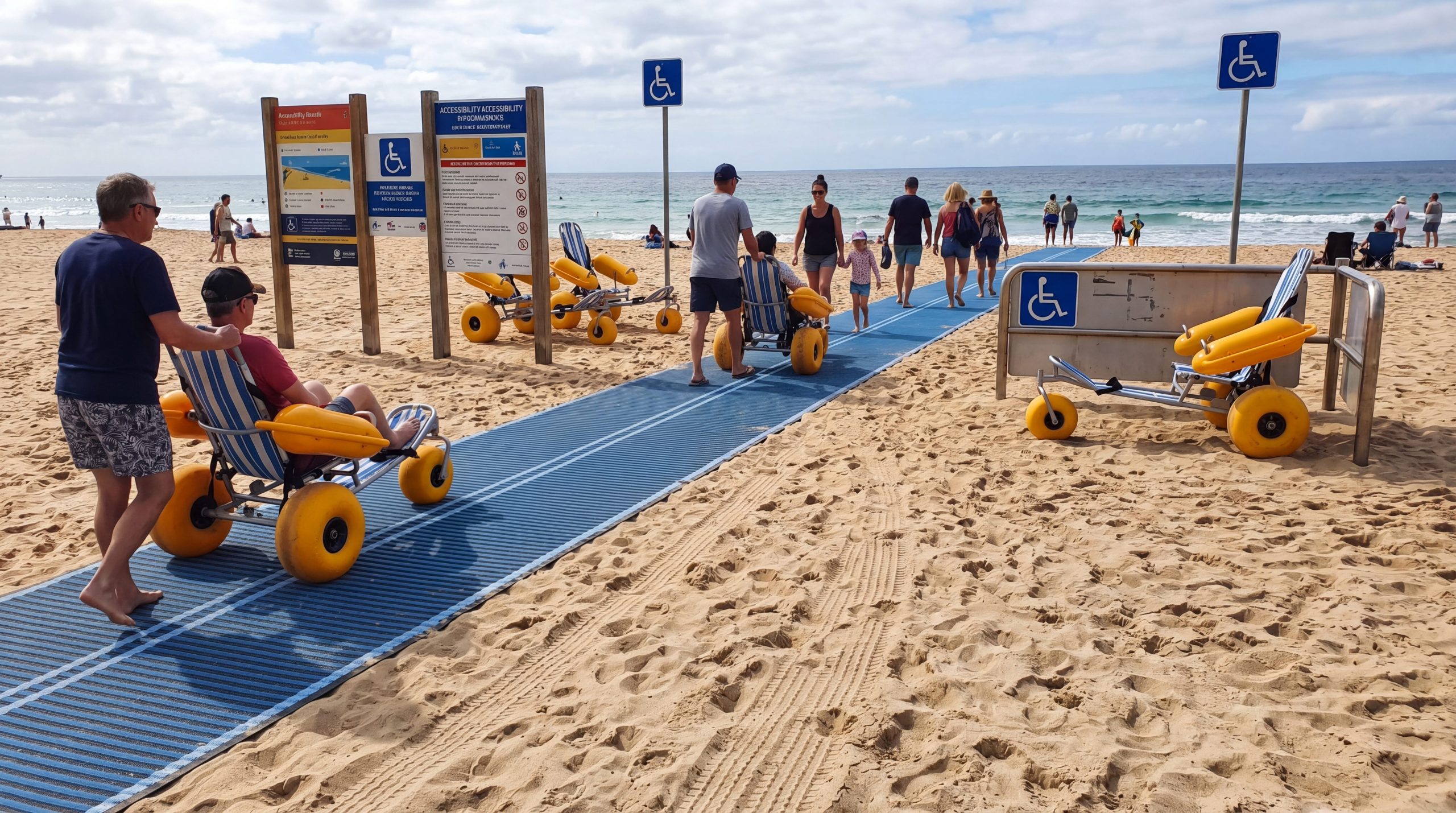
Keep one chronology and attach the evidence to it
| Report field | What belongs there |
|---|---|
| Time and location | Reported event time, actual notification time if different, route and the nearest identifiable joint or landmark. |
| People and immediate response | Assistance provided, role of responder, restriction applied and the contact handling further enquiries. Keep necessary personal details in the appropriate restricted record. |
| Conditions observed | Direction of movement, surface and joint condition, obstacles, changing sand or water, source and timing for each observation. |
| Equipment involved | Asset or component ID, configuration and location. Distinguish a mobility-device report from a mat defect until assessed. |
| Supporting material | Reference to permitted photographs, inspection record, as-installed plan, maintenance work and relevant witness accounts. |
| Open questions | What the investigation still needs to establish, who will examine it and which route remains restricted. |
Record conditions before cleanup when this can be done safely. Use one wider photograph to establish the approach and a closer view of the joint or transition. Avoid recording the visitor in technical photos unless necessary and authorised. Preserve the original observation, even if later inspection changes the working explanation. The UK’s HSE investigation guide describes collecting information, analysis and follow-up actions for workplace incidents. Apply the reporting requirements that govern the specific site and event. HSE guide to investigating accidents and incidents
Trace the condition beyond the top surface
Suppose an empty-equipment check later reproduces a catch at the identified join. The joint assembly, its end components, the ground beneath it and the incoming level could each warrant examination. Ask the technical reviewer to compare what is installed with the approved system detail. Note if sand was removed, the mat moved or the wheelchair configuration changed before the check. A later reconstruction has value only when those differences are visible.
Link an affected section to its inventory and previous repair history. If the joint has been lifted several times at the same location, the reviewer may need to examine drainage or sand movement alongside the connection hardware. Keep the original finding and supplier response under the same incident reference. Tracking mat sections and compatible fittings
Record what made the route available again
Give corrective actions separate owners where necessary. Maintenance may replace an approved fitting while the site team restores support below the end. The person authorised to release the route should inspect the affected location and adjacent sections, the approach in both directions, and the usable return from the published endpoint.
Record the recheck, decision time and any restriction that remains. If only a shorter route is approved, name the destination and update the entrance notice and visitor desk together. The incident investigation may continue after a controlled reopening. Keep its remaining questions and assigned follow-up visible until they have been addressed. Operating rules for a public mat route