
A visitor calls to ask whether a family member can accompany them on a floating beach wheelchair outing. Before reserving a time, find out which part of the trip the visitor wants and what role they want their companion to take. The companion may be there to enjoy the visit or help with communication. The operator still needs to arrange its own qualified staff for the tasks it offers.
Start with the visitor’s preferred way to receive information. Describe the meeting place, the journey to the staging point, the assistance the service can offer, the expected destination and the way back. Ask what matters for this visit and what the team needs to arrange before confirming it. Refer personal fitting or transfer questions to the appropriately trained person under the site’s procedure. A booking clerk can record a question and its owner without attempting that assessment.
Make the booking clear to everyone involved
| Point in the visit | What the visitor needs to know | Who confirms it |
|---|---|---|
| Arrival | Named entrance, collection point, time and contact if the route changes | The desk checks the current route with the duty team. |
| Preparation | Who meets the visitor, what assistance is available and where private discussion is possible | The assigned team member agrees the arrangements with the visitor. |
| Proposed activity | Whether the service currently offers a shore visit, an assisted calm-water activity or both | The authorised site lead checks conditions, available staff and the return. |
| End of visit | Where the visitor will meet their companion, collect personal equipment and next contact staff | The receiving person confirms the return point and handback. |
Keep a request, a confirmed appointment and permission to begin the water activity distinct in the booking record. A family may have a confirmed appointment even though the team can only decide on the water activity after checking that day’s conditions. Make that distinction clear before the visitor travels.
Agree how to pause before the outing starts
Ask the visitor how they would like to indicate discomfort, pause or finish. Check that the team can recognise the agreed communication in the actual setting, including over wind or background noise. Explain who will remain available to respond. If the team cannot reliably communicate, pause and arrange a workable method before proceeding. Someone accompanying the visitor may offer an interpretation when invited, but staff should continue to address the visitor directly.
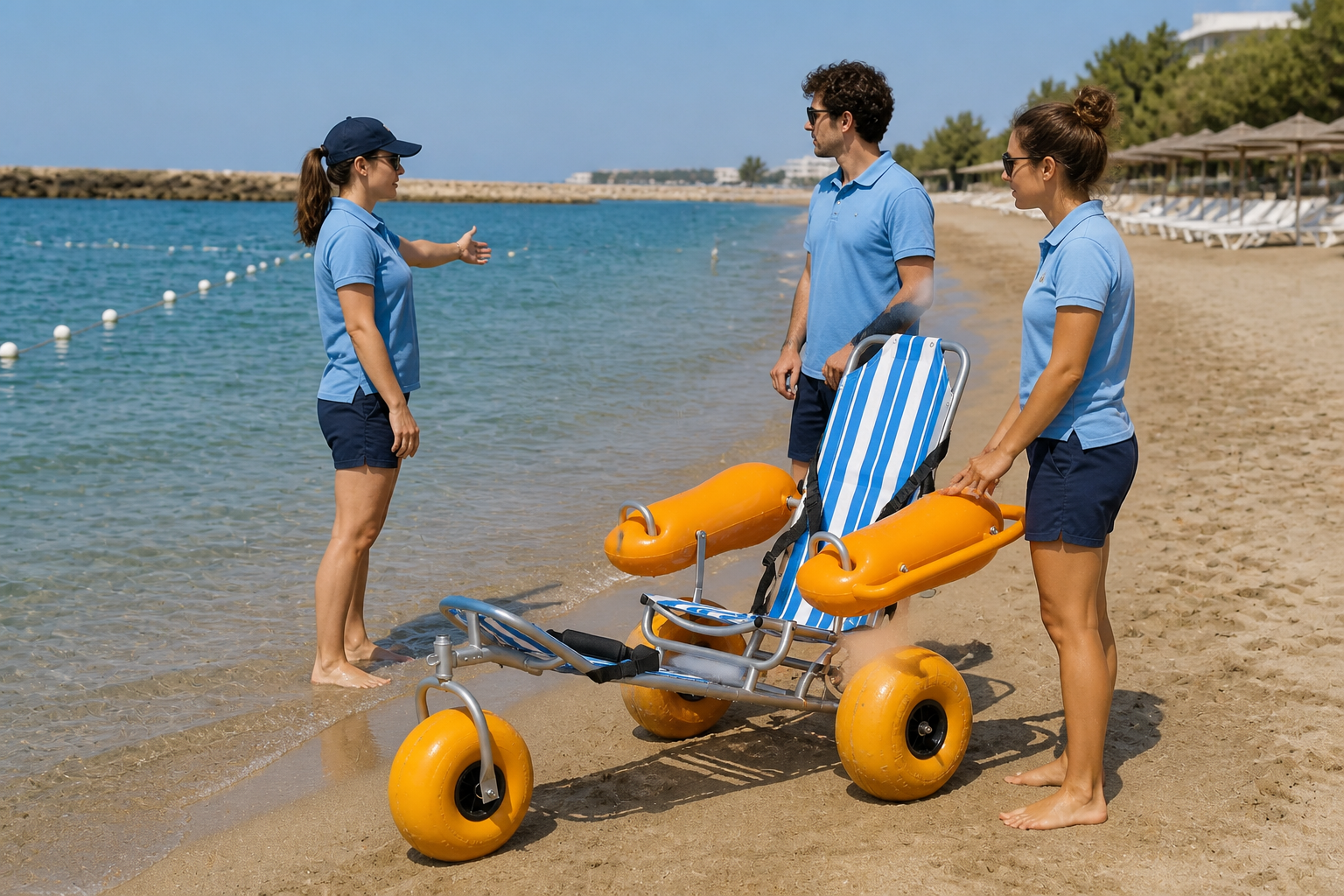
For an AY-ST-V1.0 visit, the manufacturer describes a chair with three inflatable wheels and floating armrests for calm water. Equipment readiness is only one part of the operator’s decision. The site lead must assess the intended route, available trained assistance, attendant footing and a supported return under the local procedure. The manual does not supply a universal water-depth limit, staff ratio or permission to use every shoreline. Manufacturer’s AY-ST-V1.0 instructions
When the booked visit has to change
Suppose wind and waves make the planned water activity unsuitable while a sheltered, landward viewing point remains accessible. Tell the visitor exactly which part has closed, whether the viewing point and return have been checked, and what assistance is available for that alternative. Ask which option the visitor prefers. They may choose the shorter visit, another appointment or to leave. Record the choice rather than counting a substitute outing as fulfilment of the original water request.
If conditions change once a visit is underway, the assigned team follows its approved site response and return arrangements. The desk holds new departures and contacts affected bookings using the same information. A person waiting for a chair does not need the previous visitor’s details to understand that the water service has paused. Staff handover for an assisted floating wheelchair outing
At handback, ask whether the visitor reached the destination described at booking and could communicate when they needed assistance. Keep equipment faults on the asset record and send a misleading route description to the information owner. A guest who reports a problem should be able to identify who will follow up. Give the next shift the operational facts it needs to offer the same support.