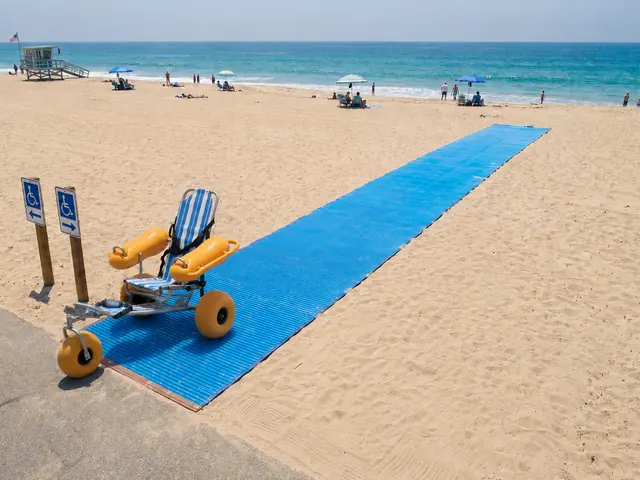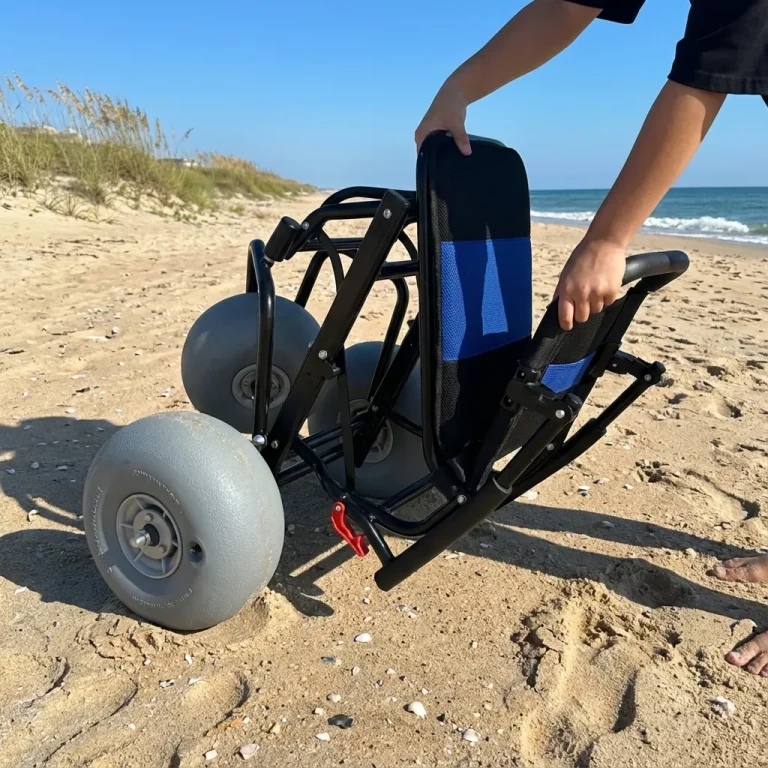
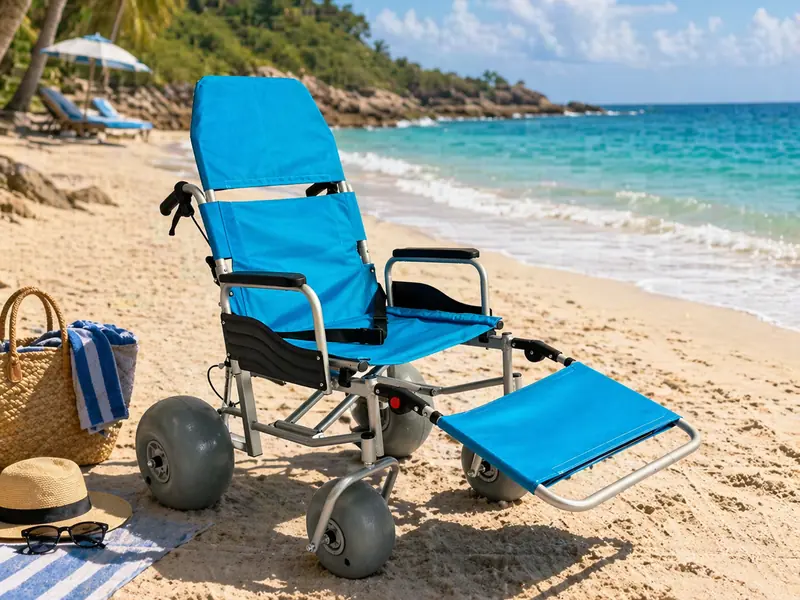
All-Terrain Beach Wheelchair
- Choose it when
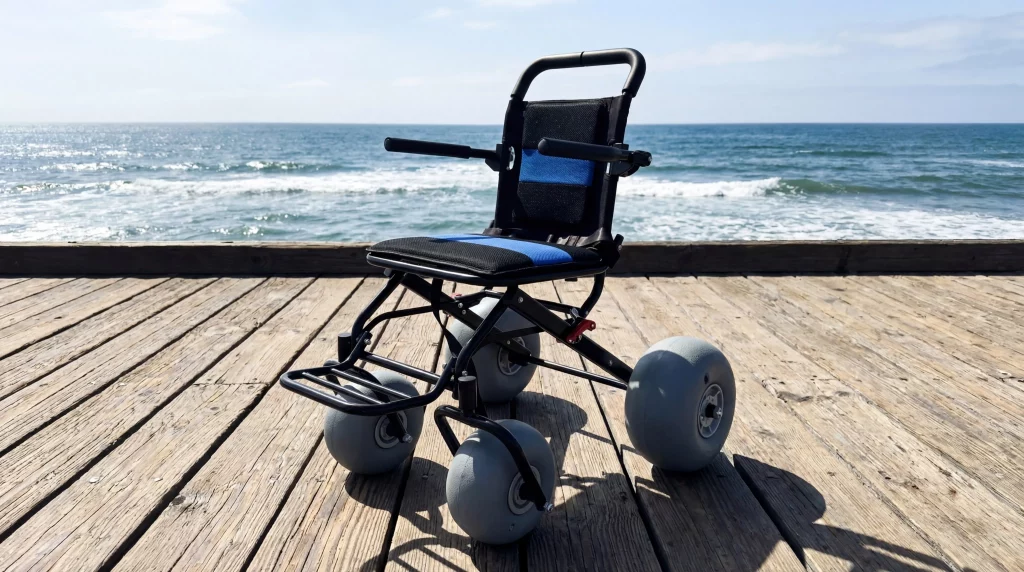
- You need assisted travel across soft sand and uneven beach surfaces.
- Water access
- Land based. Not a flotation device.
- Check
- Sand, route width, turning space and rated capacity.
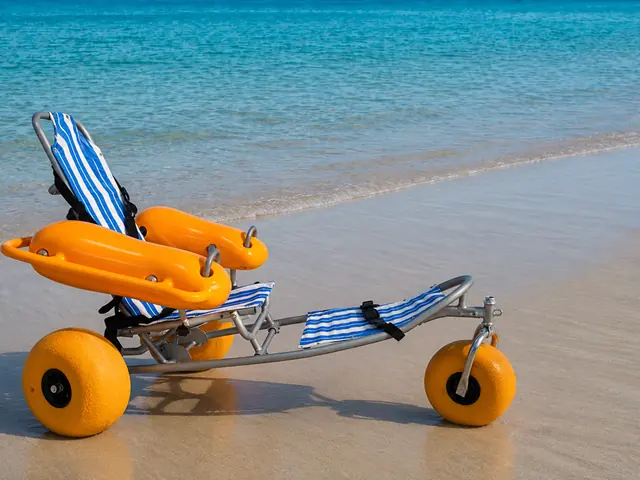
For municipalities and parks departments
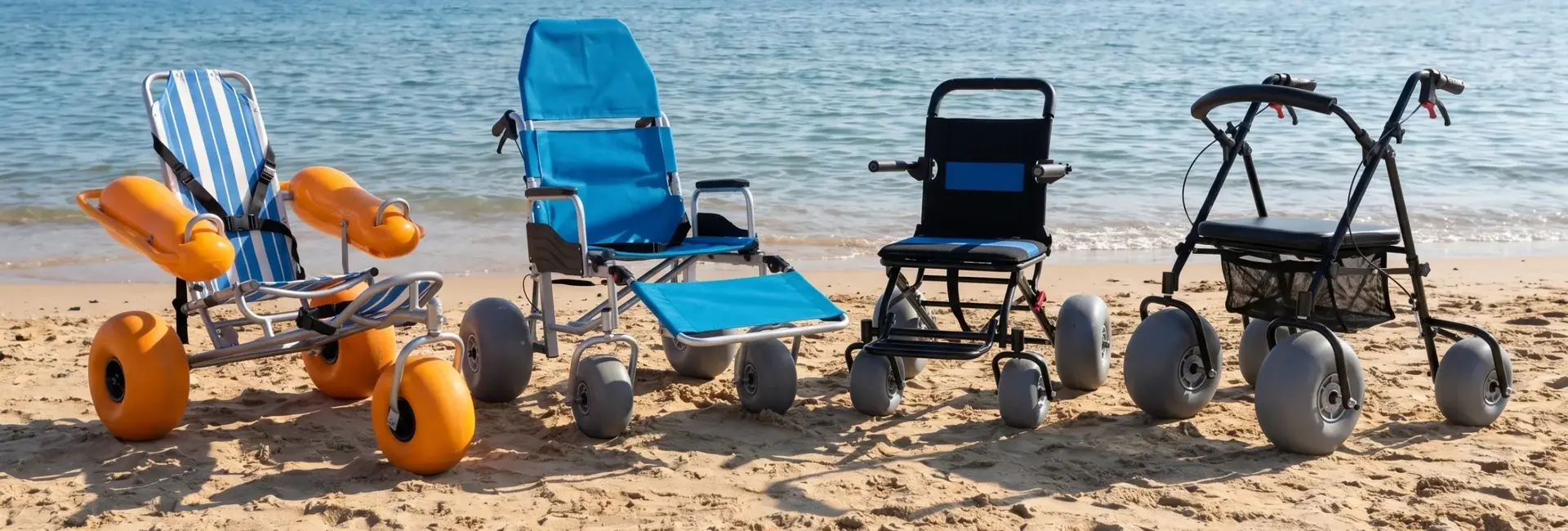
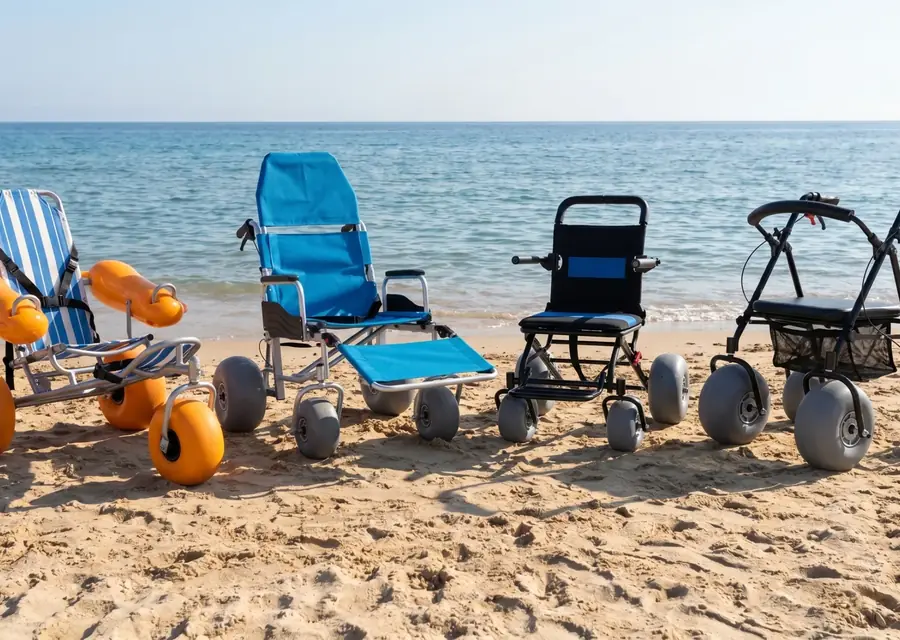
Compare manual beach wheelchairs for sand routes and supervised water entry. Add beach walkers and access mats to suit each entrance.
Compare the uses, water access and site checks for each model. Confirm final dimensions and rated capacities in the current model documents.
| Comparison criteria |
Soft sand
All-Terrain Beach Wheelchair
|
Transport
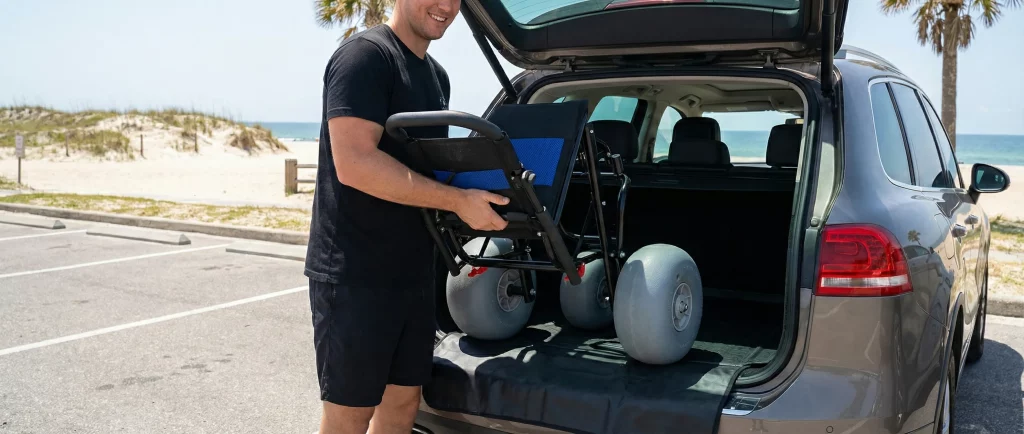
Lightweight Folding Beach Wheelchair
|
Sand + water
Standard Floating Beach Wheelchair
|
Sand + water
Premium Amphibious Floating Beach Wheelchair
|
|---|---|---|---|---|
| Best suited to | Assisted travel across soft sand, uneven beach surfaces and longer land-based routes. | Transport between access points, loading into vehicles or limited storage space. | Assisted sand travel and supervised entry into calm water at a staffed location. | Supervised water access with redesigned flotation armrests and more seat-side clearance. |
| Water access | Land only | Land only | Supervised waterWithin documented conditions | Supervised waterWithin documented conditions |
| Check before ordering | Sand conditions, route width, turning space and rated capacity. | Folded size, vehicle opening, storage and removable parts. | Entry route, flotation armrests, operating limits and trained attendant coverage. | Armrest design, seat-side clearance and specifications for the chosen configuration. |
| Add equipment to quote |

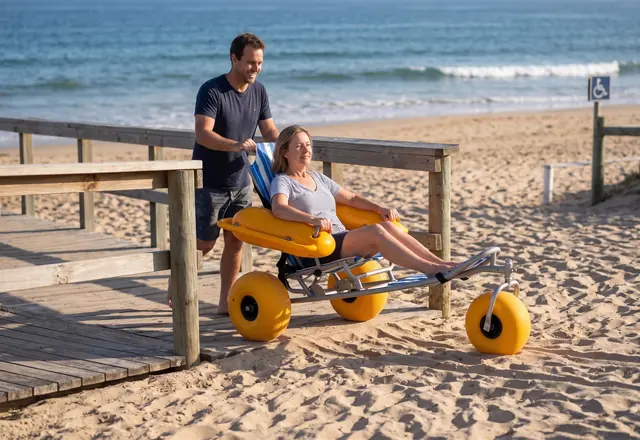
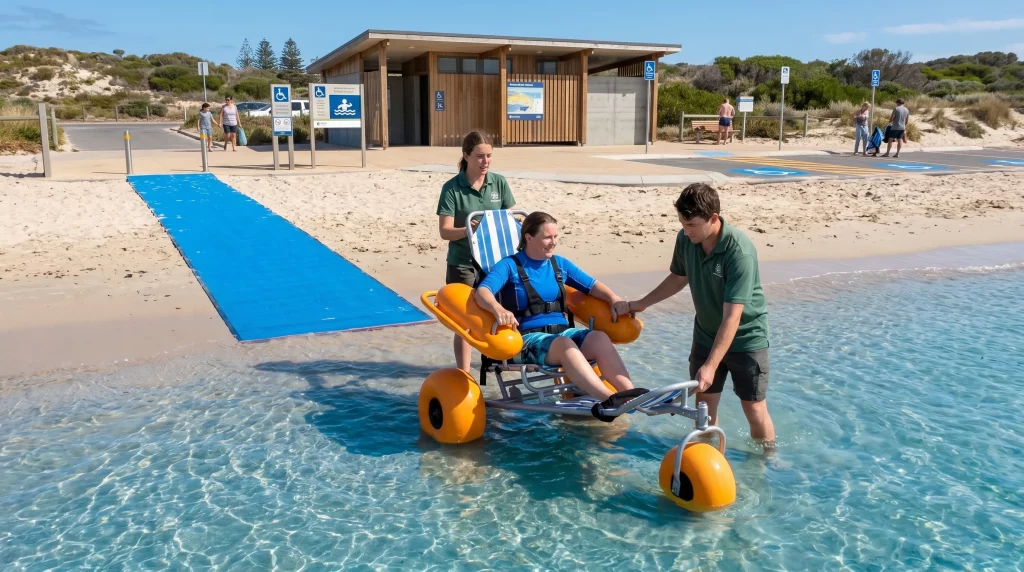
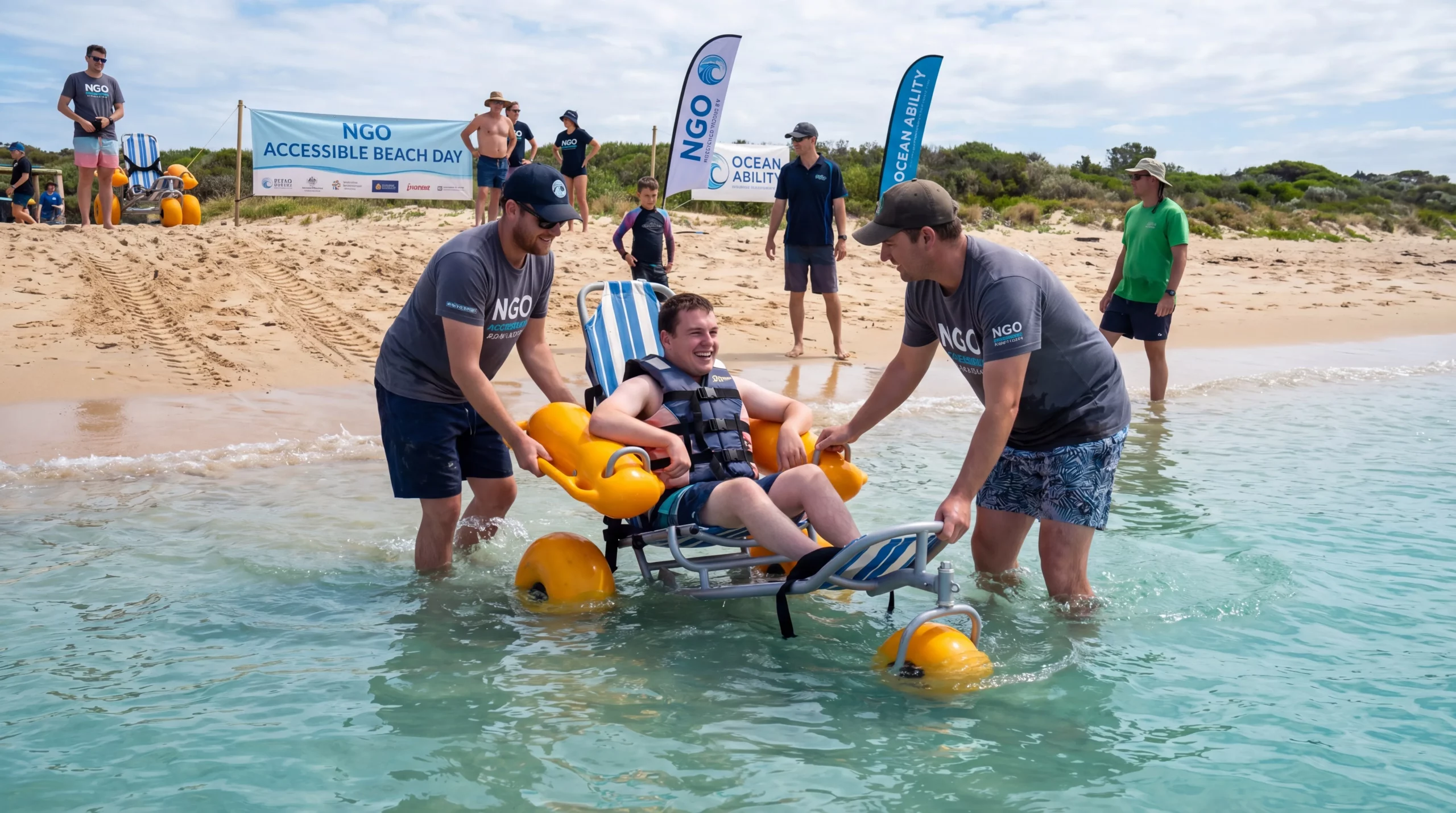
For supervised water access, check the entry and return route, calm-water conditions and trained attendant coverage against the selected model’s operating manual.
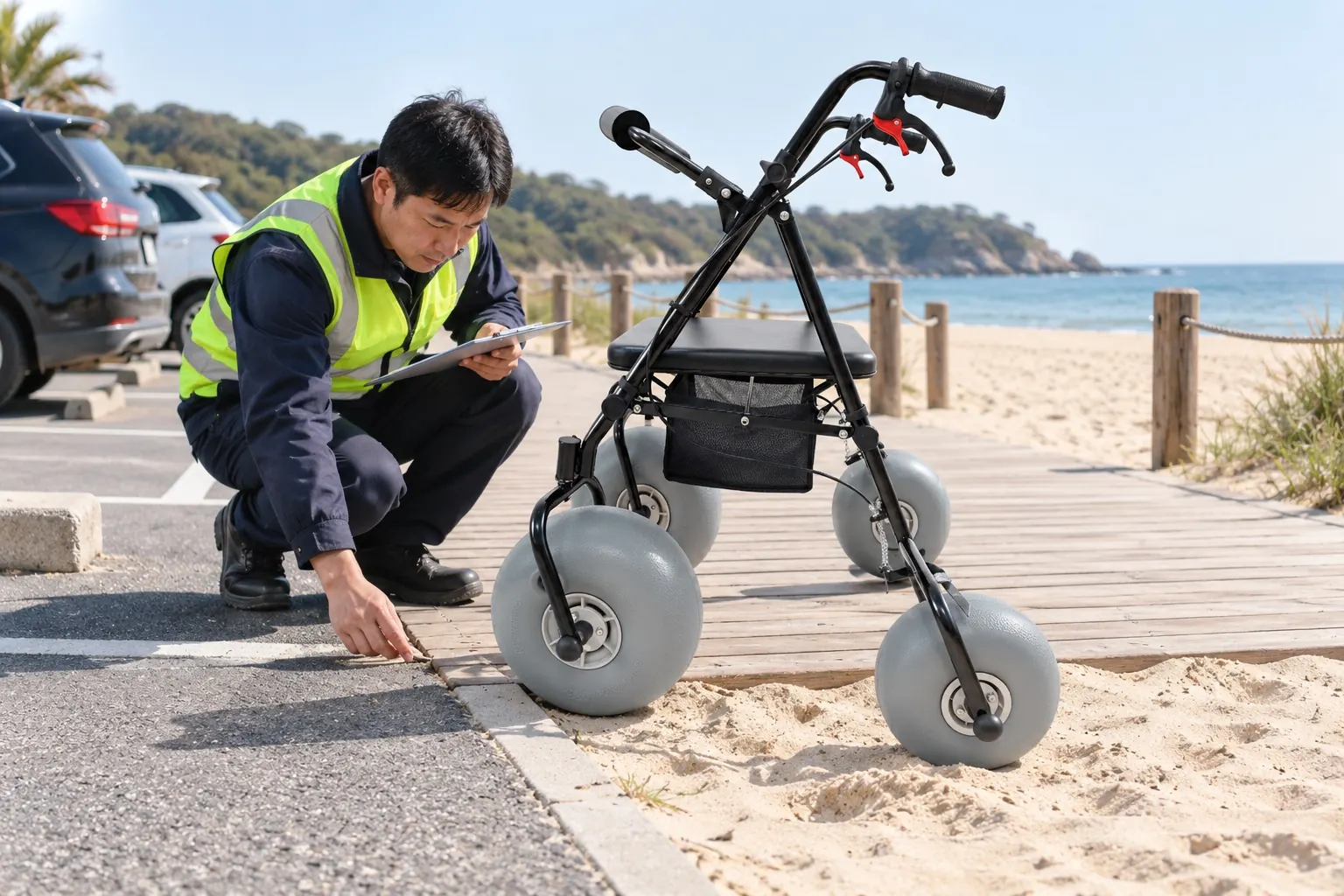
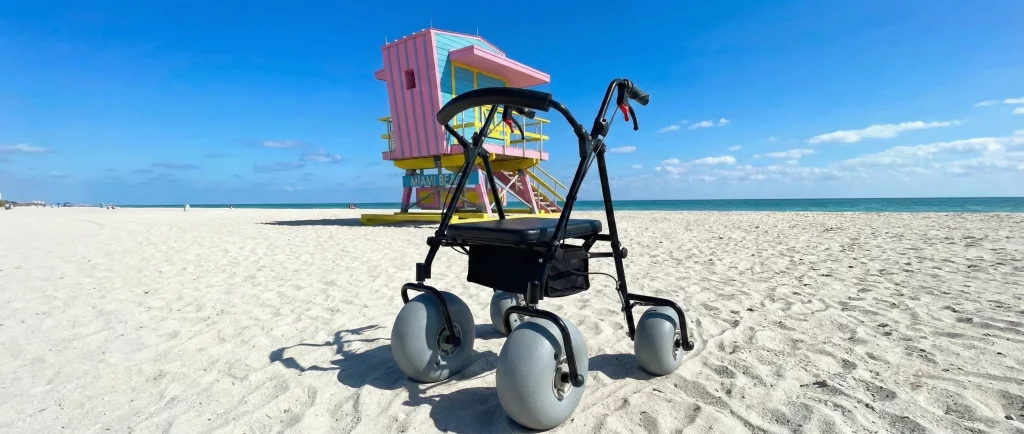
Offer a rollator at the loan desk for visitors who can walk with support. Balloon wheels are designed for sand, and the seat offers a place to rest once stopped, following the model instructions.
Before choosing a configuration, check handle fit, braking, route width and permitted surfaces.
Start at the pickup point and follow the full trip in both directions. Record what changes between paving, boardwalk and sand.

Mark paving, boardwalk, firm and loose sand, slopes and abrupt changes in surface.
Measure gates, narrow turns and storage doors. Compare them with the dimensions of the exact equipment you intend to use.
Mark pickup and drop-off locations, the areas staff can cover and which routes remain available when conditions change.
Example fleet plan
A municipal beach accessibility program can equip each entrance according to its route and staffing.
Estimate quantities by equipment type and location so the quote can reflect how the service will run.
Use booking logs, visitor requests or pilot observations to estimate how many people may need each option at once.
Account for the time a unit spends checked out, returning and being prepared for its next booking.
Check how many assisted sessions the team can cover. Allow for units unavailable during maintenance.

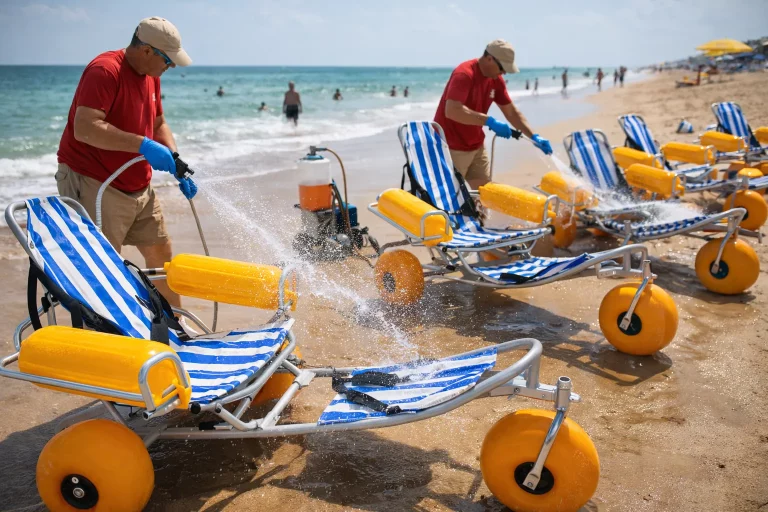
Assign a responsible team and use the current maintenance instructions for each model.

Plan where staff will rinse, dry and inspect equipment. Mark an area for units awaiting inspection or repair.

Measure doors, racks and floor space. Keep removable parts with their units.

Check vehicle openings, handling requirements and which parts need to be folded or removed.
List the paperwork your agency needs for the selected equipment and destination. Include any tender requirements in your inquiry.
List your document requirementsShare the delivery date and destination in your quote request. Review the schedule across three milestones.

PROCUREMENT FAQ
Use these answers to prepare a project brief. Final specifications and operating conditions come from the selected model’s current documents.
Ask a project-specific questionYes. Select the equipment you want to compare and list the quantities or access points in your project details.
Start with the all-terrain model for a dedicated assisted sand route. Include the folding model when staff routinely move chairs between entrances or when vehicle and storage space are limited.
Confirm the intended entry point, local water conditions and trained attendant coverage. Check the current manual for the selected floating model and follow your facility’s operating procedures. Read the water access guidance.
No single product establishes site-wide compliance. Accessibility depends on the full route, facilities, operating procedures and applicable local requirements. Have the project reviewed by the responsible accessibility or legal authority.
Yes. Share an approximate range if you have one. If quantities are still open, describe the number of entrances and the services you plan to offer at each.
PROJECT INQUIRY
Tell us where your program operates and what visitors need to access. Include any combination of beach wheelchairs, walkers and mats in one project inquiry.