
A request for a “rear wheel for the blue beach chair” leaves a supplier several decisions to guess at. Give the asset ID, full model designation AY-ST-V2.0, revision if known, wheel position, and the part markings or current drawing reference. Show the fitted connection and say what staff observed. That gives the supplier a way to identify the correct assembly and the technician a way to verify what arrives.
The AY-ST-V2.0 is the four-wheel high-back chair with a folding frame, removable upper back support and adjustable leg support. Its manual shows different front and rear wheel assemblies and lists inflatable PU tires. Keep its parts list with a reference photograph of the actual delivered chair, including any approved change made since receipt. AY-ST-V2.0 manual, pages 2–5
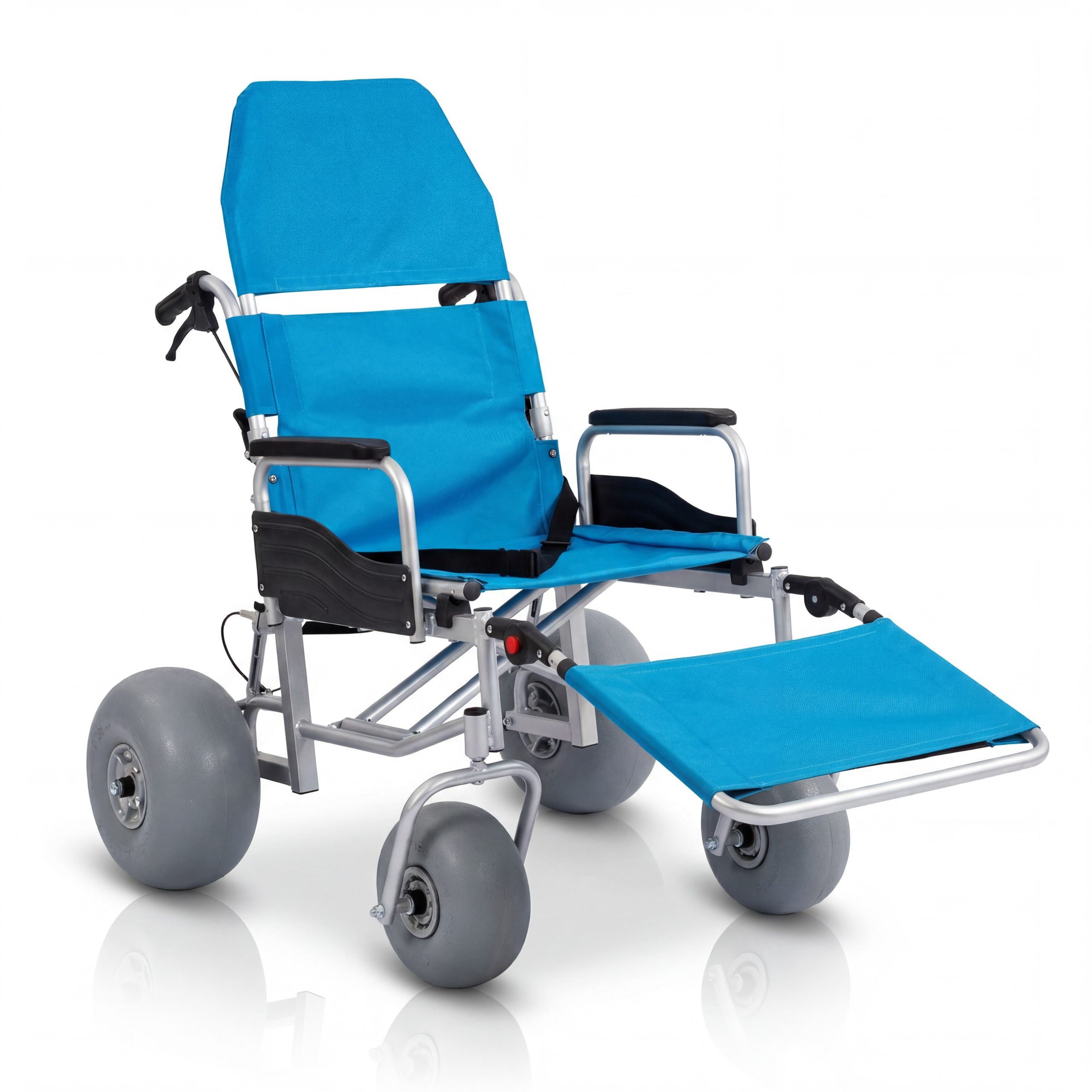
Identify the assembly before asking for a replacement
Take the chair out of issue if a wheel, seating support, retention part or adjustment mechanism is uncertain. Record the location and symptom before disturbing the connection. “Right rear wheel rubs on the frame after refitting” is a finding. The cause might concern the wheel, hardware or fit of the assembled parts. An authorised technician should decide what needs replacing.
| Assembly | Identify against the supplied chair | Ask the supplier to confirm |
|---|---|---|
| Front wheel and fork | Model and revision, left or right position where relevant, tire markings, hub and fork interface, fitted retaining parts. | Complete assembly or separate components, correct hardware and approved fitting check. |
| Rear wheel | Tire marking, mounting face, hub or running insert, axle and retention arrangement. Photograph fitted hardware in order. | Exact wheel reference, compatible axle and whether spacers or retainers are included in the quoted unit. |
| Backrest and upper support | Which fabric, support, mount or adjustment function is affected, its position and the delivered configuration. | Whether the assembly is replaceable in the field and which engagement or adjustment check applies after fitting. |
| Adjustable leg support | Side, support panel, attachment or adjustment interface, and the position where movement or damage appears. | Correct replacement version, included mounting parts and checks across the permitted positions. |
Page 2 lists front tires of 9 × 4.5 inches and rear tires of 12 × 5.5 inches. Those figures help separate front and rear stock. The lightweight AY-ST-V3.0 manual also lists those nominal sizes. Matching tire markings across the two models establish neither a matching hub nor correct retention on the chair. Obtain the replacement reference for the exact equipment model and revision. AY-ST-V3.0 wheel specifications for comparison
Give the supplier the evidence needed to resolve a mismatch
For a wheel enquiry, include an overall photograph to establish orientation and close views of the hub, mounting and retention. Use the supplier’s agreed measurement method for axle diameter, working bore, hub width and available mounting space where those are requested. Compare observed values with the current drawing. A worn shaft or distorted fitting can give a misleading purchasing dimension. Obtain instructions before removing an insert or dismantling a supporting assembly.
Suppose the proposed wheel slides onto the axle, but the retaining feature cannot fully engage after the specified hardware is fitted. Record the affected model, parts supplied, measurement or photograph, and location of interference. Hold the replacement and request a compatible assembly or an authorised technical disposition. Changing a spacer stack, enlarging the hub or drilling a new retaining hole introduces an unapproved configuration. Use the beach wheel axle-fit guide when preparing the measurement enquiry.
Receive and issue the approved part
Keep the supplier reference, revision and ordering unit on the quote and receiving entry. A quoted “wheel” might include a complete assembly or exclude the required axle hardware. At receipt, compare the item and contents with the approved order and photographs. Put an unidentified substitute in a marked hold location. Keep older and replacement versions individually identifiable until the supplier has confirmed their allowed applications.
For example, suppose two front-wheel kits have the confirmed part reference for the fleet’s V2.0 revision. One is already assigned to a repair. The desk can promise one available kit. A third wheel labelled only with its diameter stays in the identification bin until the supplier confirms its hub, axle and retainer.
Link the issue to one work order and one receiving asset. Record the removed part’s condition, the fitted part and any neighbouring connection disturbed during the work. Keep removed parts available for the agreed supplier review, return or disposal. Unlabeled stock can be fitted without traceability. A bin marked with the confirmed part reference, compatible model and wheel position makes a later request much easier to fulfil.
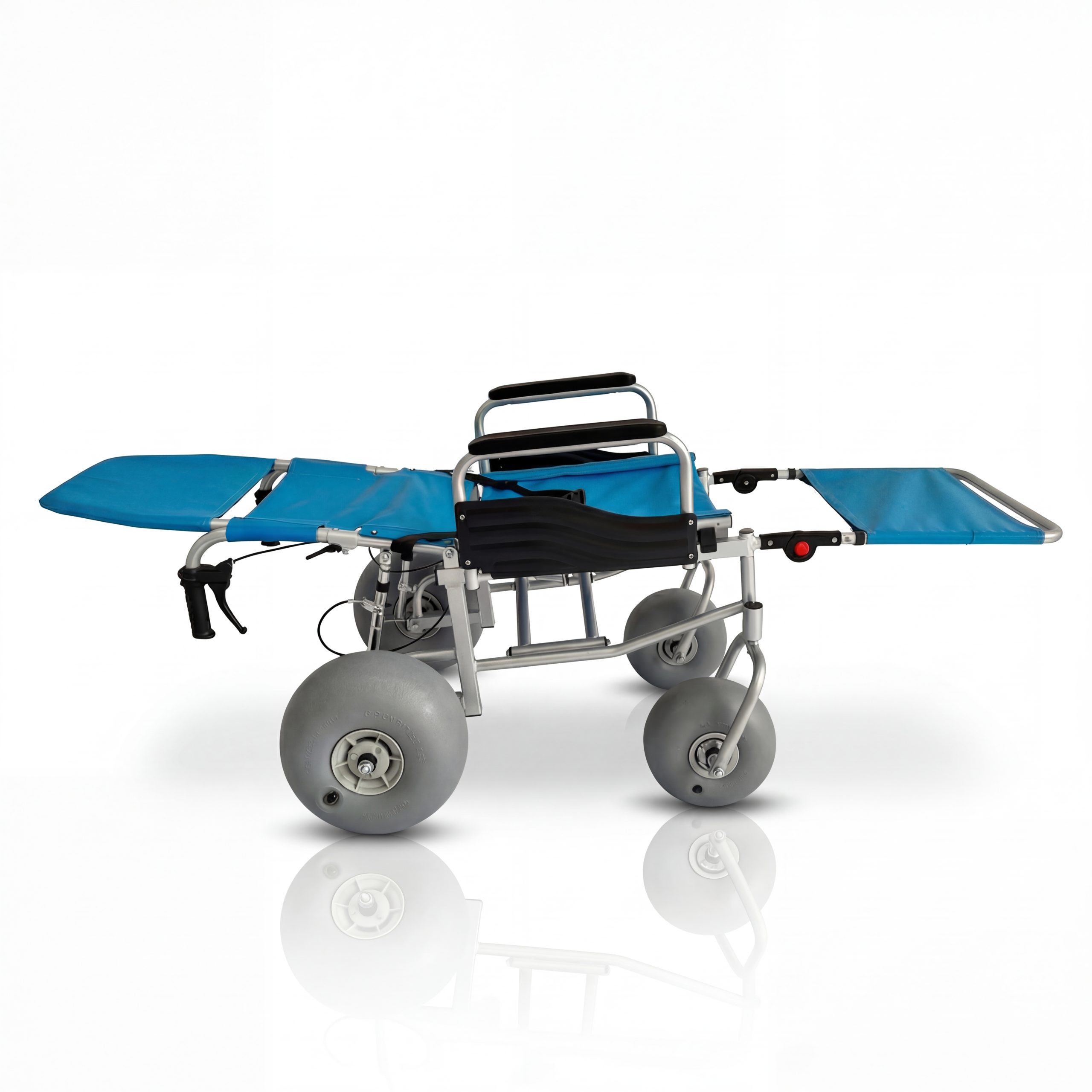
Verify the fitted function before returning the chair
After a wheel change, check the attachment and retention, rotation and clearance through the movement permitted for the supplied chair. Use the applicable inflation instructions for the fitted tire. For a backrest or leg-support replacement, verify the mounts and adjustment engagement according to the current manual. Include any connection moved during access. If the supplier proposes a different chair configuration, review the seating and support requirements for the service before accepting that change. Model comparison for sand and assisted water access
Perform the prescribed checks with the empty chair before considering further authorised service trials. Record the result, date and person releasing the unit. If the original symptom persists, retain its work order and hold status while the cause is investigated. Use completed jobs, actual consumption and confirmed supply time to decide which approved assemblies deserve local spares.