
A beach access desk can lose the use of a visitor wheelchair because a small bag of permitted fittings is at the store. A cargo cart can bring the bag to a trained employee. It cannot make the repair decision, release the wheelchair or provide a ride to a visitor. Start each supply run by identifying the service appointment or route that needs the goods and the person qualified to receive them.
Ask the access team what is missing from the visit
A weekday pickup point may need a removable sign, a protected box of approved spares and clean, bagged accessories for a particular loan unit. Have the issue desk give the cart operator the destination, part or container references and when they are needed. The access team keeps control of any promised visitor assistance and of the loan unit’s availability.
Separate items that belong to one identified chair from shared station stock. A bag marked “back support for chair B-04” goes directly to the assigned receiver. A carton of blank visitor route cards can go to the general counter. A service worker should be able to tell which delivery must be handed to a specialist and which can be shelved for later.
Protect the turning space at visitor pickup
A short delivery can still deny access if the cart is parked across the only turning space. Walk the service approach to the back or side of the desk, identify where the operator can set down the load and check that the visitor’s return route remains open during unloading. Have the access lead reserve that space when a delivery must coincide with appointments.
Suppose a group arrives just as a cart carrying a sign and parts box reaches the gate. The operator can wait in the agreed holding space and contact the receiver. The receiver may be able to collect the small box at a clear handoff point. If the sign cannot travel through until the group leaves, give the desk its revised arrival time. A temporary change to a visitor route must be communicated by the team responsible for the route.
Keep mobility equipment and cargo under their own instructions
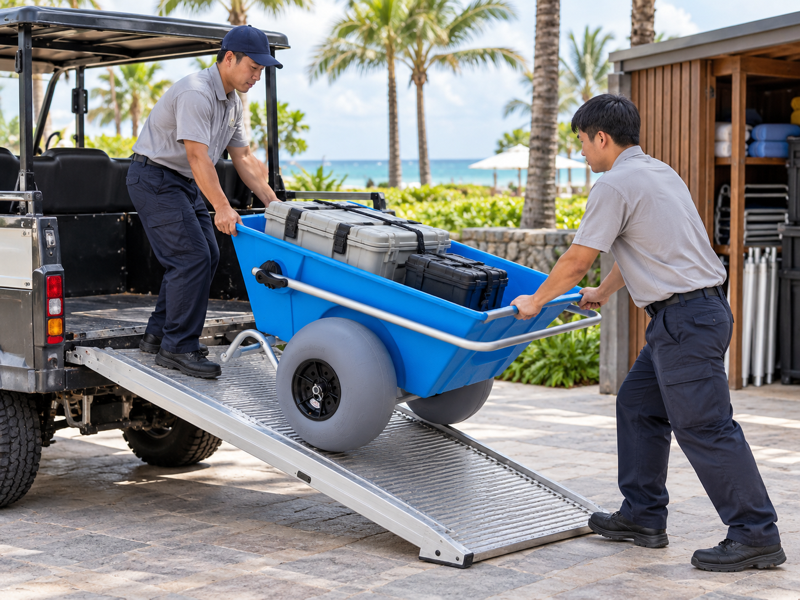
The standard beach cargo cart is a two-wheel goods carrier with a molded tub. Its cargo rating does not establish that a complete wheelchair can be supported, restrained or unloaded in that tub. Do not place a person in or on the cart. Arrange visitor movement separately with the access team.
If a whole empty wheelchair must be moved, establish its approved transport configuration and use suitable equipment and restraint for that transfer. Identify any removed parts with their parent unit. The empty wheelchair vehicle transport guide covers dimensions, cargo space and reassembly. Leave a visitor’s personal mobility device in the custody arrangement they agreed, even if an incoming cart has spare space.
Confirm what the delivery actually restores
On arrival, the named receiver checks the reference, quantity and condition of the goods. If the replacement supplied for B-04 has a different interface, hold it for supplier identification. The cart operator can close the delivery as received with a discrepancy. The access desk keeps B-04 unavailable and offers another confirmed option if one exists.
Only the responsible team can declare that the wheelchair has passed its applicable checks or that a signed route can reopen. Give the person updating the booking desk the technical or field release, not merely the delivery time. For a site with more than one entrance, the municipal wheelchair loan guide explains how to show the correct collection and return points.