Floating beach wheelchairs are necessary for inclusive beach programs because they bridge the gap between dry sand and the water, allowing individuals with physical limitations to experience the therapeutic benefits of the sea safely. Imagine a sunny day where a family gathers on the shoreline, but one member sits isolated on a distant boardwalk, unable to cross the deep, shifting sand. The heavy standard wheelchair sinks, causing immediate agitation and excluding them from the laughter in the gentle waves. By implementing a floating beach wheelchair, you transform these stressful sandy barriers into welcoming pathways. This simple addition allows every family member to enjoy the cool water together, turning a day of frustration into one of shared joy and belonging.
Why buy a floating beach wheelchair for public parks?
Purchasing a floating beach wheelchair for public parks supports that your community spaces meet modern standards of accessibility and inclusion. Local governments often struggle to make natural water resources usable for people with mobility challenges. By providing these specialized vehicles, you create a park system where everyone can enjoy the water.
Public parks serve as the foundation of community recreation. When you invest in adaptive beach equipment, you build goodwill and demonstrate a true commitment to equal public access.
What makes a park truly accessible?
Here is the main point: Accessible parks require specialized equipment designed for the unique challenges of coastal sand and shallow water. Standard mobility devices fail instantly in these environments.
- Durable frame construction that resists weathering.
- Stable flotation elements that prevent tipping.
- Easy handling for lifeguards and trained park staff.
| Public Park Feature | Practical Benefit |
|---|---|
| Soft Sand Navigation | Expands accessible park boundaries |
| Supervised Water Entry | Allows safe contact with calm water |
| Community Goodwill | Proves dedication to public inclusion |
Careful planning of park equipment directly translates to long-term success for community programs.
Key Takeaway: Investing in specialized park equipment allows municipalities to fulfill accessibility requirements while offering memorable recreation opportunities to all citizens.
How does a floating beach wheelchair improve equity?
A floating beach wheelchair improves equity by making sure that individuals with physical limitations have the exact same opportunities to experience the ocean as ambulatory visitors. True equity means removing the physical boundaries that isolate people with mobility challenges. Providing this equipment allows everyone to participate in waterfront activities alongside their peers.
Dignity is a fundamental part of public recreation. Offering specialized seating options removes the feelings of exclusion that many adaptive tourists experience.
How do we bridge the recreation gap?
What matters next? We must evaluate how our current beach infrastructure treats guests who cannot walk on sand. True integration means offering tools that go beyond the boardwalk.
- Dignified, comfortable seating that keeps users upright.
- Direct inclusion in family activities at the water’s edge.
- Reduction of physical strain on family caregivers.
| Equity Factor | Real-World Application |
|---|---|
| Social Integration | Enables shared family experiences |
| Physical Access | Removes dry sand barriers |
| Emotional Comfort | Reduces feelings of recreational isolation |
When local programs prioritize equity, the entire community becomes a warmer and more welcoming place.
Key Takeaway: Equal access to natural resources is not a luxury, and providing specialized beach chairs is a direct way to achieve institutional equity.
What makes a floating beach wheelchair safe for water?
A floating beach wheelchair is safe for water because its balanced weight distribution and flotation armrests maintain steady buoyancy in calm, shallow zones. The design utilizes physics to prevent tipping while keeping the user in a secure, upright position. Each component is engineered to handle the gentle transition from the sand into the water.
Safety depends heavily on following correct operational protocols in designated zones. Using these chairs under the supervision of trained attendants makes sure everyone stays protected.
What are the core safety features?
Let’s look at the details: The structural layout is engineered to offer maximum stability during water entry. Each part plays a specific role in keeping the user secure.
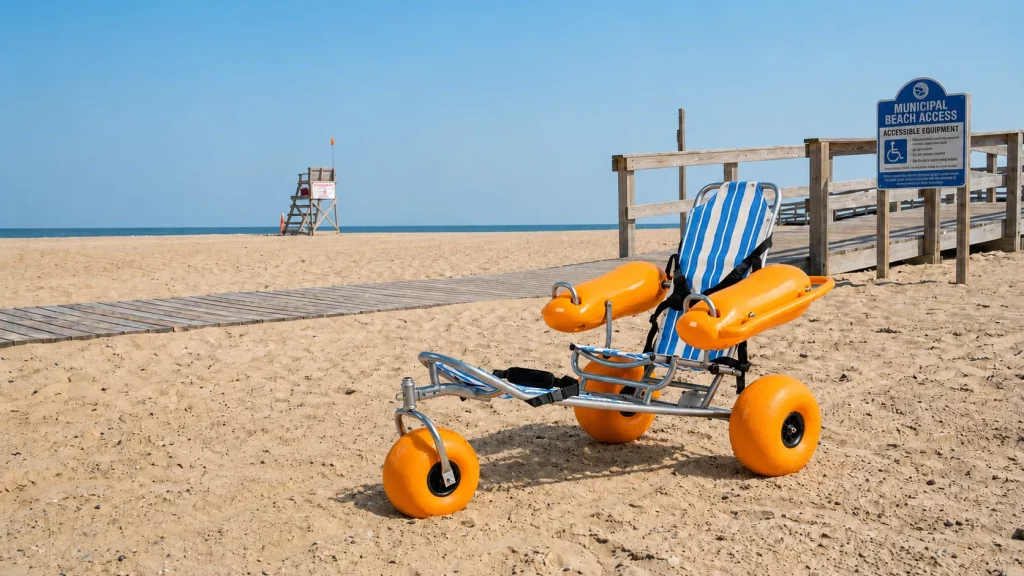
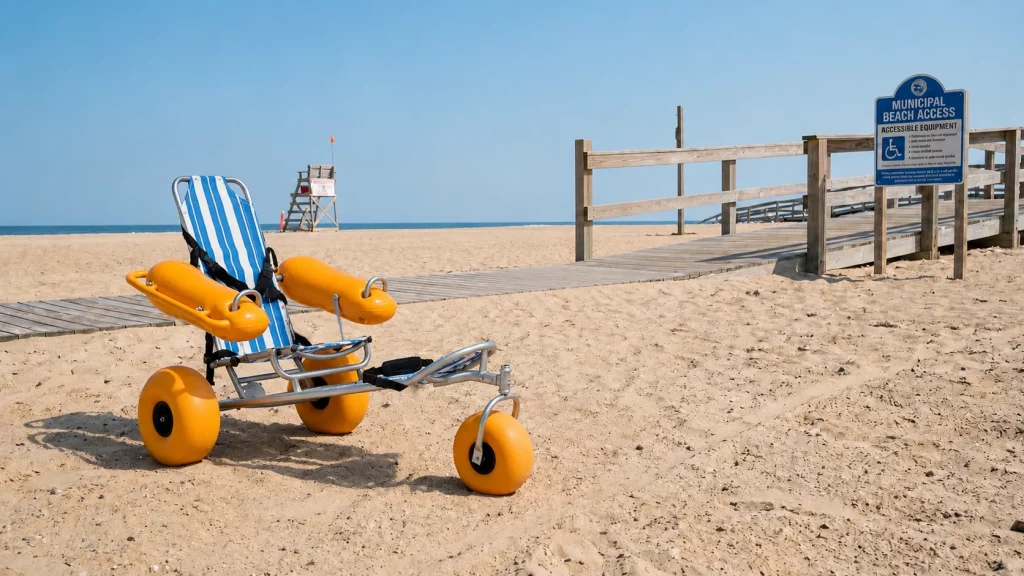
- Silver marine-grade aluminum frame that provides a sturdy, lightweight foundation.
- Twin orange side flotation chambers that serve as supportive armrests and float.
- Three orange low-pressure balloon wheels that distribute weight and absorb ground shocks.
- Striped blue-white seat and backrest fabric that dries quickly after water use.
- Quick-release safety harness, push handles, and integrated footrest for complete control.
| Safety Component | Engineering Role |
|---|---|
| Quick-Release Harness | Secure positioning with rapid exit capability |
| Flotation Armrests | Side-to-side stability in shallow water |
| Low-Pressure Tires | Easy rolling over soft, uneven sand |
Understanding these mechanical safeguards allows operators to manage risks effectively during public programs.
Key Takeaway: Combining a robust marine frame with high-visibility flotation armrests makes the transition from dry beach to calm water highly secure.
Who benefits from a floating beach wheelchair program?
A floating beach wheelchair program benefits a wide range of individuals, including seniors, rehabilitation patients, children with physical challenges, and the organizations that serve them. Inclusive programs bring communities closer together and attract new visitors to coastal areas. By offering these services, municipal parks and private resorts expand their market reach.
Facilitating access for one person often brings an entire family group to your facility. This creates positive economic returns and strengthens local tourism.
Who are the primary user groups?
Here is the reality: The positive impact of an adaptive beach program extends far beyond the primary user. Families, caregivers, and resort operators all experience significant advantages.
- Seniors who want to experience the shoreline again.
- Rehabilitation patients using aquatic therapy for recovery.
- Children with developmental or physical challenges.
- Lifeguards who can assist guests safely without manual lifting.
| Beneficiary Group | Main Practical Value |
|---|---|
| Adaptive Guests | Direct access to therapeutic water environments |
| Family Members | Peace of mind and shared recreational moments |
| Beach Operators | Increased attendance and higher satisfaction ratings |
Broadening your program’s reach creates a welcoming atmosphere that benefits every single visitor.
Key Takeaway: Implementing adaptive beach programs creates a multi-layered benefit system that improves public health, family cohesion, and tourism revenue.
Where should you store a floating beach wheelchair?
You should store a floating beach wheelchair in a clean, dry, and secure location close to the beach access point to protect it from extreme weather and unauthorized use. Proper storage prevents premature wear on the seating fabrics and flotation components. It also makes sure the equipment is ready for rapid deployment when guests arrive.
Keeping the chairs locked inside a dedicated shelter prevents vandalism and theft. A nearby storage shed also simplifies the daily routine for beach staff.
What are the ideal storage conditions?
Think about this: Proper storage management is the simplest way to protect your capital investment. A well-maintained storage routine extends the operational lifespan of the chair.
- A well-ventilated space that prevents mold growth on seat fabrics.
- Protection from direct, prolonged sunlight during off-hours.
- An accessible path from the storage unit to the sand.
- Proximity to a freshwater source for quick cleaning.
| Storage Priority | Action Required |
|---|---|
| Climate Protection | Store indoors away from freezing cold or extreme heat |
| Cleanliness | Rinse with fresh water before putting the chair away |
| Security | Use a lockable shed close to the main boardwalk |
Establishing a daily storage checklist makes sure your team treats the equipment with care.
Key Takeaway: Storing your adaptive chairs in a secure, dry facility keeps the hardware safe and supports it remains ready for daily service.
How does a floating beach wheelchair resist corrosion?
A floating beach wheelchair resists corrosion through the use of a silver marine-grade aluminum frame and high-quality synthetic fabrics that do not degrade in saltwater. Coastal environments are highly aggressive toward standard metals and materials. By selecting marine-grade alloys, the vehicle stands up to daily exposure to sand and sea.
Regular maintenance still plays an necessary role in preserving the equipment. Rinsing the chair with fresh water after every ocean visit washes away salt crystals that could cause slow wear.
Which materials prevent rusting?
Here is the technical part: Each component is chosen specifically for its ability to withstand wet, salty coastal conditions. This careful material selection keeps the chair safe and operational.
- Silver marine-grade aluminum frame that resists deep pitting rust.
- Stainless steel hardware that secures critical structural joints.
- Striped blue-white seat and backrest fabric that resists mold.
- Heavy-duty orange flotation armrests made of dense, waterproof polymers.
| Component Material | Resistance Property |
|---|---|
| Marine Aluminum | Highly resistant to saltwater oxidation |
| Synthetic Seat Fabric | Quick-drying and resistant to UV fading |
| Polymer Flotation Chambers | Sealed against water entry and puncture |
Choosing the right materials up front prevents expensive replacement costs later in the season.
Key Takeaway: Utilizing high-grade marine metals and treated fabrics prevents rust, keeping the chair safe and operational for years.
Why choose a floating beach wheelchair with balloon tires?
You should choose a floating beach wheelchair with balloon tires because these low-pressure wheels glide easily over soft, loose sand instead of sinking. Standard narrow tires dig into the beach, making the chair impossible to push. The large, wide wheels distribute the user’s weight evenly across the soft ground.
This effortless movement reduces physical strain on the person pushing the chair. It allows a single attendant or family member to move the passenger across deep dunes without exhaustion.
How do balloon tires improve mobility?
Why does this matter? Moving across soft sand requires the right wheel engineering. Balloon tires transform a difficult trek into a smooth, comfortable ride.
- Low pressure allows the tires to conform to uneven beach surfaces.
- Wide footprint prevents the chair from sinking into dry dunes.
- Pneumatic design absorbs shocks from shells and small rocks.
- Buoyant properties assist the flotation chambers in shallow water.
| Tire Characteristic | Physical Action |
|---|---|
| Low-Pressure Design | Deforms slightly to float over loose grains |
| High-Volume Air Chamber | Adds extra buoyancy when entering shallow water |
| Smooth Rubber Surface | Prevents sand from sticking or clogging the wheels |
The combination of flotation and easy rolling makes these tires the perfect choice for beach operations.
Key Takeaway: Specialized balloon tires are critical for sand mobility, allowing attendants to move passengers with minimal physical effort.
How do you fund a floating beach wheelchair initiative?
You can fund a floating beach wheelchair initiative by combining government accessibility grants, corporate sponsorships, and local community fundraising campaigns. Many public and private entities offer financial support specifically for inclusive infrastructure. By building a clear business case, you can secure the budget needed for these programs.
Highlighting the social impact of adaptive tourism can attract local business sponsors. Companies are often eager to support programs that make local beaches welcoming for everyone.
What are the primary funding sources?
Here is the approach: Securing funding requires looking at both public grants and private partnerships. Multiple paths exist to help cover the initial equipment purchase.
- Federal or regional accessibility grants for public parks.
- Tourism board subsidies aimed at attracting diverse travelers.
- Corporate donations from businesses seeking positive community relations.
- Crowdfunding campaigns organized by local disability advocacy groups.
| Funding Method | Key Benefit |
|---|---|
| Government Grants | Covers large initial fleet purchases |
| Corporate Sponsors | Provides ongoing maintenance and marketing support |
| Community Crowdfunding | Generates local pride and immediate program awareness |
By blending different financial resources, your organization can launch a sustainable inclusion program.
Key Takeaway: Creative funding strategies make it easy for municipalities and resorts to purchase high-quality adaptive beach equipment.
What training do floating beach wheelchair operators need?
Operators of a floating beach wheelchair require hands-on training in transfer techniques, water safety protocols, and pre-use equipment inspections. Having knowledgeable staff makes sure that guests enjoy a safe and relaxing experience. It also protects the equipment from accidental damage caused by incorrect handling.
Your safety protocol should always mandate that a trained attendant stays with the user during water entry. This supports quick assistance in changing tides.
What should the training program cover?
What is critical here? Staff must feel confident operating the chair in both dry sand and wet environments. A structured training program supports consistency and safety across your team.
- Safe passenger transfer methods from standard chairs.
- Proper adjustment of the quick-release safety harness.
- Evaluating local water conditions and recognizing safe, calm zones.
- Daily maintenance checks, including checking tire pressure and armrest seals.
| Training Module | Core Focus |
|---|---|
| Passenger Handling | Dignified and safe transfer methods |
| Environmental Evaluation | Identifying calm, shallow water zones |
| Equipment Check | Confirming harness and flotation integrity |
Well-trained staff members are the backbone of any successful beach accessibility initiative.
Key Takeaway: complete staff training reduces operational liability and supports a safe, professional experience for every visitor.
How can we help you choose a floating beach wheelchair?
We help you choose a floating beach wheelchair by evaluating your local beach conditions, storage options, and municipal compliance requirements. Selecting the right equipment supports your beach program operates smoothly from day one. Our team provides detailed technical guidance to match you with the perfect model.
We assist procurement officers and resort managers in planning their complete access paths. Our goal is to make your transition to an inclusive waterfront simple and successful.
How do we support your procurement journey?
Let’s move forward: We are ready to assist you at every stage of your accessibility project. From initial planning to final delivery, we offer direct support.
- Analyzing your sand type to confirm tire compatibility.
- Providing detailed technical drawings for municipal review.
- Recommending matching accessories like accessible beach mats.
- Offering volume pricing for public park fleets.
| Support Area | Service Provided |
|---|---|
| Site Evaluation | Custom matching of equipment to your local terrain |
| Technical Support | Provision of CAD drawings and material test sheets |
| Fleet Logistics | Coordinated global shipping and freight insurance |
Working with a specialized supplier makes your accessibility project simple and stress-free.
Are you ready to transform your waterfront?
By addressing sandy barriers, saltwater corrosion, and deep-water hazards, you can open your shorelines to every visitor. A dedicated supplier provides the engineering expertise and logistics support to make this change seamless.
If you are ready to build a truly welcoming beach, contact us today to find the ideal setup for your facility. Let us work together to make every wave, shore, and coastal sunset accessible to everyone, everywhere.
Key Takeaway: Partnering with experienced professionals supports you select the most durable and effective equipment for your unique coastal environment.
Frequently Asked Questions
Can I operate the chair in rough surf conditions? No, this is highly dangerous. The chair is designed specifically for calm, shallow waters such as lagoons, lakes, or protected bays, and should only be operated under close, trained adult supervision.
What’s the best way to clean the frame after ocean use? A simple freshwater rinse is the most effective method. Thoroughly washing the frame and wheels after every use removes salt deposits and fine sand grains, protecting the materials from premature wear.
How do I know if my beach is suitable for these specialized tires? Almost any sandy terrain is perfect for these wide wheels. Low-pressure balloon tires are specifically engineered to glide over loose, dry sand where standard mobility tires would sink.
Can I transport the chair in a standard vehicle? Yes, this is very easy. The modular design allows you to disassemble the frame, wheels, and flotation armrests quickly without any specialized tools for convenient transport and storage.
What’s the best safety practice during passenger use? Mandatory supervision by a trained attendant is the most key practice. Always secure the quick-release safety harness and stay in shallow zones where the attendant can maintain solid footing at all times.