A floating beach wheelchair can support a planned route over sand and, when the exact model permits, supervised entry into calm water. Its value depends on product instructions, personal fit, trained attendants, local policy, and current conditions.
Standard narrow wheels may stop at loose sand. Before travel, map the path from parking or storage through each surface change and back. For U.S. coastal sites, NOAA tide predictions can inform a timed review, while present conditions still control the decision.
A purpose-built floating beach wheelchair combines wide wheels with documented flotation parts. Those features do not authorize every route, rider, or water condition. Confirm model identity, approved use, restraints, attendant roles, and exit steps before service.
What Makes a Floating Beach Wheelchair Different?
A floating model differs from land-only designs only when its current maker documentation approves water use. Compare written boundaries across the beach wheelchair range rather than relying on appearance.
How Do the Balloon Wheels Actually Work?
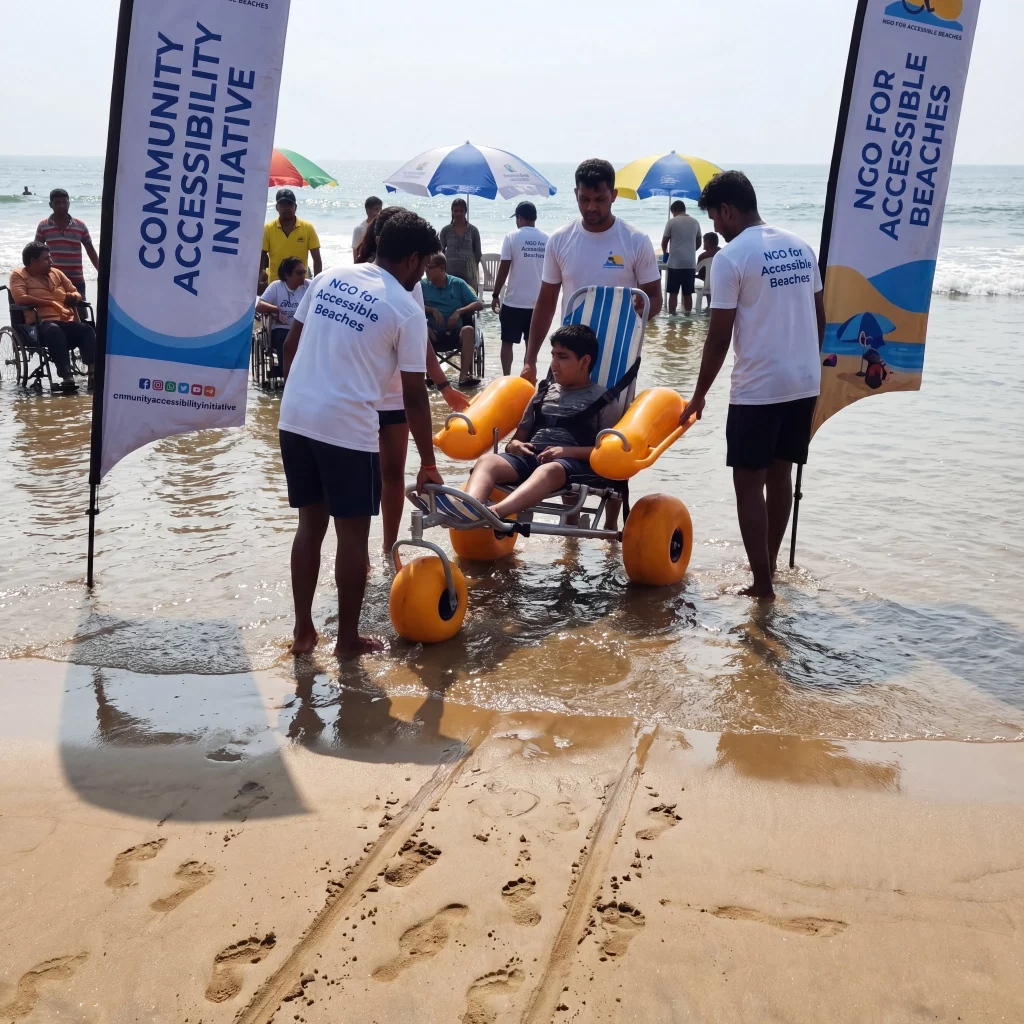
Wide low-pressure wheels may reduce sinking on loose sand. However, push effort changes with load, tire condition, slope, sand depth, and operator position.
Why Does the Frame Design Matter So Much?
Frame, seat, flotation parts, fasteners, foot support, and restraints need model-specific inspection points. Review each item against current instructions:
- Wide wheels intended for the documented sand route
- Model-matched flotation parts and attachment points
- Seat material and drainage method in the instructions
- Restraints positioned only as the maker directs
| Chair type | Documented route | Water use |
|---|---|---|
| Standard wheelchair | Firm route stated by maker | Not assumed |
| Land beach chair | Sand route stated by maker | Only if documented |
| Floating model | Sand and water boundaries | Only as approved |
The comparison should separate documented capability from local approval. Key Takeaway: Select a chair only after the route, water boundary, attendants, and exact model records agree.
How Does a Floating Beach Wheelchair Keep Swimmers Safe?
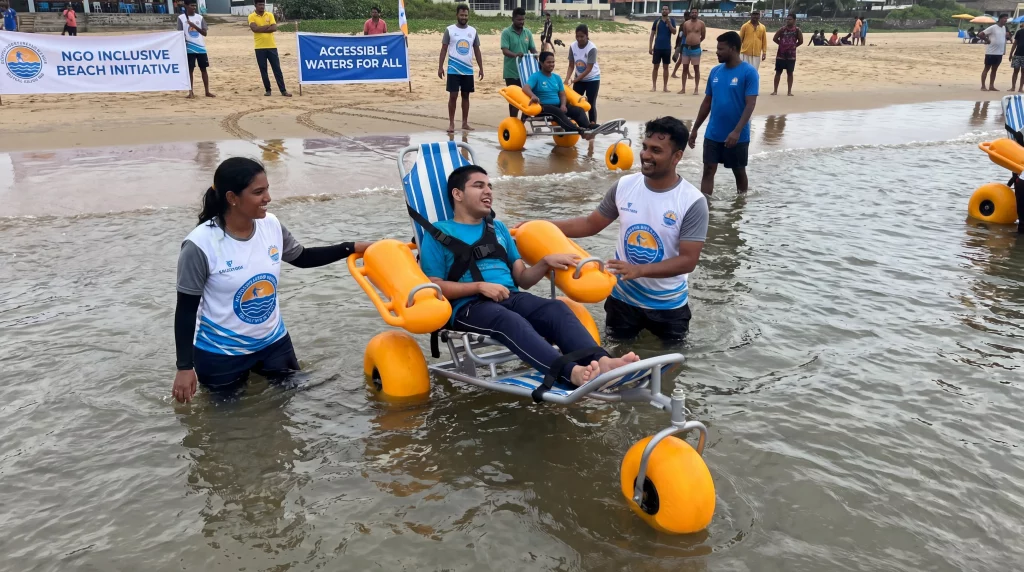
No chair makes open water inherently safe. A supervised program needs current condition checks, trained attendants, clear communication, a defined operating boundary, and a practiced exit plan.
What Happens When Waves Roll In?
Do not assume a chair will self-right or remain stable in waves. Follow the maker’s water limits and stop whenever conditions or staffing move outside the approved plan.
Which Safety Features Protect the Rider?
Several controls should work together during a supervised session:
- Current site and water check
- Trained attendant roles
- Clear guest communication cues
- Defined pause, exit, and return plan
| Control | Evidence | Decision |
|---|---|---|
| Product instructions | Exact model and revision | Allowed use |
| Site check | Current route and water conditions | Open, change, or close |
| Staff plan | Named trained roles | Proceed or hold |
Each control answers one operating question. Key Takeaway: Treat flotation features as part of a managed system, not as a guarantee against every hazard.
Why Does a Floating Beach Wheelchair Restore Independence?
Access equipment may expand participation when the route, support plan, and personal fit work together. Independence means different things to different users, so ask what assistance the person wants.
What Does a Typical Beach Day Look Like Now?
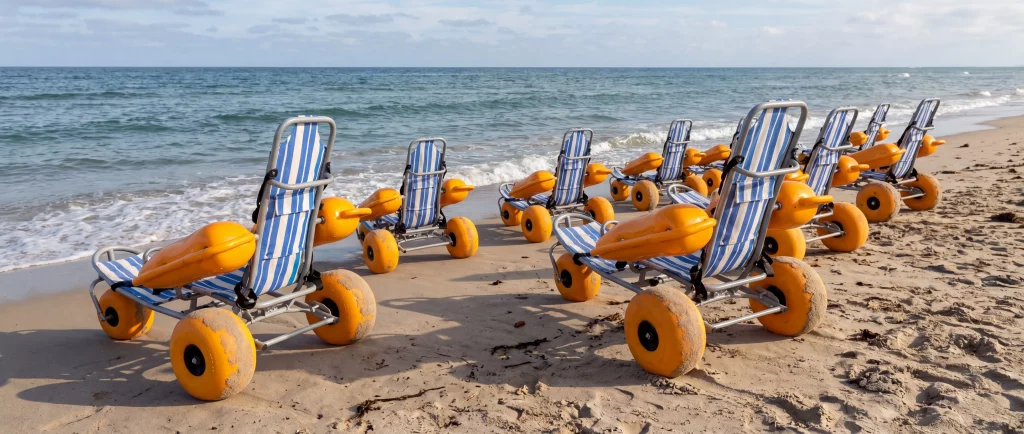
Plan each outing around the user’s choices, local route, trained help, weather, water boundary, and return path. The water-access application can frame questions without replacing a site procedure.
How Does Independence Affect Wellbeing?
Record useful outcomes as user feedback rather than universal promises. Teams may review route access, preferred assistance, activity time, communication, and reasons for stopping.
- Preferred assistance recorded before movement
- Route and water goals agreed with the user
- Breaks and return time included in the plan
- An easy stop option throughout the activity
| Planning question | Record | Owner |
|---|---|---|
| Desired activity | User preference | Service lead |
| Assistance | Agreed roles | Attendant team |
| Stop point | Route and return plan | Site decision role |
A chair can support more choices without defining them. Key Takeaway: Build the service around the person’s stated goals and approved support plan.
Can a Floating Beach Wheelchair Conquer Soft Sand?
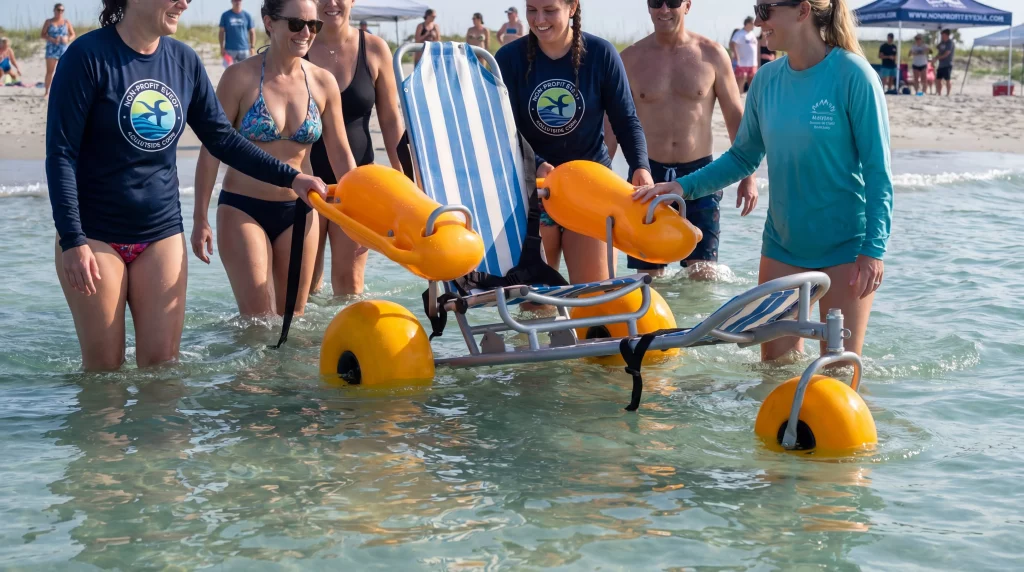
Wide wheels are intended for loose surfaces, but no wheel works equally on every beach. Test the actual route with an empty chair and trained staff before a user session.
Which Terrains Does It Handle Best?
Different surfaces create different handling questions:
- Loose dry sand on the planned path
- Firm wet sand near the shoreline
- Boardwalk, mat, or gravel joins
- Approved shallow-water entry zone
What About Pushing Effort for Caregivers?
Operator effort varies with route, chair setup, load, tire condition, and surface. Keep backup help available wherever the site plan requires it.
| Surface | Check | Record |
|---|---|---|
| Loose sand | Wheel condition and push effort | Route trial |
| Surface join | Clearance and approach | Site note |
| Water entry | Local approval and conditions | Open or closed |
A route trial reveals more than a catalog image. Key Takeaway: Approve each surface segment separately and record a stop point.
How Does a Floating Beach Wheelchair Reunite Families?
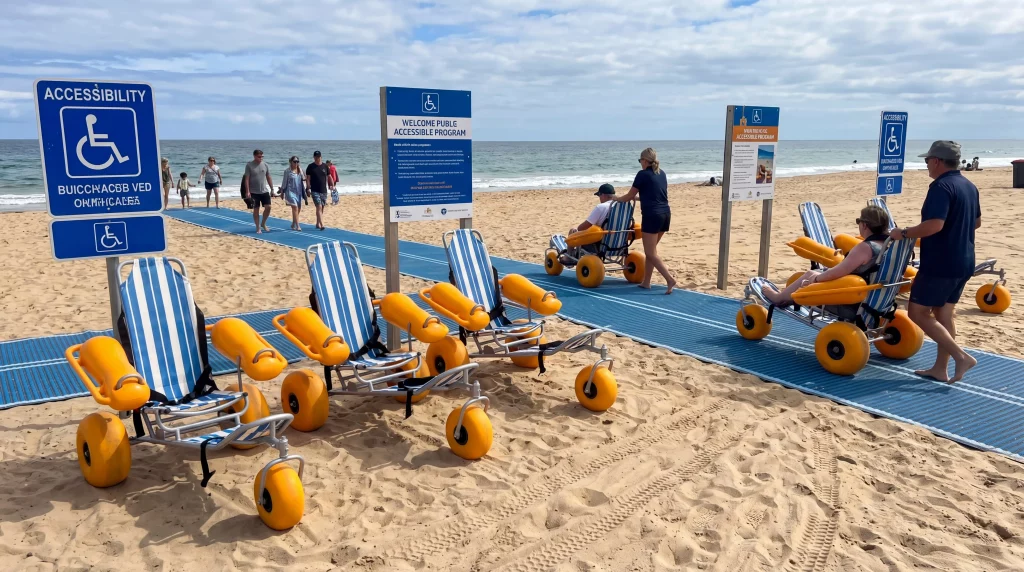
Shared beach activities become easier to plan when everyone can reach the same service zone. The chair remains one part of an inclusive route, not a promise that every activity will fit every person.
What Shared Moments Become Possible?
Define the planned activity, meeting point, attendants, communication cues, shade, breaks, and return time. A resort project example can prompt workflow questions without supplying local results.
How Do Kids Respond to Inclusive Beach Days?
Families and groups may use the program in different ways:
- Shared meeting and activity zone
- Communication plan for the group
- Shade, breaks, and return timing
- A route that keeps attendants and users together
| Group need | Planning response | Record |
|---|---|---|
| Shared activity | Meeting and service zone | Trip plan |
| Communication | Common cues | Briefing note |
| Breaks | Shade and return time | Schedule |
Inclusive planning reduces last-minute improvisation. Key Takeaway: Ask the group what shared activity matters, then build a route and staffing plan around it.
Why Do Resorts Love a Floating Beach Wheelchair Fleet?
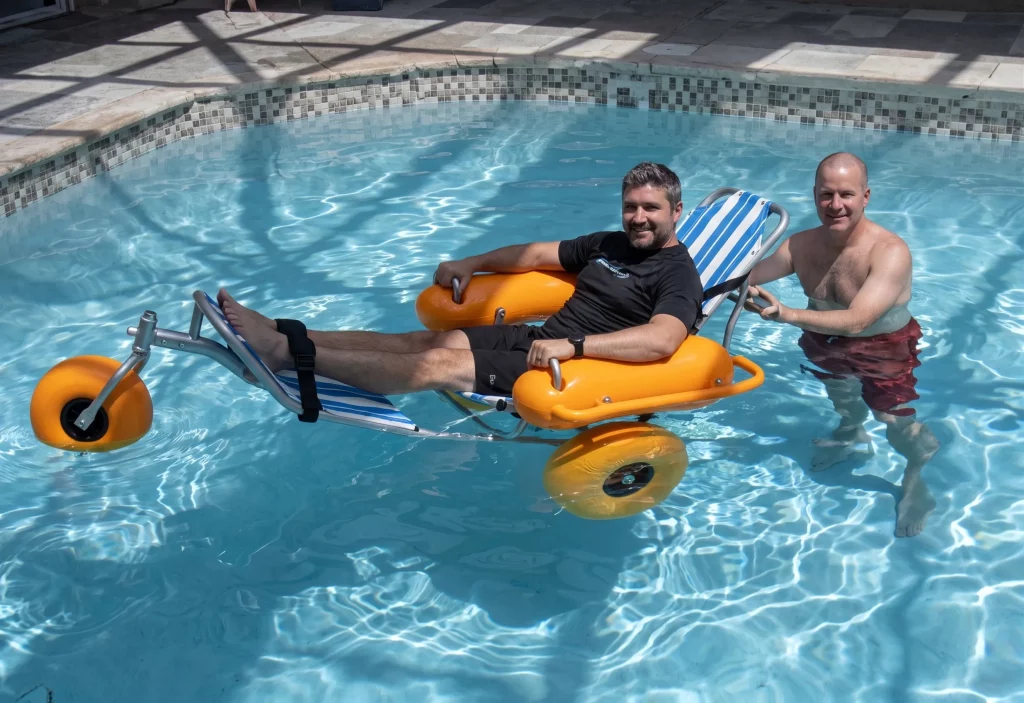
For a resort, a floating chair is an operating program rather than a display item. Management should assign booking, inspection, attendants, water decisions, post-use care, storage, and incident reporting.
What Do Guests Say About Accessible Beaches?
Guest feedback can identify route gaps, unclear booking language, or handoff problems. Use the supplier overview to prepare questions, then verify every claim for the exact model.
How Should a Resort Launch Its Program?
A practical rollout needs several coordinated steps:
- Train staff on the exact model and procedure
- Publish accurate booking and availability details
- Record inspections, holds, and handoffs
- Follow model-specific care and parts routines
| Program area | Required control | Evidence |
|---|---|---|
| Booking | Accurate availability | Reservation log |
| Operations | Inspection and attendants | Shift record |
| Care | Rinse, dry, inspect, store | Service log |
Program value comes from consistent access and clear service. Key Takeaway: Measure readiness, availability, holds, and guest feedback before making reputation claims.
How Comfortable Is a Floating Beach Wheelchair in Water?
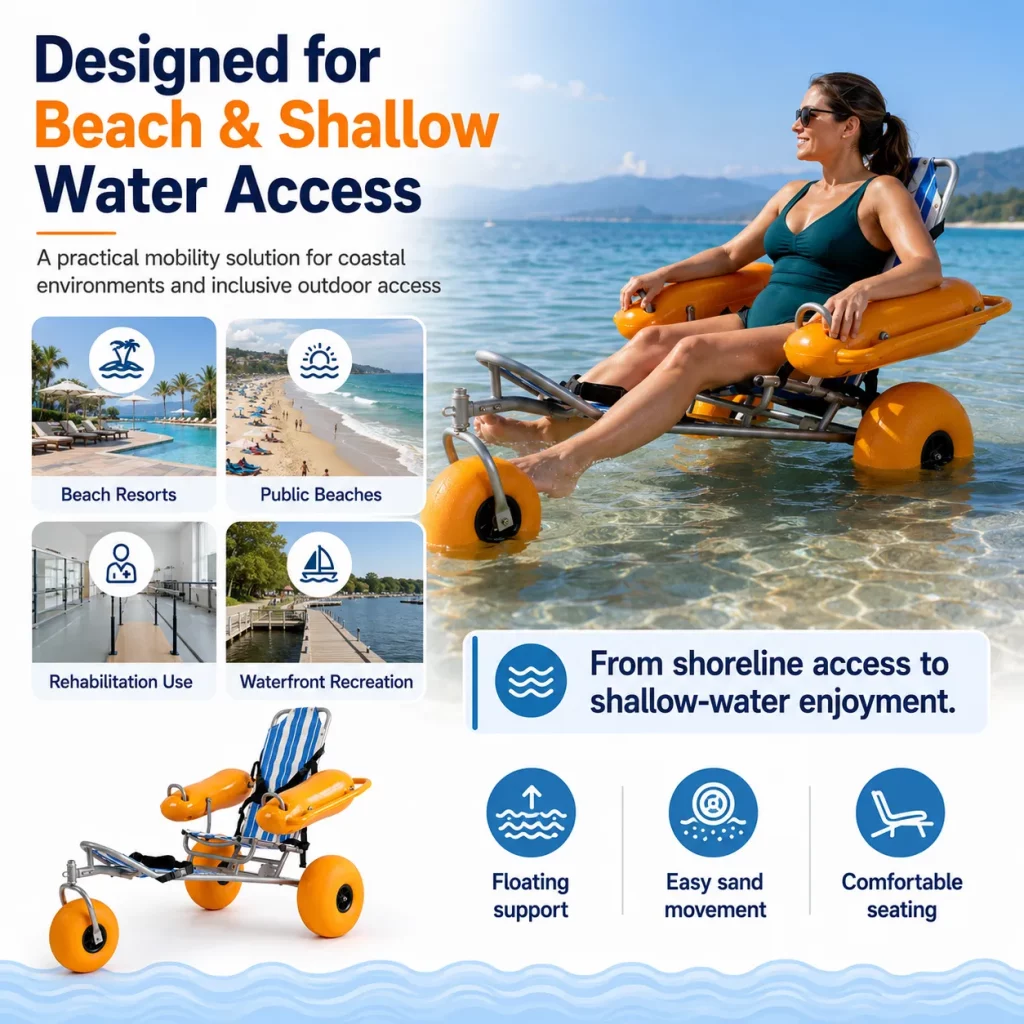
Comfort cannot be inferred from a reclined seat or mesh fabric. Fit, posture, pressure, restraint placement, foot support, temperature, and session length need individual review.
What Design Details Drive That Comfort?
Review seating with the user and qualified professionals when personal needs require it. Comfort checks should cover:
- Seat width, depth, and back support
- Restraint placement and release
- Foot position and user contact points
- Break schedule and easy exit option
Does It Stay Comfortable Back on Land?
Schedule breaks and transfers through the approved support plan. Keep the user manual resource with the model record.
| Fit area | Question | Action |
|---|---|---|
| Seat and back | Does support match the user? | Controlled fitting |
| Restraint | Is placement documented? | Follow instructions |
| Session | Are breaks and exit available? | Personal plan |
Seating features only help when fit and operating conditions agree. Key Takeaway: Confirm personal comfort during a controlled trial and keep an easy stop option.
What ROI Can a Floating Beach Wheelchair Deliver?
Do not assume a chair will pay for itself within a fixed period. Costs and value vary with purchase terms, staff time, training, storage, maintenance, parts, utilization, and local pricing.
Where Does the Revenue Actually Come From?
Build the business case from local records rather than generic rental figures. Review these cost and service categories:
- Purchase and shipping cost
- Training and staff time
- Care, storage, and replacement parts
- Local utilization and pricing records
How Fast Do Operators Break Even?
Use actual quotations, staffing schedules, booking data, and service records. Avoid unsupported payback periods or revenue forecasts.
| Cost area | Local input | Evidence |
|---|---|---|
| Purchase | Quotation and shipping | Supplier offer |
| Operations | Staff and training | Work plan |
| Ownership | Care, storage, parts | Service record |
A clear cost file supports a defensible decision. Key Takeaway: Treat financial return as a local calculation, not a product feature.
How Do You Pick the Right Floating Beach Wheelchair?
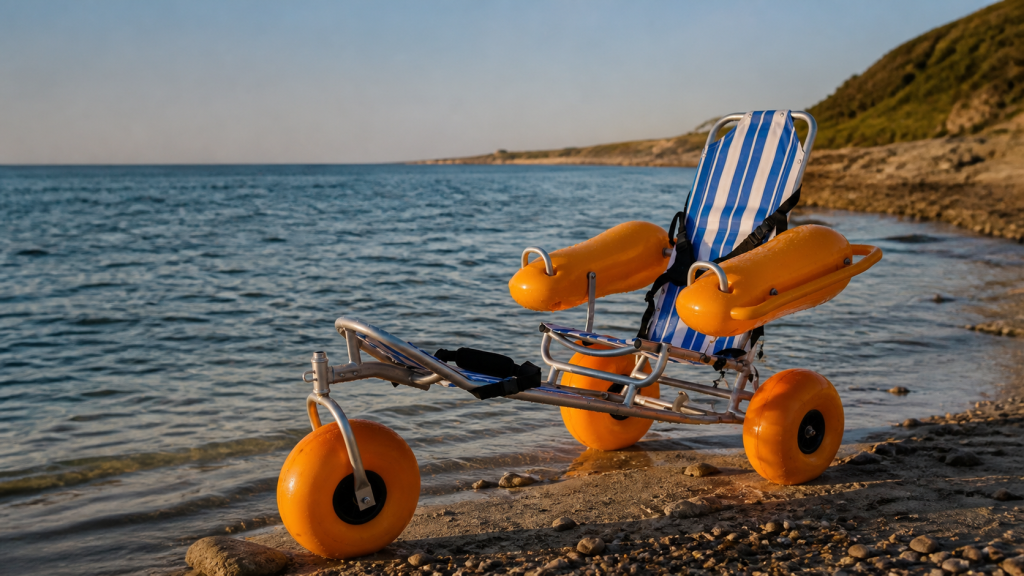
Choose a model by matching documented capacity, seating, flotation design, materials, transport state, parts, and operating limits with the real site. An all-terrain model needs a separate review if water entry is not required.
Which Specifications Deserve Close Attention?
Two chairs can look similar while their instructions, parts, and approved use differ. Check these points before ordering:
- Documented capacity and seating dimensions
- Model-specific frame and flotation records
- Current wheel, hub, and parts references
- Replaceable fabric, restraint, and wear parts
Should You Buy From a Manufacturer or Reseller?
Request current drawings, instructions, parts references, care guidance, warranty terms, and model-matched test evidence in writing.
| Checklist item | Evidence | Buyer use |
|---|---|---|
| Capacity and fit | Current model documents | Fitting review |
| Materials and parts | Drawings and parts list | Care planning |
| Operating limits | Instructions and local policy | Service boundary |
Document review protects both users and budgets. Key Takeaway: Approve the exact model and revision rather than a product photo.
Ready to Try a Floating Beach Wheelchair Yourself?
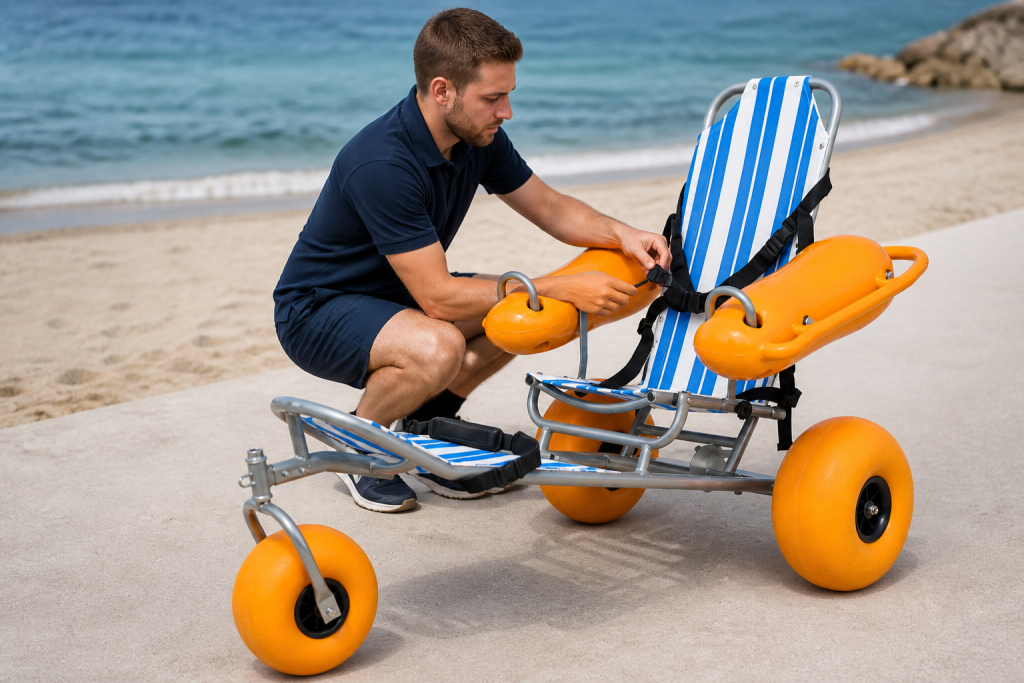
The next step is a site-specific route and service review. Define the intended activity, surfaces, water boundary, users, attendants, storage, care area, and stop rules before selecting equipment.
What’s Your Next Step Toward the Shoreline?
We can help organize product questions and model documents, so contact us today with your route, staffing, storage, and water-access requirements.
| Decision area | Question | Next step |
|---|---|---|
| Route | Where may the chair travel? | Site trial |
| Water | What conditions are approved? | Local review |
| People | Who uses and supports it? | Fit and staffing plan |
A documented plan gives every team the same operating boundary. Key Takeaway: Choose the chair only after the site, user, staff, and evidence align.
FAQ
Q1: Can I take a floating beach wheelchair into the ocean, not just a pool?
Only when the exact model instructions and local program approve that use. Check current water conditions, trained attendants, restraints, entry, exit, and stop rules.
Q2: How do I know if a floating beach wheelchair fits my body size?
Compare the model’s documented capacity and seating dimensions with the user’s needs. Use a controlled fitting and qualified guidance when personal support requires it.
Q3: What’s the best way to care for the chair after saltwater use?
Follow the exact model instructions for rinsing, drying, inspection, reporting, and storage. Hold the chair when damage, missing parts, or uncertain condition appears.
Q4: Can I rent one at a resort instead of buying my own?
Some destinations offer loan or rental programs. Contact the site directly and confirm the model, route, availability, attendant policy, water boundary, and reservation method.
Q5: How do I keep the balloon wheels properly inflated?
Use the pressure and service method stated for the exact wheel. Do not rely on a generic pressure figure or visual guess.