Disabled adults can experience seamless water recreation and sand travel by utilizing a high-quality floating beach wheelchair designed specifically to conquer coastal environments. Unfortunately, traditional daily wheelchairs immediately sink, stall, and become completely immobilized in soft coastal sand. This physical barrier does more than limit movement; it socially isolates individuals, forcing them to watch loved ones enjoy the water from afar, transforming a potential day of joy into a painful reminder of physical exclusion. Fortunately, our premium adaptive chairs revolutionize outdoor recreation by combining high-flotation balloon tires with buoyant frame components, allowing users to seamlessly cross deep dunes and safely transition directly into ocean waves or lake waters.
Why choose a floating beach wheelchair for sand travel?
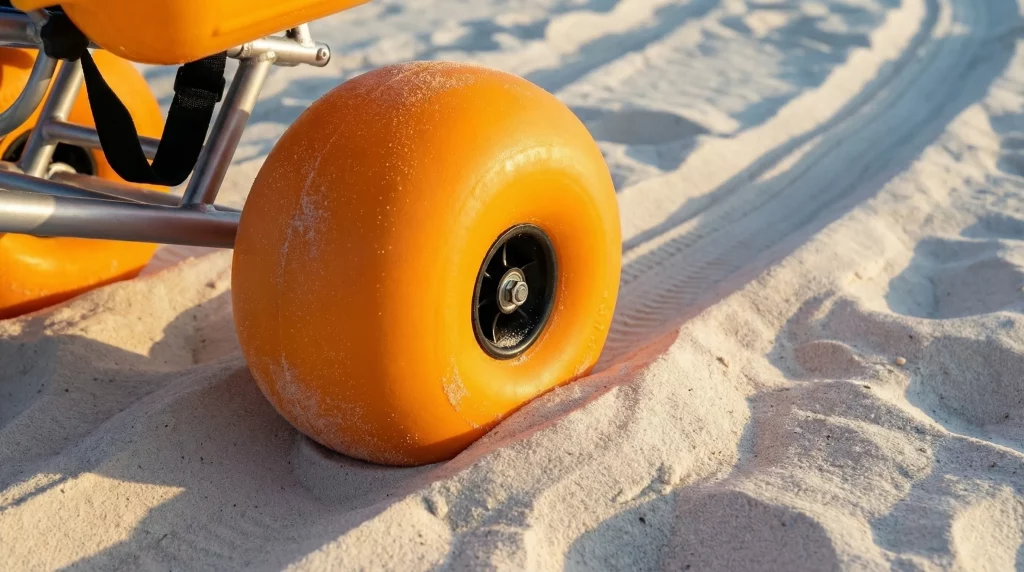
You should choose a floating beach wheelchair for sand travel because standard wheels are physically unable to roll over soft coastal dunes without getting stuck. Traditional narrow tires act like blades that cut directly into loose ground, which causes extreme physical strain for your caregiver. This adaptive off-road solution distributes your weight over a much larger surface area so you can glide across loose sand effortlessly.
Overcoming the friction of loose dunes
Think about it: standard high-pressure tires exert concentrated downward force on a tiny contact patch. This pressure causes the wheels to sink instantly, creating a physical barrier that ruins your day. When you switch to balloon-tire geometry, this sinking resistance disappears completely.
- Spreads ground pressure over a wide footprint
- Prevents wheels from digging deep ruts
- Conforms smoothly to pebbles and shells
Protecting caregivers from physical exhaustion
Here is the truth: pushing a standard wheelchair through dry sand is an exhausting task that often causes back injuries. The advanced ergonomics of a specialized beach chair dramatically reduce the pushing force required to guide you. This makes outdoor travel a relaxed and joyful experience for everyone involved.
Key Takeaway: Choosing a chair with specialized balloon tires guarantees that you can cross soft sand safely and easily without worrying about getting stuck or injuring your helper.
| Tire Metric | Standard Tires | Low-Pressure Balloon Tires |
|---|---|---|
| Ground Pressure | High (sinks in sand) | Ultra-low (floats on surface) |
| Push Force Required | Extreme (often stalls) | Low to moderate (easy to guide) |
We recommend choosing wheels with a minimum diameter of 19 inches to reduce the required pushing force by up to 50% on steep dunes.
How does a floating beach wheelchair improve water access?
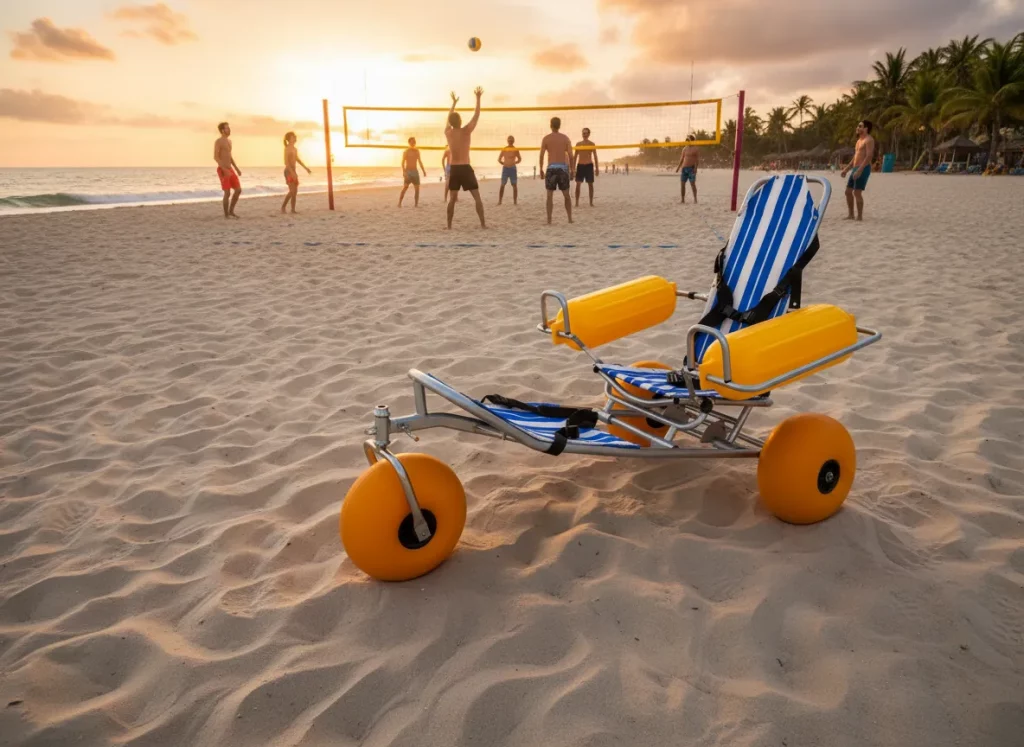
A floating beach wheelchair improves water access by combining specialized air-filled wheels with highly buoyant armrests to transition seamlessly from dry sand into the sea. By utilizing this unique combination, a floating beach wheelchair transforms the shoreline from a barrier into a welcoming gateway. Caregivers can gently guide the occupant directly into the waves without any heavy lifting or transfers.
The science of engineered buoyancy
You might be wondering: how do these materials support your weight in dynamic waves? High-density, closed-cell polyethylene foam is integrated directly into the armrests to provide lateral stability. At the same time, the large air-filled tires provide upward draft from the bottom to keep the lower frame suspended.
- Closed-cell foam prevents water absorption
- Air-filled tires create upward draft
- Rustproof components keep the base stable
Managing the sand-to-water transition safely
Think about it: the shoreline boundary is where wet, hard sand meets active waves, creating a sudden shift in surface resistance. As you push the chair into waist-deep water, the ocean begins to take the weight off the wheels. This transition must be managed slowly to ensure your balance is maintained.
Key Takeaway: True water accessibility requires a delicate balance of sand-travel capability and engineered buoyancy, allowing a seamless, low-effort transition from land to water.
| Component | Material Type | Buoyancy Function |
|---|---|---|
| Floating Armrests | Closed-cell foam | Provides lateral stability and prevents sideways tipping |
| Air-Filled Tires | Heavy-duty polyurethane | Creates upward draft and keeps the lower frame suspended |
Always check that the buoyancy capacity exceeds the user’s weight by at least 20% to account for dynamic wave action.
What safety features does a floating beach wheelchair need?
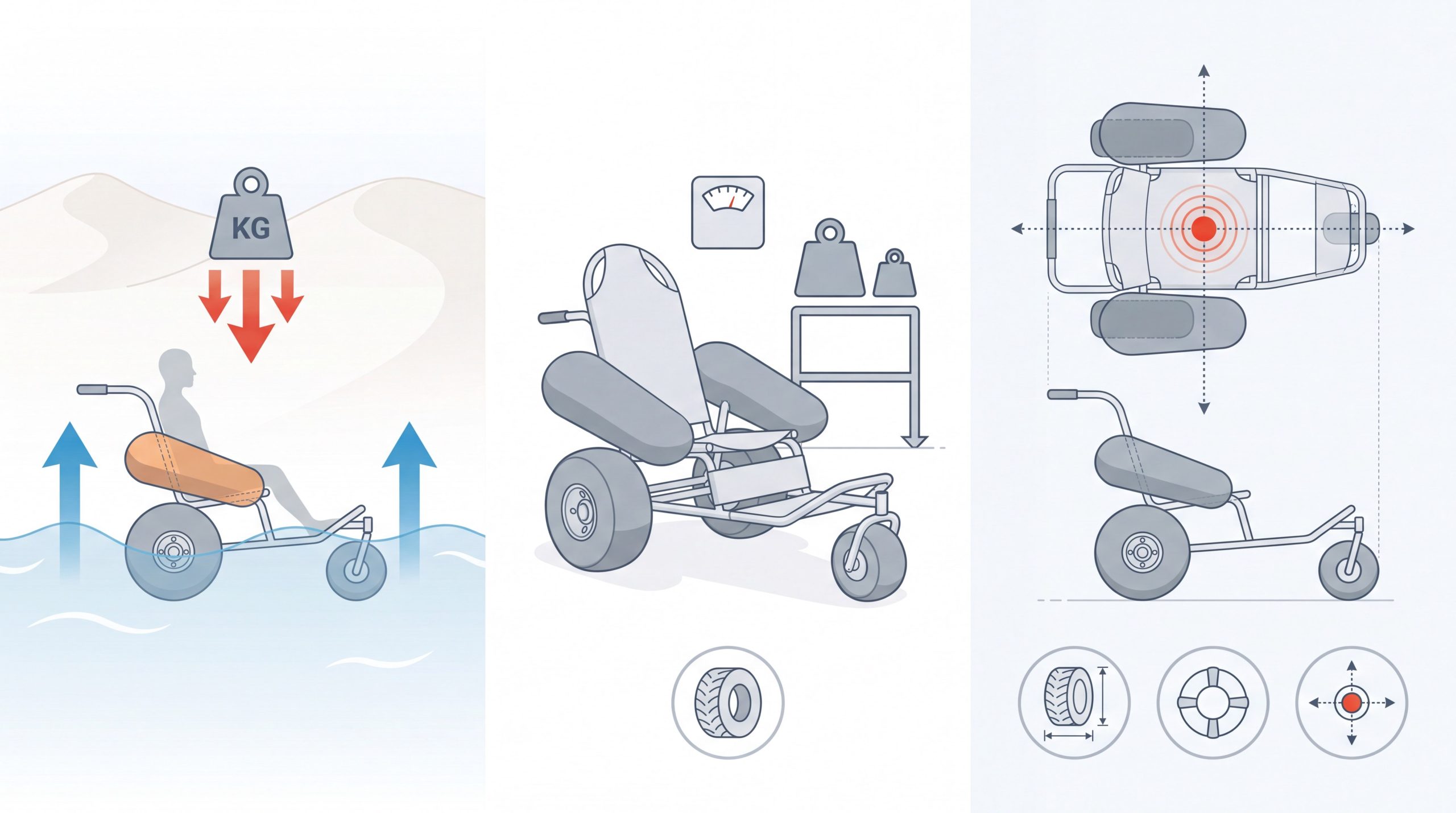
A floating beach wheelchair needs specialized safety features including quick-release harnesses, a wide-track wheelbase, and high-visibility markers to ensure absolute user protection in marine environments. When you take this adaptive vehicle out into the elements, safety must always be your top priority. Standard pelvic straps are completely inadequate for aquatic environments where quick egress might be necessary.
Harnesses, safety straps, and positioning supports
Think about it: standard pelvic straps can easily jam when clogged with fine sand grains or salt crust. Oversized, non-corrosive quick-release harnesses are necessary to secure your body while remaining simple to open in an emergency. Deep-seat contours and lateral supports also help maintain your posture over rugged sand slopes.
- Nylon straps resist saltwater rot
- Chest belts stabilize individuals with low trunk control
- Quick-release buckles open in under two seconds
Critical stability testing for open-water safety
Here is the truth: a wheelchair’s track width is the single most important factor determining its resistance to tipping. Manufacturers conduct rigorous tilt-table tests to establish safe operational limits. A wide base of support ensures that waves up to a reasonable height will not capsize you.
Key Takeaway: Water safety in adaptive recreation relies on specialized quick-release restraints, wide-track bases, and high-level postural supports designed specifically for aquatic environments.
| Safety Feature | Minimum Standard | Target Risk Mitigated |
|---|---|---|
| Harness System | 3-point quick-release | Keeps user securely positioned; releases instantly |
| Wheel Track Width | Minimum 36 inches | Lowers center of gravity to prevent lateral tipping |
Never use standard hook-and-loop straps as primary water restraints, as salt and sand quickly degrade their adhesive grip.
Who can benefit from using a floating beach wheelchair?
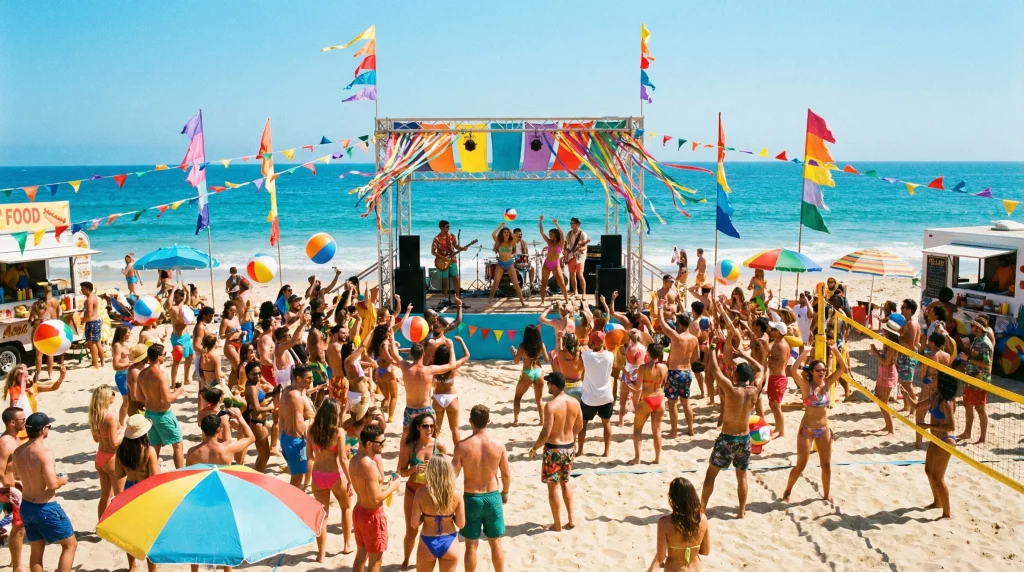
A floating beach wheelchair benefits a wide range of individuals, including adults with spinal cord injuries, muscle disorders, sensory processing issues, and elderly family members with limited mobility. For many families, using this equipment is the key to restoring long-lost memories of shared beach days. It allows individuals who rely on heavy daily chairs to experience the pure, weightless freedom of open-water flotation.
Adaptive recreation for adults with mobility limits
Think about it: recovering from an injury or living with a neurological condition should not keep you locked away from natural spaces. The natural buoyancy of water provides a soothing, zero-gravity environment that relieves muscle tension and joint compression. It offers a unique physical relief that land-based therapy cannot replicate.
- Restores vertical trunk support for low core strength
- Reduces painful joint pressure points
- Enables sensory immersion without physical discomfort
Benefits for caregivers and beach safety personnel
Here is the truth: pushing a standard wheelchair through dry sand is an exhausting task that often causes severe back injuries. The advanced ergonomics of an adaptive chair dramatically reduce the pushing force required by a single person. This preserves energy and keeps everyone focused on the joy of the outing.
Key Takeaway: A floating beach wheelchair is a collaborative tool; it restores independence and dignity to the user while significantly reducing physical strain for caregivers.
| User Group | Core Challenge Solved | Key Feature Leveraged |
|---|---|---|
| Paralyzed Adults | Sinking in sand; water isolation | Supportive seat and wide base |
| Elderly Seniors | Severe joint pain on uneven ground | Shock-absorbing balloon tires |
When selecting a model for diverse users, prioritize adjustable footrests and backrests to comfortably fit different heights.
Where can you rent a floating beach wheelchair this summer?
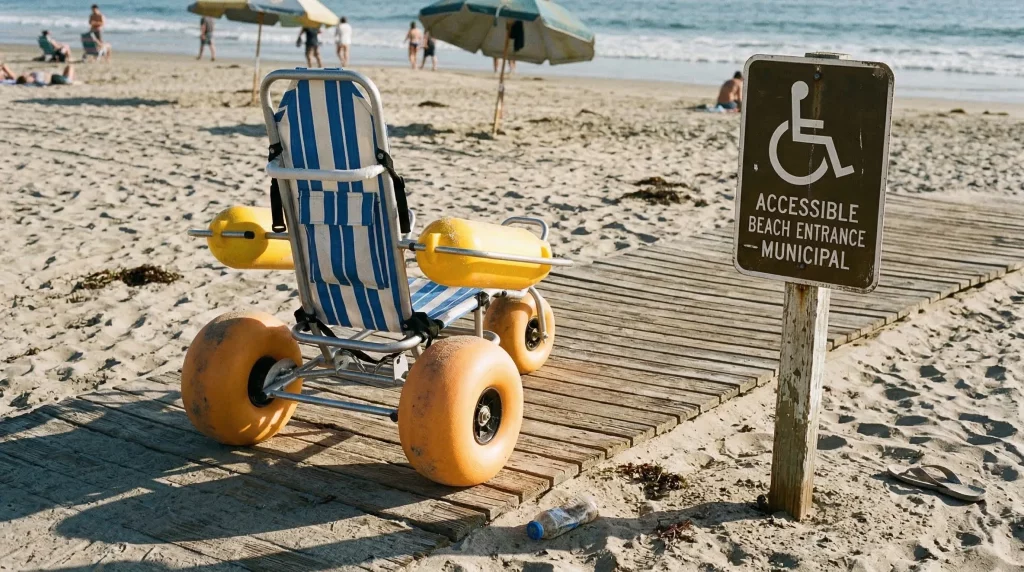
You can rent a floating beach wheelchair at a rapidly expanding network of inclusive municipal beaches, state and national parks, and private adaptive rental outfitters globally. Inclusive tourism has become a major focus for coastal cities, leading to the creation of free beach-access programs. When you plan a trip, searching for public beach patrols that offer these chairs can save you thousands of dollars.
Public beaches offering adaptive gear rentals
Think about it: many state-run parks and municipal beaches maintain dedicated fleets of adaptive chairs for public use. Because these free chairs are in incredibly high demand, you must understand the rules before you show up. Confirming reservation policies and deposit requirements will ensure a seamless arrival.
- Verify online portal pre-booking options
- Check maximum rental duration limits
- Inquire about required photo ID or deposits
Private adaptive outfitters with door-to-door delivery
Here is the truth: if you want to avoid the strict time limits of public programs, private rental companies are an excellent alternative. These specialized outfitters rent commercial-grade equipment on a daily or weekly basis. They can deliver a premium, fully sanitized chair directly to your vacation rental.
Key Takeaway: Free public programs offer a budget-friendly way to enjoy the shore, while private rentals provide the ultimate convenience and flexibility for extended coastal vacations.
| Program Type | Typical Cost | Booking Method | Key Advantage |
|---|---|---|---|
| Public Patrol | Free (with ID) | Same-day walk-up | High affordability for short visits |
| Private Outfitter | 50−150 per day | Advanced reservation | Door-to-door delivery and longer rentals |
Always contact the beach patrol or park office 48 hours prior to your visit to confirm the physical location of the chair pickup.
Can you transport a floating beach wheelchair in a car?
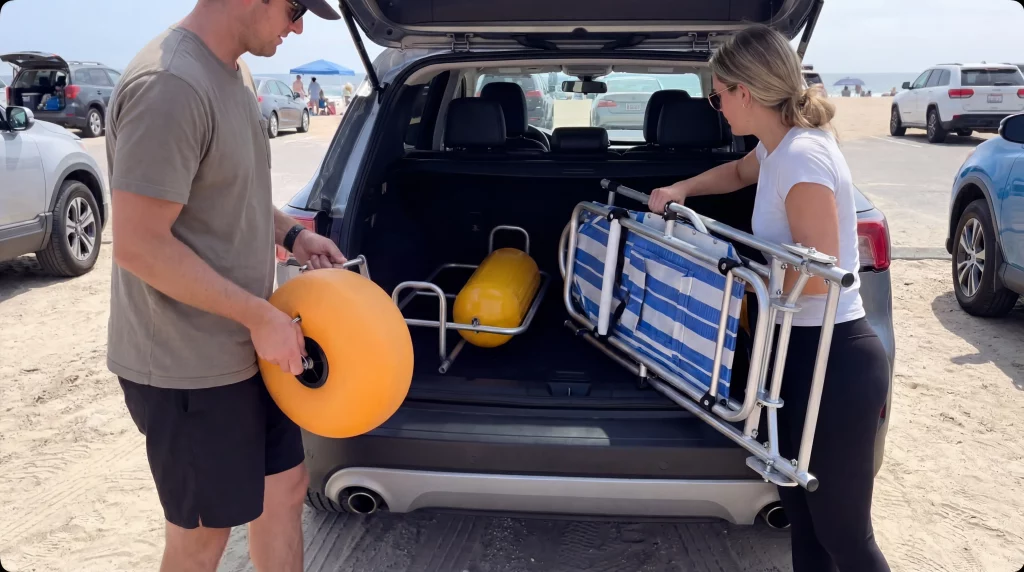
Yes, you can transport a floating beach wheelchair in a standard passenger car by utilizing quick-release wheel axles and modular folding frame designs. This means you do not need to buy a massive utility van just to take your equipment to the shore. Most modern designs are built specifically with the traveling family in mind, allowing the entire structure to break down without any tools.
Quick-release wheels and folding frame designs
Think about it: tool-free disassembly is a non-negotiable feature for active beachgoers. Quick-release wheels pop off the stainless steel axles with a simple click, reducing weight and bulk. Folding cross-braces allow the frame width to compress by up to sixty percent, fitting easily in your trunk.
- No specialized wrenches or screwdrivers needed
- Quick-release axles pop off in seconds
- Folding cross-braces maximize cargo space
Weight considerations for easy trunk loading
Here is the truth: a heavy, bulky frame is highly frustrating to lift under a hot sun. High-strength, lightweight aluminum frames offer excellent structural support without adding unnecessary physical bulk. By separating the wheels and armrests, caregivers can distribute the weight to prevent back strain.
Key Takeaway: Portability is a crucial factor in choosing a personal beach wheelchair; look for tool-free disassembly and quick-release wheels to ensure easy transport in standard passenger vehicles.
| Vehicle Class | Disassembly Level | Loading Area | Loading Time |
|---|---|---|---|
| Compact Sedan | Complete | Trunk or backseat | 5 – 8 minutes |
| Mid-Sized SUV | Partial | Rear cargo area | 3 – 5 minutes |
Before purchasing, measure your vehicle’s trunk opening to confirm that the largest non-folding frame section has at least 2 inches of clearance.
How do you clean a floating beach wheelchair after use?
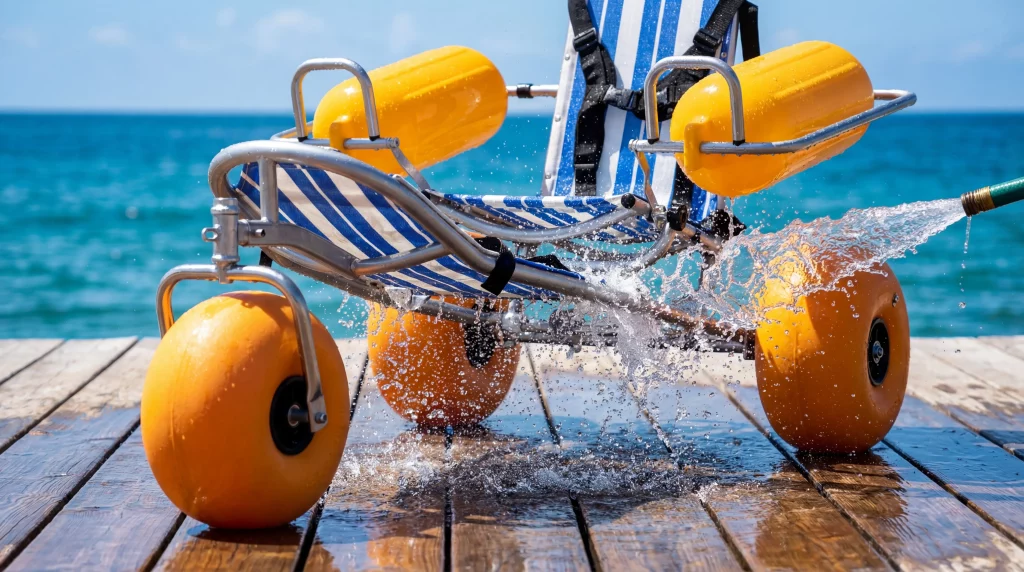
You clean a floating beach wheelchair after use by thoroughly flushing all salt, sand, and organic debris with low-pressure fresh water and letting the fabric air-dry in a shaded area. Salt water is highly corrosive, and fine beach sand can quickly grind down moving joints if left unattended. This makes immediate post-beach cleaning an absolute necessity to protect your investment.
Rinsing saltwater and sand from mechanical joints
Think about it: a quick five-minute rinse immediately after your trip prevents costly structural damage. When saltwater evaporates, it leaves behind microscopic crystals that accelerate rust and corrosion. You must pay special attention to the axle sleeves, quick-release pins, and brake mechanisms during the wash.
- Avoid using high-pressure power washers
- Flush sand out of quick-release pin sockets
- Rinse harness buckles to prevent jamming
Mold prevention for buoyant armrests and fabrics
Here is the truth: leaving a wet chair folded in a dark trunk will quickly lead to mildew growth and unpleasant odors. You should always allow the seat fabric and foam floats to air-dry completely in a shaded, well-ventilated area before storing the chair. Using mild, marine-safe soaps will preserve the fabric without degrading its UV protection.
Key Takeaway: Rigorous, post-use freshwater maintenance is the single most important factor in extending the lifespan and ensuring the ongoing mechanical safety of an adaptive beach chair.
| Cleaning Phase | Target Area | Tool/Agent | Objective |
|---|---|---|---|
| Freshwater Flush | Frame, axles, brakes | Low-pressure hose | Wash away salt and sand |
| Dry & Store | Seating mesh, armrests | Shaded breezy spot | Prevent mold and mildew |
Never use petroleum-based lubricants on wheel bearings, as they attract fine sand particles and create an abrasive paste that destroys axles.
What is the cost of a floating beach wheelchair to buy?
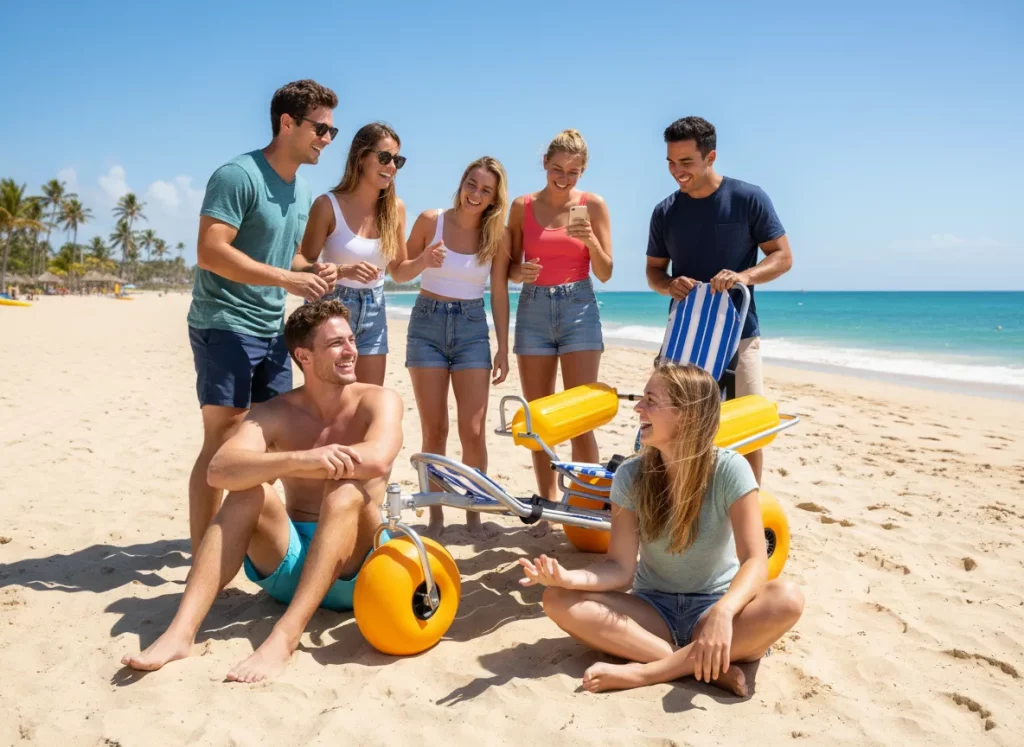
The cost to buy a floating beach wheelchair ranges from
1,500toover7,000, depending on whether you choose an entry-level recreational model or a heavy-duty commercial unit. Investing in your own adaptive equipment represents a significant financial commitment, but it opens up a lifetime of unlimited outdoor adventures. The primary price drivers are the highly specialized low-pressure balloon tires and the marine-grade, rustproof frame materials.
Price ranges for entry-level vs. commercial models
Think about it: commercial-grade chairs must support a wider variety of user weights and survive constant daily use. Personal models are optimized for light weight and quick transport, keeping material costs slightly lower. Choosing a chair that aligns with your expected frequency of use is the best way to optimize your investment.
- Personal entry-level models: 1,500−2,500
- Premium personal models: 2,500−4,500
- Commercial resort models: 4,500−7,000+
Finding funding, grants, and insurance coverage
Here is the truth: you do not always have to pay for an adaptive chair entirely out of pocket. There are numerous non-profit foundations, adaptive sports grants, and state-funded programs designed to help families afford this equipment. Working with a physical therapist to write a Letter of Medical Necessity can help you secure insurance or Medicaid funding.
Key Takeaway: While the upfront cost of a high-quality floating beach wheelchair is substantial, a variety of community grants, specialized non-profits, and insurance avenues can help offset the expense.
| Category | Price Range | Best Suited For | Common Funding |
|---|---|---|---|
| Personal Use | 1,500−4,500 | Occasional family use | Out-of-pocket, charities, Medicaid |
| Commercial Use | 4,500−7,000+ | Public beach, resort use | Municipal budgets, B2B capital |
When applying for grants or insurance, refer to the device as an “Adaptive Aquatic Mobility Device” to significantly increase approval rates.
Which accessories upgrade your floating beach wheelchair?
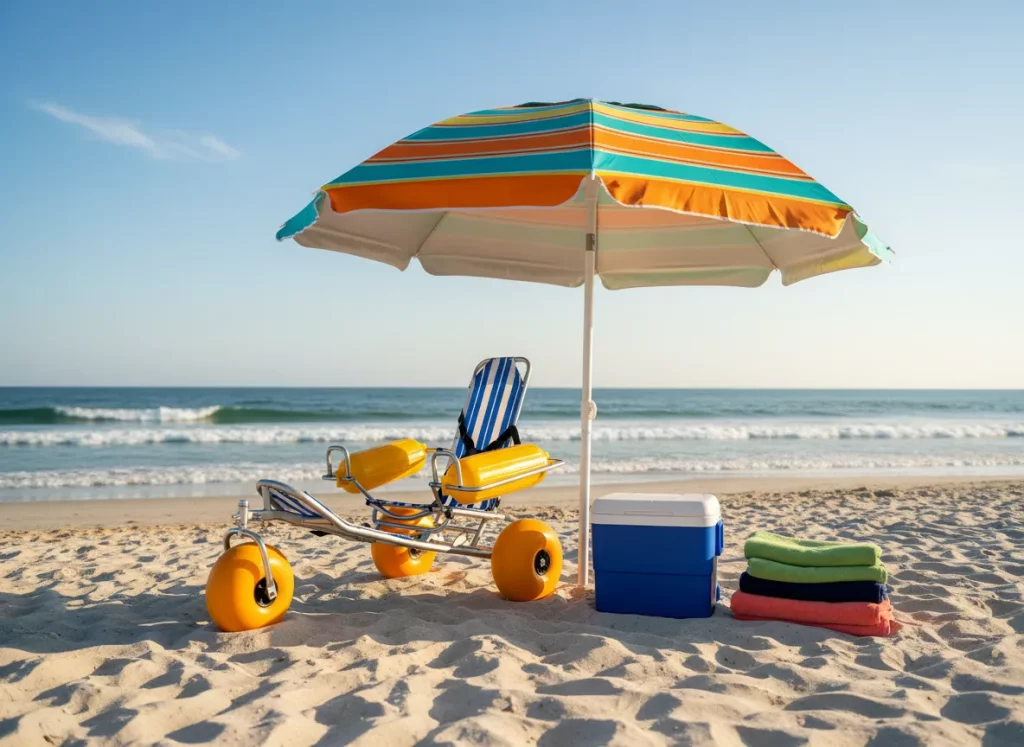
You can upgrade your floating beach wheelchair with high-value accessories including UPF 50+ canopy shields, marine-grade mesh storage bags, and specialized clinical positioning supports. Adding these functional upgrades ensures that every trip to the water is as comfortable and safe as possible. For individuals with neurological conditions, temperature regulation can be a major challenge in the hot sun.
Canopy attachments for sun and UV ray protection
Think about it: spending hours under the direct sun can lead to dehydration or painful sunburns. A clamp-on canopy with UPF 50+ rating provides a reliable personal shade zone that protects your skin from harmful UV rays. You must select a flexible, wind-resistant frame that won’t buckle in strong coastal breezes.
- UPF 50+ rated fabrics block 98% of UV rays
- Wind-resistant structures handle ocean gusts
- Multi-position clamps adjust to shifting sun angles
All-terrain storage bags and beverage holders
Here is the truth: keeping your hands free to push the chair safely is critical during sandy transitions. Specialized marine-grade mesh storage bags mount directly to the backrest, allowing sand and water to drain away instantly. You can also add heavy-duty cup holders and specialized medical brackets to secure oxygen tanks or IV poles.
Key Takeaway: Customizing a floating beach wheelchair with the right accessories directly enhances user safety, clinical comfort, and overall enjoyment during extended outdoor stays.
| Accessory | Primary Material | Primary Benefit |
|---|---|---|
| UPF 50+ Canopy | UV-resistant canvas | Sun protection and shade |
| Mesh Cargo Bag | Vinyl-coated polyester | Sand-draining personal storage |
Select accessories that feature tool-free, clamp-on designs to allow quick removal during vehicle transport or seasonal storage.
Are you ready to buy a floating beach wheelchair?
Yes, you are ready to buy a floating beach wheelchair once you understand your physical environment, transport limitations, and the specific therapeutic needs of the user. Navigating new adaptive equipment can sometimes feel overwhelming when you are planning your coastal getaway. Having clear, concise guidance ensures that you stay safe and comfortable during your outdoor excursions.
Frequently asked questions about beach access
Think about it: planning your beach trip is much easier when you have clear, expert answers to your questions. Let’s address the most common inquiries regarding transport, maintenance, and safety boundaries.
- Can I use a floating beach wheelchair without a caregiver’s help? No, you cannot. Because standard wheels are replaced with wide balloon tires, it is virtually impossible to self-propel. A dedicated, physically capable caregiver must always be present to push the chair on land and guide it safely while floating in water.
- What’s the best way to maintain the wheel bearings on these chairs? Thorough rinsing with fresh water is the absolute best preventative maintenance. After every trip to the beach, thoroughly flush the wheel hubs with clean, fresh water to wash away salt crust and sand grit. Never apply standard greasy lubricants, which attract sand; use a light, dry-film silicone spray instead.
- How do I know if a floating beach wheelchair will fit in my vehicle? Yes, it will fit easily if you select a modular design. Most high-quality models feature quick-release axles and folding frames, allowing them to be disassembled in under two minutes to fit inside a standard car trunk or SUV cargo area.
- Can I take a floating beach wheelchair into deep swimming areas? No, you should never do this. These chairs are designed exclusively for shallow, calm shoreline waters—typically waist-deep for the caregiver—where the user’s feet can safely remain elevated. They are not personal flotation devices or boats, and operating them in rough surf or strong currents is extremely dangerous.
- What’s the best tire pressure for soft sand versus hard packed soil? Extremely low pressure is best for soft sand. For soft, powdery sand, keep tire pressure very low (between 2 to 4 PSI) to maximize the tire’s footprint and float over the sand. On hard packed soil or boardwalks, inflate them slightly higher (up to 5 or 6 PSI) to reduce rolling resistance.
Contact us today to begin your coastal adventure
Here is the truth: the therapeutic sound of ocean waves and the warmth of coastal sun should be a universal experience for everyone. By resolving the physical barriers of soft sand and deep water, our specialized adaptive equipment ensures that no one is left watching from the sidelines. We encourage you to contact us today so we can help you find the perfect high-quality amphibious mobility solution.
We have successfully solved the dual challenges of sand travel and water access, enabling you to experience seamless shoreline transitions with complete peace of mind. We can provide you with industry-leading adaptive chairs, customized accessories, and expert guidance to make your next vacation a resounding success. Our ultimate vision is a world with completely barrier-free shorelines, where every single person can move seamlessly from the sand straight into the sea.
Key Takeaway: Reclaiming your outdoor freedom is just a click away; with the right adaptive technology, the beauty of the coast belongs to everyone.