
Replacing a ramp or buying a chair in isolation can leave a guest stranded at the next surface change. Before a contractor closes the hotel’s usual beach entrance, establish which outings can still be offered during that phase of work. Trace the route from an occupied guest floor to the equipment meeting point, the usable beach destination and the way back. Identify who can stop bookings if construction changes that route during the day.
Open the temporary route before closing the usual one
Suppose the contractor needs the terrace gate for deliveries while the permanent ramp is rebuilt. The proposed detour runs through the garden to a different gate. Walk it with hotel operations at breakfast service and again at the intended return time. Bring the actual equipment to the narrowest openings. Check gate swings, loose surfaces, separation from delivery traffic and where a guest and companion could wait without entering the work zone.
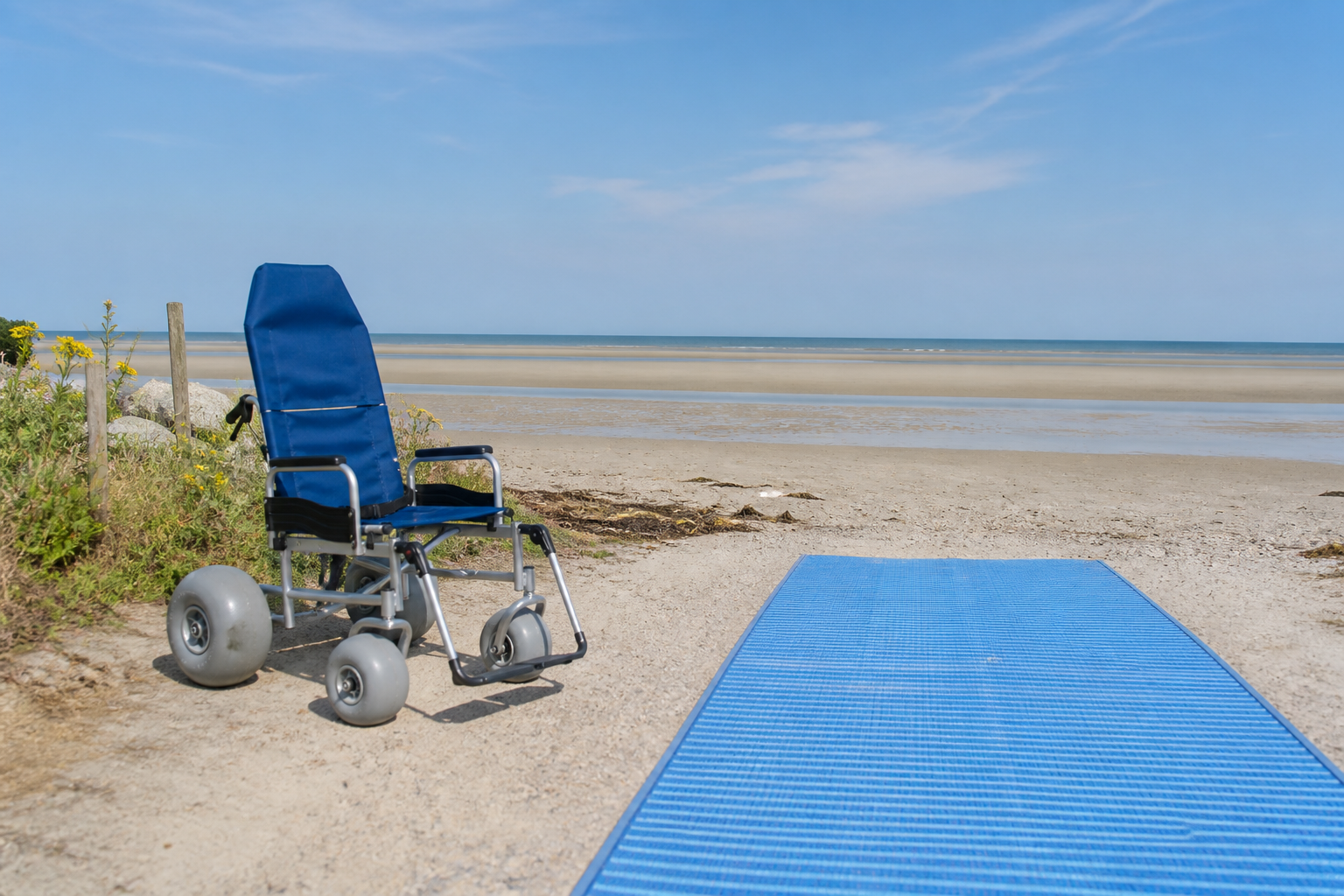
A hotel planning to lend the four-wheel AY-ST-V2.0 high-back land wheelchair needs to account for its listed 110 cm overall width and room to turn in the configured position. The manufacturer’s 45 cm seat width answers a different question. Try the return with the leg support and backrest in the intended arrangement. An empty check identifies obstructions. Individual suitability and assistance remain separate guest decisions. AY-ST-V2.0 manufacturer manual
If the garden route cannot be kept clear while materials arrive, choose a staffed service window, offer a checked terrace destination or suspend the affected beach trip. Tell guests who already hold bookings. Give the contractor a contact who can authorize changes, and reception the name of the person who can verify current access.
Release each work phase against an actual trip
| Construction stage | Evidence the hotel needs from the team |
|---|---|
| Before hoarding moves | Walk the detour in both directions, identify a safe meeting point, confirm when the gates are staffed and tell booked guests where to go. |
| While permanent surfaces are unfinished | Maintain an identified boundary at the last usable point. Inspect the temporary junction after a delivery or a change in fencing. |
| When the contractor offers the route back | Compare the built ramp, gate, landings and mat connection with approved drawings. Resolve defects that affect the outward trip or return. |
| Before taking a new beach booking | Confirm the equipment base is accessible again, the correct chair is ready, the lending team is on duty and the usual return point works. |
Accept the junction and the service separately
An installer may complete the ramp while the downstream mat still ends above eroded sand. Inspect the junction from both directions and record the result against its location and the approved design. If the permanent works reach a usable viewing terrace, tell guests they can reach that terrace and describe any remaining closure beyond it. The design coordination guide identifies which drawings and disciplines meet at this edge.
Give operations the approved drawing revision, measured and photographed changes, maintenance responsibilities and any limitations still in force. The authorized hotel lead can then update the booking page, front desk and signs together. Before removing the temporary route, confirm that guests already out can return and that no personal mobility equipment is waiting at the old handoff point.