
A guest comparing hotels may need one answer before they can book a room: can they reach the beach seating in their own wheelchair and get back to the lobby? Another guest may be looking for a supported water outing. A hotel accessible beach guide should explain the route, available equipment and assistance process. Give each guest enough detail to decide whether the property is worth contacting before they commit to the stay.
Describe the trip a guest can actually picture
Start at a named entrance visible on the property map. Describe the surface and any doors, gates, changes of level, turns or shared service crossings on the way to the beach. Say where the firm path or mat starts and where it ends. Describe the surface beyond it, the destination someone can reach on the mat and space to remain with companions or return. If the advertised restroom or shaded seating takes a different route, say how to reach it.
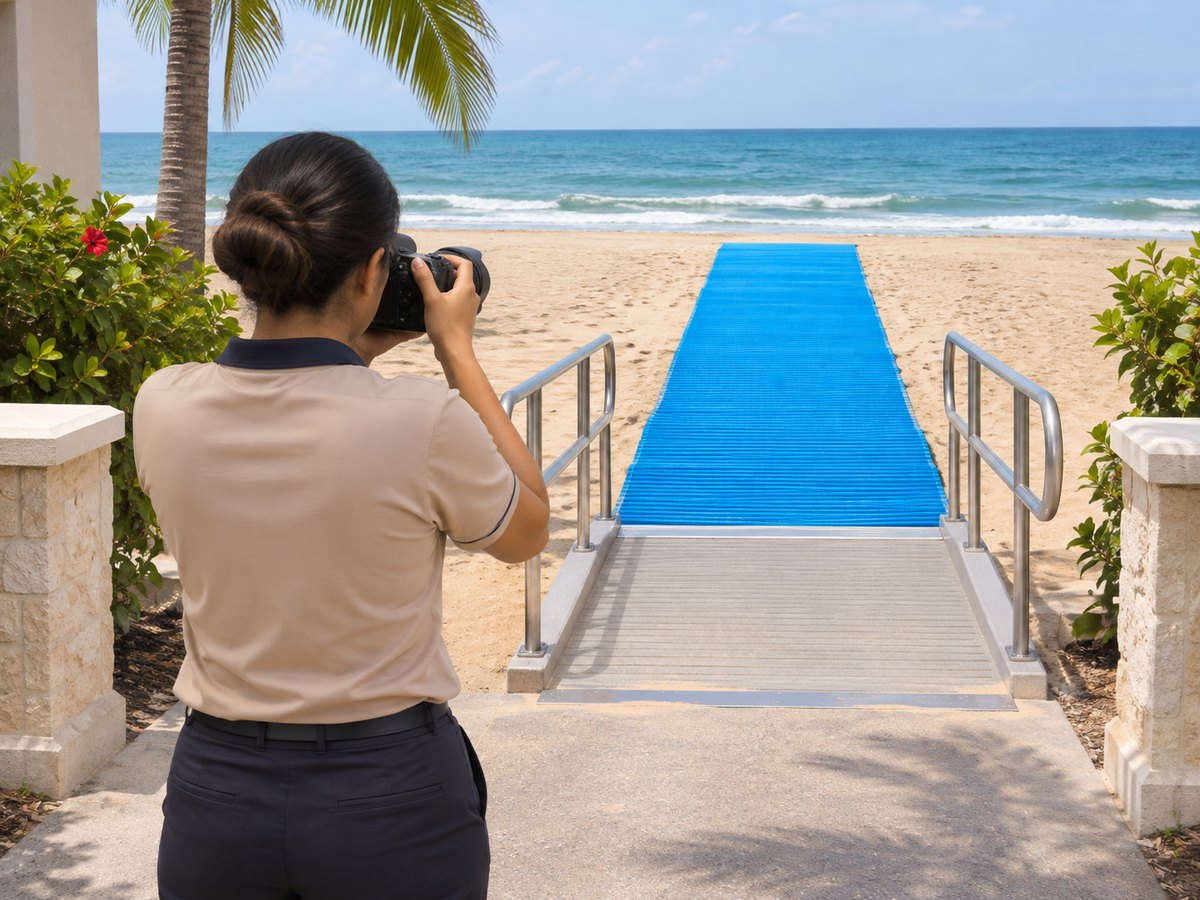
Use dated images from the property when illustrating actual access. Useful positions include the view from the lobby exit, the fixed-path-to-mat join and the return direction from the far end. A stock illustration can explain what a mat looks like, but it cannot show the condition of the hotel’s current approach. Provide a text description for guests who cannot use the photographs or map. Visitor information for a changed mat route
Give equipment and assistance their own entries
| Guest question | What the hotel can publish after checking |
|---|---|
| Can I stay in my own device? | Describe the verified land route and endpoint, remaining loose ground and any unresolved section. |
| Can I borrow a land chair? | Identify the actual model or supplier, collection and return point, staffed hours and how a request becomes a confirmed booking. |
| Is there a supported water activity? | Name the operator, contact, permitted operating conditions and assistance offered. State which decision the team makes on the day. |
| What if I want to discuss a support need privately? | Give a named role, contact channel, response arrangements and an alternative way to communicate. |
If the hotel has an AY-ST-V1.0, describe it as a floating wheelchair intended for supervised calm-water use only where trained staff have reliable footing and a supported return. Its manual identifies three inflatable wheels and floating armrests. Having the chair in storage does not establish that a water session runs each day. A high-back land chair or a mat reaching a viewing area must be described under its own service. AY-ST-V1.0 manual
Publish a specific offer and a way to check changes
An illustrative hotel description might read, “From the garden entrance, the boardwalk connects to a mat ending at the beach seating. Loose sand continues beyond the mat. Ask reception to check the route and seating for your travel dates. Beach wheelchair requests go to recreation, which confirms the model, collection time and available assistance.” Replace each place and responsibility with facts checked at the property. Where measurements or opening hours vary, give the date and scope of the last check.
Before publishing, have reservations answer a genuine guest enquiry using only the proposed page. If staff have to guess at the return gate, booking contact or water conditions, obtain the missing information or identify who can confirm it. Give the editor a duty contact who can report a temporary closure and a backup for weekends. Reception should be able to tell a guest what changed, which alternative has been checked and when to expect another update.