
The right beach wheelchair for Australian aged care providers is a stable, comfortable, high-back all-terrain chair, often paired with beach walkers, and used within the provider’s own outing, transfer and risk procedures. Picture a lifestyle coordinator planning a summer outing. Residents have talked about the beach for months, the bus is booked, but the standard wheelchairs stop at the promenade and half the group watches from the car park. Choosing a beach wheelchair for aged care Australia outings can actually use changes that day, and this guide covers chairs, walkers, planning, staffing, transport and care.
For procurement context, use beach wheelchairs for councils together with lightweight beach wheelchair Australia.
For broader destination-level context, consult the UN Tourism accessibility publications and guidelines. Apply local requirements and current product documents to the specific project.
We manufacture beach chairs, beach walkers and access mats and work with buyers who serve older people. We’ll keep to equipment and planning, and leave clinical decisions to your care team.
Why Use a Beach Wheelchair for Aged Care Australia Outings?
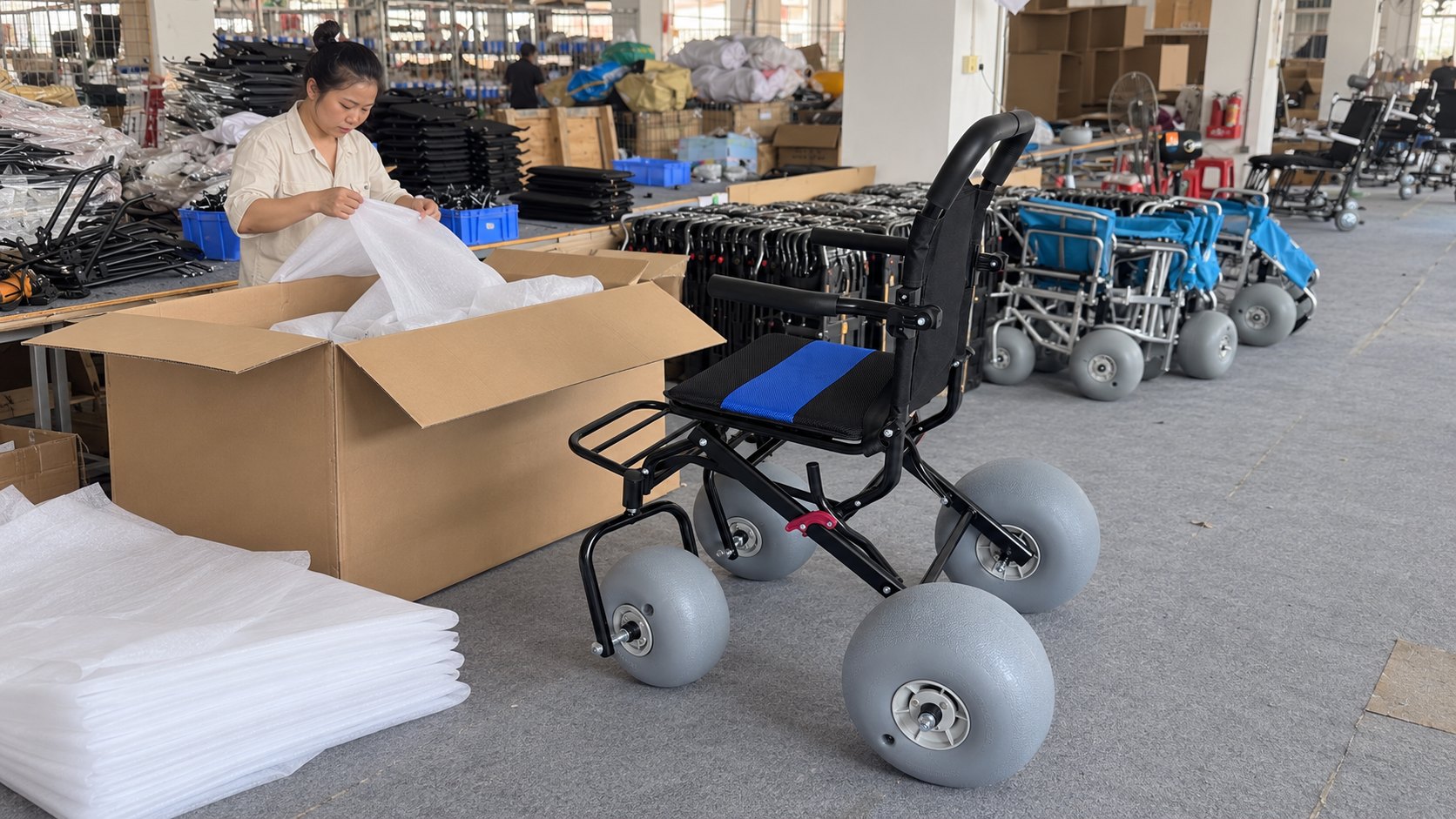
A beach wheelchair for aged care Australia outings lets residents with limited mobility reach the sand with family, staff and friends, rather than watching from the path. Beach outings can be a highlight of the year. The right chair makes them possible.
What do residents and families value?
Being part of the group and close to the water. Here’s the deal: a beach visit often means more to residents than staff expect.
- Time with family on the sand
- Fresh air and sea views
- Shared memories and photos
What do providers need from equipment?
Stability, comfort, easy cleaning and simple handling for staff. Equipment must fit within existing procedures.
| Need | Equipment response |
|---|---|
| Stability | Four balloon wheels |
| Comfort | High backrest |
| Hygiene | Rinse-friendly fabric |
| Staff ease | Simple brakes |
Good equipment turns a hopeful plan into a real outing.
Key Takeaway: Choose equipment that fits residents’ comfort and your staff procedures.
Which Beach Wheelchair for Aged Care Australia Model Suits Residents?
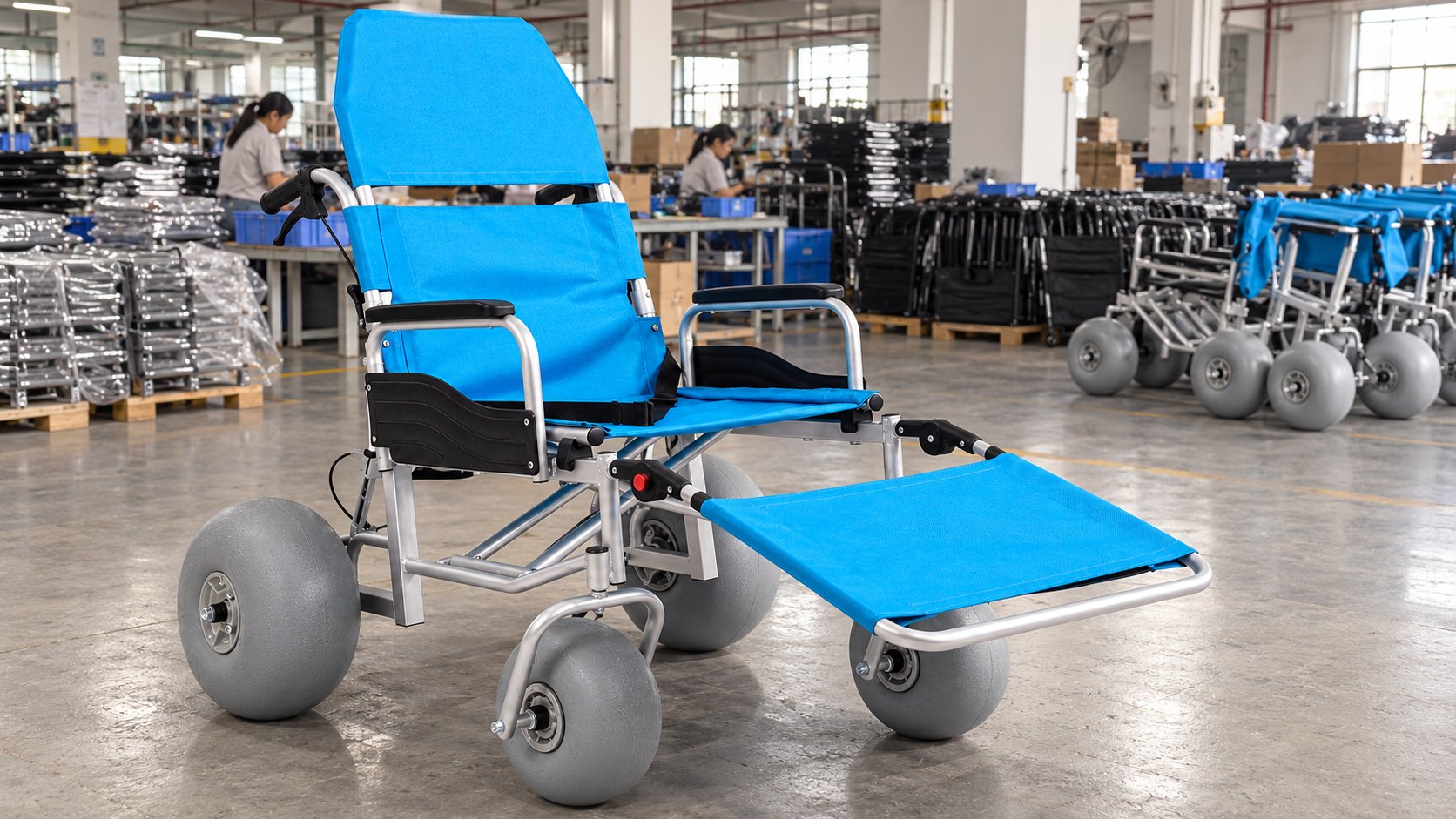
The beach wheelchair for aged care Australia model that suits most residents is a high-back all-terrain chair with an adjustable backrest, leg support and four balloon wheels. It offers comfort for longer visits. Your care team decides suitability per resident.
Why a high-back chair?
High backs support residents who tire easily or need more upper-body support. Think about it: comfort decides how long residents can enjoy the visit.
What does our high-back model offer?
Our high-back four-wheel chair includes an adjustable backrest, adjustable leg support and blue upholstery, with smaller front and larger rear balloon wheels.
- Adjustable backrest
- Adjustable leg support
- Four balloon wheels
| Feature | Benefit for residents |
|---|---|
| High backrest | Upper-body support |
| Leg support | Comfort on longer visits |
| Four wheels | Stable on sand |
| Fabric seat | Rinse and dry |
The right features make a long beach visit comfortable.
Key Takeaway: Start with a high-back all-terrain chair and let your care team confirm suitability.
Do Beach Walkers Help Beach Wheelchair for Aged Care Australia Plans?
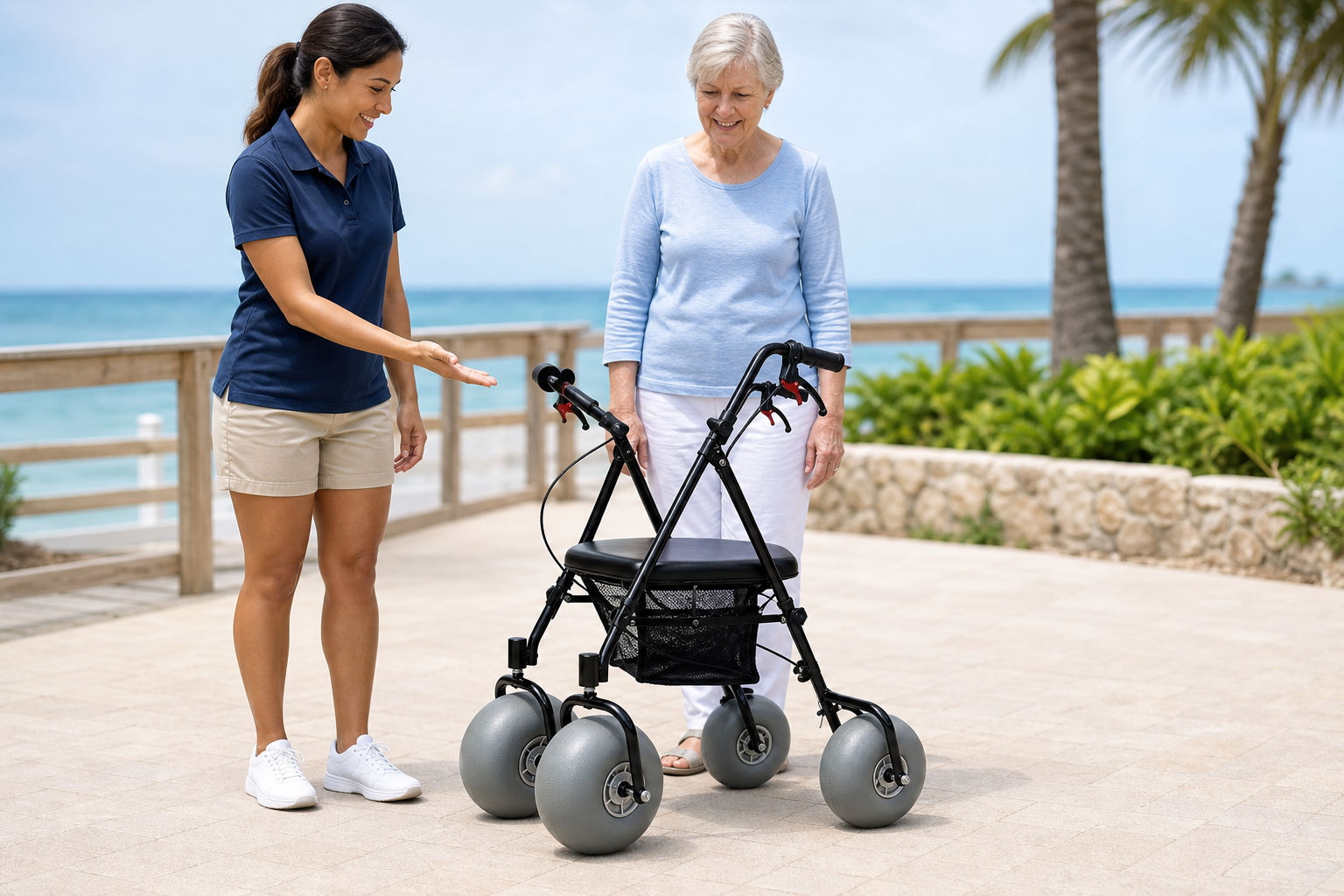
Yes, beach walkers help beach wheelchair for aged care Australia plans by supporting residents who can walk short distances but need stability on sand. They offer independence. Many outings use both chairs and walkers.
Who suits a beach walker?
Residents who walk with some support and want to stay on their feet. But here’s the kicker: walking on sand is much harder than on paths, so plan rest spots.
- Residents who walk with aids
- Short walks to the water’s edge
- Rest breaks on a built-in seat
What should you check in a walker?
Wide wheels, brakes, height adjustment and a seat. Your care team should confirm suitability.
| Walker feature | Benefit |
|---|---|
| Wide wheels | Sand travel |
| Brakes | Control |
| Seat | Rest |
| Height adjustment | Fit |
Walkers and chairs together cover more residents.
Key Takeaway: Add beach walkers for residents who can walk short distances with support.
How Do You Plan a Beach Wheelchair for Aged Care Australia Outing?
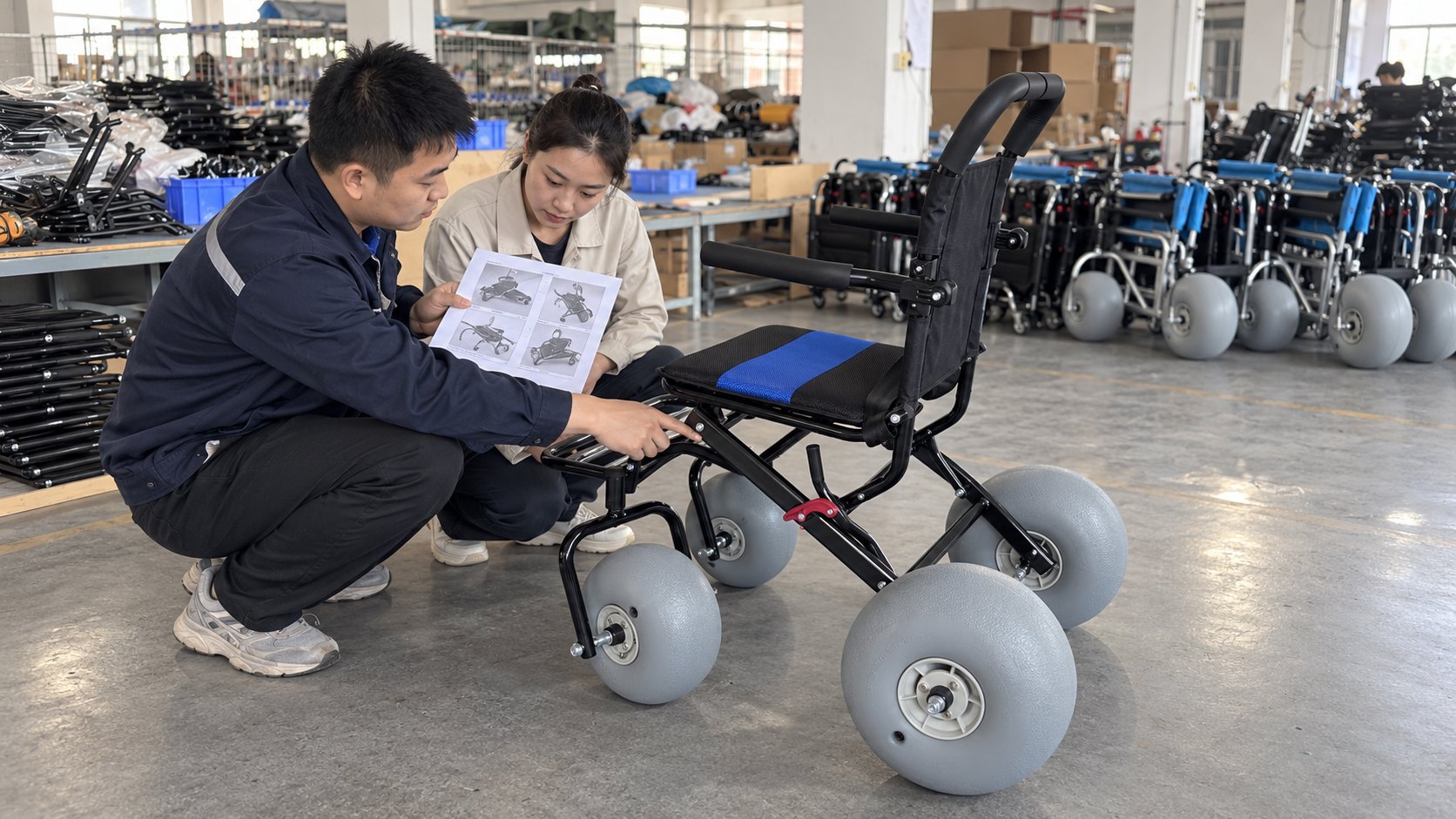
You plan a beach wheelchair for aged care Australia outing by choosing an accessible beach, checking matting and toilets, reviewing residents with your care team and preparing equipment and staff. Planning prevents stress on the day. Weather and heat matter.
What should you check about the beach?
Parking, matting, toilets, shade and hire options. Here’s why that matters: a beach without matting can stop the outing at the car park.
- Accessible parking and paths
- Matting to the sand
- Accessible toilets and shade
What should the plan include?
Resident assessments, staff roles, equipment list, weather checks and a return plan.
| Planning step | Owner |
|---|---|
| Site check | Lifestyle coordinator |
| Resident assessment | Care team |
| Equipment | Facilities |
| Staffing | Manager |
Thorough planning keeps the day relaxed and safe.
Key Takeaway: Check the beach, assess residents and plan staffing before booking the bus.
Who Staffs a Beach Wheelchair for Aged Care Australia Outing?
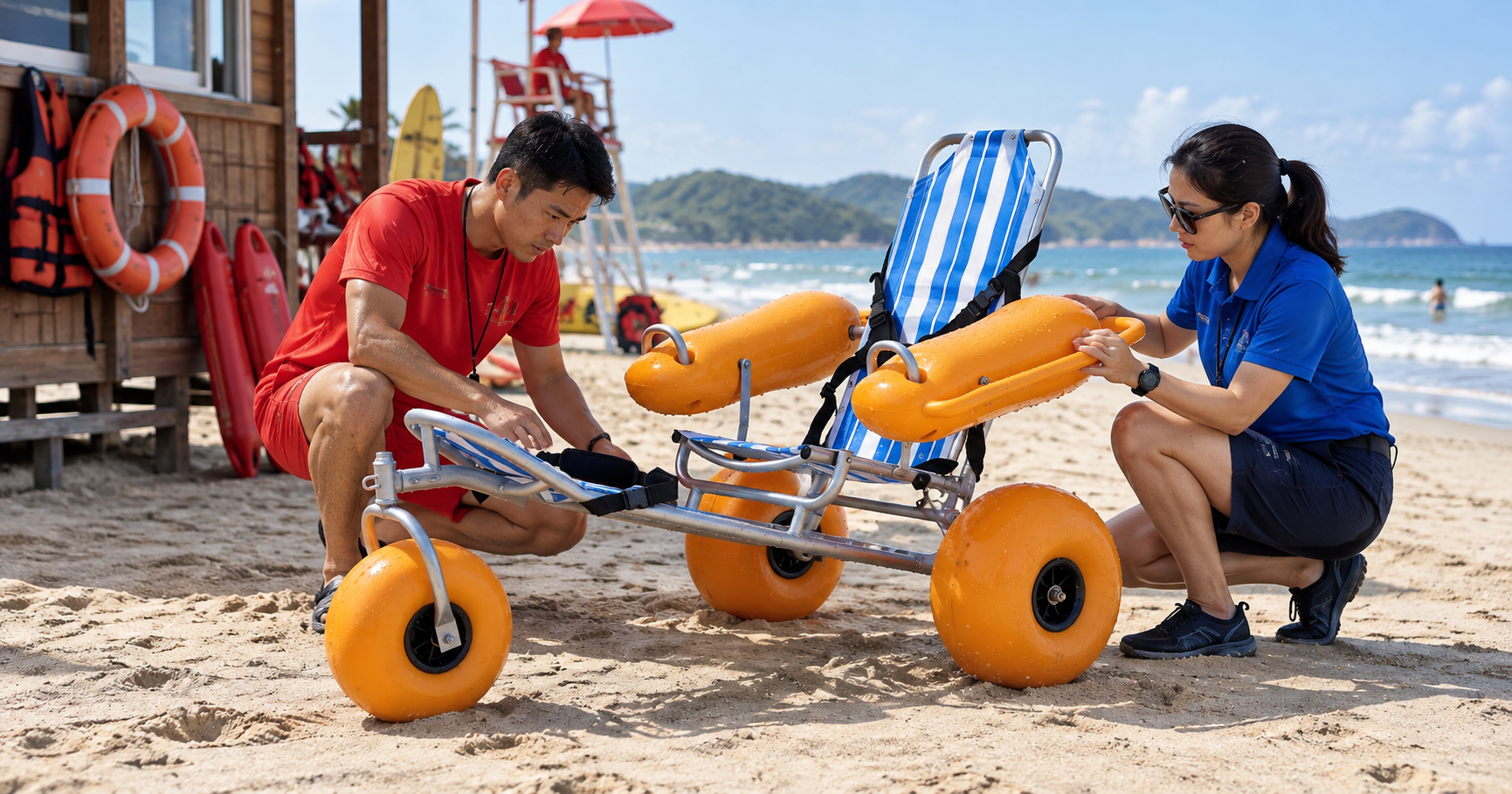
A beach wheelchair for aged care Australia outing is staffed by care workers, lifestyle staff and sometimes volunteers or family, following your provider’s ratios and procedures. Each chair needs someone to push it. Transfers follow your existing protocols.
How do you assign roles?
Assign chair pushers, transfer helpers and a lead for timing and safety. Sounds simple, right? Clear roles prevent confusion on the sand.
- Chair pushers
- Transfer helpers
- Outing lead
How should transfers be handled?
Use your existing transfer procedures and trained staff, on firm ground with brakes on.
| Role | Responsibility |
|---|---|
| Outing lead | Timing and safety |
| Care staff | Transfers and care |
| Pushers | Chair movement |
| Volunteers | Support and company |
Clear roles make the day calmer for residents and staff.
Key Takeaway: Assign roles in advance and use your existing transfer procedures.
How Do You Transport a Beach Wheelchair for Aged Care Australia Use?
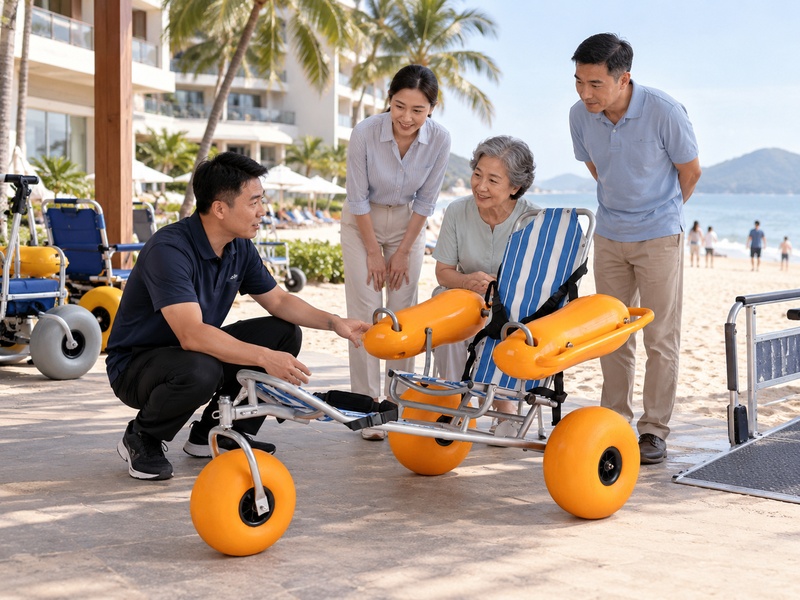
You transport a beach wheelchair for aged care Australia use by loading it into a van or bus with secure restraints, ideally choosing models that fold or fit your vehicle. Check dimensions before buying. Loading should be easy for staff.
Do you need a folding chair?
If vehicle space is tight, a folding chair helps. Now here’s the twist: a high-back chair may need more space but offers more comfort.
- Measure vehicle space
- Check folding options
- Secure chairs during travel
How do you protect equipment in transit?
Use straps or restraints and keep wheels clean before loading. Store spares in a kit bag.
| Transport factor | Check |
|---|---|
| Vehicle space | Dimensions |
| Loading | Staff lifting |
| Restraints | Secure travel |
| Spares kit | Quick fixes |
Easy transport makes outings more frequent.
Key Takeaway: Check vehicle space and loading before choosing chair models.
How Should You Clean a Beach Wheelchair for Aged Care Australia Fleet?
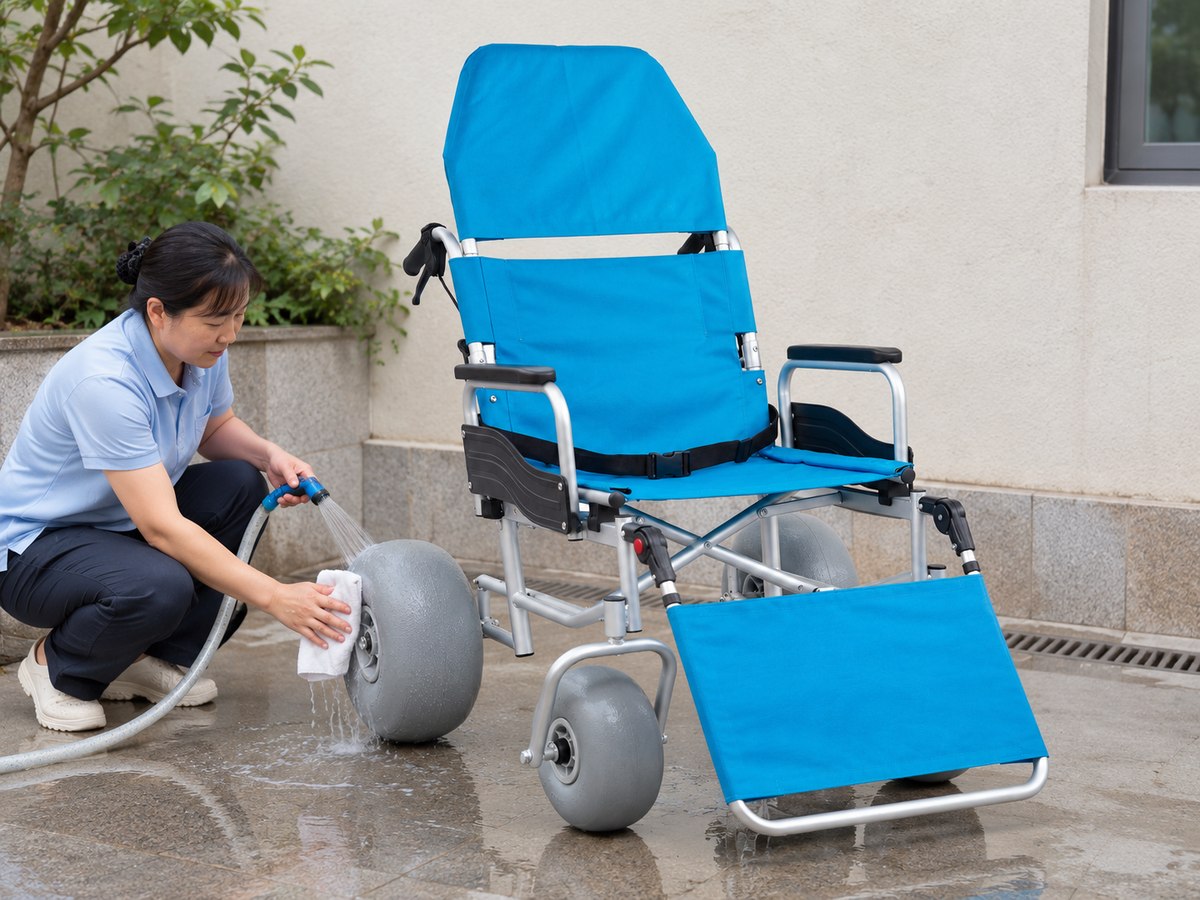
You clean a beach wheelchair for aged care Australia fleet with a fresh-water rinse, mild soap on fabric and full drying, then follow your infection control procedures. Shared equipment needs consistent hygiene. Drying prevents mould.
What’s the cleaning routine?
Rinse sand and salt, wash fabric, wipe touch points and dry fully. Want to know the best part? It’s quick once it’s routine.
- Fresh-water rinse
- Mild soap on fabric
- Wipe armrests and handles
How do you fit infection control?
Follow your provider’s procedures for shared equipment, including cleaning products and records.
| Step | Purpose |
|---|---|
| Rinse | Remove salt and sand |
| Wash fabric | Hygiene |
| Wipe touch points | Infection control |
| Dry | Prevent mould |
Consistent cleaning keeps equipment safe for every resident.
Key Takeaway: Rinse, wash, wipe and dry, and follow your infection control procedures.
What Does a Beach Wheelchair for Aged Care Australia Program Cost?
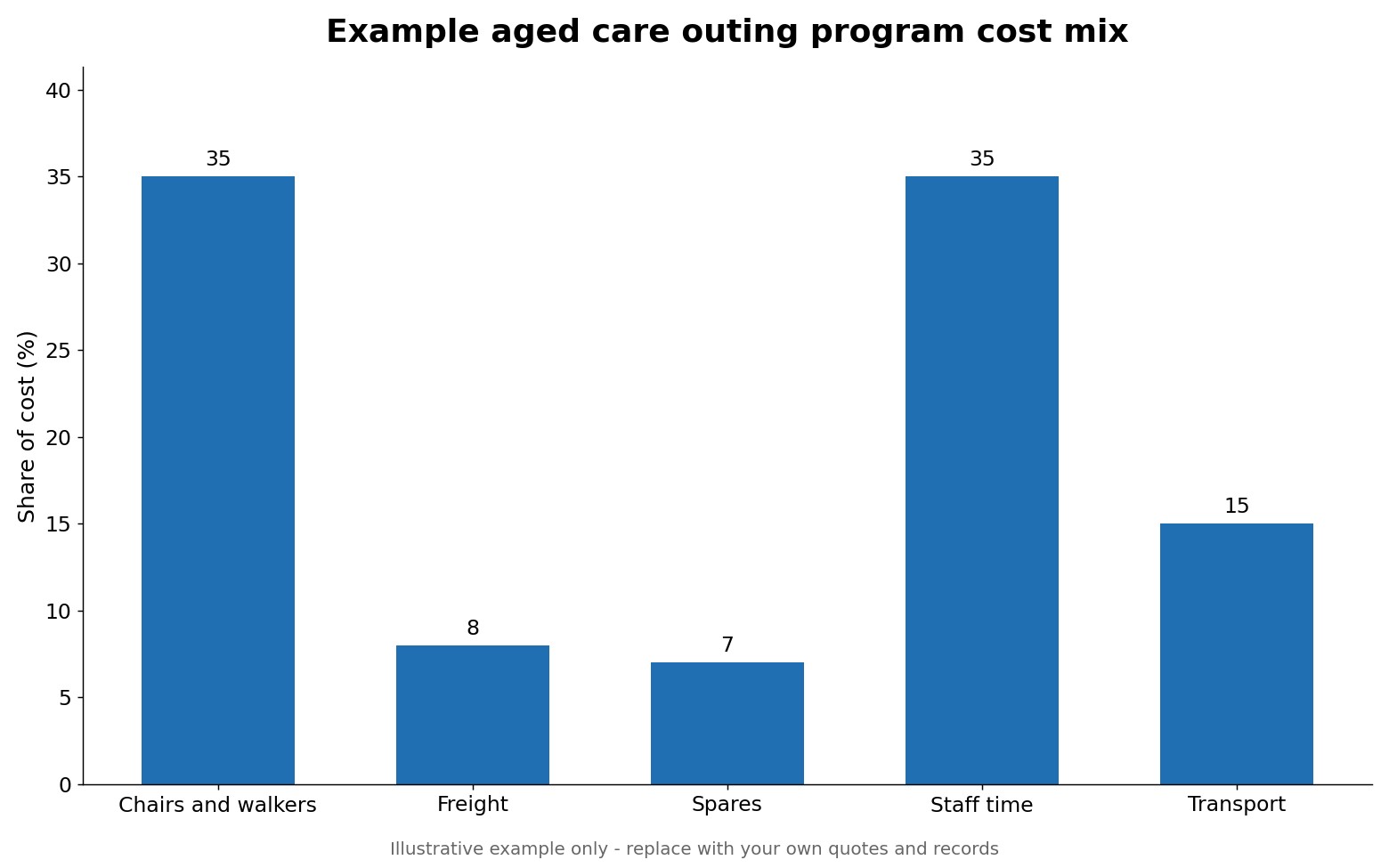
A beach wheelchair for aged care Australia program costs chairs, walkers, freight, spares, transport and staff time for outings. Staff time is the main ongoing cost. Equipment is mostly one-off.
Which costs recur?
Staff hours, transport and spares. Here’s the thing: outings become routine once equipment and plans are in place.
- Staff time per outing
- Transport costs
- Spare wheels and fabric
How do providers fund equipment?
Through operating budgets, community grants, donations and family or volunteer fundraising.
| Cost line | Type |
|---|---|
| Chairs and walkers | One-off |
| Freight | One-off |
| Spares | Ongoing |
| Staff and transport | Per outing |
Planning costs helps outings happen more often.
Key Takeaway: Budget for staff time and transport, not just equipment.
Can You Hire a Beach Wheelchair for Aged Care Australia Outings?
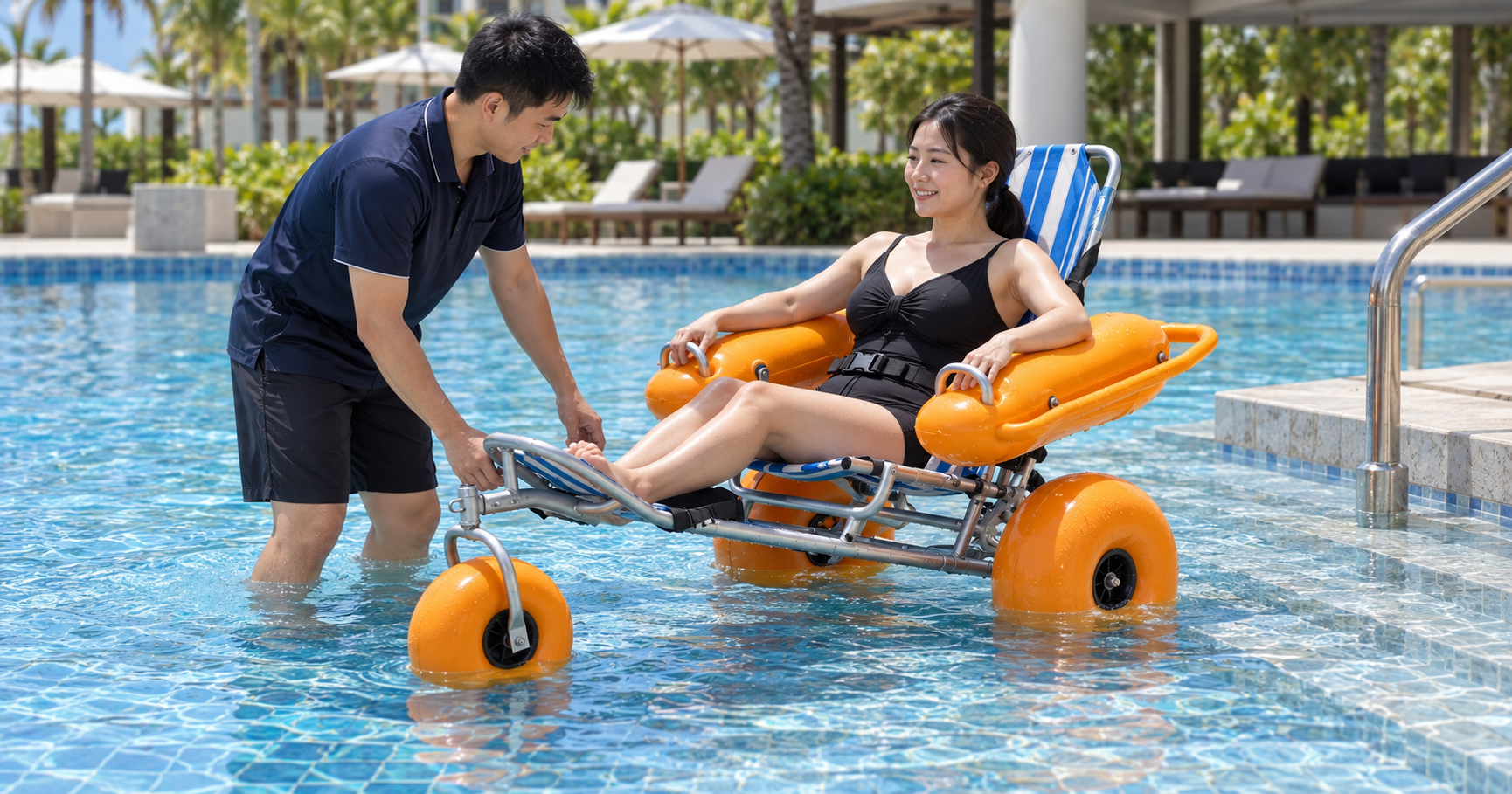
Yes, you can often hire a beach wheelchair for aged care Australia outings from councils, surf clubs or hire operators. Hiring suits occasional outings. Regular outings may justify buying.
When does hiring make sense?
For one-off or occasional outings, or to trial before buying. The short version? Hire to test, buy to repeat.
- Occasional outings
- Trying different models
- Large groups needing extra chairs
When does buying make sense?
When outings are regular, groups are large or local hire is limited.
| Option | Best for |
|---|---|
| Council hire | Free or low-cost outings |
| Hire operator | Flexible bookings |
| Buying | Regular outings |
A trial hire helps you choose the right chair to buy.
Key Takeaway: Hire to trial, then buy when outings become regular.
How Do You Buy a Beach Wheelchair for Aged Care Australia Use?
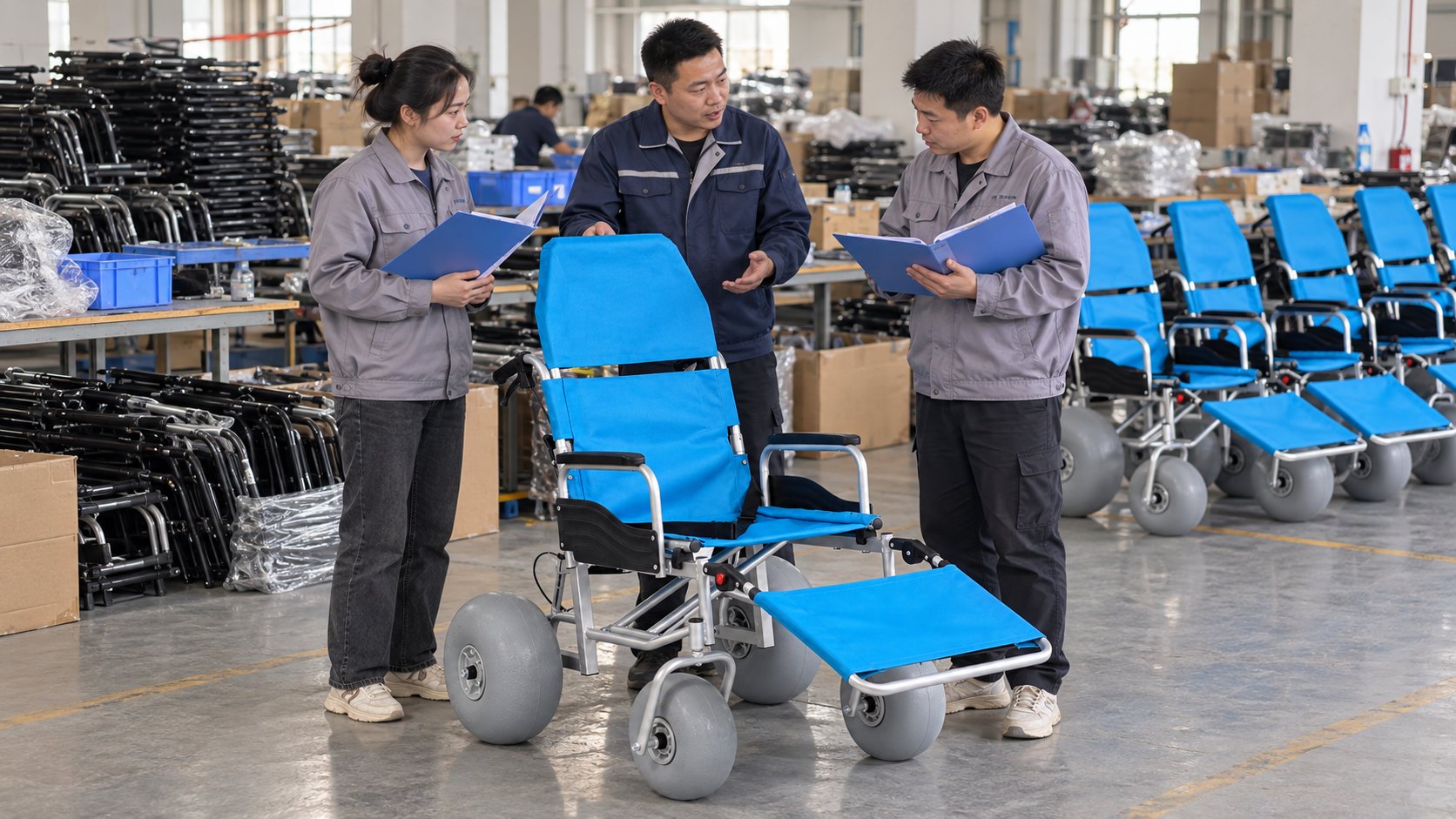
You buy a beach wheelchair for aged care Australia use by confirming specs with your care team, comparing landed-cost quotes and checking spares and support. Ask for current manuals. Weight limits and dimensions matter.
What should you confirm?
Weight limits, seat width, backrest height and folding size. This is where it gets interesting: these details decide which residents can use the chair.
- Weight limit from current manual
- Seat and backrest dimensions
- Folding size for transport
How do you compare suppliers?
Use one template with landed cost, spares, warranty and documents.
| Check | Why |
|---|---|
| Specs | Resident fit |
| Landed cost | Budget |
| Spares | Uptime |
| Support | Reliability |
Careful buying means the chair suits your residents.
Key Takeaway: Confirm specs with your care team and compare full landed cost and support.
Final Thoughts
Beach outings can bring real joy to residents and families. You’ve seen why beach chairs matter for aged care, which models suit residents, how walkers help, planning, staffing, transport, cleaning, costs, hiring and buying. With those in place, your outings can become a regular part of life.
If you’re planning equipment for beach outings, we can help you compare chairs and walkers for your residents and vehicles. Contact us today with your outing plans and resident needs. We believe nobody should be too old to feel sand underfoot or sea air on their face, and we build our equipment with that belief.
FAQ
Can residents with limited mobility visit the beach?
Often yes, with the right equipment and your care team’s assessment. Beach chairs and walkers make many outings possible.
What’s the best chair for aged care outings?
A high-back all-terrain chair is usually the best start. It offers comfort and stability on sand.
How do I know if a resident suits a beach walker?
Your care team should assess them. Walkers suit residents who can walk short distances with support.
Can I hire chairs instead of buying?
Yes, councils and hire operators often offer chairs. Hiring is a good way to trial models.
How do I know if a chair fits our vehicle?
Check the folded and full dimensions in the current manual and measure your vehicle space.