
A beach walker is a wide-wheeled walking aid designed to give users a steadier support point on soft sand and a seat for planned rest. An older visitor may walk comfortably on the boardwalk, take two steps onto dry sand, and feel a standard narrow-wheeled rollator sink or twist under the changing surface. The user loses confidence, a companion starts pulling the frame, and the beach day narrows to the edge of the path. A sand-ready walker addresses that moment with balloon wheels, stable hand support, a clear rest option, and a route chosen for the user’s real balance, endurance, and assistance needs.
What Makes a Beach Walker Work on Sand?
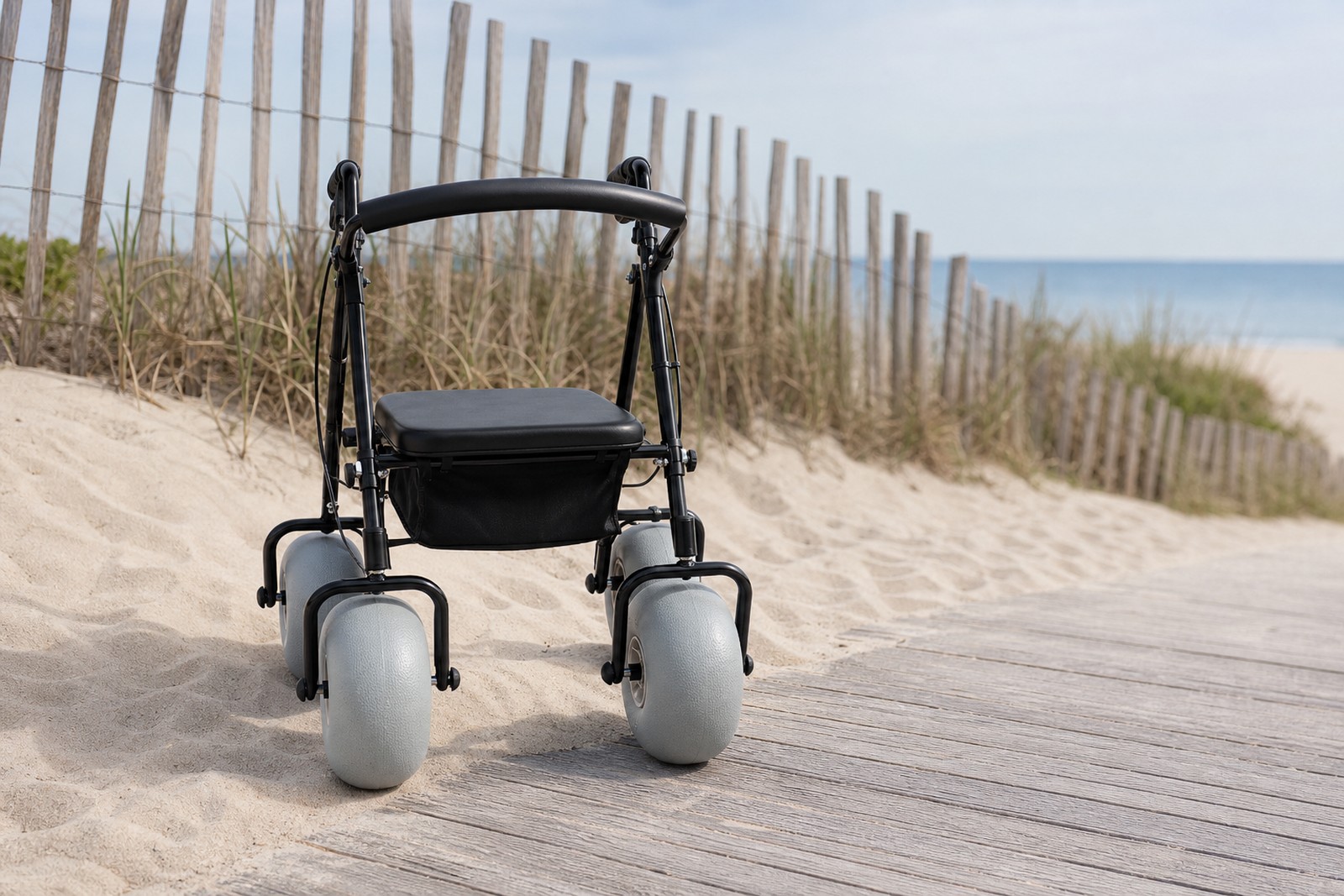
A beach walker works on sand by replacing narrow rollator wheels with broad low-pressure wheels that spread load over a larger area. It gives you a defined mobility tool, but the result still depends on user fit, route conditions, and trained support.
Which components matter most?
Start where the walker meets the ground: Wheel width affects sinking, while frame geometry and handle position affect how steady the support feels. A built-in seat gives the user a planned place to pause rather than searching for a beach chair.
- For example, broad balloon wheels.
- Also, stable frame stance.
- In addition, comfortable hand support.
- Next, integrated rest seat.
Why do standard walkers struggle?
The surface changes the mechanics: Small hard wheels cut into dry sand and can stop abruptly. Pulling harder may tip or twist the device, so users need equipment intended for the surface.
Key Takeaway: Sand performance depends on wide wheels, stable support, and controlled walking pace.
| Design Point | User Benefit |
|---|---|
| Wide wheels | Less sinking |
| Stable frame | More predictable support |
| Seat | Rest available on route |
This comparison shows why a normal rollator cannot directly be pushed harder.
Who Can Benefit From a Seated Beach Walker?
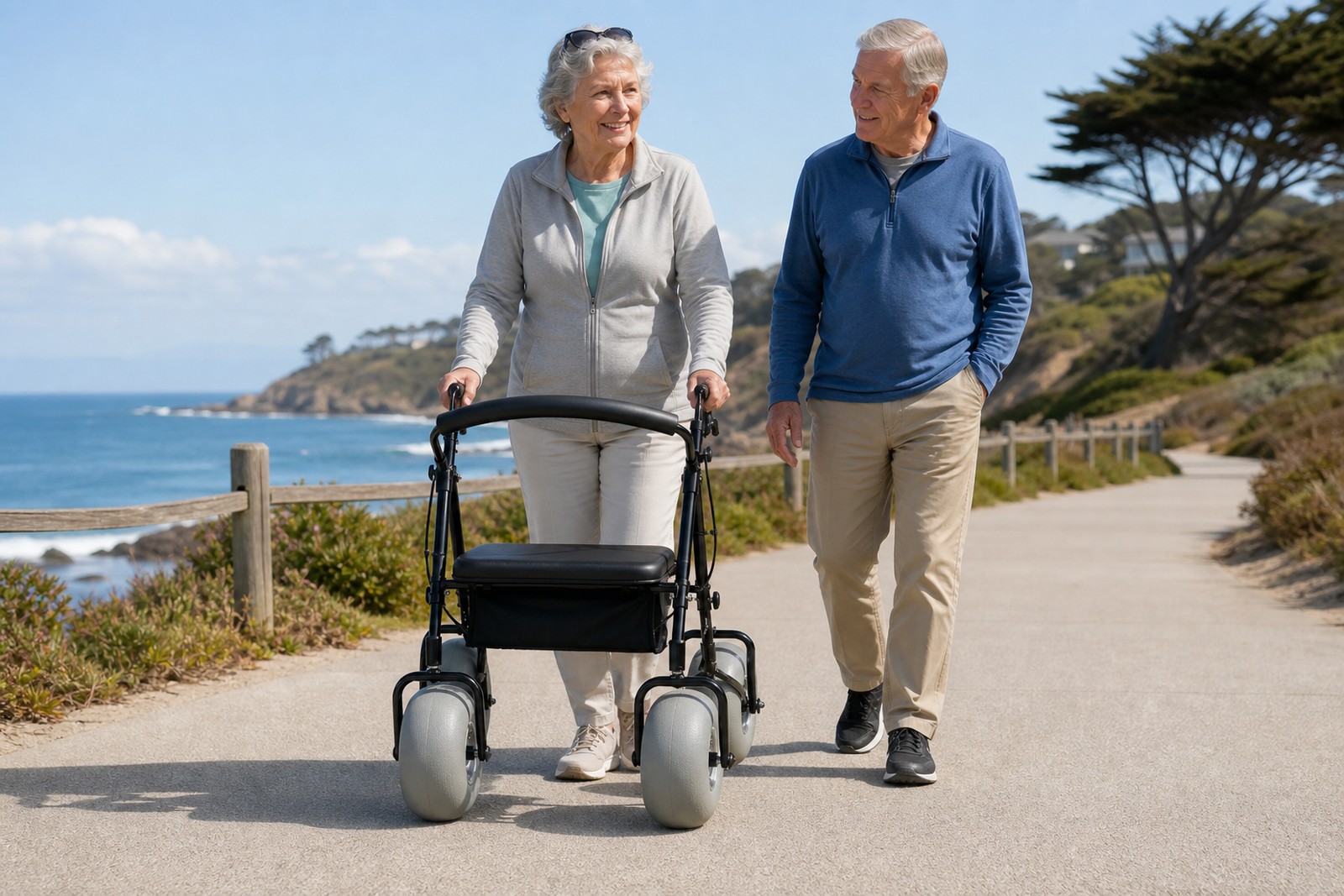
A beach walker can benefit seniors and adults with limited walking endurance when they can safely use the handles, brakes, seat, and planned route. It gives you a defined mobility tool, but the result still depends on user fit, route conditions, and trained support.
What should be discussed with the user?
Ask before setting the pace: Talk about walking distance, balance, fatigue, rest needs, and whether a companion will stay nearby. The user should decide when to stop and sit.
- For example, comfortable walking distance.
- Also, balance on changing surfaces.
- In addition, preferred rest frequency.
- Next, need for nearby assistance.
What role does the seat play?
Rest is part of the route: A seat lets the user pause before fatigue changes posture or judgment. It should be used only when the walker is stable, brakes are engaged, and the ground is suitable.
Key Takeaway: The walker is a mobility and rest tool, but user fit must be checked first.
| User Need | Planning Response |
|---|---|
| Low endurance | Add frequent rest points |
| Balance concern | Use close support |
| Heat sensitivity | Plan shade and shorter trips |
The table helps companions shape a beach visit around the person.
How Should Seniors Start Using It?
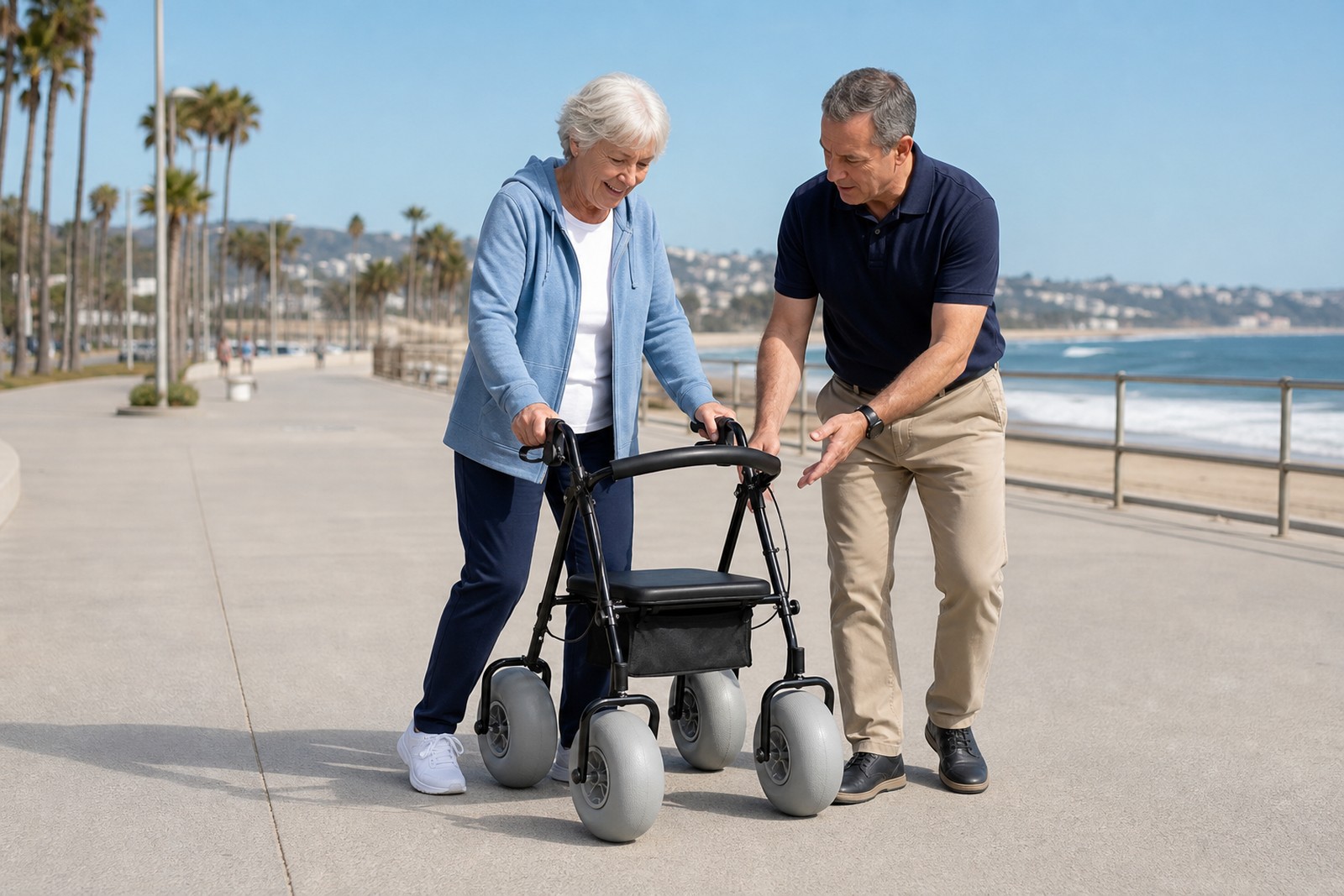
A beach walker should be introduced to seniors on a firm level surface before any move onto soft sand. It gives you a defined mobility tool, but the result still depends on user fit, route conditions, and trained support.
What should the first practice cover?
Build familiarity on stable ground: Set the handle height, test the brakes, practice straight walking, and rehearse sitting and standing with supervision. Move to packed sand only after the controls feel familiar.
- For example, handle position.
- Also, brake operation.
- In addition, wide turning motion.
- Next, safe sit-to-stand sequence.
How should the route progress?
Increase difficulty in small steps: The senior care project reflects a staged approach: firm path first, packed sand next, then a short section of loose sand if the user remains comfortable. Stop before fatigue drives the decision.
Key Takeaway: Practice on firm ground gives the user a calmer start on sand.
| Practice Zone | Goal |
|---|---|
| Firm path | Control and braking |
| Packed sand | Adapt to rolling resistance |
| Loose sand | Short supported trial |
This sequence makes progress visible without rushing the user.
How Do Wide Wheels Reduce Sinking?
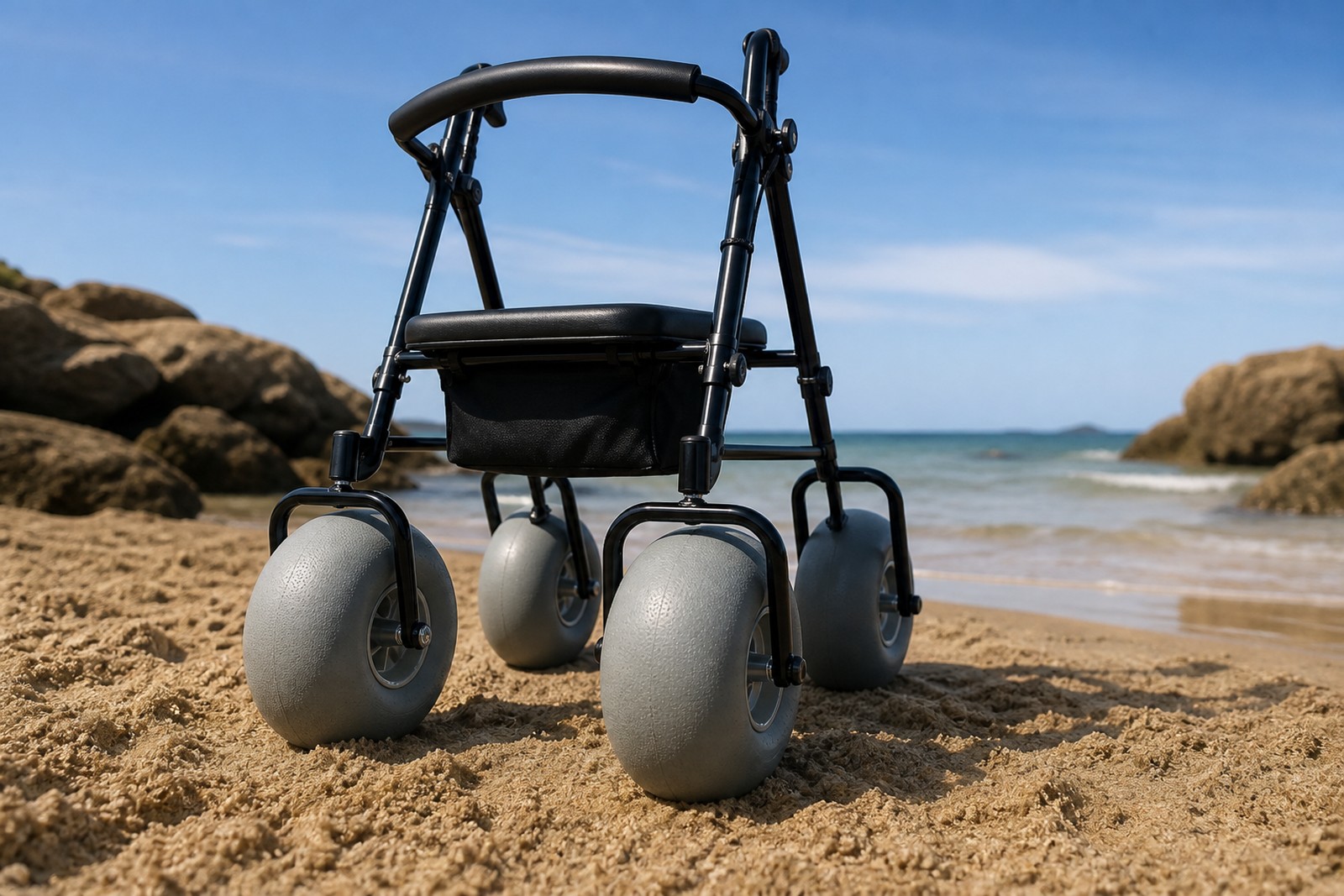
A beach walker reduces sinking because each wide wheel spreads the user’s applied load across more sand than a narrow wheel. It gives you a defined mobility tool, but the result still depends on user fit, route conditions, and trained support.
What happens under the wheel?
Pressure changes the outcome: A narrow wheel concentrates force and forms a deeper track, while a balloon wheel presents a larger contact patch. Less sinking usually means fewer sudden stops.
- For example, larger contact area.
- Also, shallower wheel track.
- In addition, lower rolling resistance.
- Next, smoother forward movement.
Does wheel width solve every terrain problem?
There are still limits: Steep slopes, very deep loose sand, wet drop-offs, stones, and crowded routes can remain unsuitable. The user or companion should inspect the route before the walk begins.
Key Takeaway: Wide wheels help on sand, but the safest route still avoids sharp terrain changes.
| Wheel Type | Soft-Sand Result |
|---|---|
| Narrow hard wheel | Tends to dig in |
| Wide balloon wheel | Spreads load |
| Damaged wheel | Unpredictable handling |
The comparison links wheel shape directly to user effort.
Where Should a Beach Walker Be Used?
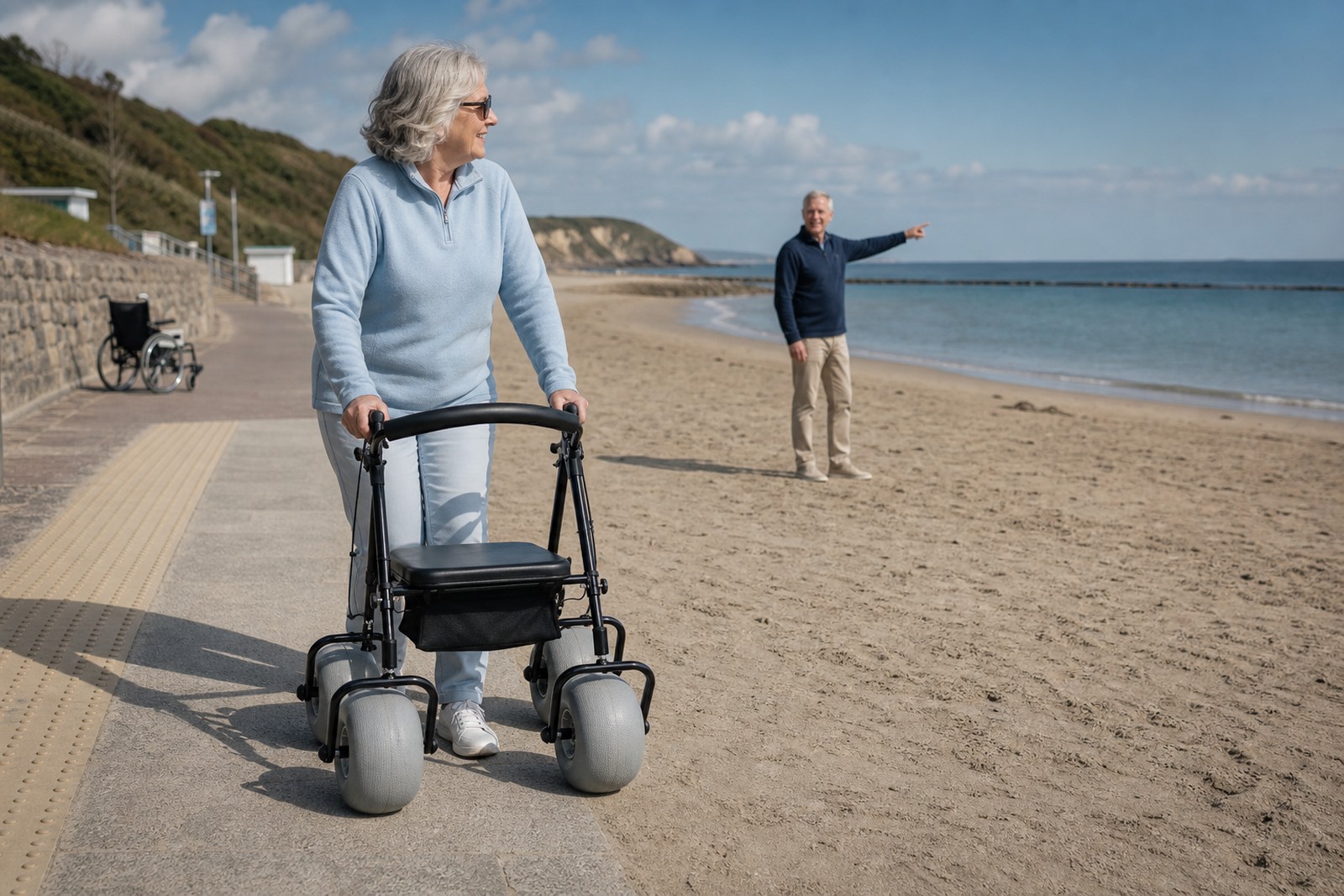
A beach walker should be used on planned beach paths, packed shoreline zones, level soft sand, and other coastal areas that match the user’s ability. It gives you a defined mobility tool, but the result still depends on user fit, route conditions, and trained support.
Which routes are the best starting points?
Choose simple terrain first: Start with a short route that stays close to a firm path, shade, seating, and help. Avoid forcing the user to complete a long loop before a rest point.
- For example, firm beach access paths.
- Also, packed level sand.
- In addition, short soft-sand sections.
- Next, areas near shade and support.
Which areas need a different plan?
Know when to turn back: Steep dunes, unstable water edges, deep ruts, and loose side slopes can create more risk than the walker can offset. A wheelchair or another mobility option may fit some users better.
Key Takeaway: The best route gives the user an easy way to pause or return.
| Route Type | Fit |
|---|---|
| Firm level path | Strong starting point |
| Short soft sand | Trial with support |
| Steep dune | Use another plan |
This route filter keeps the outing within the user’s available energy.
What Safety Steps Matter Before Walking?
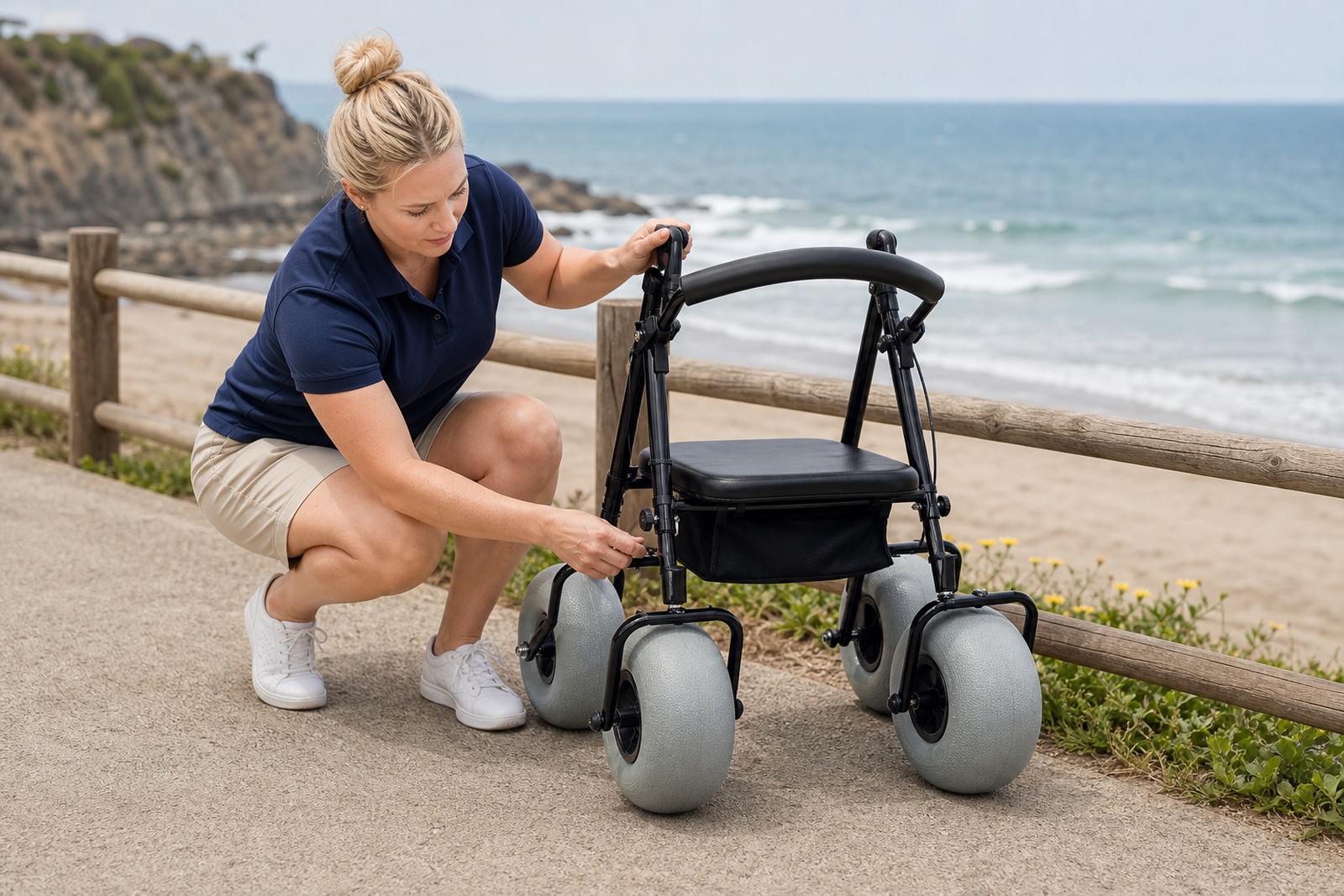
A beach walker needs a pre-walk check of wheels, frame, brakes, handles, seat, route, weather, and the user’s current comfort. It gives you a defined mobility tool, but the result still depends on user fit, route conditions, and trained support. For older users, the CDC falls guidance is a useful reminder to review personal risk and the route before walking.
What should the equipment check include?
Follow one quick sequence: Confirm that wheels turn freely, fasteners look secure, brakes hold, handles are set, and the seat is stable. Remove the walker from use when any control point feels uncertain.
- For example, wheel movement and attachment.
- Also, brake hold and release.
- In addition, handle and frame stability.
- Next, seat and storage pouch condition.
What should the person check include?
The user sets the limit: The soft-sand safety guide supports a person-first check of fatigue, heat, footwear, hydration, and confidence. Conditions can change between visits.
Key Takeaway: Both the walker and the user need a go-or-pause check.
| Check Area | Pause Signal |
|---|---|
| Equipment | Brake or frame fault |
| Route | Unsafe slope or obstacle |
| User | Pain, fatigue, or uncertainty |
The table puts personal readiness beside mechanical readiness.
How Should You Sit and Rest Safely?

A beach walker should be positioned on firm level ground with brakes engaged before the user turns and sits. It gives you a defined mobility tool, but the result still depends on user fit, route conditions, and trained support.
What is the safest sequence?
Slow the transition down: Stop properly, choose stable ground, set the brakes, back toward the seat until it can be felt behind the legs, and use the prescribed support method. A companion should stay close when balance is uncertain.
- For example, stop on level ground.
- Also, engage both brakes.
- In addition, turn without pulling the frame.
- Next, stand only after checking balance.
Where should rest stops be planned?
Place them before fatigue peaks: Choose shaded or cooler areas near the firm route and schedule rests earlier than the user thinks they may be needed. This keeps the return trip within reach.
Key Takeaway: A safe rest begins with level ground, locked brakes, and an unrushed transfer.
| Rest Step | Reason |
|---|---|
| Level position | Reduces rolling or tipping |
| Brakes | Keeps the frame still |
| Early stop | Preserves energy for return |
The sequence makes the seat a planned feature instead of an emergency fallback.
How Do You Choose the Right Beach Walker?
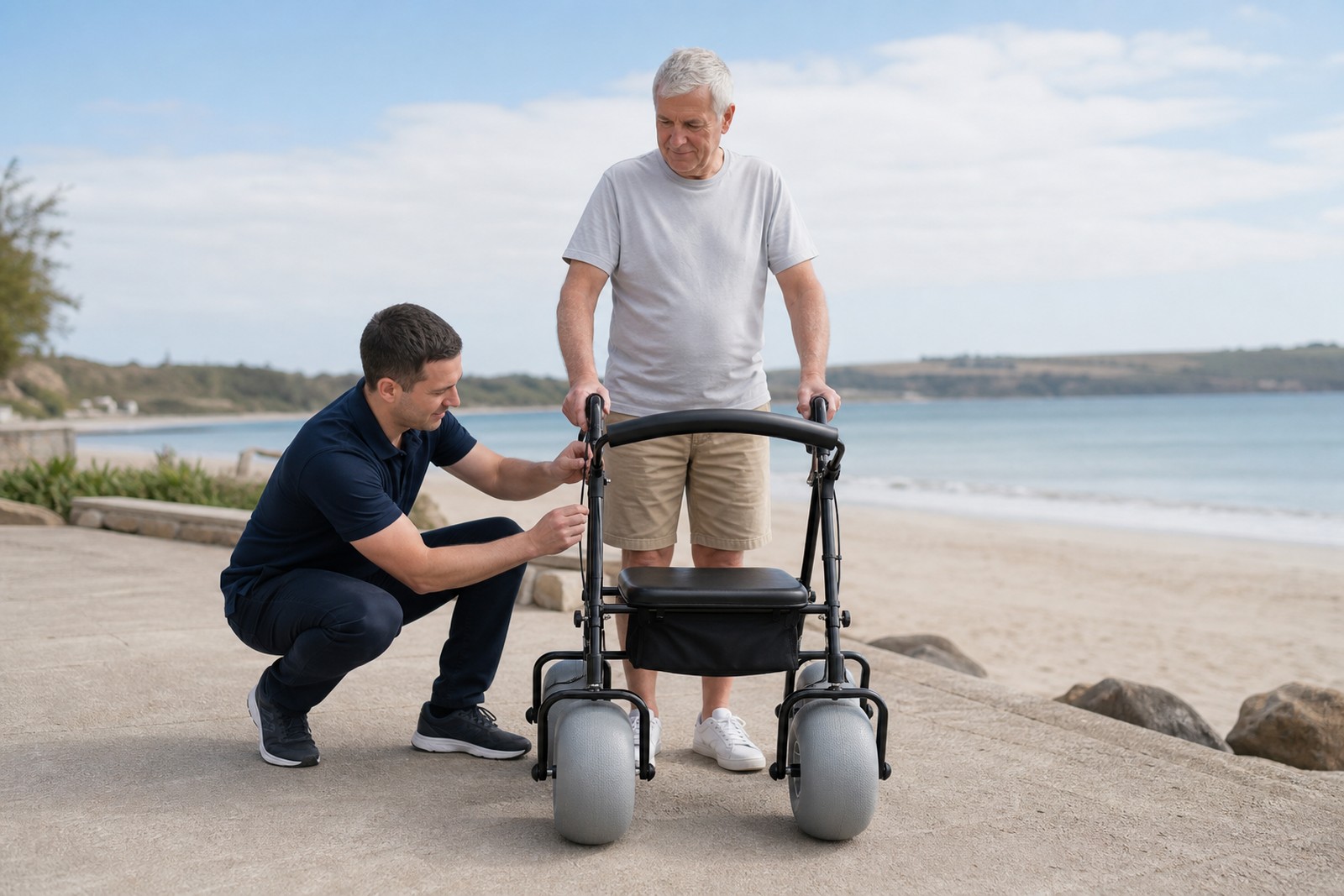
A beach walker should be chosen by matching wheel design, handle range, frame stability, seat size, braking, folded storage, and user needs. It gives you a defined mobility tool, but the result still depends on user fit, route conditions, and trained support.
What should a product trial test?
Use the same route the buyer will face: Adjust the handles, test braking, cross firm and loose surfaces, turn, sit, stand, fold, and store the device. Note where the user or companion needs extra effort.
- For example, handle fit and posture.
- Also, brake reach and response.
- In addition, wheel movement on sand.
- Next, seat and storage practicality.
How do you compare models fairly?
Use needs, not feature count: The walker selection guide helps buyers compare user ability, terrain, assistance, and transport. A feature has value only when it supports the actual trip.
Key Takeaway: A route-based trial is the clearest way to compare walker fit.
| Selection Area | Test |
|---|---|
| Fit | Posture and handle reach |
| Terrain | Movement on real sand |
| Rest | Seat and brake sequence |
This matrix keeps selection grounded in the user’s beach routine.
How Do You Clean and Store the Walker?
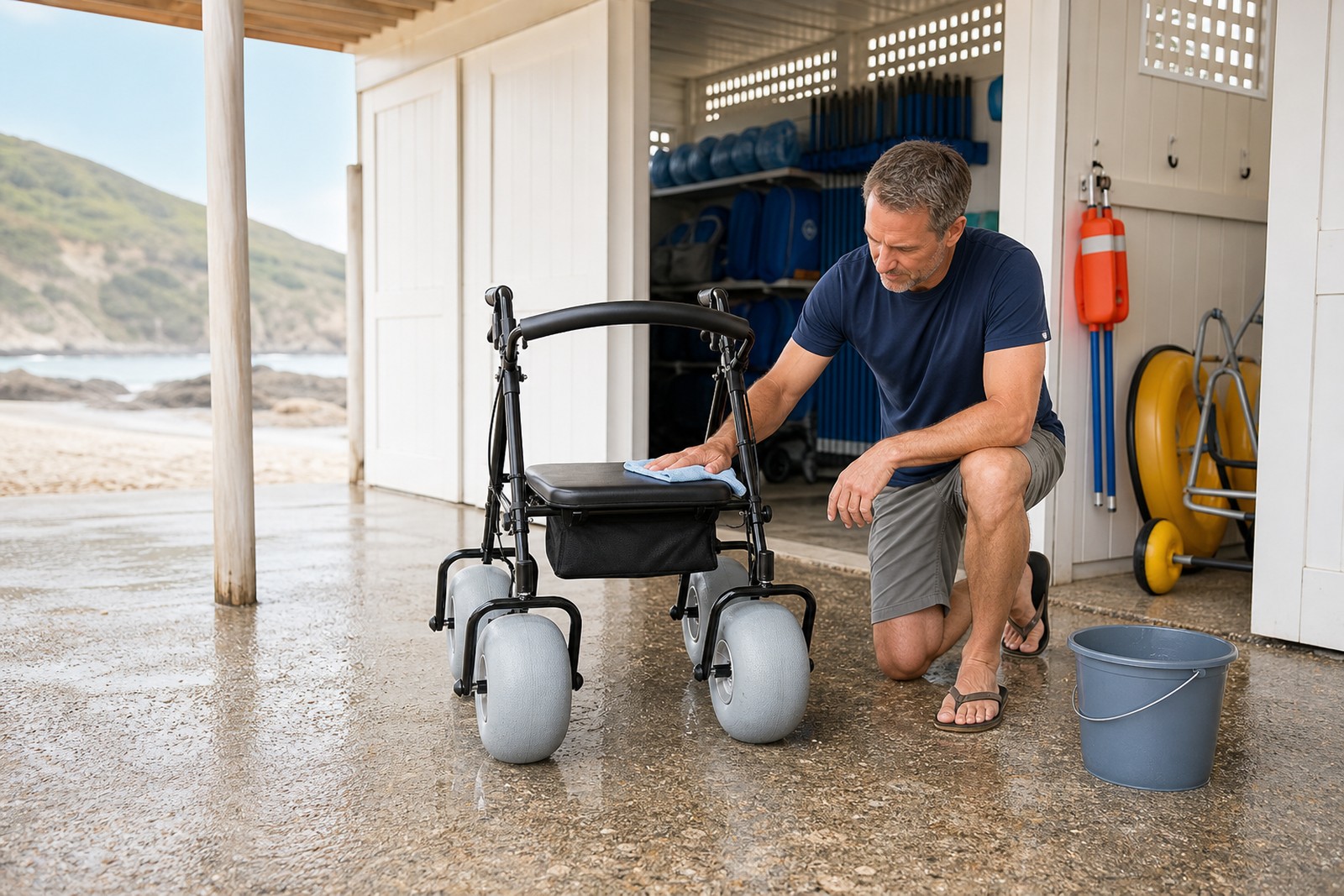
A beach walker needs sand removal, fresh-water rinsing after salty exposure, drying, brake checks, and protected storage. It gives you a defined mobility tool, but the result still depends on user fit, route conditions, and trained support.
What belongs in daily care?
Make the return routine visible: Brush or rinse residue from wheels and lower frame parts, dry the seat and metal surfaces, and check that brakes and folding points move normally. Record loose or worn parts.
- For example, remove sand from wheel areas.
- Also, rinse coastal residue.
- In addition, dry before enclosed storage.
- Next, check brakes and fasteners.
What storage setup works best?
Keep readiness close at hand: Use a dry shaded area with enough space to avoid bending cables or loading weight onto the seat. Store the checklist and any approved tools beside the walker.
Key Takeaway: Simple after-use care keeps the walker ready for the next visit.
| Care Item | Timing |
|---|---|
| Sand removal | After each outing |
| Fresh-water rinse | After salt exposure |
| Detailed check | By use level and schedule |
The routine links cleaning directly to reliable braking and movement.
How Can a Beach Walker Support Better Access?
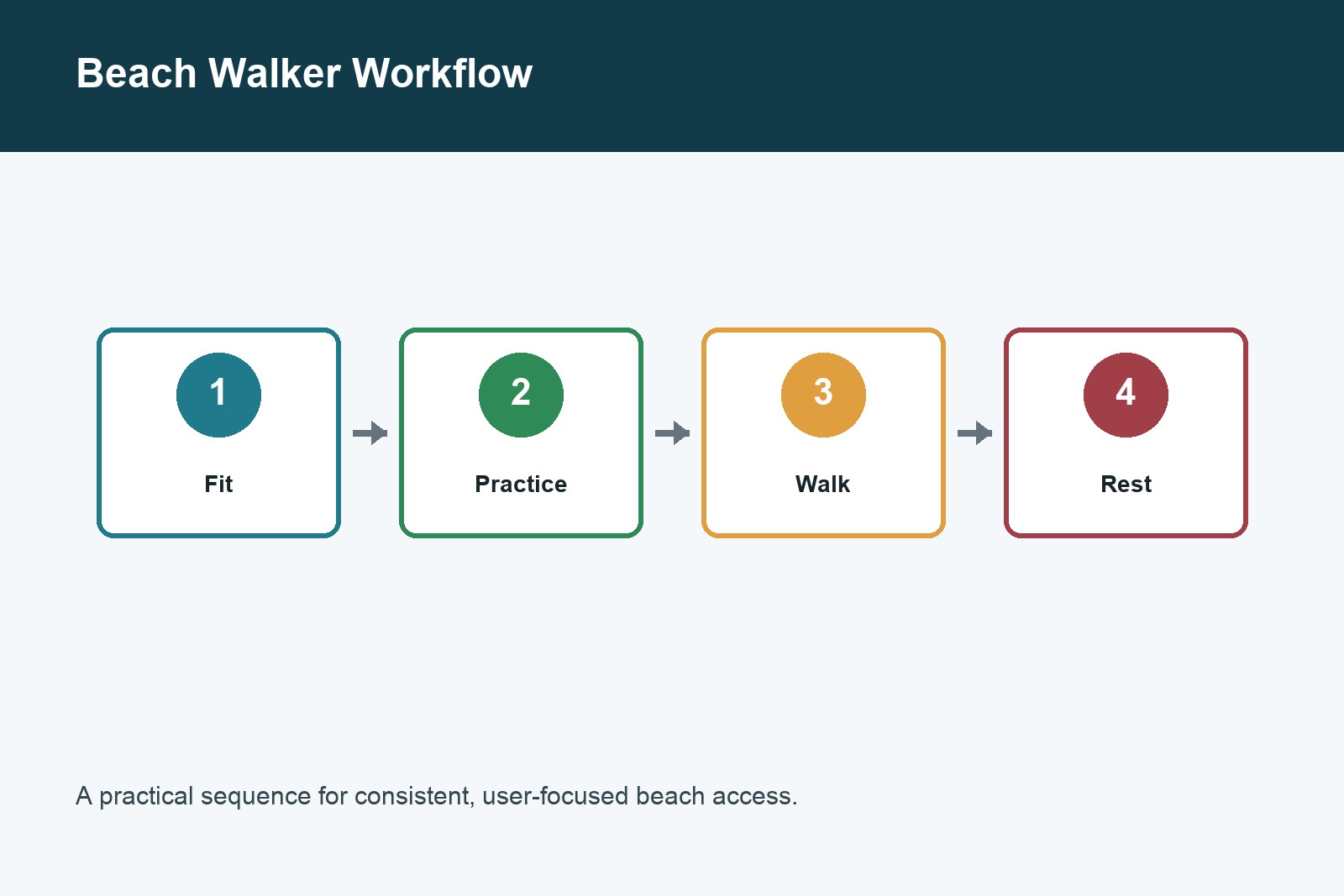
A beach walker supports better access when it is paired with a short usable route, rest planning, respectful assistance, and another option for users who need seated transport. It gives you a defined mobility tool, but the result still depends on user fit, route conditions, and trained support.
What should a complete program include?
Plan for different levels of mobility: Offer a clear request process, trained staff, route information, shade or rest points, and an alternative chair when walking is not the right fit. Access improves when users can choose.
- For example, walker request and fitting.
- Also, short mapped beach routes.
- In addition, rest and shade points.
- Next, wheelchair option when needed.
What should facilities do next?
Test the experience from arrival: Walk the route with the equipment, identify every pause point, and ask whether the user can return without exceeding their energy. You can contact us today to discuss a walker and broader beach mobility setup. Coastal access should respect both movement and rest as parts of participation.
Key Takeaway: A walker program works best when it gives users choice, pacing, and a clear way back.
| Program Part | User Value |
|---|---|
| Walker | Supported walking |
| Rest plan | Energy management |
| Alternative chair | Choice when walking is not suitable |
This final check keeps access flexible instead of forcing one mobility method.
FAQ
Can I use a beach walker on deep dry sand?
Sometimes. Wide balloon wheels help, but deep loose sand raises effort, so start with a short level trial and close support.
What’s the best beach walker for a senior?
The best fit is personal. Match handle height, braking, seat size, stability, wheel width, route conditions, and the user’s walking endurance.
How do I know if the seat is safe to use?
Check before sitting. The walker should be on firm level ground, both brakes should hold, and the user should follow a stable turning and sitting method.
Can I use the walker without a companion?
It depends on the user and route. A clinician or mobility professional can advise on personal ability, while the site team should assess sand, slopes, heat, and distance.