
Beach accessibility equipment in Australia usually means access matting, beach wheelchairs, floating chairs, beach walkers, shade, transfer aids and storage, planned as one route from car park to water. Here’s how projects often stall. A council buys two beach chairs, but there’s no matting through the dunes, no shade at the transfer point and nowhere secure to store them, so the chairs barely get used. Planning beach accessibility equipment Australia as a complete set fixes that, and this guide covers each piece, how they fit together, funding, buying and upkeep.
Before finalizing this workflow, review beach wheelchair distributor Australia alongside beach wheelchairs for councils.
For broader destination-level context, consult the UN Tourism accessibility publications and guidelines. Apply local requirements and current product documents to the specific project.
We manufacture beach chairs, floating chairs, beach walkers and access mats and supply councils, clubs and operators around Australia. The approach below comes from projects where every piece of the route works together.
What Is Beach Accessibility Equipment Australia Programs Use?
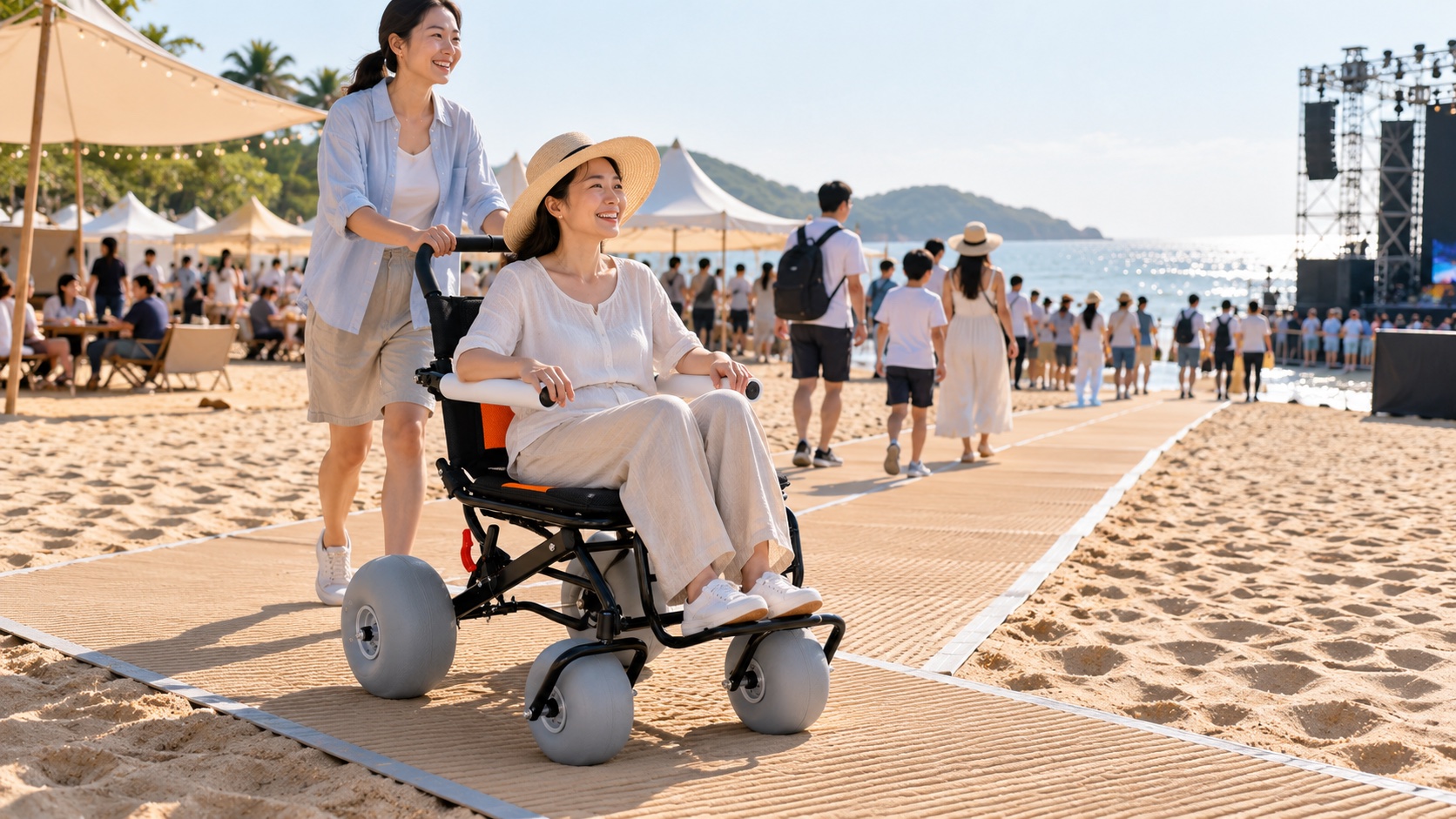
Beach accessibility equipment Australia programs use is the set of products that helps people with limited mobility reach the sand and sometimes the water. It includes surfaces, chairs, walkers and support items. Each one solves a different part of the route.
What’s in a typical equipment set?
Most sets combine matting, beach chairs and supporting items. Here’s the deal: one missing piece can block the whole route.
- Access matting across soft sand
- Beach wheelchairs and floating chairs
- Beach walkers, shade and storage
Why think in routes, not products?
Users need to get from the car park to the sand, rest, transfer and return. Every step needs the right equipment.
| Route step | Equipment |
|---|---|
| Car park to dunes | Ramp or path |
| Dunes to sand | Access matting |
| Sand to shoreline | Beach wheelchair |
| Shoreline to water | Floating chair, supervised |
Thinking in routes stops you buying chairs for paths nobody can reach.
Key Takeaway: Plan equipment as one route, from car park to water.
Why Is Matting Central to Beach Accessibility Equipment Australia?
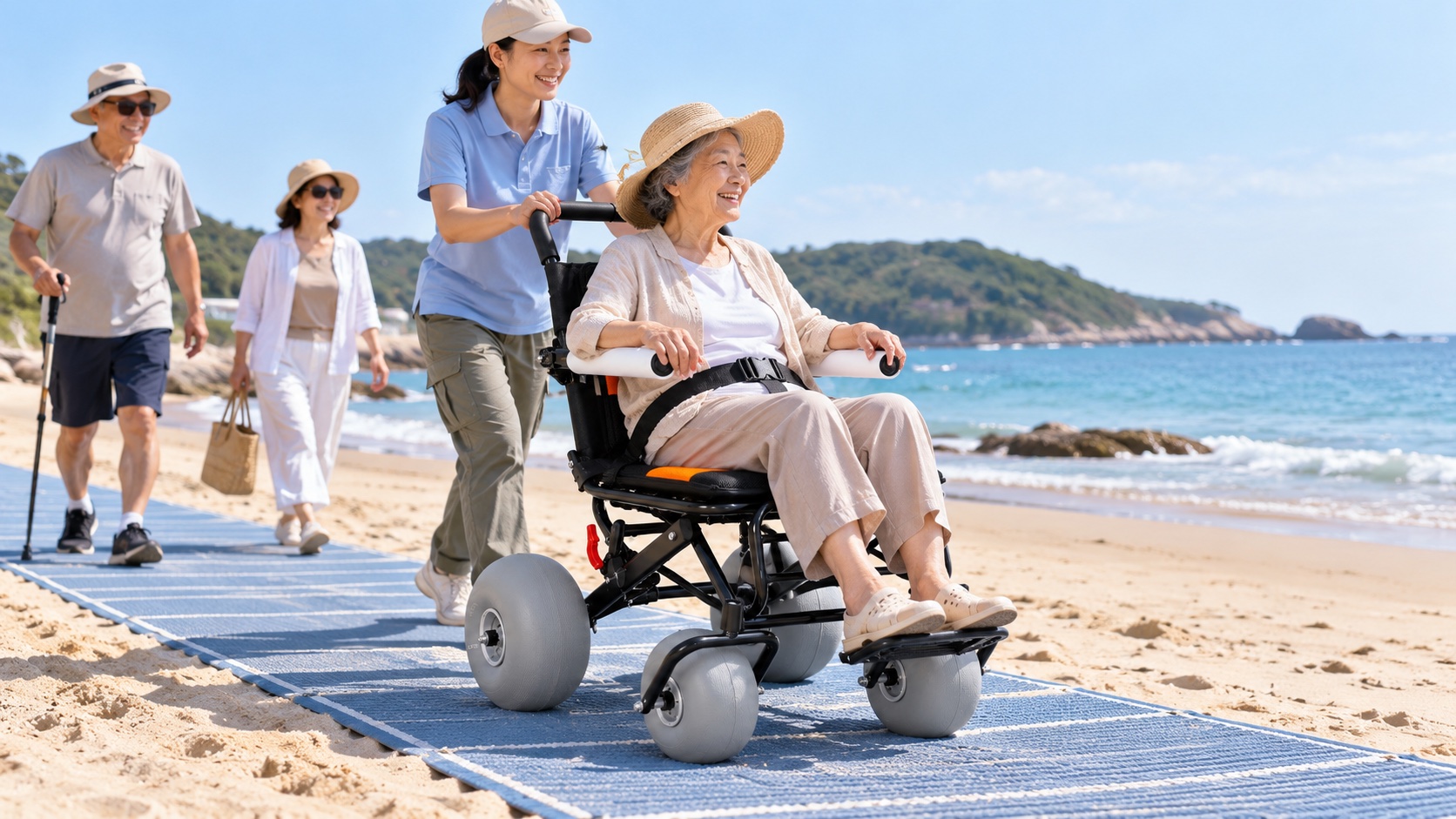
Matting is central to beach accessibility equipment Australia because it gives a firm path across soft sand for wheelchairs, walkers, prams and older visitors. It’s often the most-used item. Without it, chairs can’t reach their users.
Where should matting run?
From the end of the hard path across the dunes and softest sand. Think about it: the softest sand is usually where people give up.
- Start at the path or ramp
- Cross dunes and soft sand
- End at a transfer or rest spot
How do you look after matting?
Clear sand regularly, check anchors and lift mats before big storms. Store clean during the off-season.
| Matting task | Frequency |
|---|---|
| Clear sand | Daily or weekly |
| Check anchors | Weekly |
| Lift for storms | As needed |
| Off-season storage | Yearly |
Well-kept matting serves the whole community every day.
Key Takeaway: Put matting at the top of your plan, because every other item depends on reaching the sand.
Which Chairs Belong in Beach Accessibility Equipment Australia Sets?
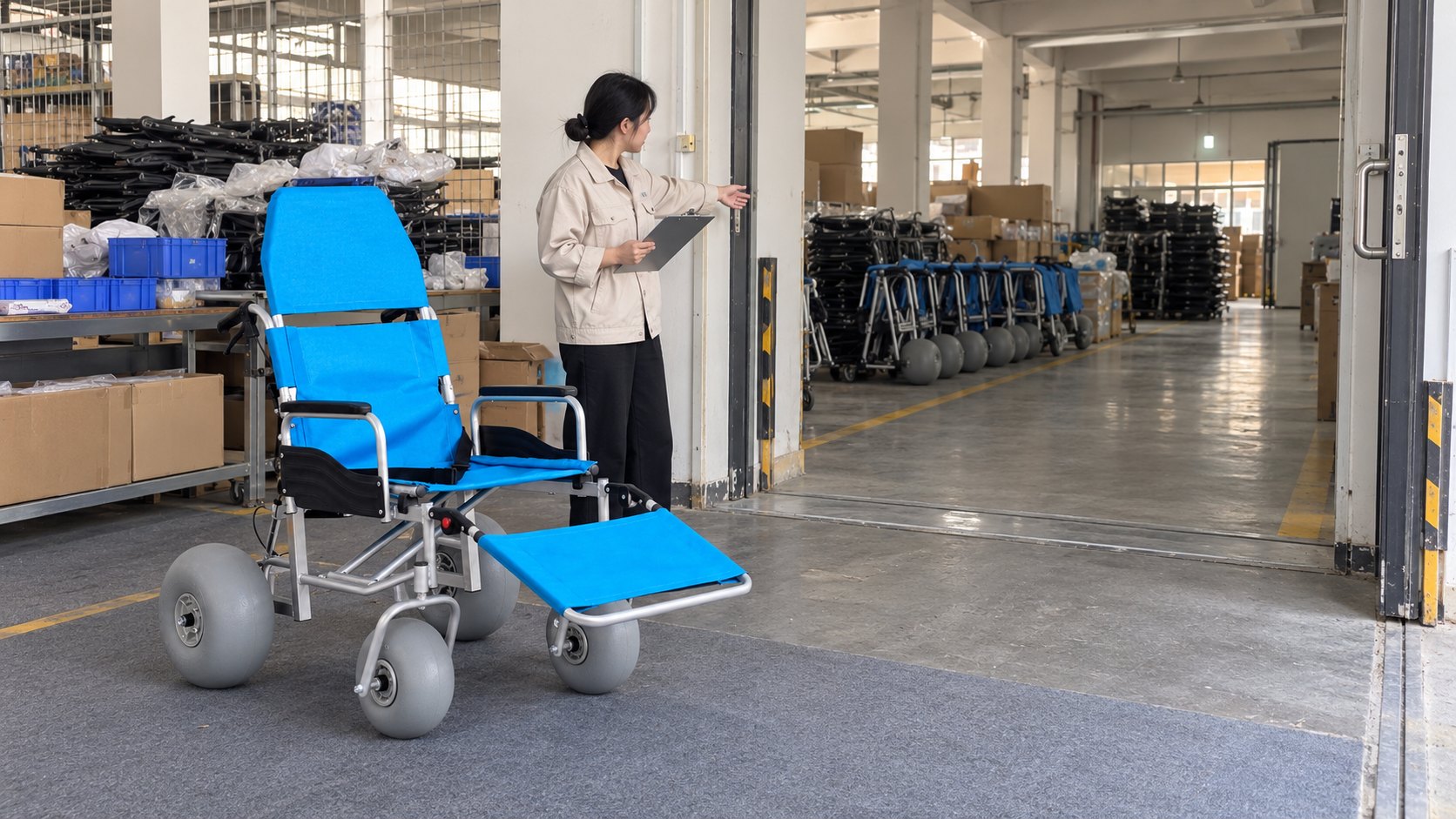
Chairs that belong in beach accessibility equipment Australia sets are all-terrain chairs for sand and floating chairs for supervised calm-water use. Folding chairs help hire and travel. Most councils start with all-terrain.
What does each chair do?
All-terrain chairs reach the shoreline. Floating chairs enter calm shallows with support. But here’s the kicker: floating chairs need trained support persons.
Which models do we make?
Our high-back four-wheel chair has an adjustable backrest and leg support. Our floating chair uses three wheels and side flotation armrests.
- All-terrain chair for sand loans
- Floating chair for supervised water
- Folding chair for transport
| Chair | Use | Support |
|---|---|---|
| All-terrain | Sand | Basic |
| Floating | Calm water | Trained |
| Folding | Travel and hire | Basic |
The right chair mix depends on your site and staff.
Key Takeaway: Start with all-terrain chairs and add floating chairs when supervision is ready.
How Do Beach Walkers Fit Beach Accessibility Equipment Australia?
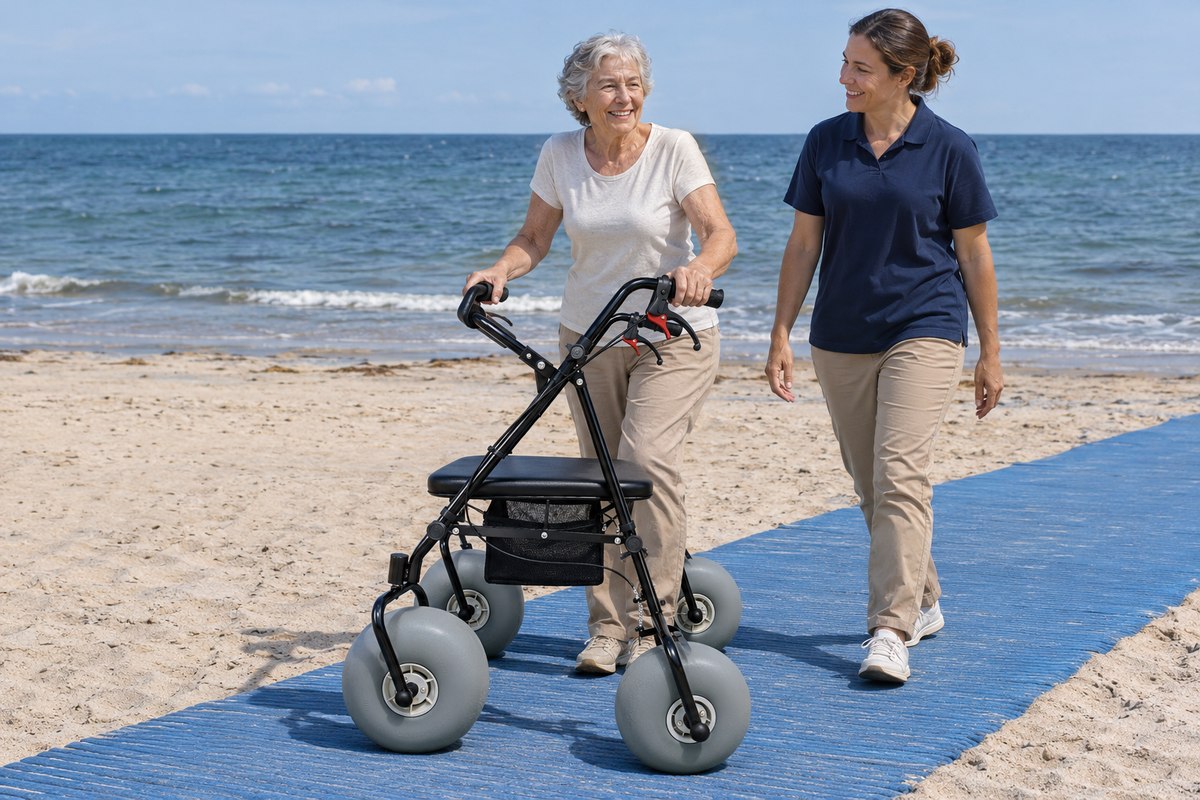
Beach walkers fit beach accessibility equipment Australia sets by supporting people who can walk short distances but need stability on sand. They suit older visitors and people recovering from injury. They give independence without a chair.
Who benefits from beach walkers?
Seniors, people with balance concerns and those who prefer walking. Here’s why that matters: many visitors don’t want a wheelchair but still need help.
- Seniors visiting with family
- People with balance concerns
- Aged care outings
What should you check in a walker?
Wide wheels for sand, brakes, height adjustment and a seat for rests. Test it on your sand.
| Walker feature | Benefit |
|---|---|
| Wide wheels | Sand travel |
| Brakes | Control |
| Seat | Rest breaks |
| Height adjustment | Fit |
Walkers widen your program to many more visitors.
Key Takeaway: Add beach walkers to serve visitors who walk but need support.
What Support Items Complete Beach Accessibility Equipment Australia?
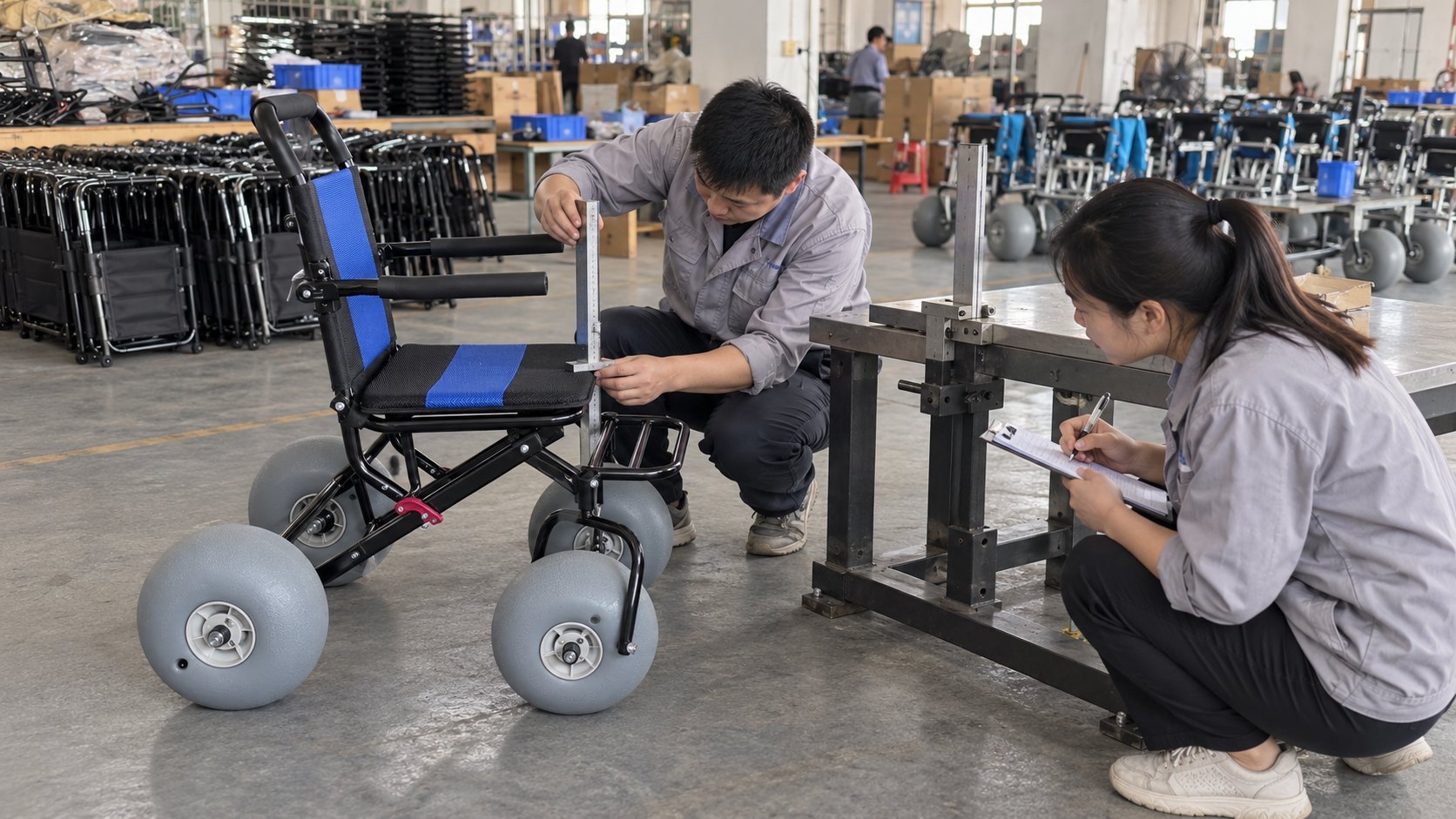
Support items that complete beach accessibility equipment Australia include shade, transfer spots, storage boxes, rinse stations, signage and accessible toilets nearby. These small items make the route usable. They’re often overlooked.
Which support items matter most?
Shade and storage matter most for daily use. Sounds simple, right? A chair with nowhere to live won’t get used.
- Shade at transfer and rest points
- Secure, shaded storage
- Rinse water nearby
How do signs help?
Signs show where equipment is, how to book and who to call. Use clear, large text.
| Support item | Purpose |
|---|---|
| Shade | Comfort and safety |
| Storage | Security and chair life |
| Rinse station | Care |
| Signage | Visibility |
Support items turn equipment into a working service.
Key Takeaway: Budget for shade, storage, rinse water and signs alongside chairs and mats.
How Is Beach Accessibility Equipment Australia Funded?
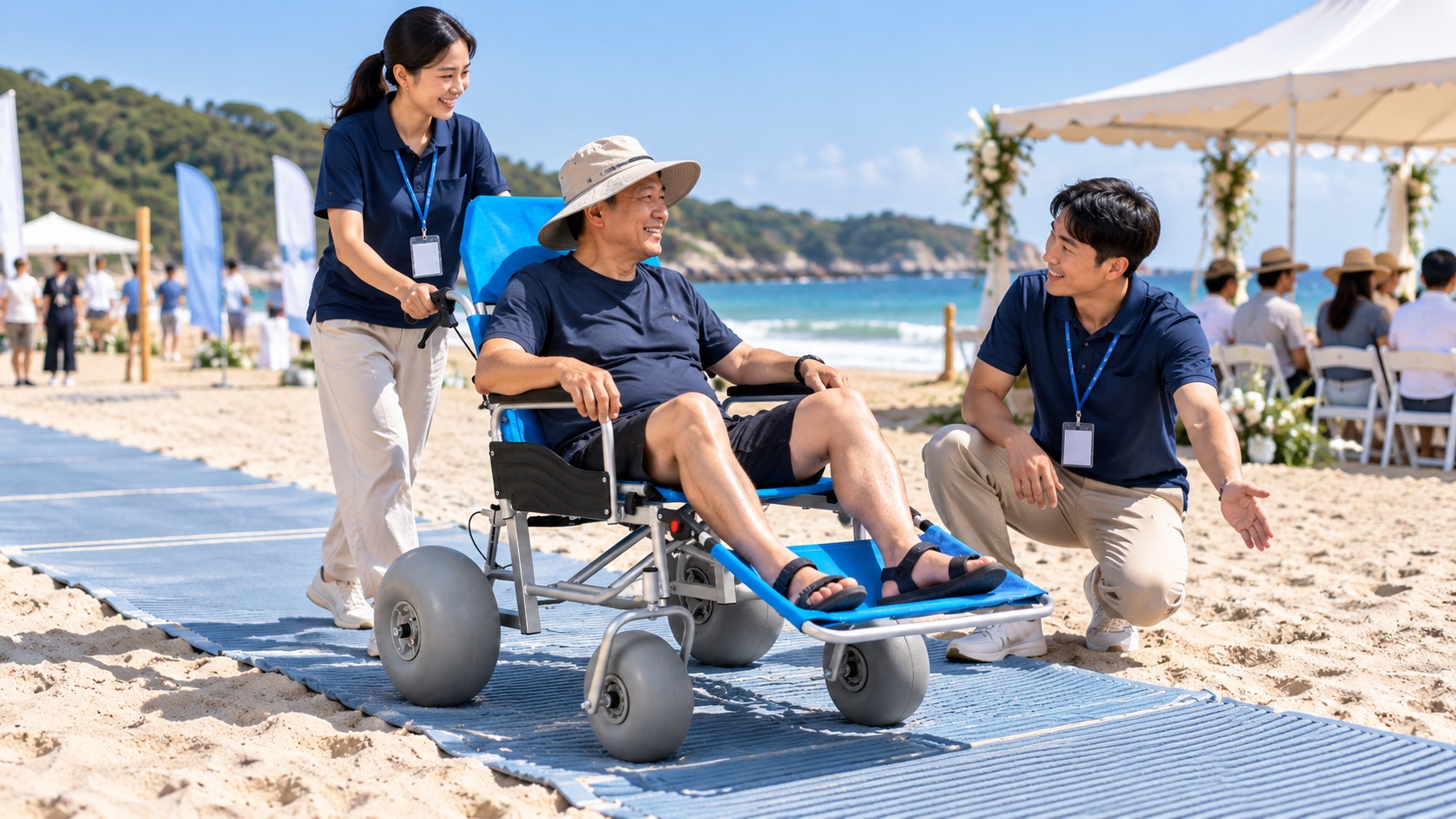
Beach accessibility equipment Australia is often funded through government inclusive-beach programs, council budgets, community grants, sponsors and fundraising. Rules and rounds change. Check current options with your state government.
Where do councils look for funds?
State-administered inclusive-beach funding, council capital budgets and community grants. Now here’s the twist: many projects started with crowdfunding and local sponsors.
- Government inclusive-beach funding
- Council budgets and grants
- Sponsors and service clubs
How do you build a strong application?
Show community demand, a full route plan and an upkeep budget. Include quotes for each item.
| Funding source | Typical use |
|---|---|
| Government | Mats and chairs |
| Council | Installation and storage |
| Sponsors | Chairs and signs |
| Fundraising | Extras and spares |
A full route plan makes funding applications more convincing.
Key Takeaway: Combine funding sources and show a complete route plan with upkeep costs.
How Do You Buy Beach Accessibility Equipment Australia Councils Need?
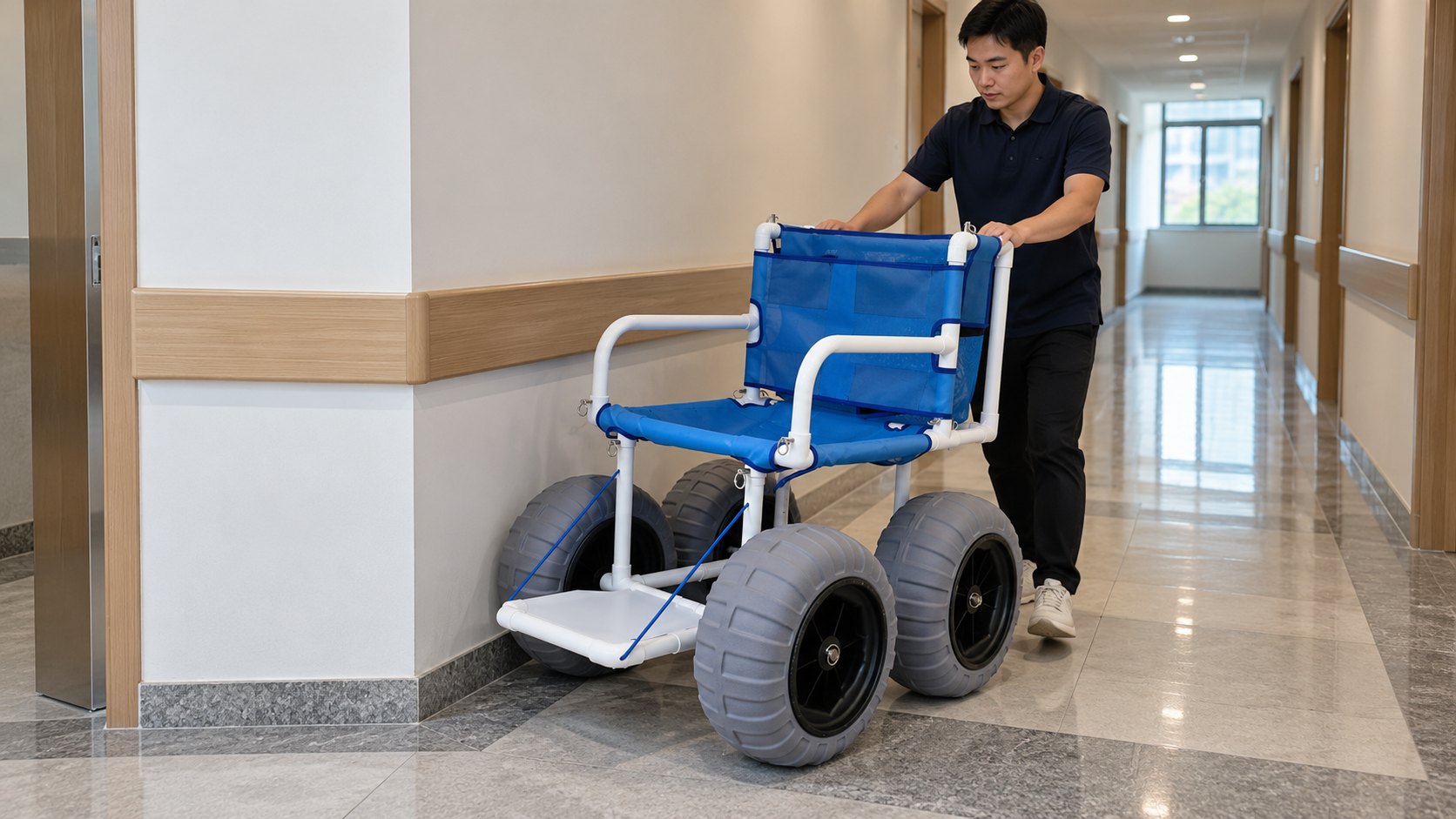
You buy beach accessibility equipment Australia councils need by writing route-based specs, following procurement rules and comparing landed cost, spares and support. Buying matting and chairs from one supplier can simplify things. Compare carefully either way.
What should specs include?
Matting dimensions, chair types, weight limits, materials and spares. Want to know the best part? Route-based specs make quotes easier to compare.
- Matting length and width
- Chair types and weight limits
- Spares and delivery
How do you compare quotes?
Score landed cost, documents, spares, warranty and support. Ask for samples or videos.
| Scoring item | Weight |
|---|---|
| Landed cost | High |
| Documents | High |
| Spares | High |
| Warranty | Medium |
Route-based buying keeps every piece compatible.
Key Takeaway: Write specs around your route and compare full landed cost and support.
How Should Beach Accessibility Equipment Australia Be Stored?
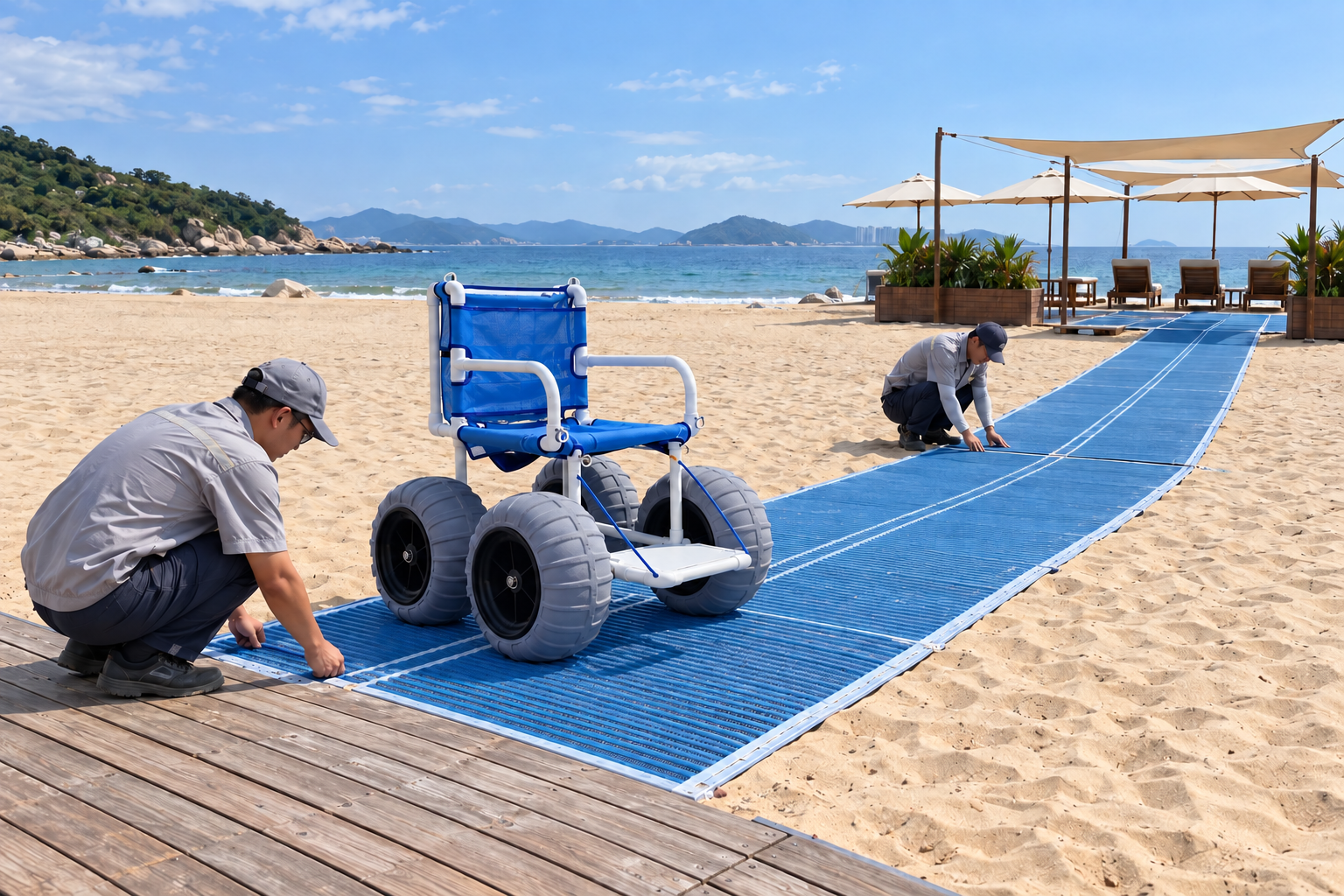
Beach accessibility equipment Australia should be stored shaded, secure and close to the beach entry, with matting rolled and stored clean in the off-season. Storage protects equipment from UV, salt and theft. It also speeds up daily use.
What makes good storage?
It’s near the route, shaded, ventilated and lockable. Here’s the thing: convenient storage means equipment actually gets used.
- Near the beach entry
- Shaded and ventilated
- Lockable
How do you store matting off-season?
Clean, dry and roll matting, then store it indoors. Check anchors before reinstalling.
| Item | Storage tip |
|---|---|
| Chairs | Shaded and dry |
| Matting | Rolled and indoors |
| Walkers | Shaded and secure |
| Spares | Labelled by model |
Good storage extends equipment life by seasons.
Key Takeaway: Store equipment close, shaded and secure, and roll matting away clean.
How Do You Maintain Beach Accessibility Equipment Australia?
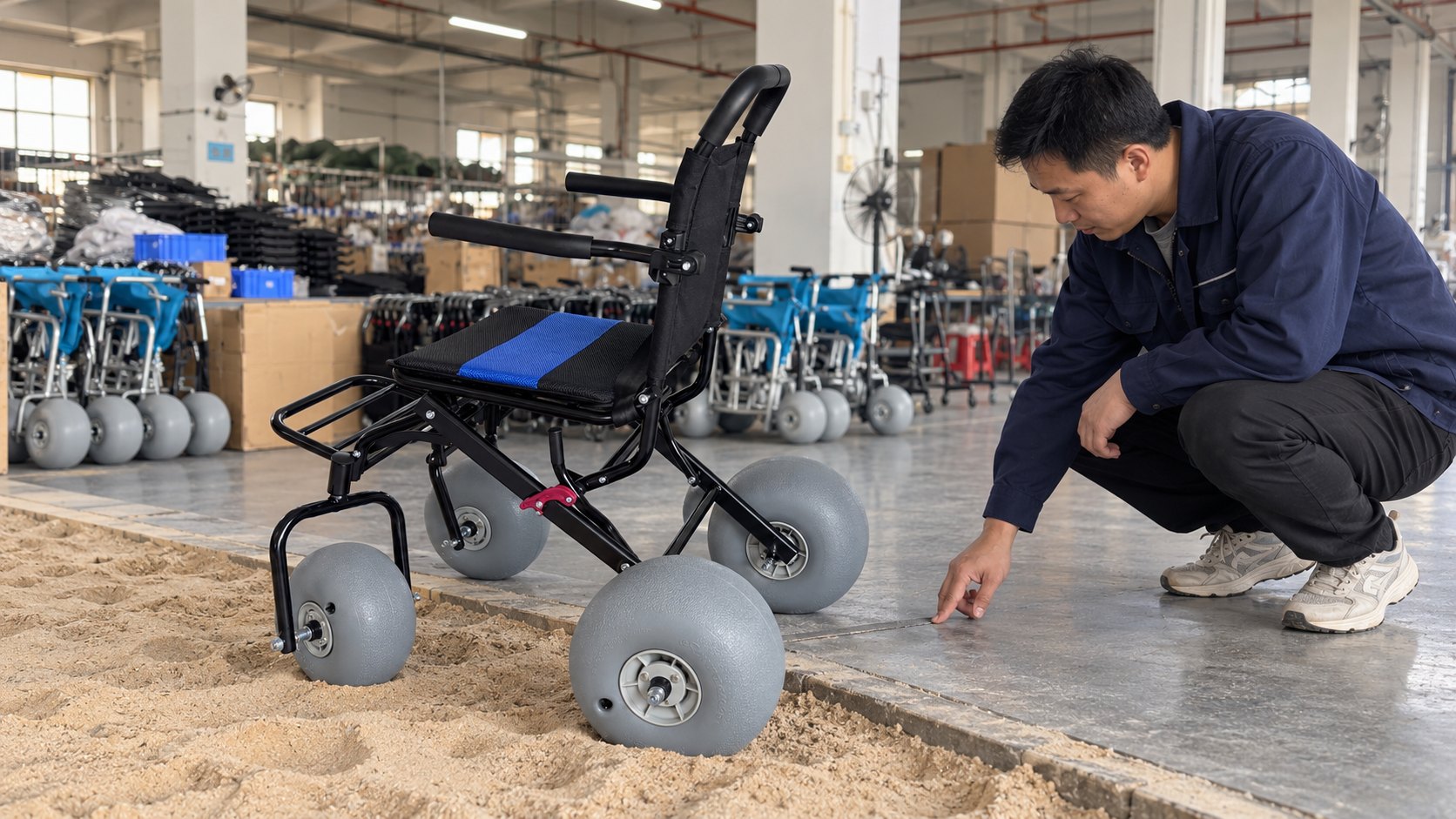
You maintain beach accessibility equipment Australia with fresh-water rinsing, weekly checks of wheels, brakes, fabric and mat anchors, and a deep clean each off-season. Routines keep everything safe. Records show what needs replacing.
What’s the routine?
Rinse chairs and walkers after use and check matting regularly. The short version? Small checks prevent big repairs.
- Rinse chairs and walkers
- Check wheels, brakes and fabric
- Inspect mat anchors and edges
Which spares should you keep?
Balloon wheels, fabric sets, fasteners, float parts and mat anchors.
| Task | Frequency |
|---|---|
| Rinse equipment | After use |
| Wheel and brake check | Weekly |
| Matting check | Weekly |
| Deep clean | End of season |
A steady routine keeps the whole route safe.
Key Takeaway: Maintain chairs, walkers and matting together on one schedule.
How Do You Measure Beach Accessibility Equipment Australia Success?
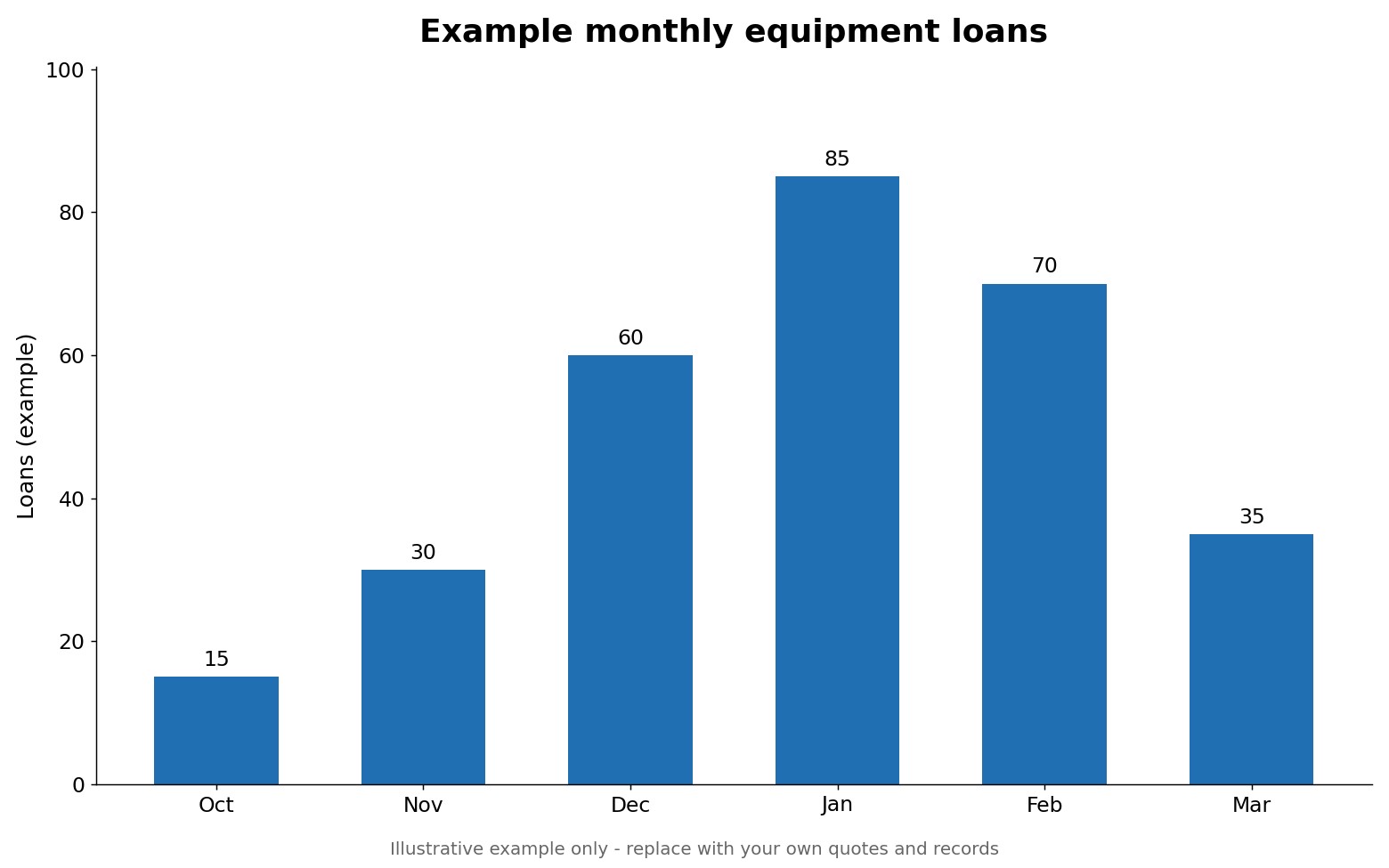
You measure beach accessibility equipment Australia success by tracking loans, bookings, turned-away requests, repairs and user feedback. These numbers support future funding. They also show where to expand.
Which numbers matter?
Loans and turned-away requests show demand. This is where it gets interesting: unmet requests often make the strongest case for more equipment.
- Loans and bookings per month
- Turned-away requests
- Repairs and parts used
How do you share results?
Share a short seasonal report with council, funders and community groups. Include user comments with permission.
| Metric | Use |
|---|---|
| Loans | Demand |
| Unmet requests | Growth case |
| Repairs | Spares planning |
| Feedback | Improvements |
Measured success keeps funding and support coming back.
Key Takeaway: Track use and unmet demand, and share results with funders every season.
Final Thoughts
Accessible beaches work when every piece of equipment fits into one route. You’ve seen what the equipment set includes, why matting matters, which chairs and walkers to choose, support items, funding, buying, storage, maintenance and measurement. Put them together and your beach welcomes far more people.
If you’re planning an accessible beach project, we can help you match chairs, walkers and matting to your site. Contact us today with your beach route and expected users. We believe accessible beaches are built piece by piece, and we’re proud to supply the pieces that bring people to the water.
FAQ
Can I start with just matting?
Yes, matting alone helps many visitors. Adding chairs and walkers later widens access further.
What’s the best equipment for a small council beach?
Matting plus one or two all-terrain chairs is a strong start. Add shade and storage too.
How do I know if we need floating chairs?
You need them if users want water access and you have calm water and trained support persons.
Can I buy matting and chairs from one supplier?
Yes, and it can simplify ordering and spares. Compare landed cost and support either way.
How do I know if our equipment is working?
Track loans, bookings and unmet requests each month. Rising use and fewer complaints show success.