
A suitable all-terrain beach wheelchair for Australia should match the user, route, support team and current model manual, with wheel, seating and material choices reviewed against local conditions. Here’s a familiar sight. A family reaches the end of a beach access path, the sand ahead is deep and dry, and a standard wheelchair can no longer move easily. An all-terrain beach wheelchair Australia buyer can assess through documented fit and site checks may provide a practical land-access option, and this guide covers design, wheels, terrain, seating, UV, storage, care, costs and buying.
We manufacture all-terrain, folding and floating beach chairs and can provide model documents for Australian purchasing discussions. We’ll keep it practical and show where another chair category may fit the intended activity more closely.
What Is an All-Terrain Beach Wheelchair Australia Buyers Use?
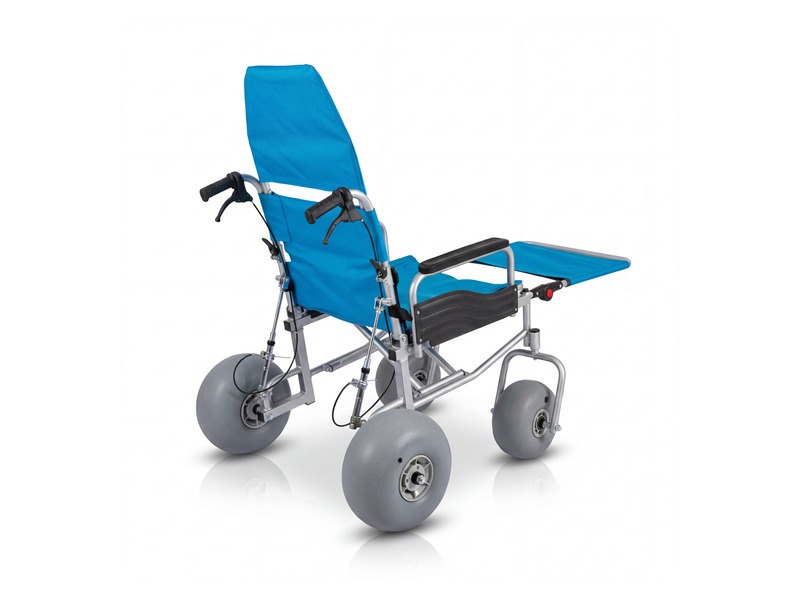
An all-terrain beach wheelchair Australia buyer may review is a manual chair designed for specified sand and outdoor routes, often using wide low-pressure wheels. A support person pushes it. Water use depends entirely on the exact model manual rather than the all-terrain label.
For a fleet buyer, that distinction controls training, route design and supervision. Put the intended surface, water boundary and support-person role in your operating note before staff offer the chair to visitors. Use the same note during inductions so seasonal employees give visitors consistent advice.
How does it differ from a floating chair?
Also, a floating model is designed for the water conditions stated in its manual, while a land chair follows different limits. Here’s the deal: choose from the planned activity and written use boundaries rather than assuming one category covers both. Review current public accessibility guidance before launch.
- Land-use limits from exact manual
- Wide balloon wheels
- Supportive seat
What does our high-back model include?
Also, confirm the current high-back configuration from the exact model sheet rather than relying on a photograph or earlier quote. Ask how seating support, leg positioning and wheel layout are documented for the unit offered.
| Feature | Benefit |
|---|---|
| Documented item | Buyer question |
| High-back seating | What support is specified? |
| Leg positioning | What adjustment is stated? |
| Wheel layout | Which terrain limits apply? |
| Seat material | What care method applies? |
The answers may be relevant to councils, clubs or families after individual fit and route review.
Key Takeaway: Pick an all-terrain chair when users need comfort and stability on sand.
Who Buys an All-Terrain Beach Wheelchair Australia Model?
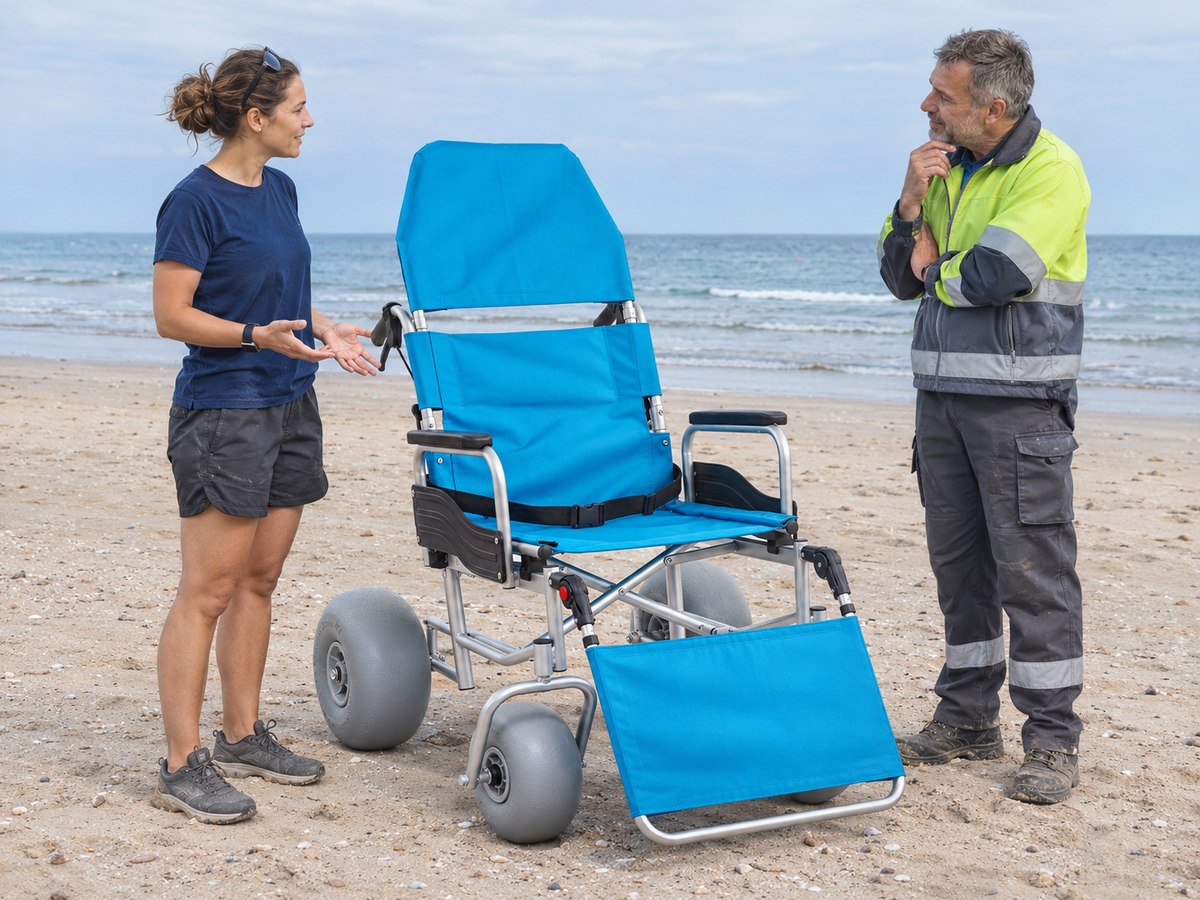
Potential buyers for an all-terrain beach wheelchair Australia model include councils, surf clubs, hire operators, holiday parks, care providers and families. Use patterns differ. Maintenance and spare-part needs differ too.
Usage volume should shape the order rather than a generic product label. Record expected loan frequency, cleaning access, transport method and storage conditions so suppliers can answer against the same operating picture. A busy public fleet may also need a spare chair while another unit waits for service.
Which buyers need the toughest chairs?
Also, councils, clubs and hire fleets, because many people use each chair. Think about it: a chair lent every day of summer needs replaceable parts.
- Councils and clubs
- Hire operators
- Holiday parks
When do families buy?
Families may consider ownership when they visit the coast regularly. A folding model may fit some vehicles, subject to its packed dimensions and the vehicle space.
| Buyer | Main use |
|---|---|
| Council | Free loans |
| Surf club | Access days |
| Hire operator | Paid hire |
| Family | Private use |
In fact, knowing your use pattern guides model and spares choices.
Key Takeaway: Match durability and spares to how often each chair is used.
Which Wheels Suit an All-Terrain Beach Wheelchair Australia Chair?
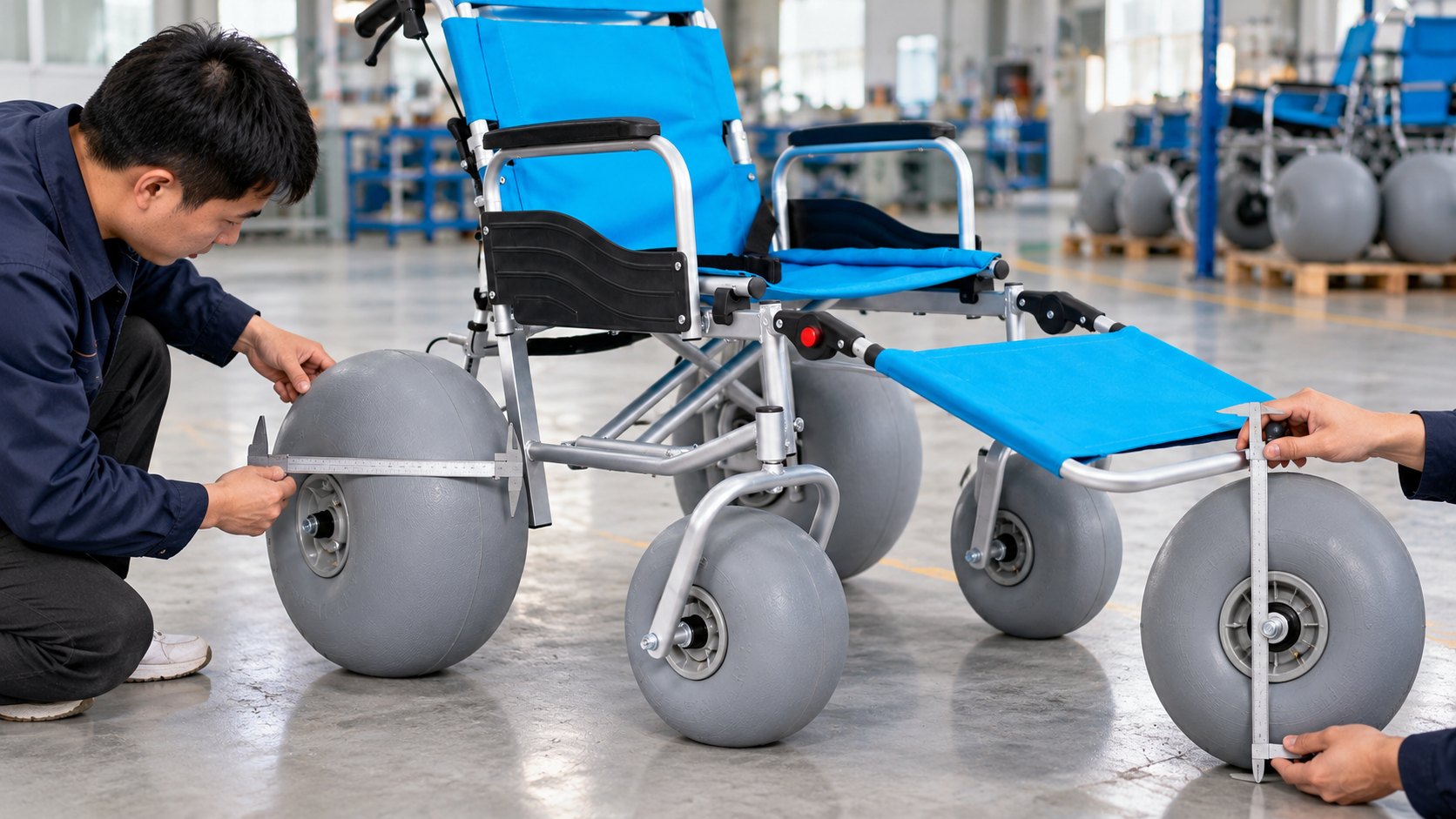
Wide low-pressure wheels are commonly considered for an all-terrain beach wheelchair Australia chair because they are designed to reduce sinking on compatible soft surfaces. Performance remains model and site dependent. Follow the current manual.
Ask for the current wheel-care instructions and the tools needed on site. A simple pressure check at handover prevents staff from guessing and gives managers a repeatable maintenance standard. Record replacement part references before delivery so the team can reorder the correct wheel later.
How do you keep wheels working?
Also, check pressure and condition using the model instructions, and keep any specified tool available. But here’s the kicker: temperature and exposure can affect wheel condition. As a result, use the maker’s check method before operation.
- Pressure check before use
- Hand pump nearby
- Spare wheels on hand
Why do front and rear sizes differ?
Some models use different front and rear wheel sizes, but the stated handling purpose and limits should come from the maker’s current documents.
| Wheel factor | Why it matters |
|---|---|
| Width | Flotation |
| Pressure | Rolling effort |
| Size | Obstacles |
| Spares | Uptime |
Wheel care keeps pushing effort down.
Key Takeaway: Check wheel pressure and condition at the intervals stated for the model and local exposure.
How Does an All-Terrain Beach Wheelchair Australia Handle Terrain?
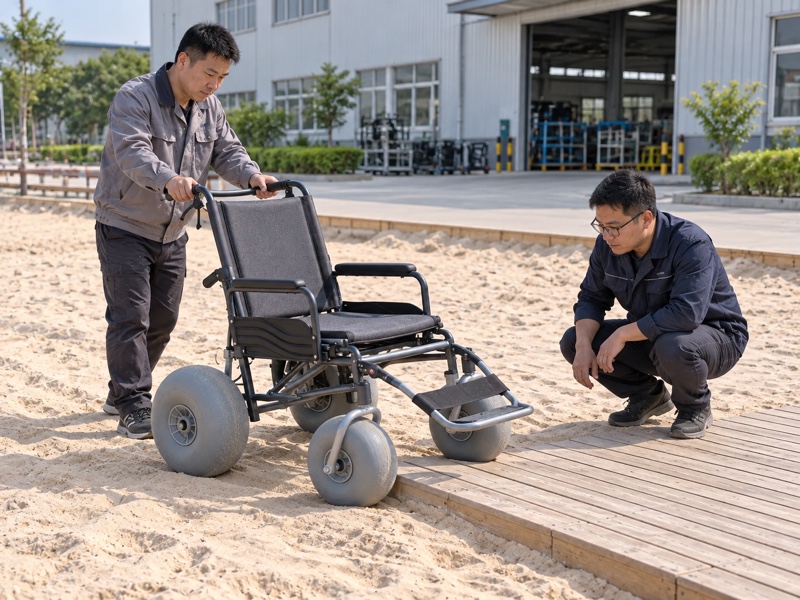
An all-terrain beach wheelchair Australia chair may travel across surfaces listed by its maker. However, pushing effort changes with sand depth, slope, route length and user load. Deep dry sand or dune tracks can demand more support. Water use must follow the exact manual.
Walk the whole route with staff before approving a model. Note loose sand depth, cross-slopes, narrow turns, kerbs and the distance from storage because each factor changes the effort required from a support person. Repeat that walk after seasonal storms or beach works, since a route that worked last month may now contain a steep drop, buried mat edge or longer stretch of loose sand.
Where does it perform best?
Also, approved matting and firmer sand may reduce pushing effort compared with deep loose sand. Here’s why that matters: a route audit helps the operator choose a manageable path before a loan begins.
- Matting
- Wet, firm sand
- Short soft stretches
Where should you take care?
Dune tracks, steep ramps and long deep-sand stretches.
| Surface | Effort |
|---|---|
| Matting | Low |
| Wet sand | Low |
| Deep dry sand | High |
| Dune track | Site assessment needed |
Still, route choice matters as much as the chair.
Key Takeaway: Plan routes around site conditions and set support levels from the manual and local assessment.
How Should an All-Terrain Beach Wheelchair Australia Seat Fit?
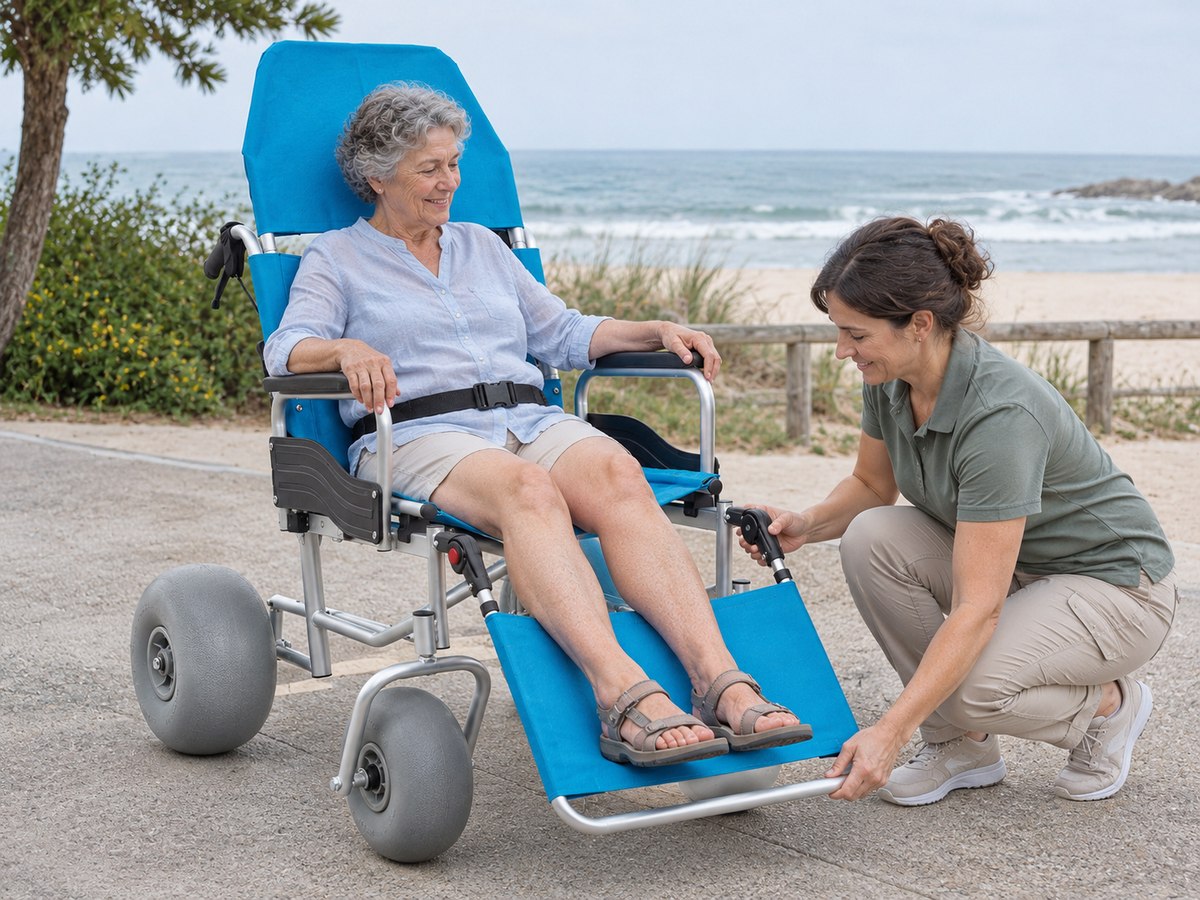
An all-terrain beach wheelchair Australia seat should match the user’s width, support their back and keep their legs comfortable for the visit. Adjustments help. A health professional can advise.
Fit should be reviewed for each user rather than assumed from appearance. Your booking form can ask about transfer needs and support preferences without asking staff to make clinical decisions.
Which adjustments matter most?
Also, backrest angle, leg support and positioning straps. Sounds simple, right? Good fit decides how long someone can stay on the sand.
- Backrest angle
- Leg support
- Straps
How do you check fit?
Use seat size and weight limit from the current manual, then trial on firm ground.
| Fit check | Source |
|---|---|
| Seat width | Manual |
| Weight limit | Manual |
| Support | Trial |
| Straps | User needs |
Documented fit checks help the user and support team judge comfort and positioning.
Key Takeaway: Confirm seat size and limits in the manual and trial before the sand.
How Does UV Affect an All-Terrain Beach Wheelchair Australia Fleet?
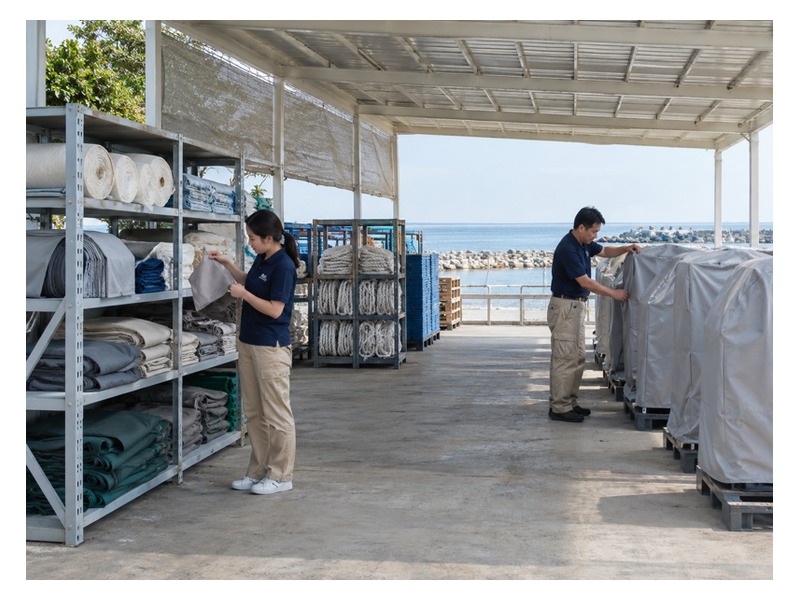
Strong UV affects an all-terrain beach wheelchair Australia fleet by fading and weakening fabric and straps over time. Shade slows it. Spare fabric helps.
Create a shaded drying position before the fleet arrives. Rotating wet chairs straight back into a closed shed traps moisture. Meanwhile, a short drying stage makes faults easier to spot. Keep direct sun off removable fabric and follow the maker’s care instructions for every material.
How do you protect fabric?
Also, store the chair as its manual directs and replace worn fabric before further use. Now here’s the twist: repeated sun exposure may affect fabrics and straps. As a result, inspect them under the maker’s care schedule.
- Shade storage
- Covers between loans
- Spare fabric sets
Which parts need UV checks?
Also, seat fabric, straps and wheel surfaces.
| Part | UV check |
|---|---|
| Seat fabric | Operator schedule |
| Straps | Before use and scheduled checks |
| Wheels | Manual-based checks |
| Covers | After heavy exposure |
UV planning keeps chairs looking and working well.
Key Takeaway: Keep chairs in shade and replace fabric before it weakens.
How Do You Maintain an All-Terrain Beach Wheelchair Australia Chair?
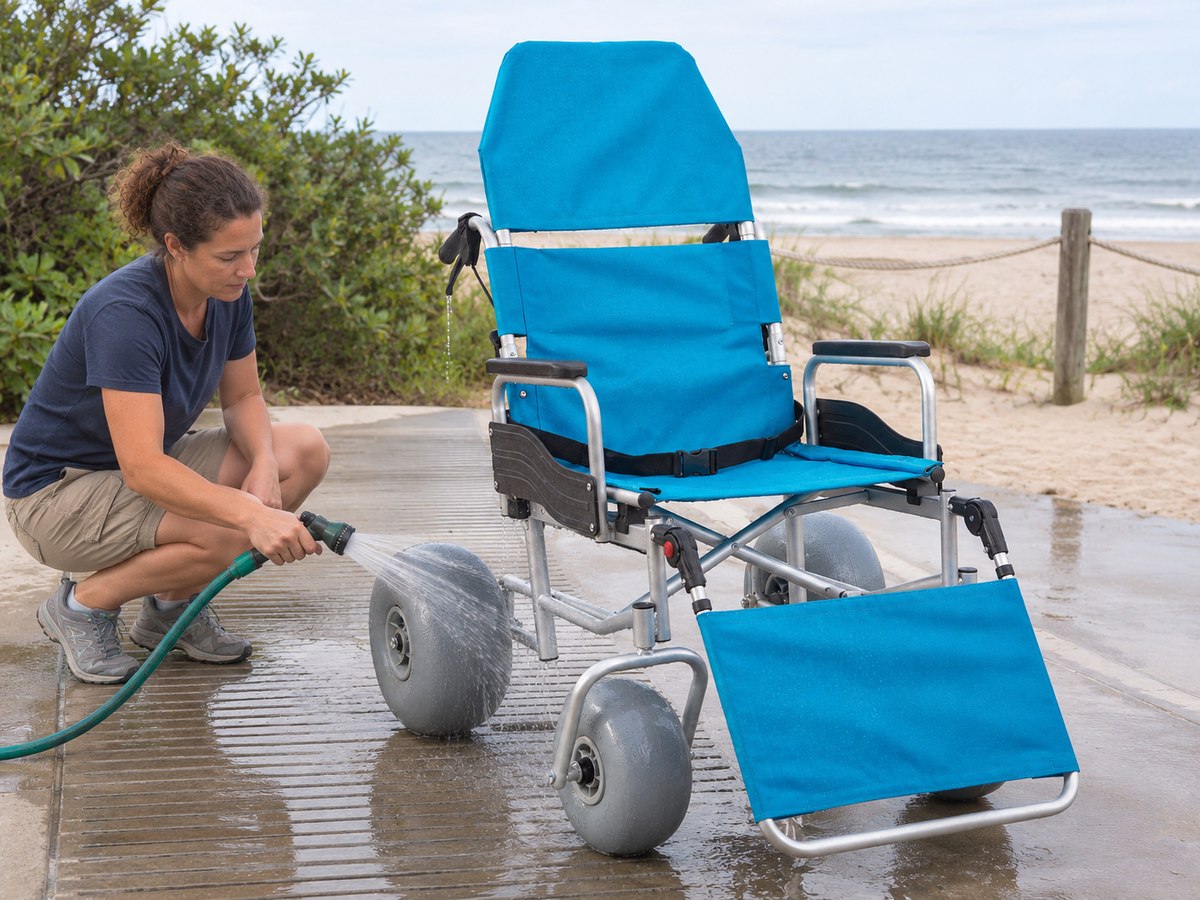
You maintain an all-terrain beach wheelchair Australia chair with a fresh-water rinse after use, regular wheel, brake and fastener checks and early part replacement. Salt is the enemy. Routines are cheap.
Assign the routine to a named shift or role so it does not disappear on busy days. A dated checklist beside the rinse point gives the next operator a clear record without adding heavy administration. Keep cleaning tools beside the rinse point.
What’s the daily routine?
Also, rinse, dry and inspect the areas named in the manual. Keep the handover practical: each operator should complete model-specific instruction before taking responsibility for checks.
- Rinse
- Dry in shade
- Wheels and brakes
What should you check weekly?
Also, fasteners, fabric and straps. Log repairs.
| Task | Frequency |
|---|---|
| Rinse | After use |
| Wheels and brakes | Before use or as directed |
| Fasteners | Planned inspection |
| Fabric | Before use and planned inspection |
Simple care keeps chairs in service.
Key Takeaway: Rinse after every use and log repairs for spares planning.
What Does an All-Terrain Beach Wheelchair Australia Cost?
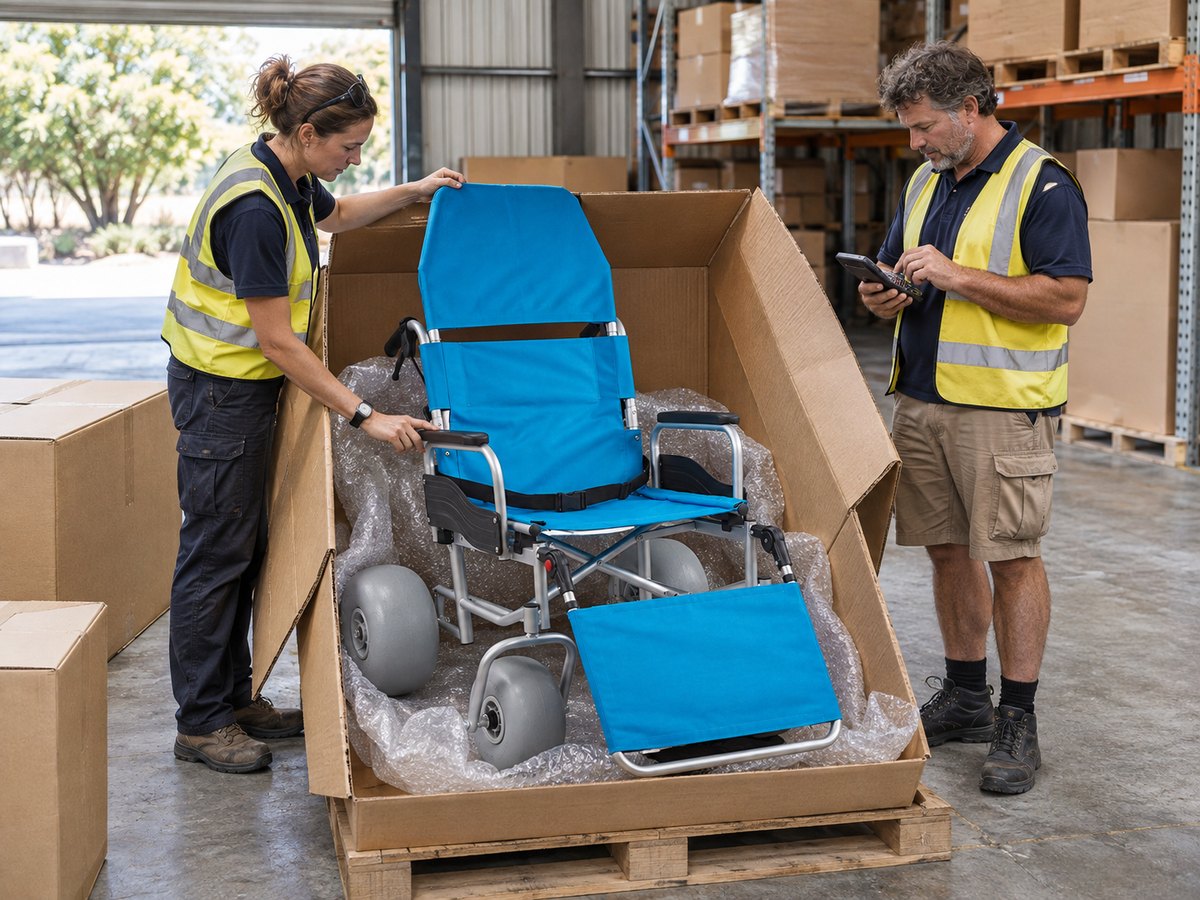
An all-terrain beach wheelchair Australia purchase may involve the chair, freight, border charges, tax, local delivery and spares, depending on the sale and import arrangement. Running costs can include staff time and storage. Confirm each line for the actual transaction.
Use a landed-cost worksheet that separates quoted supply from freight, local handling and site preparation. That approach exposes missing items early and keeps two supplier proposals comparable.
Which costs are one-off?
Also, the chair, freight, applicable tax and delivery may be one-off costs. Here’s the thing: compare the documented landed basis rather than an isolated factory price.
- Chair and freight
- Import charges and GST
- Delivery
Which costs recur?
Also, spares, storage and staff or volunteer time.
| Cost line | Type |
|---|---|
| Chair | One-off |
| Freight and GST | One-off |
| Spares | Ongoing |
| Staff time | Ongoing |
Meanwhile, documented cost lines give budget reviewers a clearer basis for comparison.
Key Takeaway: Compare landed cost and budget for spares and staff time.
How Do You Compare All-Terrain Beach Wheelchair Australia Quotes?

You compare all-terrain beach wheelchair Australia quotes on landed cost, documents, spares, warranty and local support. One template helps. Unit price misleads.
Request the same response format from every bidder. Written confirmation of model identity, included parts, packing method and after-sales contact reduces ambiguity when the shipment reaches your site.
What should a quote include?
Also, model, manual, landed cost, spares list and lead time. The short version? Ask for anything missing before you compare.
- Current manual
- Landed cost
- Spares and lead time
How do you score them?
Also, use the same weights for every supplier and record your reasons.
| Criterion | Weight |
|---|---|
| Landed cost | Set locally |
| Documents | Set locally |
| Spares | Set locally |
| Warranty | Set locally |
Consistent scoring leads to defensible choices.
Key Takeaway: Score quotes on landed cost, documents and spares.
Where Should You Buy an All-Terrain Beach Wheelchair Australia Model?
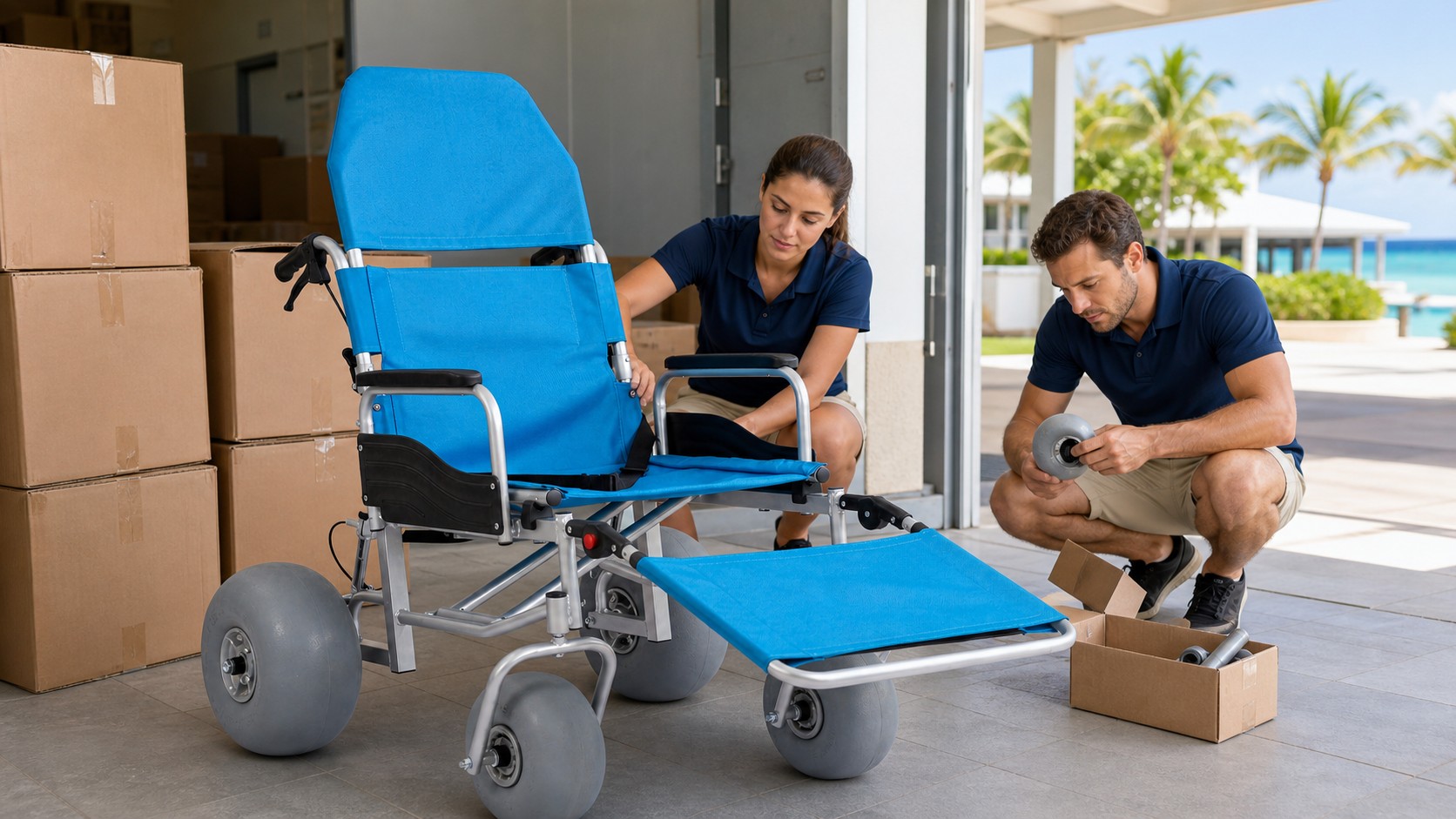
Compare an all-terrain beach wheelchair Australia model through suppliers that provide current manuals, written specifications and a stated spare-parts path. A local retailer and a factory-direct channel can offer different trade-offs. Neither route fits every order.
Choose the channel around order size, support needs and local service capacity. Fleet buyers often value consistent batches and spare-part continuity. Meanwhile, a single-site trial may favour a nearby source.
When does factory-direct make sense?
Also, fleet, accessory or repeat-order discussions may justify a factory-direct quote. This is where it gets specific: ask what spare-parts access, support and order conditions the supplier can actually document.
- Fleet orders
- Custom accessories
- Spares packages
When should you buy locally?
Also, for one chair, quick delivery or local service.
| Channel | Possible use case |
|---|---|
| Local retailer | Local supply option |
| Factory direct | Direct supply option |
| Hire trial | Pre-purchase evaluation option |
The comparison should reflect support, delivery and total documented cost.
Key Takeaway: Compare local and direct channels against the same documents, support needs and landed basis.
Final Thoughts
An all-terrain beach chair may support access when the selected model, route and operating plan align. You’ve seen how to review users, wheels, terrain, seating, UV exposure, maintenance, costs, quotes and supply channels. Those checks create a stronger basis for selection without promising performance at every beach.
If you’re planning a purchase, we can share manuals, spares lists and landed-cost quotes for Australia. Contact us today with your beach and user needs. We believe the sand belongs to everyone, and we build every chair to help people reach it.
FAQ
Can I take an all-terrain chair into the surf?
Only if the exact manual permits that use. A separately designed floating model follows its own water limits and supervision requirements.
What’s the best wheel for soft sand?
In fact, wide low-pressure wheels are commonly evaluated for soft sand. Confirm the model, pressure and surface limits in the current manual.
How do I know if the chair fits the user?
Check seat size and weight limit in the current manual. Ask a health professional if unsure.
Can I push the chair alone?
That depends on user load, route, surface, model and operator capacity. Set support levels through the manual and a site-specific assessment.
How do I know if UV has damaged the fabric?
Also, look for fading, stiffness or fraying. Replace fabric before it tears.