The best accessibility beach mat route plan creates one managed path from an existing hard surface toward a defined beach access zone, with clear ownership for rollout, inspection, removal, and storage. Resorts and parks often buy a pathway product before deciding where it begins, where it ends, or who checks it after sand and foot traffic change. A route-led plan fixes that problem. It brings facilities, beach operations, guest service, and purchasing into the same review. Each decision should come from site observations and written product guidance, not invented load figures, installation times, or compliance claims. A dated route record also helps managers review seasonal site changes.
Why should an accessibility beach mat route start at entry?
An accessibility beach mat route should start at a stable entry point where users can approach from existing accessible infrastructure without crossing an unmanaged gap. The site team needs to review parking links, paving, ramps, gates, drainage, and the point where sand begins. A route that starts too late may leave the original barrier in place. However, U.S. Access Board beach-route guidance applies to defined federal settings, so local reviewers must confirm what governs each site.
Walk the path from the arrival side rather than beginning on the beach. Include the people responsible for facilities, daily setup, guest questions, and storage. Mark ownership boundaries between existing hard surfaces and the planned mat. If another authority manages part of the route, record the handoff and approval needed before installation.
How can teams document the starting point?
Begin with a shared map: show the entry, surface boundary, available width, drainage features, and the person responsible for each area.
- Name the existing hard-surface connection.
- Mark gates, ramps, and drainage points.
- Record ownership across the route boundary.
Key Takeaway: A strong route begins where existing access ends and site ownership remains clear.
| Review item | Team note |
|---|---|
| Entry feature | Observed condition |
| Ownership | Responsible team |
| Open approval | Named contact |
Resolve entry gaps before choosing route length.
Which beach areas suit an accessibility beach mat route?
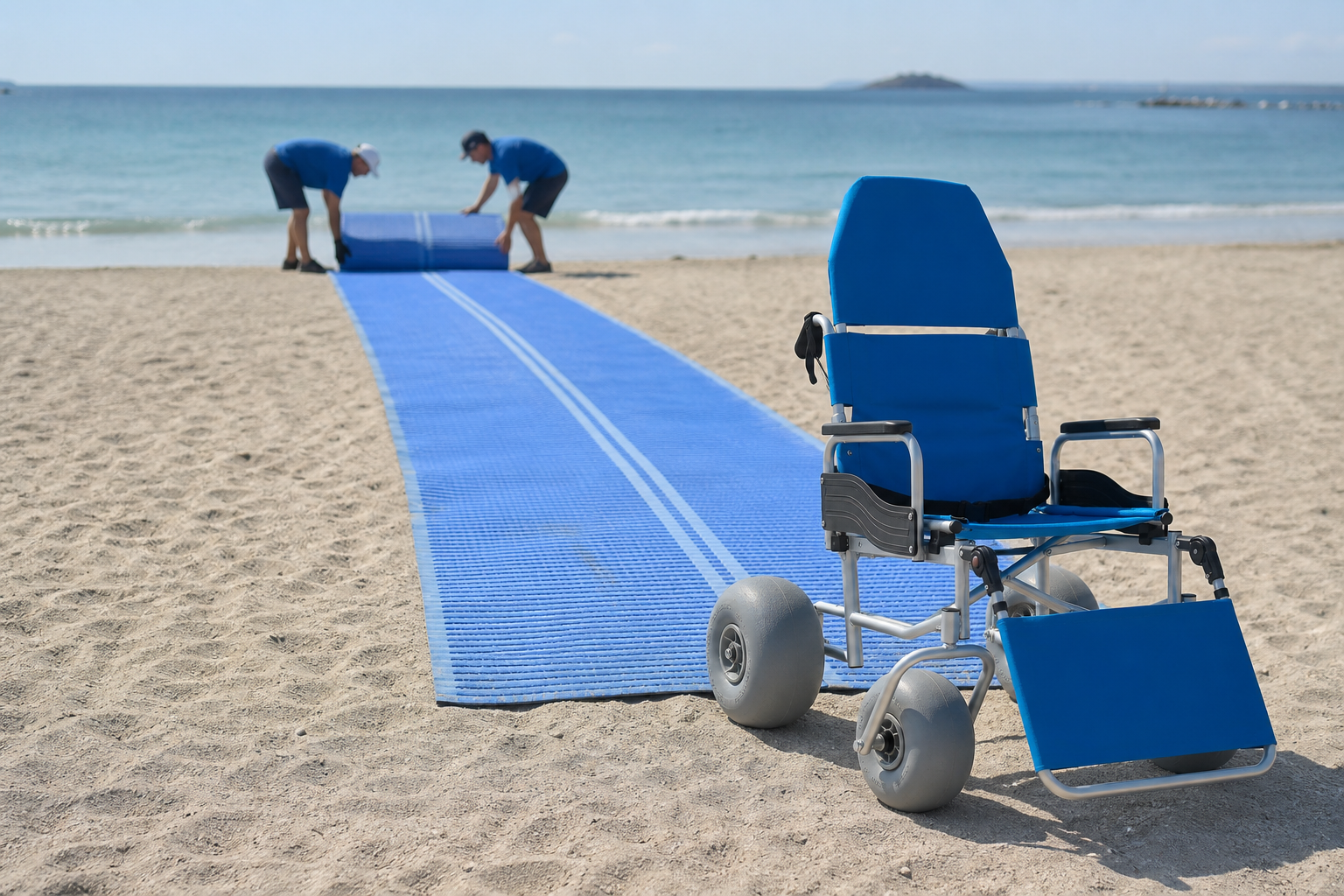
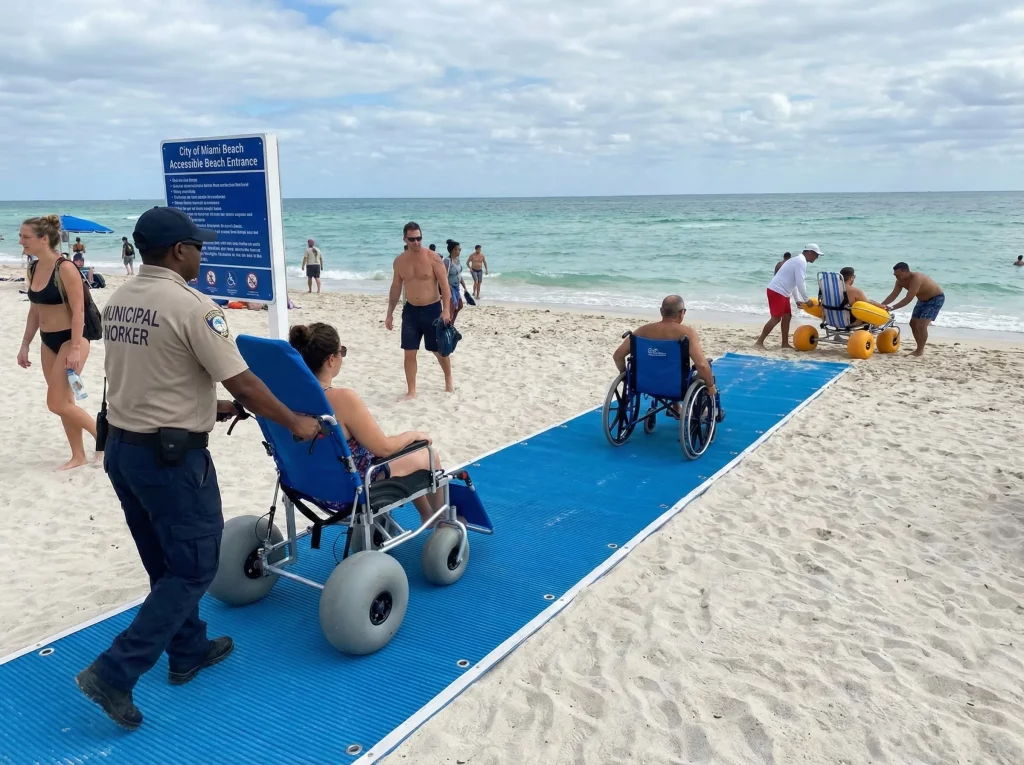
An accessibility beach mat route suits a managed corridor with a defined start, destination, operating period, inspection routine, and plan for changed sand conditions. The corridor should avoid service traffic, emergency paths, sharp turns, and unmanaged obstructions. Route selection also needs enough working space for rollout and recovery under the product guidance. Then compare the planned path with an all-terrain beach wheelchair at every surface join.
Use the beach wheelchair range to review how mobility devices may approach the pathway, then examine the site itself. Note beach furniture, event zones, lifeguard lines, cleaning routes, and seasonal boundaries. The pathway should support the local access program without becoming a storage lane or general equipment route.
What corridor questions belong in the route plan?
Keep the map operational: show who uses the corridor, when it operates, which activity crosses it, and what staff do when the path no longer remains clear.
- Define the destination and operating period.
- Mark cross traffic and furniture zones.
- Add a stop rule for blocked sections.
Key Takeaway: A suitable corridor has a defined purpose, clear space, and a local response for changed conditions.
| Review item | Team note |
|---|---|
| Corridor item | Local note |
| Cross traffic | Control action |
| Blocked path | Staff response |
Review the corridor during peak beach activity.
How should teams prepare the rollout area?
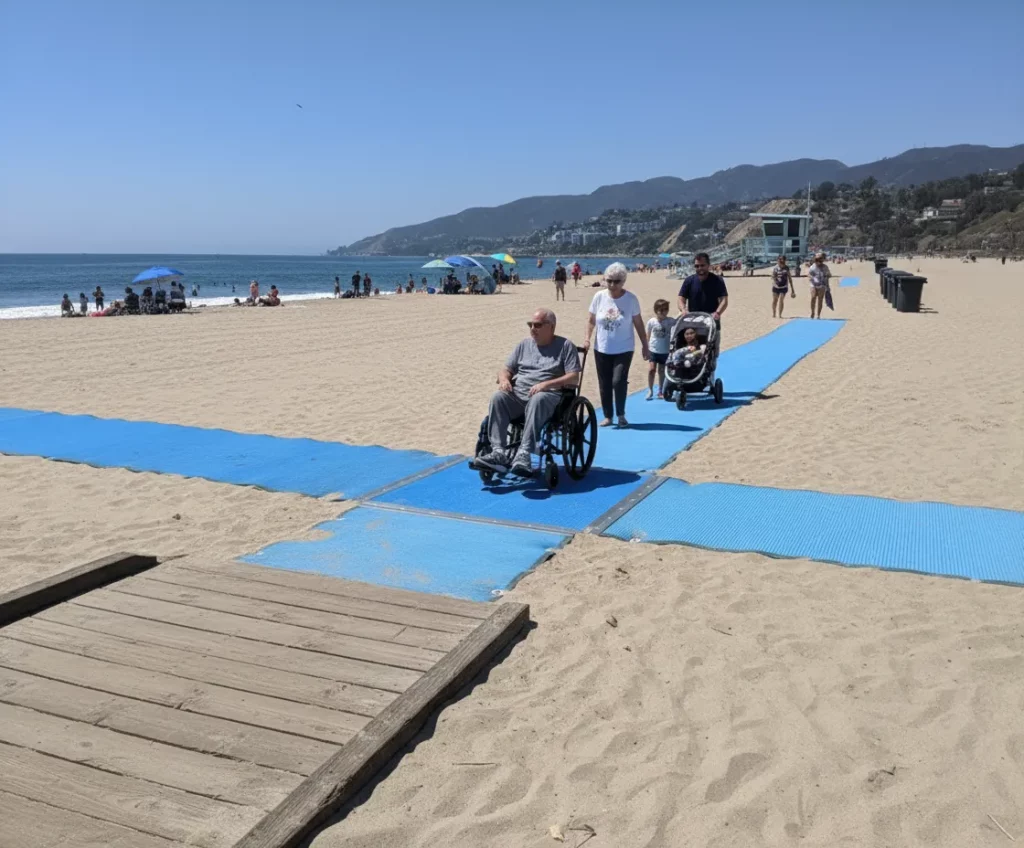
An accessibility beach mat rollout area should be prepared under the model instructions and the site’s approved method for clearing hazards, positioning the material, and protecting adjacent operations. Staff should identify debris, deep ruts, standing water, sharp objects, and route obstructions before the mat leaves storage. Preparation should never depend on unsupported installation shortcuts. Use the supplier overview to prepare questions, while exact mat instructions control deployment.
The beach access mat application page offers related route context. Keep the local method tied to supplier guidance and site policy. Assign staff positions, define where the roll or panels may rest, and keep the working zone separated from guest traffic until the opening check is complete.
What should the pre-rollout briefing cover?
A calm setup starts with roles: each person should know the route limit, handling position, communication cue, and action for an unexpected obstruction.
- Inspect the route for visible hazards.
- Assign handling and observation roles.
- Control the working area until approval.
Key Takeaway: Preparation should create a clear working zone and a shared setup sequence based on written guidance.
| Review item | Team note |
|---|---|
| Preparation item | Staff action |
| Working zone | Control method |
| Unexpected issue | Pause owner |
Open the route only after the setup check.
What makes surface joins easy to review?
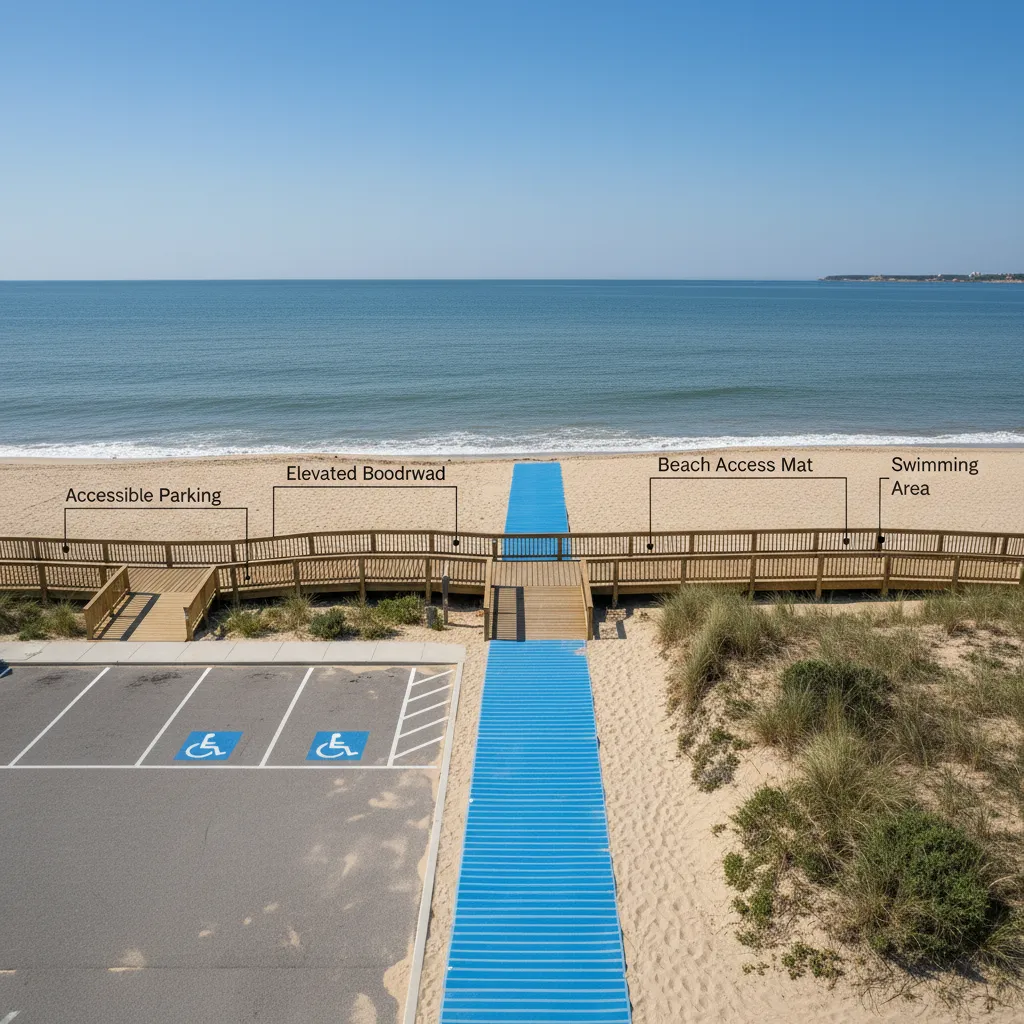
An accessibility beach mat surface join is easier to review when its location, level change, drainage, edge condition, and approach direction are recorded. Pay close attention where paving meets sand, where mat sections connect, and where a mobility device enters or leaves the pathway. Small gaps or raised edges need a defined staff response.
Do not create pass or fail measurements without an approved source. Use site dimensions, supplier instructions, and applicable project requirements. Photograph joins from both travel directions if local policy allows. Record what staff inspect before opening and which condition closes the route pending review.
How should join conditions be recorded?
Make the note easy to repeat: another staff member should be able to find the join, view the same features, and apply the same local response.
- Name each join and travel direction.
- Record edge and drainage observations.
- State the closure and escalation rule.
Key Takeaway: Surface joins need named locations, repeatable checks, and a clear route-status rule.
| Review item | Team note |
|---|---|
| Join location | Inspection point |
| Observed condition | Route status |
| Escalation | Assigned owner |
Include join checks in the opening record.
How can sites check mat condition each day?

An accessibility beach mat should receive a daily opening check for alignment, visible damage, sand buildup, edge condition, connections, obstructions, and the status of the planned destination. The checklist should follow the product guidance and local operating plan. Staff also need a mid-day or event-based check when site conditions change.
Use factual condition language and route-status choices such as open, restricted under a local rule, or closed for review. Avoid repair attempts outside the approved procedure. A condition note should identify the location, observation, time, staff member, and person receiving the escalation so the next shift can see the full record.
What makes a condition check useful?
Location is the key: attach every observation to a route segment or connection rather than writing a general comment about the whole mat.
- Check alignment and visible edges.
- Remove only approved obstructions or buildup.
- Log location, status, and escalation.
Key Takeaway: A daily check should connect a visible condition with route status and a named response.
| Review item | Team note |
|---|---|
| Route segment | Condition note |
| Status | Staff action |
| Escalation | Recipient and time |
Compare opening and closing records for patterns.
Where should the route end near the shoreline?
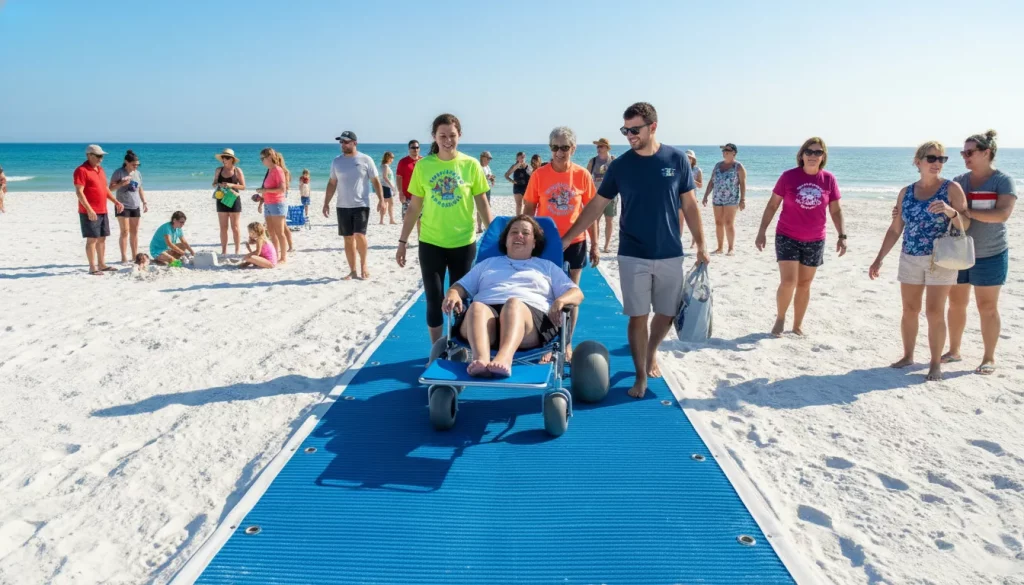
An accessibility beach mat route should end at a defined managed zone that supports the site’s access program without extending into an unapproved water, tide, or service area. The endpoint should have enough space for the intended movement and a clear boundary that staff can inspect. Seasonal shoreline movement may require a local review schedule. If water access also belongs in the program, review a floating beach wheelchair under a separate operating boundary.
Coordinate the endpoint with lifeguard, beach maintenance, facilities, and guest-service teams. Record who may adjust the route and which approval is needed. Do not promise water access merely because the pathway reaches closer to the shoreline. The access plan should describe the endpoint’s function in precise, non-medical language.
How can the endpoint remain clearly managed?
Define its purpose in writing: state where the pathway stops, which activity the zone supports, and what staff do when sand or shoreline conditions alter the area.
- Mark the endpoint on the route map.
- Name the team that approves changes.
- Add a review trigger for moved sand or boundaries.
Key Takeaway: A managed endpoint has a defined purpose, visible boundary, and approval process for change.
| Review item | Team note |
|---|---|
| Endpoint feature | Defined use |
| Boundary check | Route status |
| Change request | Approval owner |
Review endpoint notes with beach operations.
Who should brief staff before opening the route?
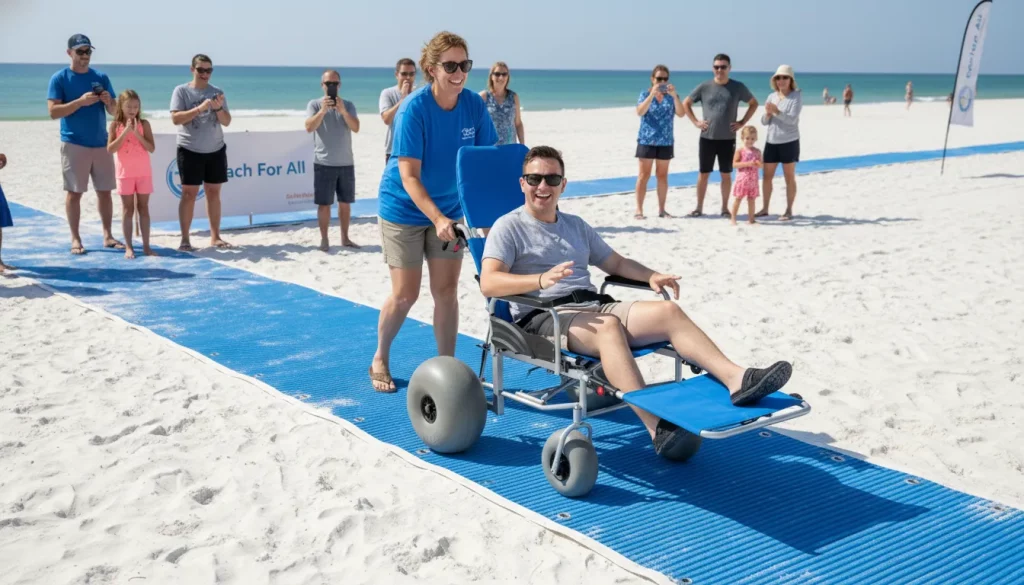
An accessibility beach mat route should be opened by staff who have been briefed on setup roles, inspection points, communication cues, route limits, status records, and escalation contacts. The briefing can be short, but it should cover the actual route and current site conditions. New or reassigned staff need the same core information before taking ownership.
Use the route map and opening checklist during the briefing. Walk the path when practical, point out joins and the endpoint, and state who may change route status. Guest-facing staff should know how to describe the service without making medical or compliance promises. Facilities staff should know where condition reports go.
What should staff be able to explain?
A quick check works well: ask each role to describe its inspection point, status action, and escalation contact in its own words.
- Review route limits and opening checks.
- Confirm status and escalation authority.
- Practice concise guest-facing language.
Key Takeaway: A staff briefing should link each role with a route point, decision, and record.
| Review item | Team note |
|---|---|
| Role | Route responsibility |
| Status decision | Authority |
| Guest question | Approved response |
Repeat the briefing after route changes.
How should teams remove and store the mat?
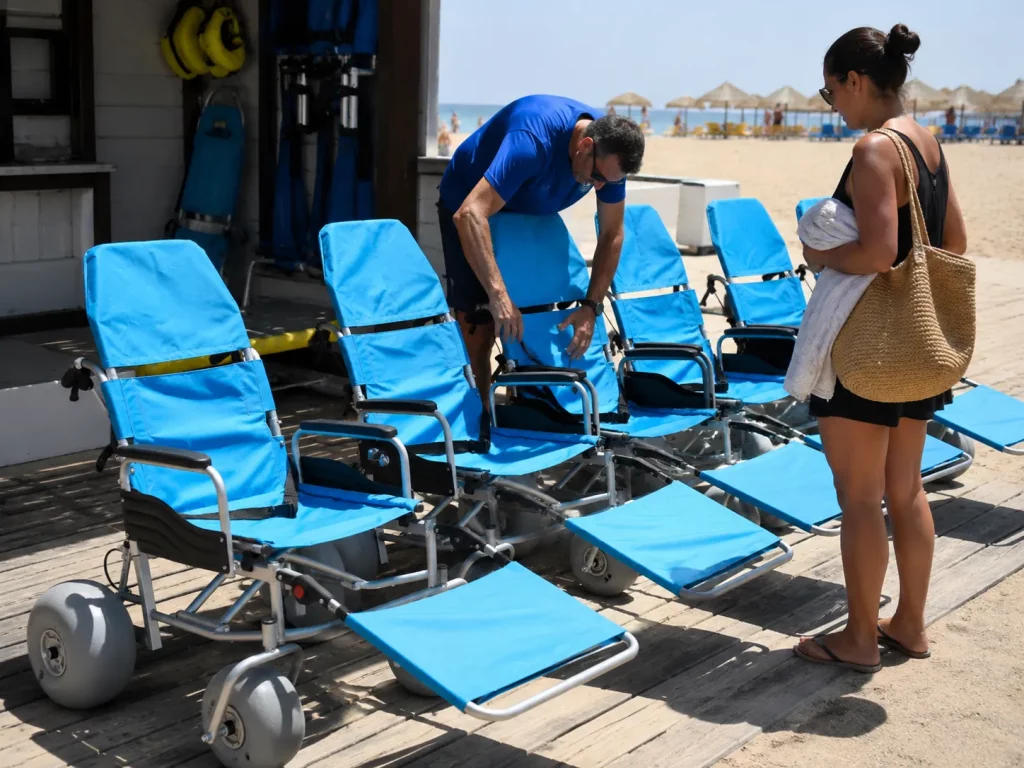
An accessibility beach mat should be removed and stored through the approved product method, with the route closed to users during the working period and the material checked before storage. The return plan should cover handling roles, debris removal, approved cleaning, drying needs, roll or panel configuration, transport path, and a dry labelled storage area.
The beach mat installation project gives related project context, while local teams should follow the exact model instructions. Record any damage or missing component before the mat enters storage. Keep route hardware and accessories with the matching equipment reference so the next setup does not begin with a search.
What keeps removal orderly?
Close the service loop: assign a route-closure owner, handling roles, condition recorder, and storage-status owner before work begins.
- Close and mark the route before removal.
- Follow approved cleaning and handling steps.
- Store components under one equipment reference.
Key Takeaway: Removal should protect users, staff workflow, equipment records, and the next setup.
| Review item | Team note |
|---|---|
| Removal step | Assigned role |
| Condition record | Storage status |
| Component group | Label and location |
Check storage status before the team leaves.
What should a route inspection record include?
An accessibility beach mat route inspection record should include date, time, route version, staff name, entry condition, surface joins, endpoint status, visible mat condition, obstructions, action taken, route status, and open escalation. The format should let another shift understand what was checked and why the route remained open or closed.
Use one equipment and route reference across opening, mid-day, event, and closing checks. Keep photos linked to the same record if local policy permits. Close resolved items with a date and owner rather than copying old warnings. Supervisors can sample records to identify recurring route locations that need a project review.
How can records support management decisions?
Turn notes into owned actions: each recurring condition should point to a route review, maintenance request, supplier question, or documented reason for no change.
- Use one route version and equipment reference.
- Close resolved items with owner and date.
- Group recurring notes by location.
Key Takeaway: Inspection records add value when they show route status, actions, and repeated location-based patterns.
| Review item | Team note |
|---|---|
| Record field | Required entry |
| Recurring note | Management action |
| Closed item | Owner and date |
Review record trends during route meetings.
What should site teams do next?
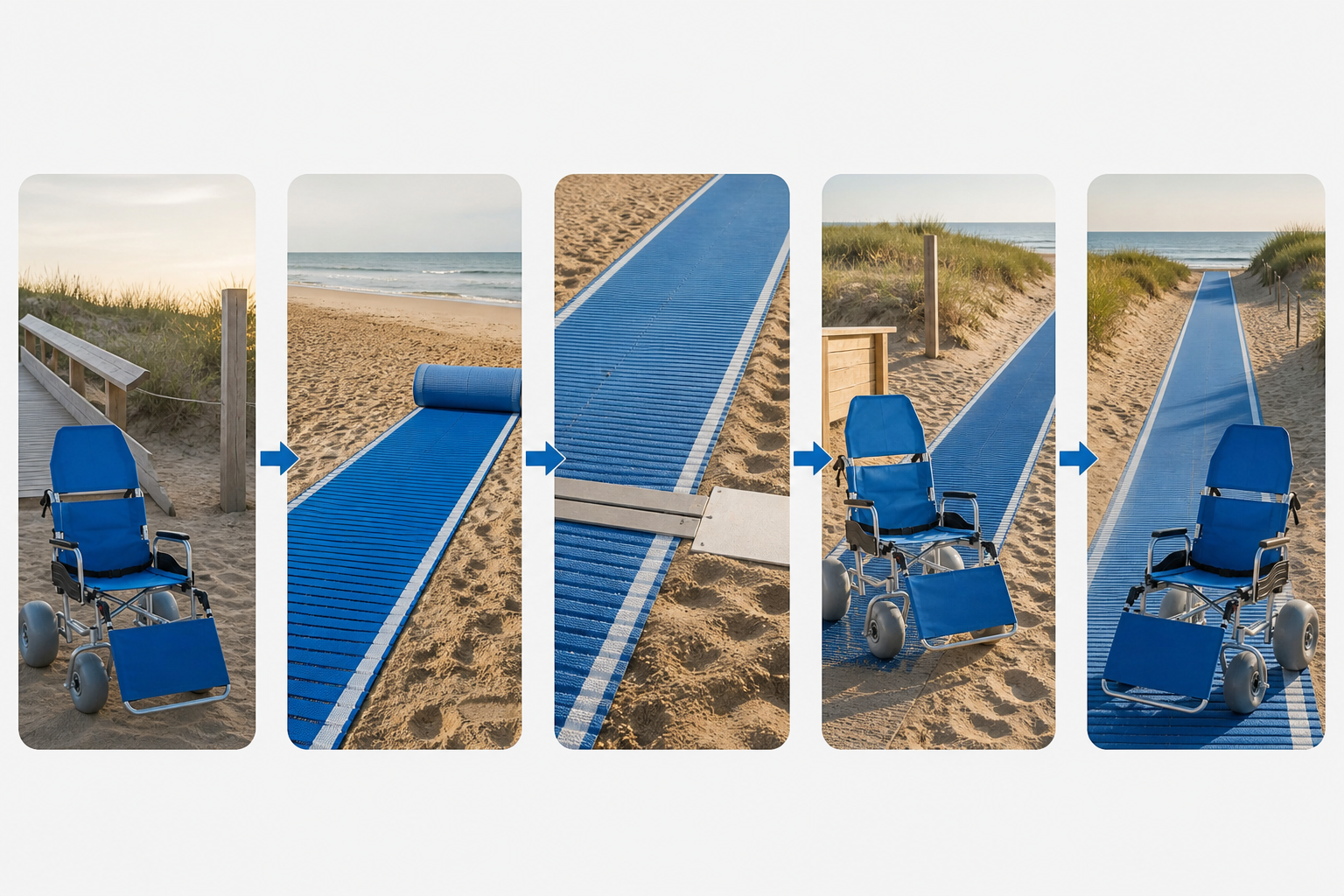
An accessibility beach mat site team should approve the route map, verify product documents, rehearse setup and removal, brief assigned roles, place inspection records at the operating point, and define authority for route-status changes. The approved plan should identify its route version and the conditions that require another review before opening.
Bring facilities, beach operations, guest service, storage, and purchasing into one short approval meeting. Use the entry, joins, endpoint, setup method, removal plan, and records as the agenda. If the team needs model details or project support, contact us with a route sketch and operating context so the discussion stays tied to the site.
How can route approval stay controlled?
Use one approved version: every map, checklist, staff briefing, and storage label should point to the same current route reference.
- Approve entry, corridor, and endpoint.
- Assign setup, inspection, and storage owners.
- Set the next route-review date.
Key Takeaway: A controlled route plan connects the physical path with people, records, product guidance, and change authority.
| Review item | Team note |
|---|---|
| Approval area | Supporting record |
| Role owner | Current status |
| Route version | Review date |
Open service only under the approved route version.
FAQ for project teams
Can I place a mat anywhere on the beach?
No. The route needs a managed entry, corridor, endpoint, operating plan, product guidance, and approval from the teams responsible for that site.
What is the best way to record a surface join?
Use a named location and two-direction check. Record edge condition, available space, drainage, route status, and the staff action linked with that observation.
How do I know if the route should close?
Follow the approved stop rule. The local plan should name the conditions, authority, record, and escalation contact used when the route cannot remain open.
Can staff change the route during a busy day?
Only under the approved change process. Pause service if required, document the reason, obtain the named approval, and issue a new route version before reopening.