Why Accessible Beaches Are Becoming a Global Necessity
The demand for inclusive beach experiences is accelerating worldwide. Multiple forces are converging to make beach accessibility not just desirable, but mandatory.
Aging Population Growth
By 2050, the global population aged 60+ will double to 2.1 billion. This demographic shift creates unprecedented demand for mobility-assisted beach access and recreational experiences.
Rights Awareness Rising
People with disabilities and mobility challenges are increasingly advocating for their right to equal access. Beach access is no longer seen as a privilege but as a fundamental entitlement.
Regulatory Mandates
ADA requirements in the US, EU accessibility directives, and Australian standards are continuously strengthening. Compliance is becoming more complex and enforcement more rigorous.
Inclusive Tourism
The tourism industry is shifting from sightseeing to experience-based offerings. Inclusive, barrier-free destinations now command premium positioning and attract broader visitor segments.
The Bottom Line
Accessible beach infrastructure is transitioning from a "nice-to-have" feature to a baseline requirement. Organizations that recognize this shift early will gain competitive advantage and avoid costly retrofitting.
Ready to understand how these trends affect your beach accessibility plans?
Discuss Your ProjectWhy Most Beaches Remain Truly Inaccessible
Despite growing awareness and investment, the majority of beaches still fail to deliver genuine accessibility. The gap between intention and implementation remains significant.
Current Reality
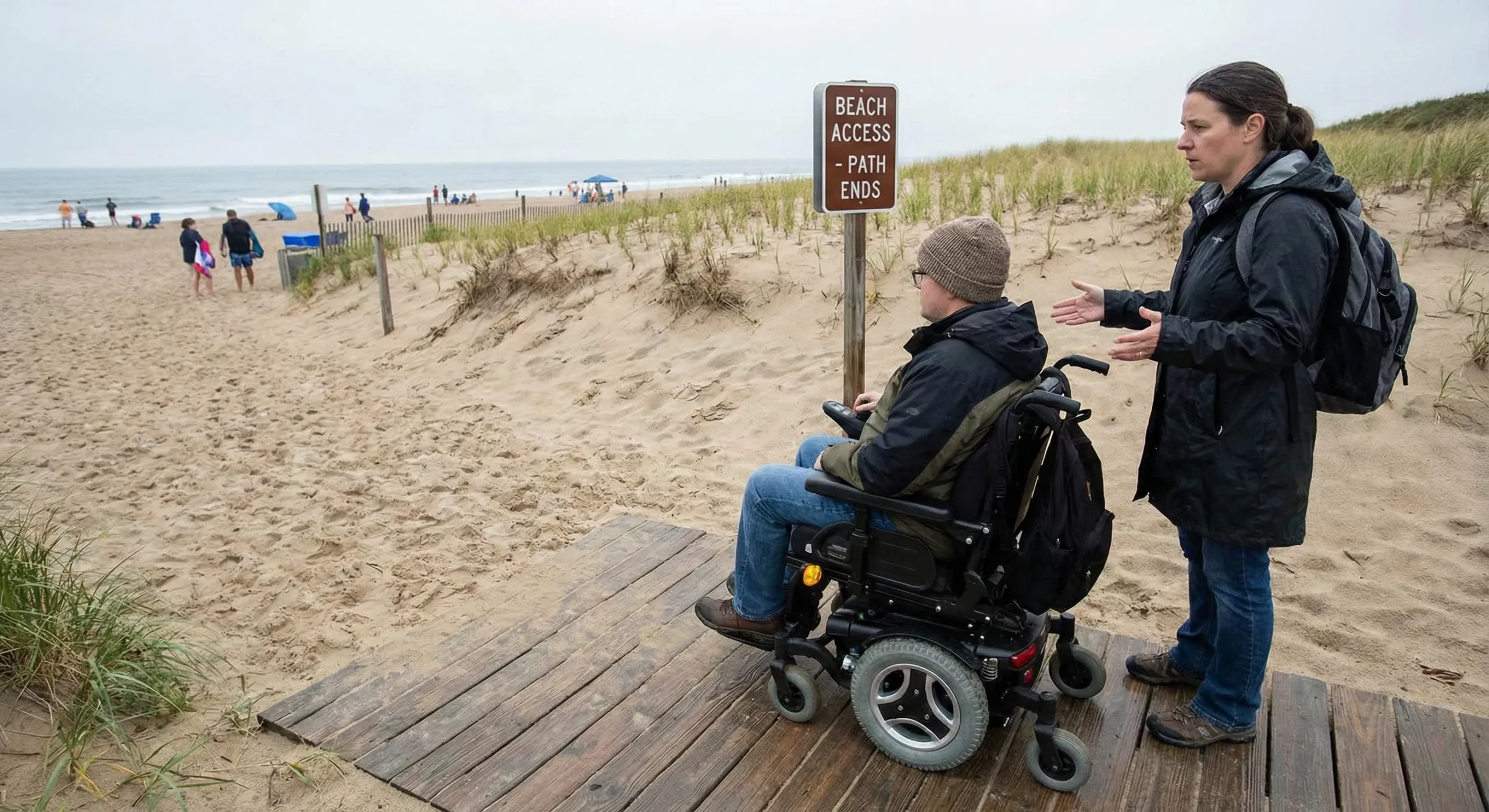
Access stops at the sand
Standard Wheelchairs Can't Navigate Sand
Traditional wheelchairs sink into sand, making it impossible to reach the waterline. Users are stranded at the edge of the beach, unable to participate in the beach experience.
Ramps End Before the Journey Begins
Most accessibility ramps terminate at the sand's edge. They provide access to the beach but not into it—leaving users meters away from the ocean they came to experience.
Compliant Doesn't Mean Usable
Many beaches meet minimum compliance standards on paper while failing to deliver practical accessibility. Equipment exists but isn't maintained, staff aren't trained, and systems don't connect.
Key Insight: Looking accessible and being accessible are not the same thing. True beach accessibility requires solutions that work across sand, through surf, and in real-world conditions.
Discover how to close the gap between accessibility promises and reality.
Get Expert GuidanceWhy Existing Solutions Fail to Deliver Long-Term Results
Many beach accessibility projects start with good intentions but struggle to sustain operations. Understanding why traditional approaches fail helps identify what actually works.
Not Designed for Beach Environments
Most mobility equipment is designed for indoor or paved surfaces. Sand, saltwater, and sun exposure create conditions that rapidly degrade equipment not specifically engineered for beach use.
Supplied by Traders, Not Manufacturers
Many suppliers are intermediaries without manufacturing capability. When problems arise or parts are needed, there's no direct line to the source—leading to delays, substitutions, and eventual abandonment.
Heavy, Corrosion-Prone Equipment
Bulky designs make equipment difficult to deploy and store. Materials that aren't corrosion-resistant degrade quickly in marine environments, driving up replacement and maintenance costs.
No Post-Purchase Support
Equipment is delivered, but ongoing support is absent. Without training, spare parts, maintenance guidance, and operational consulting, even the best equipment eventually sits unused.
The Real Problem
The beach accessibility industry isn't lacking products—it's lacking the right approach. Success requires partners who understand the complete lifecycle of beach accessibility, from initial assessment through years of operation.
Avoid the common pitfalls that derail beach accessibility projects.
Learn the Right ApproachThe Problem Isn't the Wheelchair—It's the System
Accessible beach is never about a single piece of equipment. It's about building a complete system that connects access pathways, sand mobility, water entry, user safety, and long-term operations into one seamless experience.
Traditional Thinking
"Buy a beach wheelchair and check the accessibility box"
Systems Thinking
"Design an integrated accessibility system that works end-to-end"
Ready to shift from product purchasing to systems thinking?
Explore System SolutionsThe Five Levels of True Beach Accessibility
A genuinely accessible beach experience requires addressing five interconnected layers. Each level builds on the previous, creating a comprehensive system that actually works.
Access Path
The journey begins with getting to the beach. This includes parking, pathway surfaces, and transition zones that allow wheelchair users to reach the sand without obstacles. Ramps, mats, and boardwalks create the initial connection.
Sand Mobility
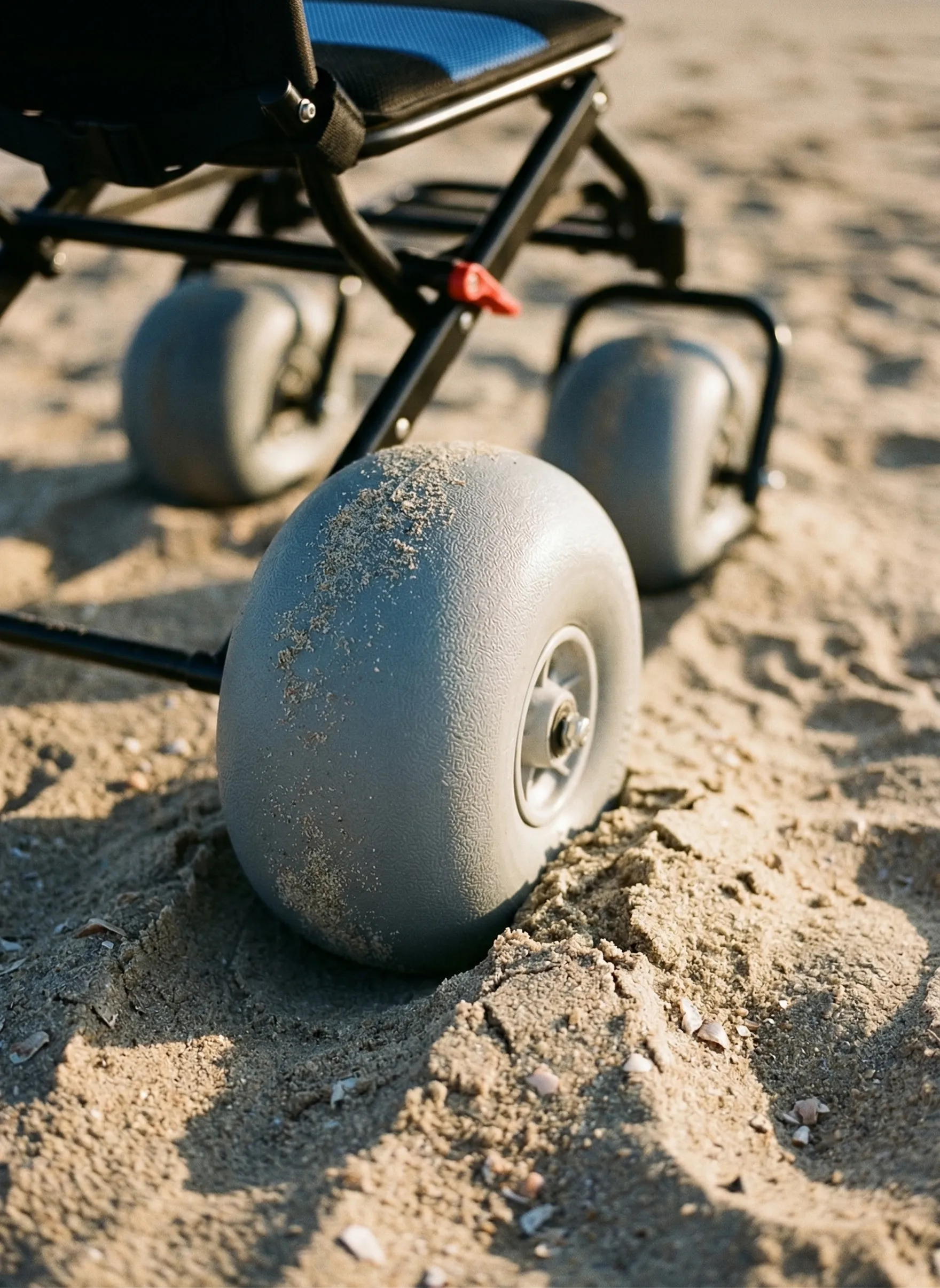
Standard wheelchairs fail on sand. Specialized beach wheelchairs with wide, balloon-style tires distribute weight effectively, allowing smooth movement across soft and compact sand surfaces to reach preferred spots.
Water Entry
The beach experience isn't complete without water access. Floating wheelchairs and amphibious designs allow users to enter the surf safely, experiencing the ocean rather than just observing it from the shore.
User Safety
Equipment must be structurally sound, stable, and built with corrosion-resistant materials. Safety features like secure seating, proper drainage, and weight capacity ratings protect users in unpredictable beach conditions.
Operation & Maintenance
Long-term success depends on ongoing operations. Staff training, spare parts availability, maintenance schedules, and operational protocols ensure equipment remains functional and the program sustainable over years.
The Framework in Practice
Without addressing all five levels, beach accessibility programs remain incomplete. Each layer supports the others—and missing even one creates gaps that undermine the entire experience. True accessibility requires systemic thinking, not piecemeal solutions.
Interested in applying this framework to your beach accessibility project?
Schedule a ConsultationWho Makes the Decisions for Accessible Beaches?
Beach accessibility projects involve multiple stakeholders with different priorities. Understanding who drives these decisions helps align solutions with actual needs.
Government & Municipal Authorities
Public beach managers and accessibility officers responsible for compliance with ADA and local regulations.
Resort & Hotel Operations
Hospitality facility managers seeking competitive differentiation through inclusive guest experiences.
NGO & Foundation Directors
Non-profit leaders funding accessibility initiatives and advocating for inclusive beach programs.
Equipment Rental Operators
Beach service providers managing daily equipment deployment, maintenance, and user assistance.
End Users & Families
Individuals with mobility challenges and their caregivers who influence purchasing through feedback and advocacy.
Key Insight: These decision-makers aren't buying wheelchairs—they're procuring solutions that deliver measurable outcomes: compliance, guest satisfaction, operational efficiency, and genuine accessibility.
Need to align your beach accessibility project with stakeholder requirements?
Talk to Our ExpertsWhy Manufacturing Capability Matters More Than Marketing
The beach accessibility industry has learned hard lessons from working with the wrong suppliers. Here's what experienced buyers now demand.
Non-Source Suppliers Can't Guarantee Continuity
Trading companies and resellers lack control over production. When demand increases or issues arise, they can't guarantee consistent supply or quality standards.
Generic Products Fail in Marine Environments
Equipment not specifically engineered for sand and saltwater degrades rapidly. Structural optimization for beach conditions requires manufacturing expertise, not just sourcing.
Follow-up Orders Become High-Risk
Initial purchases may go smoothly, but expansion orders often face delays, specification changes, or complete supplier disappearance. Project continuity depends on supplier stability.
What the Industry Actually Needs
- Direct manufacturing capability with full production control
- Purpose-built designs for beach and marine environments
- Consistent quality across initial and follow-up orders
- Long-term partnership commitment with ongoing support
- Spare parts availability and maintenance expertise
The industry needs long-term partners, not one-time sellers. Projects succeed when suppliers are invested in outcomes, not just transactions.
Looking for a manufacturing partner you can rely on for years?
Verify Our CapabilitiesNot All Beaches Are the Same—Neither Are the Solutions
Beach conditions vary dramatically across locations and use cases. Effective accessibility solutions must account for these differences, not ignore them.
 Sand Type
Fine Sand vs. Coarse Sand
- Different tire pressure needs
- Wheel width requirements
- Push assistance levels
 Tidal Range
High Tide vs. Low Tide Zones
- Distance to water varies
- Wet sand compaction changes
- Scheduling considerations
 Ownership
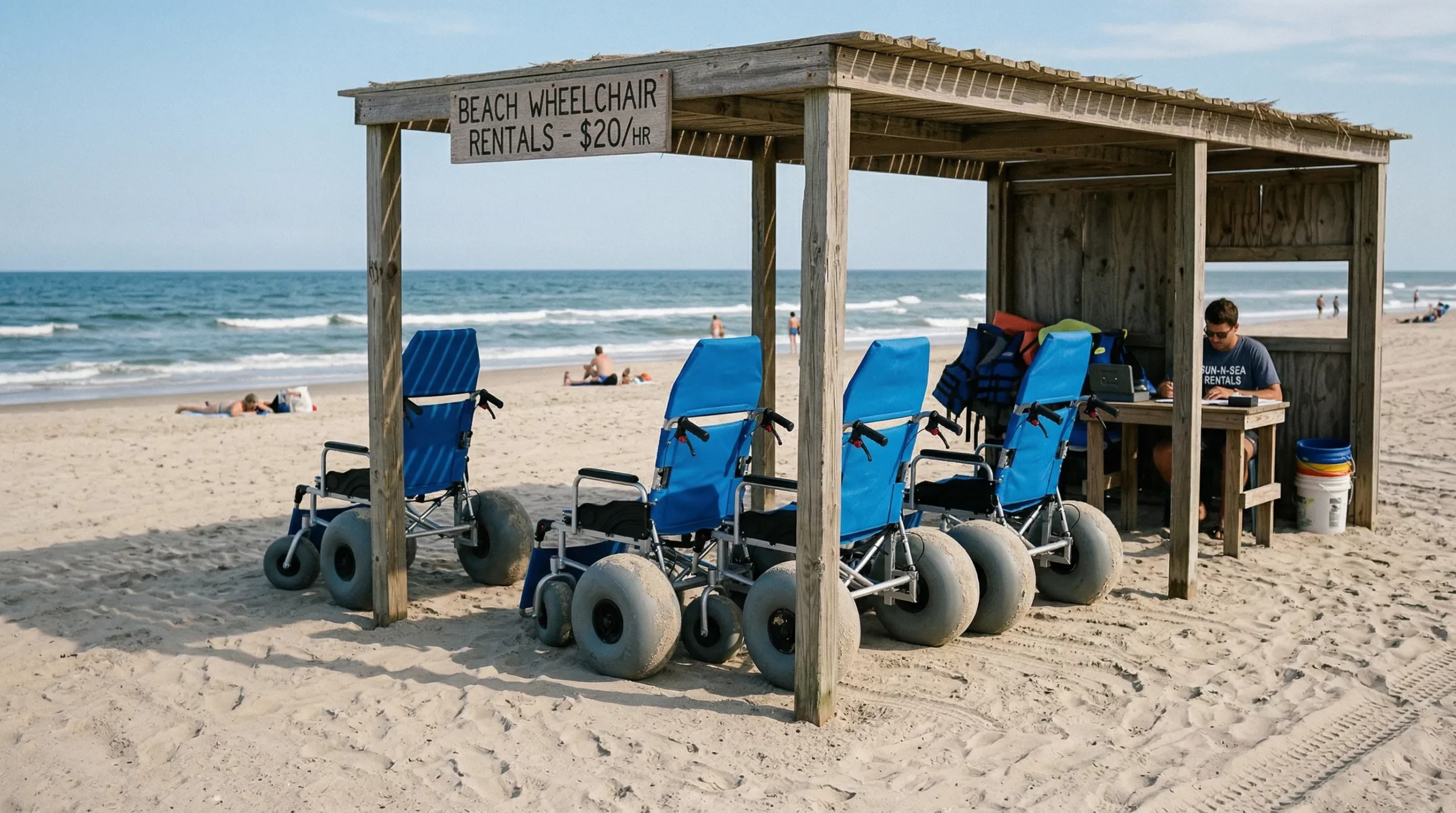
Public Beach vs. Private Resort
- Usage volume differences
- Staff support availability
- Storage and security needs
 Duration
Seasonal vs. Year-Round Operation
- Equipment durability specs
- Maintenance schedules
- Off-season storage plans
Critical Understanding: There is no "one-size-fits-all" beach wheelchair. Successful projects start with environment assessment and match equipment to specific conditions.
Not sure which solution fits your beach environment?
Request Site AssessmentCommon Mistakes We've Seen in Real Projects
After years of working with beach accessibility projects worldwide, we've identified patterns that lead to failure. Avoiding these mistakes can save significant time, money, and frustration.
Single Unit "Showcase" Purchase
Buying just one wheelchair for display purposes. A single unit can't serve real demand, breaks down without backup, and signals tokenism rather than commitment.
Ignoring Maintenance Costs
Focusing only on purchase price while ignoring ongoing maintenance, wear parts replacement, and operational costs that determine true long-term value.
Underestimating User Difficulty
Selecting equipment without considering who will actually operate it. Caregivers, volunteers, and users have different strength levels and training backgrounds.
Applying Indoor Logic to Outdoor Needs
Using medical wheelchair specifications for beach environments. Indoor mobility equipment isn't designed for sand, saltwater, sun exposure, or outdoor terrain.
The Cost of Getting It Wrong
These mistakes don't just waste budget—they damage credibility with users who expected accessible experiences and were disappointed. Rebuilding trust after a failed accessibility initiative is far more expensive than doing it right the first time.
Want to ensure your project avoids these common pitfalls?
Get Project ReviewThe Right Sequence for Accessible Beach Projects
Successful beach accessibility isn't just about buying equipment—it's about following a proven implementation sequence that addresses each critical phase in the right order.
Site Assessment
Evaluate beach terrain, sand type, tidal patterns, and infrastructure to understand environmental requirements.
User Analysis
Identify target users, usage frequency, assistance availability, and specific mobility requirements.
Solution Design
Configure equipment combination based on site conditions and user needs, including pathways, wheelchairs, and water access.
Testing & Training
Deploy equipment, conduct real-world testing, train staff on operation and safety protocols.
Ongoing Support
Establish maintenance schedules, spare parts inventory, and continuous improvement based on user feedback.
The Difference Between Success and Failure
This structured approach is what separates thriving accessibility programs from abandoned equipment gathering dust. Each phase builds on the previous one, creating sustainable solutions rather than short-term fixes.
Ready to start your beach accessibility project the right way?
Begin Site AssessmentHow We Participate in Solving This Industry Challenge
We don't just sell products—we've built our entire operation around the specific demands of beach accessibility. Here's what makes our approach different.
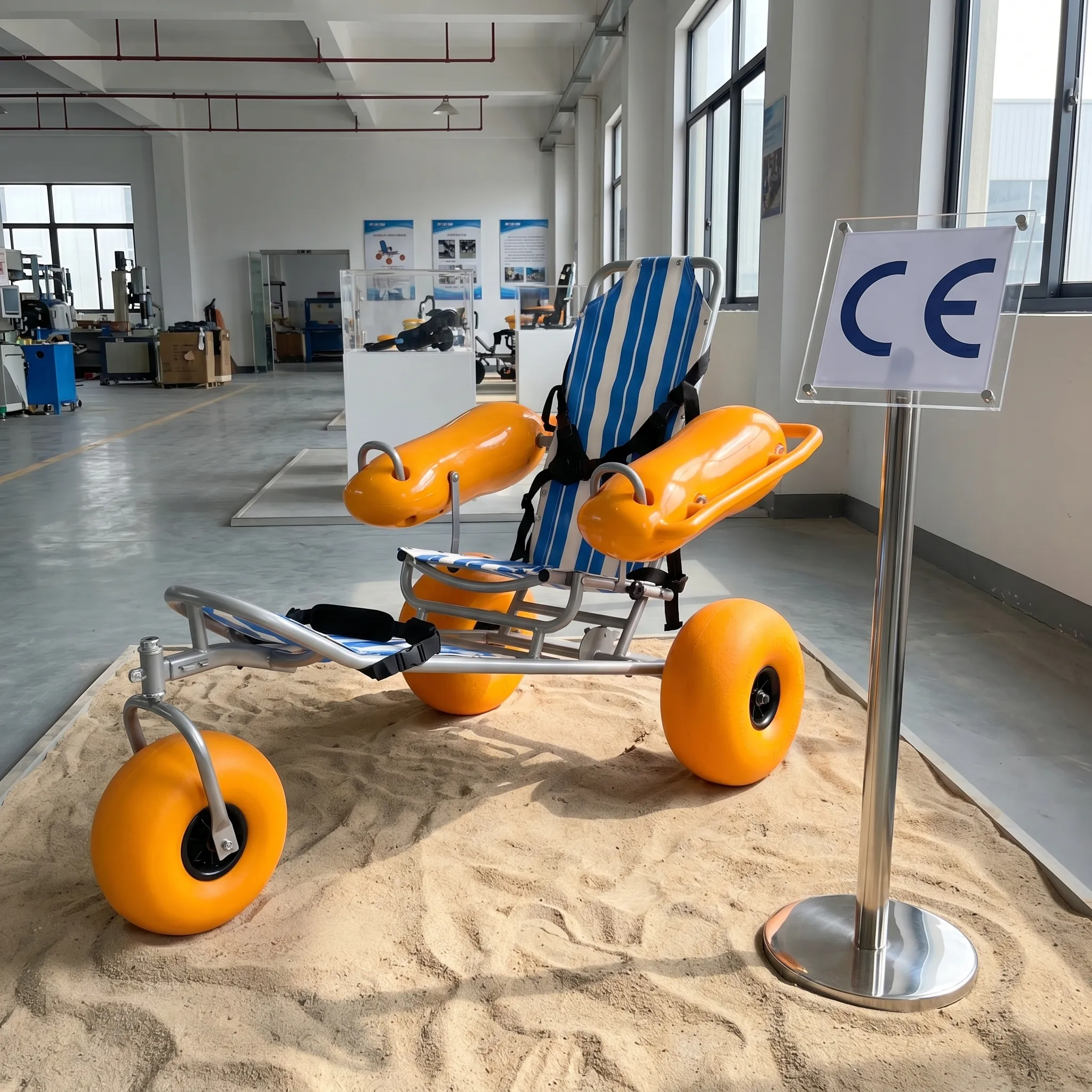
Dedicated Manufacturing Facility
Our own factory focused exclusively on beach and water mobility equipment—not a sideline, but our core business.
Purpose-Built for Beach & Marine Environments
Every design decision considers sand, saltwater, and sun exposure. No generic mobility equipment repurposed for beach use.
Complete Product Ecosystem
Sand wheelchairs, floating wheelchairs, access mats, and support equipment—a coordinated system, not disconnected products.
Project-Level Partnership
We support full project planning, not just order fulfillment. Technical guidance, training materials, and ongoing consultation included.
Want to understand how our capabilities align with your project needs?
Explore Our CapabilitiesWhy Professional Projects Use Combined Equipment Configurations
Beach accessibility isn't solved by a single product. Understanding the distinct roles of different equipment types leads to better project outcomes.
Lightweight Wheelchairs
Designed for personal or family use with easy transport and storage. Ideal for individual owners but not built for high-volume public deployment.
- Easy car trunk storage
- Lower weight capacity
- Best for occasional use
Floating/Water Wheelchairs
Engineered for water entry with buoyancy features. Essential for complete beach experiences but not optimized for long-distance sand travel.
- Safe water immersion
- Corrosion-resistant materials
- Requires transfer near water
Access Mats & Pathways
Create stable surfaces across sand for standard wheelchairs and easier pushing. Complement—but don't replace—specialized beach wheelchairs.
- Connects parking to beach
- Reduces pushing effort
- Limited to pathway coverage
Project Procurement Insight: Professional beach accessibility programs purchase coordinated systems, not isolated products. Each equipment type serves a specific function within the overall access journey.
Need help designing the right equipment combination for your project?
Get Configuration GuidanceWhat Decision-Makers Actually Look For
Industry buyers have learned to distinguish between marketing claims and verifiable evidence. Here's what builds real trust in beach accessibility procurement.
Real Beach & Water Footage
Actual video of equipment performing in sand and surf conditions—not studio shots or CGI renderings.
In-Use Photography
Real users in real environments—showing genuine accessibility outcomes rather than posed marketing images.
Clear Technical Specifications
Precise dimensions, weight capacities, materials, and certifications—information that enables informed comparison.
Factory Production Evidence
Documentation of actual manufacturing capabilities—proving source authenticity and production capacity.
High-Trust Content
- Equipment tested in actual ocean conditions
- Verifiable customer installations
- Third-party certifications documented
- Manufacturing process transparency
Low-Trust Content
- Stock photography of beaches
- Vague claims without specifics
- No factory or production evidence
- Marketing language over substance
Want to see real evidence of our capabilities?
Request DocumentationWhere Accessible Beach Is Heading
The beach accessibility industry is evolving rapidly. Understanding these trajectories helps organizations make forward-looking investment decisions.
From "Compliance"
To "Experience"
Meeting minimum standards is no longer enough. Users expect complete, dignified beach experiences—not just technical accessibility compliance.
From "One-Time Purchase"
To "Long-Term Operations"
Successful programs now plan for years of operation—including maintenance cycles, staff training, and equipment replacement schedules.
From "Single Equipment"
To "Integrated Systems"
Leading programs combine pathways, sand mobility, water access, and support equipment into coordinated accessibility ecosystems.
Position your organization at the leading edge of beach accessibility.
Discuss Future-Ready SolutionsPlanning an Accessible Beach Project?
Whether you're exploring options, comparing approaches, or ready to move forward—we're here to provide the expertise and perspective you need to make informed decisions.
No pressure, no hard sell—just practical guidance from people who've worked on hundreds of beach accessibility projects.