A resort can offer better water access only when equipment, routes, staff, and operating limits work together. A guest who uses a mobility device may reach the boardwalk yet still be blocked by soft sand and an unmanaged water entry. A site-matched floating beach wheelchair, a documented route, trained attendants, and clear stop rules can address that gap without promising that every condition or user will be suitable.
Why is a floating beach wheelchair valuable for resort guests?
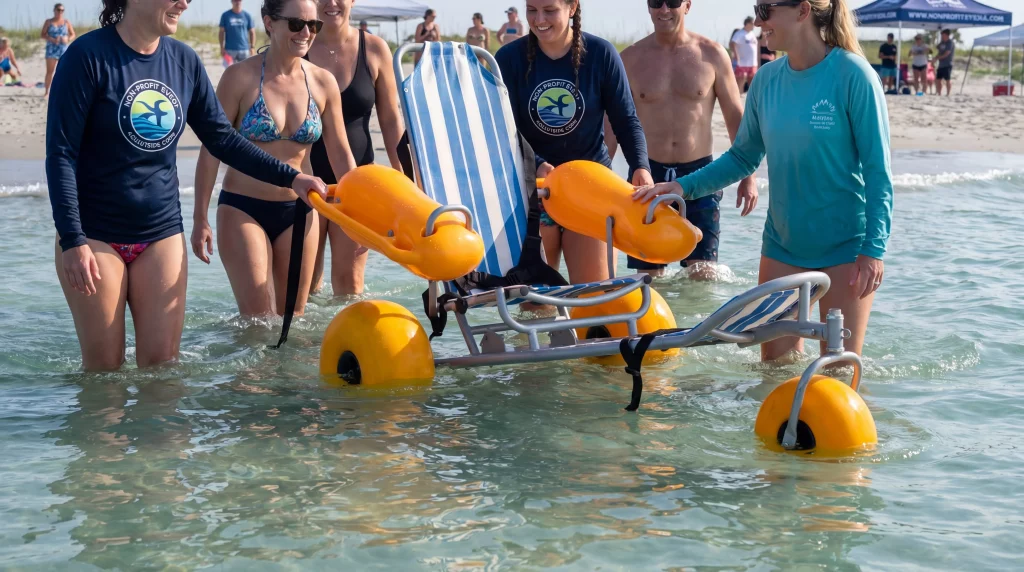
For example, providing a floating beach wheelchair is key because it allows guests with limited mobility to transition smoothly from dry sand directly into the sea. Standard options often sink into soft sand, but these specialized water chairs roll over obstacles and float beautifully, giving everyone equal access to the resort’s main attraction. By offering this equipment, you transform a restrictive beach into a welcoming environment. It answers the fundamental need for true inclusion, allowing grandparents, injured travelers, and disabled guests to swim alongside their loved ones.
What is the true value of water accessibility?
However, true water accessibility is about dignity and shared family moments. When a guest can join their children in the waves instead of watching from afar, their entire holiday experience shifts from isolation to participation. What matters next? It is about creating memories that last long after check-out.
How does this change the guest experience?
Meanwhile, having dedicated beach mobility tools on hand changes how guests view your entire brand. It shifts your property from a standard destination to an inclusive sanctuary where every family member feels valued.
- For example, seamless transitions from hotel room to the ocean
- Also, increased confidence for guests with physical limitations
- Next, shared family activities right in the shallow surf
| Guest Group | Main Barrier | Practical Solution |
|---|---|---|
| Multi-generational families | Separation on the beach | Cohesive group swimming |
| Guests with physical limitations | Fear of slipping or sinking | Stable, buoyancy-supported entry |
As a result, this setup reduces avoidable separation during busy recreation hours.
Key Takeaway: True beach inclusion directly impacts the quality of your guest stays, transforming simple beach trips into shared, barrier-free family milestones.
How does a floating beach wheelchair support resort bookings?
Also, clear access information can help travelers decide whether a property fits their needs before booking. Publish the route, reservation method, transfer limits, staff role, water boundaries, and available equipment, then track qualified inquiries instead of assuming demand.
Who is looking for accessible destinations?
Then, some travelers screen for wheelchair-accessible water facilities before booking. Give them precise access details and a contact path rather than broad promises. For routine care: Missing or vague access information can cause qualified guests to rule out the property before making an inquiry.
How does accessibility drive market growth?
For example, investing in accessible travel infrastructure places your resort ahead of shifting global demographics. As the traveling population ages, the demand for adaptive beach recreation continues to rise steadily.
- In practice, attracts multi-room family reunions and group bookings
- For example, extends your seasonal appeal to mature traveler groups
- Also, generates positive word-of-mouth recommendations within adaptive communities
| Target Segment | Average Stay Length | Booking Characteristic |
|---|---|---|
| Adaptive travelers | 5-7 days | Multi-generational, multi-room |
| Aging baby boomers | 4-6 days | Mid-week, off-peak preferences |
However, understanding these booking trends helps your marketing team allocate resources to highly profitable guest demographics.
Key Takeaway: Developing an accessible beach program is a smart commercial strategy that opens up reliable, high-value revenue streams.
Where should you deploy a floating beach wheelchair on site?
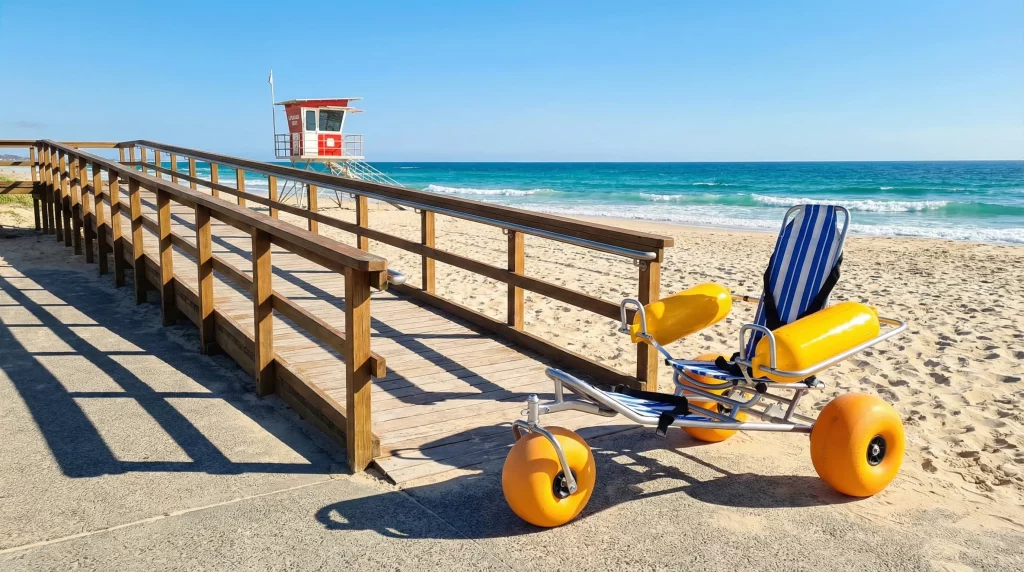
Meanwhile, you should deploy a floating beach wheelchair at your main beach access points, directly adjacent to stable pathways or dedicated rental stations. Placing the equipment where the concrete boardwalk transitions to soft sand makes the transfer process fast and comfortable for both guests and staff. It is best to set up a visible, designated staging zone right near your lifeguard station. This placement can help staff respond promptly and manage the documented water-entry procedure. Resort operators in the United States can use ADA Title III guidance as a starting point while confirming site-specific obligations with qualified local advisers.
Where can guests safely access the waves?
As a result, safe entry requires a gentle, gradual shoreline incline without sudden drops or sharp coral. You want to choose a protected cove or lagoon area where waves are minimal. Let us look closer: Calm waters make sure the chair floats predictably, giving the user a relaxed and secure experience.
What setup keeps the coastline organized?
Also, to keep your beachfront organized, pair your floating equipment with a high-durability accessible beach mat. This pathway creates a firm, slip-resistant surface over the loose sand, allowing users to move smoothly down to the shoreline.
- Next, lay out bright blue mats for clear visual navigation
- In practice, keep a dedicated parking spot for the chair near the water
- For example, set up clear signage explaining how to request staff assistance
| Equipment Type | Best Placement Zone | Operational Role |
|---|---|---|
| Roll-out beach mat | Boardwalk to wet sand | High-traction roll-way |
| Floating water chair | Shallow shoreline / Calm bay | Water immersion and swimming |
Then, coordinating these physical assets keeps your beachfront neat while reducing transition times for arriving guests.
Key Takeaway: A structured, well-mapped beachfront deployment protects your equipment and makes the entire water-entry process seamless for guests.
What staff training makes a floating beach wheelchair safe?
For example, structured staff training makes a floating beach wheelchair safe by preparing your team to manage guest transfers, evaluate water conditions, and follow proper water-entry protocols. Your beach attendants and lifeguards must understand how buoyancy affects the chair’s balance in shallow water. With structured training, your staff can operate the equipment with confidence, eliminating operational risks and creating a professional, secure environment for your guests.
How do resort teams handle basic operation?
However, attendants must practice how to secure the restraint comfortably and guide the chair down sandy slopes. They need to practice rolling the chair backward into gentle surf to maintain full control of the front wheel. For attendant control: A trained attendant should maintain the control required by the model and site procedure throughout water use.
What safety protocols must be followed?
Your team must adhere to strict safety protocols, including a mandatory pre-use check of the flotation chambers and structural frame. Regular inspections keep the equipment in peak working condition.
- Also, verify flotation chambers are properly secure and buoyant
- Next, only operate in designated calm-water swimming zones
- In practice, keep water depth below the recommended waist-high limit for attendants
| Safety Step | Action Required | Frequency |
|---|---|---|
| Pre-deployment check | Inspect armrests, restraint, and tires | Before every guest use |
| Attendant briefing | Confirm water depth limits and exit plans | Prior to water entry |
Following these checklists daily reduces liability while maintaining the highest safety standards on your beach.
Key Takeaway: Ongoing staff training supports a safe, professional, and reliable water-access program that protects both guests and your resort’s reputation.
How to market your new floating beach wheelchair to travelers?
You can market your floating beach wheelchair to travelers by featuring high-quality photos and videos of the equipment in action on your website’s main landing page. Travelers looking for accessible destinations need to see real proof that you have these amenities ready to use. By highlighting these services in your booking portal, you make it easy for families to plan their trips. This active outreach quickly positions your property as a leader in inclusive hospitality.
Where should your team display this equipment?
Display the equipment prominently in your resort’s promotional materials, social media feeds, and digital brochures. You want to show actual guests enjoying the water comfortably and safely. How does this work? By placing these images in your main galleries, you answer the accessibility question before a traveler even has to ask.
What marketing channels offer the best returns?
Partnering with adaptive travel bloggers and inclusive tourism organizations can amplify your reach. Sharing real guest testimonials on specialized travel forums builds immediate trust within the community.
- For example, post video walkthroughs of the beach-to-water journey
- Also, list your resort on specialized accessible travel directories
- Next, share positive reviews from families who used the equipment
| Marketing Channel | Content Focus | Target Audience |
|---|---|---|
| Dedicated website page | Clear equipment specs and booking steps | Active trip planners |
| Social media video | Real guest experiences and smooth water entry | Families and travel groups |
Combining these digital strategies makes your resort with less effort discoverable for those searching for inclusive holidays.
Key Takeaway: Creative, transparent marketing of your accessible beach amenities directly drives higher occupancy rates among a highly loyal traveler community.
What storage works best for a floating beach wheelchair?
The storage that works best for a floating beach wheelchair is a clean, dry, and with less effort accessible space right near your primary beach access ramp. Storing the chair in a dedicated beachfront locker or pool house keeps it safe from the elements while making it quick to deploy when a guest requests it. A secure, well-ventilated storage hut protects the frame from unnecessary weathering and makes sure your beach team can access the equipment without having to transport it long distances.
Where should equipment be stored daily?
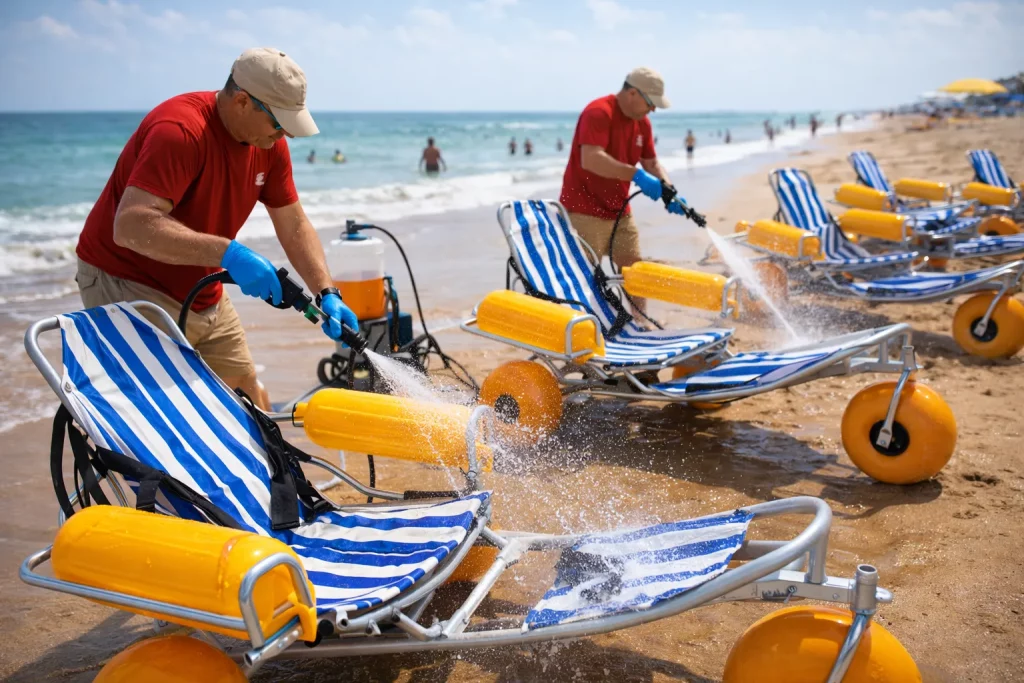
Choose daily storage from the model instructions, local weather, security needs, route, and inspection workflow. Keep the chair close enough for controlled deployment without exposing it beyond its documented storage limits. For storage access: A defined storage location helps staff find, inspect, issue, and return the chair consistently.
How do you protect assets in the off-season?
During the off-season, you should store the chairs in a properly enclosed, dry warehouse or indoor storage room. Disassembling modular frames can save valuable space during the winter months.
- In practice, perform a thorough freshwater rinse and dry before long-term storage
- For example, apply a light protective spray to moving parts and metal joints
- Also, cover the equipment with breathable fabric to prevent dust buildup
| Storage Type | Ideal Conditions | Main Benefit |
|---|---|---|
| Daily beach hut | Covered, dry, near-shore | Fast deployment for guests |
| Off-season locker | Enclosed, climate-sheltered | Prevents long-term corrosion |
Implementing these clear storage guidelines protects your capital investment and extends the lifespan of your gear.
Key Takeaway: Documented daily and seasonal storage can reduce avoidable exposure and keep inspection records current.
How does a floating beach wheelchair improve guest loyalty?
A floating beach wheelchair can support a clearer access process when the route, reservation, transfer, attendant, and water procedures are documented. Measure guest satisfaction through direct feedback and repeat use; do not assume that one device creates loyalty on its own.
Why do families return to accessible resorts?
Traveling with a disabled relative takes careful planning and can be stressful. When your resort makes water entry easy and safe, you eliminate that worry entirely. Consider this reality: Families will happily return to a familiar, accessible place where they feel welcomed and supported.
How do reviews influence future business?
Enthusiastic reviews from grateful families are often powerful. When guests write about their grandfather swimming in the ocean for the first time in years, it builds immense trust for your brand online.
- Next, generates emotional, highly authentic user reviews
- In practice, builds a strong, positive reputation on travel booking platforms
- For example, positions your resort as a compassionate, forward-thinking destination
| Guest Feedback Type | Impact on Business | Long-Term Value |
|---|---|---|
| Detailed accessibility reviews | Drives trust among searching families | High organic booking growth |
| Word-of-mouth referrals | Bypasses traditional advertising | Low-cost guest acquisition |
These authentic testimonials highlight your brand’s commitment to delivering meaningful travel experiences for all.
Key Takeaway: Prioritizing inclusive water access creates deep emotional connections with guests, turning first-time visitors into passionate, lifelong brand advocates.
Can a floating beach wheelchair handle diverse shoreline terrain?
A floating beach wheelchair is specifically engineered to handle diverse shoreline terrains, from fine loose sand to compact gravel paths and soft muddy coastlines. Its design distributes the occupant’s weight evenly, preventing the wheels from digging into the ground. This versatility makes the equipment ideal for properties with changing beach conditions, helping maintain your team can offer safe water access across different areas of your resort.
Which terrains present the biggest challenges?
Soft, dry sand and rocky transitions are usually the hardest areas for standard wheels to navigate. Rocky shorelines with large boulders or steep slopes exceeding a 15-degree angle require extra caution. What should you look for? You want to find clear, sandy pathways that avoid sudden drops or sharp rock formations.
How do balloon wheels solve soft sand issues?
Oversized, low-pressure balloon wheels are the secret to smooth beach mobility. They operate at low pressure to glide right over soft sand instead of cutting into it.
- Also, distributes weight over a larger surface area to prevent sinking
- Next, absorbs surface shocks from gravel, shells, and uneven sand
- In practice, provides key flotation when entering calm shallow waters
| Terrain Type | Challenge Level | Balloon Wheel Performance |
|---|---|---|
| Dry, loose sand | High | Glides smoothly across the surface |
| Compact gravel | Medium | Rolls with less effort with excellent stability |
Selecting the right wheel technology helps maintain your staff can move the chair across your property with minimal physical effort.
Key Takeaway: High-quality balloon tires are necessary for overcoming difficult coastal terrains, providing a smooth and comfortable ride for your guests.
Why invest in a commercial floating beach wheelchair now?
Investing in a commercial floating beach wheelchair now is a smart way to modernize your property’s amenities while meeting the growing demand for inclusive travel. Resorts that offer complete water-access solutions stand out to the rising number of travelers prioritizing accessibility. Ask each supplier for model limits, maintenance instructions, parts terms, test records, and warranty conditions before comparing lifecycle cost.
What is the return on investment for resorts?
Build the business case from actual accessibility inquiries, bookings, utilization, service time, maintenance cost, and guest feedback rather than assumed revenue. For the business case: Track both access outcomes and operating cost before treating the program as a marketing investment.
How does high durability lower operating costs?
Commercial-grade models are built with marine-grade aluminum and UV-resistant fabrics that resist rust and wear. This durable construction prevents frequent breakdowns, reducing your general operating costs.
- For example, sturdy frames built for years of heavy saltwater exposure
- Also, quick-drying, weather-resistant mesh fabrics that are easy to clean
- Next, minimal moving parts to keep maintenance simple for your team
| Durability Feature | Operational Benefit | Financial Impact |
|---|---|---|
| Marine-grade frame | Resists saltwater corrosion | Extends equipment lifespan to 5+ years |
| Quick-dry mesh sling | Fast turnaround between guests | improves daily equipment use |
These durable design features translate directly into fewer repairs and lower replacement costs for your operations team.
Key Takeaway: Investing in durable, commercial-grade water chairs is a smart, cost-effective decision that delivers excellent long-term returns and improves guest satisfaction.
How can we help you choose a floating beach wheelchair?
We can help you select the ideal floating beach wheelchair for your property by evaluating your specific beachfront layout, tidal patterns, and guest demographics. Our team provides specialized, manufacturer-direct guidance to help you choose the best combination of equipment for your resort. If you are ready to upgrade your property’s beachfront amenities, contact us today. We will guide you from the initial product selection all the way to staff training and successful deployment, helping you create a truly welcoming beach experience.
What models suit your resort beachfront?
Different coastal environments require specific gear configurations. Resorts with soft sand beach transitions benefit from lightweight, foldable models with high-visibility features, while properties with mixed gravel pathways need multi-surface models. For model selection: Send route, user, water, transport, and storage requirements to suppliers, then compare their written model recommendations.
How do we support commercial installations?
We offer full support for commercial buyers, providing complete technical specifications, customized branding options, and reliable global shipping. Our partnership continues long after delivery with maintenance guides and replacement parts.
- In practice, technical guides for smooth procurement and site setup
- For example, custom color and logo integration to match your resort’s branding
- Also, direct access to spare parts to keep your fleet in top shape
| Support Area | What We Provide | Operational Goal |
|---|---|---|
| Technical specs | Detailed drawings and assembly videos | Simple, hassle-free setup |
| Logistics coordination | Direct shipping with full transit insurance | On-time delivery for the season |
A written launch plan gives staff clear steps for intake, inspection, use, return, and issue reporting.
Key Takeaway: Partnering with a dedicated manufacturer gives you the specialized equipment, custom options, and ongoing support needed to build an award-winning inclusive resort.
Frequently Asked Questions
- Next, Can I use a floating beach wheelchair without an attendant? No. A trained attendant should remain in control during transfers, shoreline travel, and water use.
- In practice, What is the best place to operate the chair? A calm, designated access zone is best. The route should avoid steep slopes, strong currents, sharp debris, and sudden depth changes.
- For example, How do I know if the equipment is ready for use? Complete a pre-use inspection. Check the frame, restraint, flotation parts, wheels, pins, and the manufacturer’s operating guidance.