A beach walker is a specialized mobility aid designed with large, low-pressure tires to navigate soft sand and coastal terrain where standard rollators would fail. For many, the simple joy of a seaside stroll is blocked by the physical impossibility of pushing standard narrow wheels through shifting sand. You might find yourself stuck on the pavement, watching loved ones enjoy the waves while you feel isolated by your own mobility gear. Modern beach walkers provide the stability and flotation needed to reclaim your independence at the shoreline.
What exactly is a beach walker?
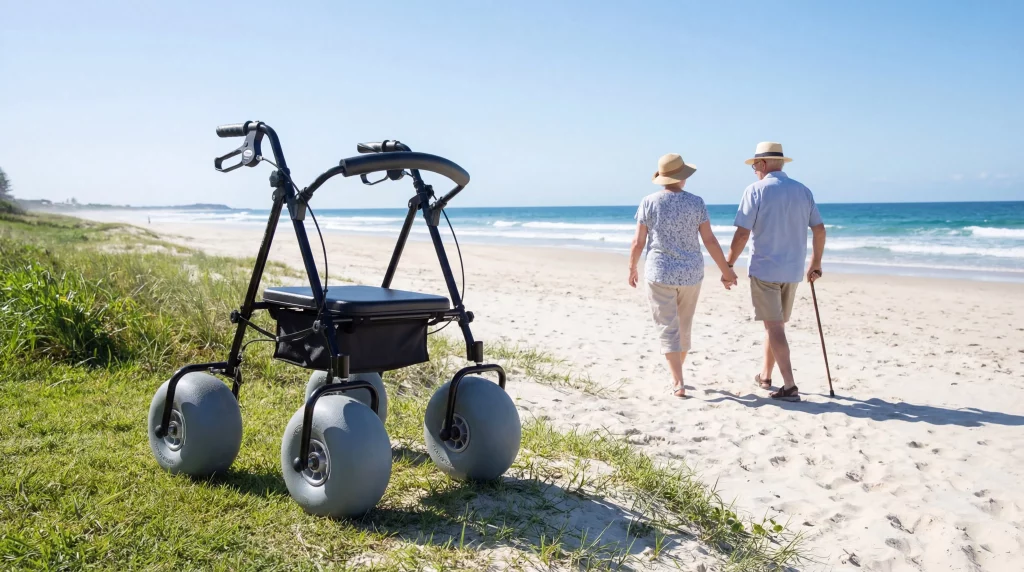
Beach walkers are robust rollators engineered specifically for soft, uneven coastal environments and sandy surfaces. Unlike indoor models, these devices feature wide wheelbases and corrosion-resistant frames to handle the unique stresses of the beach. You can rely on them to provide a stable walking platform that resists tipping on dunes.
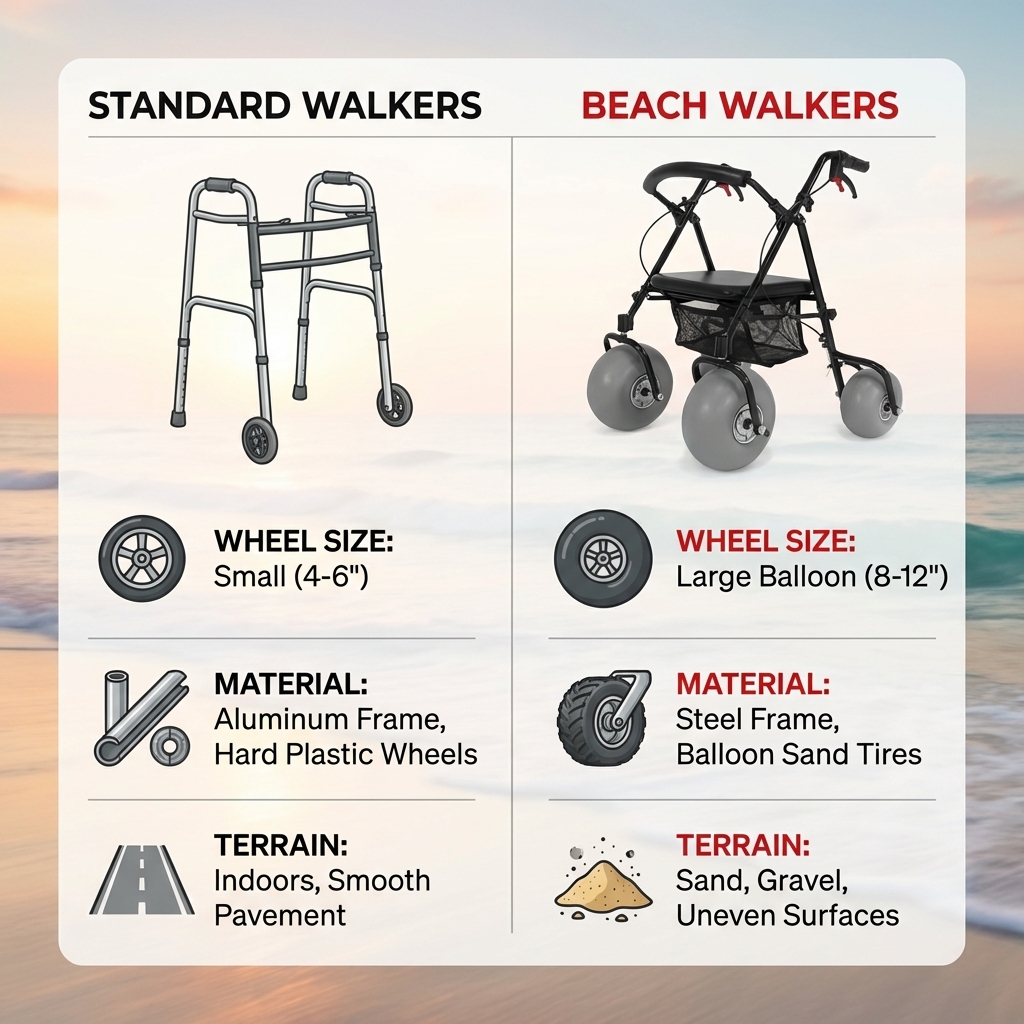
How does it differ from a standard rollator?
Standard rollators often sink into the sand the moment you leave the boardwalk. These specialized versions utilize oversized pneumatic tires to create “flotation” over soft ground.
Look: Standard models are built for flat, hard surfaces like linoleum or asphalt.
- Indoor wheels are typically 6-8 inches in diameter.
- Standard frames are often made of lighter metals not treated for salt air.
- Brakes on standard walkers can easily jam with fine sand particles.
Key components and design features
The design focuses on durability and ease of movement across low-traction surfaces. Most models include a seat so you can rest and enjoy the view whenever you need.
The best part? The high-clearance frame prevents the walker from getting hung up on debris or uneven mounds.
- Marine-grade stainless steel or powder-coated aluminum construction.
- Integrated loop-lock brakes for safety on sloping ramps.
- Wide-set seating for maximum user comfort during long outings.
Key Takeaway: A beach walker is defined by its ability to stay on top of the sand rather than digging into it, ensuring you stay mobile.
| Feature | Standard Rollator | Professional Beach Walker |
|---|---|---|
| Tire Type | Thin Rubber/Plastic | Low-pressure Balloon Tires |
| Frame Material | Basic Aluminum/Steel | Marine-grade Stainless/Coated Aluminum |
| Surface Compatibility | Hard Pavement/Indoor | Soft Sand/Gravel/Grass |
Analysis Guide: Use this comparison to identify why a specialized frame is non-negotiable for coastal safety.
Who benefits most from beach walkers?
Various user groups find that beach walkers provide the necessary support to enjoy the outdoors safely and independently. These devices are particularly effective for those who have the leg strength to walk but require a balance aid to manage the shifting nature of sand. You can find specialized senior care mobility solutions that prioritize long-term comfort.
Support for limited mobility and balance
Walking on sand requires significantly more effort and balance than walking on a sidewalk. The wide stance of these walkers compensates for the uneven terrain, giving you the confidence to move.
Think about it: The device acts as a stabilizing anchor, preventing falls that often occur on slippery or soft shorelines.
- Provides a “four-point” contact system with the earth.
- Reduces the caloric energy required to traverse soft ground.
- Increases the duration of time you can spend active outdoors.
Recovery from injuries or health conditions?
If you are recovering from surgery, maintaining an active lifestyle is a critical part of physical therapy. These walkers allow you to continue your exercise regimen in a therapeutic coastal environment.
But wait, there’s more: The low-impact nature of walking on sand, combined with the support of a walker, is excellent for joint health.
- Ideal for post-hip or knee replacement rehabilitation.
- Supports users with chronic conditions like multiple sclerosis.
- Allows for safe weight-bearing exercise without the risk of tripping.
Key Takeaway: Beach walkers serve as a bridge to independence for seniors and those in rehabilitation who wish to stay active.
| User Group | Primary Benefit | Recommended Feature |
|---|---|---|
| Seniors | Fall Prevention | Ergonomic Grips |
| Rehab Patients | Controlled Weight-bearing | Height-adjustable Handles |
| Disabled Adventurers | Independent Access | High-clearance Frame |
Analysis Guide: Identify your specific mobility level to choose the frame height and seat width that best supports your body.
Where can you find beach walkers?
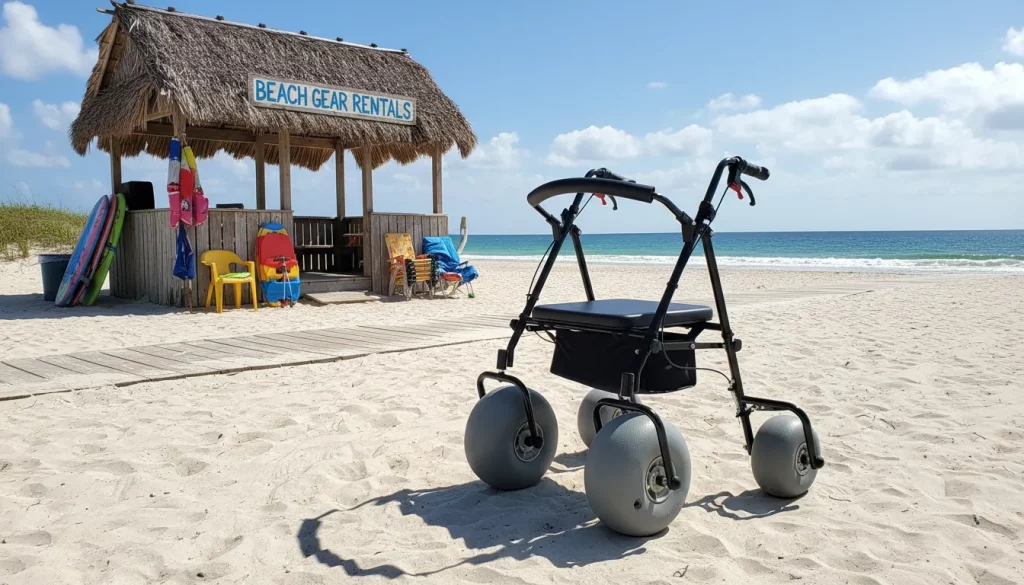
Finding beach walkers is increasingly easy as more coastal councils and resorts invest in accessibility equipment. Many popular tourist destinations now offer these devices to ensure that every visitor can enjoy the water’s edge. You can often locate them at visitor centers or specialized rental kiosks near the main beach access points.
Local hire locations and availability
Most major accessible beaches maintain a fleet of mobility aids that are available for daily or hourly rental. You should check with local surf lifesaving clubs, as they frequently manage these resources.
Look: Local government websites often list which specific beaches have these units in stock.
- Available at beachfront hotels and inclusive resorts.
- Found at municipal disability resource centers.
- Managed by local coastal councils in major tourist hubs.
Are they free for public use?
In many regions, the use of these walkers is subsidized by the government or local charities to promote inclusion. However, you may still need to book in advance during peak summer periods.
The best part? Many facilities provide these walkers free of charge for several hours to ensure everyone has beach access.
- Often requires only a small refundable deposit.
- Some locations offer weekend-long hires for local residents.
- Charitable organizations may provide long-term loans for residents.
Key Takeaway: Accessibility is a priority for many coastal towns, making it easy to find a walker for your next visit.
| Location Type | Typical Availability | Cost Structure |
|---|---|---|
| Surf Lifesaving Clubs | Daily / Hourly | Often Free or Low-cost |
| Luxury Resorts | Guest Use Only | Included in Stay |
| Municipal Rental Kiosks | Scheduled Booking | Hourly Rate |
Analysis Guide: Always call ahead to confirm the specific model available and verify if a reservation is required.
How do you transport a beach walker?
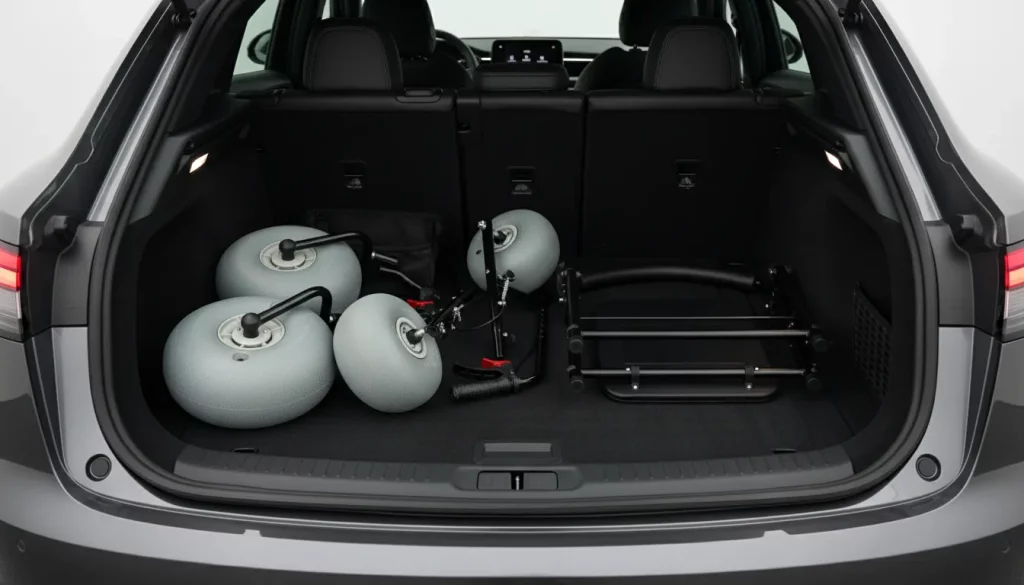
Transporting beach walkers usually requires a vehicle with a standard-sized boot due to their wider wheelbases and oversized tires. While they are built for the outdoors, many modern designs incorporate folding mechanisms to make them more portable. You should measure your vehicle’s cargo space before purchasing or renting one of these units.
What size vehicle do you need?
While some compact cars might struggle, most SUVs and station wagons can accommodate these walkers with ease. The balloon tires are the largest component, so ensure your trunk opening is wide enough.
Think about it: Removing the wheels can often save space, though most users prefer a simple fold-and-go approach.
- SUVs and Crossovers offer the most vertical clearance.
- Station wagons provide the depth needed for the wide frame.
- Some models may require folding down the rear seats in small hatchbacks.
Dimensions when folded for transport
Understanding the specific footprint of the walker helps you plan your coastal road trip without stress. Most high-quality walkers are designed to break down into a manageable size.
But wait, there’s more: Lightweight aluminum frames make lifting the device into a vehicle much easier for a single person.
- Typical folded dimensions are approximately 100cm x 120cm.
- Tool-free disassembly allows for quick wheel removal.
- Compact folding ensures the walker doesn’t take up the entire cargo area.
Key Takeaway: Most modern beach walkers are designed to fit into a standard SUV boot, making them travel-friendly.
| Vehicle Type | Suitability | Note |
|---|---|---|
| SUV / Van | Excellent | No disassembly usually required |
| Station Wagon | High | Fits easily in the trunk |
| Compact Sedan | Moderate | May require wheel removal |
Analysis Guide: Check if your walker features quick-release axles to simplify transport in smaller vehicles.
Where can you use beach walkers?
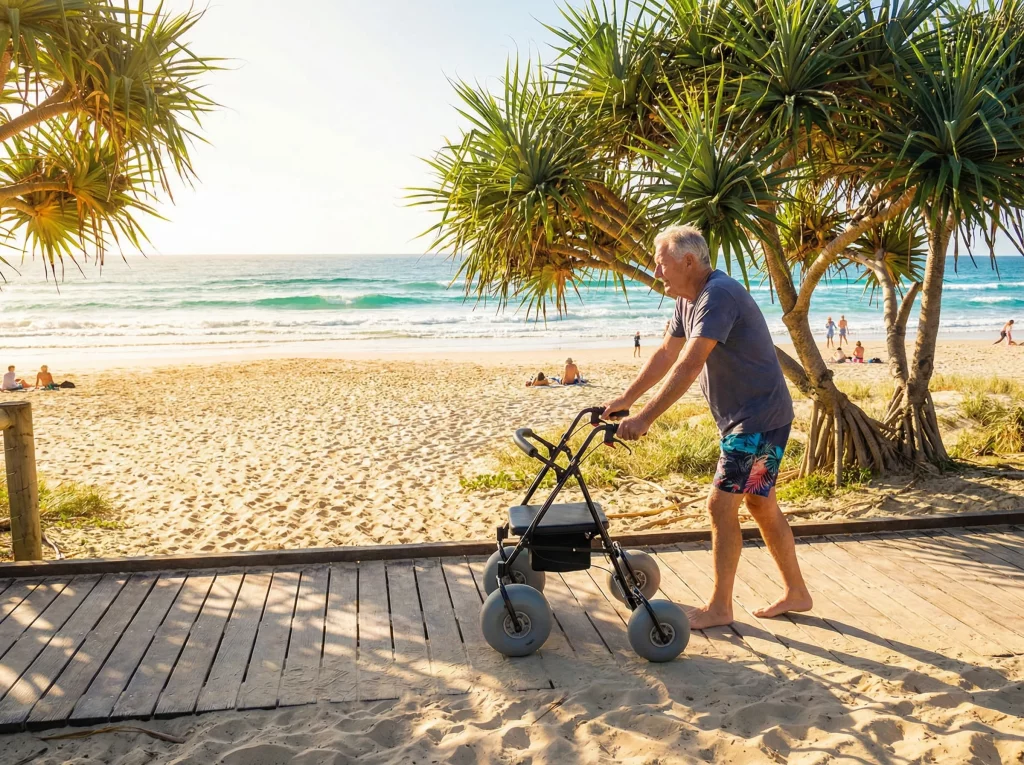
Most beach walkers are designed for use on beaches, but they also excel on gravel trails and grassy parks. Their versatile tires absorb shocks from uneven terrain, making them the ultimate all-terrain mobility aid. You can confidently navigate various outdoor environments that would be off-limits to a traditional wheelchair.
Best accessible beaches to visit
Beaches that offer specialized infrastructure, such as ramps and accessible beach mats , are the best locations for these walkers. These features provide a transition from the parking lot to the soft sand.
Look: The combination of a walker and a beach mat creates a seamless experience for users.
- Look for beaches with Blue Flag accessibility ratings.
- Seek out locations with concrete ramps leading to the sand.
- Check for beaches that maintain level, groomed sand areas.
Can you use them on walking trails?
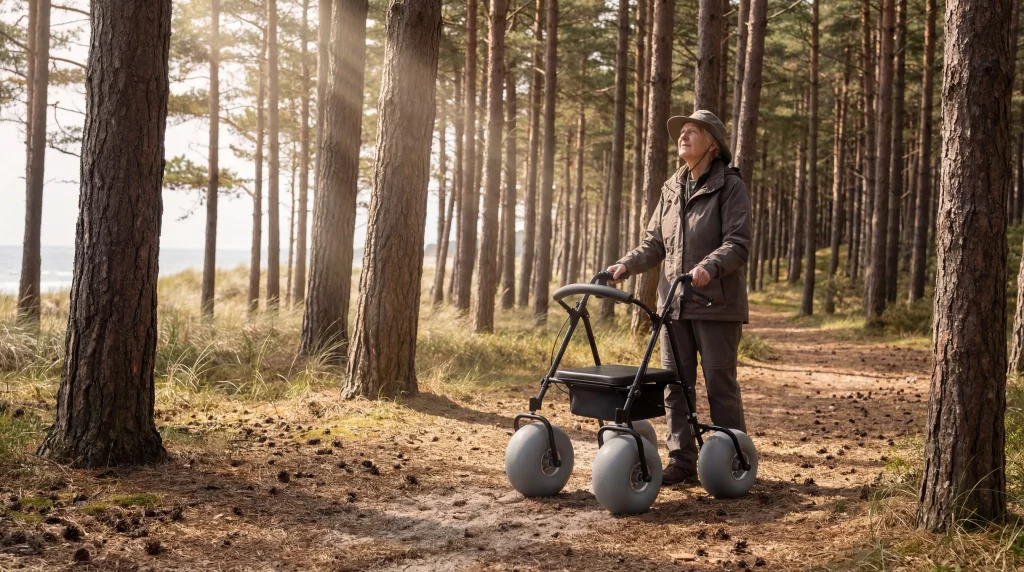
The low-pressure tires are not just for sand; they are perfect for navigating forest paths and rocky coastal tracks. You will find that the walker glides over roots and stones that would stop smaller wheels.
The best part? The balloon tires act as a suspension system, protecting your joints from the impact of rough trails.
- Great for botanical gardens and nature preserves.
- Performs well on crushed limestone and gravel paths.
- Provides stability on wet grass or muddy park areas.
Key Takeaway: A beach walker is a multi-terrain tool that opens up beaches, parks, and trails for your enjoyment.
| Terrain Type | Performance Level | Benefit |
|---|---|---|
| Soft Sand | High | Balloon tires prevent sinking |
| Gravel Trails | High | Absorbs vibrations and bumps |
| Grassy Fields | Excellent | Will not dig into soft turf |
Analysis Guide: Match your walker’s tire size to your primary environment; larger tires are better for the softest sand.
Can beach walkers get wet in the surf?
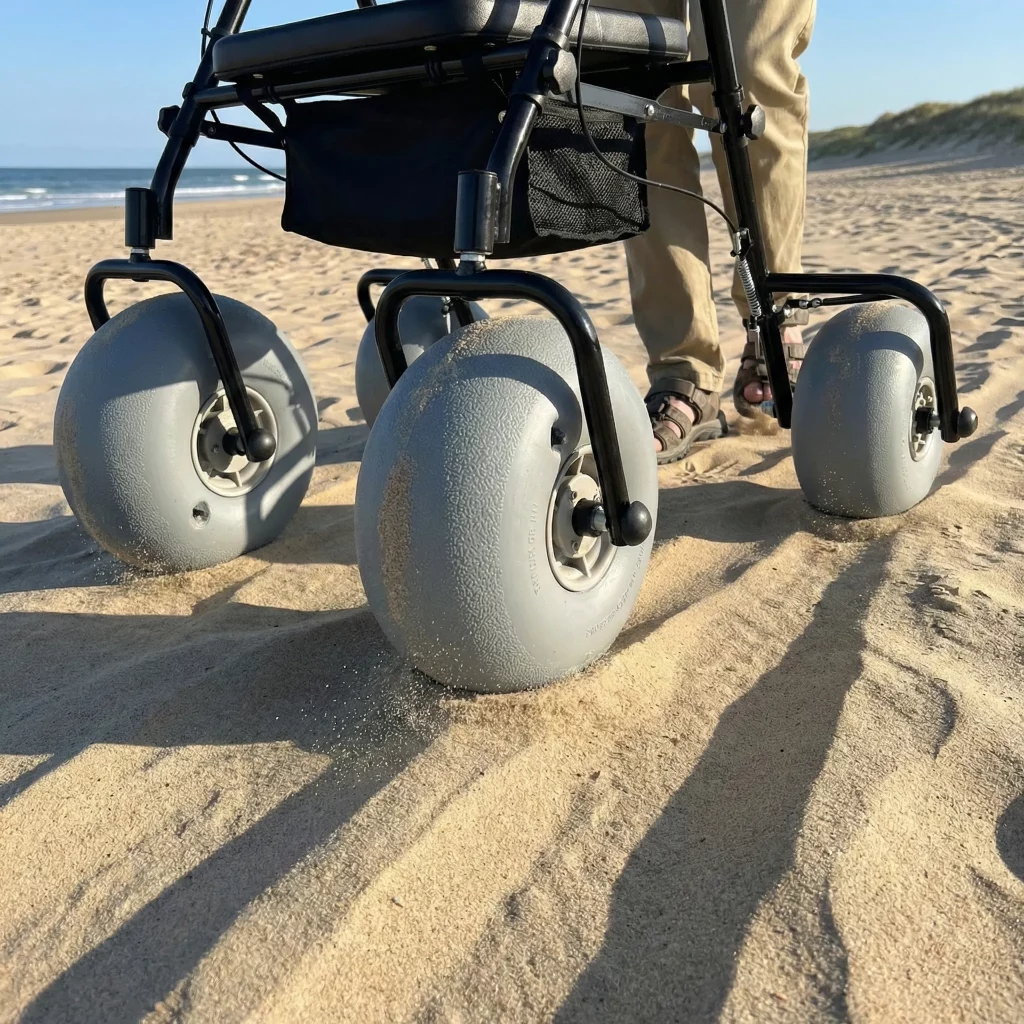
Many beach walkers can safely navigate the hard-packed sand at the water’s edge, but deep immersion is generally discouraged. While the materials are often rust-resistant, the buoyancy of the tires can create safety risks in deeper water. You should always use caution when the tide is coming in.
Water’s edge vs. deep water entry
Walking along the shoreline where the sand is firm and wet is the ideal use case for these devices. It allows you to feel the ocean breeze and get close to the waves safely.
Think about it: The firm sand at the water’s edge provides the best traction for the walker’s braking system.
- Safe for splashing and shallow water up to the ankles.
- Provides a stable platform for watching the sunset near the surf.
- Avoid deep water where waves could tip the frame.
Why do the balloon wheels float?
The air-filled nature of the tires means they have high buoyancy, which is great for sand but tricky in the ocean. If the water gets too deep, the wheels may lift off the ground, causing you to lose your footing.
Here is the kicker: Buoyancy can turn your mobility aid into a floating hazard if you are not careful in the surf.
- Large tires contain a significant volume of air.
- Floating wheels can pull the frame away from the user.
- Saltwater requires immediate rinsing to protect moving parts.
Key Takeaway: Stay in the shallows and on firm sand to ensure your walker remains a stable support rather than a buoy.
| Water Depth | Recommendation | Risk Level |
|---|---|---|
| Ankle Deep | Safe for navigation | Low |
| Knee Deep | Use extreme caution | Medium |
| Waist Deep | Not recommended | High (Buoyancy risk) |
Analysis Guide: Monitor the tide levels during your walk to prevent being caught in deep water unexpectedly.
How do you book a beach walker?
Booking beach walkers through rental facilities typically involves a simple reservation process and a valid form of identification. Most organizations want to ensure their equipment is handled by responsible users who will return it in good condition. You can usually manage the entire process online or through a quick phone call.
What identification is required?
To hire a walker, you will generally need to provide a government-issued photo ID and contact details. Some locations may also ask for a small security deposit to cover any potential damage.
Look: A driver’s license or passport is usually sufficient for most coastal hire services.
- Photo ID is mandatory for insurance purposes.
- Proof of local residency may qualify you for discounts.
- Credit card details are often kept on file for the deposit.
How long can you hire the walker?
Hire durations vary from a quick one-hour stroll to a full weekend of coastal exploration. If you are staying at a resort, they may allow you to keep the walker for your entire stay.
The best part? Flexible booking times allow you to plan your beach trip around the most comfortable times of day.
- Standard hires range from 2 to 4 hours.
- Overnight rentals are often available for local residents.
- Multi-day discounts are common for tourists on vacation.
Key Takeaway: Proper identification and a quick reservation are all you need to unlock a day of beach mobility.
| Booking Step | Requirement | Purpose |
|---|---|---|
| Identification | Photo ID / License | Security and Liability |
| Deposit | Credit Card / Cash | Equipment Protection |
| Return | Inspection | Ensure no salt damage |
Analysis Guide: Review the rental agreement for specific rules regarding where the walker can be taken.
Why are balloon tires essential?
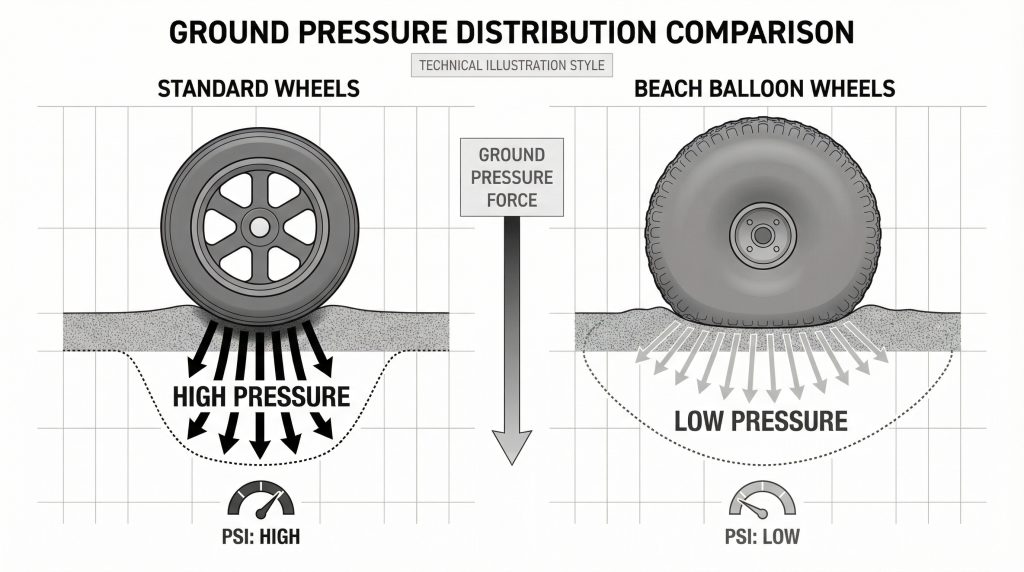
Balloon tires are the defining feature of beach walkers because they distribute weight to prevent sinking into soft sand. By using low air pressure, these tires deform slightly, creating a larger surface area in contact with the ground. You will feel the difference immediately as the walker “glides” rather than “digs.” To learn more about operating these features, you can consult the beach wheelchair user manual .
How do low-pressure tires work?
The physics of “flotation” allows the walker to stay on top of the sand particles. This reduces the rolling resistance, making it much easier for you to push the device forward.
Think about it: A standard tire acts like a knife cutting into the sand, while a balloon tire acts like a snowshoe.
- Pressure is typically kept between 2 and 4 PSI.
- Wider tires prevent the frame from listing to one side.
- Air-filled tires provide a natural cushion against bumps.
Gliding over soft sand vs. sinking
When you encounter deep, dry sand, a standard walker becomes a heavy anchor. In contrast, the balloon tires allow you to maintain a steady pace with minimal effort.
But wait, there’s more: The ease of movement significantly reduces the strain on your shoulders and wrists.
- Minimal downward pressure on the terrain.
- Smooth transitions from pavement to sand.
- Less physical exertion required from the user.
Key Takeaway: Low-pressure tires are the engineering secret that makes beach accessibility possible for everyone.
| Technical Spec | Value | Impact |
|---|---|---|
| Tire Material | Polyurethane (PU) | Durable and puncture-resistant |
| Standard PSI | 2 – 4 PSI | Maximum sand flotation |
| Surface Area | Large / Wide | Prevents sinking and tipping |
Analysis Guide: Check your tire pressure regularly; if the tires are too hard, they will begin to sink into soft sand.
Is a folding frame better for travel?
A folding frame makes beach walkers much more practical for users who enjoy frequent coastal road trips. This feature allows the device to be tucked away when not in use, saving precious space in your home or garage. You will appreciate the convenience of a frame that can be collapsed in seconds without tools.
Benefits of lightweight aluminum
Most high-end walkers use powder-coated aluminum because it is both incredibly strong and light enough for easy lifting. This ensures that you can manage the device independently without needing a large team to assist you.
Look: A lightweight frame means you spend more energy walking and less energy struggling with the equipment.
- Resists rust even in salty coastal environments.
- Easy for caregivers to load into vehicle trunks.
- Provides a rigid, stable platform for the user.
Quick storage for coastal road trips?
If you are traveling from hotel to hotel, a folding design is essential for efficient packing. You can quickly collapse the walker and place it alongside your luggage.
The best part? A compact walker means you don’t have to choose between your mobility aid and your beach gear.
- Fits into most standard hotel closets.
- Can be stored flat under a bed or in a corner.
- Ideal for transport in small boats or ferries.
Key Takeaway: Folding mechanisms turn a bulky piece of equipment into a portable travel companion for any adventure.
| Feature | Folding Frame | Fixed Frame |
|---|---|---|
| Portability | Very High | Low |
| Storage | Compact | Requires large space |
| Assembly | Seconds | May require tools |
Analysis Guide: Look for “one-hand” folding mechanisms if you prioritize speed and ease of use.
How do you maintain these walkers?
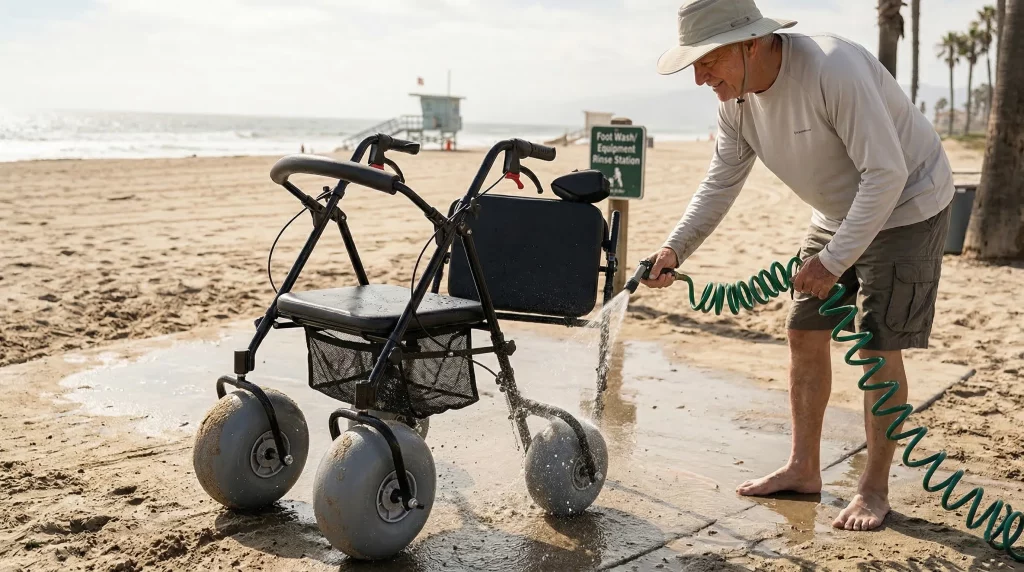
Maintaining beach walkers requires consistent cleaning to prevent the buildup of corrosive salt and abrasive sand. Even the highest quality beach wheelchairs and walkers need a quick rinse after every visit to the shore. You should pay special attention to the moving parts, such as the brakes and axles.
Rinsing away salt and sand
Saltwater is highly corrosive to metals over time, and sand can act like sandpaper on your walker’s bearings. A simple freshwater rinse is the most effective way to extend the life of your equipment.
Think about it: Five minutes of cleaning after your walk can save you years of replacement costs.
- Use a low-pressure hose to clear all crevices.
- Wipe down the frame with a soft, dry cloth.
- Clear any sand trapped in the brake mechanisms.
Longevity of marine-grade materials?
While these walkers are built with tough materials, they are not indestructible. Regular inspections help you catch small issues before they become safety hazards.
But wait, there’s more: Applying a silicone-based lubricant to the axles once a month keeps the wheels spinning smoothly.
- Check for any signs of pitting on the metal frame.
- Ensure the seat fabric is dry before long-term storage.
- Inspect tire valves for any leaks or debris.
Key Takeaway: Regular maintenance is the key to ensuring your walker remains a reliable partner for years of beach visits.
| Maintenance Task | Frequency | Benefit |
|---|---|---|
| Freshwater Rinse | After every use | Prevents corrosion |
| Brake Check | Weekly | Ensures safety on slopes |
| Tire Pressure | Monthly | Maintains sand flotation |
Analysis Guide: Create a “Post-Beach Checklist” to ensure you never forget the critical freshwater rinse.
Reclaiming the Coastline
Our vision at Ary Beach Wheelchair is a world where the horizon is never out of reach. We believe that every individual deserves the right to feel the sand beneath them and the salt air on their face, regardless of their physical limitations. By providing elite-tier mobility solutions, we are helping families create memories that were once thought impossible.
If you are ready to transform your next beach outing into a seamless, inclusive adventure, we are here to help. Our team is dedicated to matching you with the perfect gear for your specific needs and environment.
contact us today to learn more about our full range of accessibility products and start your journey back to the water’s edge.
FAQ: Beach Walker Usage
Can I use a beach walker on steep dunes?No. Beach walkers are designed for flat or gently sloping terrain, and steep dunes pose a significant tipping risk for the user.
What’s the best way to clean my balloon tires?Freshwater rinse. Use a low-pressure hose to remove all salt and sand particles from the tires and axles immediately after leaving the beach.
How do I know if a beach walker will fit in my car?Measure the boot. Check the dimensions of your trunk against the walker’s folded size; most walkers fit easily into SUVs and wagons.
Can I take a beach walker into the deep ocean?No. The balloon tires are highly buoyant and will cause the walker to float, which can lead to a loss of balance and serious injury.
What’s the best terrain for a beach walker?Soft sand and gravel. While they work on pavement, these walkers are optimized for soft, uneven surfaces where traditional wheels would sink.