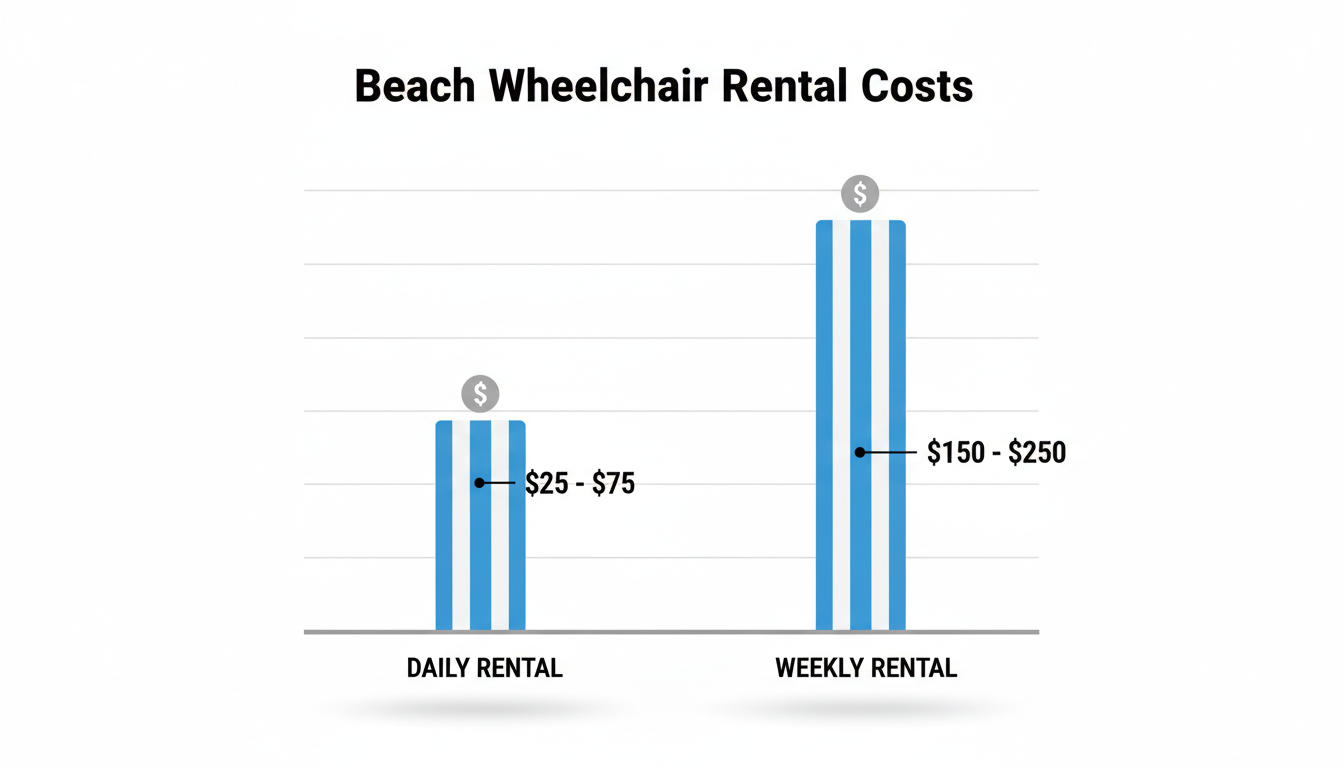
Hiring a beach wheelchair typically costs between 25and75 per day, depending on the specific model and the duration of your rental.
Many families find themselves stuck on the boardwalk because traditional mobility aids simply sink into soft sand, creating a physical barrier to the ocean. This often leads to a sense of exclusion for the user and exhaustion for caregivers who struggle to push standard frames through dunes. Our professional Beach wheelchair provides the ultimate solution, featuring an aluminum frame and orange balloon wheels designed to glide over unstable terrain effortlessly.
1. What exactly is a beach wheelchair?
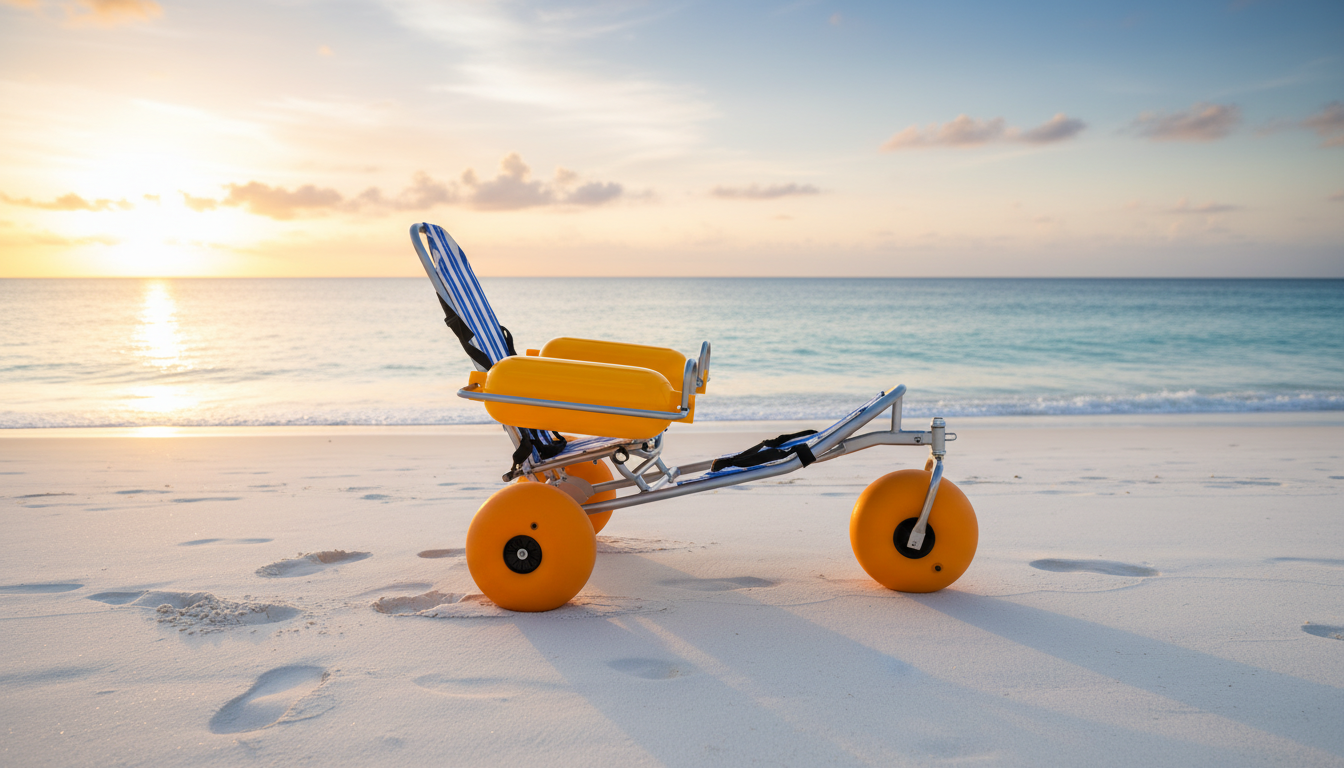
A Beach wheelchair is a specialized mobility device engineered with large, low-pressure tires and corrosion-resistant materials to navigate coastal environments. These chairs feature high-visibility orange balloon wheels and blue-white striped fabric for a professional look.
How do balloon tires improve mobility?
Balloon tires distribute the user’s weight across a much wider surface area, which prevents the chair from digging into the sand. This design allows the chair to “float” on top of the grains rather than cutting through them.
Here is the secret.
- Low ground pressure inflation.
- Wide footprint for maximum stability.
- Shock absorption on uneven dunes.
Why is the frame material critical?
Coastal air is laden with salt, which quickly destroys standard steel frames through rapid oxidation. We use high-grade aluminum because it remains lightweight while offering superior resistance to saltwater damage.
But that is not all.
| Component | Material | Purpose |
|---|---|---|
| Frame | Aluminum | Rust prevention |
| Wheels | PU Balloon | Sand flotation |
| Fabric | Synthetic | Quick-drying comfort |
The choice of materials directly impacts how long the chair remains functional and safe for users in harsh environments.
Key Takeaway: A true beach wheelchair combines buoyant tire technology with a rust-proof frame to ensure reliable access to the shoreline.
2. Why should you use a beach wheelchair?
A beach wheelchair is the most effective way to ensure every family member can participate in a coastal trip without physical limitations. It eliminates the frustration of being confined to the pavement while others enjoy the surf.
Does it improve family inclusivity?
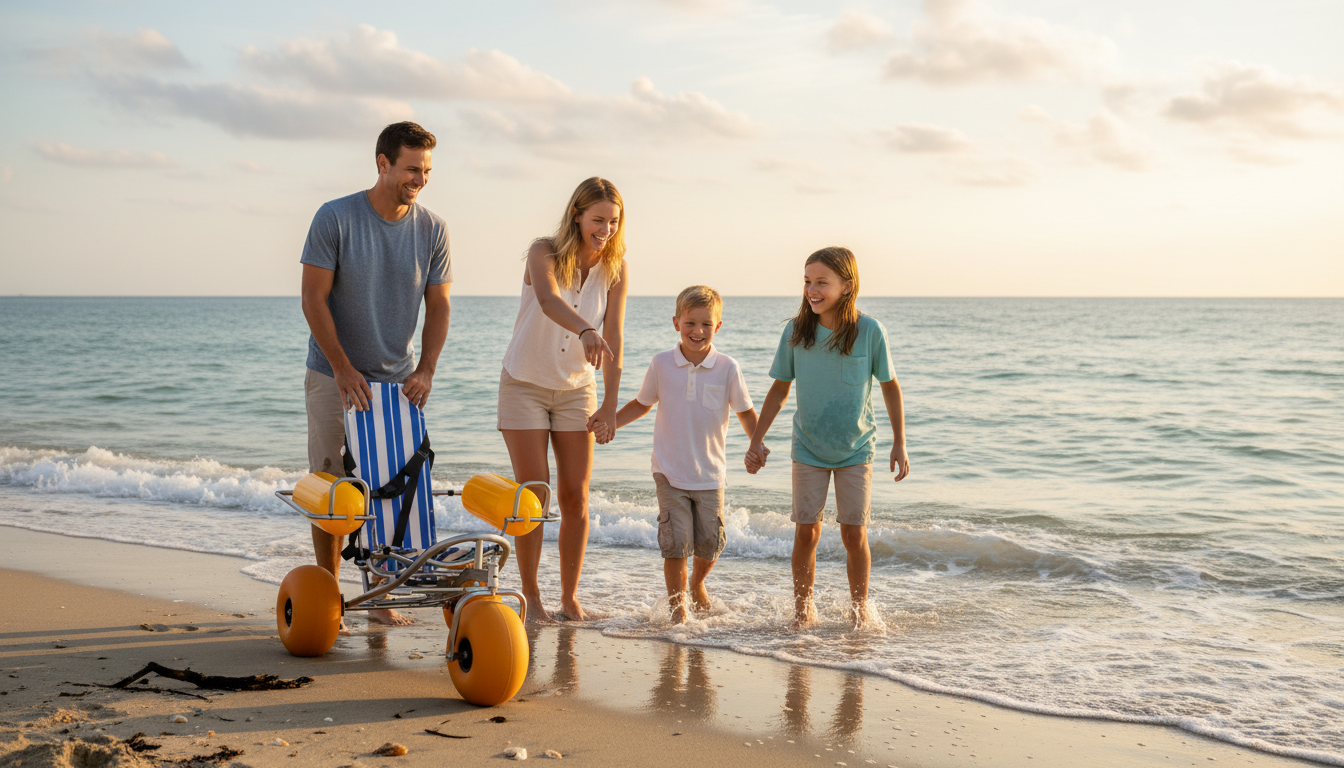
Inclusivity is the heart of a successful vacation, and providing mobility options ensures that no one is left behind during group activities. It allows users to transition from the car to the water’s edge without multiple transfers.
Think about this.
- Reduced caregiver burnout.
- Enhanced emotional well-being.
- Full participation in beach games.
Can it handle different coastal terrains?
These chairs are not limited to just soft sand; they perform exceptionally well on gravel, grass, and wet tidal zones. The wide tires act as a universal suspension system for various outdoor surfaces.
The best part?
| Terrain | Performance | Support Level |
|---|---|---|
| Soft Sand | Excellent | Maximum |
| Gravel | High | High |
| Wet Sand | Superior | Maximum |
Using the right equipment transforms a difficult trek into a smooth, enjoyable journey across any shoreline landscape.
Key Takeaway: Utilizing specialized mobility gear restores independence and ensures that the entire family can share the beach experience together.
3. How much does a beach wheelchair hire cost?
Hiring a Beach wheelchair usually costs around
40perday,thoughweeklyratescanbringthepricedowntoaslowas
150. Prices vary based on whether you choose a manual, electric, or water-floating model.
What are the typical daily rates?
Daily rates are perfect for local visitors who only need the chair for a specific excursion or a single day at the dunes. Most vendors include basic safety accessories and a quick training session within this fee.
Let’s break it down.
- Daily Hire: 25–75.
- Weekend Rate: 80–120.
- Delivery Fees: 10–30.
Are weekly discounts standard?
Weekly packages offer the best value for families staying at a resort for an extended period. Booking for seven days often results in a 30% to 50% discount compared to the daily rate.
It gets even better.
| Duration | Estimated Cost | Recommendation |
|---|---|---|
| 1 Day | $45 | Day trips |
| 3 Days | $100 | Long weekends |
| 7 Days | $180 | Full vacations |
Analyzing the cost per day shows that longer rentals are significantly more economical for vacationers planning multiple beach visits.
Key Takeaway: If you plan to visit the shore more than three times in a week, a weekly rental package is your most cost-effective choice.
4. Where to find a beach wheelchair hire?
You can find a beach wheelchair for hire at most major public beach boardwalks, specialized mobility shops, and high-end coastal resorts. Many municipal programs also offer these chairs near lifeguard stations for public use.
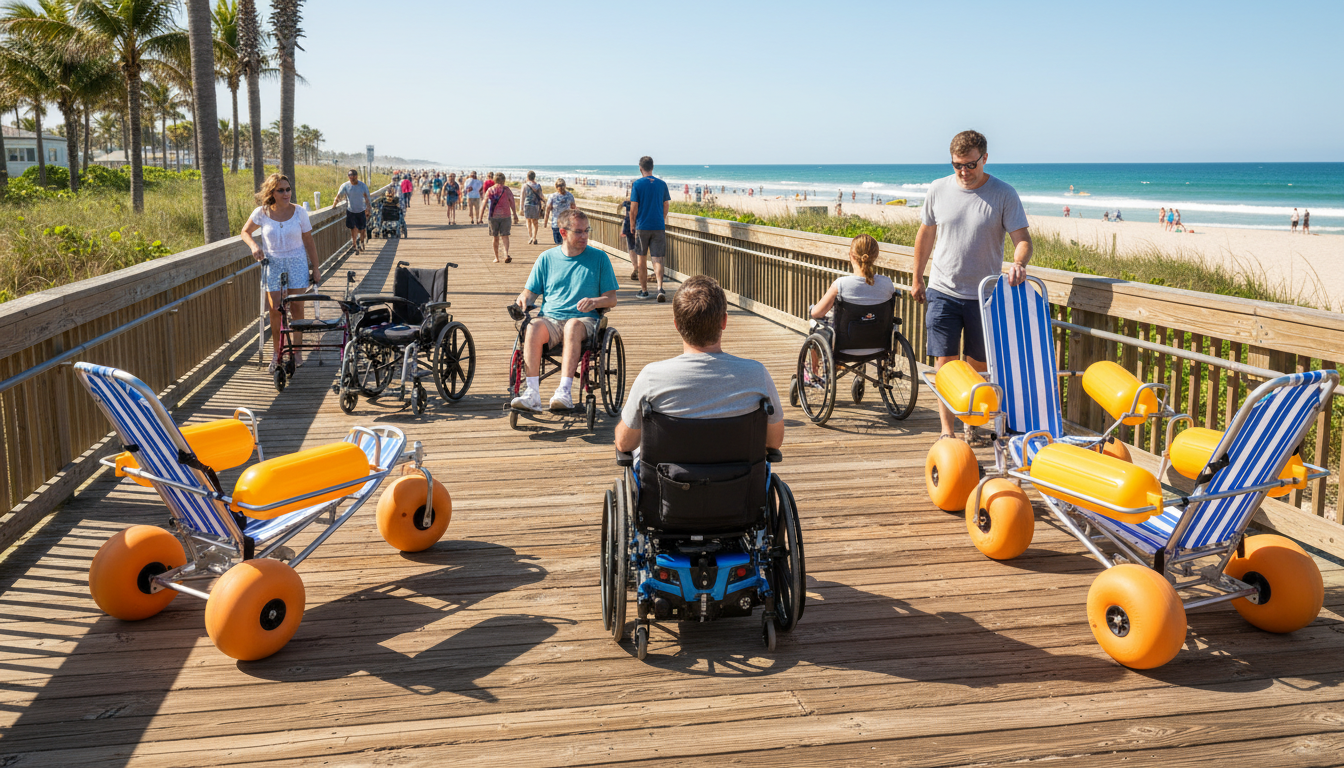
Are public beach rentals reliable?
While many cities provide chairs, they are often available on a first-come, first-served basis, which can be risky during peak summer months. We suggest checking availability online before you arrive to avoid disappointment.
You might wonder.
- Limited stock in high season.
- Restricted usage hours.
- Varying maintenance standards.
Why choose a private rental company?
Private companies offer the advantage of guaranteed reservations and door-to-door delivery services directly to your hotel or rental home. They also tend to stock newer models with better features like flotation pontoons.
Imagine this.
| Source | Reliability | Convenience |
|---|---|---|
| City Lifeguards | Moderate | Low |
| Private Shops | High | High |
| Resort Concierge | Maximum | Maximum |
The reliability of your source dictates the success of your accessibility plan, making private bookings a safer bet for travelers.
Key Takeaway: Booking your mobility equipment through a private provider guarantees availability and often includes the convenience of delivery.
5. How to maintain a beach wheelchair?
Maintaining a Beach wheelchair requires a thorough freshwater rinse after every use to prevent salt and sand from accumulating in the moving parts. This simple step preserves the integrity of the aluminum frame and the orange balloon tires.
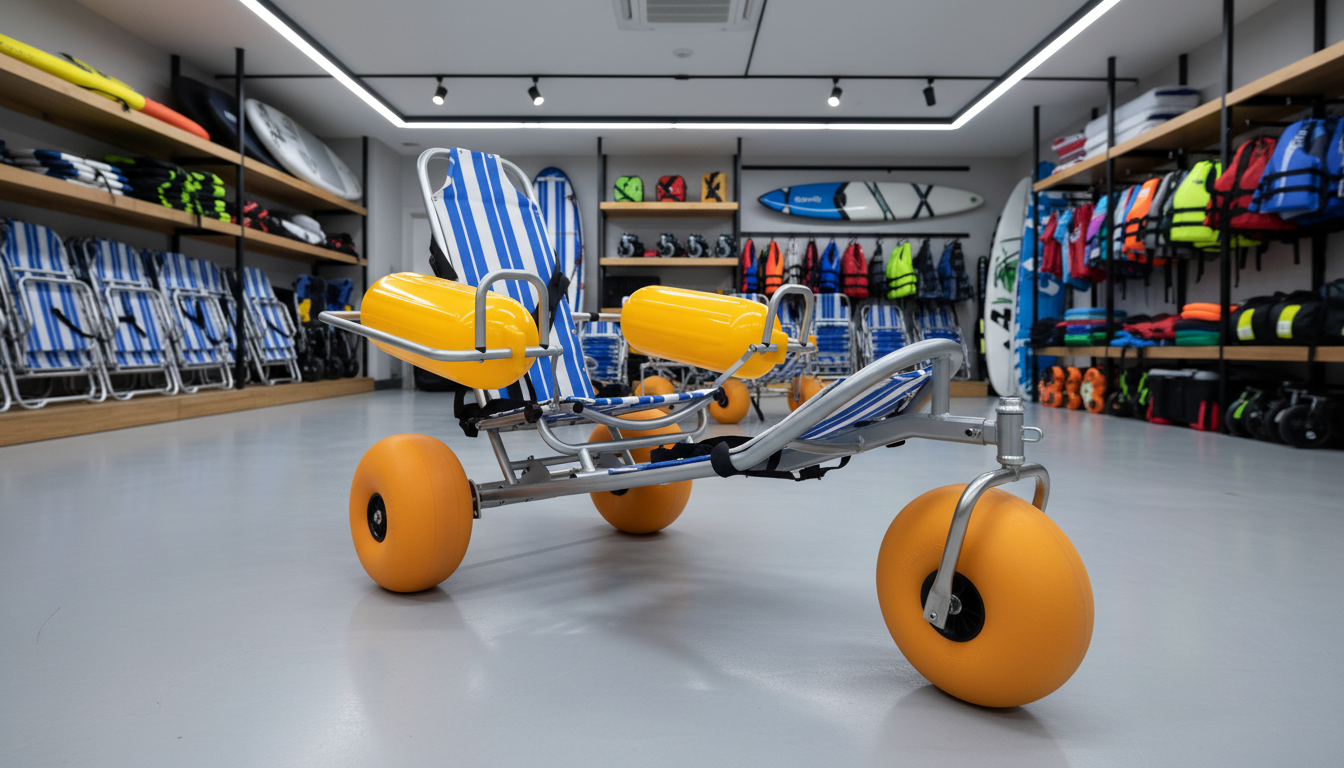
Why is rinsing mandatory?
Saltwater is highly corrosive, and even high-grade materials will eventually degrade if salt crystals are left to sit on the surface. Rinsing clears the axles and bearings, ensuring the wheels continue to spin freely without friction.
Watch out for this.
- Jammed wheel bearings.
- Fabric staining from salt.
- Sand buildup in the harness.
How do you protect the upholstery?
The blue-white striped fabric is designed for durability, but it should still be dried away from direct, harsh sunlight when not in use. This prevents the synthetic fibers from becoming brittle and ensures the colors remain vibrant.
The danger is real.
| Maintenance Task | Frequency | Duration |
|---|---|---|
| Fresh Water Rinse | Daily | 5 mins |
| Bearing Check | Weekly | 2 mins |
| Fabric Wash | Monthly | 10 mins |
Regular cleaning is the most important factor in extending the lifespan of your accessibility equipment in coastal conditions.
Key Takeaway: Consistency is key; a five-minute rinse after every trip prevents long-term damage and keeps the chair in peak condition.
6. How to transport a beach wheelchair safely?
Transporting a beach wheelchair is easiest when using a vehicle with a ramp or a large trunk space, as these chairs are wider than standard mobility aids. Many manual models feature quick-release pins that allow you to remove the balloon wheels for more compact storage.
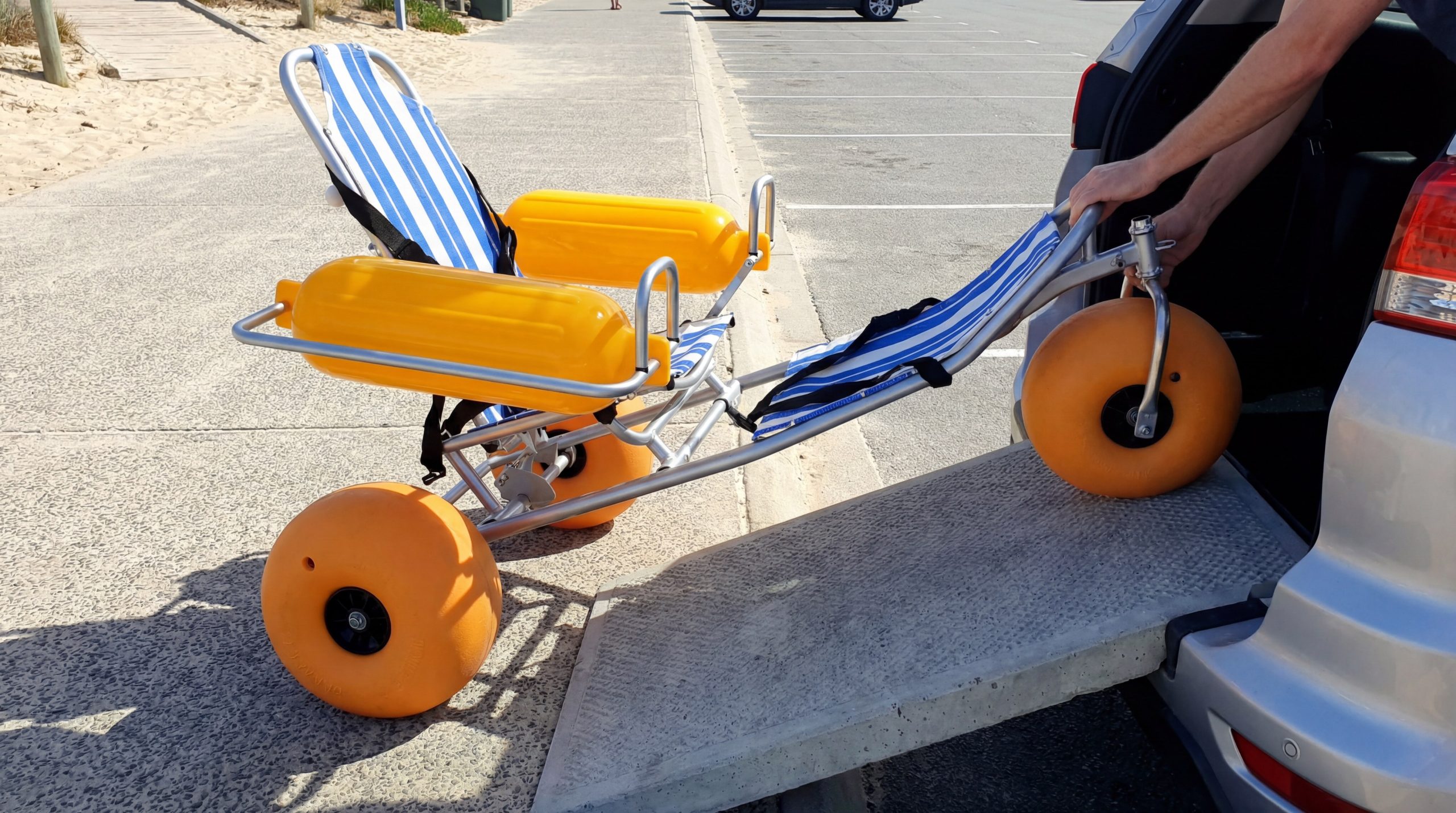
Can it fit in a standard car?
Most standard SUVs and vans can accommodate the frame if the wheels are detached, but a sedan might struggle with the bulk. We recommend measuring your cargo space before attempting to transport the unit yourself.
Keep this in mind.
- Frame dimensions vs. trunk space.
- Weight of the aluminum frame.
- Proper securement during transit.
Should you use a hitch-mounted rack?
Using a hitch-mounted carrier is an excellent option for those who don’t want to disassemble the chair every time they move. Ensure the rack is rated for the specific weight and width of the beach model.
It is a trade-off.
| Method | Ease of Use | Space Required |
|---|---|---|
| Disassembly | High | Low |
| Van Ramp | Maximum | High |
| Hitch Rack | Medium | Medium |
Choosing the right transportation method prevents physical strain on the caregiver and protects the chair from damage during travel.
Key Takeaway: Always verify your vehicle’s cargo capacity or consider a hitch rack to make transporting the bulky chair manageable.
7. What features make a beach wheelchair great?
A great Beach wheelchair must have flotation armrests, an adjustable safety harness, and low-pressure tires designed for unstable surfaces. These features ensure the user remains secure while navigating the unpredictable terrain of the shoreline.
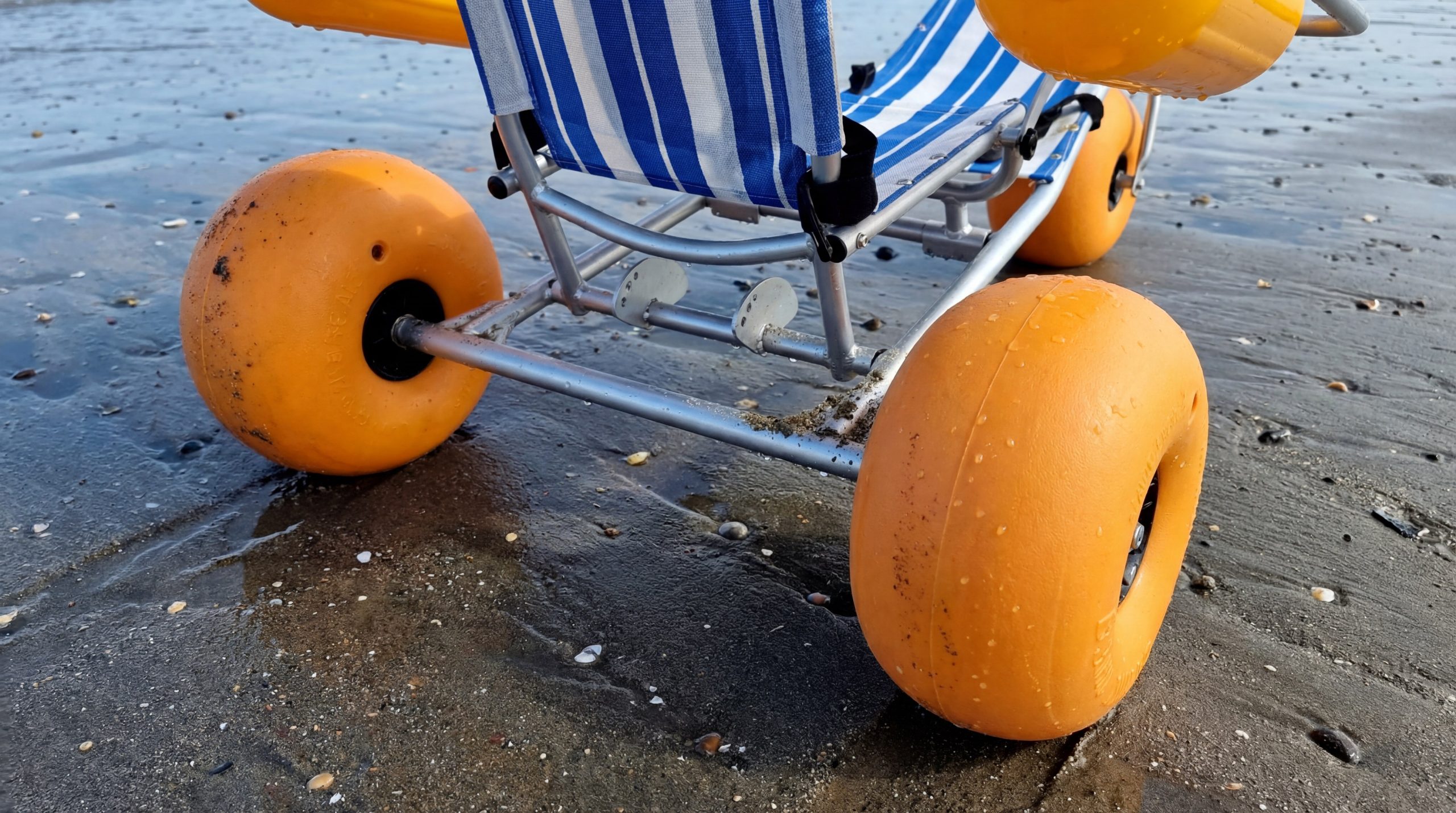
Why are flotation armrests vital?
Flotation armrests serve two purposes: they provide comfortable support on land and act as buoyancy aids when the user ventures into shallow water. This dual functionality is essential for chairs designed for aquatic environments.
You will want this.
- Lateral stability in water.
- Ergonomic land support.
- Increased user confidence.
Is an adjustable harness necessary?
Safety is paramount, and an adjustable harness keeps the user centered in the chair when traversing steep dunes or uneven boardwalks. It prevents sliding and ensures the user’s weight is always balanced correctly.
Imagine this.
| Feature | Importance | Benefit |
|---|---|---|
| Pontoons | High | Buoyancy & Balance |
| 5-Point Harness | Essential | User Security |
| Footrest | Moderate | Leg Comfort |
A well-equipped chair focuses on user safety first, allowing for a stress-free experience in challenging outdoor environments.
Key Takeaway: Prioritize chairs with safety harnesses and flotation aids to ensure the most versatile and secure beach experience possible.
8. Is a beach wheelchair safe in water?
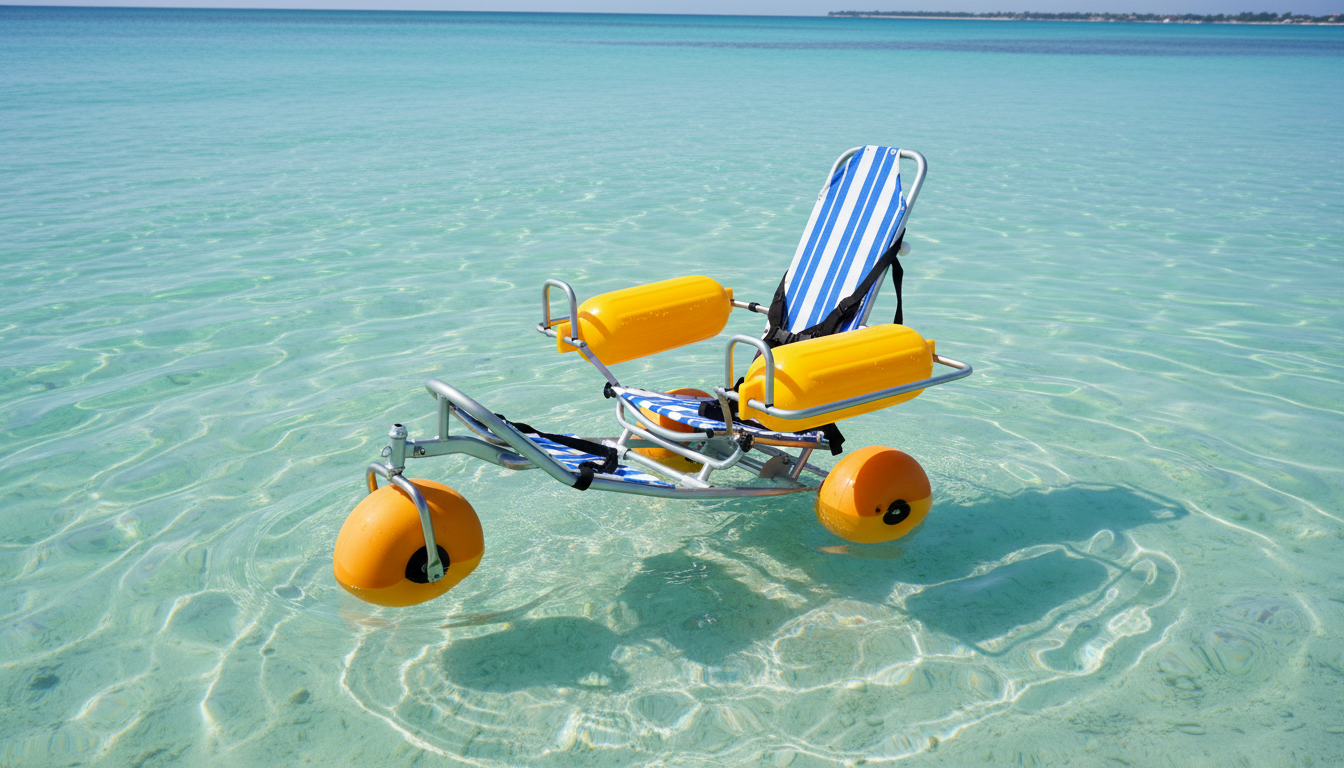
A beach wheelchair is safe for shallow water use only if it is specifically designed with flotation pontoons and buoyant armrests. Standard all-terrain chairs that lack these features can tip over or become bogged down in the wet sand.
How does buoyancy improve safety?
Buoyancy ensures that the chair stays upright even when hit by small waves, providing a stable platform for the user to enjoy the water. The pontoons act as outriggers, significantly widening the base of support.
Watch out for this.
- Strong currents or high surf.
- Deep water beyond chest height.
- Users without life jackets.
What are the risks of standard chairs?
Chairs without pontoons are prone to sinking into the “suction” created by retreating waves, which can make them nearly impossible to move. This creates a dangerous situation where the user could be stuck as the tide rises.
The danger is real.
| Chair Type | Water Safety | Ideal Use |
|---|---|---|
| Floating | High | Swimming/Surfing |
| Manual All-Terrain | Low | Sand Walking |
| Electric | Zero | Boardwalks/Dry Sand |
Using the equipment as intended by the manufacturer is the only way to ensure a safe transition from the dunes into the water.
Key Takeaway: Never enter the water with a chair that does not have integrated flotation devices or explicit manufacturer approval for aquatic use.
9. Does a beach wheelchair need accessories?
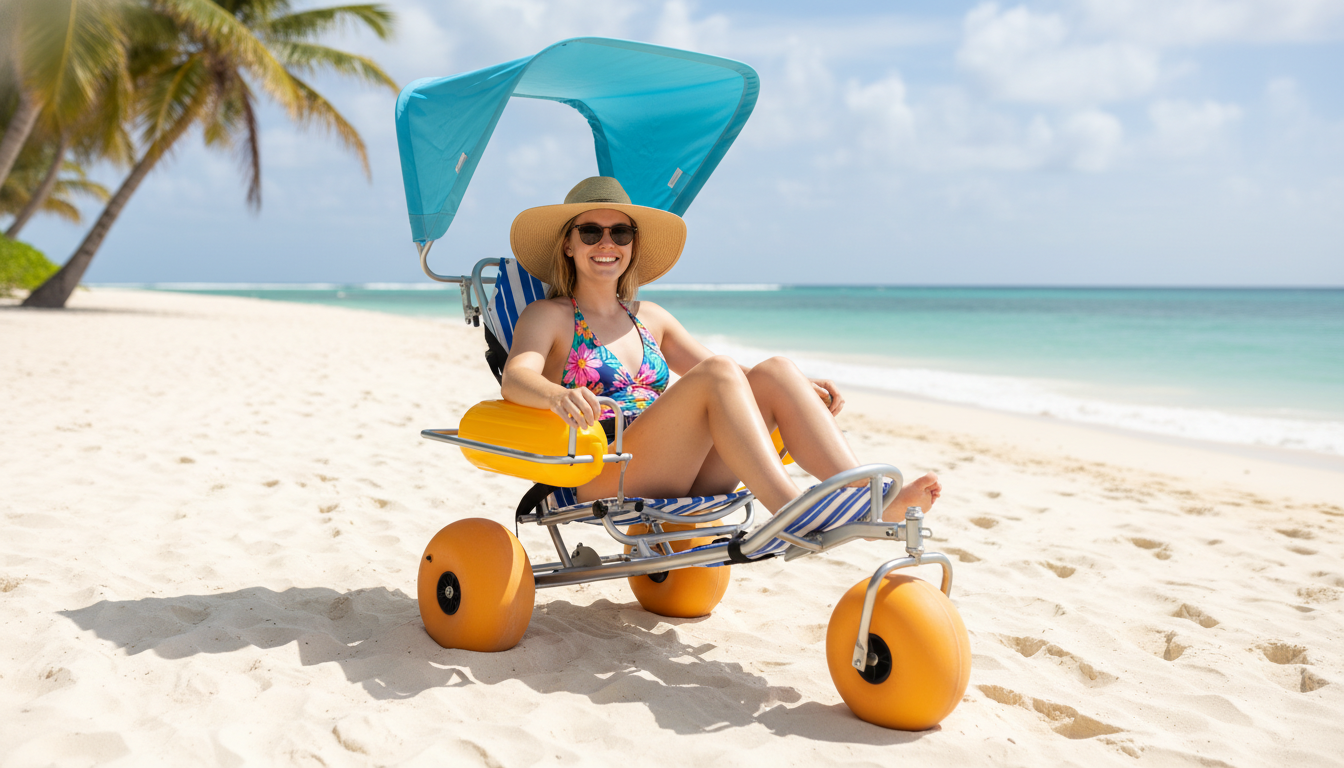
A Beach wheelchair benefits greatly from accessories like sunshades, cup holders, and storage bags to enhance the user’s comfort during long days out. These additions protect the user from the elements and keep personal items within easy reach.
Why is a sunshade essential?
The sun’s reflection off the sand and water can be intense, leading to rapid sunburn or heat exhaustion for those with limited mobility. An integrated sunshade provides a mobile refuge from UV rays throughout the day.
The catch is.
- UV protection for skin.
- Reduced glare for vision.
- Temperature regulation.
Are storage bags useful?
Having a dedicated storage bag attached to the frame allows you to carry water bottles, sunscreen, and medical supplies without needing an extra person to hold them. This promotes independence for the user.
It’s quite simple.
| Accessory | Value | Function |
|---|---|---|
| Sun Canopy | Maximum | UV Protection |
| Mesh Bag | High | Sand-free Storage |
| Padded Seat | Moderate | Long-term Comfort |
Adding the right accessories turns a basic mobility tool into a complete outdoor recreation station for the user.
Key Takeaway: Investing in a sunshade and storage bag significantly improves the user’s endurance and comfort during a full day at the beach.
10. How to book a beach wheelchair today?
Booking a beach wheelchair is a straightforward process that involves selecting your dates, choosing a model, and confirming a delivery location. Most professional rental services offer online booking portals for immediate confirmation and peace of mind.

Should you book in advance?
We highly recommend booking at least two weeks in advance, especially during the summer months when demand for accessibility equipment peaks. This ensures you get the specific model that fits your physical needs.
It’s quite simple.
- Check local vendor stock.
- Select your rental duration.
- Pay the deposit online.
What information is required?
You will typically need to provide the user’s weight, the delivery address (such as a hotel or beach house), and a contact phone number. This allows the rental company to set up the chair and adjust the harness before arrival.
It gets even better.
| Step | Action | Timing |
|---|---|---|
| Research | Find local providers | 3 weeks out |
| Booking | Confirm model & dates | 2 weeks out |
| Delivery | Receive chair on-site | Arrival day |
Following a structured booking timeline eliminates last-minute stress and ensures that accessibility is ready the moment you reach the coast.
Key Takeaway: Early booking is the only way to guarantee availability and secure the specific features needed for a safe coastal trip.
FAQ
- Q1: Can I transport a beach wheelchair in my SUV?
- Yes, most models allow for the removal of the large balloon wheels, making the frame compact enough to fit in the back of most standard SUVs.
- Q2: Does insurance cover the cost of a beach wheelchair hire?
- Generally, standard health insurance does not cover “leisure” rentals, but some travel insurance policies may provide reimbursement for accessibility needs.
- Q3: What’s the best way to clean the chair?
- Rinse the entire unit with fresh water after every use to remove abrasive salt and sand, focusing specifically on the axles and harness buckles.
- Q4: Is there a weight limit for a beach wheelchair?
- Yes, most standard chairs support up to 250 lbs, though heavy-duty models are available that can safely hold up to 500 lbs.
- Q5: Can I use the chair in deep water?
- No, these chairs are designed for shallow, knee-deep water only; they are not intended to be used as a boat or in deep, moving currents.
Conclusion
Maximizing accessibility is about more than just equipment; it is about providing the freedom to explore our natural world without barriers. By choosing a professional mobility solution with orange balloon wheels and flotation pontoons, you ensure that every family member can experience the joy of the ocean. Whether you are planning a single day trip or a month-long coastal stay, the right tools make the impossible possible. For more information on our engineering and how we can support your specific mobility goals, please contact us today. We are dedicated to ensuring the horizon remains open to everyone.