
Yes, you can absolutely use a wheelchair on the beach as long as the equipment is specifically engineered for high-displacement mobility and saltwater resistance. For many individuals with limited mobility, the soft, shifting terrain of a coastline represents a significant barrier that standard equipment simply cannot overcome. This creates a frustrating disconnect where the beauty of the shore remains visible but physically unreachable. By utilizing a specialized all-terrain solution, you can bridge this gap and reclaim your independence on the sand. You should explore how can you use a wheelchair on the beach to transform your next seaside excursion into a seamless experience.
Can You Use a Wheelchair on the Beach?
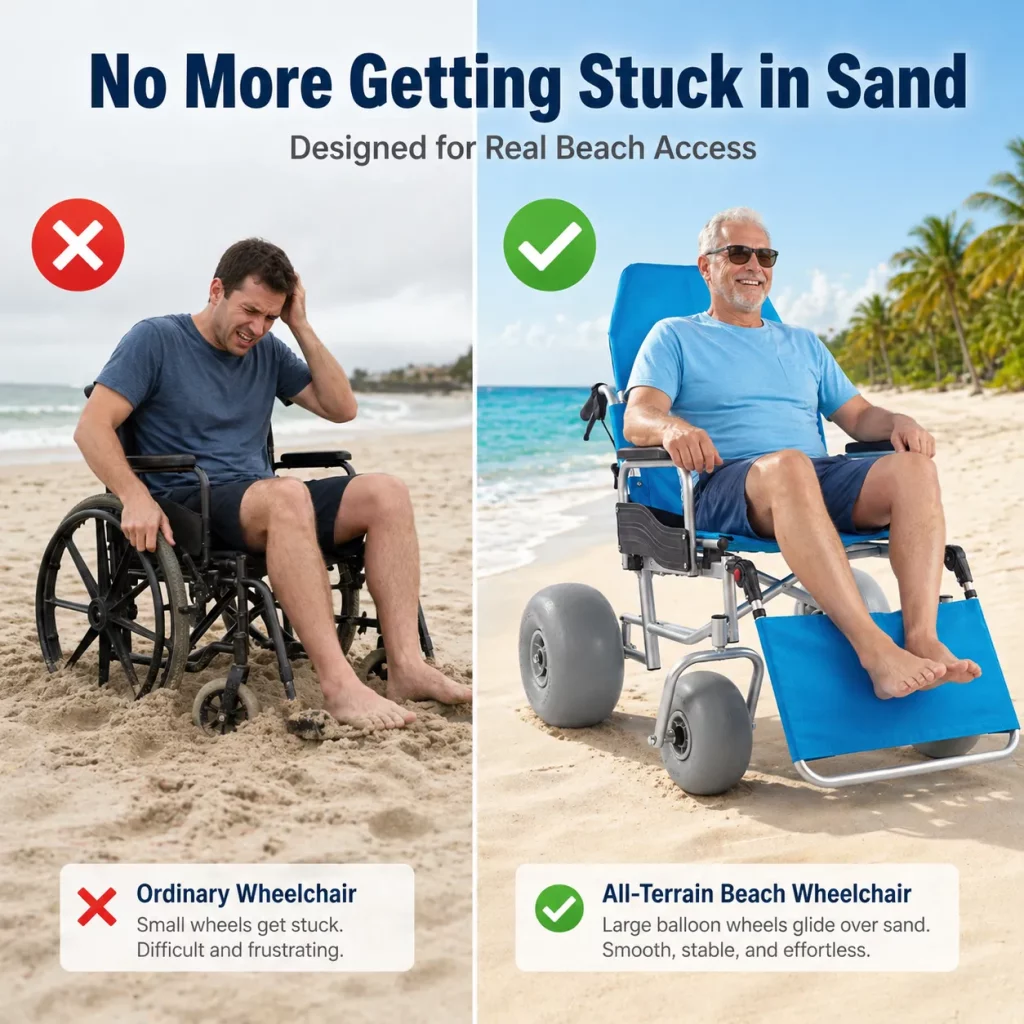
Yes, you can use a wheelchair on the beach provided it is an all-terrain model equipped with low-pressure balloon tires. Standard mobility aids are designed for high-friction, hard surfaces like concrete or carpet, which makes them fundamentally incompatible with soft sand. When asking can you use a wheelchair on the beach, the answer depends entirely on the mechanical ability of the chair to stay on top of the substrate rather than sinking into it.
The Physics of Coastal Mobility
Navigating a coastal environment requires a different approach to ground pressure and weight distribution. Standard wheels are narrow and apply concentrated force, which causes them to dig into loose granules immediately.
Here’s the deal: Specialized equipment uses “flotation” physics to glide over the surface. By increasing the surface area of the tires, the downward force of the user is spread across a wider patch, preventing sinkage.
- Low-pressure tires expand the contact area.
- Lightweight aluminum frames reduce the total load.
- Stainless steel components prevent rust from salt spray.
Overcoming the Sand Barrier
Traditional wheelchairs lack the clearance and the tire profile to manage even the most compact wet sand. You will find that without the right equipment, even a few feet of travel becomes an exhausting struggle for both the user and the caregiver.
But that’s not all. Modern designs incorporate a three-wheel or four-wheel configuration specifically balanced for uneven dunes. This ensures that you maintain stability even when the ground beneath you shifts or slopes toward the shoreline.
Key Takeaway: Achieving beach access is not a matter of effort but a matter of selecting the correct mechanical tools for the terrain.
| Feature | Requirement for Sand | Standard Wheelchair |
|---|---|---|
| Tire Type | Balloon/Pneumatic | Solid/Narrow |
| Frame | Marine-grade Aluminum | Chrome/Steel |
| Pressure | 2 – 4 PSI | High PSI/Solid |
The primary difference in accessibility lies in the displacement capacity of the tires versus the concentrated weight of standard wheels.
How Does a Beach Wheelchair Work?
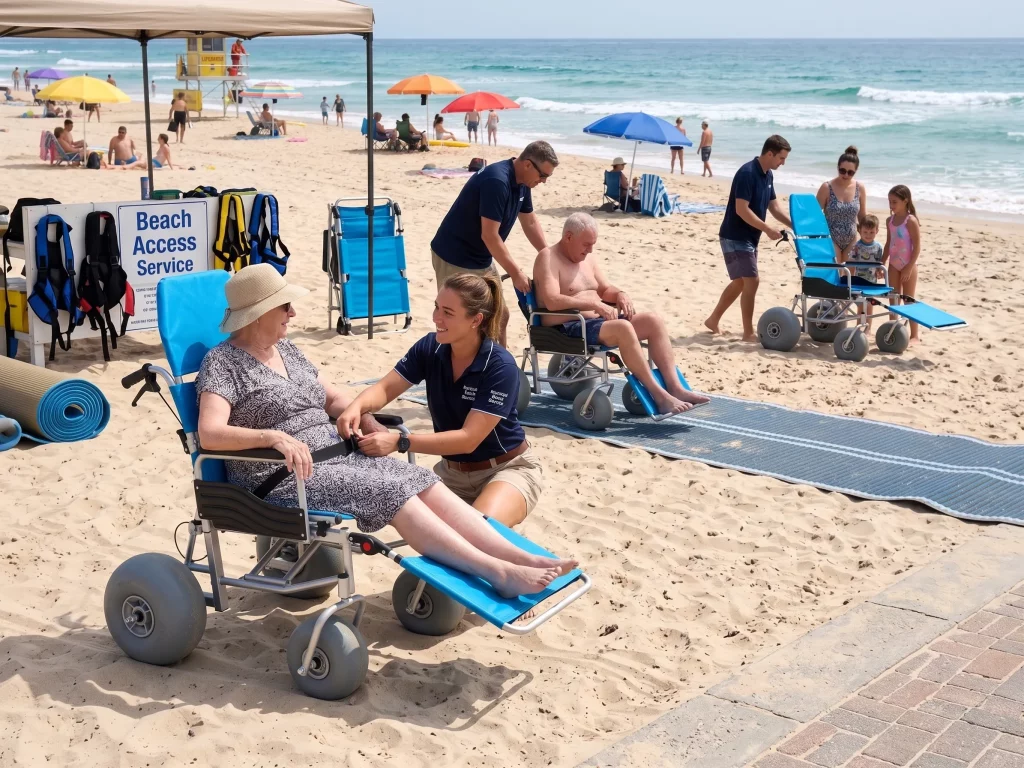
A beach wheelchair works by utilizing large, air-filled balloon tires that create a massive “footprint,” allowing the chair to float on top of soft sand. When you investigate can you use a wheelchair on the beach , you will see that the secret lies in low-pressure technology. These tires are typically inflated to only 2-4 PSI, making them soft enough to deform over shells and pebbles while maintaining a broad surface area.
Flotation and Weight Distribution
The engineering principle of “flotation” is what allows these chairs to navigate environments that would trap a car or a standard chair. By spreading the weight of the occupant over four or three wide tires, the ground pressure is reduced to a level lower than a human footprint.
Make no mistake: This distribution is the only way to prevent the wheels from creating ruts. When the tire makes contact with the sand, it flattens slightly to maximize the area of engagement.
- Pneumatic tires absorb ground shocks.
- Wide axles provide a stable center of gravity.
- Strategic wheel placement prevents tipping on slopes.
Propulsion and Maneuverability
Because the tires are designed to roll over the sand rather than through it, the force required to move the chair is significantly reduced. This makes it possible for a single person to push the chair across soft dunes without excessive physical strain.
Check this out: The swivel front wheels allow for 360-degree turns even in tight spaces or on uneven transitions. You can navigate from a wooden boardwalk directly onto the loose sand without losing momentum or stability.
Key Takeaway: Low-pressure balloon tires are the essential component that turns an impossible terrain into a navigable path.
| Mechanism | Function | Benefit |
|---|---|---|
| Large Diameter | Rolls over obstacles | Smoother ride |
| Soft Compound | Conforms to terrain | High traction |
| Quick-Release Axles | Rapid assembly | Easy transport |
Advanced tire physics eliminate the high-friction resistance that usually makes sand travel impossible for traditional mobility devices.
What are the Different Types of Beach Wheelchairs?
There are three main categories of beach wheelchairs: manual sand-only models, floating water models, and all-terrain power chairs. When considering can you use a wheelchair on the beach, you must first identify which of these fits your specific goals for the day. Each type is engineered for a specific zone of the beach, from the dry dunes to the breaking waves.
Manual Sand-Only Models
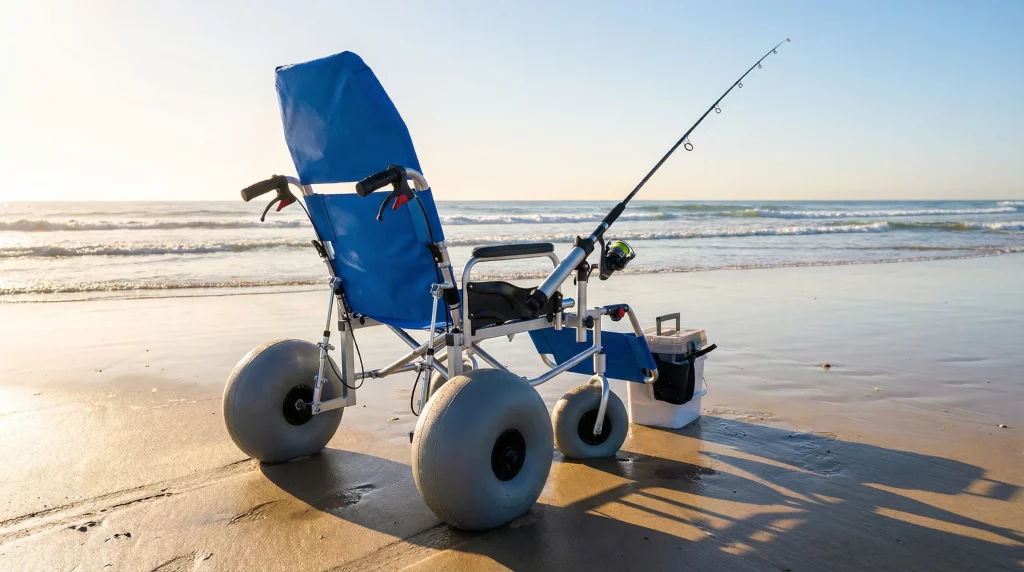
These are the most common chairs, featuring a lightweight aluminum frame and four large balloon tires. They are designed for maximum portability and are often the easiest to transport in a standard vehicle.
Here’s the deal: These chairs excel at traversing the long stretch of soft sand between the parking lot and the water. While they aren’t meant for deep immersion, they provide the most reliable transport for shore-side relaxation.
- Lightweight aluminum alloy frames.
- Blue and white striped mesh seating.
- Removable footrests for easy entry.
Floating Water-Entry Models
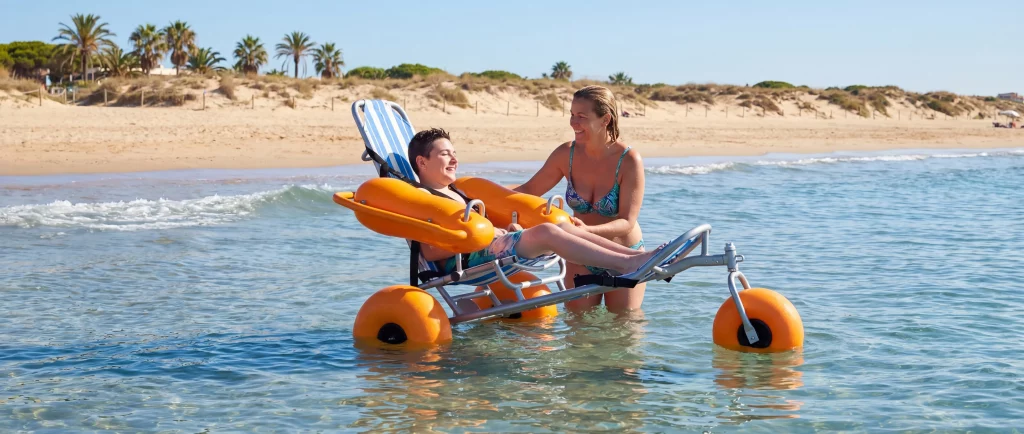
If your goal is to actually get into the surf, a floating model is the necessary choice. These chairs feature buoyant armrests and specialized frames that allow the chair to float once it enters the water.
But that’s not all. These models act as a bridge between a land vehicle and a swimming aid. They allow the user to experience the buoyancy of the ocean while remaining safely seated and supported by a caregiver.
- High-buoyancy orange armrests.
- Three-wheel tripod design for stability.
- UV-resistant quick-dry upholstery.
All-Terrain Power Chairs
For those seeking total independence, electric all-terrain chairs use heavy-duty tracks or oversized tires powered by a motor. These are less common for casual beach trips but provide unparalleled freedom for solo explorers.
Think about this: Power models eliminate the need for a pusher entirely. However, they are significantly heavier and require specialized trailers for transport, making them a more intensive investment.
Key Takeaway: Selecting the right chair type depends on whether you intend to stay on the sand or enter the water.
| Chair Type | Best Use Case | Key Feature |
|---|---|---|
| Manual Sand | Transport to the shore | Lightweight/Portable |
| Floating | Ocean immersion | Buoyant components |
| Power | Independent exploration | Electric drivetrain |
Matching the equipment to the specific “beach zone” ensures safety and maximizes the enjoyment of the coastal environment.
Can I Use My Standard Wheelchair on the Beach?
No, you cannot use a standard wheelchair on the beach because the narrow, high-pressure wheels will immediately sink and become stuck. When you ask can you use a wheelchair on the beach , you are often looking for a way to adapt existing equipment, but standard frames are not built for this. Beyond the mobility issues, the salt and sand will cause permanent damage to your standard chair’s bearings and frame.
The Problem with Narrow Tires
Standard wheelchairs use wheels that are less than two inches wide, which creates extremely high ground pressure. On a hard surface, this is efficient, but on sand, it acts like a blade cutting into the ground.
You see: The moment any weight is applied, the wheels bury themselves up to the axle. Attempting to force a standard chair through sand can lead to the chair tipping forward or the user being jolted out of the seat.
- Narrow tires have zero “flotation.”
- Small front casters act as anchors in sand.
- Lack of tread leads to instant traction loss.
Corrosion and Mechanical Failure
Beach environments are incredibly hostile to standard mechanical components. Saltwater is a powerful electrolyte that accelerates rust, while fine sand grit can destroy sensitive ball bearings in minutes.
The reality is: Your standard chair is an expensive medical device that is not “sealed” against coastal elements. Exposing it to the beach can lead to costly repairs and a voided warranty.
- Salt causes rapid oxidation of steel.
- Sand clogs folding mechanisms.
- Bearings seize up after saltwater exposure.
Key Takeaway: Using standard equipment on the beach is unsafe for the user and destructive to the wheelchair itself.
| Risk Factor | Standard Wheelchair | Beach Wheelchair |
|---|---|---|
| Sinkage Risk | Extremely High | Extremely Low |
| Corrosion | Rapid / Permanent | Resistant |
| Component Damage | Likely (Bearings/Gears) | Minimal (Sealed) |
The mechanical constraints of standard chairs make them fundamentally incompatible with the shifting, corrosive nature of the beach.
Where Can I Find Wheelchair Accessible Beaches?
Accessible beaches are becoming more common, with many coastal cities offering beach mats and free wheelchair rentals. When investigating can you use a wheelchair on the beach, your first step should be checking local municipal or park websites for “ADA accessible” designations. Many high-traffic tourist destinations now invest in infrastructure that supports the transition from pavement to the waterline.
Modern Accessibility Infrastructure
The most accessible beaches feature “Mobi-Mats” or similar non-slip roll-out pathways. These mats provide a firm surface for any wheelchair to travel closer to the water before needing to switch to specialized sand equipment.
Here is the deal: A good accessible beach will have a complete “chain of access” from the parking lot. This includes van-accessible parking, ramps, accessible restrooms, and a staging area for equipment transfers.
- Blue non-slip mats extend onto the sand.
- Wide wooden boardwalks with guardrails.
- Accessible showers for rinsing off sand.
Public Rental Programs
Many state and local parks now offer beach wheelchairs for public use on a first-come, first-served basis. This is an excellent way to test different models and see how they perform in your specific local sand conditions.
But that’s not all. Lifeguard stations are often the hub for these programs. You can usually find information by looking for the “International Symbol of Access” signs posted near the main beach entrances or visitor centers.
- Free or low-cost daily rentals.
- Attendants available to assist with setup.
- Multiple chair styles often available.
Key Takeaway: Proactive planning and checking for “ADA Beach Access” will ensure you have the infrastructure needed for a successful trip.
| Feature | Accessible Beach | Non-Accessible Beach |
|---|---|---|
| Pathways | Roll-out mats/Boardwalks | Soft sand only |
| Parking | Van-accessible spots | Standard spots only |
| Equipment | Rental chairs on-site | Bring your own |
Infrastructure like beach mats and rental programs significantly reduces the barrier to entry for users with mobility challenges.
How to Choose the Best Beach Wheelchair?
To choose the best beach wheelchair, you must evaluate the frame material, tire size, and whether the user requires specialized postural support. As you research can you use a wheelchair on the beach , focus on models that balance durability with ease of transport. A chair that is too heavy to lift into your trunk will be used far less than a modular, lightweight aluminum model.
Material Selection for Longevity
The beach is a brutal environment for metal. You should prioritize marine-grade aluminum or high-quality stainless steel to ensure your investment lasts more than a single season.
The deal is this: Aluminum is the preferred choice for most because it is naturally rust-resistant and incredibly light. Look for frames with a powder-coated finish for an extra layer of protection against salt air and UV rays.
- 306 Marine-grade stainless steel hardware.
- High-strength aluminum alloy tubing.
- UV-stabilized plastics and meshes.
Ergonomics and User Comfort
Because sand is uneven, the chair needs to provide excellent shock absorption and stability. A chair with adjustable footrests and a breathable mesh seat will keep the user comfortable during long periods in the sun.
But that’s not all. Consider the width of the seat and the height of the backrest. If the user has limited core strength, a model with a five-point harness or lateral supports may be necessary for safety during transit over dunes.
- Quick-dry mesh prevents heat buildup.
- Padded armrests for long-term comfort.
- Ergonomic push-handles for the caregiver.
Key Takeaway: Quality materials and user-specific ergonomic features determine the long-term value and safety of the equipment.
| Evaluation Metric | Priority Level | Reason |
|---|---|---|
| Weight | High | Ease of loading/unloading |
| Corrosion Resistance | Essential | Prevention of structural failure |
| Tire Diameter | High | Ability to clear obstacles |
A well-chosen chair combines lightweight portability with the ruggedness required to withstand years of salt and sand exposure.
Can You Rent Beach Wheelchairs?
Yes, you can rent beach wheelchairs at most major coastal resorts, public parks, and through specialized medical equipment rental companies. Many people ask can you use a wheelchair on the beach only to realize they don’t want to purchase and store a large chair themselves. Rental services provide a convenient way to access the shore for a vacation without the logistical headache of transporting your own equipment.
Resort and Hotel Amenities
Higher-end coastal resorts frequently keep a fleet of all-terrain chairs for guest use. This is often included in the resort fee or available for a small daily charge, making it the most seamless option for travelers.
Here is the deal: Always call ahead to reserve your chair. While many hotels claim to have them, they may only have one or two available for hundreds of guests, especially during the peak summer months.
- Convenient on-site storage and pickup.
- Maintenance is handled by the resort.
- Staff often assist with the transfer.
Independent Rental Agencies
In popular beach towns, independent companies specialize in delivering all-terrain equipment directly to your vacation rental or hotel. This is often the best choice if you need a specific model, such as a floating chair or a power model.
Check this out: These agencies usually offer weekly rates that are much more affordable than daily rentals. They also provide a thorough orientation on how to use and maintain the chair during your stay.
- Delivery and pickup services included.
- Wide selection of chair sizes and types.
- 24/7 support for mechanical issues.
Key Takeaway: Renting is the ideal solution for occasional beach-goers or travelers who want to avoid the cost of ownership.
| Rental Source | Average Cost | Pros |
|---|---|---|
| Public Parks | Free – $20/day | Budget-friendly |
| Resort | Included/$30 day | Maximum convenience |
| Private Agency | 150−300/week | Best equipment choice |
Rental programs eliminate the need for specialized transport vehicles and long-term storage while providing professional-grade mobility.
Are Beach Wheelchairs Hard to Push?
Beach wheelchairs are designed to be significantly easier to push than a standard chair, though they still require more effort than pushing on a flat, paved surface. When exploring can you use a wheelchair on the beach , you will find that the balloon tires do most of the hard work. However, the physical effort required still depends on the weight of the occupant and the softness of the sand.
The Impact of Tire Pressure
The ease of propulsion is directly linked to how well the tires are inflated. If the tires are too hard, they will dig in; if they are too soft, they will create excessive drag.
Here’s the deal: Finding the “sweet spot”—usually between 2 and 4 PSI—makes the chair feel like it is gliding. Most people find that they can push an adult across soft sand with just one hand once the chair is in motion.
- Lower PSI for extremely soft, dry sand.
- Higher PSI for compact, wet sand.
- Use a low-pressure gauge for accuracy.
Leveraged Design and Handles
Professional models feature ergonomic push bars that allow the caregiver to use their body weight to move the chair. Unlike standard handles, these bars are often wider and higher to provide better leverage.
But that’s not all. The balance of the chair is calculated so that the weight is centered over the large rear wheels. This allows the pusher to “pop” the front wheel over small obstacles like driftwood or seaweed with minimal effort.
- Padded bars reduce hand fatigue.
- Multiple grip positions for different heights.
- Balanced center of gravity for easy pivoting.
Key Takeaway: While some effort is required, specialized balloon tires make sand mobility manageable for most caregivers.
| Surface Type | Effort Level | Tip for Ease |
|---|---|---|
| Dry, Loose Sand | Moderate | Keep momentum steady |
| Wet, Compact Sand | Low | Increase tire pressure slightly |
| Grass/Gravel | Low | Use wide turns |
The mechanical advantage provided by oversized pneumatic tires turns a heavy lifting task into a manageable rolling motion.
Can Beach Wheelchairs Go in the Water?
Yes, specific models called “floating wheelchairs” are designed to go into the water and provide buoyancy for the user. When asking can you use a wheelchair on the beach, many users specifically want to know if they can experience the waves. Standard beach chairs are meant for the sand only, but floating models utilize buoyant materials to keep the chair upright in shallow water.
Buoyancy and Stability in Surf
Floating chairs are equipped with large, air-filled armrests and tires that act as “floats.” This allows the user to transition from the sand directly into the water without needing to transfer out of the chair.
Make no mistake: These chairs are designed for calm water and should always be used with an attendant. The buoyancy is carefully calibrated so that the chair remains stable even as small waves pass underneath.
- Orange floats provide high visibility.
- Three-wheel design prevents “flipping” in water.
- Mesh seating allows water to drain instantly.
Safety Protocol for Water Entry
While floating chairs provide incredible freedom, they must be used with caution. You should always check the tide and surf conditions before entering the water, as strong currents can be dangerous for buoyant equipment.
But that’s not all. Always ensure the user is wearing a life vest if they have limited upper body control. The chair is a mobility aid, not a life-saving device, and safety should always be the primary concern when entering the ocean.
- Never use in high surf or rip currents.
- Always have a dedicated attendant.
- Rinse the chair with fresh water after every dip.
Key Takeaway: Floating models provide a unique way to enjoy the water safely, provided the proper safety equipment and attendants are present.
| Water Depth | Stability Level | Attendant Role |
|---|---|---|
| Ankle Deep | Very High | Directing movement |
| Knee Deep | High | Maintaining balance |
| Chest Deep | Buoyant | Preventing drifting |
Specialized water-entry chairs open up the ocean to individuals who would otherwise be limited to the dry sand.
What Maintenance Does a Beach Wheelchair Need?
Beach wheelchairs require a thorough freshwater rinse after every use and periodic lubrication of the axles to prevent salt damage. When you learn more about can you use a wheelchair on the beach , you will see that maintenance is the single most important factor in the lifespan of the chair. Saltwater is extremely corrosive, and sand grit can act like sandpaper on moving parts.
The Post-Beach Rinse Protocol
The most critical step is rinsing the entire chair with a garden hose as soon as you leave the beach. You must pay special attention to the wheels, the axles, and any folding joints where salt crystals can hide.
Here is the deal: Allowing saltwater to dry on the frame will lead to pitting and corrosion over time. A five-minute rinse can extend the life of your chair by years.
- Spray deep into the wheel hubs.
- Rinse the mesh upholstery to remove salt.
- Wipe down the frame with a soft cloth.
Long-Term Care and Storage
Beyond daily rinsing, you should periodically check the tire pressure and apply marine-grade lubricant to the axles. This keeps the wheels spinning freely and prevents the metal-on-metal wear that can occur if sand gets trapped.
But that’s not all. Store your chair in a dry, shaded area. Constant exposure to direct sunlight can eventually degrade the plastic components and the mesh seating, making them brittle and prone to tearing.
- Check PSI every two weeks during the season.
- Use waterproof grease on all moving parts.
- Store indoors or under a UV-resistant cover.
Key Takeaway: A consistent maintenance routine is the only way to protect your investment from the harsh coastal environment.
| Task | Frequency | Purpose |
|---|---|---|
| Fresh Water Rinse | After every use | Salt removal |
| Axle Lubrication | Once a month | Friction reduction |
| Tire Pressure Check | Bi-weekly | Mobility optimization |
Proper care ensures that your specialized equipment remains safe, functional, and ready for your next seaside adventure.
Frequently Asked Questions
Can I take a beach wheelchair into the ocean?Yes, but only if you are using a model specifically designed for flotation with buoyant armrests and tires. Standard sand wheelchairs are not balanced for water entry and may tip or become dangerously heavy if they aren’t built to float.
What is the best tire pressure for a beach wheelchair?The ideal pressure is usually between 2 and 4 PSI, as this allows the tire to flatten slightly and create a wider footprint. Over-inflating the tires will make them hard, causing them to dig into the sand rather than floating on top of it.
How do I transport a beach wheelchair?Most professional models feature quick-release axles and folding frames, allowing them to fit into the trunk of a large SUV or the bed of a truck. You should check the dimensions of the disassembled unit to ensure it fits your vehicle before purchasing.
Can one person push an adult in a beach wheelchair?Yes, thanks to the low-pressure tires and balanced frame design, most adults can be pushed by a single caregiver with moderate effort. On very soft, deep sand, it may require more strength to get the chair moving, but momentum is easy to maintain.
Are beach wheelchairs covered by insurance?Generally, most standard health insurance plans consider beach wheelchairs to be “recreational equipment” rather than “medical necessity,” and they do not cover the cost. However, some non-profits and local grant programs provide funding for individuals seeking to improve their outdoor access.
Restoring Coastal Freedom
Navigating the transition from asphalt to the shoreline should not be an insurmountable challenge. As we have explored, the answer to the question of whether you can use a wheelchair on the beach is a resounding “yes,” provided you have the right engineering on your side. We have addressed the mechanical failures of standard equipment, the physics of flotation, and the critical importance of maintenance in coastal environments.
Our mission is to ensure that no one is left watching the waves from a distance. By combining marine-grade materials with specialized low-pressure tire technology, we have created a system that restores dignity and autonomy to the beach-going experience. Whether you are planning a family vacation or seeking a therapeutic session by the sea, the right equipment is the key to unlocking the coast. If you are ready to transform your accessibility project or need technical guidance on the best model for your needs, contact us today to start your journey back to the water’s edge.