Staring at the shimmering shoreline from the edge of a paved path, you feel the familiar frustration as your wheels begin to dig into the soft, unyielding sand. The laughter of family members splashing in the waves feels miles away when every inch of forward progress is a grueling struggle against the terrain. You deserve to experience the waterfront without physical barriers or the fear of getting stuck. By utilizing a high-quality beach wheelchair , you can reclaim your summer and navigate the most beautiful provincial shorelines with total confidence and ease.
Where can I find a beach wheelchair in Ontario?
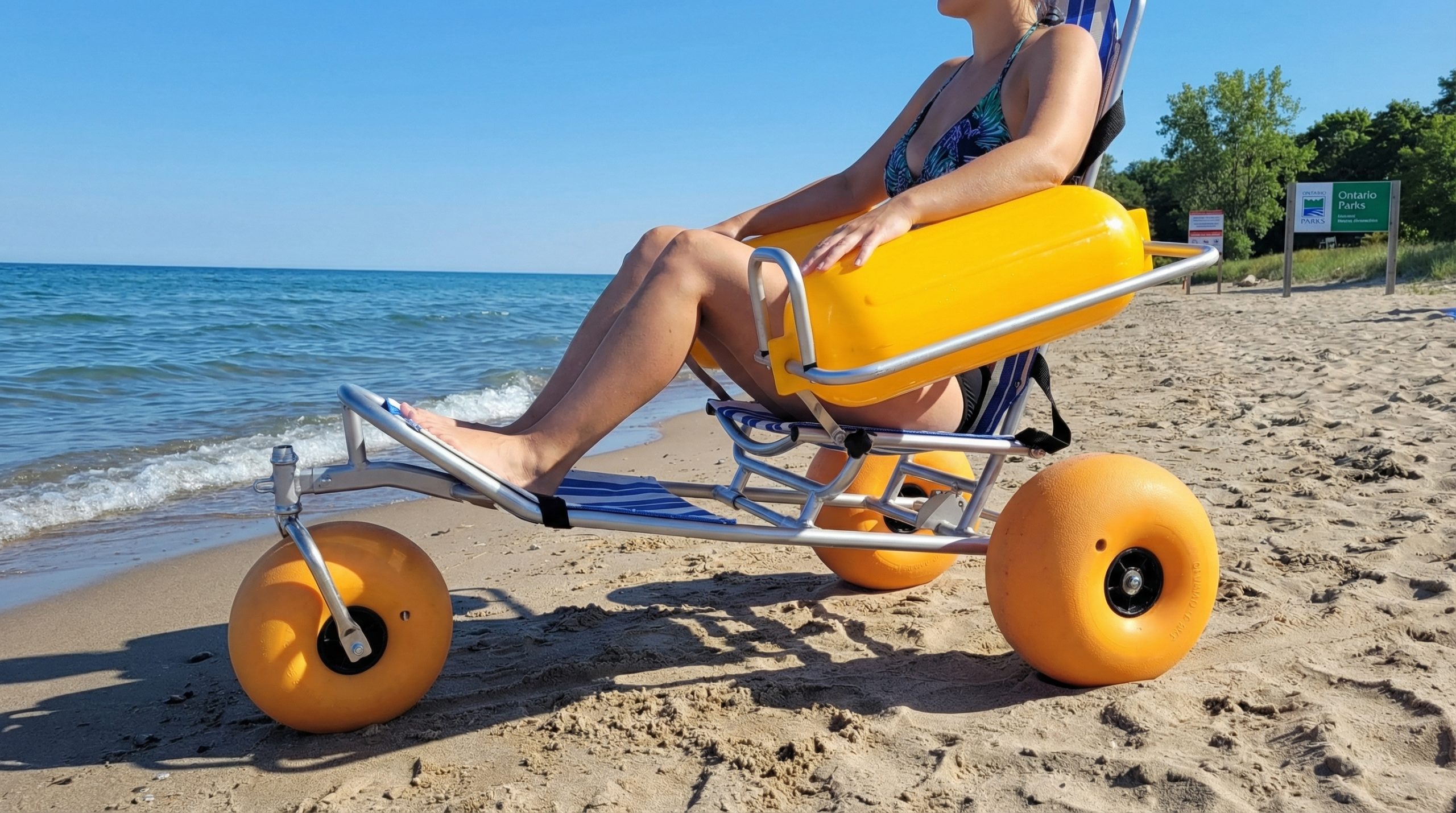
Beach accessibility at Ontario Parks is widely available through specialized equipment loan programs at various provincial locations. Most major shoreline parks provide a beach wheelchair to visitors on a first-come, first-served basis to ensure everyone can reach the water. These devices are typically managed by park staff at gatehouses or visitor centers.
Which parks offer onsite mobility equipment?
You will find specialized mobility aids at popular destinations like Sandbanks, Wasaga Beach, and Grand Bend. These locations prioritize inclusion by maintaining a fleet of chairs designed specifically for sandy environments.
- Sandbanks Provincial Park
- Wasaga Beach Provincial Park
- Pancake Bay Provincial Park
- Pinery Provincial Park
Make no mistake: Having these options available means you can plan a trip knowing the infrastructure supports your needs.
How do I locate the rental stations?
Most rental or loan stations are situated near the main beach access points or the primary park office. You can usually spot them by looking for accessibility signage or asking staff at the entry gate.
- Check the main park visitor center.
- Look for the discovery or rental hut.
- Ask gatehouse staff upon arrival.
- Follow “Barrier-Free Access” signs.
Here is the kicker: While many parks offer these for free, arriving early is the only way to guarantee you secure a device during a busy holiday weekend.
Key Takeaway
Finding mobility support is simple if you target major provincial parks with established accessibility programs and check-in early at the visitor center.
| Park Region | Availability Level | Primary Equipment Type |
|---|---|---|
| Southwestern Ontario | High | All-terrain & Floating |
| Central Ontario | Very High | Sand-specialized |
| Northern Ontario | Medium | Basic All-terrain |
The data above suggests that your best chance for finding specialized gear is within the high-traffic parks of Central and Southwestern Ontario.
Why is a beach wheelchair needed on soft sand?
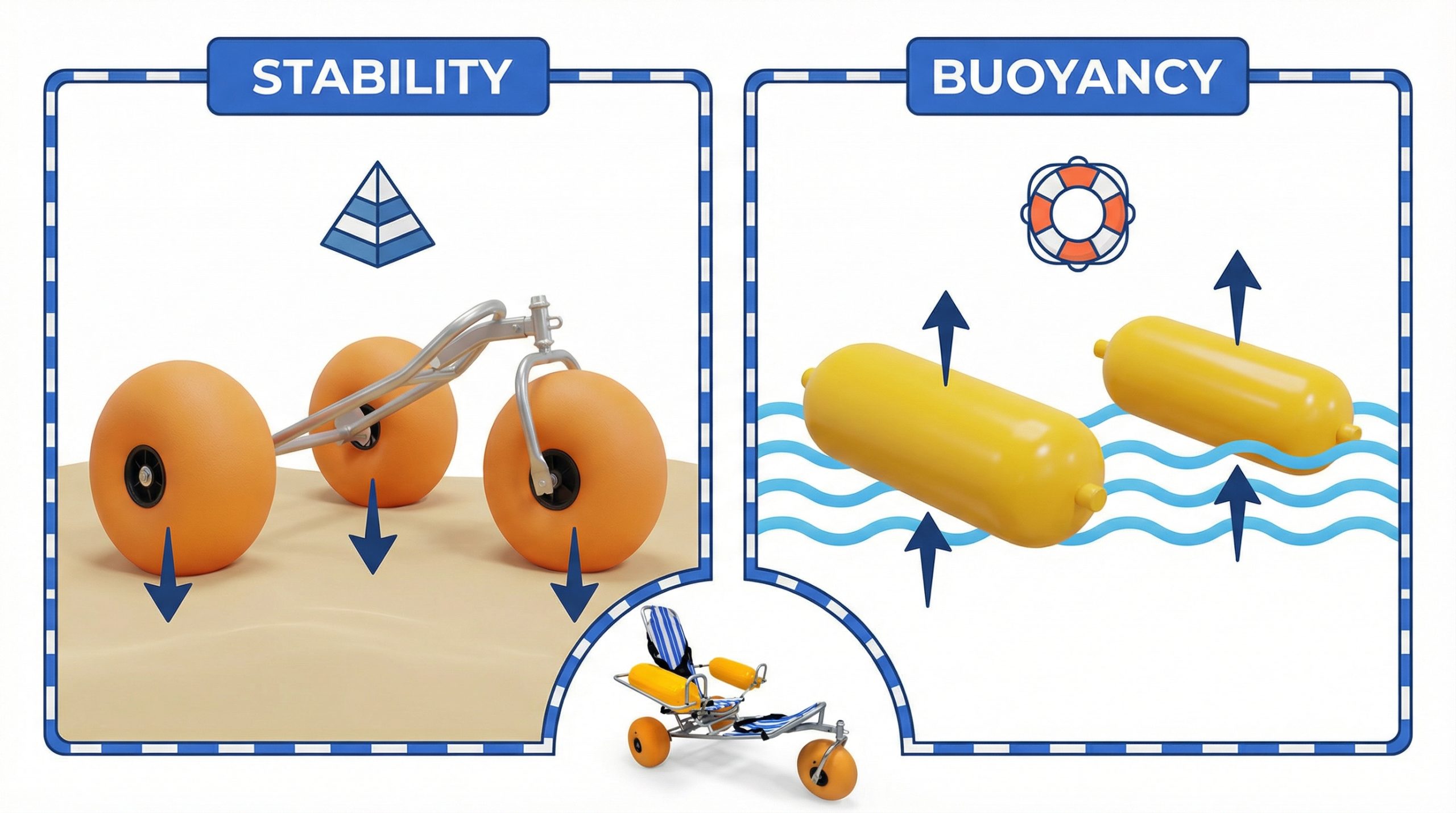
A beach wheelchair is essential because standard mobility tires are too narrow and high-pressure to stay on top of granular surfaces. Instead of rolling, traditional wheels act like blades that slice into the sand, creating immense resistance for both the user and the assistant. This specialized equipment uses physics to overcome these natural obstacles.
How do balloon tires improve mobility?
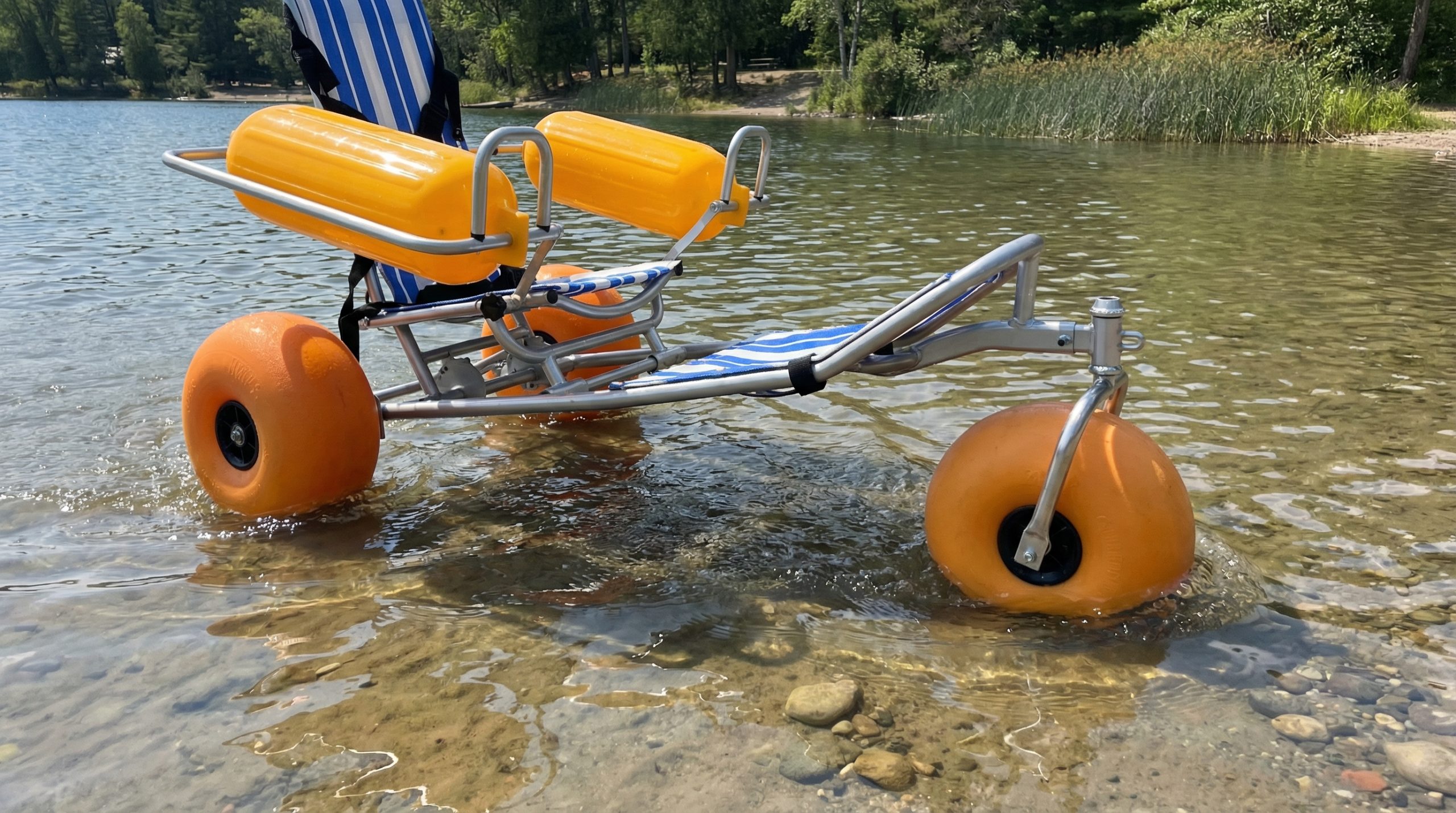
Balloon tires feature a large surface area that distributes weight across the sand rather than concentrating it in one spot. This low-pressure design allows the chair to “float” over the surface, making it feel remarkably light even on the softest dunes.
- Prevents wheels from sinking into deep sand.
- Reduces the physical effort required to push.
- Provides a smoother ride over uneven bumps.
- Protects the sensitive beach ecosystem from deep ruts.
The best part? You can move across the shoreline with a fraction of the effort required by any other mobility device.
What are the limits of standard tires?
Standard tires are designed for hard, predictable surfaces like asphalt or concrete. When they encounter loose sand or pebbles, they lose all traction and become an anchor rather than a tool for movement.
- Narrow profiles sink immediately in dry sand.
- Small front casters get caught in small pits.
- Metal components can corrode from salt and grit.
- Hand rims become hot or abrasive in beach sun.
Believe it or not: Even “all-terrain” wheelchairs often struggle on the specific type of fine sand found on the Great Lakes shorelines.
Key Takeaway
Standard equipment fails on the beach due to tire pressure physics, making specialized balloon tires a necessity for a successful day in the sun.
| Tire Type | Sand Performance | Hard Surface | Weight Distribution |
|---|---|---|---|
| Standard | Very Poor | Excellent | Concentrated |
| All-Terrain | Moderate | Good | Moderate |
| Balloon | Excellent | Fair | Dispersed |
These comparisons highlight why choosing a chair with the correct tire profile is the most important factor for beach mobility.
How do I rent a beach wheelchair at the park?
Renting a beach wheelchair at a provincial park usually requires a simple check-in process at the park office or a designated rental hut. While many parks provide these devices as a free loan, you may need to provide a piece of identification or a small refundable deposit. It is a streamlined system designed to get you onto the sand as quickly as possible.
Should I call the park in advance?
It is highly recommended that you contact the park 24 to 48 hours before your visit to verify the equipment’s current status. Since quantities are limited, speaking with a staff member can help you understand the busiest times and the best entry points.
- Confirm equipment is currently in service.
- Inquire about reservation policies.
- Ask about the closest accessible parking.
- Verify the specific model of chair available.
Think about it: A five-minute phone call can save you hours of disappointment if the equipment is already in use by another family.
What documents do I need for a loan?
Most parks will ask for a valid driver’s license or a similar photo ID to secure the loan. You might also be asked to sign a standard liability waiver or a simple usage agreement before taking the chair to the shoreline.
- Government-issued photo identification.
- Contact information for the primary user.
- A signed equipment usage agreement.
- Occasional small cash or card deposit.
Look: The process is designed to be inclusive and barrier-free, so don’t let the paperwork intimidate you.
Key Takeaway
Securing a chair is a straightforward process involving identification and potentially a reservation, ensuring the equipment remains available for those who need it.
| Requirement | Description | Mandatory? |
|---|---|---|
| Valid ID | Driver’s license or health card | Yes |
| Reservation | Calling ahead of time | Recommended |
| Usage Fee | Cost to borrow the device | Usually Free |
Following these simple steps ensures that your arrival at the park is smooth and your transition to the beach is immediate.
What makes a beach wheelchair truly amphibious?
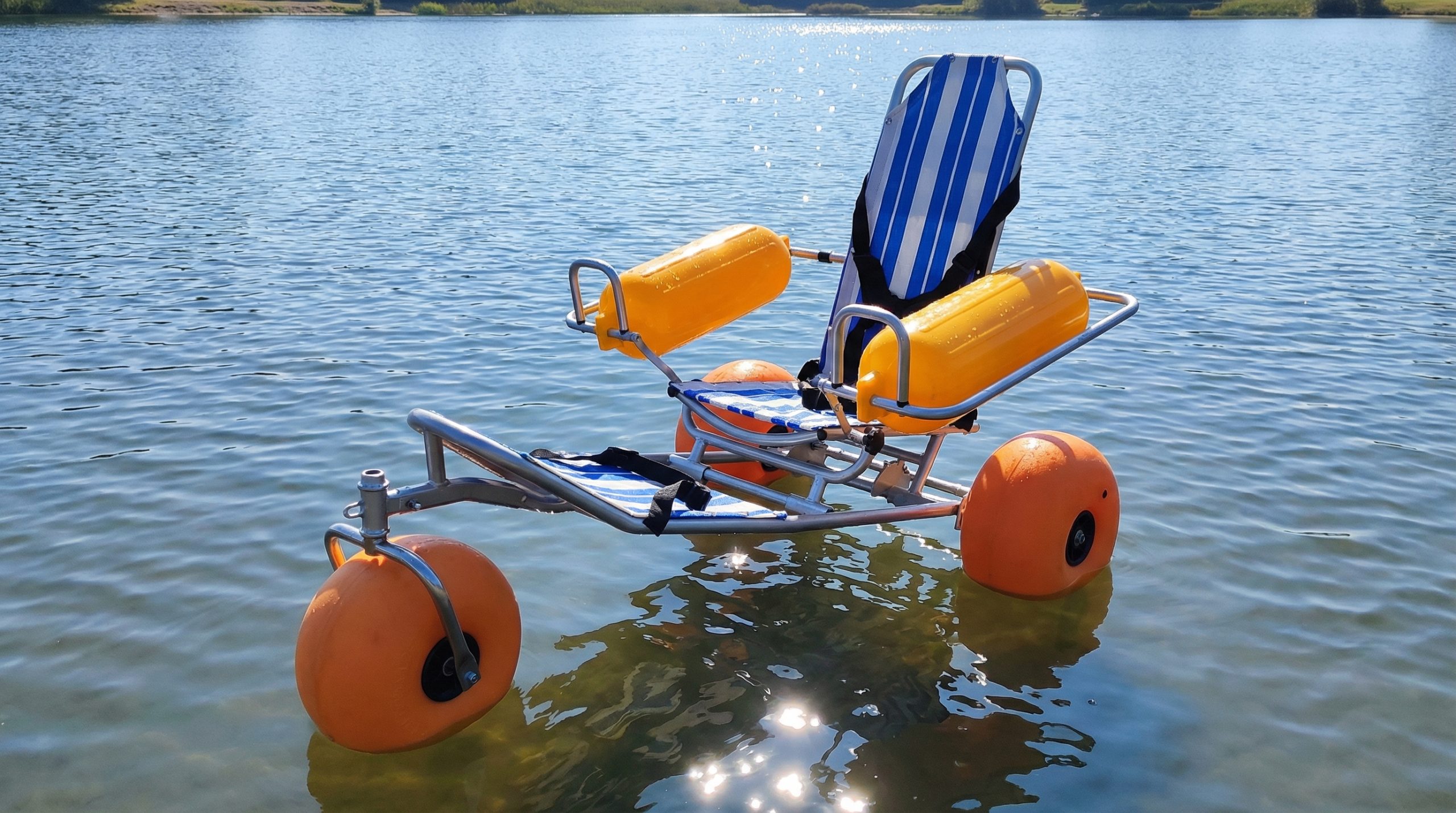
A beach wheelchair becomes amphibious when its design incorporates buoyant materials that allow it to float safely in the water. These models are not just for the sand; they feature sealed frames and floating armrests that provide stability in the surf. This dual-purpose functionality allows you to experience the water without ever leaving your seat.

How do floating armrests provide stability?
The armrests on these chairs are often made from specialized foam or air-filled plastic that serves as a pontoon. This creates lateral stability, preventing the chair from tipping even when you encounter gentle waves or shifting currents.
- Provides buoyancy for the upper frame.
- Acts as a safety stabilizer in the water.
- Offers comfortable support while on land.
- Bright colors aid in visibility for safety.
But wait, there is more: The tires themselves also contribute to the floating capability, creating a multi-point buoyancy system.
Can the frame withstand saltwater?
High-quality amphibious chairs use marine-grade aluminum or stainless steel that has been treated to resist corrosion. This ensures that the structural integrity remains sound even after years of exposure to salt, sand, and moisture.
- Resists rust and structural weakening.
- Easy to rinse and maintain after use.
- Lightweight enough for easy transport.
- Durable powder-coated finishes for extra protection.
Truth be told: Without these specific materials, a standard chair would begin to seize up and rust within days of beach use.
Key Takeaway
Amphibious capability relies on a combination of buoyant armrests, specialized tires, and corrosion-resistant materials to provide a safe aquatic experience.
| Feature | Land Benefit | Water Benefit |
|---|---|---|
| Balloon Tires | Easy rolling on sand | Primary buoyancy |
| Floating Arms | Comfortable rest | Lateral stability |
| Sealed Frame | Easy cleaning | Rust prevention |
Understanding these technical aspects helps you appreciate the engineering required to keep you safe and mobile in the water.
Can a beach wheelchair handle rough park trails?
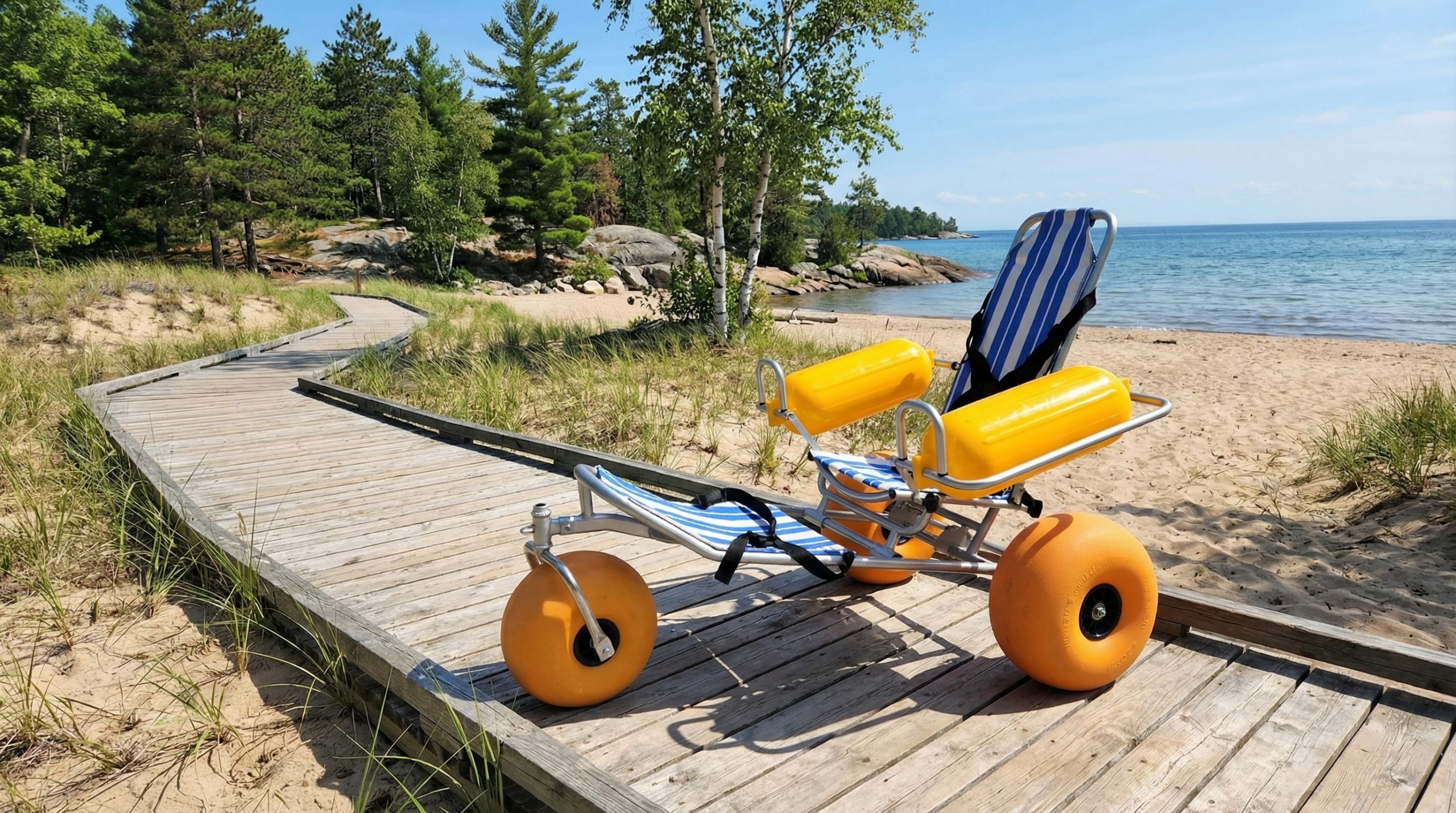
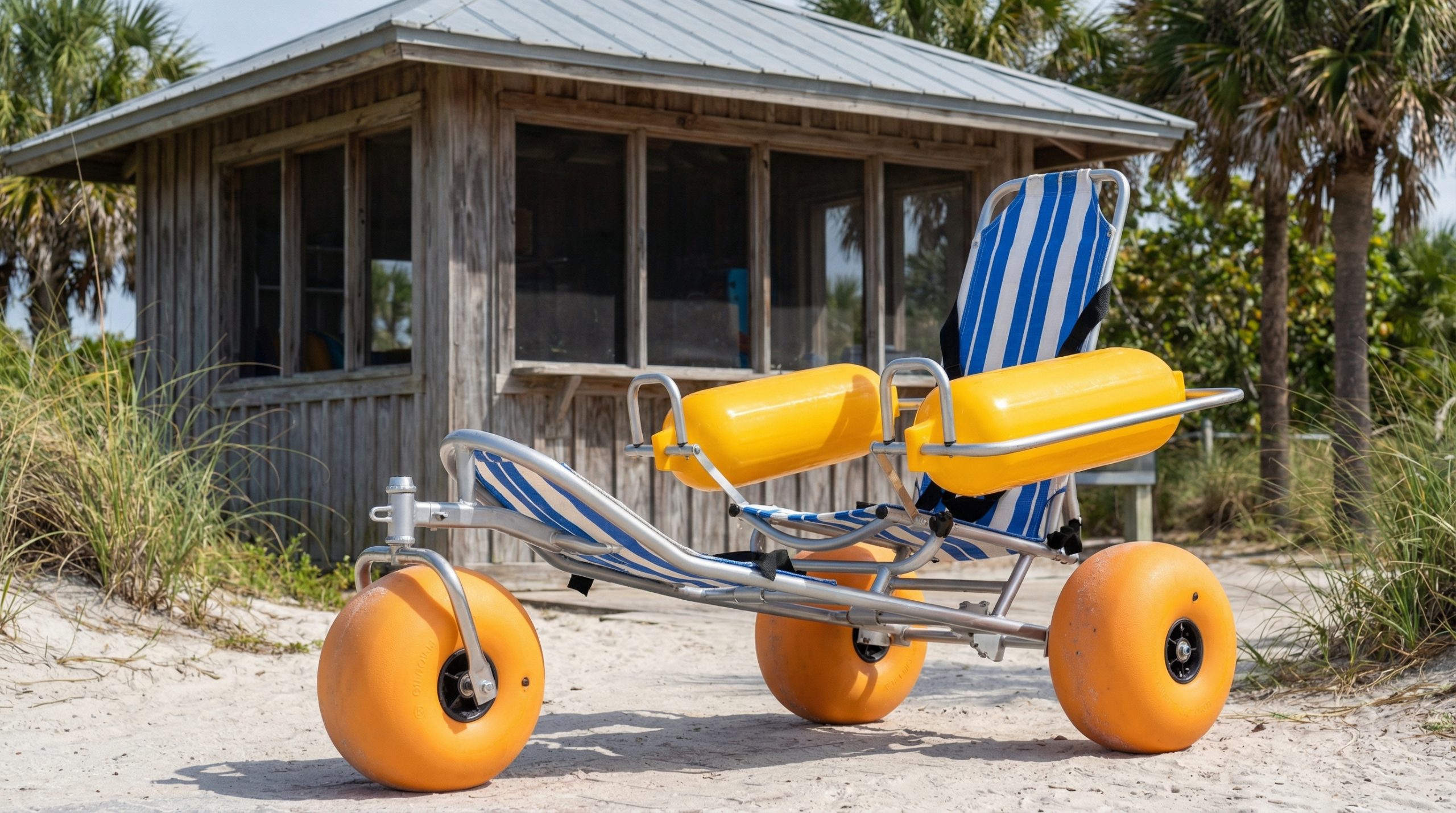
Navigating mixed terrain is easy with a beach wheelchair because its wide tires act as natural shock absorbers on gravel and grass. While designed for the sand, these devices are surprisingly capable on the wooded paths and boardwalks that often lead to the shoreline. They bridge the gap between the parking lot and the distant water’s edge.
Is it compatible with boardwalks?
The wide wheelbase of these chairs is perfectly suited for the wooden boardwalks found in many provincial parks. They provide a stable ride that won’t get caught in the gaps between boards, unlike the small front casters of a traditional wheelchair.
- Smooth transition from wood to sand.
- Stable base for uneven planking.
- No risk of wheels getting stuck in cracks.
- Wide profile provides a feeling of security.
Here is the kicker: Using these chairs on boardwalks is often the easiest part of the journey, allowing you to enjoy the scenery without looking down at every bump.
Does it work on gravel or grass?
The low-pressure tires conform to the “lumps and bumps” of a nature trail, preventing the jarring vibrations typical of hard wheels. This makes the chair an excellent choice for reaching picnic areas or campsites located just off the beaten path.
- Absorbs shocks from rocks and roots.
- Stays on top of soft or muddy grass.
- Provides traction on loose gravel inclines.
- Keeps the user comfortable over long distances.
It gets better: You can use these chairs as a total transport solution from the moment you leave your vehicle until you return at the end of the day.
Key Takeaway
These chairs are versatile all-terrain tools that handle everything from polished boardwalks to rugged gravel paths with ease and comfort.
| Terrain Type | Performance Level | User Comfort |
|---|---|---|
| Sand | Excellent | Very High |
| Boardwalk | Excellent | High |
| Gravel Path | Good | Moderate |
This versatility ensures that your mobility isn’t just limited to the shoreline, but extends to the entire park experience.
Which parks offer a free beach wheelchair loan?
Most provincial park locations provide a beach wheelchair at no cost to the visitor as part of their commitment to universal access. This service removes the financial barrier to enjoying the outdoors and ensures that families can spend their day focused on fun rather than equipment rentals. These programs are often supported by community partnerships and local accessibility initiatives.
Are there hidden fees for loans?
You will find that the vast majority of parks do not charge any hourly or daily fees for using their accessibility equipment. The goal of the program is to provide equal access to the natural heritage of the province without adding a price tag to mobility.
- No hourly rental charges in most parks.
- No daily usage fees for day visitors.
- Free delivery to the beach by park staff.
- Complimentary safety briefings provided.
Make no mistake: While the equipment is free, you are still responsible for returning it in the same condition you received it.
Do I need a credit card for a deposit?
Some locations may ask for a credit card imprint or a small cash deposit as a security measure, though this is becoming less common. This is simply to ensure the equipment is returned to the correct station and is not an actual charge for the service.
- Provides security for high-value equipment.
- Simple check-in and check-out process.
- Refunded immediately upon equipment return.
- Usually waived for registered overnight campers.
It gets better: Most parks have simplified this so much that a simple signature and an ID are all you need to get moving.
Key Takeaway
Free loan programs are the standard at provincial parks, ensuring that accessibility is a right for all visitors regardless of their budget.
| Park Location | Loan Fee | Deposit Required |
|---|---|---|
| Awenda | Free | Usually No |
| Bonnechere | Free | No |
| Sandbanks | Free | Yes (Form only) |
The lack of financial barriers demonstrates a strong commitment to making the province’s beaches inclusive for every resident and visitor.
Is a beach wheelchair safe for water activities?
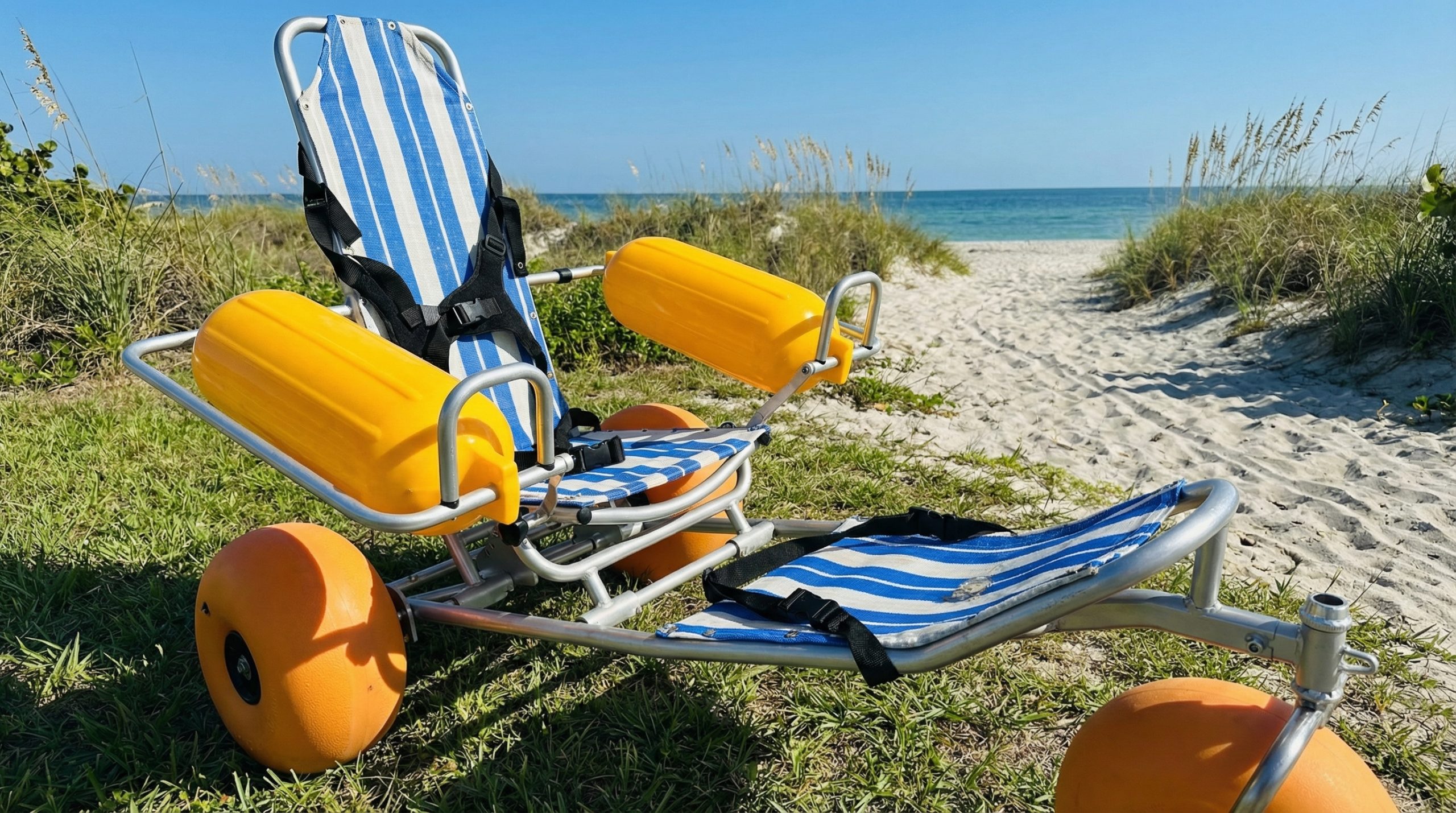
Using a beach wheelchair in the water is very safe as long as you follow basic safety protocols and stay within designated swimming areas. These chairs are engineered with a low center of gravity and integrated harnesses to keep you secure while you enjoy the waves. However, they are not intended for independent use and always require an attendant for maximum safety.
What are the essential safety features?
A high-quality chair will include a multi-point harness system and high-visibility components to ensure you are always secure and seen. The wide footprint of the tires also acts as a stabilizer against the force of incoming waves or light currents.
- Chest and lap belts for secure seating.
- Non-slip footrests to prevent sliding.
- Brightly colored pontoons for visibility.
- Reliable braking systems for sandy inclines.
The best part? You can relax in the water knowing that the chair is doing the work of keeping you buoyant and upright.
Why is an attendant necessary?
The attendant provides the steering and propulsion needed to navigate the resistance of the water and the shifting sand underneath. They also serve as a vital safety observer who can quickly pull the chair back to shore if the weather conditions change.
- Manages the chair against the surf.
- Ensures the user stays in calm depths.
- Assists with transfers in and out of the chair.
- Monitors for changes in water or wind.
Look: Safety is a team effort, and having a dedicated assistant ensures your water experience remains purely enjoyable.
Key Takeaway
Safety is built into the design through buoyancy and restraints, but the presence of an attendant is the most critical factor for a safe water excursion.
| Safety Tool | Function | Importance |
|---|---|---|
| Harness | Prevents falling out | Critical |
| Attendant | Steering and safety | Critical |
| Pontoons | Stability in water | High |
By prioritizing these safety elements, you can focus on making memories in the water rather than worrying about your equipment.
How does balloon tire tech aid a beach wheelchair?
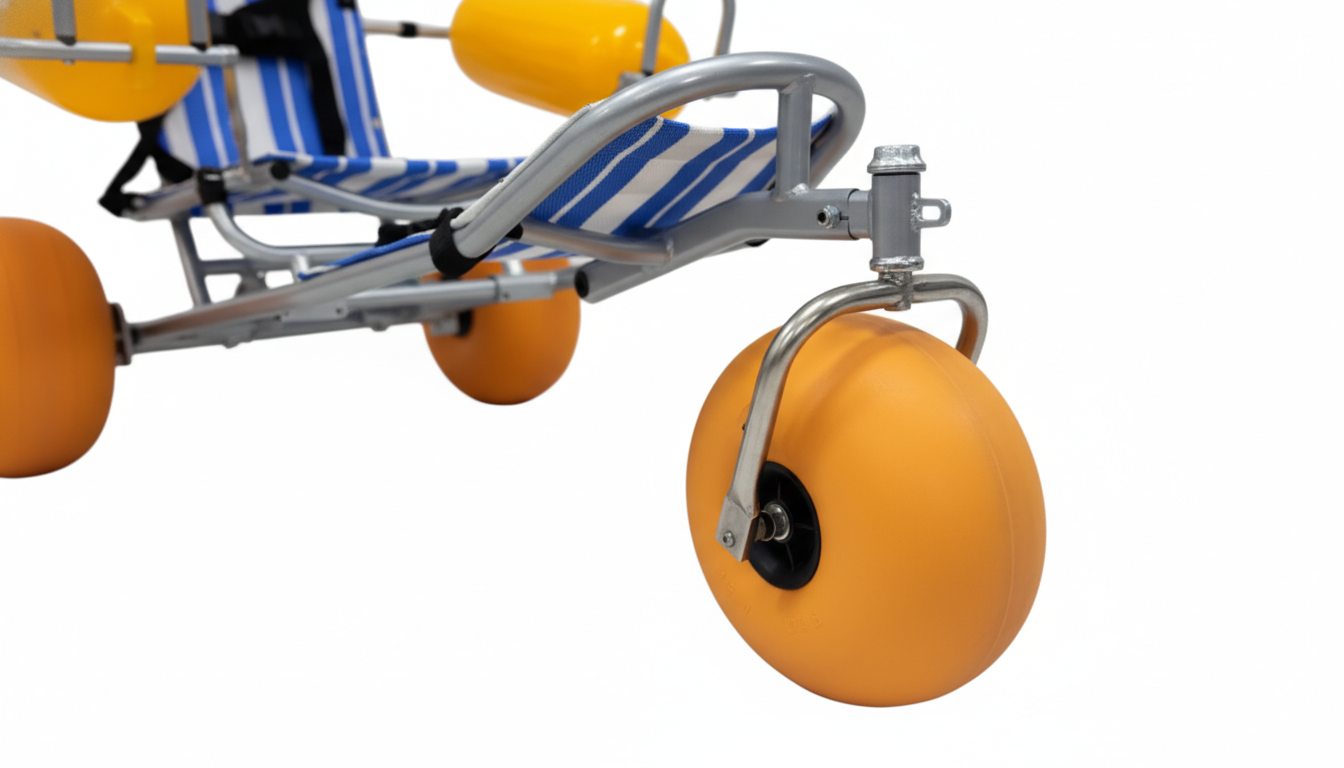
The technology behind a beach wheelchair centers on the specific physics of low-pressure, high-volume tires. By increasing the “footprint” of the wheel, the pressure exerted on the ground is minimized, allowing the chair to roll over soft sand rather than plunging into it. This simple but effective technology is what makes modern beach access possible for everyone.

How does PSI affect sand mobility?
The air pressure inside these tires is kept extremely low, typically between 2 and 4 PSI, which allows the tire to deform and wrap around obstacles. This deformation creates a larger contact patch with the sand, providing the necessary lift to stay on the surface.
- Allows tires to “mold” to the terrain.
- Decreases the depth of the wheel’s path.
- Improves traction on loose or dry sand.
- Makes the chair much easier to push.
Here is why that matters: Lower pressure means less work for the person pushing, which translates to longer and more frequent trips to the water.
What materials are used in these tires?
Modern balloon tires are typically made from heavy-duty polyurethane that is designed to resist UV damage and punctures from sharp shells or rocks. This material remains flexible in various temperatures while being durable enough for years of outdoor use.
- Resists stretching and deformation over time.
- UV-stabilized to prevent sun rot and cracking.
- Easy to patch or repair if a puncture occurs.
- Lightweight material reduces the overall chair weight.
Believe it or not: These tires are so effective that they are now the standard for almost every professional-grade beach mobility solution in the world.
Key Takeaway
Balloon tire technology is the “secret sauce” of beach mobility, using low pressure and durable materials to conquer the toughest sandy environments.
| Tire Material | Durability | Flexibility | Sand Lift |
|---|---|---|---|
| Polyurethane | Very High | High | Excellent |
| Rubber | High | Low | Moderate |
| Plastic | Low | Very Low | Poor |
This technological advantage is why specialized chairs perform so much better than any improvised mobility solution.
What maintenance does a beach wheelchair require?
Owning a beach wheelchair requires minimal but consistent maintenance to ensure it survives the harsh coastal environment. Sand and salt are the primary enemies of any mechanical device, so a regular cleaning routine is essential for long-term reliability. A few minutes of care after each trip can extend the life of your equipment by many years.
Is a freshwater rinse mandatory?
You should always rinse your chair with fresh water after every single use, especially if it has been submerged in lake water or exposed to salt spray. This removes the abrasive grit and corrosive residues that can eat away at metal frames and seize up bearings.
- Flushes sand out of moving parts.
- Dissolves salt crystals before they corrode.
- Cleans the fabric seat to prevent mold.
- Keeps the balloon tires in peak condition.
Truth be told: Skipping even one rinse can lead to rust spots or “crunchy” wheels that are difficult to move the next time you visit the beach.
How do I check for wear and tear?
Regularly inspecting the frame, harnesses, and tire pressure will help you catch small issues before they become safety hazards. You should look for any signs of fraying on the belts or small cracks in the polyurethane of the tires.
- Inspect all buckles and safety straps.
- Check tire pressure with a low-PSI gauge.
- Look for loose bolts or frame connections.
- Ensure the front caster swivels freely.
But wait, there is more: Applying a small amount of marine-grade lubricant to the axles every season will keep the chair rolling as smoothly as the day you bought it.
Key Takeaway
Simple freshwater rinsing and seasonal inspections are all that is needed to keep your mobility equipment safe and functional for years.
| Maintenance Task | Frequency | Time Required |
|---|---|---|
| Freshwater Rinse | After every use | 5 Minutes |
| Tire Pressure Check | Monthly | 2 Minutes |
| Axle Lubrication | Once per season | 10 Minutes |
Investing a small amount of time into maintenance ensures that your equipment is always ready for the next adventure.
Why invest in a personal beach wheelchair?
Investing in your own beach wheelchair provides a level of freedom and spontaneity that public loan programs simply cannot match. When you own your equipment, you are no longer tied to the operating hours of a rental hut or the limited inventory of a busy park. You can explore any shoreline at any time, knowing that your personal mobility solution is tailored specifically to your comfort and needs.
Can I customize my own equipment?
Personal ownership allows you to select the exact model, seating style, and accessories that work best for your body type and specific mobility challenges. You can add specialized cushions, sunshades, or even storage bags that aren’t available on standard park loaner chairs.
- Choose a seat width that fits perfectly.
- Add custom harnesses for extra support.
- Select specific tire sizes for your favorite beach.
- Install personal accessories like cup holders or bags.
The best part? Your chair becomes an extension of your lifestyle, reflecting your personal style and specific functional requirements.
Does it save time during trips?
Having your gear ready to go in your vehicle means you can skip the lines and the paperwork at the park office. You can head straight to your favorite spot on the sand the moment you arrive, maximizing your relaxation time.
- No waiting for equipment to become available.
- No restrictive return times at the end of the day.
- Access to “hidden” beaches without rental huts.
- Spontaneous trips are now possible anytime.
Look: Spontaneity is one of the greatest joys of summer, and having your own chair makes it a reality.
Key Takeaway
Personal ownership offers unmatched customization and total independence, allowing you to enjoy any beach on your own terms and schedule.
| Ownership Type | Independence | Spontaneity | Customization |
|---|---|---|---|
| Personal | Total | High | Unlimited |
| Park Loan | Limited | Moderate | None |
| Standard Chair | Very Low | Low | Moderate |
Owning your equipment is the ultimate step toward complete coastal independence and a worry-free summer lifestyle.
Building a world where the shoreline is a place of inclusion rather than exclusion is a collective responsibility. By choosing high-quality mobility solutions, you are not just buying a tool; you are investing in a lifestyle of freedom and equal access to the natural beauty that surrounds us. Our vision is to ensure that no person is ever left on the sidelines of a family memory because of the terrain. If you are ready to transform your beach experience and reclaim your independence, please contact us today to find the perfect solution for your next adventure.
Frequently Asked Questions
Can I use these chairs in the ocean?Yes, most amphibious models are designed for both freshwater and saltwater use. However, you must always perform a thorough freshwater rinse after saltwater exposure to prevent long-term corrosion.
What’s the best way to transport a beach wheelchair?The most efficient method is using a vehicle with a hitch-mounted carrier or a large trunk space, as most models can be partially disassembled. Many chairs feature quick-release wheels that make them surprisingly compact for travel.
How do I know if a park has equipment available?Always check the official park website or call the visitor center directly before you leave home. This is the only way to confirm current inventory levels and any specific reservation requirements for that day.
Can I operate a floating wheelchair by myself in the water?No, for safety reasons, you should never use a floating chair in the water without a capable attendant present. Waves and currents can shift the chair unexpectedly, and an assistant is necessary to maintain control and safety.
What’s the best tire pressure for soft sand?Keep your balloon tires at a very low pressure, typically between 2 and 4 PSI, for optimal performance. This low pressure allows the tire to “squish” and create the large footprint necessary to float over the sand.