The primary difference between a floating beach wheelchair and an all-terrain beach wheelchair is their level of buoyancy and intended environment, with floating models designed for water immersion and all-terrain models optimized for rugged land navigation. Imagine the sun is shining, the waves are calling, and your family is gathered at the water’s edge, yet you are left behind on the boardwalk because your standard mobility device sinks into the unforgiving sand. This sense of exclusion can be devastating, turning a day of relaxation into a painful reminder of physical limitations. You shouldn’t have to watch the fun from a distance while the salt air teases you with what you are missing. Fortunately, a floating beach wheelchair provides the specialized engineering needed to bridge the gap between the shore and the sea. These innovative tools ensure that the beach is no longer a barrier, but a playground for everyone regardless of their mobility status. By choosing the right specialized equipment, you can reclaim your seaside freedom and create lasting memories in the surf.
Why is a floating beach wheelchair essential for the shore?
A floating beach wheelchair is essential because it eliminates the physical barriers of soft sand and provides a safe mechanism for users to enter the water. Standard wheelchairs have thin tires that act like shovels, digging deep into the sand and leaving the user completely stranded. You realize quickly that without specialized equipment, the coastline is effectively off-limits.
What makes beach accessibility so difficult?
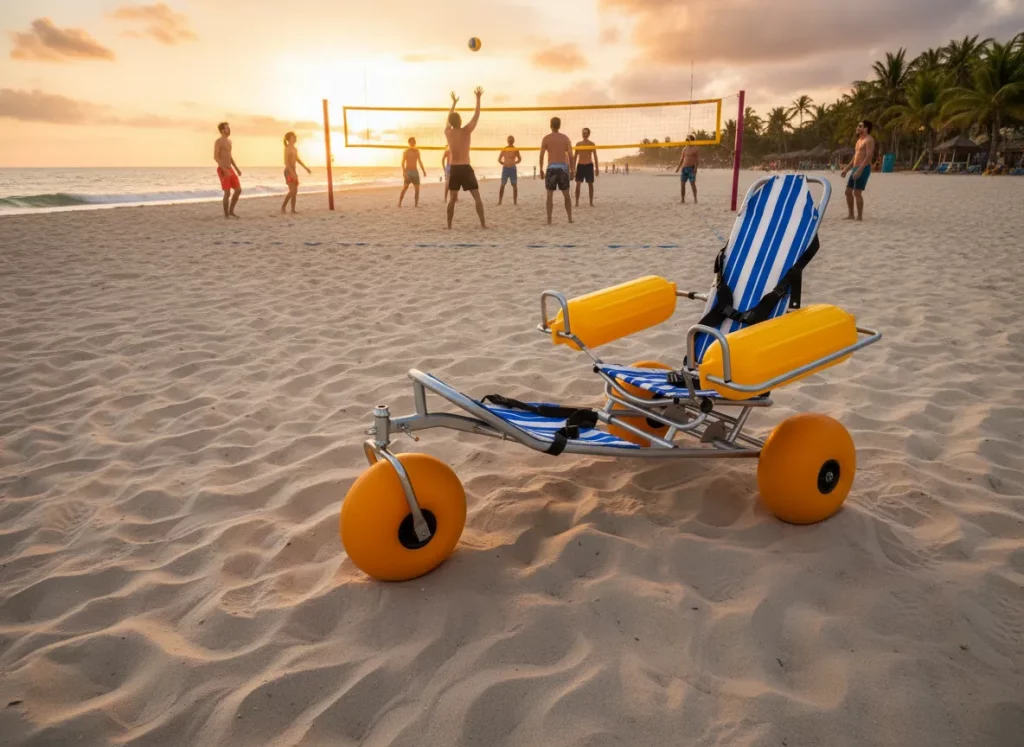
The combination of shifting terrain and corrosive elements makes the beach a hostile environment for traditional mobility aids. You will find that loose, dry sand provides zero traction for standard rubber tires.
- Sand particles clog small casters instantly.
- Saltwater causes rapid oxidation on chrome or standard steel.
- Deep dunes require high clearance that traditional chairs lack.
You might be wondering: “How can anyone navigate these dunes without getting stuck?” The answer lies in specialized surface-area engineering that distributes weight evenly.
Can accessibility restore emotional well-being?
Being able to join your friends in the water changes your entire outlook on the vacation experience. It replaces the feeling of being a “spectator” with the joy of being a “participant.”
- Shared experiences build stronger family bonds.
- Water immersion offers unique sensory therapy.
- Independence on the sand boosts personal confidence.
But here is the kicker: True inclusion isn’t just about reaching the sand; it is about reaching the waves. You deserve to feel the ocean breeze on your face without worry.
Key TakeawayChoosing a model that handles both the sand and the water ensures you never have to choose between mobility and immersion, providing a comprehensive solution for coastal inclusion.
| Feature | Importance | Benefit |
|---|---|---|
| Sand Navigation | Critical | Prevents sinking and physical strain |
| Water Entry | High | Allows for full sensory inclusion |
| Corrosion Resistance | Essential | Extends the life of the equipment |
This data confirms that a specialized amphibious design is the only way to achieve total beach freedom.
How does a floating beach wheelchair navigate soft sand?
A floating beach wheelchair navigates soft sand by utilizing low-pressure balloon tires that increase the surface area of contact with the ground. This design prevents the chair from sinking into the dunes, allowing it to glide over the top of loose particles. It is the difference between walking on snow with boots versus using snowshoes.
Can weight distribution prevent sinking?
Engineered frames ensure that the user’s weight is centered over the widest part of the tires to maximize floatation on land. You will notice that the wider the tire, the less pressure is exerted on any single point of the sand.
- Wide footprints create a stable base of support.
- Low PSI (pounds per square inch) allows the tire to deform over obstacles.
- Centralized centers of gravity prevent the chair from tipping on inclines.
The truth is: Without this specific tire geometry, you would be fighting a losing battle against gravity every few feet. You need equipment that works with the terrain, not against it.
How do all-terrain models differ on land?
While floating models prioritize water entry, some all-terrain units use more rugged, treaded tires for mixed surfaces like gravel or grass. You might find these helpful if your path to the beach involves a long trek through a park or stabilized soil.
- Treaded tires provide better grip on slippery mud.
- Narrower profiles can navigate tight wooded trails.
- Hybrid designs offer a compromise for varied coastal parks.
You might be wondering: “Should I focus on the sand or the paths leading there?” The best approach is to assess the specific terrain you encounter most frequently.
Key TakeawayNavigation success depends almost entirely on tire technology, where balloon tires excel on soft sand while treaded tires are better for compact, mixed-use pathways.
| Surface Type | Best Tire Type | Navigation Ease |
|---|---|---|
| Fine/Loose Sand | Balloon Tires | Very Easy |
| Compact Gravel | Treaded Tires | Easy |
| Mud/Wet Soil | Rugged All-Terrain | Moderate |
Understanding these surface dynamics helps you select the equipment that matches your specific environment.
Can a floating beach wheelchair actually float in the ocean?
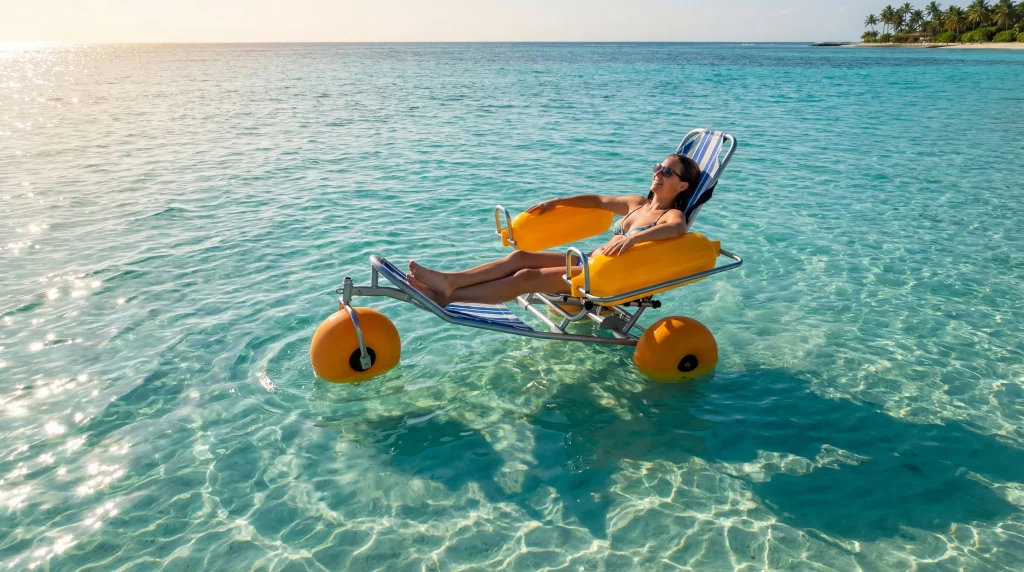
A floating beach wheelchair is specifically designed with buoyant armrests and frames that allow it to stay afloat once it reaches a certain depth in the water. This buoyancy is the defining feature that separates it from standard all-terrain models which are meant only for land. When you push the chair into the surf, the components act like a personal raft for the occupant.
How does the buoyancy system work?
Most models incorporate closed-cell foam or air-filled floats into the armrests and front casters to ensure the chair remains upright in the waves. You will feel the chair begin to lift as the water reaches the mid-frame level.
- Front floats provide directional stability in the water.
- Side armrests prevent the chair from rolling in gentle surf.
- The frame material itself is often lightweight to assist with lift.
Listen to this: The physics of floating allows for a weightless experience that is incredibly therapeutic for many users. You can finally experience the ocean without leaving your seat.
Is an attendant required for safe floating?
Yes, you must always have an able-bodied attendant to supervise and guide the chair when it is in floating mode. Waves and currents can move a buoyant chair quickly, so a tether or a firm hand on the push bar is a non-negotiable safety rule.
- Attendants manage the depth to keep the user’s head clear.
- They provide the power needed to return to the shore against the tide.
- Safety harnesses keep the user securely seated during the transition.
You might be wondering: “Can I go out into deep water alone?” For your safety, these chairs are strictly designed for supervised, shallow-water entry only.
Key TakeawayThe buoyancy of these chairs provides a unique aquatic experience, but it requires active supervision and a clear understanding of water safety protocols to enjoy safely.
| Buoyancy Component | Function | Safety Level |
|---|---|---|
| Floating Armrests | Lateral Stability | High |
| Buoyant Tires | Vertical Lift | Moderate |
| Attendant Tether | Directional Control | Essential |
Properly utilizing these features ensures that your time in the ocean is both relaxing and secure.
Is a floating beach wheelchair easy to transport and store?
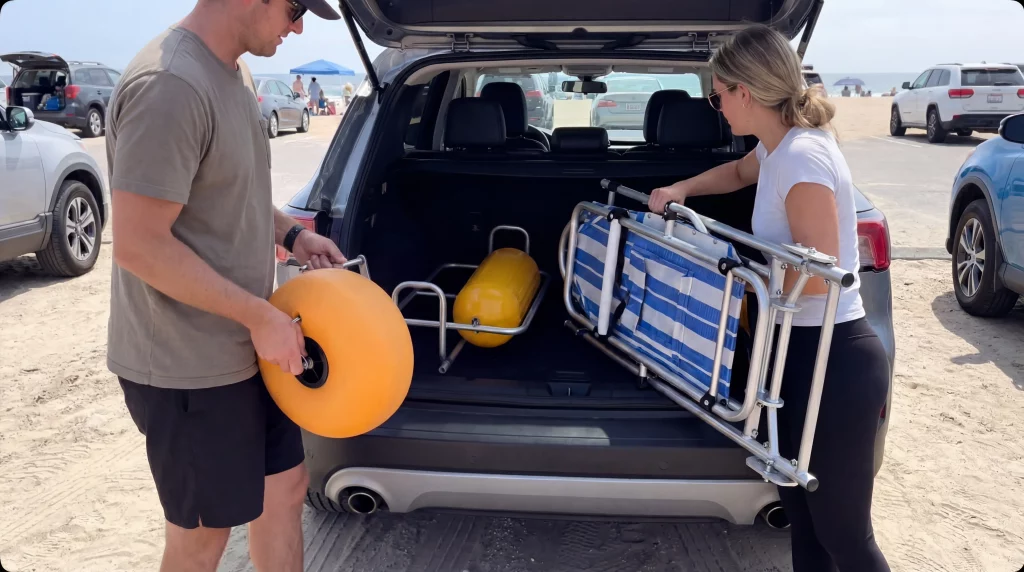
A floating beach wheelchair is surprisingly portable due to its modular design and the use of lightweight materials like aluminum or marine-grade stainless steel. Many units are designed to be disassembled in minutes without the need for specialized tools. This means you can take your accessibility solution with you on road trips or store it in a compact space during the winter months.
Do these chairs fit in a standard vehicle?
Most high-quality beach wheelchairs feature quick-release axles that allow the large balloon tires to be removed with the press of a button. Once the wheels are off, the frame can often fold or lay flat in the trunk of a SUV or minivan.
- Quick-release pins simplify the breakdown process.
- Lightweight frames are easy for one person to lift.
- Modular components can be tucked into corners of the trunk.
But here is the kicker: You don’t need a massive trailer to enjoy a day at the coast. You can simply load it up and head out whenever the weather is right.
What are the storage requirements for resorts?
For hotels and beach clubs, storage efficiency is vital when managing a fleet of multiple accessibility units. You will want to look for chairs that can be stacked or nested to save valuable floor space in storage sheds.
- Vertical storage options maximize small equipment rooms.
- Protective covers prevent dust buildup during the off-season.
- Organized parts bins keep wheels and harnesses together.
You might be wondering: “Will salt air damage the chair if I store it near the beach?” While the materials are resistant, a dry, covered area is always best for long-term preservation.
Key TakeawayPortability is a hallmark of modern design, allowing users and facility managers to move and store equipment with minimal physical effort or specialized transport.
| Transport Aspect | Design Feature | User Benefit |
|---|---|---|
| Vehicle Fit | Folding/Modular Frame | No trailer required |
| Assembly Time | Quick-Release Axles | Ready in under 5 minutes |
| Lifting Weight | Aluminum Alloys | Reduced back strain for loaders |
These transport features make it possible to bring accessibility to any coastline you choose to visit.
Does a floating beach wheelchair provide better user comfort?
A floating beach wheelchair typically offers superior comfort compared to standard wheelchairs because it utilizes ergonomic seating and specialized fabrics designed for the elements. Since these chairs are intended for long periods of outdoor use, the design focuses on pressure distribution and temperature regulation. You will find that the seating is often more like a comfortable lounge chair than a piece of medical equipment.
Why is breathable fabric important?
The mesh or fabric used in these chairs must allow water to drain quickly and air to circulate to prevent skin irritation. You will appreciate this feature on hot summer days when standard vinyl seating would become sticky and uncomfortable.
- UV-resistant materials prevent the seat from becoming hot to the touch.
- Quick-dry mesh prevents the user from sitting in a puddle after a swim.
- Anti-microbial treatments help keep the equipment hygienic.
The truth is: Comfort is the difference between a one-hour trip and an all-day adventure. You want to feel supported and relaxed the entire time you are out.
Are there reclining options for users?
Many floating models feature adjustable backrests that allow the user to sit upright for social interaction or recline for a nap under an umbrella. This versatility is essential for users with different levels of trunk stability or those who need to shift their weight periodically.
- Multiple recline positions accommodate various comfort needs.
- Padded headrests provide extra support for long sessions.
- Adjustable footrests ensure proper leg alignment for all heights.
You might be wondering: “Can these chairs handle users with more complex support needs?” High-end models often include secondary harnesses and lateral supports for added safety and comfort.
Key TakeawayErgonomic design and climate-appropriate materials are essential for ensuring that the user remains comfortable and safe during extended outdoor excursions.
| Comfort Feature | Material/Design | Result |
|---|---|---|
| Seat Fabric | Open-Weave Mesh | Stays cool and dries fast |
| Frame Shape | Contoured Ergonomics | Reduces pressure points |
| Adjustability | Multi-Position Backrest | Accommodates varied postures |
Investing in comfort features ensures that the beach remains a place of relaxation rather than physical endurance.
What frame materials define a floating beach wheelchair?
A floating beach wheelchair is defined by its use of 316 marine-grade stainless steel or powder-coated aluminum, which are the only materials capable of surviving constant saltwater exposure. While standard wheelchairs use chrome or steel that will rust within days of beach use, these specialized alloys are engineered for longevity. The frame is the backbone of the chair, and its material choice determines the total cost of ownership over time.
Is stainless steel better than aluminum?
Stainless steel offers incredible strength and a heavier weight that can provide better stability in the surf, while aluminum is prized for its lightweight portability. You should choose the material based on whether you prioritize the “feel” in the water or the ease of lifting into a car.
- 316 Stainless Steel is the gold standard for salt resistance.
- Aluminum frames are easier for elderly attendants to push on land.
- Both materials require a freshwater rinse to maximize their lifespan.
But here is the kicker: Not all “stainless” steel is created equal; only marine-grade alloys can truly handle the ocean. You should always verify the specific grade before making a purchase.
How does powder coating help?
Many manufacturers add a thick layer of powder coating over the metal frame to provide an extra barrier against salt-spray and scratches. This not only adds a pop of color to the equipment but also seals the metal from the oxygen that causes corrosion.
- It provides a durable finish that resists chipping.
- Smooth surfaces are easier to wipe clean after use.
- It adds an aesthetic appeal that makes the chair look less clinical.
You might be wondering: “Does the coating eventually wear off?” With proper maintenance, a high-quality powder coat can last for many years of heavy use.
Key TakeawayMaterial choice is the most critical factor in the durability of your beach wheelchair, with marine-grade metals being the only viable option for saltwater environments.
| Material | Pro | Con |
|---|---|---|
| 316 Stainless Steel | Maximum durability, heavy | More expensive |
| 6061 Aluminum | Lightweight, affordable | Slightly less salt-resistant |
| Powder Coating | Extra protection, colorful | Can chip if handled roughly |
Selecting the right frame material ensures your investment lasts through many seasons of sun and sand.
Which tires suit a floating beach wheelchair vs terrain types?
The tires on a floating beach wheelchair are almost exclusively low-pressure balloon wheels designed to “float” on top of fine particles. Unlike standard tires that have a small contact patch, these oversized wheels distribute weight over a massive surface area. This technology is what makes it possible for a single person to push an occupied chair over the softest, most challenging sand.
What makes balloon tires special?
Balloon tires are made from a soft, flexible polyurethane that allows them to deform when they hit a bump or a shell. You will notice that they don’t bounce off obstacles but rather roll smoothly over them, providing a much more comfortable ride for the user.
- They operate at very low pressure (usually 2-4 PSI).
- The wide shape prevents the wheel from cutting into the sand.
- Polyurethane construction is resistant to punctures from beach debris.
You might be wondering: “Can I use these tires on pavement?” While they work on hard surfaces, they will wear down faster, so it is best to stick to the sand whenever possible.
Are there tires for gravel or trails?
If your beach path is made of crushed stone or packed dirt, you might prefer a narrower, higher-pressure all-terrain tire with an aggressive tread. These tires provide the “bite” needed to maintain traction on slippery or uneven surfaces where balloon tires might slide.
- Treaded tires are better for climbing steep, packed slopes.
- They offer lower rolling resistance on hard-packed trails.
- Some chairs allow you to swap tire types based on the day’s plans.
But here is the kicker: A balloon tire is a specialized tool for sand; it is not a “do-it-all” solution for every trail. You must match the wheel to the world you want to explore.
Key TakeawayTire selection should be dictated by your primary environment, with balloon tires being the undisputed king of soft sand and treaded tires winning on compact trails.
| Tire Characteristic | Balloon Tires | All-Terrain Treaded |
|---|---|---|
| Surface Pressure | Extremely Low | Moderate |
| Traction on Sand | Excellent | Poor |
| Durability on Pavement | Low | High |
By understanding these mechanical differences, you can ensure a smooth and effortless journey across the coastline.
Is a floating beach wheelchair right for resort operations?
A floating beach wheelchair is an essential investment for any resort looking to provide a truly inclusive guest experience. In the hospitality industry, accessibility is no longer just a legal requirement; it is a competitive advantage that attracts a wider demographic of travelers. By offering specialized beach equipment, you signal to your guests that everyone is welcome to enjoy the primary amenity: the ocean.
How does accessibility impact guest reviews?
Providing high-quality accessibility equipment often leads to glowing reviews and repeat bookings from families who struggle to find inclusive destinations. You will find that word-of-mouth in the disability community is a powerful marketing tool for resorts that go above and beyond.
- Families are more likely to stay longer when everyone can participate.
- Inclusive amenities are a major selling point for event planners.
- It demonstrates a commitment to corporate social responsibility.
Listen to this: A single wheelchair can open the door for an entire family to choose your resort over a competitor. You are investing in loyalty, not just a piece of plastic and metal.
What maintenance is required for a rental fleet?
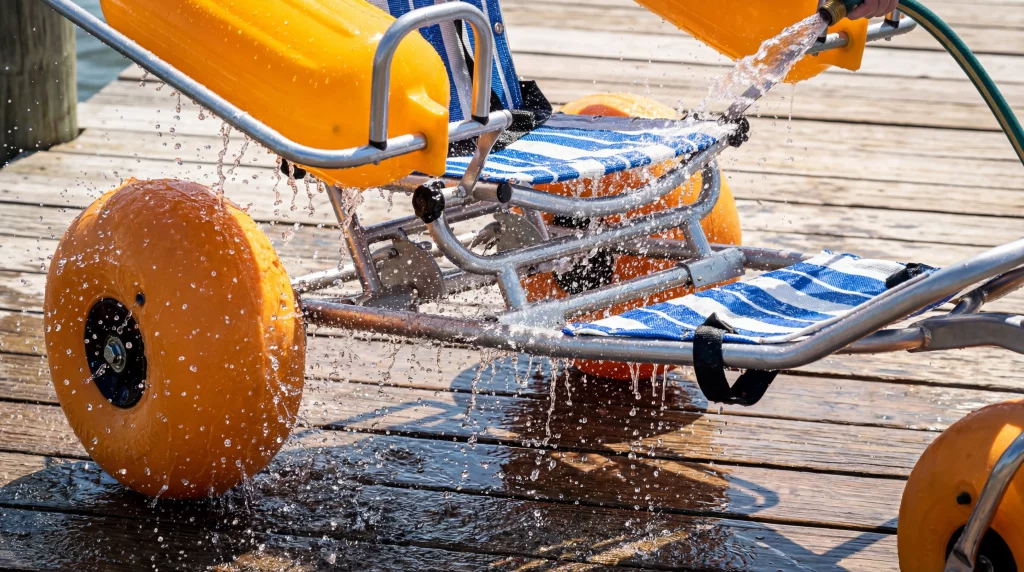
Resort equipment takes a beating, so you need a dedicated maintenance protocol to ensure the chairs remain safe and functional for every guest. A simple daily routine can extend the life of your fleet by several years and prevent unexpected breakdowns during the peak season.
- Daily freshwater rinses are mandatory after every saltwater use.
- Weekly inspections of tires and harnesses ensure safety compliance.
- Monthly lubrication of axles prevents seizing in the salt air.
You might be wondering: “How many chairs do I need for my property?” A good rule of thumb is to start with one or two units and scale based on guest demand and occupancy rates.
Key TakeawayFor resort operators, the ROI of beach accessibility equipment is found in increased guest satisfaction, improved brand reputation, and the ability to serve a growing market of inclusive-minded travelers.
| Resort Benefit | Impact Level | Long-Term Value |
|---|---|---|
| Guest Inclusivity | High | Builds brand loyalty |
| ADA/Compliance | Essential | Reduces legal risks |
| Competitive Edge | Moderate | Distinguishes from nearby hotels |
This strategic approach to accessibility ensures that your facility remains a top choice for all beach lovers.
Where can you buy a quality floating beach wheelchair today?
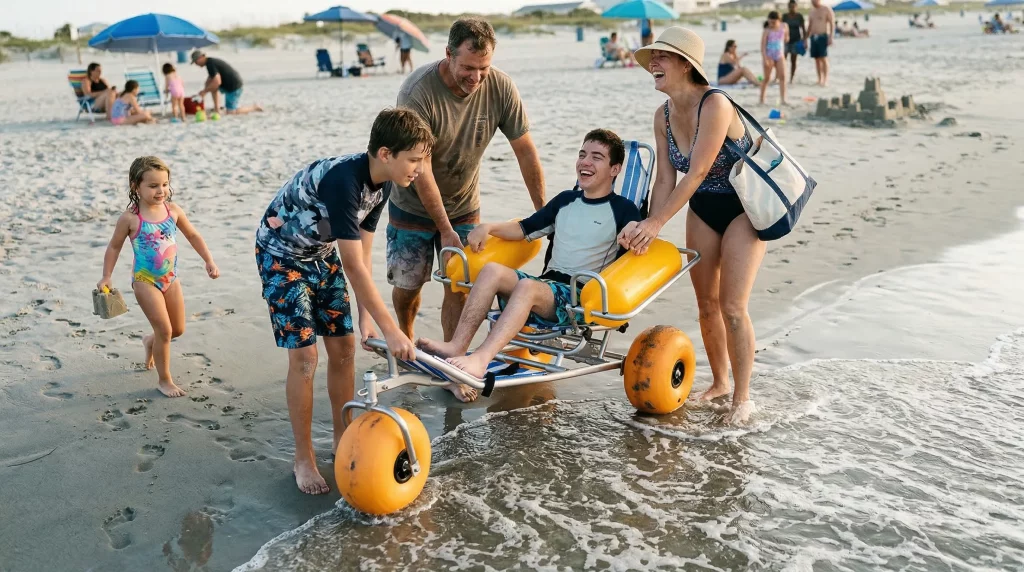
Finding a quality floating beach wheelchair requires looking for manufacturers that specialize exclusively in coastal mobility solutions rather than general medical equipment. You should prioritize vendors that offer comprehensive technical specifications and clear warranty terms. Because these chairs are a significant investment, you want to ensure you are buying from a source that understands the unique stresses of the marine environment.
How do you identify a professional manufacturer?
A professional source will provide detailed information on material grades, weight capacities, and tire PSI ratings. You should avoid generic “sand chairs” that lack the engineering needed for actual water entry or heavy-duty use.
- Look for ISO-certified manufacturing facilities.
- Check for a history of supplying municipalities or large resorts.
- Ensure they offer a full range of spare parts and accessories.
The truth is: You aren’t just buying a chair; you are buying a safety-critical piece of equipment. You need a partner who stands behind their engineering.
Can you customize a chair for your needs?
Many top-tier providers allow you to choose specific colors, add custom branding for your resort, or select specialized accessories like sunshades or storage bags. This allows you to integrate the accessibility equipment into your brand’s existing aesthetic and operational flow.
- Custom colors can match your resort’s branding.
- Added accessories improve the user experience for your guests.
- Different frame sizes can accommodate children or bariatric users.
You might be wondering: “Is it possible to get a custom quote for a large project?” Professional distributors are always happy to provide volume pricing and technical consultations for large-scale deployments.
Key TakeawaySource your equipment from specialized manufacturers who offer transparency, custom options, and a proven track record in the beach accessibility industry.
| Buying Criteria | What to Look For | Why it Matters |
|---|---|---|
| Material Spec | 316 Stainless / 6061 Aluminum | Prevents rust and failure |
| Certifications | ISO / CE Marking | Guarantees quality standards |
| Support | Spare Parts Availability | Ensures long-term operation |
By following these guidelines, you can secure high-quality equipment that provides reliable service for years to come.
What are the common floating beach wheelchair questions?
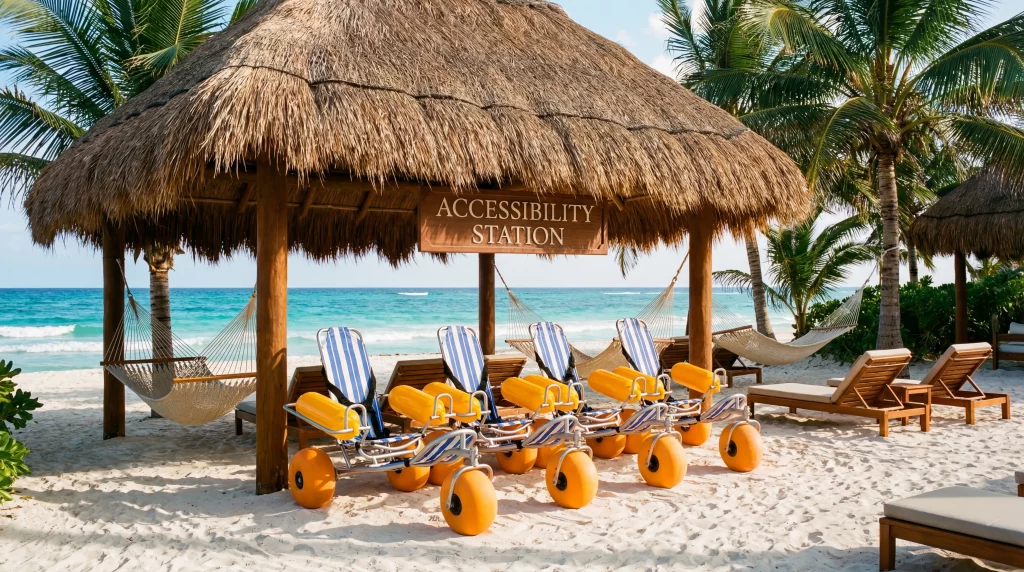
Most buyers and users of a floating beach wheelchair have specific concerns regarding safety, maintenance, and the practical limits of the technology. Understanding these common questions helps you manage expectations and ensure that the equipment is used correctly. Whether you are a first-time user or a facility manager, being informed is the first step toward a successful accessibility program.
Can these chairs be used in a swimming pool?
Yes, you can use most floating beach wheelchairs in a pool environment, provided they are rinsed with fresh water afterward to remove chlorine. The buoyant armrests and wide tires make them excellent for supervised pool entry in facilities without permanent lifts.
- They provide an alternative to traditional pool chairs.
- The wide tires won’t damage expensive pool liners.
- They allow for easy transitions from the deck to the water.
But here is the kicker: Chlorine is just as corrosive as salt, so never skip the post-use rinse. You want to protect the frame’s finish at all costs.
What is the weight limit for most models?
Standard models typically support between 250 and 350 pounds, but heavy-duty bariatric versions are available for users who require more support. You should always check the manufacturer’s load rating before allowing a user to occupy the chair.
- Exceeding the weight limit can compromise the buoyancy.
- It also puts undue stress on the axle and frame joints.
- Always use the provided safety harnesses regardless of user weight.
You might be wondering: “Is there a version for children?” Smaller, lightweight frames are specifically engineered to provide the right fit and buoyancy for younger beachgoers.
Key TakeawayAddressing these operational questions upfront ensures that every user has a safe, comfortable, and predictable experience at the water’s edge.
| Common Concern | Expert Answer | Action Item |
|---|---|---|
| Pool Use | Permitted with care | Rinse immediately after use |
| Weight Limit | 250-350 lbs (Standard) | Check load rating sticker |
| Solo Use | Not Recommended | Always bring an attendant |
These insights provide the foundation for a professional and safe beach accessibility program.
Reclaiming the beach is about more than just equipment; it is about restoring the fundamental right to enjoy nature’s beauty alongside friends and family. Whether you choose a floating model for ocean immersion or an all-terrain design for rugged coastal paths, the goal remains the same: total inclusion. By understanding the key differences in tire technology, frame materials, and buoyancy features, you can make an informed decision that transforms the seaside experience. Don’t let another summer pass by from the sidelines. If you are ready to enhance your facility’s accessibility or provide a loved one with the gift of the ocean, contact us today for a professional consultation and custom quote. Our vision is a world where every coastline is inclusive, and our mission is to provide the engineering excellence that makes that vision a reality for every beachgoer.
Frequently Asked Questions
Can I use a floating wheelchair in a swimming pool?Yes, but you must be diligent. While these chairs are excellent for pool entry, the chlorine in the water is highly corrosive, necessitating a thorough freshwater rinse of the entire frame and all joints immediately after each use.
What’s the best way to clean the wheelchair after saltwater use?Use a standard garden hose. You should spray down the entire unit with fresh water, paying close attention to the axles, brake mechanisms, and the underside of the seat fabric where salt crystals tend to hide and cause damage.
Can one person push a floating chair on their own over sand?Generally, yes. Due to the low-pressure balloon tire technology, the rolling resistance is significantly reduced, allowing one adult to push an occupied chair over soft sand, though steep dunes may require a second helper for safety.
What is the standard weight limit for these specialized chairs?Most standard models support 250 to 300 pounds. However, professional manufacturers often offer reinforced bariatric models that can support 400 pounds or more, so always verify the specific rating of your particular unit.
Can I transport this wheelchair in a standard car trunk?Yes, if it has quick-release features. By removing the large wheels and folding the frame, most beach wheelchairs will fit into the trunk of a mid-sized SUV or a large sedan, making them highly portable for family vacations.