To get a wheelchair on the beach, you need specialized equipment designed with wide, low-pressure tires that glide over soft sand rather than sinking into it. Navigating the coastline often feels impossible when standard wheels dig into the terrain, turning a relaxing day into an exhausting struggle for mobility. This frustration shouldn’t prevent you from enjoying the ocean breeze or the sound of the waves with your family. By utilizing professional wheelchair beach access solutions, you can transform the shoreline into an inclusive environment where the sand is no longer a barrier.
What Are the Main Challenges of Sand Mobility?
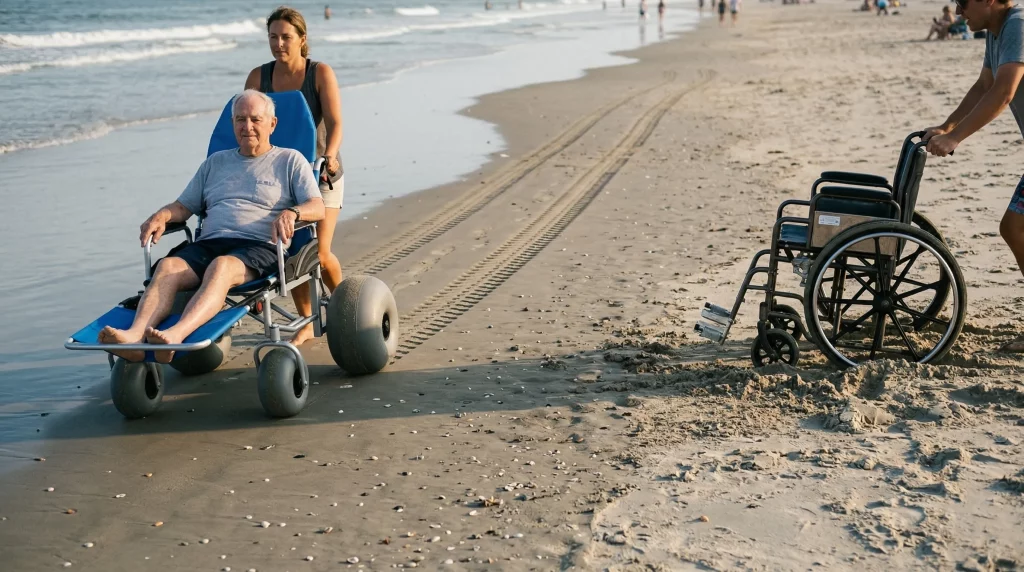
The primary challenges of sand mobility involve high surface friction and the tendency of narrow wheels to displace loose grains, causing the chair to become stuck. Proper wheelchair beach access requires a deep understanding of how different sand types, from packed wet surfaces to dry dunes, impact rolling resistance. Standard mobility devices simply lack the surface area needed to stay atop the shifting landscape.
Understanding Surface Resistance
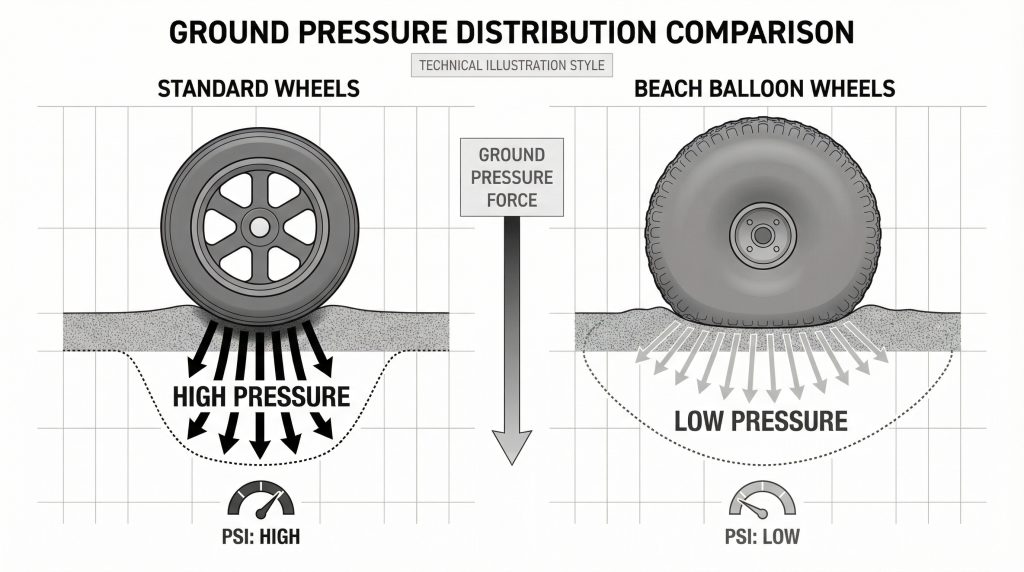
The truth is, dry sand acts like a fluid that collapses under high-pressure points. When a standard wheel applies concentrated weight, it pushes the sand aside instead of rolling over it.
- Increased physical exertion for the pusher.
- Risk of tipping the chair in uneven soft spots.
- Damage to standard wheel bearings from grit.
Impact of Narrow Wheel Width
Think about it: the narrower the wheel, the deeper it sinks. Wide balloon tires are essential because they spread the load across a much larger footprint.
- Reduces the PSI exerted on the ground.
- Allows for smoother transitions over small obstacles.
- Provides better lateral stability on slopes.
Environmental Corrosion Risks
Believe it or not, the beach environment is incredibly hostile to mechanical parts. Salt air and moisture lead to rapid oxidation if the frame isn’t treated for marine use.
- Rusting of steel components.
- Seizing of moving joints and axles.
- Pitting of chrome or unprotected aluminum.
Key Takeaway: Successful navigation requires equipment specifically engineered to overcome the physical properties of soft sand and the corrosive nature of the ocean.
| Challenge | Impact on User | Required Solution |
|---|---|---|
| Surface Friction | Heavy resistance/Stuck | Large diameter tires |
| Sinkage | Immobility | Low-pressure balloon wheels |
| Corrosion | Equipment failure | Marine-grade materials |
While these challenges are significant, they are easily mitigated with the right technical approach to coastal engineering.
How Does Beach Gear Compare to Standard Gear?
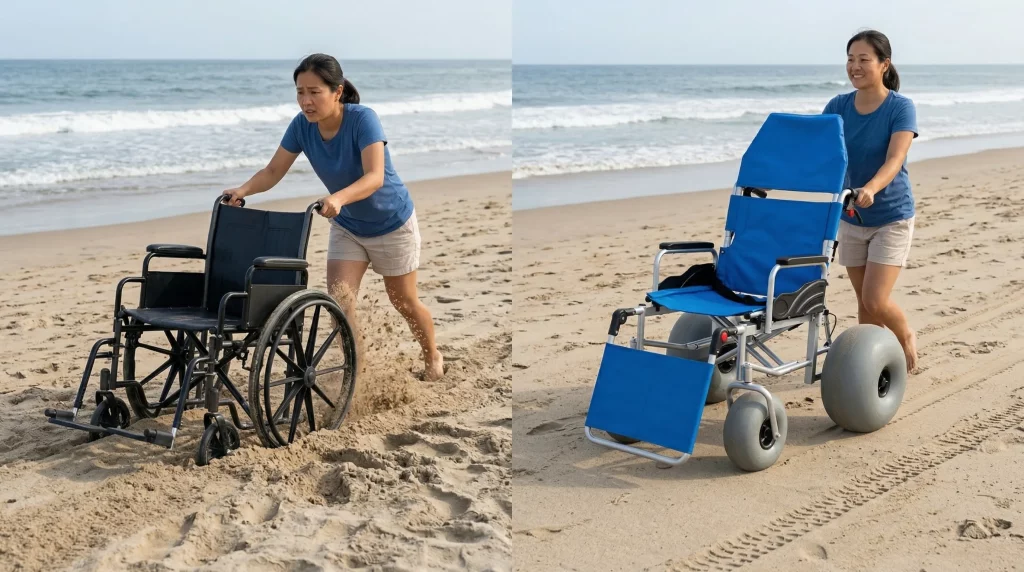
Beach equipment differs from standard gear by utilizing oversized balloon tires and corrosion-resistant frames to ensure reliable wheelchair beach access in coastal conditions. Standard wheelchairs are designed for hard, flat surfaces like pavement or indoor flooring, making them functionally useless on soft shorelines. Specialized models prioritize weight distribution and material durability to withstand the unique stresses of the beach.
Tires and Ground Pressure
Here is the deal: balloon tires are the defining feature of a true beach mobility device. These tires are typically inflated to just 2-4 PSI, allowing them to deform and “float” over the sand.
- Standard wheels: High pressure, low surface area.
- Balloon tires: Low pressure, high surface area.
- Result: Effortless rolling on soft dunes.
Frame Material and Coating
But wait, there is more than just the wheels to consider. Beach-ready frames are often made from high-grade aluminum or 316 stainless steel to prevent the rapid rust seen in standard steel chairs.
- Resistant to saltwater immersion.
- UV-stabilized fabrics for seating.
- Powder-coated finishes for extra protection.
Maneuverability and Handling
Look at this: a beach chair often requires a different push-handle height and wheel alignment to handle the drag of the sand. The geometry is optimized for an attendant to push with minimal effort over uneven grades.
- Wider axle tracks for better balance.
- Ergonomic handles for leverage.
- Simplified folding mechanisms for sand clearance.
Key Takeaway: Standard wheelchairs are built for efficiency on hard floors, whereas beach models are built for flotation and environmental resilience.
| Feature | Standard Wheelchair | Beach Mobility Chair |
|---|---|---|
| Wheel Type | Narrow / Solid | Large / Balloon |
| Frame | Steel / Basic Aluminum | Marine-Grade Alloy |
| Terrain | Pavement / Indoors | Sand / Soft Earth |
Choosing the correct equipment type ensures that the user remains safe and the device remains functional for years to come.
Can You Use a Standard Wheelchair on the Beach?
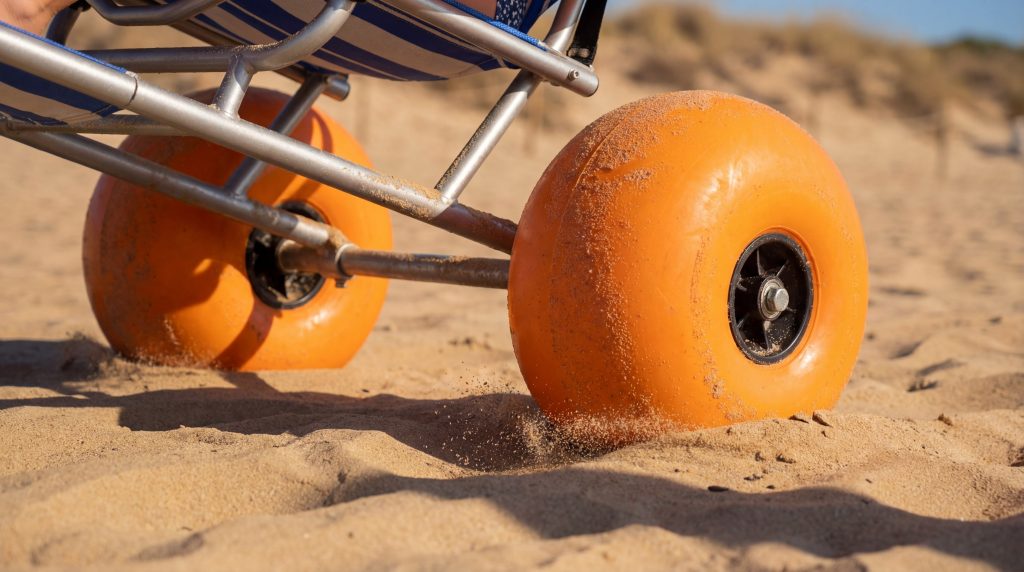
You generally cannot use a standard wheelchair on the beach because the narrow tires will sink immediately into the sand, making wheelchair beach access impossible without extreme effort. Even if you manage to push across a small patch of wet sand, the salt and grit will likely ruin your bearings and frame. It is far safer and more effective to transition to a specialized chair at the boardwalk.
Risks of Sinking and Tipping
Let’s face it: getting stuck is more than just an inconvenience; it can be a safety hazard. If a chair sinks unevenly, the user may be thrown forward or the chair could tip over sideways.
- Instant loss of momentum in dry sand.
- Difficulty performing a safe extraction.
- Stress on the occupant’s posture and safety.
Mechanical Damage from Salt
You see, standard wheelchairs are not sealed against the abrasive nature of beach sand. Once salt enters the moving parts, it acts like sandpaper, grinding down the internal mechanisms.
- Premature failure of casters and wheels.
- Squeaking and seizing of the folding joints.
- Permanent staining of upholstery from salt.
Limitations of Wet Sand
In short, while wet sand is firmer, it is still unpredictable. High tides or heavy traffic can turn firm paths into soft traps that standard tires cannot escape.
- Inconsistent density along the waterline.
- Suction effects that trap small wheels.
- Sudden drop-offs that standard chairs can’t clear.
Key Takeaway: Attempting to use standard equipment on the beach often results in permanent damage to the chair and a frustrating experience for the user.
| Hazard | Risk Level | Consequence |
|---|---|---|
| Soft Sand | High | Complete immobility |
| Salt Air | Moderate | Frame corrosion |
| Sand Ingress | High | Bearing/Joint failure |
It is always recommended to use purpose-built solutions to protect your investment and ensure a stress-free outing.
How Do Beach Access Mats Improve Mobility?
Beach access mats improve mobility by creating a stable, semi-rigid pathway over the sand, allowing for easier wheelchair beach access for both standard and specialized chairs. These mats are typically made from UV-stabilized recycled materials that roll out to provide a firm surface. They bridge the gap between the parking lot or boardwalk and the firmer sand near the water’s edge.
Pathway Stability and Grip
Best of all, these mats feature a non-slip texture that provides traction even when wet or covered in a light layer of sand. This makes it much easier for someone to push a chair or for a power chair user to navigate independently.
- Clear visual path for users.
- Reduced rolling resistance for all wheels.
- Safe for barefoot walking alongside the chair.
Durability and Maintenance
As it turns out, professional-grade mats are designed to withstand heavy foot traffic and environmental exposure. They can be hosed off easily and remain in place throughout the summer season.
- Resistance to mold and rot.
- Open-weave design allows sand to filter through.
- Simple anchoring systems to prevent shifting.
Increasing Beach Inclusivity
Keep this in mind: installing a mat is one of the most cost-effective ways for a community to meet accessibility standards. It allows a wider range of people to reach the shoreline without needing to rent specialized equipment.
- Supports walkers, strollers, and wheelchairs.
- Creates a designated “accessible zone.”
- Promotes universal design in public spaces.
Key Takeaway: Access mats provide a reliable and permanent-feeling solution that simplifies the journey from the car to the coast.
| Benefit | Impact | User Group |
|---|---|---|
| Firm Surface | Easier pushing | Manual chair users |
| Traction | Prevents slips | Everyone |
| Visibility | Clear navigation | Visually impaired/General |
Mats serve as the foundation for a truly accessible beach, providing the infrastructure needed for everyone to enjoy the water.
What Tips Help When No Access Mat Is Available?
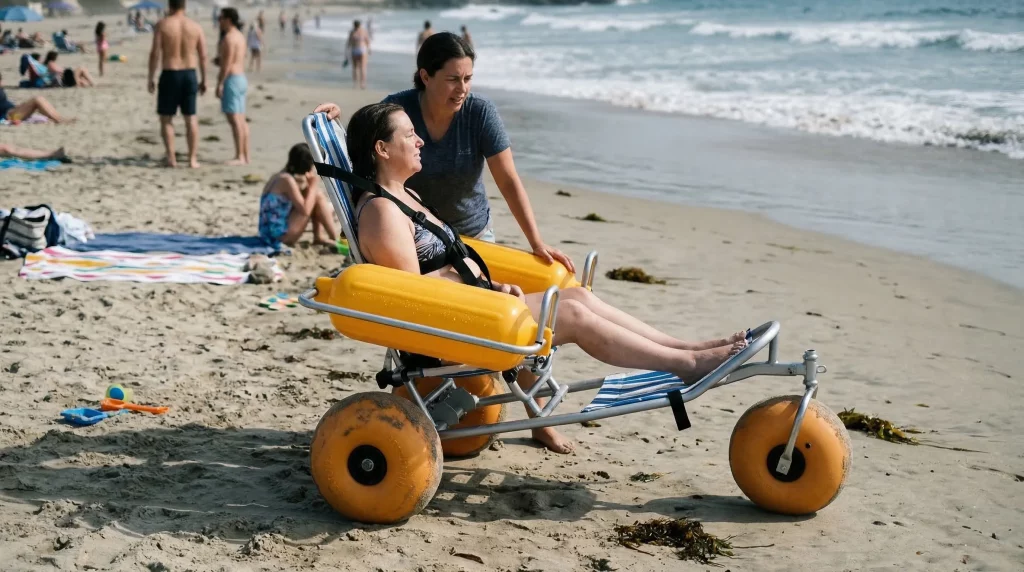
When no mat is available, you can still achieve wheelchair beach access by sticking to the firmer wet sand near the tide line and using a “backwards-pull” technique. This strategy minimizes the weight on the small front casters, which are usually the first parts to get stuck. However, this is only a temporary fix and works best if you have a strong assistant to help navigate.
The Backwards-Pull Technique
Fact is, pulling a wheelchair backwards is much easier than pushing it forwards on soft ground. By leading with the large rear wheels, you prevent the front casters from digging into the sand like anchors.
- Assistant takes the lead behind the chair.
- Weight stays centered over the large tires.
- Provides better control on slight inclines.
Scouting the Firmest Sand
To put it simply, not all sand is created equal. Look for the “dark” sand near the water where the tide has recently receded, as this area is much more compacted.
- Stay away from the soft, fluffy dunes.
- Timing your trip with low tide provides more space.
- Watch for “soft spots” indicated by footprint depth.
Reducing Excess Weight
More importantly, remove any heavy bags or accessories from the chair before hitting the sand. Every extra pound increases the depth the tires will sink into the terrain.
- Carry bags separately or use a backpack.
- Ensure the occupant is positioned over the rear axle.
- Check tire pressure if using pneumatic wheels.
Key Takeaway: Manual navigation on raw sand requires specific physical techniques and a keen eye for the firmest possible path.
| Technique | When to Use | Effort Level |
|---|---|---|
| Backwards Pull | Soft/Loose sand | High |
| Wet Sand Traversal | Near tide line | Moderate |
| Weight Reduction | Every trip | Low |
While these tips help, they highlight the significant physical demand required when specialized equipment is absent.
How Does a Floating Wheelchair Change the Water?
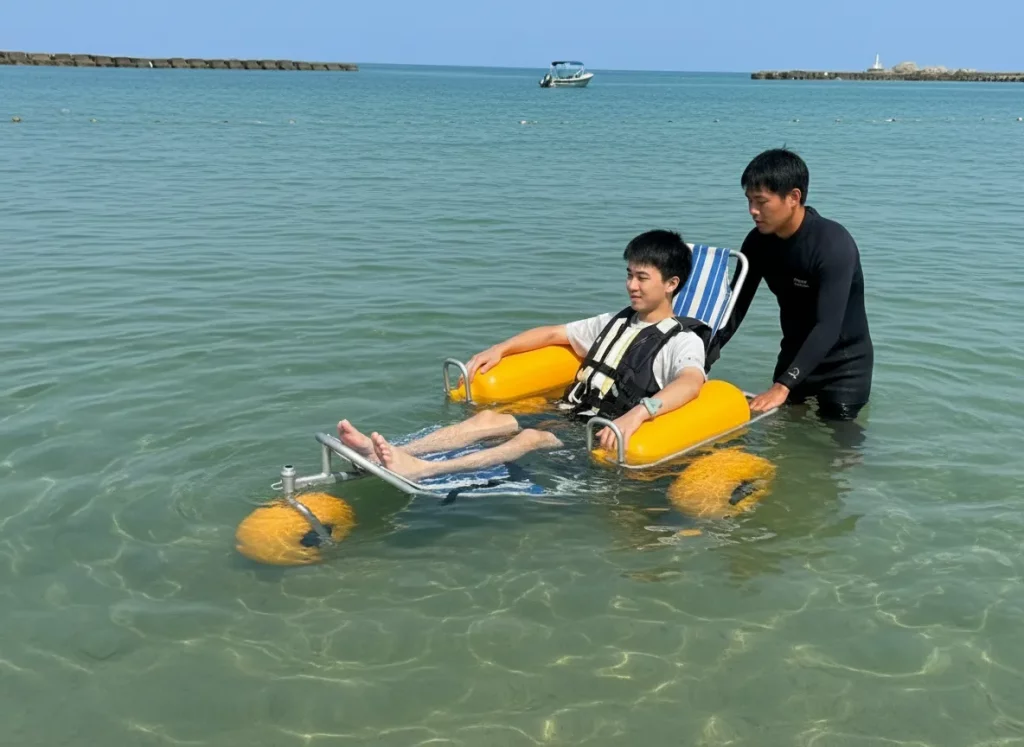
A floating wheelchair changes the experience by allowing for seamless wheelchair beach access that extends directly into the surf or pool. These chairs are equipped with buoyant armrests or floats that keep the user upright and stable in the water. This allows for a fully immersive experience that was previously impossible for many people with limited mobility.
Buoyancy and Stability
Imagine this: you can glide right off the sand and into the waves without ever leaving your seat. The pontoons are engineered to provide a stable platform that resists tipping even in gentle swells.
- High-buoyancy armrests for safety.
- Stable three-wheel design for water entry.
- Corrosion-resistant components for immersion.
Full Immersion Benefits
Not to mention, the therapeutic benefits of being in the water are immense. Floating chairs allow for sensory engagement and cooling off on hot days in a safe, controlled manner.
- Supervised water therapy sessions.
- Socializing with family in the surf.
- Full-body relaxation in a buoyant state.
Ease of Water Exit
That is not all; these chairs are designed to be pushed back onto the sand with minimal resistance once the swim is over. The large tires transition from water to land without getting bogged down in the slurry.
- Quick-drain fabrics to reduce weight.
- Easy-grip handles for the attendant.
- Secure harnesses for occupant safety.
Key Takeaway: Floating models provide the ultimate level of beach access, turning the ocean from a “viewing-only” area into a recreation zone.
| Feature | Function | Benefit |
|---|---|---|
| Pontoons | Buoyancy | Water flotation |
| Open Fabric | Drainage | Lightweight exit |
| Wide Base | Stability | Prevents tipping |
These specialized devices represent the pinnacle of coastal inclusion, ensuring that the water is accessible to everyone.
Can You Rent a Specialized Wheelchair Locally?
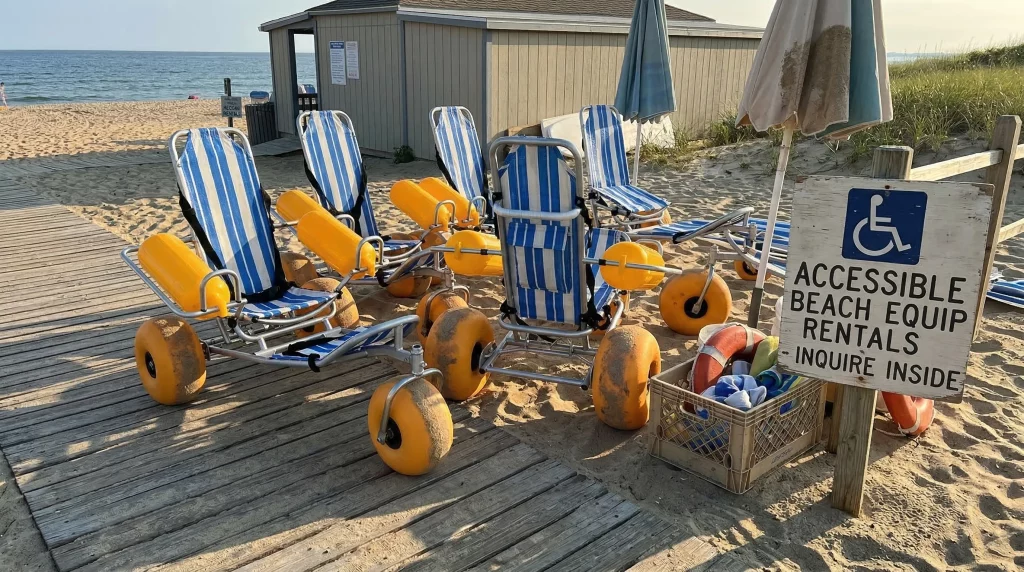
Yes, many popular resorts and public beaches offer rental services to facilitate wheelchair beach access for visitors who do not own their own equipment. Checking with the local parks department or the hotel concierge is the best way to secure a chair for your stay. It is highly recommended to book in advance, especially during peak summer months, as supply is often limited.
Finding Rental Locations
By the way, many coastal cities now list “accessible beaches” on their official websites. These listings often include details on where the rental kiosks are located and what models they have available.
- Public lifeguard stations.
- Beachfront hotel concierge desks.
- Local medical supply rental shops.
Costs and Requirements
Of course, rental fees vary significantly depending on the location and the type of chair. Some public programs provide these chairs for free on a first-come, first-served basis, while private rentals may charge by the day.
- Daily or weekly rental rates.
- Possible deposit requirements.
- Photo ID usually needed for checkout.
Delivery and Pickup Services
For example, some independent rental companies will deliver the chair directly to your vacation rental or hotel. This saves you the trouble of trying to transport a large, bulky device in a standard vehicle.
- Door-to-door convenience.
- Instructional walkthrough on delivery.
- Flexible pickup times at the end of your trip.
Key Takeaway: Rental programs make beach accessibility affordable and accessible without the need for personal equipment ownership.
| Provider | Typical Cost | Availability |
|---|---|---|
| Public Beach | Free – Low | First-come, first-served |
| Private Resort | Included – Mid | Guests only/Priority |
| Rental Company | Mid – High | Reservation based |
Utilizing these services is a great way to test different equipment types before making a permanent purchase.
How Do Portable Designs Ease Coastal Travel?
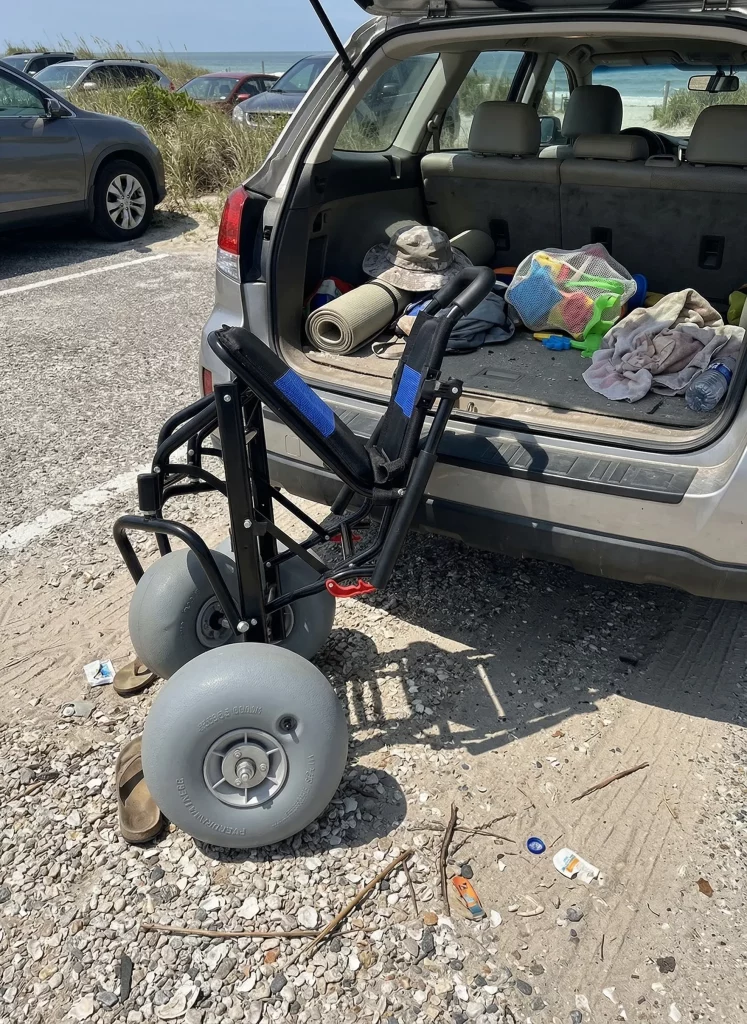
Portable designs ease coastal travel by featuring folding frames and quick-release wheels that make wheelchair beach access possible for families on the go. Unlike older, bulky models, modern beach wheelchairs can often fit into the trunk of a standard SUV or van. This portability ensures that you aren’t restricted to beaches that only offer rentals.
Folding Frame Mechanisms
Generally speaking, the latest beach chairs use lightweight aluminum alloys that fold down in seconds. This allows you to store the chair in your garage or vehicle without taking up excessive space.
- Tool-free assembly and disassembly.
- Lightweight components for easy lifting.
- Compact footprint when stored.
Quick-Release Balloon Tires
Surprisingly, even the largest balloon tires can be removed with the press of a button. Removing the wheels makes the frame significantly more manageable and allows for tighter packing in a car.
- Reduces the width of the stored device.
- Allows for easy cleaning of wheels.
- Prevents sand from getting into the car interior.
Travel Cases and Bags
Essentially, many manufacturers now offer custom travel bags to protect the chair during flights or long road trips. These bags keep all the parts together and prevent the frame from being scratched during transit.
- Padded protection for the frame.
- Handles and wheels for easy transport.
- Clearly labeled compartments for parts.
Key Takeaway: Portability removes the logistical barriers to beach travel, allowing for spontaneous trips to any shoreline.
| Aspect | Portable Design | Traditional Design |
|---|---|---|
| Storage | Fits in SUV trunk | Requires trailer/van |
| Weight | 25-40 lbs | 50+ lbs |
| Setup | < 5 minutes | 15+ minutes |
Investing in a portable model provides the freedom to explore remote beaches that don’t have established rental infrastructure.
What Safety Features Are Essential for Beaches?
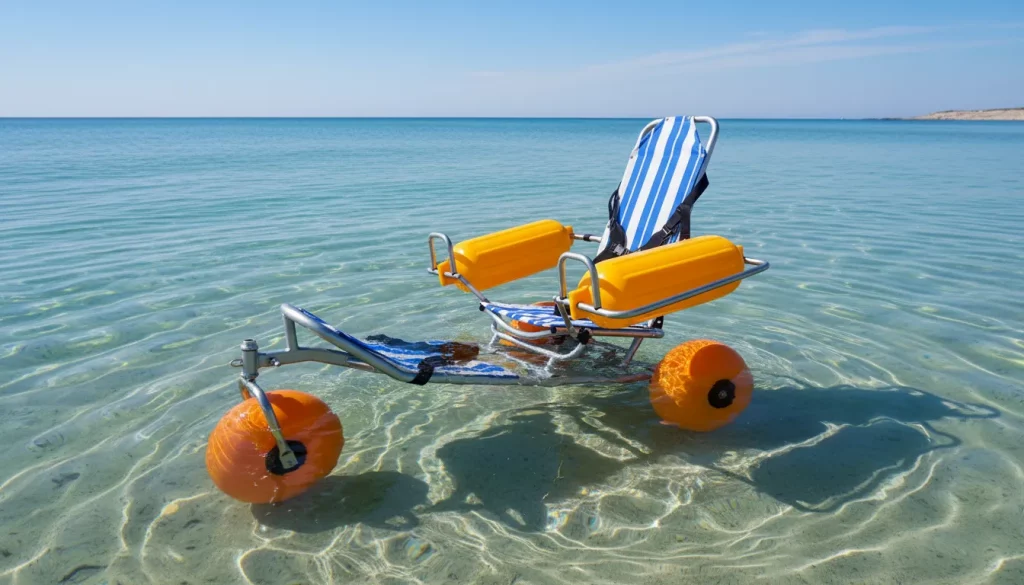
Essential safety features for wheelchair beach access include secure chest harnesses, parking brakes, and high-visibility flags. Because the beach environment involves slopes, water, and shifting sand, the user must be securely positioned within the chair at all times. A well-designed chair prioritizes the occupant’s stability to prevent accidents in the surf or on uneven dunes.
Secure Harness Systems
Above all, a 5-point or chest harness is critical for users with limited upper-body control. It ensures that the occupant remains centered in the seat even when the chair is navigating a steep incline or a small wave.
- Adjustable straps for various body types.
- Quick-release buckles for emergency exit.
- Salt-resistant nylon webbing.
Braking and Locking Mechanisms
Naturally, you need a way to keep the chair from rolling away when stopped on a slope. Specialized beach brakes act directly on the balloon tires to provide a firm hold in the sand.
- Dual-wheel locking for maximum stability.
- Easy-to-engage levers for assistants.
- Corrosion-free internal parts.
Visibility and Identification
Truly, the beach can be a crowded and chaotic place. Using high-visibility flags or bright colors helps lifeguards and other beachgoers spot the wheelchair from a distance.
- Tall safety flags for dune navigation.
- Reflective strips for sunset strolls.
- Brightly colored floats or frames.
Key Takeaway: Safety should never be compromised for mobility; always look for chairs with comprehensive restraint and locking systems.
| Safety Feature | Primary Purpose | Environment |
|---|---|---|
| Chest Harness | Postural support | All terrains |
| Parking Brake | Stationary security | Slopes/Dunes |
| Safety Flag | Visibility | Crowded beaches |
Proper safety equipment ensures that the user and the assistant can enjoy the beach with total peace of mind.
How Should You Clean and Maintain Your Chair?
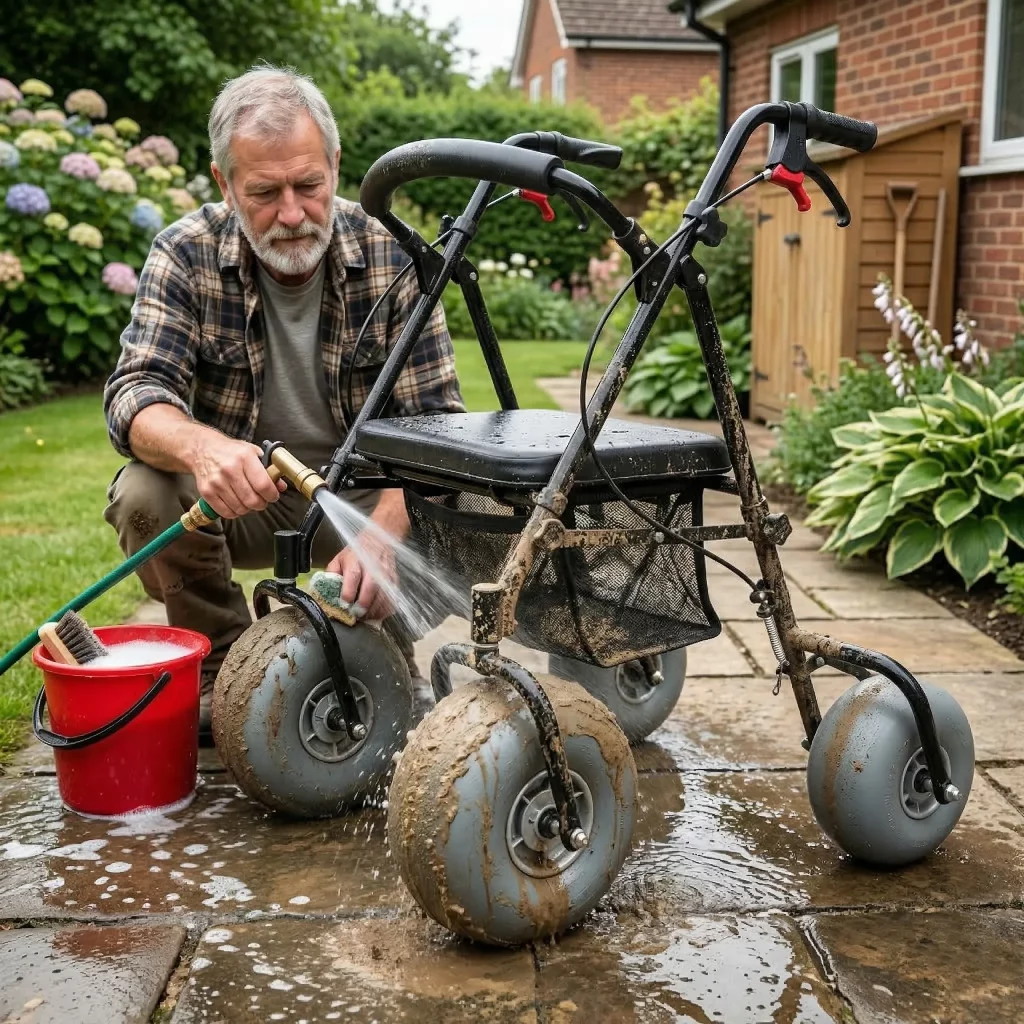
To ensure long-term wheelchair beach access , you must rinse your chair with fresh water after every use to remove salt and sand. Regular maintenance prevents the build-up of corrosive minerals and ensures that the folding mechanisms remain smooth. A small amount of preventive care will extend the life of your equipment by several years.
Freshwater Rinse Protocol
Simply put, salt is the enemy of any metal. Use a standard garden hose to thoroughly spray down the entire chair, paying close attention to the axles and folding joints.
- Rinse immediately after leaving the beach.
- Open any folding parts to reach hidden grit.
- Wipe down the upholstery to remove salt crust.
Lubrication of Moving Parts
Basically, once the chair is dry, you should apply a marine-grade lubricant to the axles and hinges. This keeps the parts moving freely and provides an extra layer of protection against the humid coastal air.
- Use silicone-based or “dry” lubricants.
- Avoid greases that attract and hold sand.
- Check for loose bolts or worn hardware regularly.
Off-Season Storage Tips
Bottom line, if you aren’t using the chair for several months, store it in a dry, shaded area. Leaving a chair out in the sun can cause the fabrics to fade and the balloon tires to degrade over time.
- Deflate tires slightly for long-term storage.
- Cover with a breathable tarp.
- Store in a garage or climate-controlled shed.
Key Takeaway: Consistent cleaning and lubrication are the best ways to protect your mobility investment from the harsh coastal climate.
| Task | Frequency | Time Required |
|---|---|---|
| Freshwater Rinse | After every use | 5 minutes |
| Lubrication | Monthly/Seasonally | 10 minutes |
| Inspection | Before every trip | 2 minutes |
A well-maintained chair is always ready for the next adventure, providing reliable access to the shore whenever you need it.
Frequently Asked Questions
Can I use a motorized wheelchair on the beach?Standard motorized wheelchairs cannot be used on sand as the motors and batteries are not sealed against sand or salt, and the tires will sink. You must use a specialized all-terrain power chair designed specifically for beach environments.
What is the best way to transport a beach wheelchair?The best way is to use a folding model with quick-release wheels that can fit inside an SUV or van. If you have a non-folding model, you may need a small utility trailer or a specialized hitch-mounted carrier.
Can beach wheelchairs go into deep water?Floating beach wheelchairs are designed for shallow water entry and flotation, but they should never be used in deep water or high surf. Always ensure an attendant is present and the user is wearing any required safety flotation devices.
How much does a professional beach wheelchair cost?
Prices range from 1,500forbasicmanualsandchairstoover 4,000 for high-end floating or all-terrain models. Rental programs are a cost-effective alternative for occasional visitors.
Are all public beaches required to have wheelchair access?While many public beaches in the US and EU are required to follow accessibility guidelines (like the ADA), levels of actual access vary. It is always best to call the local parks department ahead of time to confirm the availability of mats or rental chairs.
Conclusion
Getting a wheelchair on the beach is no longer a logistical nightmare thanks to modern engineering and dedicated accessibility infrastructure. By choosing specialized balloon tires, utilizing access mats, and following proper maintenance protocols, you can ensure that the coastline is a place of inclusion rather than exclusion. At Ary Beach Accessibility Solutions, we are dedicated to manufacturing professional-grade beach wheelchairs and walkers that bridge the gap between the sand and the sea. Our commitment to marine-grade durability and ergonomic design ensures that every user can experience the joy of the ocean with safety and dignity. If you are ready to transform your next coastal outing, reach out to our team today to find the perfect mobility solution for your needs.