The floating wheelchair is a specialized mobility device designed to navigate soft sand and provide buoyant access to the water for individuals with limited mobility.
For years, people using mobility aids faced a cruel reality at the shoreline—they could see the beautiful waves but never touch them. This barrier kept families apart and made beach trips a source of frustration rather than a time for joy. The Floating wheelchair solves this by bridging the gap between the pavement and the surf, restoring total freedom to the coastline for everyone.
Why is the floating wheelchair a beach game-changer?
It transforms the beach from a restricted zone into an inclusive environment where anyone can enter the waves safely. This technology allows a seamless transition from the parking lot to the shoreline without the risk of getting stuck.
What were the previous barriers?
Before this innovation, standard chairs would sink immediately into fine sand, making water entry physically impossible. You likely noticed how standard wheels dig deep into the dunes, creating a high-friction environment that stalls mobility.
- Sinking wheels
- High friction
- Weight imbalance
- Lack of buoyancy
Here is the thing. These hurdles often meant that wheelchair users had to stay on the boardwalk while their families played in the surf.
How does it improve the user experience?
The arrival of these buoyant devices turns a sedentary beach visit into an immersive aquatic experience. It allows you to feel the cooling sensation of the Gulf without the fear of your equipment failing in the sand.
- Social inclusion
- Sensory relief
- Mental well-being
- Physical cooling
Think about this. When you remove the mechanical barrier of the sand, you restore the dignity and joy of a traditional beach day.
Key TakeawayThe floating wheelchair provides the mechanical advantage needed to navigate soft sand and provide safe water immersion.
| Feature | Standard Wheelchair | Floating Wheelchair |
|---|---|---|
| Sand Performance | Sinks/Stalls | Glides/Floats |
| Water Entry | Not Recommended | Purpose-Built |
| Buoyancy | Negative | Highly Positive |
Specialized engineering ensures that the equipment remains a bridge to the water rather than a barrier to the shore.
Where can you find a floating wheelchair in Sarasota?
Sarasota County has taken a leading role by deploying a Floating wheelchair at five of its most popular coastal destinations. This regional standard ensures that accessibility is a right for every visitor rather than a localized luxury.
Which five beaches have these chairs?
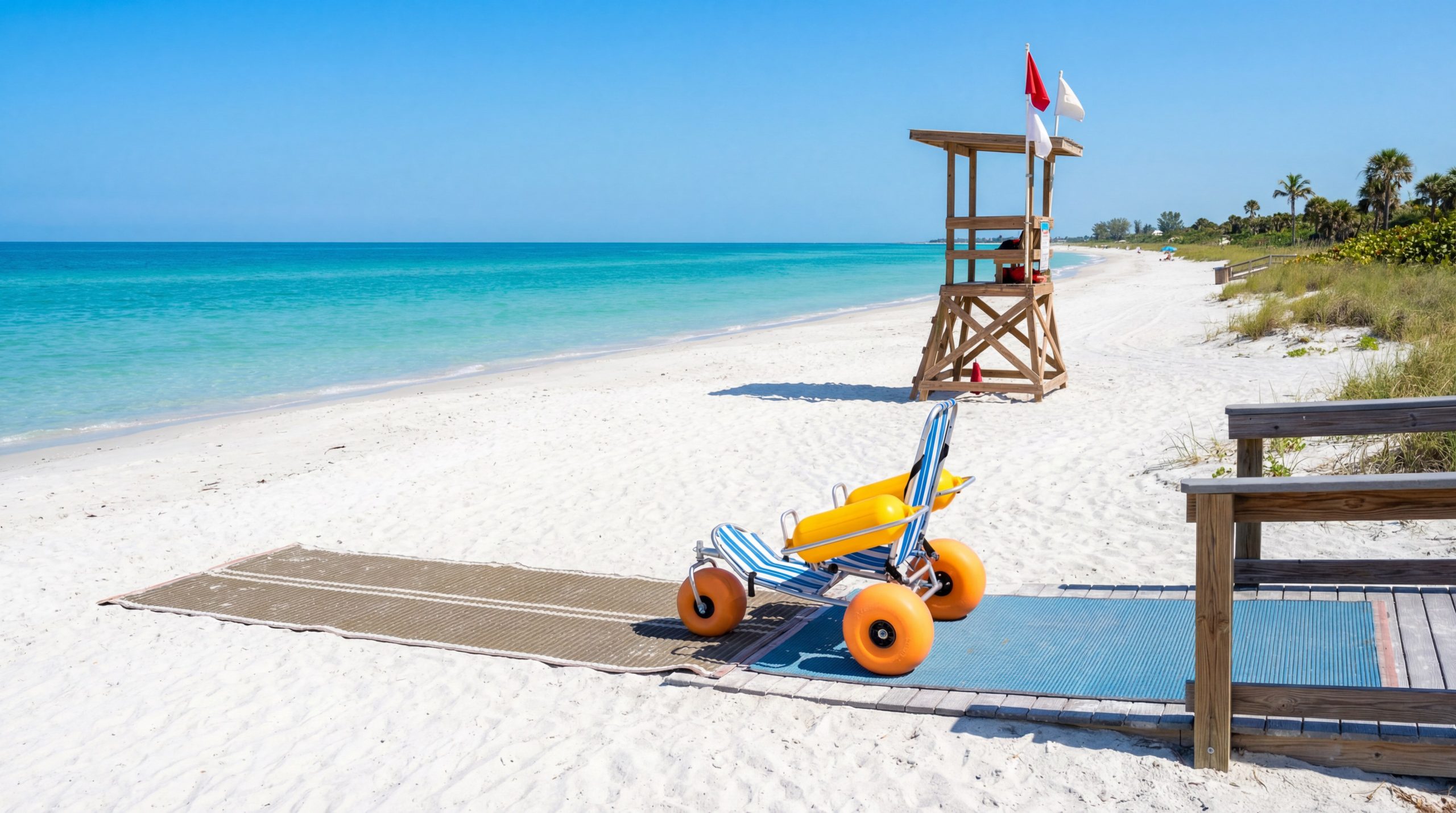
The equipment is stationed at Siesta, Nokomis, Lido, Venice, and Manasota beaches to provide broad coastal coverage. You can find these units near lifeguard stands or designated park entry points across the county.
- Siesta Key Beach
- Lido Beach
- Nokomis Beach
- Venice Beach
- Manasota Beach
Best of all. These locations were chosen specifically because they represent the most frequented shorelines in the Gulf region.
Is there a cost for public use?
For the average user, the cost of checking out this specialized technology is zero. The county has invested in these units to ensure that financial status does not dictate who can enjoy the therapeutic benefits of the ocean.
- Free daily rentals
- Lifeguard assistance
- First-come service
- Easy check-out process
You might be wondering. Most public programs allow for simple registration so you can get into the water without any administrative delays.
Key TakeawayAccessibility is now geographically distributed, ensuring users can find a floating wheelchair at most major public entry points.
| Beach Location | Rental Cost | Availability |
|---|---|---|
| Siesta Key | Free | Lifeguard Stand |
| Lido Beach | Free | Park Office |
| Nokomis Beach | Free | Concession Area |
Public investment in shared equipment removes the high barrier of entry for local residents and visiting tourists alike.
How does a floating wheelchair handle deep beach sand?
The engineering behind these devices focuses on surface area and weight distribution to keep you atop the terrain. By utilizing high-volume wheels, the chair glides over the sand rather than digging into it like a traditional mobility aid.
Why are the wheels so large?
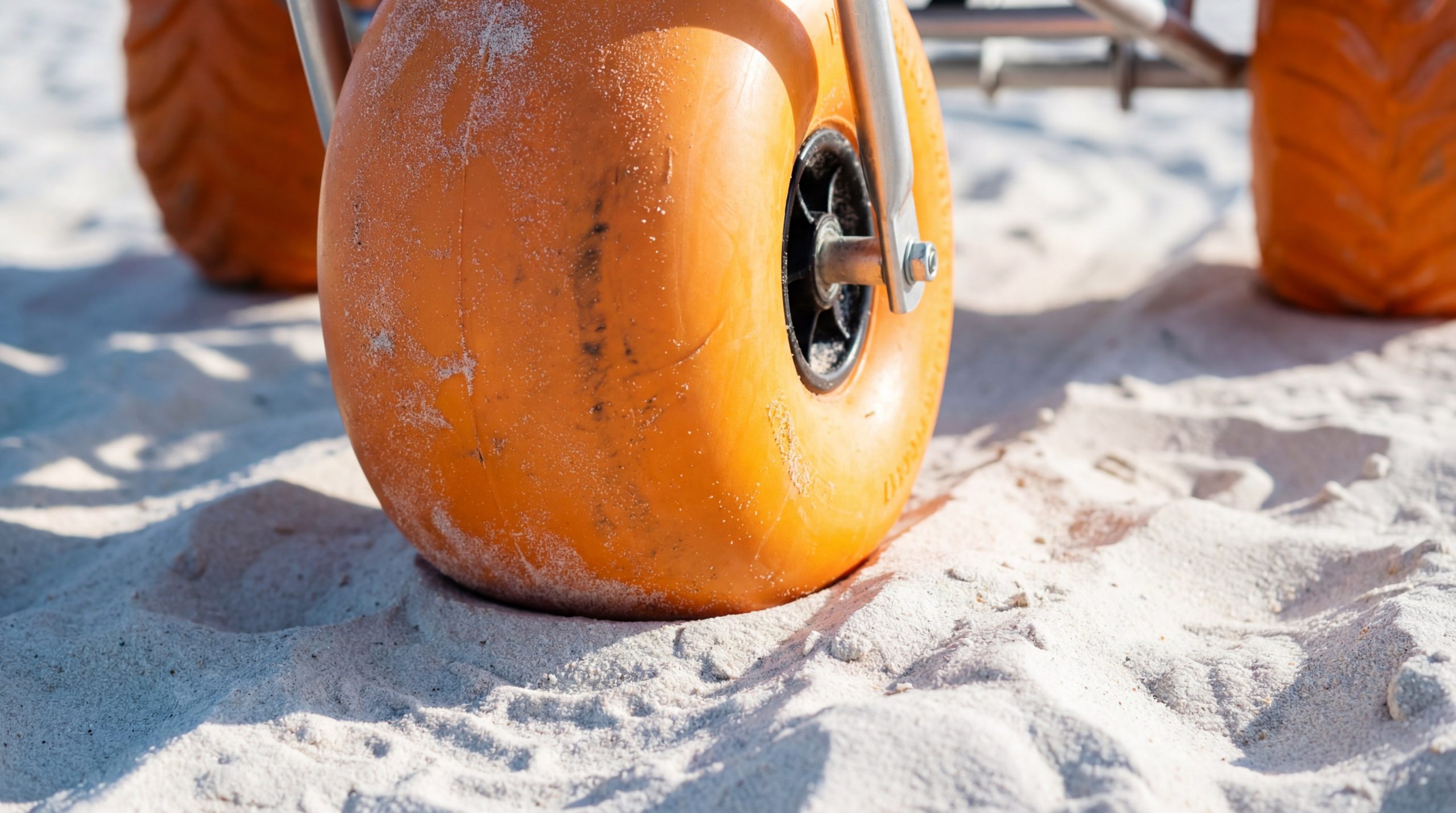
The low-pressure balloon tires are designed to spread the user’s weight across a much larger surface. This prevents the tires from “cutting” into the sand, allowing an assistant to push the user with minimal physical exertion.
- Increased surface area
- Reduced ground pressure
- Enhanced stability
- Smooth shock absorption
It gets better. These tires are typically inflated to very low PSI, which provides a cushioned ride over uneven coastal shells and dunes.
Can an assistant push it easily?
Ergonomic handles and a lightweight frame ensure that the person assisting you does not suffer from back strain. You will find that even on steep dune inclines, the friction is significantly lower than that of any other wheeled device.
- Ergonomic handles
- Low-friction glide
- Lightweight frame
- Wide track design
Look at it this way. The chair does most of the heavy lifting so that the focus remains on the scenery and the experience.
Key TakeawayThe floating wheelchair relies on specialized balloon tire technology to overcome the high-friction environment of the shoreline.
| Tire Component | Specification | Benefit |
|---|---|---|
| Diameter | Large (30cm+) | Overcomes obstacles |
| Pressure | 2-4 PSI | Floats on soft sand |
| Material | UV-Resistant Poly | Long-term durability |
By reducing the effort required for transport, these chairs make the beach accessible to users of all ages and abilities.
Is the floating wheelchair safe for use in the Gulf?
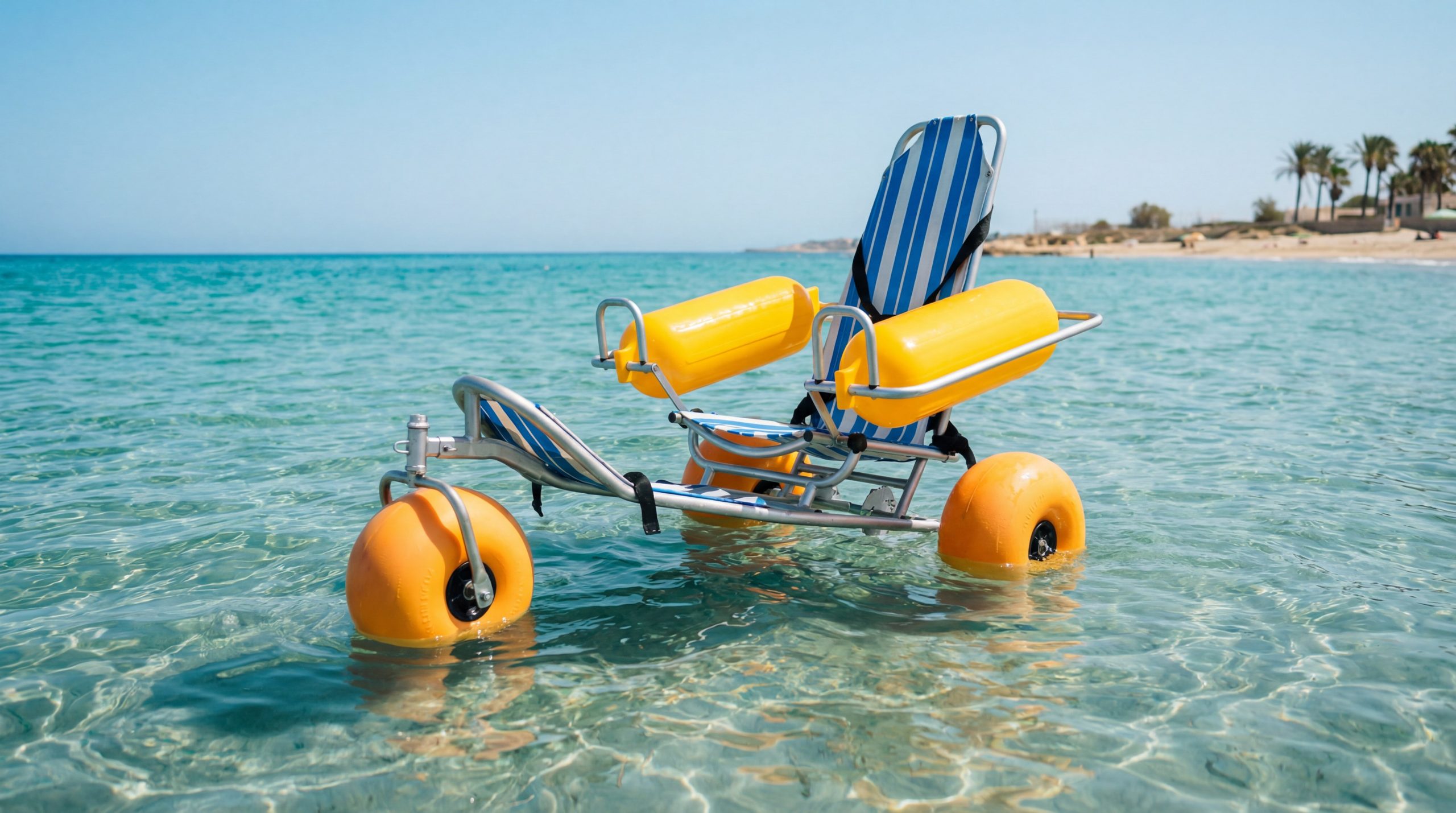
Safety is the paramount concern, which is why a Floating wheelchair is built with marine-grade materials and inherent buoyancy. These units are designed for specific environmental conditions to ensure user security and peace of mind during immersion.
Are waves a concern for users?
Officials specify that these chairs are not intended for heavy surf or high-wave conditions. You should use them in calm, shallow water where the buoyant armrests can keep the platform stable and upright.
- Surf height limits
- Attendant requirements
- Calm water preference
- Shallow depth rating
But here is the catch. Even with specialized equipment, you must always have a dedicated assistant to monitor water levels and currents.
How do lifeguards manage safety?
Beach safety teams often inspect the chairs daily to ensure that all flotation components are functioning correctly. They provide the necessary instruction to ensure you understand how the chair will react once it loses contact with the seafloor.
- Monitoring surf levels
- Inspecting equipment
- Providing instruction
- Emergency support
That is not all. Lifeguards can also advise you on the best entry points where the sand gradient is most gentle for the chair.
Key TakeawaySupervised use in calm water ensures the floating wheelchair remains a safe and stable platform for aquatic recreation.
| Safety Factor | Recommendation | Reason |
|---|---|---|
| Wave Height | < 1 Foot | Prevents tipping |
| Attendant | Required | Safety & Steering |
| Depth | Hip Level | Maintains control |
Strict adherence to calm-water protocols ensures that every excursion remains a positive and secure experience for the user.
Who benefits most from using a floating wheelchair?
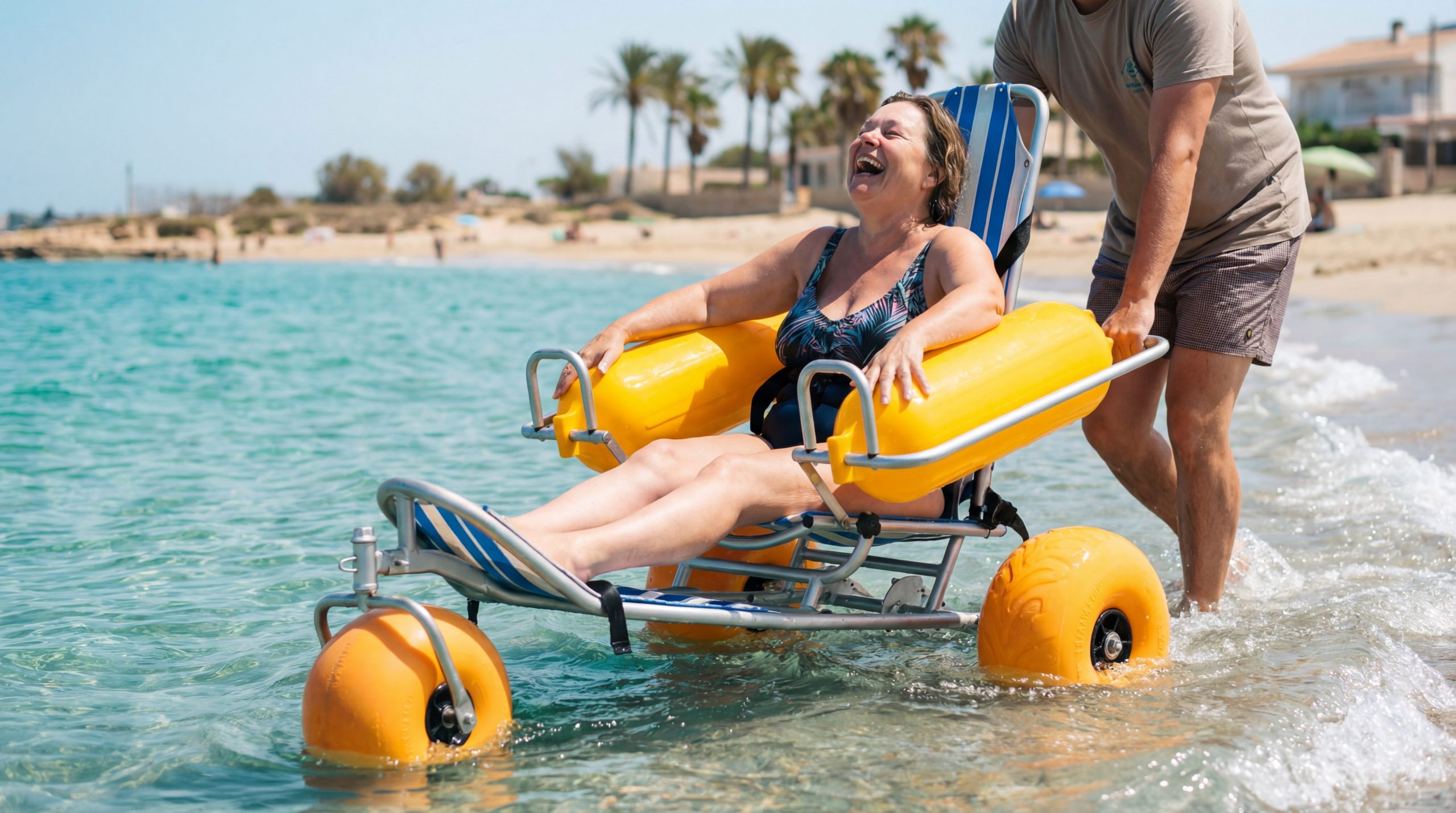
The impact of this technology is best seen through the experiences of long-time residents who have lived beside the shore but remained excluded from it. This specialized equipment serves a diverse demographic, from seniors to those with chronic neurological conditions, restoring their access to the water.
Can those with MS use the chair?
Residents with multiple sclerosis and other mobility-limiting conditions have found the chairs offer a sense of freedom. The cooling nature of the water is particularly beneficial for managing symptoms that are exacerbated by the Florida heat.
- Temperature regulation
- Weightless feeling
- Sensory stimulation
- Physical freedom
Believe it or not. Many users report that being in the water is the only time they feel completely free from the physical constraints of their diagnosis.
How does it help senior citizens?
Aging populations often face balance issues that make walking on uneven sand dangerous or impossible. The chair provides a stable, secure seat that allows you to participate in multi-generational family outings without the risk of falling.
- Joint relief
- Family participation
- Safety assurance
- Extended mobility
Even more importantly. It allows seniors to continue traditions, like watching the sunset from the water’s edge, that they thought were lost forever.
Key TakeawayThe floating wheelchair serves a diverse demographic, restoring water access for seniors and those with chronic conditions.
| User Group | Primary Benefit | Functional Need |
|---|---|---|
| Seniors | Stability | Balance Support |
| MS Patients | Cooling | Heat Management |
| Rehab Patients | Zero-G | Physical Therapy |
The technology acts as a bridge, ensuring that physical limitations do not lead to social isolation at the coastline.
How do you operate a floating wheelchair in the water?
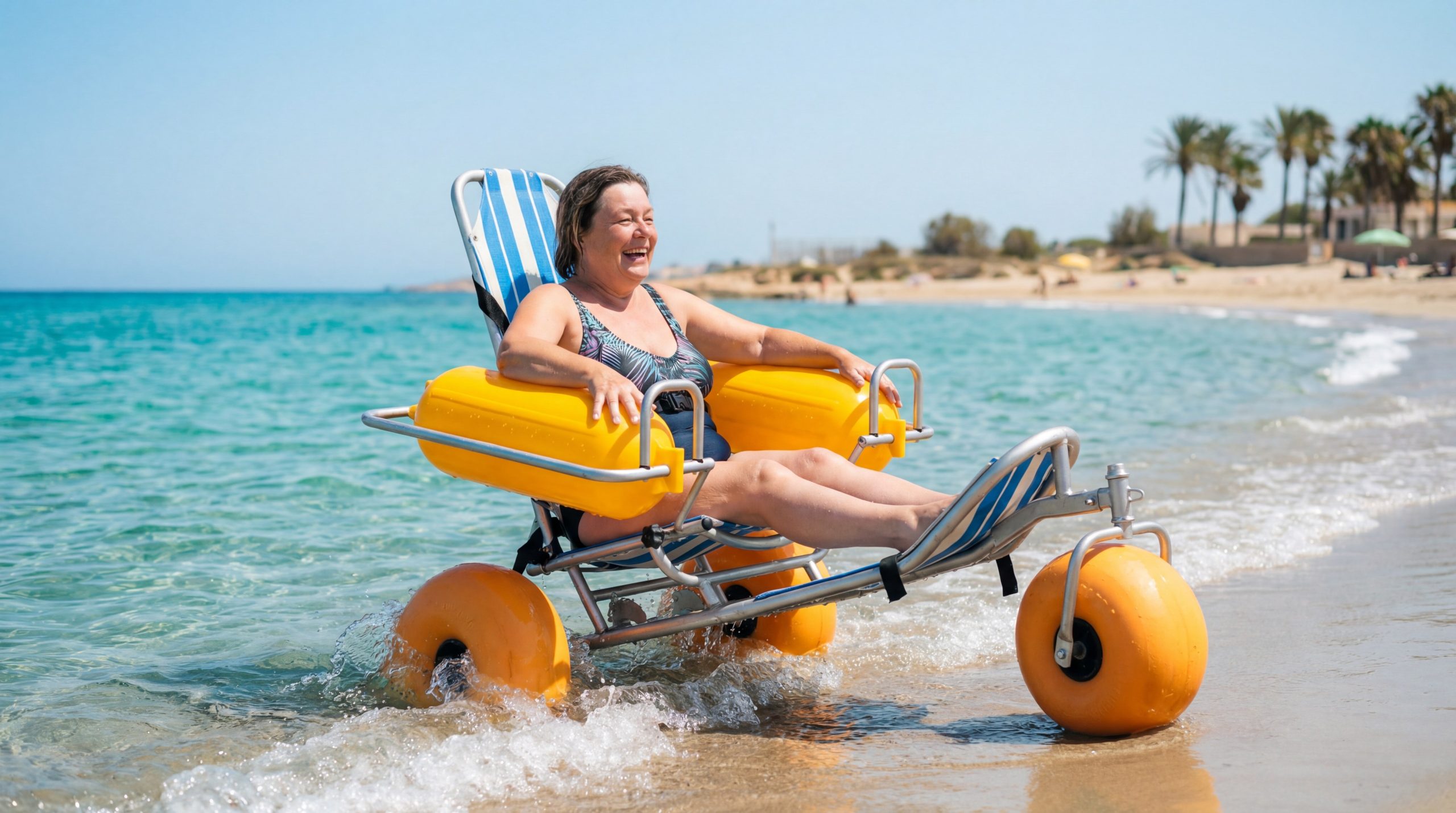
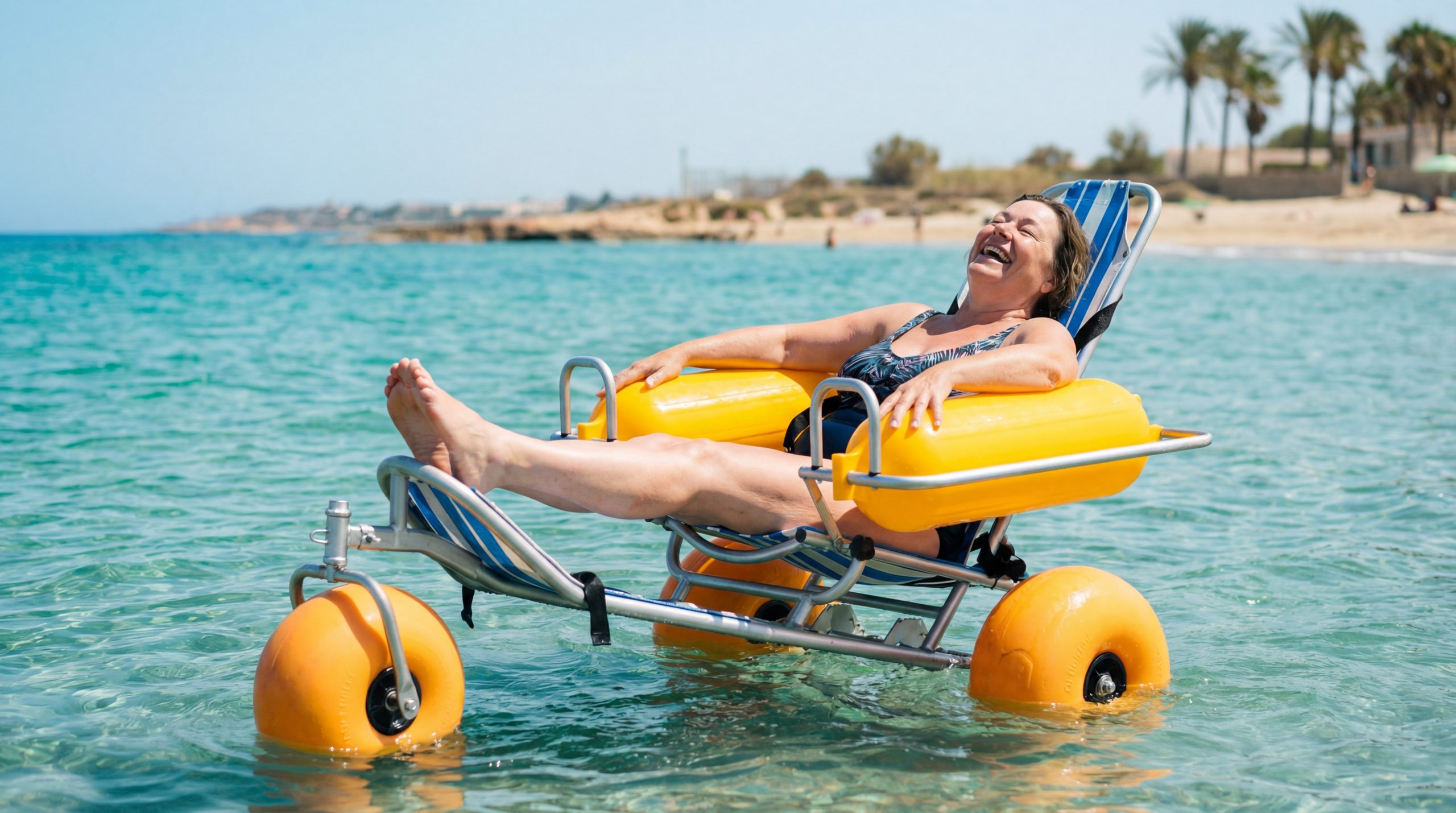
Operating a Floating wheelchair requires a different technique than standard mobility devices. As you enter the surf, the chair is engineered to transition into a reclining position to maximize buoyancy and comfort.
Does the chair tilt back in water?
Once the water reaches a certain depth, the chair naturally tips into a comfortable lounge position. This allows your legs to float in front of you while the buoyant armrests keep your upper body securely above the waterline.
- Natural reclining angle
- Leg flotation
- Ergonomic support
- Stable center of gravity
As it turns out. This reclining motion is a key safety feature that prevents the chair from tipping forward in the water.
What is the attendant’s role?
The person pushing you is responsible for steering and ensuring the chair does not drift into deeper currents. You rely on them to maintain a firm grip on the push bar while you enjoy the weightless sensation of the Gulf.
- Steering control
- Depth monitoring
- Entry assistance
- Exit coordination
The reality is. Without an assistant, the chair would be susceptible to the natural ebb and flow of the tide.
Key TakeawayThe floating wheelchair is engineered to function as both a transport device and a floating lounger once fully submerged.
| Submersion Stage | Chair Action | User Experience |
|---|---|---|
| Shoreline | Rolling | Smooth transport |
| Knee-Deep | Buoyancy begins | Lift sensation |
| Hip-Deep | Reclining | Total flotation |
The transition from rolling to floating is a seamless mechanical process designed to provide maximum relaxation and security.
What features make a floating wheelchair unsinkable?
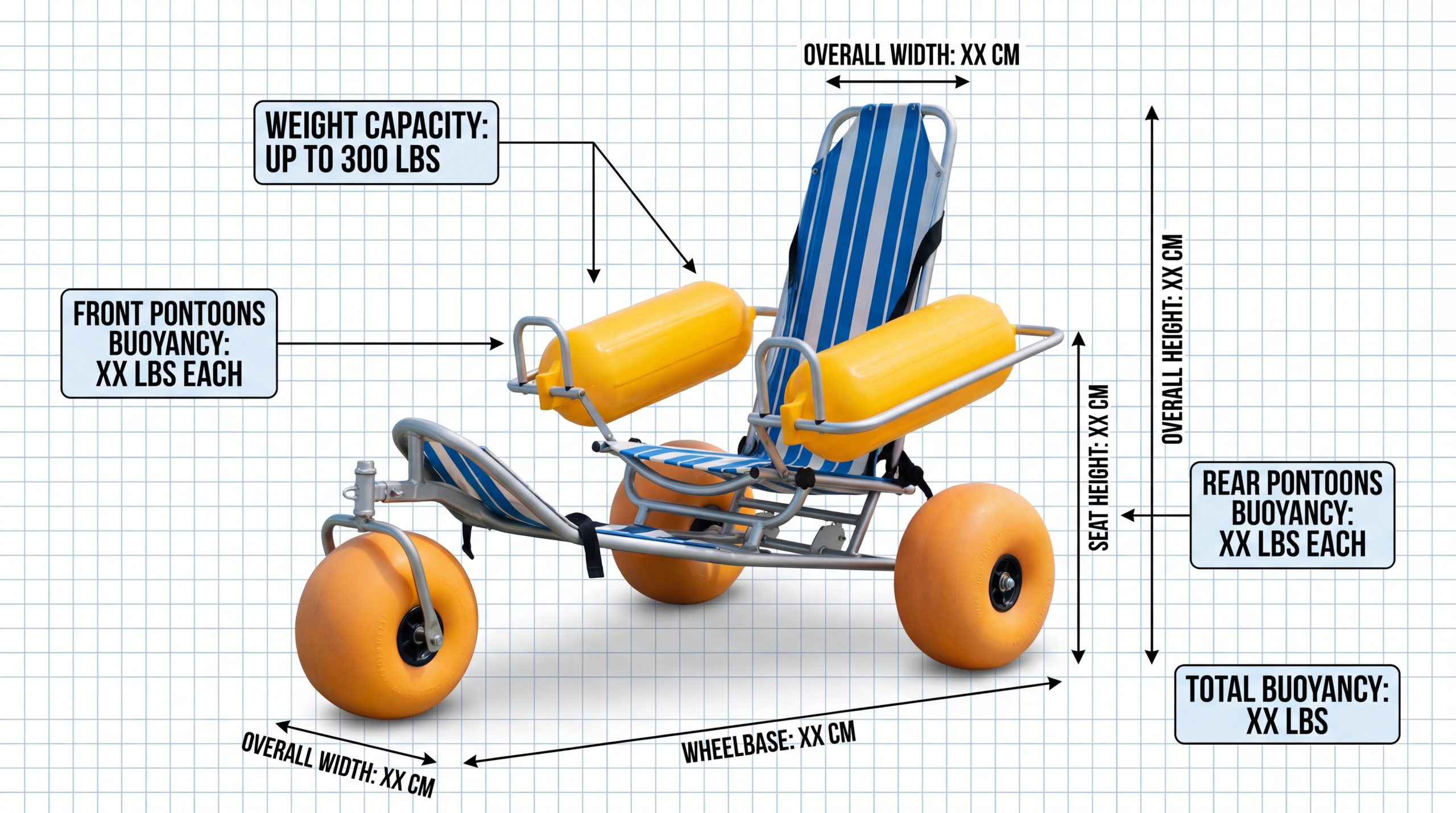
The design includes high-visibility flotation components that provide the necessary lift while ensuring you remain visible to lifeguards. These features are integrated into the frame to create a platform that is virtually impossible to sink under normal use.
Why are the side floaters orange?
The large orange armrests are filled with buoyant material, providing the stability needed to prevent tipping in the surf. You will find that these bright components make the unit easy to spot from the shore, which is a vital safety requirement for public beaches.
- High visibility
- Impact protection
- Primary buoyancy
- Ergonomic arm support
To put it simply. These armrests act as the “wings” of the chair, keeping you balanced even if a small ripple passes by.
Is the frame corrosion resistant?
Since these units spend their lives in saltwater and sand, they are constructed from marine-grade aluminum or stainless steel. You won’t have to worry about rust or structural failure, provided the equipment follows a basic freshwater rinse protocol.
- Marine-grade aluminum
- Powder coating
- Stainless hardware
- Salt-resistant seals
More to the point. This high-quality construction ensures that the county’s investment lasts for many seasons of heavy use.
Key TakeawayIntegrated buoyancy in the armrests is the primary safety feature that allows the floating wheelchair to remain upright.
| Component | Material | Function |
|---|---|---|
| Frame | Aluminum Alloy | Lightweight Strength |
| Armrests | PE Foam / Poly | Buoyancy & Lift |
| Hardware | 316 Stainless | Corrosion Resistance |
The combination of smart materials and buoyant geometry creates a device that is as durable as it is functional.
Will the floating wheelchair replace standard models?
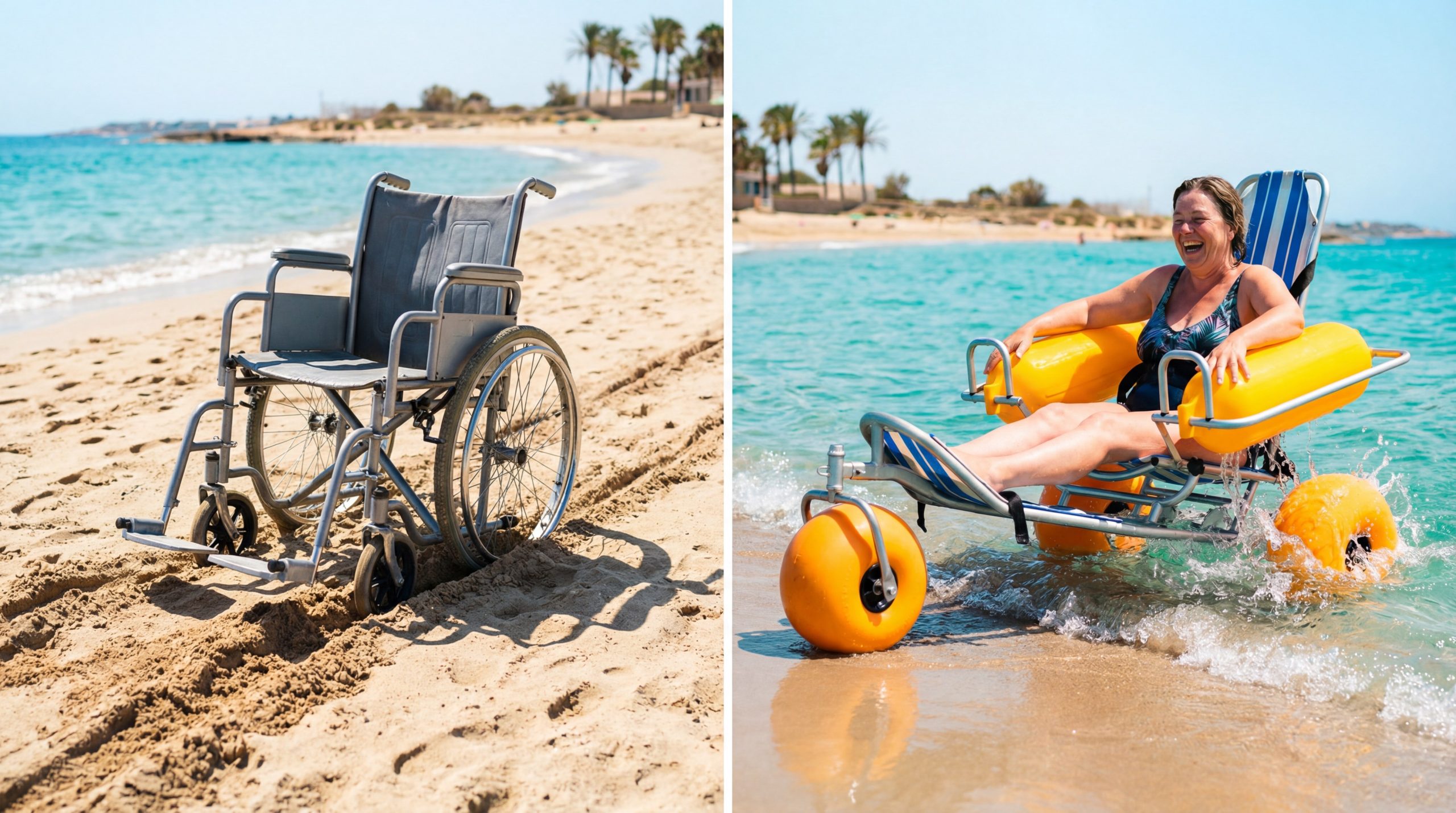
While the new buoyant models offer water access, they are part of a broader ecosystem where a Floating wheelchair complements existing sand-mobility tools. Standard beach chairs still play a vital role for users who wish to stay dry while navigating the shoreline.
How do these differ from sand chairs?
Standard beach wheelchairs are built for land transport only and do not feature the buoyant armrests required for floating. You would use a standard model for birdwatching or dining on the sand, whereas the floating version is your ticket into the waves.
- Water immersion capability
- Buoyancy arms
- Reclining frames
- Attendant-required design
Think of it like this. One is an all-terrain vehicle for the sand, while the other is a hybrid vehicle for both sand and sea.
Should facilities own both types?
For a resort or a public beach, having a mix of equipment ensures that all guest preferences are met. You might have some visitors who only want to reach a beach umbrella, while others are specifically there for aquatic therapy.
- Diverse user needs
- Maintenance schedules
- Budget allocation
- Storage efficiency
On top of that. Standard chairs are often easier to store because they lack the bulky flotation armrests found on water-entry models.
Key TakeawayThe floating wheelchair complements existing sand-mobility tools, providing a specialized solution for those wanting to swim.
| Capability | Standard Sand Chair | Floating Wheelchair |
|---|---|---|
| Sand Mobility | Excellent | Excellent |
| Water Floating | None | High |
| Storage Size | Compact | Moderate |
An integrated accessibility program uses both types of equipment to provide a complete “parking-to-water” user journey.
What is the cost of a county floating wheelchair?
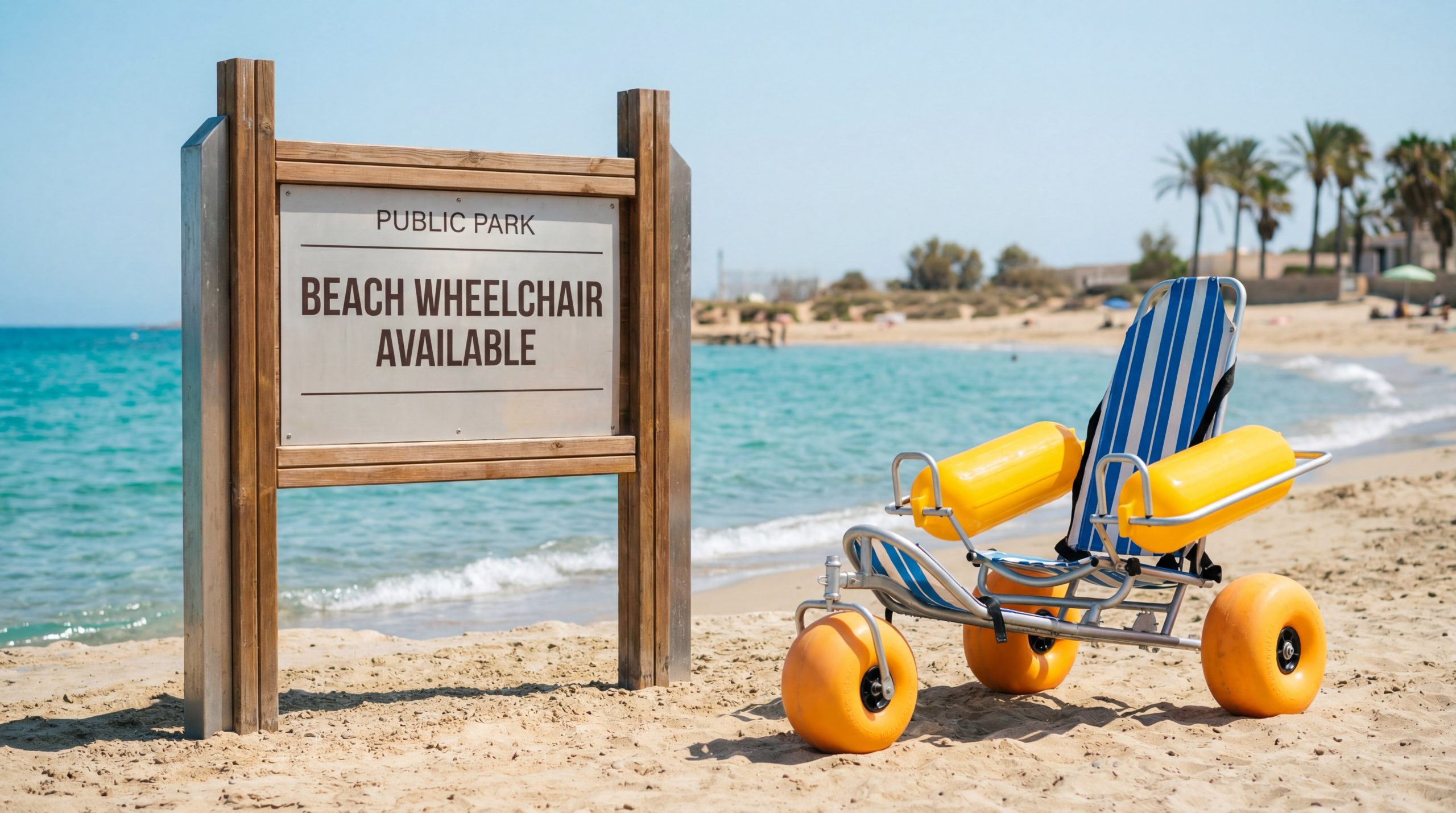
Public investment in these devices ensures that financial status does not dictate who can enjoy the therapeutic benefits of the ocean. The county typically invests approximately $2,400 per unit to provide this as a free public service to residents and guests.
Is the service free for beachgoers?
Public programs in areas like Sarasota allow residents to check out the equipment at no cost. You simply need to provide identification and follow the safety guidelines provided by the park staff or lifeguards on duty.
- Public funding
- Grant availability
- Tourism incentives
- Zero user fee
You read that right. The cost is absorbed by the municipality because they recognize the immense value of social inclusion and accessible tourism.
What is the long-term ROI for resorts?
For private resorts, the purchase of these chairs often leads to increased bookings from families who require accessibility. You will find that providing this equipment sets your facility apart as a truly inclusive destination for all guest demographics.
- Guest satisfaction
- Accessibility compliance
- Competitive edge
- Brand loyalty
But wait, there’s more. Accessible facilities often see higher return-visit rates because they provide a specialized service that is rare in the hospitality industry.
Key TakeawayPublic and private investment in the floating wheelchair ensures that water access remains a free or low-cost reality for all.
| Investment Type | Cost per Unit | Primary Goal |
|---|---|---|
| Municipal | ~$2,400 | Public Equity |
| Resort | ~$2,400 | Guest Experience |
| Individual | ~$2,400 | Personal Freedom |
Removing financial barriers is the final step in making the coastline a truly universal environment for recreation.
Why is the floating wheelchair vital for accessibility?
Beyond the hardware, a Floating wheelchair represents the restoration of social bonds and personal dignity. These chairs ensure that families who once had to leave members behind can now enjoy the water together as a complete unit.
Does this promote local togetherness?
For couples who have walked the beach for decades, the chairs allow them to continue their traditions even if one partner can no longer walk. You will see families laughing in the surf, a sight that was previously impossible for many mobility-impaired residents.
- Family outings
- Shared memories
- Community integration
- Emotional connection
The bottom line is. Inclusion isn’t just about a ramp; it’s about the ability to participate in the core activities of your community.
Can it improve therapeutic outcomes?
The psychological boost of re-entering the water after years of exclusion is immeasurable. You can feel the physical relief of zero-gravity mobility, which provides a significant boost to both mental health and physical rehabilitation.
- Saltwater therapy
- Weightless mobility
- Psychological boost
- Sensory engagement
And the best part. This equipment turns a “disability” into a different way of experiencing the exact same joy that everyone else takes for granted.
Key TakeawayThe floating wheelchair is a tool for total social inclusion, ensuring everyone can participate in coastal culture.
| Impact Category | Outcome |
|---|---|
| Social | Restores family beach days |
| Psychological | Increases independence & joy |
| Physical | Provides cooling & zero-G relief |
Investing in accessibility equipment is an investment in the social fabric of our coastal communities.
Frequently Asked Questions
Can I use the floating wheelchair without an assistant?No, these chairs are specifically designed to be operated with the help of an attendant to ensure safety during the transition into the water and to monitor buoyancy in the surf.
What’s the best way to ensure a chair is available when I arrive?Check with local park offices or lifeguard stands at the specific beach you plan to visit, as availability is typically managed on a first-come, first-served basis.
Can I take the chair into deep water or heavy surf?No, you should only use the chair in calm, shallow waters; it is not engineered for high-wave conditions or unsupervised deep-water operation.
What’s the best way to maintain a chair I have purchased privately?Rinse the frame and wheels thoroughly with fresh water after every use to prevent saltwater corrosion and ensure the longevity of the moving parts.
Can I transport the chair in a standard vehicle?Most models require a larger vehicle like a van or a truck due to the size of the balloon tires and the flotation armrests, though some can be partially disassembled for transport.
Conclusion
The floating wheelchair is more than just a piece of equipment; it is a gateway to the ocean that was once closed to many. By combining innovative balloon tire technology with inherent buoyancy, these devices have successfully dissolved the barriers between the sand and the sea. Whether you are a resort manager looking to enhance your guest experience or a resident seeking to reclaim your time in the waves, we invite you to contact us today to learn more about our accessibility solutions.
Our vision is a world where every shoreline is open to every person, regardless of their physical limitations. Let’s work together to make your beach the next inclusive destination. Join the movement for universal beach access and experience the freedom of the water again.