To provide accessible paths for beaches and outdoor events, you must install modular, firm, and stable surfacing that bridges the gap between arrival points and the destination. Many public recreation areas remain off-limits to wheelchair users because sand and uneven grass act as natural barriers. This isolation can ruin the guest experience for 25% of the population, leaving families frustrated and event planners facing compliance risks. The most effective solution is a high-quality Accessible beach mat that creates a “floating” floor over challenging terrain.
What are modular mats and how does an accessible beach mat work?
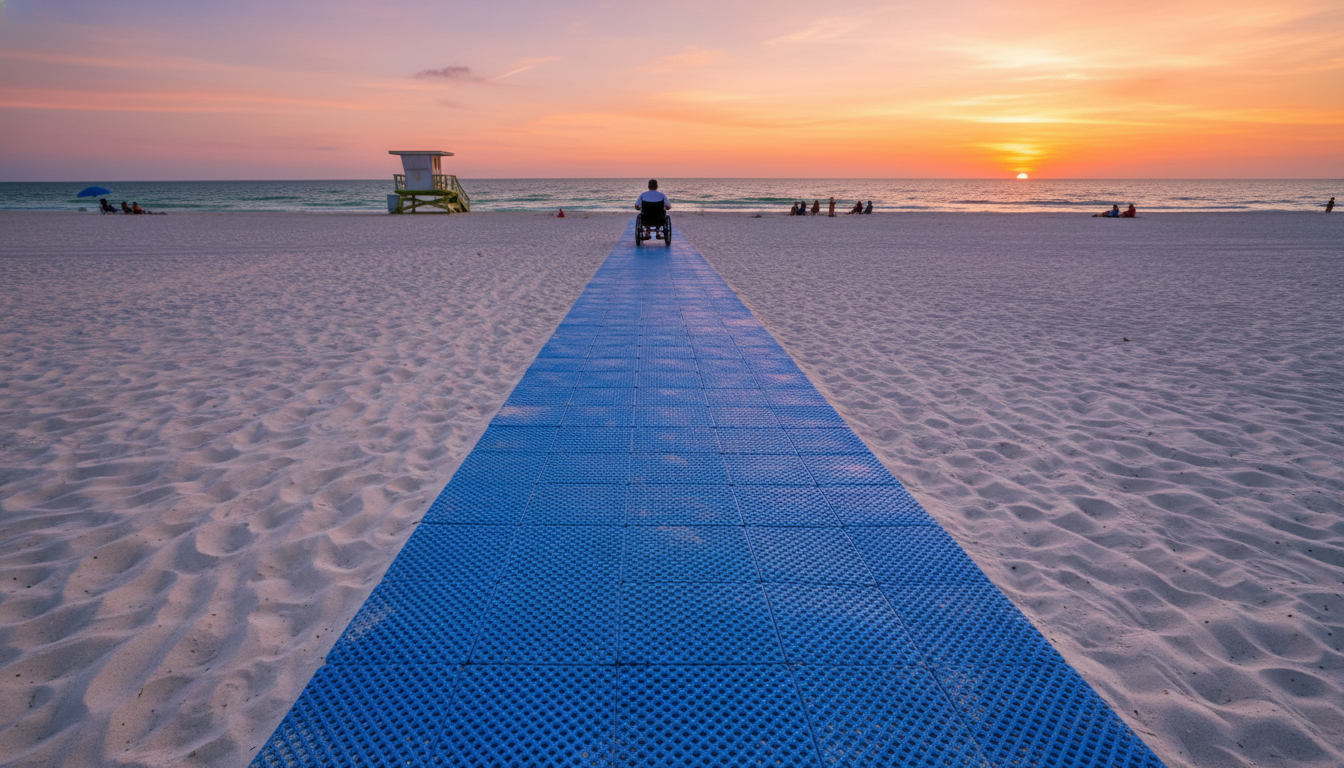
An Accessible beach mat works by distributing the weight of pedestrians and mobility devices across a series of interlocking tiles. These portable units connect on all four sides to form a custom pathway that stays flat even on shifting sand. You can quickly expand the route by adding more sections to reach the waterline or an event stage.
How do the mat sections connect for stability?
Modular tiles use a specialized hinge system that allows for a gap-free transition between units. This ensures that wheels do not get caught in joints and the path remains a single cohesive unit.
- Four-sided interlocking capability
- Secure hinge connectors
- Slip-resistant surface texture
- Lightweight 36” x 36” units
Here is the deal: You don’t need a construction crew to create a professional walkway.
Are specialized tools required for assembly?
The assembly process is designed for speed and efficiency without the need for heavy machinery or specialized hand tools. Most systems allow a small team to snap the sections together manually in minutes.
Key Takeaway: Modular systems provide the ultimate flexibility for temporary or permanent accessibility projects.
| Feature | Specification |
|---|---|
| Mat Dimensions | 36″ x 36″ |
| Unit Weight | Approx. 5.2 lbs |
| Connection Type | Tool-free Hinges |
The modular design allows for rapid response to changing event layouts or seasonal beach conditions.
Why is a firm surface vital for an accessible beach mat?
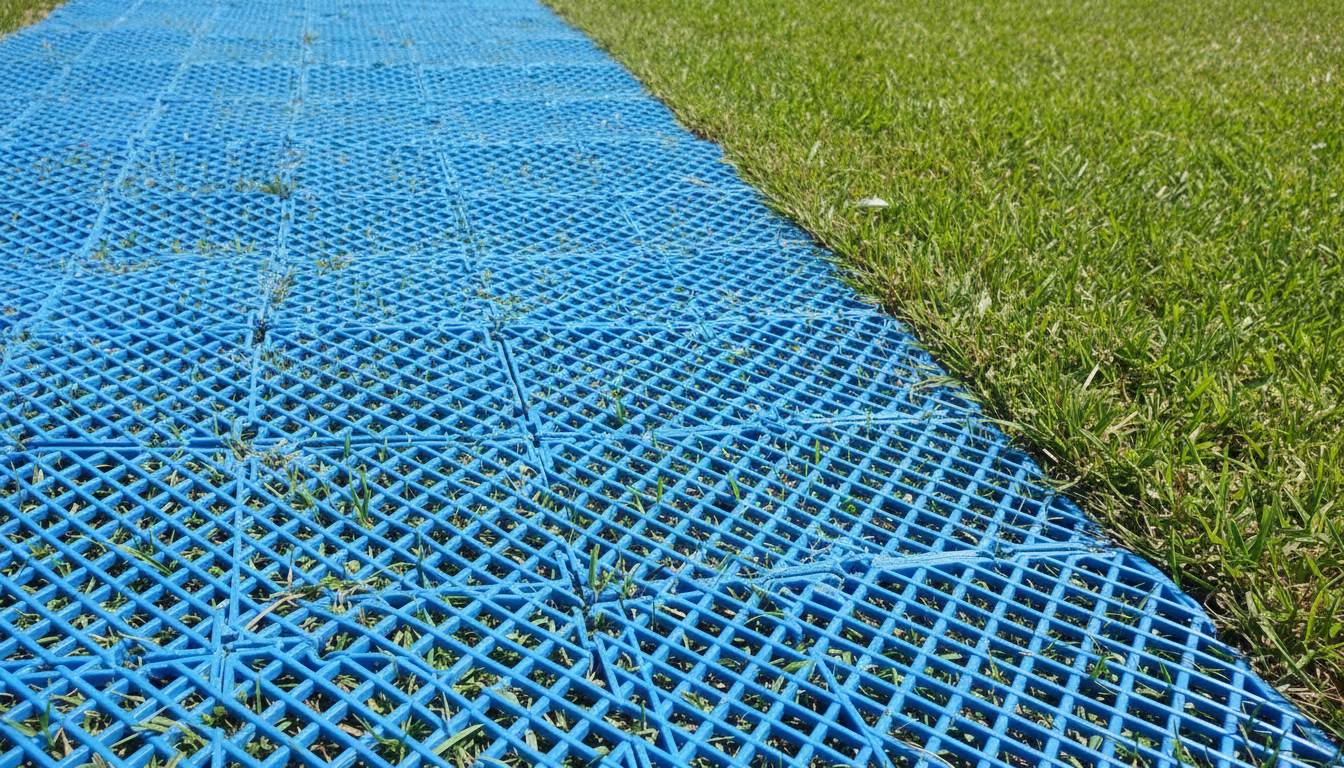
A firm and stable surface is the foundation of any inclusive outdoor event because it eliminates rolling resistance for mobility aids. Without an accessible beach mat, wheelchair tires sink into soft terrain, making independent movement impossible. Providing this stability transforms a hostile environment into a welcoming one for all guests.
How does stability help wheelchair users?
A rigid pathway allows a wheelchair user to navigate sand with the same ease as a concrete sidewalk. This independence is crucial for dignity and full participation in community activities.
- Reduced physical exertion
- Prevention of tire entrapment
- Straight-line tracking
- Level resting platforms
But that is not all. True accessibility also protects your venue from liability and ensures equal enjoyment for everyone.
Why is it vital for parents with strollers?
Strollers with small wheels are notorious for clogging in sand or mud, causing parents to struggle or carry their children. A stable mat path allows families to move seamlessly from the parking lot to the heart of the event.
Key Takeaway: Firm surfacing is the only way to ensure that 25% of your potential visitors aren’t left behind.
| Terrain Type | Mobility Challenge | Mat Solution |
|---|---|---|
| Soft Sand | Wheels sink and stall | Rigid weight distribution |
| Tall Grass | Hidden ruts and bumps | Level, visible surface |
| Loose Gravel | Unstable footing | Firm interlocking base |
Providing a stable base is the first step toward creating a truly universal outdoor environment.
How does an accessible beach mat meet ADA and ABA standards?
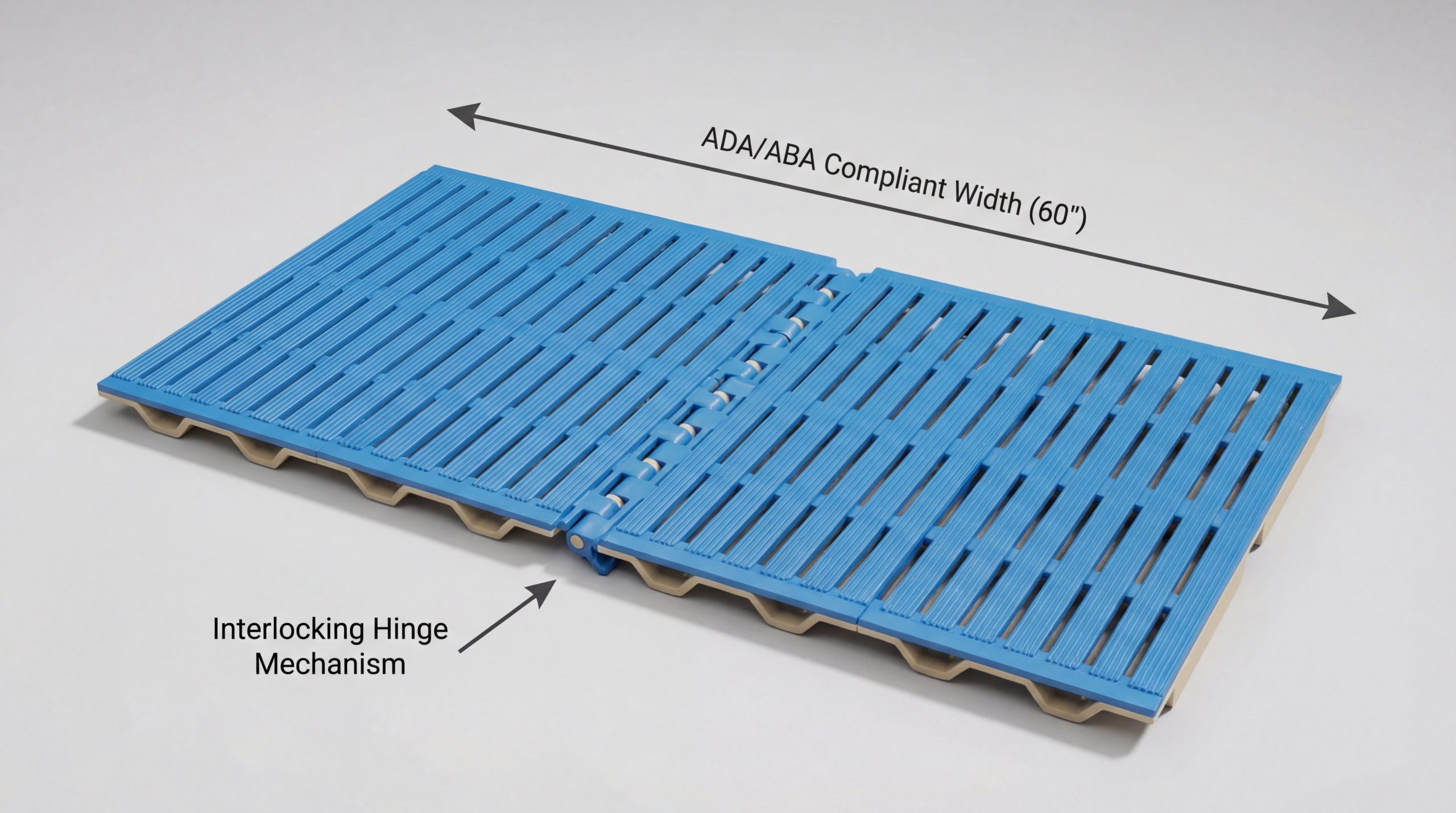
An Accessible beach mat is engineered specifically to meet the width and stability requirements set by the Americans with Disabilities Act (ADA). These regulations ensure that public routes are wide enough for turning and passing. By using a modular system, you can easily configure paths that satisfy legal mandates for outdoor developed areas.
What is the minimum width for beach routes?
Federal guidelines typically require a minimum width of 60 inches for portable beach access routes to allow two-way traffic. Modular mats achieve this by being laid in a double-wide configuration.
- 60-inch minimum width compliance
- Slip-resistant surface ratings
- Firmness and stability testing
- Continuous, gap-free surfaces
You might be wondering: Is it difficult to maintain this width across long distances?
How do double-wide configurations improve access?
Configuring mats in a double-wide layout creates enough space for a wheelchair user and an ambulatory companion to walk side-by-side. This layout also provides the necessary space for a 180-degree turn at the end of the route.
Key Takeaway: Compliance is not just a legal hurdle; it is a blueprint for providing high-quality service to all visitors.
| Regulation | Width Requirement | Configuration |
|---|---|---|
| ADA Standard | 60 inches | Double-wide Matting |
| ABA Guideline | 60 inches | Double-wide Matting |
| Local Codes | Varies | Modular Expansion |
Using standardized modular units makes it simple to scale your installation to meet any regulatory width requirement.
What materials ensure a long-lasting accessible beach mat?
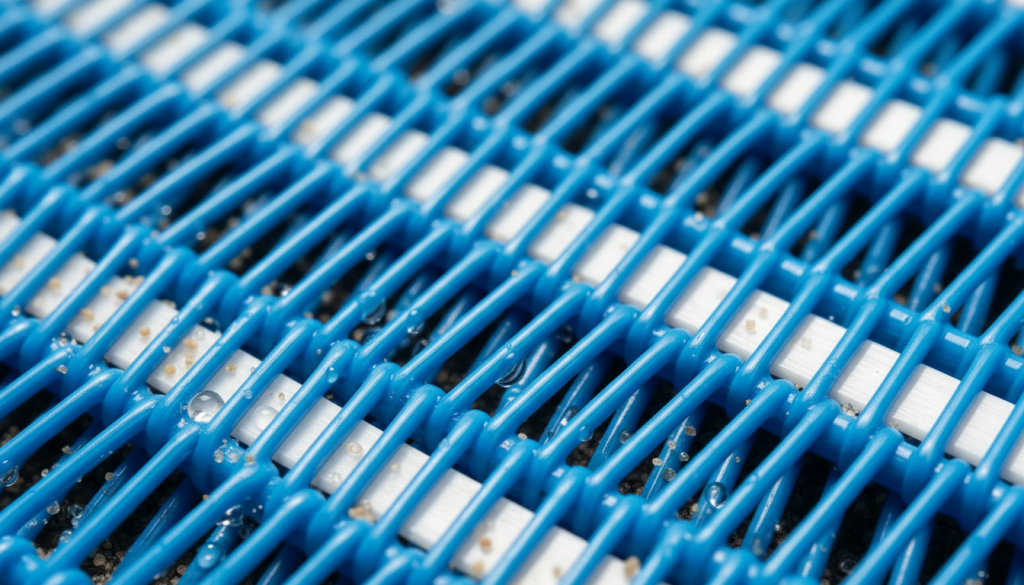
The best accessible beach mat is made from high-density, UV-stabilized polymers that resist the corrosive effects of saltwater and sand. Unlike fabric or mesh paths, solid polymer tiles do not fray or become sharp over time. These materials are chosen for their ability to maintain structural integrity under intense sun and heavy foot traffic.
Are the mats resistant to UV and saltwater?
Marine-grade materials are essential for any equipment deployed in coastal environments to prevent sun bleaching and cracking. These polymers are designed to stay cool to the touch and remain durable for years of seasonal use.
- UV-stabilized for sun protection
- Salt-spray resistant composition
- Heat-resistant surface properties
- High impact resistance
Think about this: Standard plastics would degrade in weeks under the harsh ocean sun.
Will the material fray or become sharp over time?
Solid-state modular mats are superior to mesh alternatives because they cannot tear or develop loose threads. This ensures the safety of barefoot guests and prevents trip hazards caused by material failure.
Key Takeaway: Investing in high-quality polymers significantly reduces your total cost of ownership by extending the life of the path.
| Material Property | Benefit to User | Durability Factor |
|---|---|---|
| UV Stabilization | Prevents cracking | 5+ Year Lifespan |
| Solid Polymer | No fraying edges | Low Maintenance |
| Salt Resistance | Prevents corrosion | Marine-Grade |
Choosing the right material ensures your accessibility investment continues to serve the public for many seasons.
Where can you install an accessible beach mat system?

You can deploy an Accessible beach mat at almost any outdoor venue that suffers from unstable ground. From high-end luxury resorts to public community parks, these mats provide a versatile solution for temporary event infrastructure. They are equally effective on grass, sand, dirt, and even fine gravel.
Can they be used on park grass for weddings?
Outdoor weddings often present a challenge for guests in heels or those using walkers due to soft or uneven sod. These mats create a professional, stable aisle or dance floor that protects the underlying grass from damage.
- Grass protection for events
- Stable aisles for ceremonies
- Level surfaces for catering
- Mud-free paths for guests
But that is not all. They also prevent the venue from becoming a slip-hazard after unexpected rain.
Are they suitable for hotel sand-to-water routes?
Resorts use these paths to provide a premium experience that connects the pool area directly to the shoreline. This allows guests with mobility limitations to enjoy the ocean without needing to be carried.
Key Takeaway: The versatility of modular matting makes it an essential tool for any hospitality or recreation manager.
| Application | Primary Benefit | Terrain |
|---|---|---|
| Resort Beach | Guest inclusion | Sand |
| Park Wedding | Level walkway | Grass |
| Music Festival | Heavy traffic route | Dirt / Gravel |
The ability to move and reconfigure the mats makes them suitable for an endless variety of outdoor environments.
How do you transport an accessible beach mat for events?
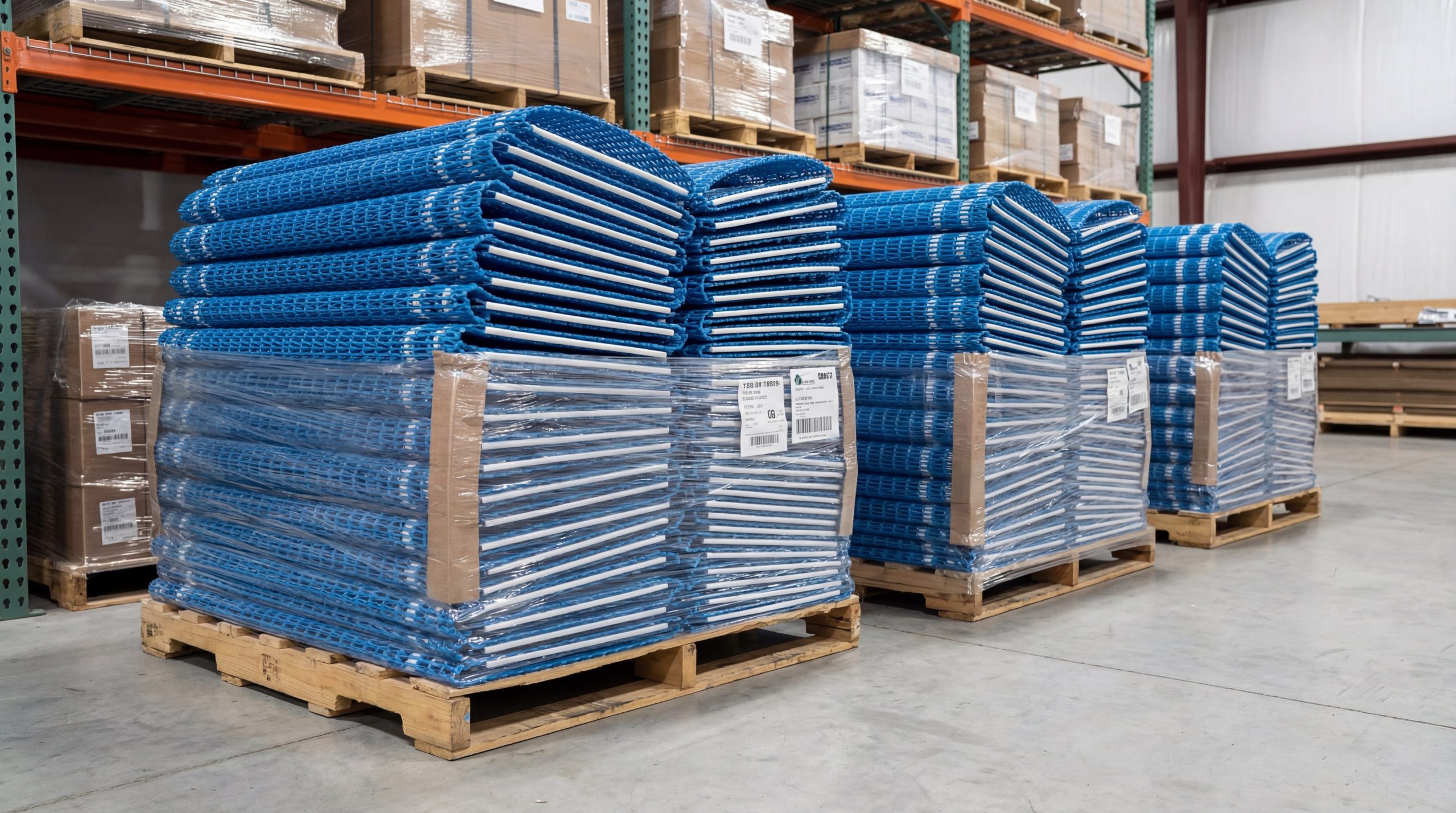
Transporting an accessible beach mat is made simple through the use of accordion folding technology and lightweight materials. When the mats are connected into a long path, they can be folded into a compact stack without being disassembled unit-by-unit. This significantly reduces the time and labor required for setup and breakdown at busy event venues.
What is accordion folding technology?
Hinged mats allow a long section of the pathway to fold back and forth on itself like a concertina. This means you can store a 50-foot path in a single, manageable stack that fits on a standard pallet.
- Rapid unrolling deployment
- Compact storage footprint
- Minimized labor hours
- Easy palletized transport
It gets better: You can deploy hundreds of feet of pathway with just a two-person crew.
How long does setup and breakdown take?
Because the mats remain connected during transport, a single person can deploy a long stretch of pathway in just a few minutes. Breakdown is just as fast, as the path is simply folded back into its storage state.
Key Takeaway: Efficient transport and storage design drastically lower the operational costs of running an accessible venue.
| Logistics Stage | Method | Time Efficiency |
|---|---|---|
| Deployment | Unroll connected mats | 5 mins / 50 feet |
| Storage | Accordion folding | High Density |
| Transport | Palletized stacks | Standard Freight |
Accordion folding ensures that your staff spends less time on labor and more time on guest service.
Can an accessible beach mat withstand heavy public traffic?
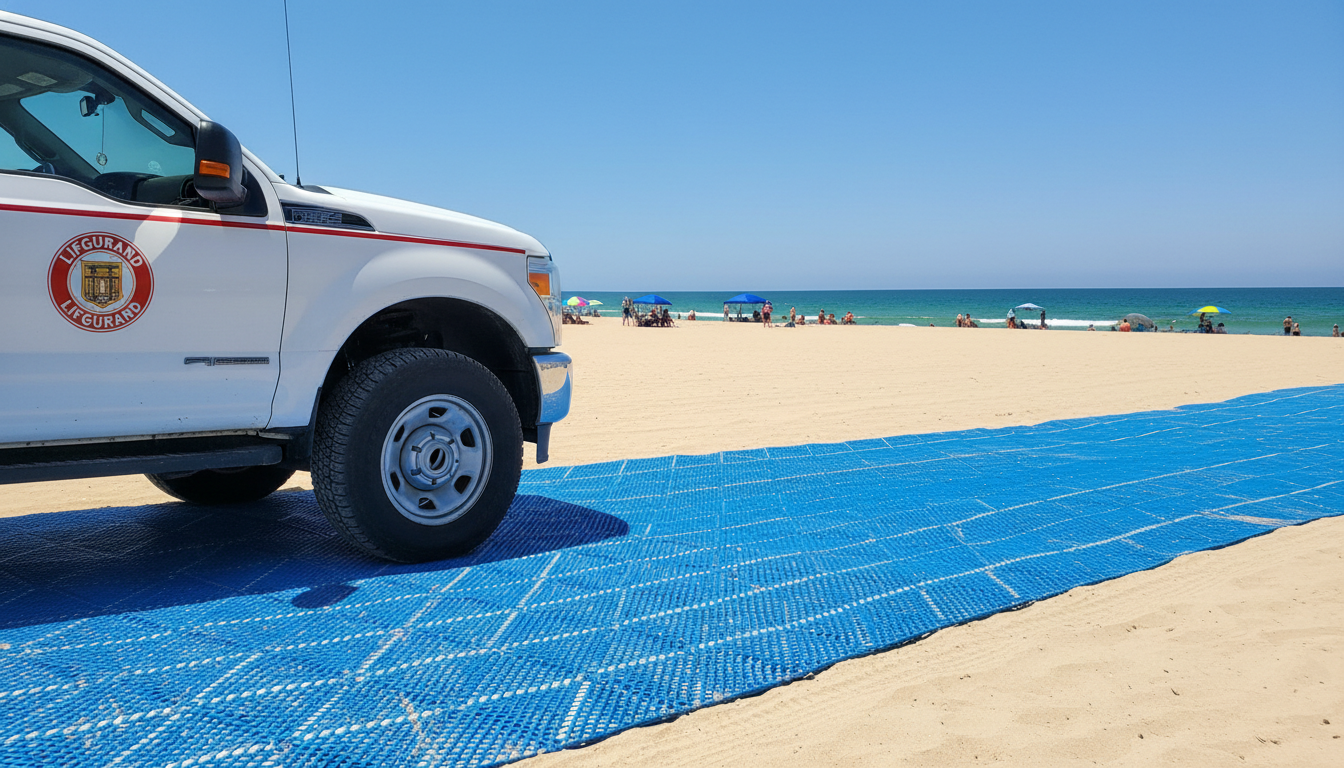
A professional-grade Accessible beach mat is built to handle the rigorous demands of high-traffic public areas. Beyond supporting pedestrians and wheelchairs, these mats are often strong enough to allow light service vehicles to pass over them without damage. This durability makes them ideal for beaches where lifeguards or maintenance staff must cross the sand frequently.
Can lifeguard trucks drive across the mats?
High-quality modular mats are designed to withstand the point-load pressure of utility vehicle tires. This allows emergency responders to move quickly across the sand while maintaining the integrity of the accessible path.
- Support for ATVs and UTVs
- Heavy foot traffic tolerance
- Resistant to catering carts
- Impact-resistant surface
Best of all: The mats protect the sand from being rutted by heavy tires.
How do they handle heavy event equipment?
Event planners often need to move sound systems, stages, and heavy catering equipment across uneven ground. These mats provide the necessary platform to prevent gear from tipping or sinking during the move-in process.
Key Takeaway: Strength and accessibility are integrated, ensuring the path serves both guests and operational staff.
| Load Type | Performance | Safety |
|---|---|---|
| Pedestrian | Excellent | Trip-resistant |
| Wheelchair | Excellent | Low resistance |
| Light Vehicle | Supported | No deformation |
The rugged construction of these mats ensures they remain a reliable part of your infrastructure under any load.
Why choose blue for your accessible beach mat installation?
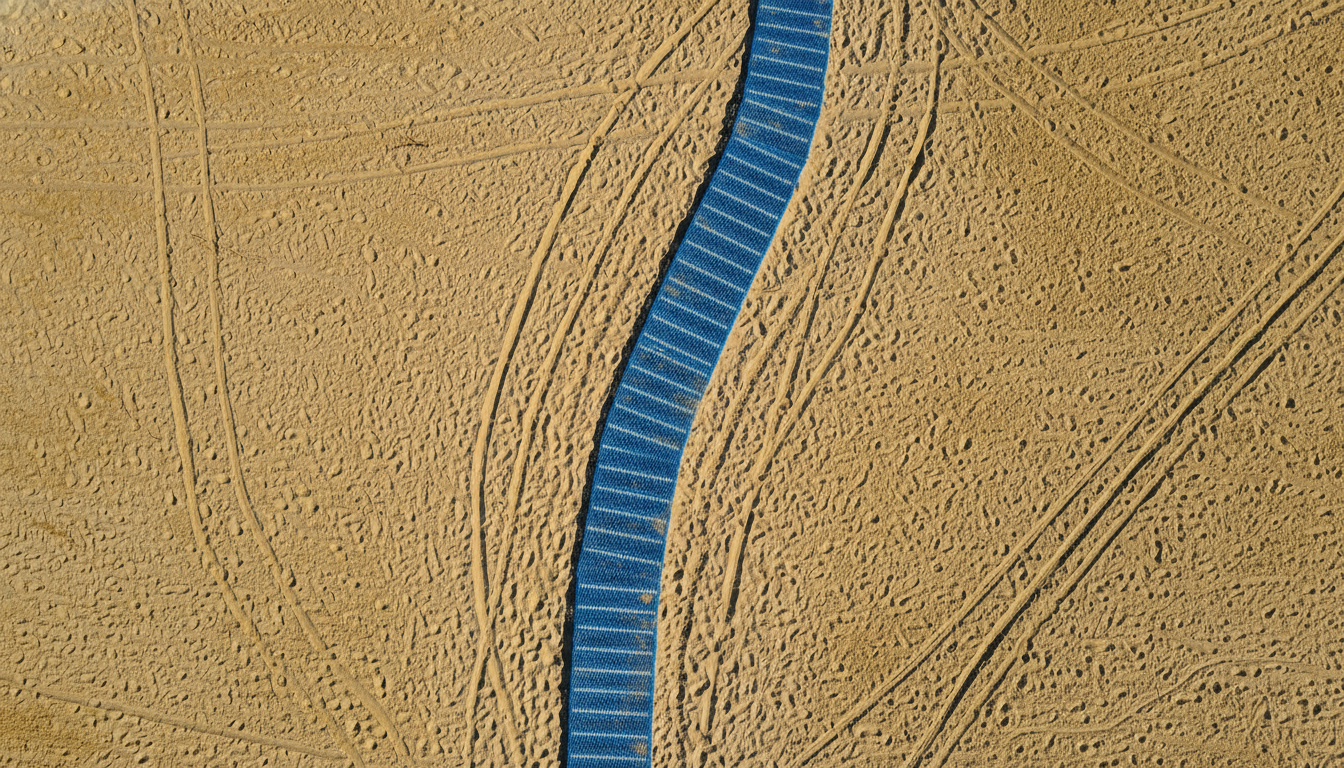
Choosing a high-visibility blue for your accessible beach mat is a strategic decision that improves safety and navigation. In universal design, color contrast is a critical element that helps users with visual impairments distinguish the safe pathway from the surrounding sand or grass. A bright blue path acts as a clear beacon, signaling that the area is specifically designed for inclusive access.
Why is high-contrast color important for accessibility?
For users with low vision, a neutral-colored path might blend into the environment, creating a navigation hazard. Blue provides a sharp contrast against light-colored sand and green grass, making the route easy to follow from a distance.
- High visual contrast
- Clear traffic flow guidance
- Dedicated accessibility branding
- Professional aesthetic
Simply put: Visibility is a safety feature that cannot be overlooked.
How does blue improve navigation for the visually impaired?
The color blue is rarely found in the natural colors of a beach or park floor, ensuring it remains distinct. This helps guide traffic flow and keeps the accessible route clear of obstructions like towels or beach chairs.
Key Takeaway: Color choice is a functional tool that enhances the usability of your path for the widest possible audience.
| Color | Visibility Score | Heat Retention |
|---|---|---|
| Blue | Very High | Low to Moderate |
| Sand / Tan | Low | Moderate |
| Green | Moderate | Moderate |
High-visibility matting ensures that your commitment to accessibility is visible and functional for all.
How does an accessible beach mat support family inclusion?
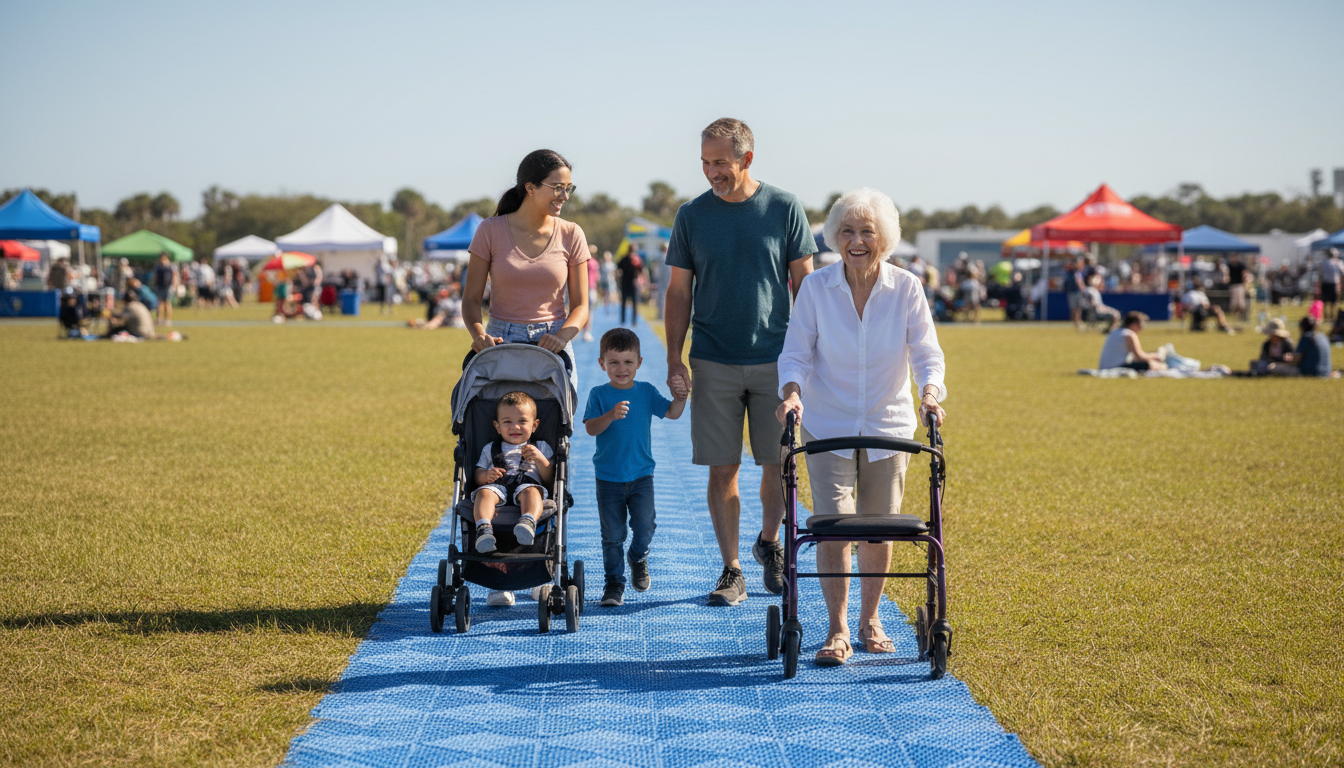
An Accessible beach mat is more than just a tool for wheelchairs; it is a gateway for multigenerational families to enjoy events together. When you install a wide, stable path, you allow grandparents using walkers and parents with strollers to move side-by-side with the rest of the group. This creates a cohesive social environment where no one is excluded due to their mobility status.
Are the mats safe for babies in strollers?
The smooth, vibration-free surface of a modular mat is ideal for strollers, preventing infants from being jarred by uneven terrain. It allows parents to navigate crowded outdoor spaces without the stress of getting stuck in the sand.
- Smooth ride for strollers
- Trip-reduction for toddlers
- Easy navigation for parents
- Wider berths for passing
Look at it this way: An accessible venue is a family-friendly venue.
How do they help elderly guests attend weddings?
Many elderly guests rely on walkers or canes and may skip outdoor events if they fear falling on unstable ground. A firm mat provides the confidence they need to attend beach weddings or park festivals safely.
Key Takeaway: Mats transform “difficult” terrain into a welcoming space that encourages participation from all age groups.
| User Group | Specific Mat Benefit | Impact |
|---|---|---|
| Elderly | Stable footing for walkers | Increased attendance |
| Parents | Smooth stroller navigation | Less physical stress |
| Disabled | Independent beach access | Dignity and inclusion |
Universal design ensures that your event is a success for every member of the family, regardless of age.
How do you select the right accessible beach mat for your site?
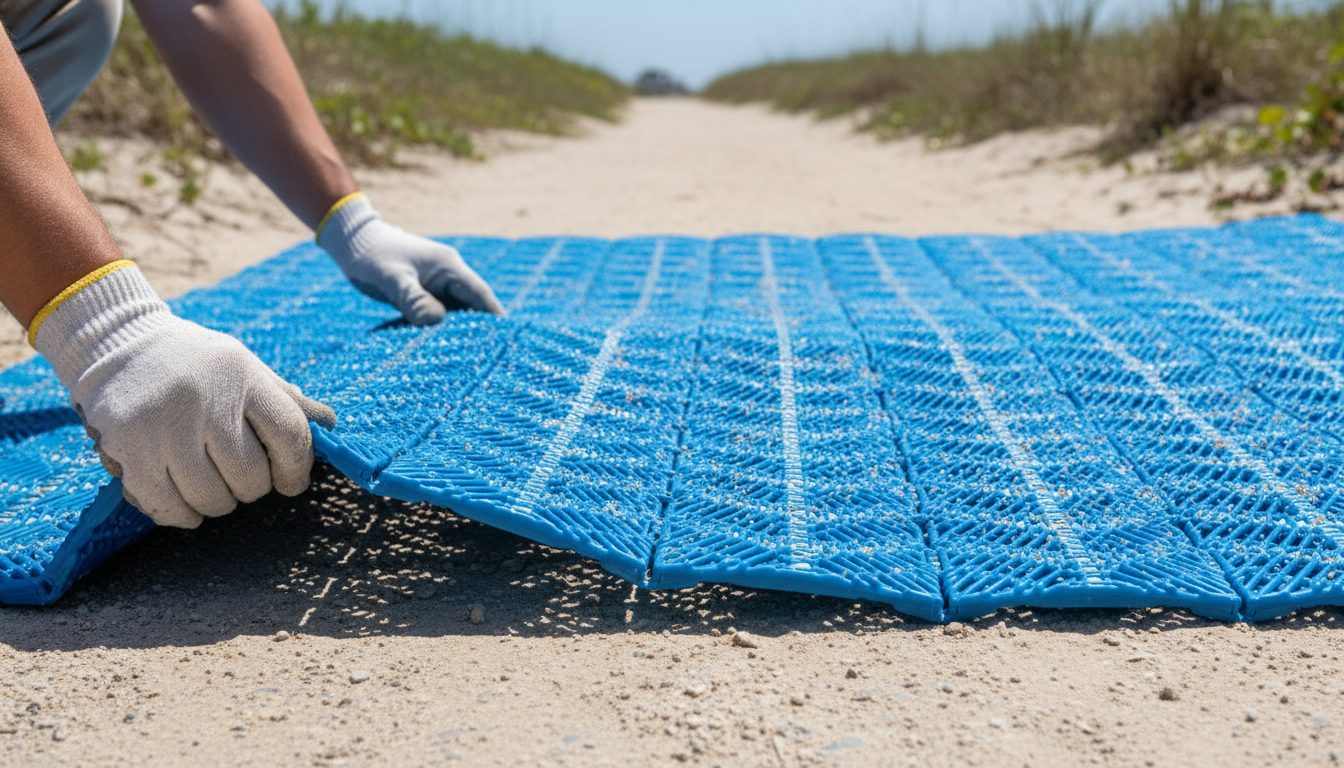
Selecting the right accessible beach mat depends on the specific characteristics of your site, such as the typical terrain and the volume of traffic expected. You must evaluate whether you need a permanent seasonal installation for a resort or a highly portable system for temporary weekend events. Choosing the correct provider ensures you receive certified materials that meet all safety and compliance standards.
What should you look for in a mat provider?
A reputable provider should offer ISO-certified manufacturing and clear documentation regarding ADA and ABA compliance. Look for features like UV-stabilization and a proven track record in high-salinity coastal environments.
- ISO quality certifications
- ADA/ABA compliance guides
- Warranty and support terms
- Custom sizing options
The bottom line? You want a partner who understands the technical demands of outdoor accessibility.
Is renting or buying better for your specific needs?
For municipalities and resorts, purchasing is usually the most cost-effective long-term investment. However, for one-time events or festivals, renting provides the necessary accessibility without the need for long-term storage and maintenance.
Key Takeaway: Customization and quality certification are the most important factors in a successful accessibility project.
| Business Type | Recommended Strategy | Reasoning |
|---|---|---|
| Public Beach | Purchase | Seasonal ROI |
| Event Planner | Rent / Purchase | Fleet flexibility |
| Luxury Resort | Purchase | Premium guest service |
Strategic planning ensures you select a system that balances compliance, durability, and budget.
Making the outdoors inclusive is a commitment to the 25% of our population that faces mobility challenges every day. By installing a professional accessibility system, you are not just meeting a legal requirement; you are opening your venue to a wider audience and creating lasting memories for families. If you are ready to transform your beach or park into a truly universal space, contact us today for expert guidance and factory-direct pricing. The future of outdoor recreation is accessible to everyone, and it starts with a single step—or a single mat.
FAQ
Can I install these mats on steep sand dunes?No, these mats are primarily designed for flat or gently sloping surfaces up to a 15-degree incline. Installing them on steep dunes could create a sliding hazard and would likely require extensive anchoring and site engineering to remain safe.
What is the best way to clean the mats after a beach event?Freshwater rinsing is the best method to maintain your mats. Because they are made of solid, non-porous polymer, you can simply spray them down with a hose to remove sand and salt before folding them for storage.
Can I customize the color of the mats for my brand?Yes, while high-visibility blue is the industry standard for accessibility, custom colors are available for large-scale municipal or resort orders. This allows you to maintain brand consistency while still providing an obvious, high-contrast path.
What is the best configuration for a high-traffic public beach?A double-wide configuration is the best choice because it provides a 60-inch width. This setup allows users to pass each other comfortably and ensures your facility fully complies with ADA and ABA portable route requirements.
Can I leave the mats out during the winter season?It is generally recommended to store the mats during extreme weather or the off-season. While the materials are UV-stabilized and weather-resistant, storing them when the beach is closed will significantly extend the lifespan of the hinges and surface texture.