The best handicap beach access mats are constructed from UV-stabilized, high-density composite materials or reinforced mesh that provide a firm, non-slip surface capable of supporting wheelchairs, walkers, and strollers on soft sand. Navigating soft, powdery sand is an insurmountable challenge for many individuals with mobility impairments, effectively turning a relaxing day at the shore into a source of frustration. When standard wheels sink into the terrain, it creates a sense of isolation and limits the freedom of those who rely on mobility aids to enjoy public spaces. By installing an accessible beach mat , coastal managers and homeowners can eliminate these physical barriers, ensuring a safe, inclusive, and stable pathway from the boardwalk directly to the water’s edge.
Why do you need an accessible beach mat for coastal entry?
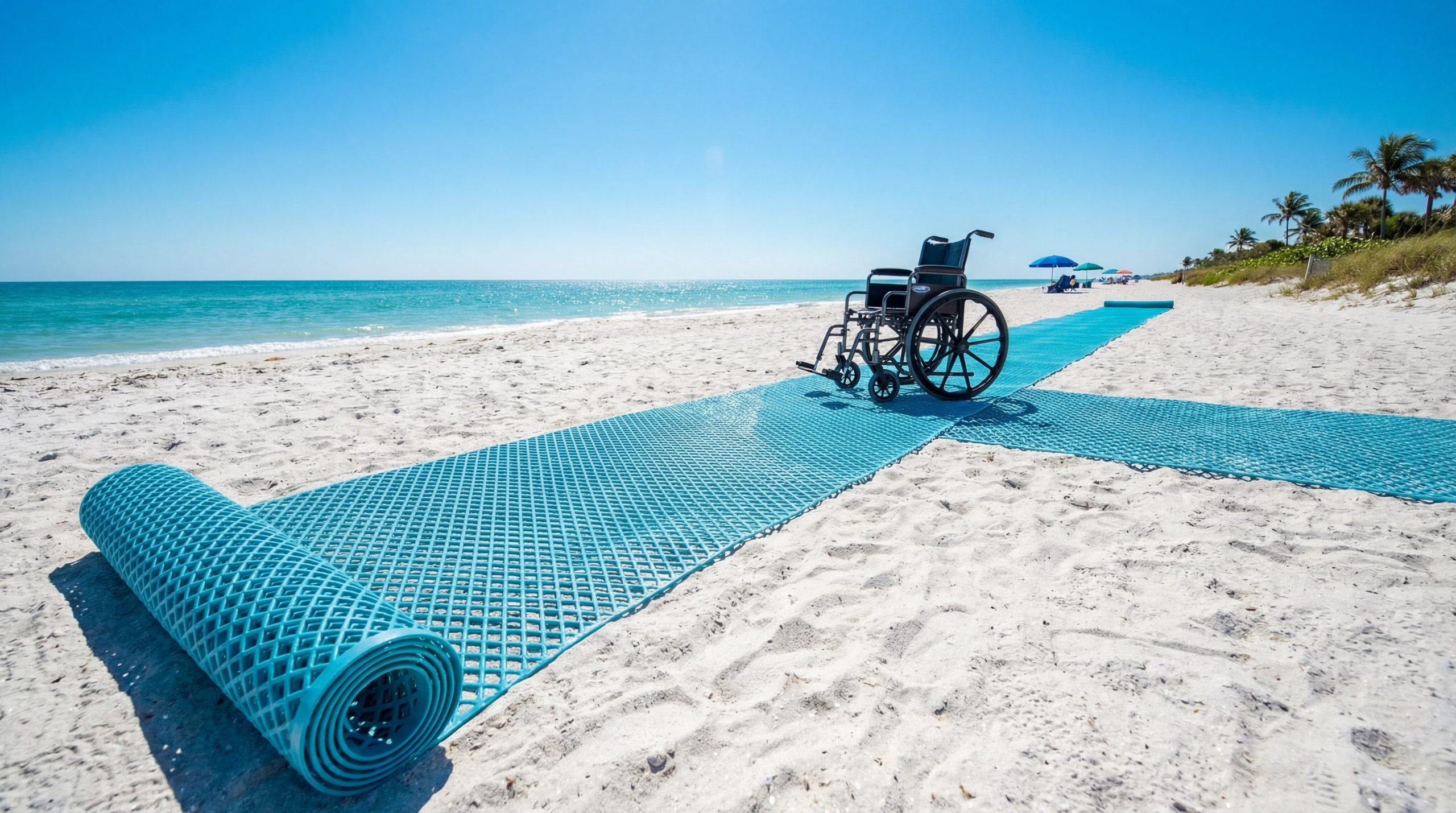
Providing a firm surface is the only way to ensure true coastal inclusivity for all physical abilities. An accessible beach mat eliminates the physical barriers that standard wheelchairs face on the shore. These pathways prevent sinking and provide a clear, visible route for visitors.
What are the hazards of soft sand for mobility aids?
You will find that soft sand acts as a natural trap for traditional wheels and narrow canes. Without a stable surface, you risk tipping your chair or experiencing extreme physical exhaustion while trying to navigate the dunes. It is simply not worth the safety risk to attempt these crossings without proper infrastructure.
Here is the bottom line:
- High-density surfaces prevent wheel entrapment.
- Stable pathways reduce the risk of falls for seniors.
- Visible routes guide visitors safely toward designated swim areas.
Key Takeaway: Providing a firm surface is the only way to ensure true coastal inclusivity for all physical abilities.
| Feature | Impact on Accessibility |
|---|---|
| Firm Foundation | Prevents wheelchairs from sinking into soft sand |
| High Visibility | Clearly marks the safe path for visually impaired users |
| Slip Resistance | Ensures safety for barefoot users and those using canes |
Effective shoreline management begins with identifying these high-risk terrain segments and reinforcing them for user safety.
Does the accessible beach mat meet ADA compliance standards?
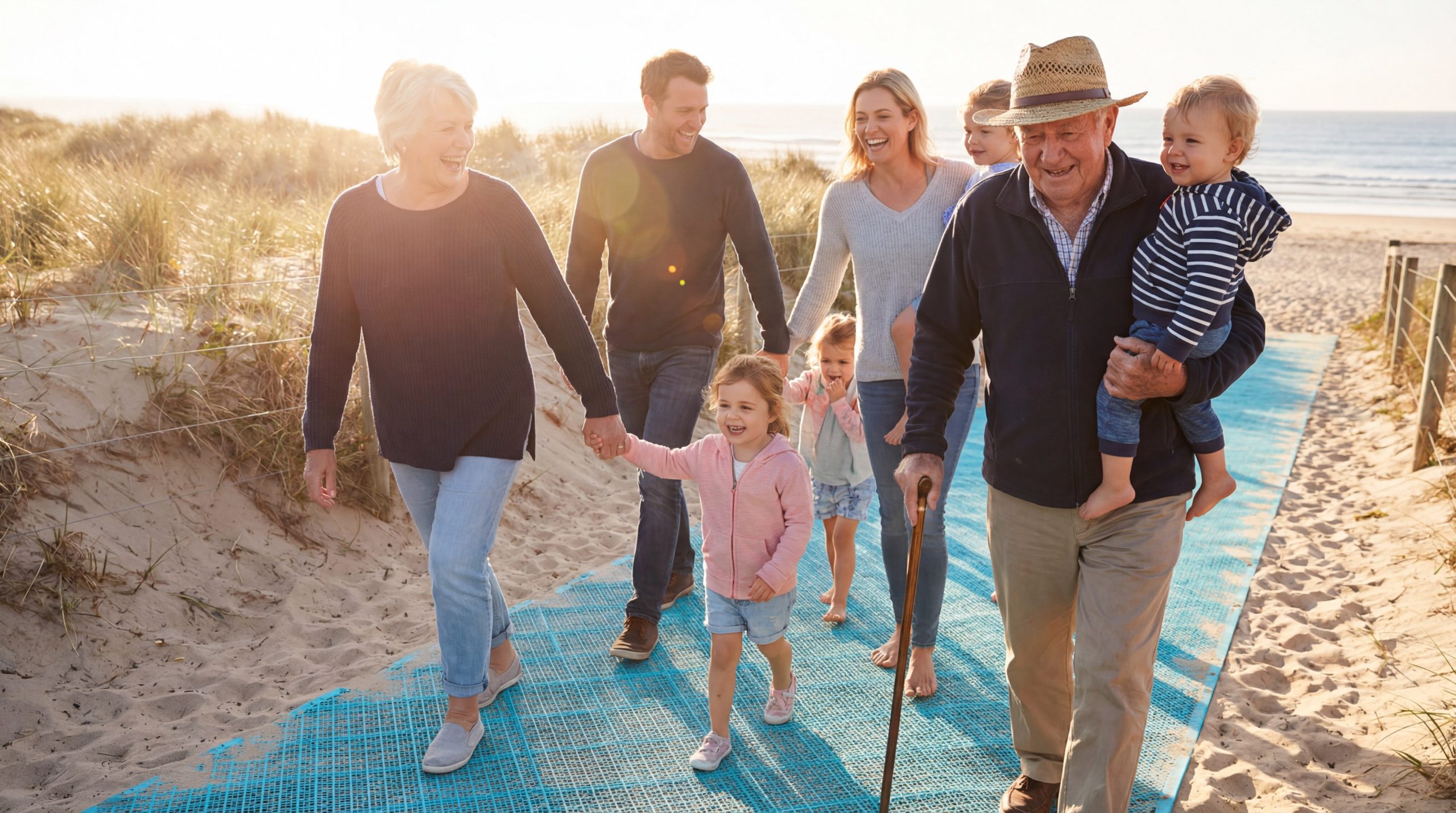
High-quality mats create an ADA compliant walkway by providing firm, stable, and slip-resistant surfaces in public environments. You will see that an accessible beach mat is essential for meeting legal requirements for public beach access. These products are designed to stay flush with the sand even under heavy foot traffic.
How does the mat integrate with existing ramps?
You need a seamless transition from your parking lot or boardwalk to the sand surface to prevent tripping hazards. When you align these mats with existing concrete ramps, you create a continuous “chain of access” for every visitor. This integration ensures that your facility remains fully compliant with modern safety codes.
But wait, there’s more.
- Seamless transitions prevent tripping for those with limited lift in their stride.
- Wide dimensions allow for comfortable two-way wheelchair traffic.
- Edge-tapering reduces obstacles for standard narrow tires.
Key Takeaway: ADA compliance isn’t just a legal hurdle; it’s a blueprint for professional-grade safety.
| ADA Criteria | Mat Performance |
|---|---|
| Stability | Does not shift or bunch under heavy loads |
| Slip Resistance | Maintains traction even when wet from salt spray |
| Connectivity | Links seamlessly with |
Meeting these standards demonstrates your commitment to providing a world-class experience for guests with diverse physical needs.
What materials make for a durable accessible beach mat?
The top material choices include high-density polyethylene (HDPE) or reinforced synthetic mesh for long-term coastal use. Selecting a high-quality accessible beach mat ensures your investment survives harsh UV rays and constant saltwater exposure. These materials are chosen specifically for their ability to resist corrosion and structural fatigue.
Is a mesh-based mat better for drainage?
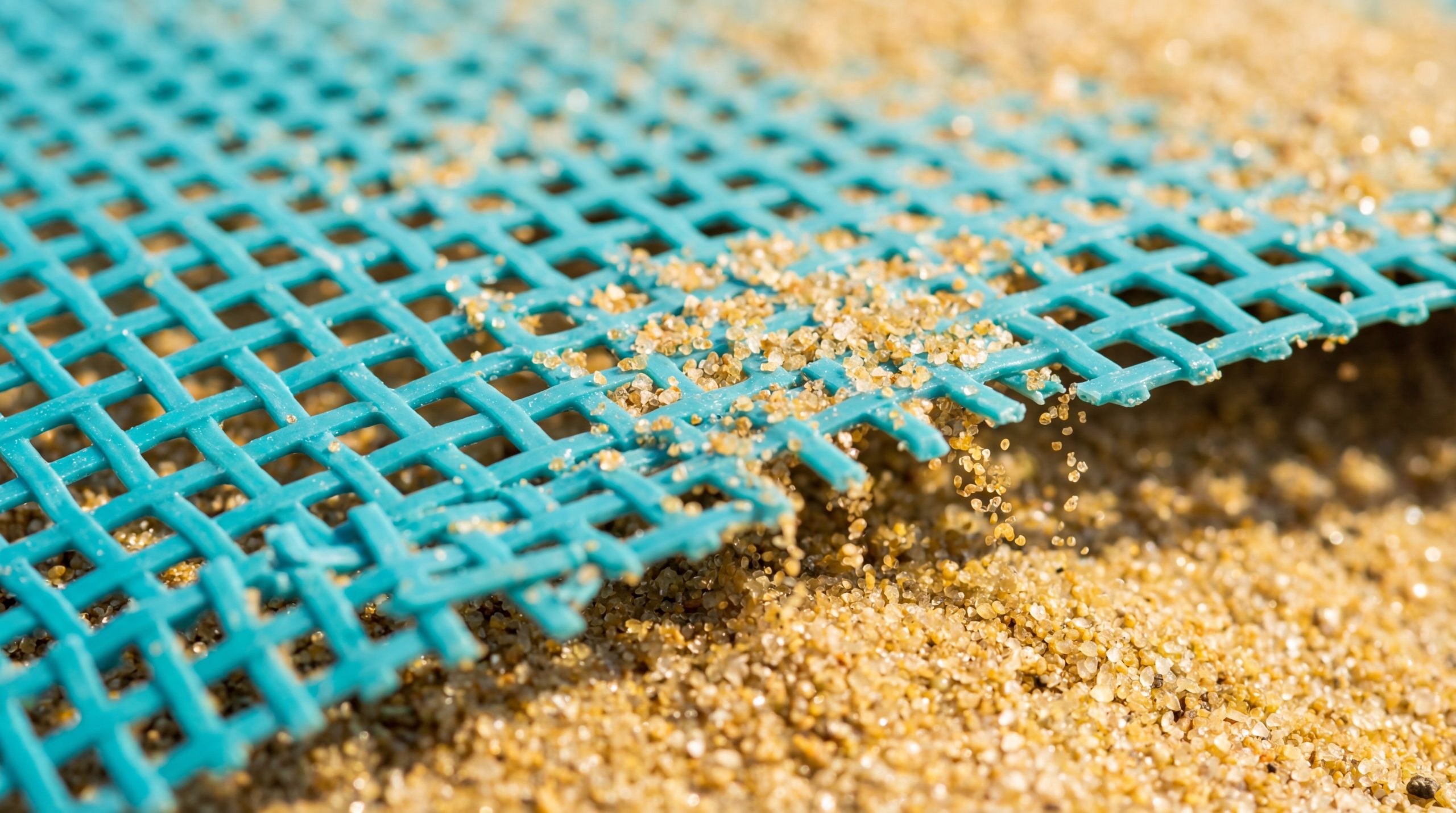
You should consider mesh structures if your shoreline experiences frequent tidal changes or heavy rainfall. The open-weave design allows sand and water to pass through without pooling on the walking surface, which keeps your path clear. Think about how much time you will save on maintenance when the environment works for you instead of against you.
Think about it:
- HDPE offers extreme durability against industrial-grade UV rays.
- Recycled plastics provide an eco-friendly coastal solution for green resorts.
- Reinforced mesh is lightweight and remarkably easy to deploy seasonally.
Key Takeaway: Choosing the right material depends on the frequency of use and the specific coastal weather conditions.
| Material | Best Use Case | Durability |
|---|---|---|
| Composite Plastic | High-traffic public beaches | 5+ Years |
| Synthetic Mesh | Temporary or residential paths | 2-3 Years |
| Polypropylene | Portable, snap-together events | 1-2 Years |
Material selection is the primary driver of both the initial cost and the long-term ROI for any coastal project.
Is a temporary or permanent accessible beach mat better?
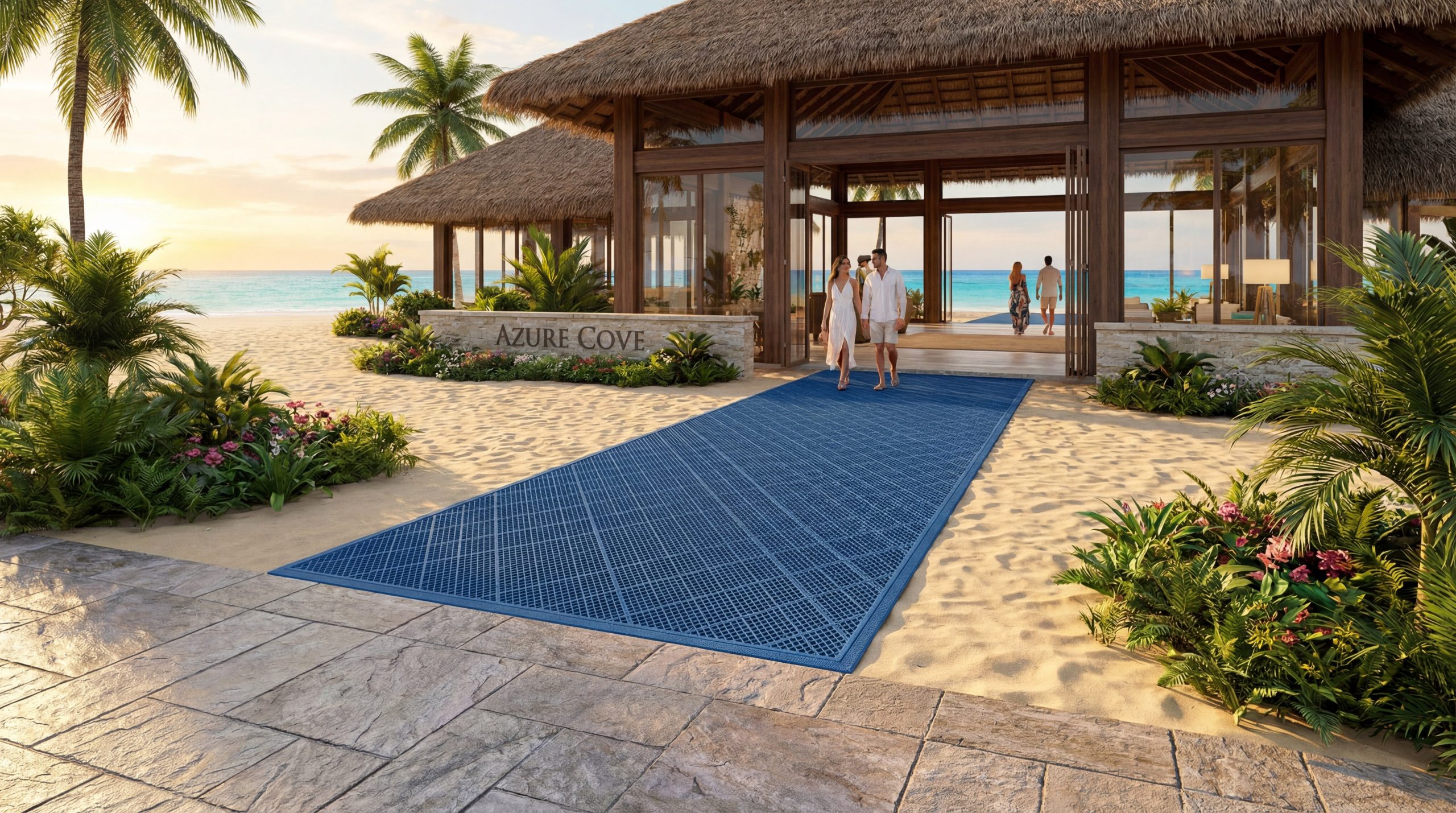
Choosing between permanent or temporary installations depends on your specific seasonal needs and facility layout. An accessible beach mat provides the versatility to be rolled out during the summer and stored during storm seasons to prevent damage. This flexibility is vital for municipalities that must clear the shoreline for grooming machinery.
What is the easiest way to secure a temporary mat?
You can secure these pathways using specialized ground anchors or heavy-duty stakes designed for loose soil. This ensures that your path does not shift or blow away during high-wind events on the coast. You will appreciate how quickly your team can install or relocate these sections as the tide lines change.
You might be wondering.
- Permanent installs are ideal for high-end resort entrances and beach clubs.
- Roll-out mats allow for easy beach maintenance and daily grooming protocols.
- Modular tiles can be reshaped for different event layouts or wedding venues.
Key Takeaway: The modularity of modern access mats makes them a flexible investment for any coastal facility.
| Install Type | Speed of Setup | Longevity |
|---|---|---|
| Roll-out Mat | Minutes | Seasonal/High |
| Interlocking Tiles | Hours | Permanent/High |
| Anchored Mesh | Under an hour | Temporary/Medium |
Modern installation hardware makes it possible to maintain a stable path even on shifting dunes without permanent foundation work.
How does an accessible beach mat handle sand and grass?
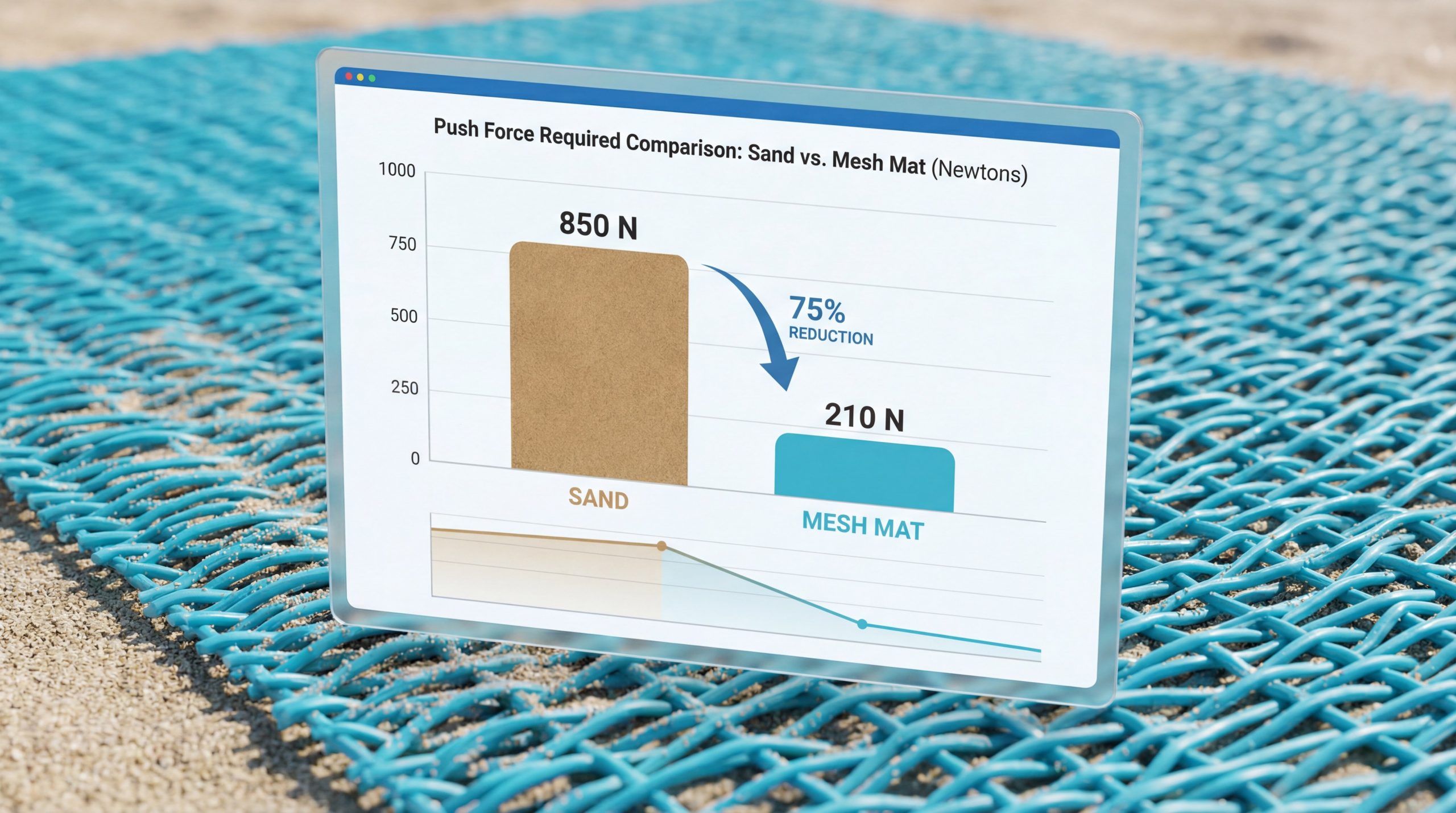
Professional mats feature perforated designs that allow for sand and water drainage while protecting underlying vegetation. An accessible beach mat prevents the pathway from “floating” on sand or killing grass in residential areas. This breathable design is a requirement for many environmentally sensitive coastal zones.
Can the mat withstand heavy coastal machinery?
You need to know if your pathway can handle the weight of a lifeguard ATV or a beach cleaning tractor. Many commercial-grade options are engineered to distribute weight so effectively that they prevent surface ruts from forming. This means you won’t have to worry about replacing sections every time emergency services need to cross the path.
It gets better.
- Small perforations allow natural coastal vegetation to breathe and thrive.
- Water drainage prevents the “lake effect” on top of the walking pathway.
- Sand filtration keeps the surface clear and maintains high-traction grip.
Key Takeaway: A well-designed mat works with the environment, not against it, by allowing nature to pass through.
| Environmental Factor | Mat Response | Benefit |
|---|---|---|
| Rainfall | Rapid drainage through pores | No puddles or slips |
| Heavy Winds | Perforations reduce lift | Mat stays anchored |
| Soft Sand | Load distribution | Prevents surface ruts |
By integrating with the natural landscape, these mats reduce the environmental impact of human traffic on fragile dune systems.
What defines a portable residential accessible beach mat?
For home use, portability and lightweight construction are the most important features to consider for single-person handling. You can easily transport a residential accessible beach mat in a standard SUV for private shore access. These models are typically narrower and optimized for storage in small garages or beach huts.
Is a snap-together system better for home use?
You will find that modular tiles allow you to customize the length of your path based on the daily tide line. These snap-together systems require no specialized tools, allowing you to build a firm walkway in just a few minutes. If you only visit the shore occasionally, this portable setup is your best value.
Make no mistake:
- UV treatment prevents the surface from getting too hot for your bare feet.
- Lightweight sections fit easily into a standard trunk for day trips.
- DIY installation requires no specialized contractors or heavy tools.
Key Takeaway: Residential users should prioritize ease of storage and portability for the best value.
| Residential Need | Optimal Feature | Recommended Product |
|---|---|---|
| Easy Storage | Folding or modular design | Lightweight beach mat |
| Portability | Under 30 lbs per section | Portable mesh roll |
| Safety | Non-slip texture | Textured polypropylene |
Residential mats empower families to enjoy the shoreline together without the logistical headache of heavy commercial equipment.
Why is a non-slip texture vital for an accessible beach mat?
A non-slip surface texture is essential to prevent falls when the pathway becomes wet from salt spray or rain. Every accessible beach mat should prioritize traction to ensure user safety and confidence. Without this texture, a simple puddle can turn a safe walkway into a significant liability.
What happens when the accessible beach mat gets wet?
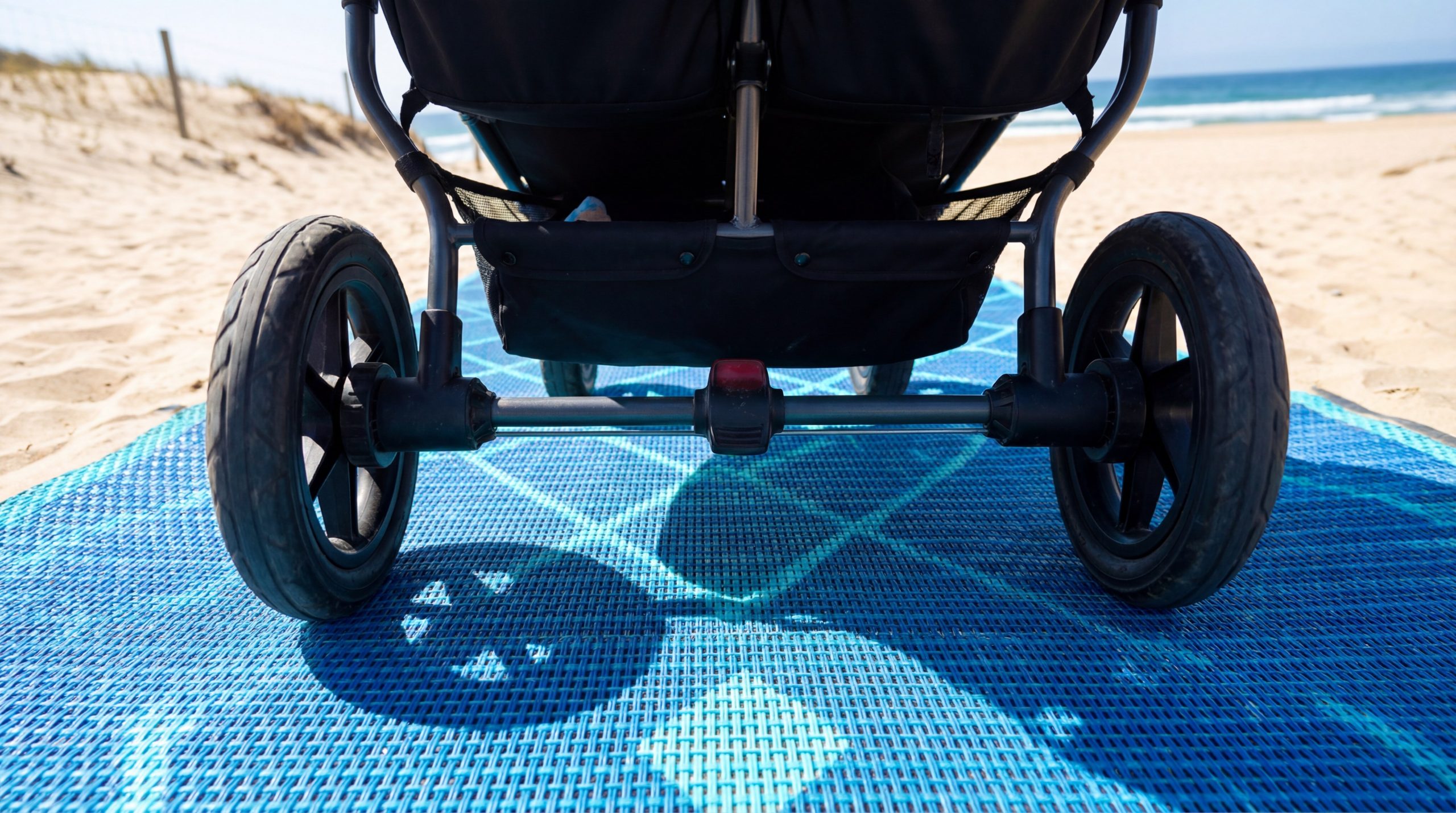
You will notice that high-quality mats use a diamond-plate or cross-hatch pattern to maintain grip even under a film of water. This is critical for users who are pushing their own chairs or for parents navigating double strollers. You can feel secure knowing that the surface won’t become slick like smooth plastic in the humid coastal air.
That’s not all.
- Diamond-plate patterns provide multi-directional grip for walkers and wheels.
- Perforated surfaces prevent a dangerous film of water from forming.
- Soft-touch materials are gentle on the skin of playing children.
Key Takeaway: Traction is the most critical feature for preventing liability and ensuring user confidence.
| Surface Type | Traction Level | Barefoot Friendly? |
|---|---|---|
| Smooth Plastic | Low (Slippery when wet) | No |
| Textured Composite | High | Yes |
| Woven Mesh | Medium-High | Yes |
Prioritizing safety through texture reduces the risk of accidents and makes your beach a more welcoming destination for everyone.
How do you maintain an accessible beach mat effectively?
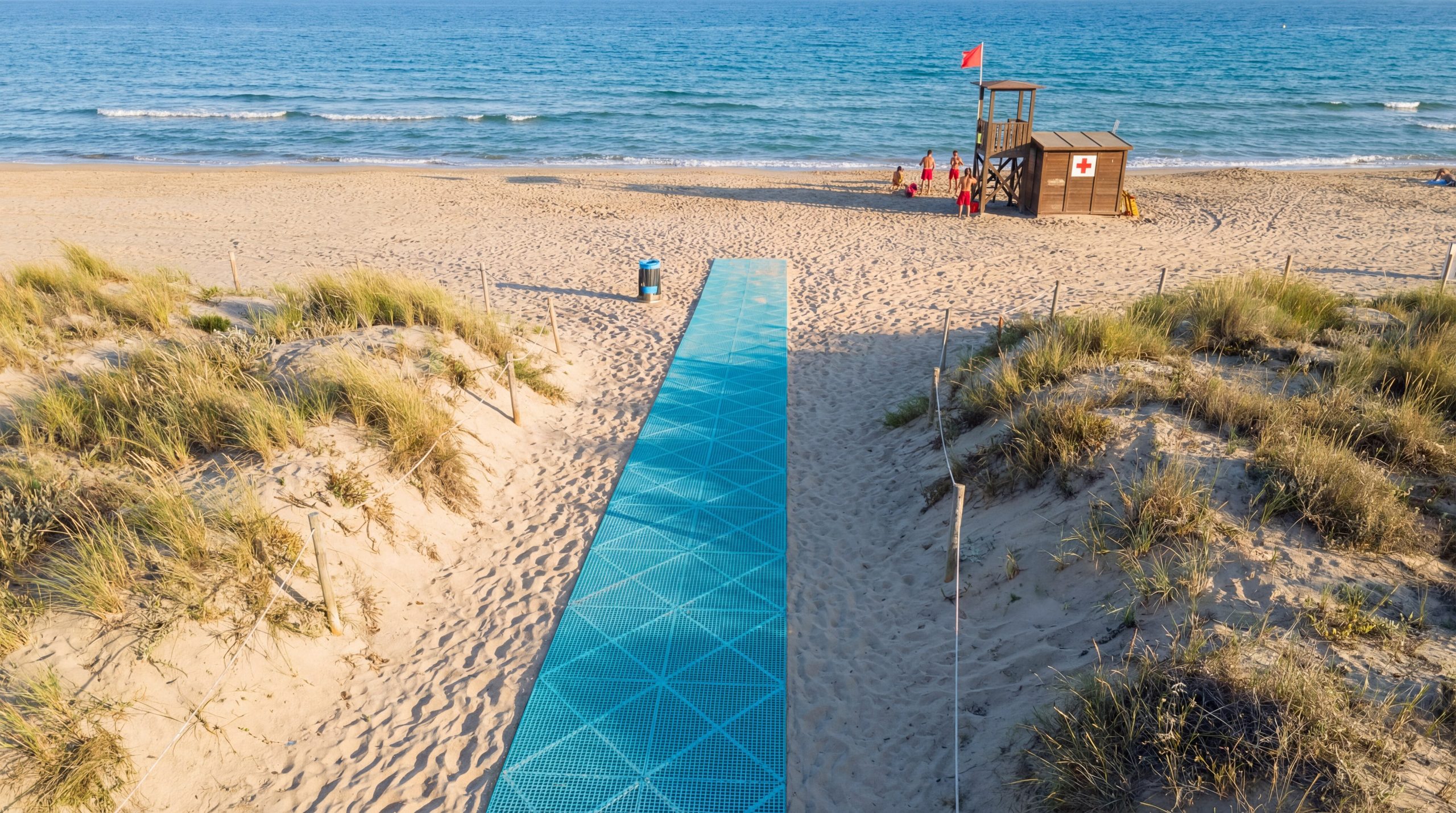
Maintenance is straightforward and involves regular rinsing with a garden hose to remove salt and debris. You will extend the lifespan of your accessible beach mat by sweeping away excess sand weekly to maintain the path’s visibility. Salt crystallization can eventually degrade materials, so freshwater rinses are your best defense.
Can you leave the mat out during the winter months?
You should consult the manufacturer’s guidelines, but most UV-treated materials are tough enough to survive year-round if they are anchored properly. However, if your region faces severe winter storms, you will save yourself a lot of trouble by rolling the mats up for the off-season. This prevents the path from being buried under several feet of shifting winter sand.
Here is a pro tip:
- Regularly sweep or blow off excess sand to maintain path visibility.
- Use mild soap for organic stains or stubborn bird droppings.
- Inspect anchors monthly to ensure the mat hasn’t shifted in the wind.
Key Takeaway: Minimal maintenance is required, but regular rinsing is essential to prevent salt crystallization.
| Maintenance Task | Frequency | Tools Needed |
|---|---|---|
| Sand Removal | Weekly | Broom or Blower |
| Salt Rinsing | Bi-weekly | Garden Hose |
| Deep Cleaning | End of Season | Pressure Washer |
A few minutes of preventative care each week will ensure your pathway remains functional for a decade or more.
What is the load capacity of an accessible beach mat?
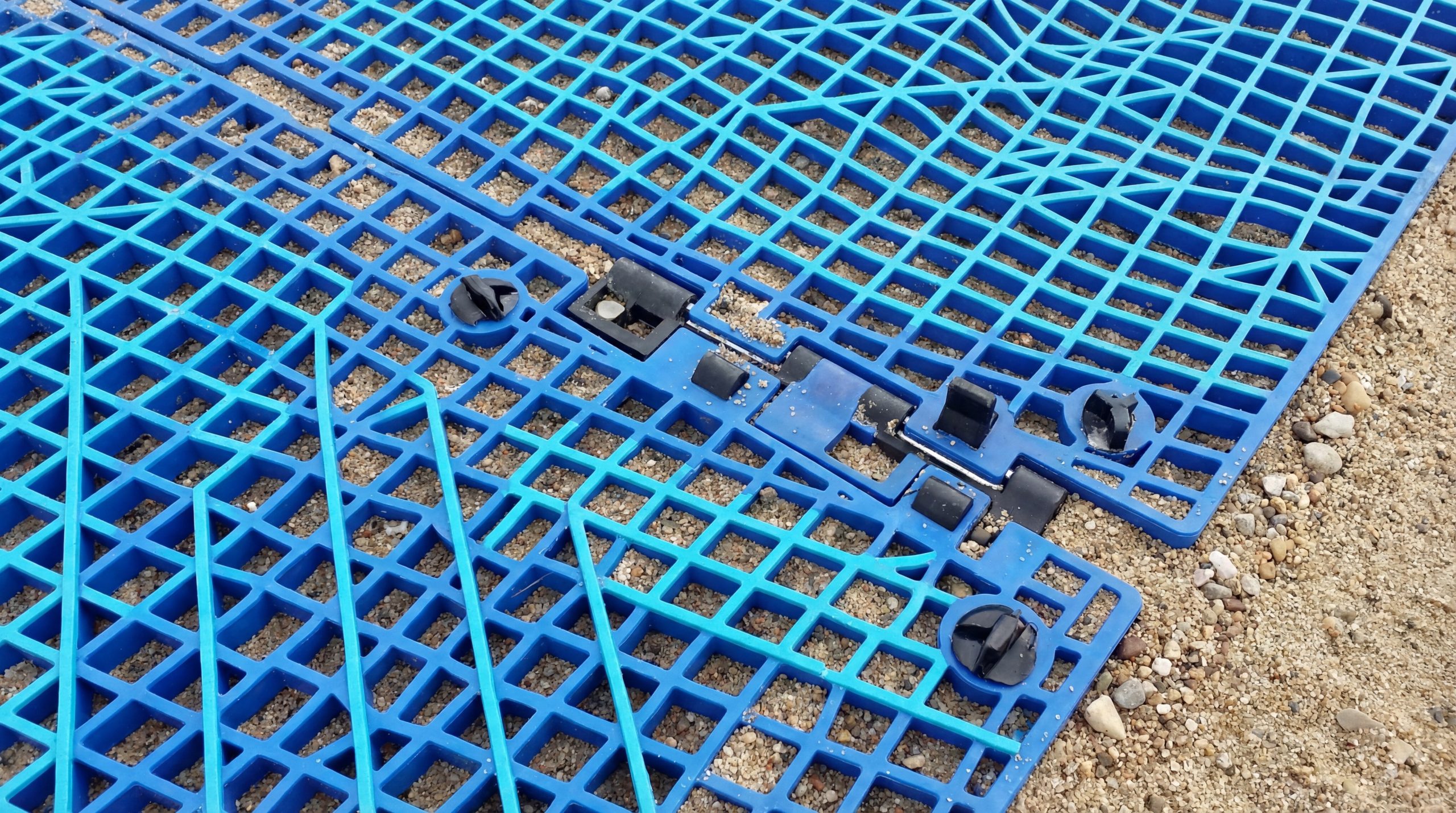
Professional-grade mats typically support over 200 psi, making them suitable for power wheelchairs and medical carts. A high-capacity accessible beach mat is non-negotiable for public beaches where diverse equipment is used daily. These mats are engineered to distribute heavy point-loads across a wider surface area.
Will it support a floating water beach wheelchair?
You will find that reinforced mats are the perfect staging ground for heavy amphibious equipment. When you are transitioning from the path to the water, you need a surface that won’t buckle under the combined weight of a chair and an occupant. This high compression strength is what separates professional gear from residential alternatives.
Let’s dig deeper.
- Commercial mats can support over 200 psi for heavy power chairs.
- Reinforced edges prevent curling under the weight of medical carts.
- Proper sub-surface preparation increases the effective load limit of the mat.
Key Takeaway: High load capacity is non-negotiable for public beaches where diverse equipment is used daily.
| Equipment Type | Estimated Weight | Mat Requirement |
|---|---|---|
| Manual Wheelchair | 200-300 lbs | Standard Duty |
| Power Wheelchair | 400-600 lbs | Heavy Duty |
| Beach Walker | 150-250 lbs | Standard Duty |
Investing in high-load capacity ensures that your infrastructure can handle any mobility device your guests bring to the shore.
How does an accessible beach mat work with other aids?
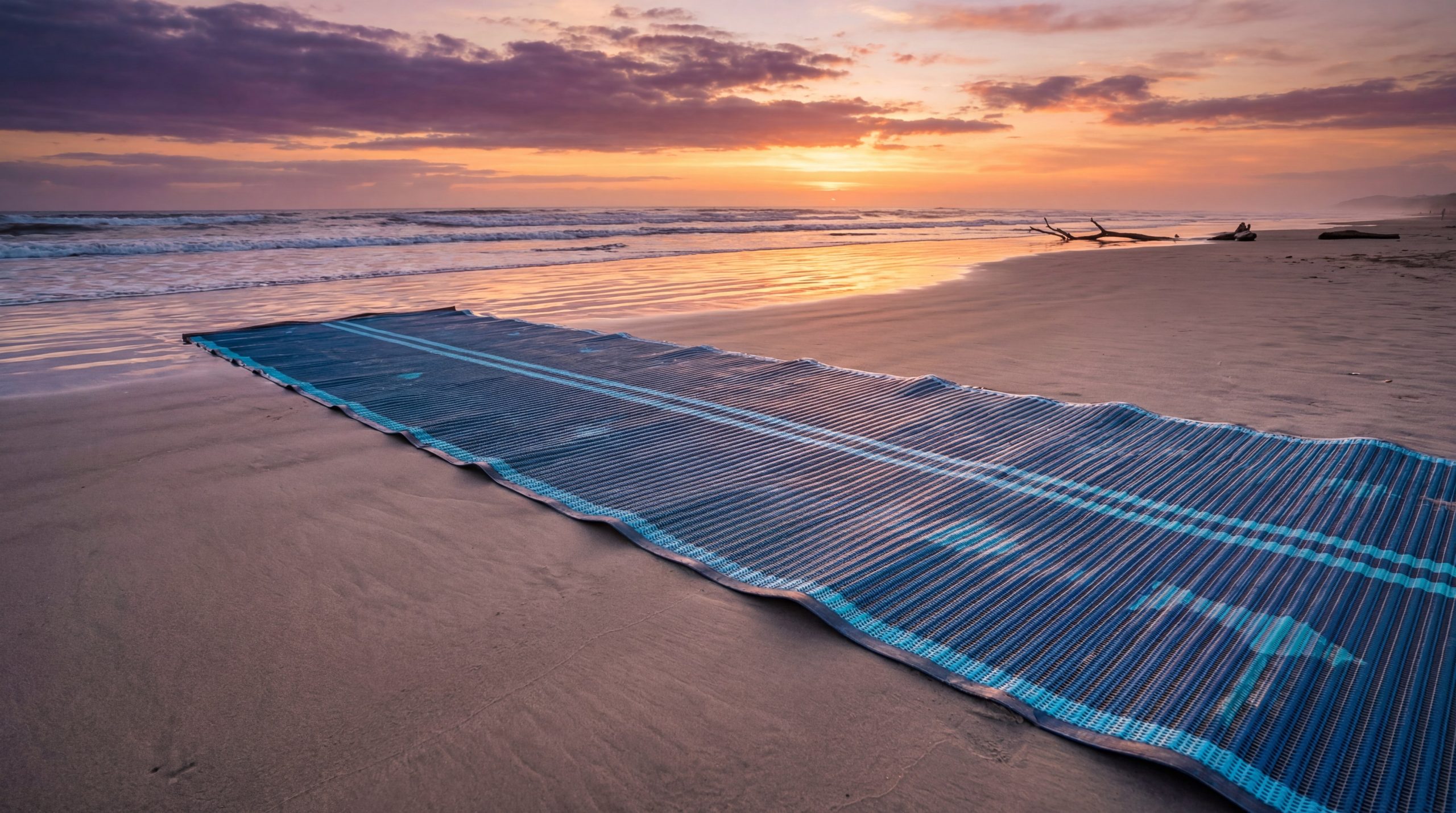
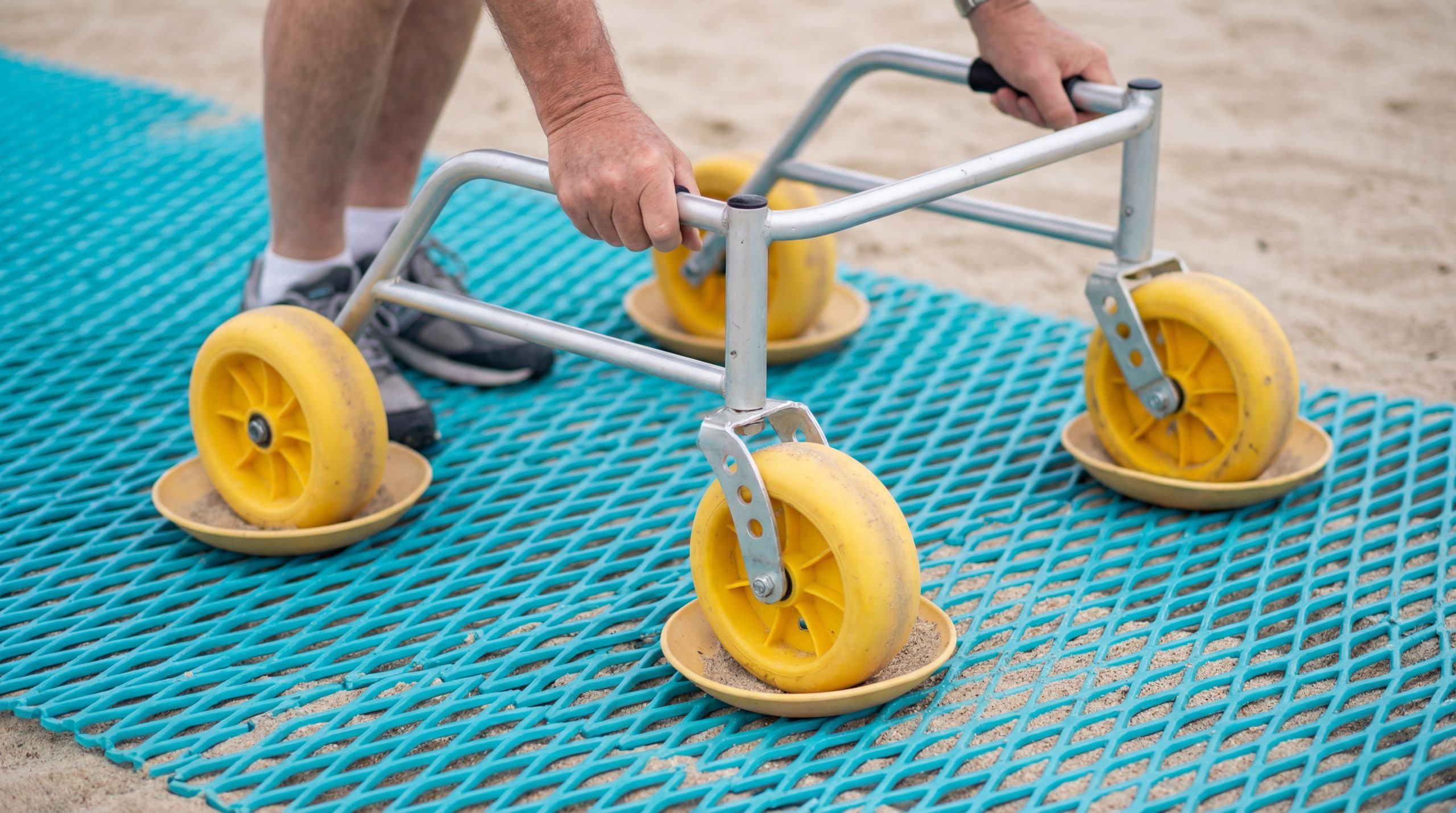
Mats provide the primary infrastructure that makes specialized equipment like beach walkers and all-terrain chairs more effective. An accessible beach mat acts as a stable highway for diverse mobility equipment, allowing users to reach their destination with minimal effort. They are the foundation of any comprehensive coastal accessibility program.
Is a dedicated path better than wide tires alone?
You will find that even “all-terrain” wheels perform significantly better on a flat, stable mat than they do on loose sand. A dedicated path provides a predictable surface that reduces the physical force required to push a chair. Think of the mat as the road and the beach walker as the vehicle; you need both for the best experience.
The truth is:
- Mats create the “highway” while wheelchairs provide the “vehicle” for movement.
- Even “all-terrain” wheels perform better on a stable, flat mat surface.
- Accessible paths encourage more people to use provided rental equipment.
Key Takeaway: A mat is the foundation of any successful inclusive coastal program.
| Integration Aid | Role | Synergy |
|---|---|---|
| Beach Walker | Stability | Prevents walker feet from sinking |
| Floating Chair | Transition | Eases the path from sand to water |
| Standard Stroller | Convenience | Makes the beach accessible to young families |
Creating an integrated system of mats and specialized chairs is the most effective way to guarantee dignity and access for all.
Conclusion
Creating an inclusive coastline starts with removing the barriers between the boardwalk and the tide. An accessible beach mat is a critical investment for any municipality, resort, or private homeowner looking to provide safety and dignity to all visitors. At Ary Beach Wheelchair, our vision is a world where the beauty of the ocean is accessible to everyone, regardless of physical ability. Our engineered solutions are designed to endure the harshest coastal elements while providing the smoothest ride possible. If you are ready to transform your shoreline into a truly inclusive destination, contact us today to discuss your project requirements.
FAQ
- Can I install an accessible beach mat by myself?Yes, most residential and roll-out models are designed for quick DIY installation using simple ground anchors or stakes.
- What’s the best way to prevent sand from covering the mat?Regular maintenance is the best approach; using a leaf blower or a stiff broom weekly will keep the path clear and visible.
- How long does a professional accessible beach mat last?High-quality composite or UV-stabilized mats typically last between 5 to 10 years, depending on traffic and local weather conditions.
- Can these mats be used on grass or gravel as well?Absolutely, their load-distribution properties make them excellent for creating stable walkways over any soft or uneven backyard terrain.
- Is it safe to walk barefoot on the mat in the summer heat?Yes, top-tier mats are designed with materials that have low heat conductivity to remain comfortable even in direct sunlight.