A floating beach wheelchair is essential because it bridges the gap between land-based mobility and full aquatic participation for individuals with physical disabilities.
Imagine a bright, sunny day at a luxury resort where a family is ready to dive into the surf, but one member is stuck on the boardwalk. Standard wheelchairs sink into the sand, creating a literal barrier to the ocean and leaving guests feeling excluded from the core vacation experience. By integrating a floating beach wheelchair into your facility’s fleet, you eliminate this physical boundary and provide a seamless transition from the dunes into the refreshing water.
What defines a professional floating beach wheelchair?
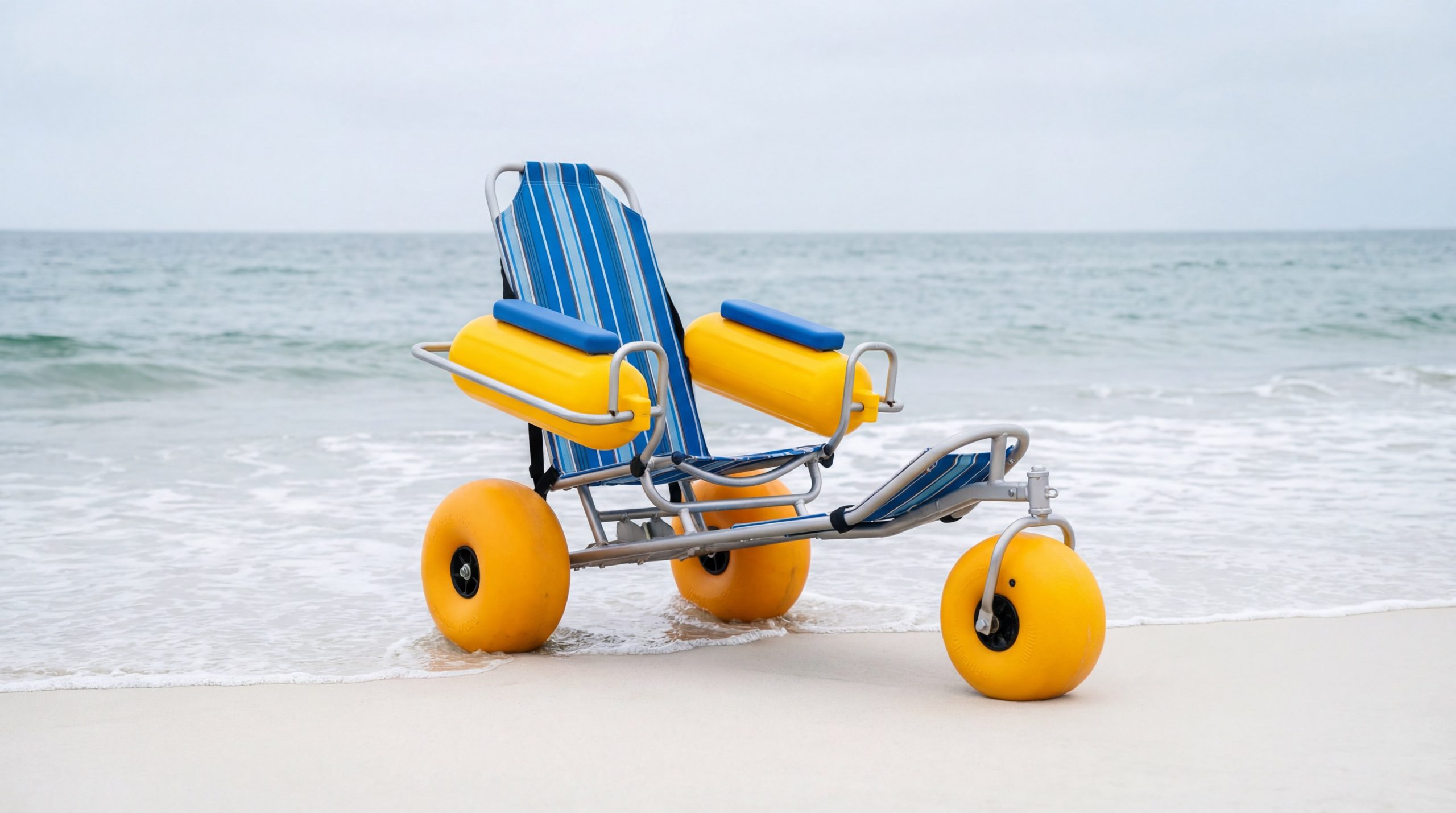
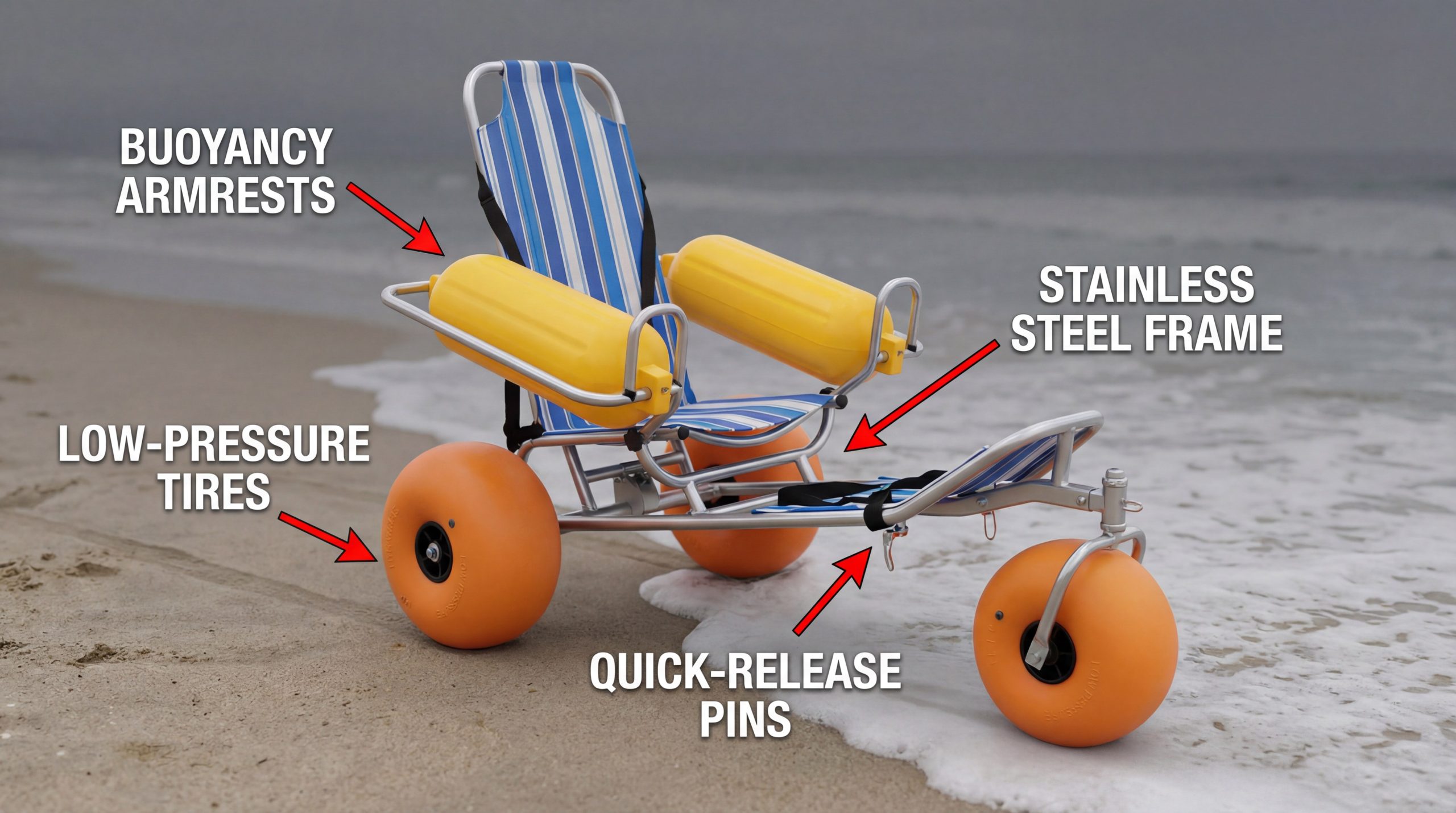
A professional floating beach wheelchair is a specialized mobility device engineered with high-buoyancy armrests and low-pressure balloon tires to navigate sand and float in water. This specific floating beach wheelchair design ensures that users do not have to transfer between different pieces of equipment when moving from the car park to the sea.
Engineered for aquatic stability
The frame is typically constructed from marine-grade aluminum or stainless steel to resist saltwater corrosion. These materials provide the necessary strength to support weight while remaining light enough for an attendant to push across soft terrain.
How does it differ from all-terrain chairs?
Unlike standard all-terrain chairs that only handle dry sand, these models are specifically balanced to remain upright while floating.
- High-volume flotation armrests.
- Pneumatic balloon tires for shock absorption.
- Corrosion-resistant hardware and fabrics.
Think about it: A chair that only handles sand is only solving half the problem for a beach-goer.
Key Takeaway: Professional models combine structural durability with aquatic physics to provide a two-in-one mobility solution.
| Feature | Standard All-Terrain | Floating Beach Wheelchair |
|---|---|---|
| Sand Access | Yes | Yes |
| Water Entry | No | Yes |
| Buoyancy | None | High |
This comparison shows that the floating variant offers significantly more versatility for shoreline environments.
How does a floating beach wheelchair achieve buoyancy?
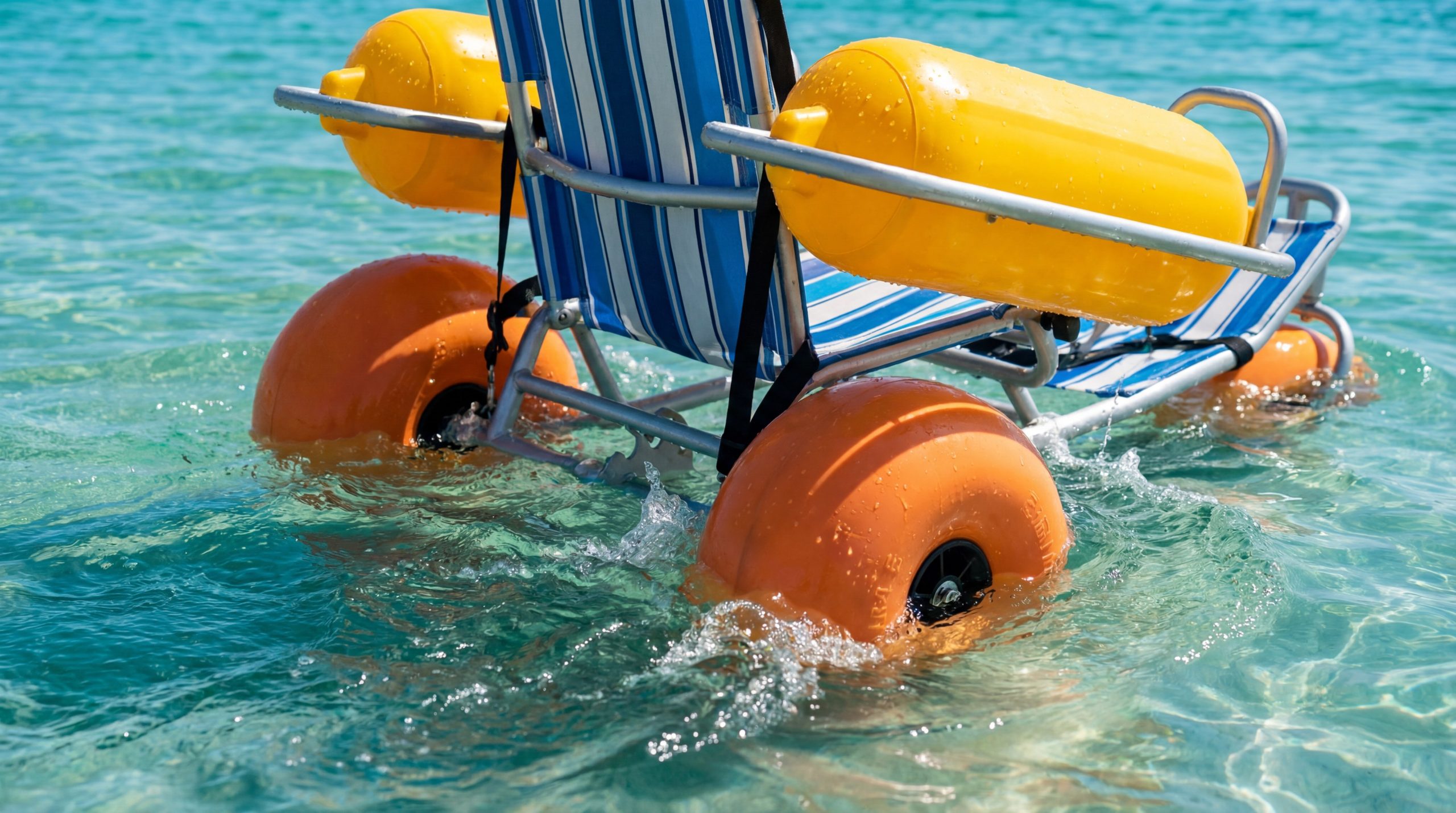
Buoyancy is achieved through a combination of large-volume air-filled armrests and pneumatic tires that displace enough water to support the user’s weight. The floating beach wheelchair utilizes basic displacement principles to ensure the user stays comfortably above the waterline in calm conditions.
The science of flotation armrests
The armrests are the primary buoyancy engines, often designed as large, sealed cylinders. They are positioned to provide lateral stability, preventing the chair from tipping even if small waves are present.
Why are balloon tires necessary?
Low-pressure balloon tires serve a dual purpose by providing surface area on sand and additional lift in the water.
- They spread weight to prevent sinking in soft sand.
- The air trapped inside the rubber adds to the total buoyant force.
- They act as natural shock absorbers on uneven boardwalks.
Here is the kicker: Without these specialized tires, the chair would require significantly more force to maneuver through the tide line.
Key Takeaway: Buoyancy is a result of integrated engineering across the tires and armrests, not just a single component.
| Component | Primary Function | Secondary Benefit |
|---|---|---|
| Armrests | Flotation | User comfort |
| Balloon Tires | Sand mobility | Water lift |
| Aluminum Frame | Support | Easy pushing |
Proper component integration is what allows the device to transition from a land vehicle to a watercraft.
Why invest in a floating beach wheelchair for resorts?
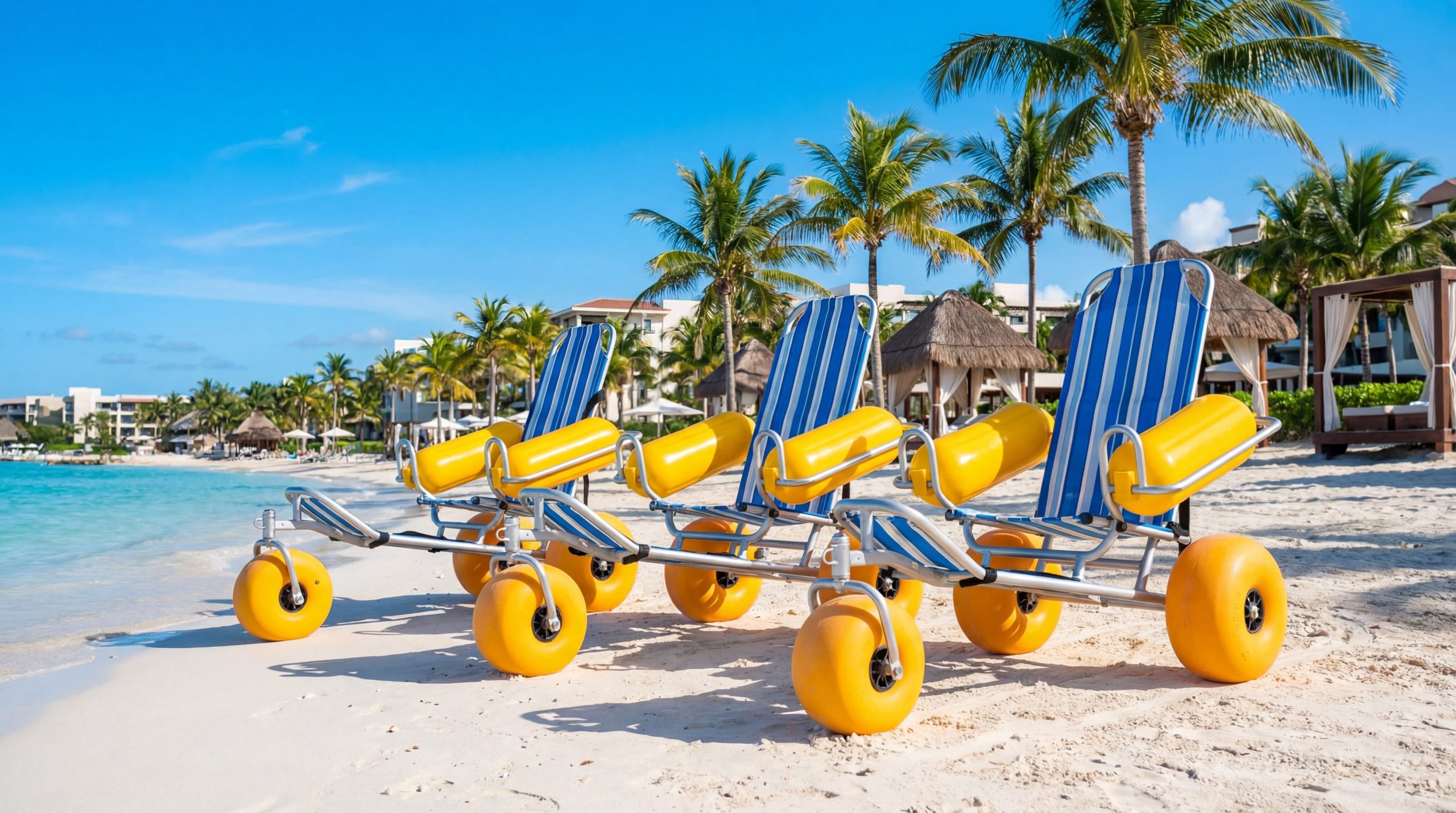
Investing in a floating beach wheelchair enhances guest satisfaction and ensures your resort meets modern accessibility standards for inclusive hospitality. Providing a floating beach wheelchair signals to your customers that you value the experience of every individual, regardless of their mobility level.
Improving the guest experience
Resorts that offer high-quality accessibility equipment often see increased loyalty from families traveling with elderly or disabled members. Being the only venue on the coast with water-entry capabilities can be a significant competitive advantage.
Meeting compliance requirements
Accessibility is no longer just a courtesy; in many regions, it is a legal requirement for public-facing businesses.
- Avoid potential legal challenges regarding exclusion.
- Qualify for “Accessible Beach” certifications.
- Build a reputation as a socially responsible brand.
The best part? Inclusive equipment often pays for itself through increased bookings and positive word-of-mouth reviews.
Key Takeaway: Accessibility is a strategic business investment that drives both social impact and revenue growth.
| Benefit Category | Impact on Resort | ROI Type |
|---|---|---|
| Guest Loyalty | Repeat bookings | Financial |
| Compliance | Risk mitigation | Legal |
| Brand Image | Market leadership | Reputation |
Strategic inclusion creates a welcoming atmosphere that benefits the entire community and the bottom line.
Is a floating beach wheelchair safe for ocean use?
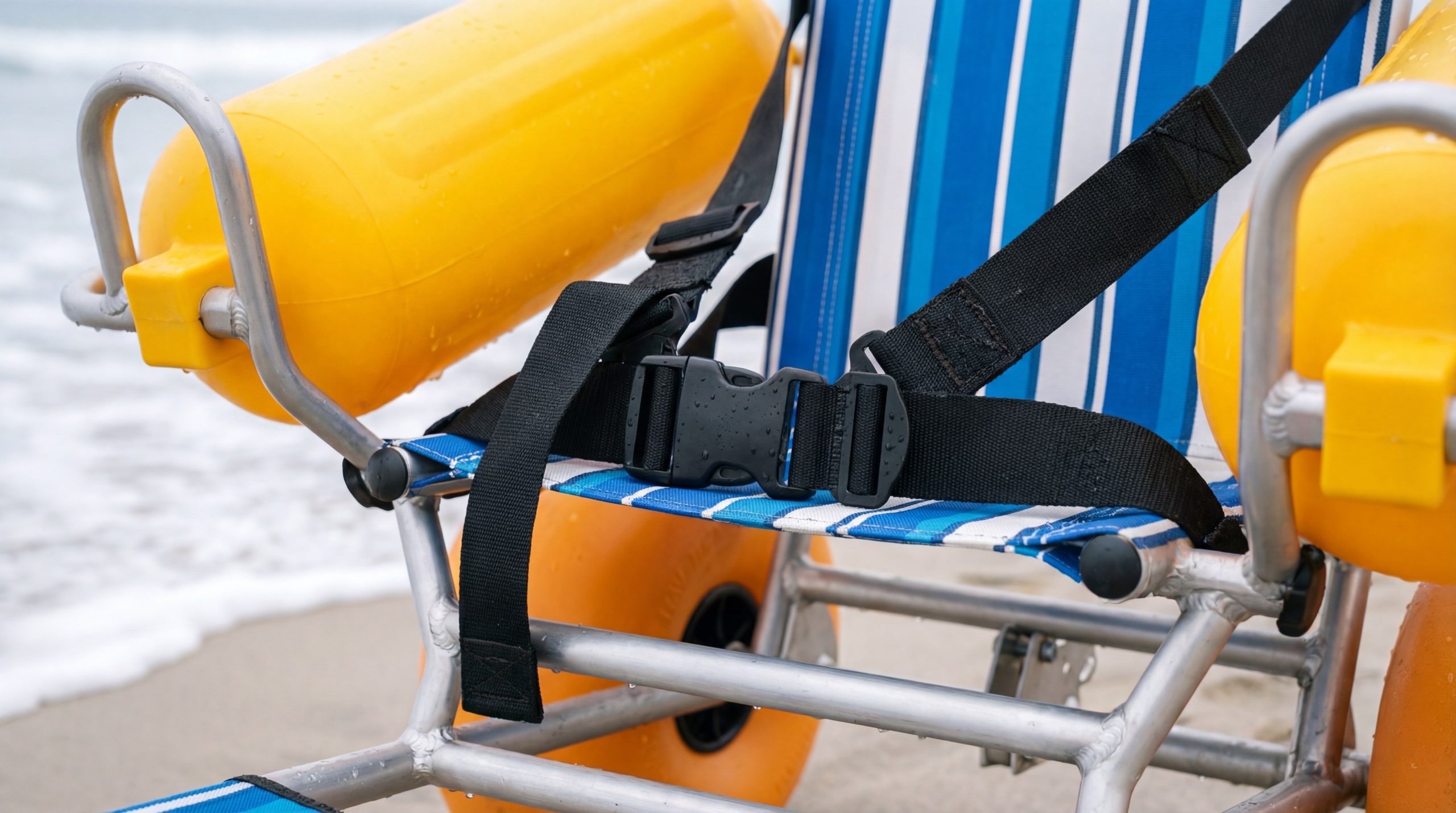
Yes, these chairs are safe for ocean use when operated in calm conditions under the supervision of a dedicated attendant. A floating beach wheelchair is designed with a low center of gravity to ensure it remains stable while floating in shallow depths.
The role of safety harnesses
Most professional models include adjustable chest straps and lap belts to keep the user securely positioned. These harnesses prevent the user from sliding out if the chair encounters a sudden change in water level.
Stability in shallow surf
While designed for water, these chairs are not meant for high-surf zones or deep-water exploration without a tether.
- Use in depths no greater than waist-high for the attendant.
- Always utilize the provided safety belts.
- Monitor weather conditions for strong rip currents.
But wait, there’s more: Safety is further enhanced by using tether ropes that allow the attendant to maintain a physical link to the chair at all times.
Key Takeaway: User safety is a combination of robust equipment design and responsible attendant supervision.
| Safety Feature | User Protection | Operational Benefit |
|---|---|---|
| Seatbelt | Prevents falls | Peace of mind |
| Low Center of Gravity | Prevents tipping | Stability |
| Attendant Handles | Controlled movement | Directional safety |
A focus on safety features ensures that the aquatic experience remains enjoyable and risk-free for everyone involved.
Can you transport a floating beach wheelchair easily?
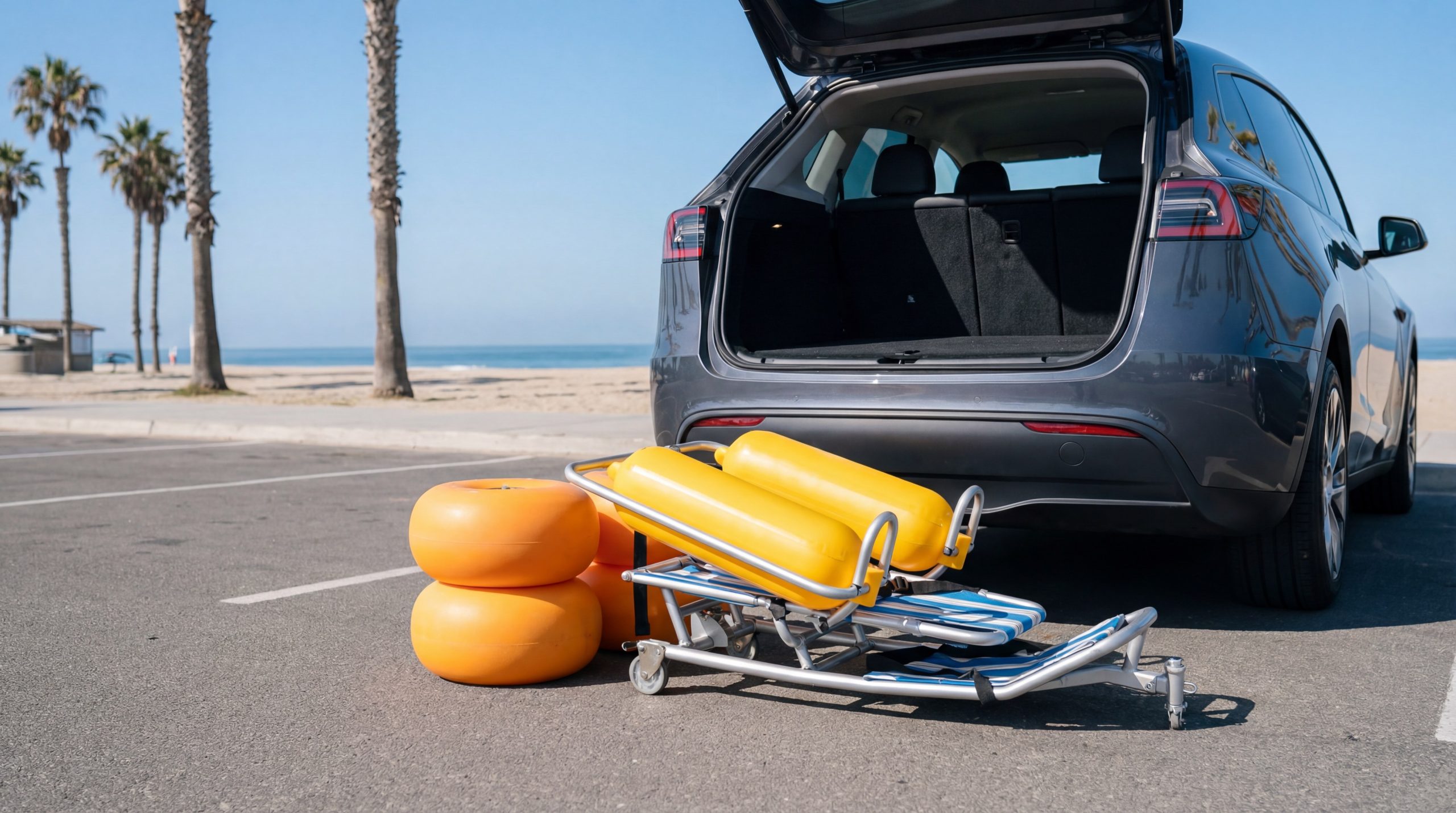
You can transport a floating beach wheelchair easily thanks to its modular, tool-free design that allows for rapid disassembly into a flat profile. This portability makes the floating beach wheelchair ideal for families who want to explore different coastal locations without needing a specialized van.
Tool-free assembly features
Most models utilize quick-release pins and snap-on components that can be handled by a single person. You can go from a trunk-stored package to a fully functional chair in under five minutes.
Fitting into standard vehicles
When disassembled, the frame usually folds to a thickness similar to a folded lounge chair.
- Wheels can be removed and stacked.
- Armrests detach to reduce width.
- The frame fits into most hatchbacks and SUVs.
But here is the kicker: The lightweight materials mean you don’t need to be a professional weightlifter to move the components.
Key Takeaway: High portability ensures the chair is a practical tool for travel rather than a logistical burden.
| Transport Step | Time Required | Tool Needed |
|---|---|---|
| Wheel Removal | 30 Seconds | None |
| Frame Folding | 1 Minute | None |
| Armrest Detach | 30 Seconds | None |
Ease of transport dramatically increases the frequency with which the chair will be used by active families.
Who benefits from using a floating beach wheelchair?
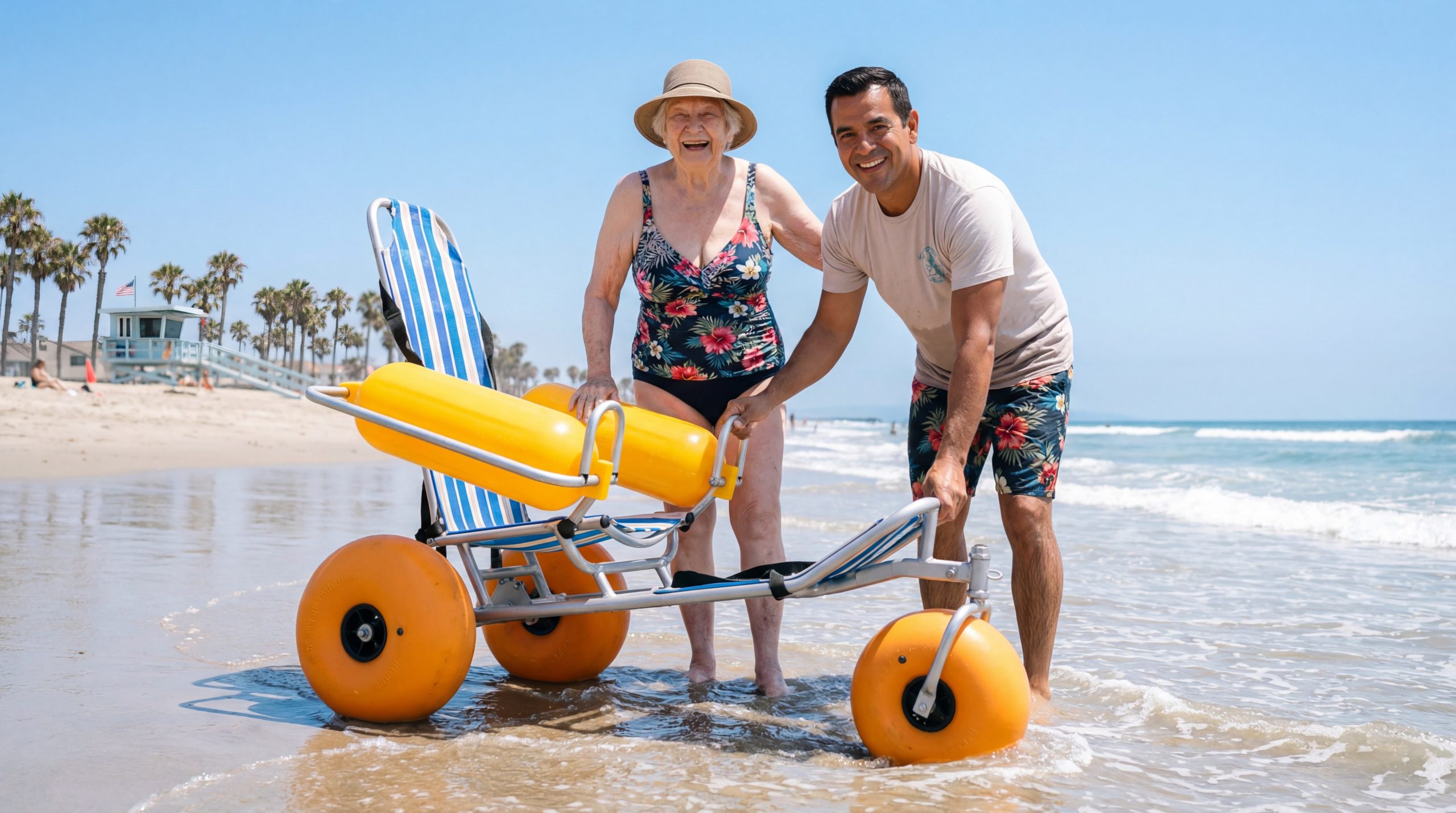
A wide range of users, including seniors, individuals with spinal cord injuries, and pediatric patients, benefit from the independence provided by this device. A floating beach wheelchair is not just for permanent wheelchair users; it is for anyone who finds navigating sand and surf physically challenging.
Accommodating diverse body types
Professional frames are designed to support various weight capacities, often up to 136kg (300 lbs). The seating is typically wider than a standard chair to allow for comfortable positioning during long days at the beach.
Pediatric and senior applications
For children, these chairs offer a sense of play and adventure that is often missing from medical equipment. Seniors with balance issues or arthritis also find the stable, buoyant platform much safer than attempting to walk through soft sand.
Think about it: The ocean belongs to everyone, and the right equipment ensures that age or injury doesn’t change that.
Key Takeaway: The “user” of a beach wheelchair is anyone who needs help turning the sand from a barrier into a path.
| User Group | Primary Need | Specific Benefit |
|---|---|---|
| Seniors | Balance/Stability | Safe sand crossing |
| SCI Users | Full Mobility | Water immersion |
| Pediatric | Adventure | Inclusive play |
By catering to a broad demographic, you ensure that your accessibility program has the widest possible impact.
How to maintain a floating beach wheelchair for longevity?
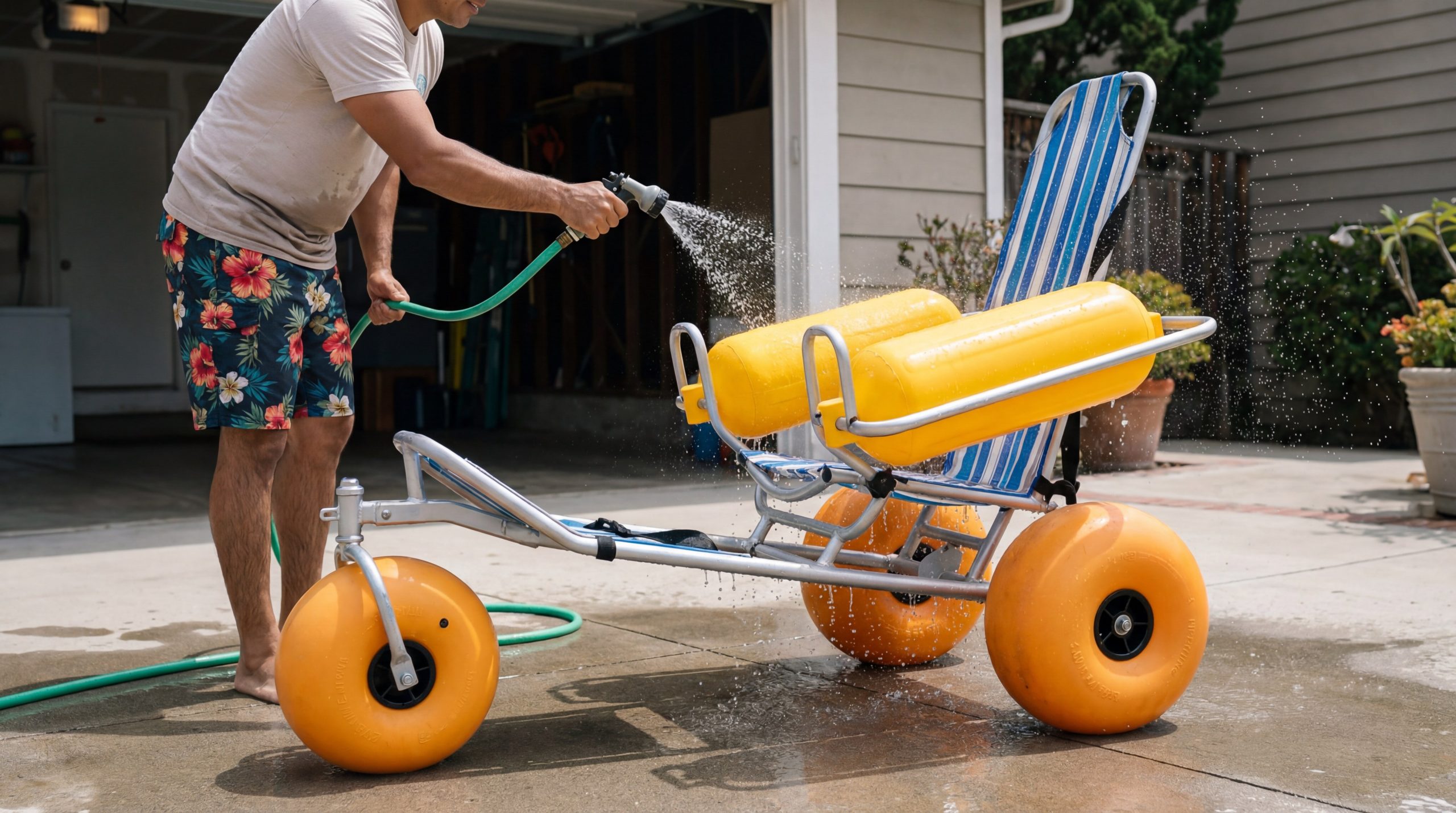
Maintaining a floating beach wheelchair involves consistent freshwater rinsing after saltwater exposure and regular lubrication of the moving parts. Because the floating beach wheelchair operates in harsh coastal environments, a proactive maintenance schedule is the best way to protect your investment.
Essential rinsing protocols
Saltwater is highly corrosive to even the best marine-grade metals if left to sit and crystallize. After every use, you should spray down the entire frame, the mesh fabric, and the wheel axles with a fresh water hose.
Storing for UV protection
While the fabrics are UV-resistant, prolonged exposure to intense sun can eventually degrade the materials.
- Store the chair in a shaded area or under a cover.
- Check tire pressure seasonally.
- Apply a marine-grade lubricant to axles and pins.
The best part? A well-maintained chair can last over a decade, providing thousands of hours of beach access.
Key Takeaway: Ten minutes of post-use cleaning can add years to the operational lifespan of the equipment.
| Maintenance Task | Frequency | Estimated Time |
|---|---|---|
| Freshwater Rinse | After every use | 5 Minutes |
| Axle Lubrication | Monthly | 10 Minutes |
| UV Storage | Always | 0 Minutes |
Consistent care ensures the equipment remains safe, attractive, and functional for every guest.
What surfaces can a floating beach wheelchair handle?
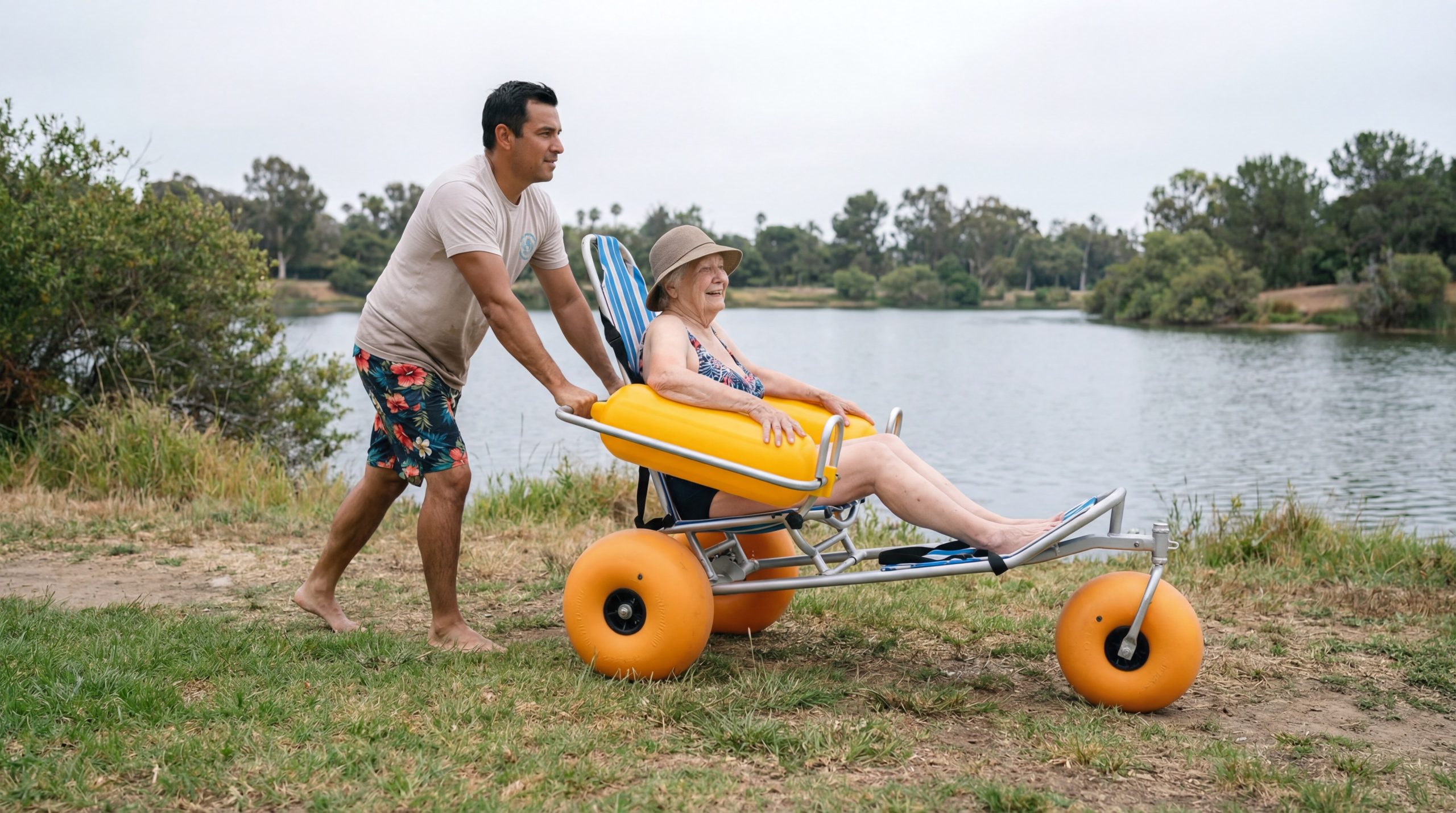
A floating beach wheelchair is designed to handle soft sand, dunes, grass, and gravel, in addition to calm water environments. The high-surface-area balloon tires allow the floating beach wheelchair to glide over loose terrain where standard wheels would instantly dig in.
Navigating soft sand and dunes
The low-pressure tires act like tank treads, distributing weight over a wide area to prevent sinking. This allows an attendant to push the user across the softest dunes with significantly less effort than a standard transport chair.
Limitations on rocky terrain
While versatile, these chairs are not designed for jagged rocks or steep, unstable cliffs.
- Ideal for sandy beaches and lakesides.
- Performs well on resort lawns and gravel paths.
- Avoid large boulders or slippery reef zones.
But wait, there’s more: The tires are also puncture-resistant, meaning you don’t have to worry about small shells or debris on the path.
Key Takeaway: Balloon tires provide the necessary float on sand that makes shoreline mobility possible.
| Terrain Type | Performance Level | Attendant Effort |
|---|---|---|
| Soft Sand | Excellent | Low |
| Grass/Turf | Good | Very Low |
| Gravel | Fair | Moderate |
Understanding terrain limits helps operators plan the best access routes for their guests.
Which accessories fit a floating beach wheelchair best?
The best accessories for a floating beach wheelchair include heavy-duty storage bags, chest harnesses, and quick-release tether ropes for added security. Customizing your floating beach wheelchair with these items can greatly enhance the user’s comfort and the operator’s ease of use.
Enhancing user comfort
For users with limited trunk control, specialized lateral supports and headrests can be added to the mesh seating. Waterproof storage pockets are also popular for keeping personal items like phones or sunscreen dry during water entry.
Essential replacement parts
Keeping a small inventory of spare parts ensures that your equipment is never out of service for long.
- Spare quick-release pins.
- Replacement tire tubes.
- Extra safety harness buckles.
Here is the kicker: Most accessories are designed for “one-size-fits-all” compatibility, making upgrades simple.
Key Takeaway: The right accessories transform a basic mobility device into a personalized, high-comfort experience.
| Accessory | Primary Benefit | Target User |
|---|---|---|
| Chest Harness | Increased Safety | SCI/Pediatric |
| Storage Bag | Convenience | All users |
| Tether Rope | Control in water | Attendants |
Modular additions allow resorts to tailor their fleet to the specific needs of their unique guest profile.
How to select the right floating beach wheelchair?
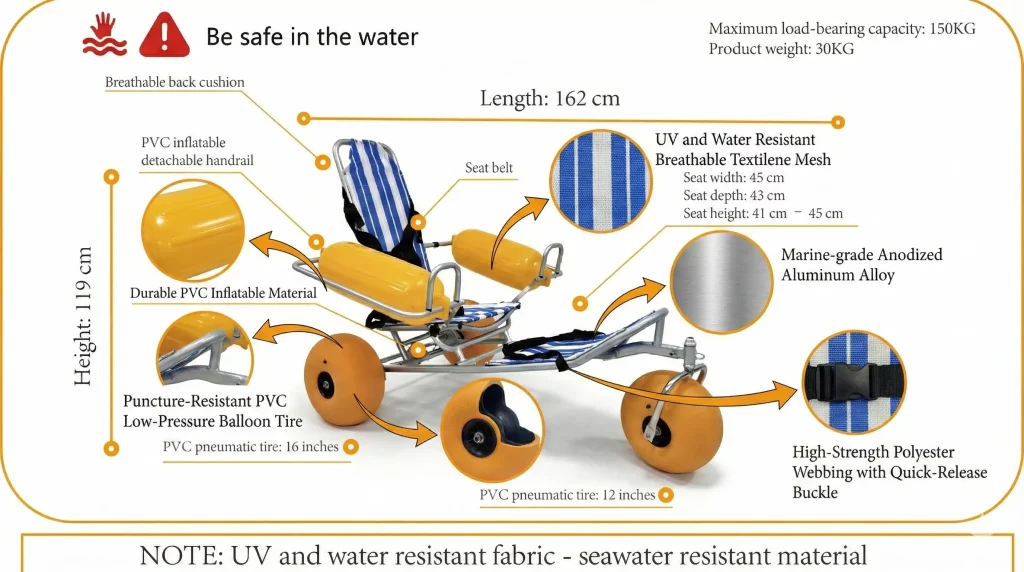
Selecting the right model requires evaluating frame materials, weight capacities, and the ease of transfer for your specific guest demographic. A floating beach wheelchair should be chosen based on its durability and the specific aquatic conditions of your location.
Evaluating frame materials
Aluminum frames are the most common because they are lightweight and rust-proof. However, for high-frequency resort use, reinforced stainless steel might be preferred for its superior structural rigidity.
Assessing seat height needs
The ease of transferring from a standard wheelchair to a beach chair is often determined by the seat height.
- Look for seat heights close to 19 inches.
- Ensure the armrests swing out or are removable.
- Check for adjustable backrests for varied comfort levels.
Think about it: If a guest can’t easily get into the chair, the flotation features don’t matter.
Key Takeaway: Prioritize transfer ease and frame durability to maximize the utility of your accessibility fleet.
| Selection Factor | Priority | Why it Matters |
|---|---|---|
| Weight Limit | High | Accommodates all guests |
| Seat Height | High | Ease of transfer |
| Material | Moderate | Maintenance cost |
Choosing equipment that balances these factors will result in a more successful and sustainable accessibility program.
Conclusion
Providing a floating beach wheelchair is more than just a service; it is a commitment to dignity and joy for everyone who visits the coast. By investing in these specialized devices, you turn the shoreline into a space of shared memories and total inclusion. If you are ready to enhance your facility’s accessibility, contact us today to find the perfect solution for your needs. We are dedicated to making every beach accessible through innovative design and quality craftsmanship.
Frequently Asked Questions (FAQ)
Can I use a floating beach wheelchair in a swimming pool?Yes, these chairs are excellent for pool use as long as there is a ramp or zero-entry point available.
What’s the best way to dry the chair after use?The best way is to towel off the frame and allow the mesh fabric to air dry in a shaded, well-ventilated area.
How do I know if the chair will fit in my car?You should measure your trunk space and compare it to the folded dimensions of the chair, which typically match a standard large suitcase.
Can one person push the chair on soft sand?Yes, the balloon tires are specifically designed to allow a single attendant to push the chair across soft surfaces with minimal effort.
What is the maximum weight capacity for professional models?Standard professional-grade models typically support up to 136kg (approx. 300 lbs), though some heavy-duty frames can accommodate more.