Choosing an accessible beach mat for your coast is the most effective way to transform a restricted sandy landscape into a truly inclusive environment for every visitor. Imagine a beautiful summer day where the heat is perfect and the waves are calling, yet you find yourself stuck at the edge of the pavement because your equipment cannot handle the terrain. The soft, shifting sand acts as a physical barrier that isolates individuals with limited mobility, turning a place of relaxation into a source of frustration and exclusion. This lack of access doesn’t just hurt the individual; it prevents families from staying together and limits the reach of your coastal resort or public park. By implementing a professional roll-out surfacing solution, you solve this problem instantly by providing a firm, stable, and cool path that leads directly to the water’s edge.
Why choose an accessible beach mat for your coast?
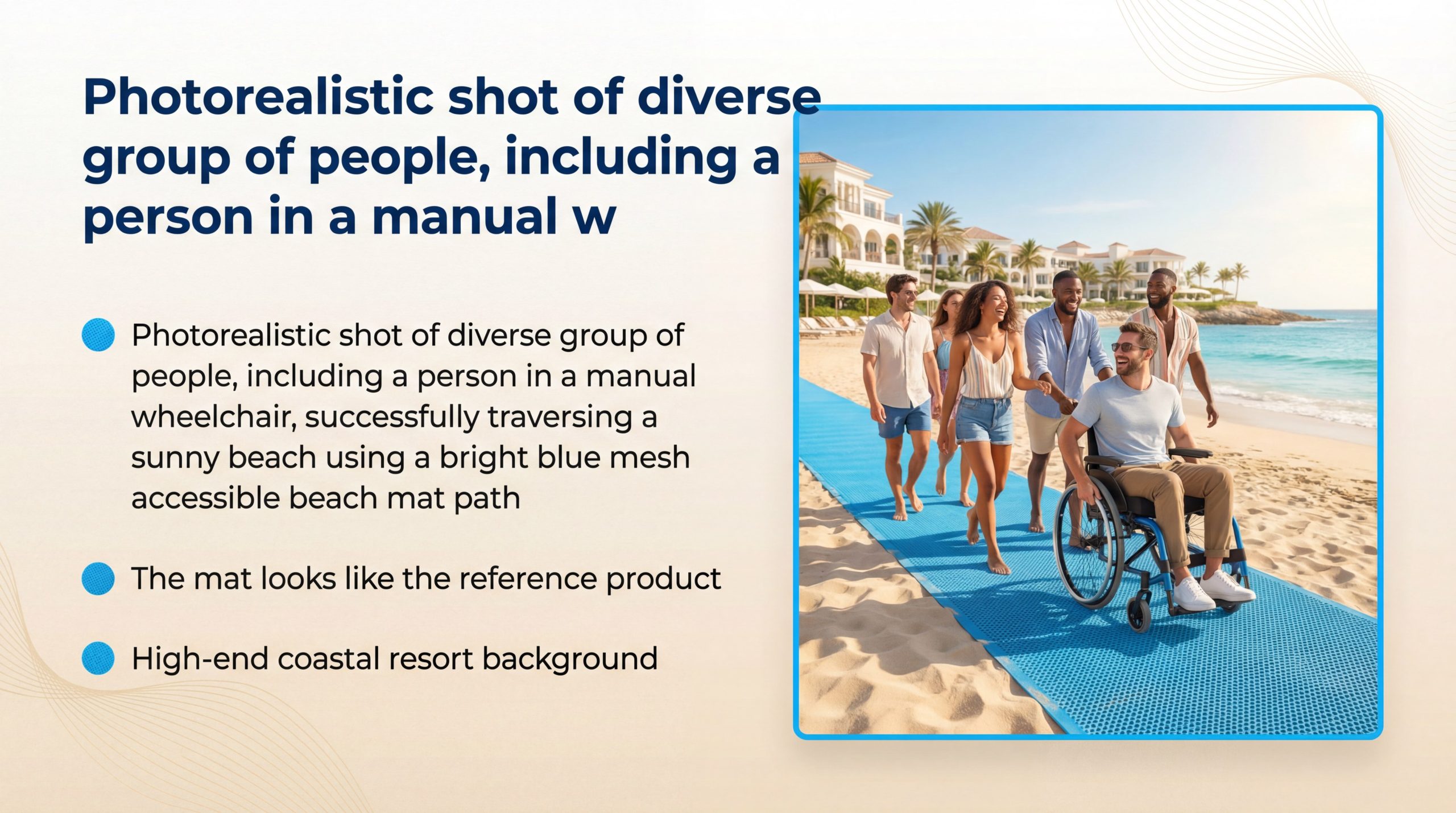
You should choose an accessible beach mat to ensure that your shoreline meets modern inclusion standards while protecting the natural environment from heavy foot traffic. Providing a designated pathway allows everyone to navigate the transition from parking lots to the tide line without the risk of getting stuck or injured.
Enhancing public inclusion on the shore
How can you make sure every guest feels welcome at your facility? Creating a clear, blue-colored pathway signals to the community that you prioritize the needs of seniors, parents, and individuals with disabilities.
- It builds a sense of community belonging.
- It reduces the physical effort required to traverse soft sand.
- It encourages longer visits and higher guest satisfaction.
The best part? You create a visual landmark that guides people safely across the dunes while maintaining the aesthetic beauty of the coastline. This simple addition ensures that no one is left behind during a family outing or a corporate beach retreat.
How does it help coastal resorts?
Are you looking for ways to improve your resort’s accessibility rating? By installing a professional surfacing system, you immediately increase the value of your property and attract a wider demographic of travelers.
- It improves your compliance with international accessibility guidelines.
- It protects your investment in high-end beach furniture by providing a stable base.
- It minimizes the amount of sand tracked into hotel lobbies and rooms.
Think about it: A resort that cares about accessibility is a resort that cares about its guests’ comfort. Providing these paths demonstrates a commitment to premium service that visitors will remember and share with others.
Key Takeaway: Providing an accessible path ensures that everyone, regardless of mobility, can enjoy the natural beauty of the beach safely.
| Feature | Primary Impact | User Benefit |
|---|---|---|
| Inclusion | Eliminates physical barriers | Social equity for all |
| Safety | Reduces trip hazards | Confidence on soft sand |
| Compliance | Meets ADA/ABA standards | Legal and ethical peace of mind |
Providing these paths is not just a legal requirement but a transformative gesture that opens the natural world to everyone.
What sizes does a roll out accessible beach mat offer?
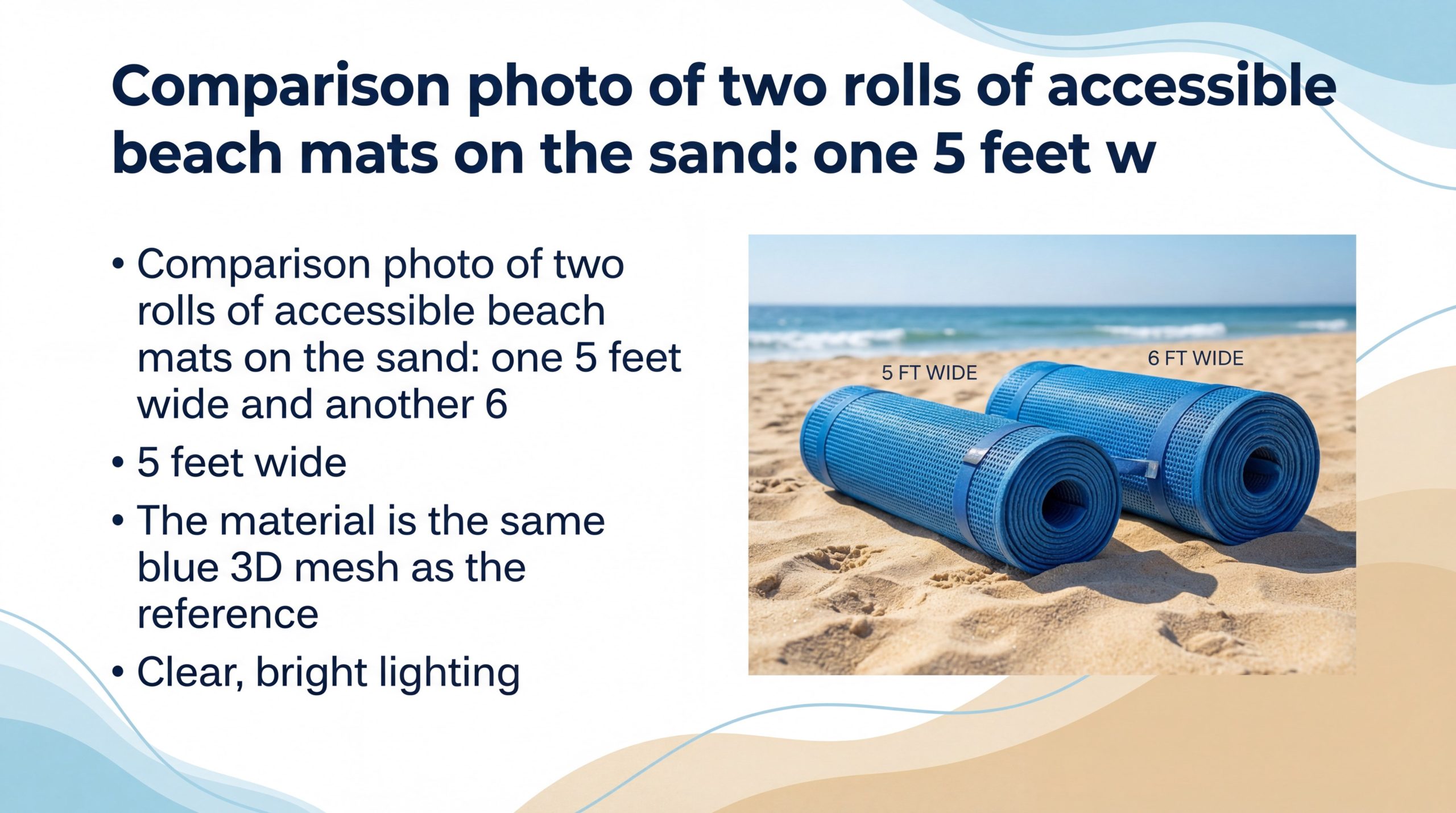
An accessible beach mat typically comes in 5-foot and 6.5-foot widths to accommodate different levels of pedestrian traffic and specific mobility equipment requirements. Selecting the right width is the first step in designing a functional layout that works for your specific location.
Benefits of the 5-foot width option
Why is the 5-foot width considered the standard for most beach applications? This size provides ample space for a single manual or electric wheelchair to navigate comfortably while remaining lightweight and easy to manage.
- It is ideal for low-to-medium traffic areas.
- It fits perfectly on narrow dune crossings and existing boardwalks.
- It offers the highest level of portability for seasonal setups.
Here is the deal: You can deploy these sections quickly without needing a large crew or specialized machinery. They are the perfect balance between providing a usable surface and maintaining a small footprint on the sand.
Why select the 6.5-foot width version?
Do you need to manage high volumes of visitors during the peak summer season? The 6.5-foot width is engineered for busy public beaches where people frequently need to pass each other in opposite directions.
- It allows for two-way traffic without congestion.
- It provides extra room for wider all-terrain equipment.
- It creates a more “permanent” feel for high-end resort installations.
But that’s not all. The extra width adds significant stability and weight to the installation, making it even more resistant to shifting in high-wind environments. You gain a more robust infrastructure that feels like a solid extension of your existing walkways.
Can these mats be customized in length?
Is your path to the water longer than a standard roll? You have the flexibility to connect multiple sections together to create a seamless walkway that spans hundreds of feet if necessary.
- Sections can be joined with secure high-tensile connectors.
- You can create “T” or “L” junctions for complex layouts.
- Custom lengths allow you to reach the tide line regardless of beach depth.
Believe it or not: You can actually tailor the entire system to follow the natural contours of your landscape. This means you don’t have to change the beach to fit the mat; the mat fits the beach.
Key Takeaway: Choosing between 5-foot and 6.5-foot widths allows locations to accommodate different traffic volumes and specific ADA requirements.
| Feature | 5′ Width Mat | 6.5′ Width Mat |
|---|---|---|
| Best For | Standard wheelchair access | High-traffic passing lanes |
| Portability | Highly lightweight | Maximum stability |
| Compliance | ADA Standards | Enhanced ADA/ABA space |
Matching the mat width to your expected visitor volume ensures a smooth experience for both staff and beachgoers.
Is your accessible beach mat made of eco-friendly fabric?
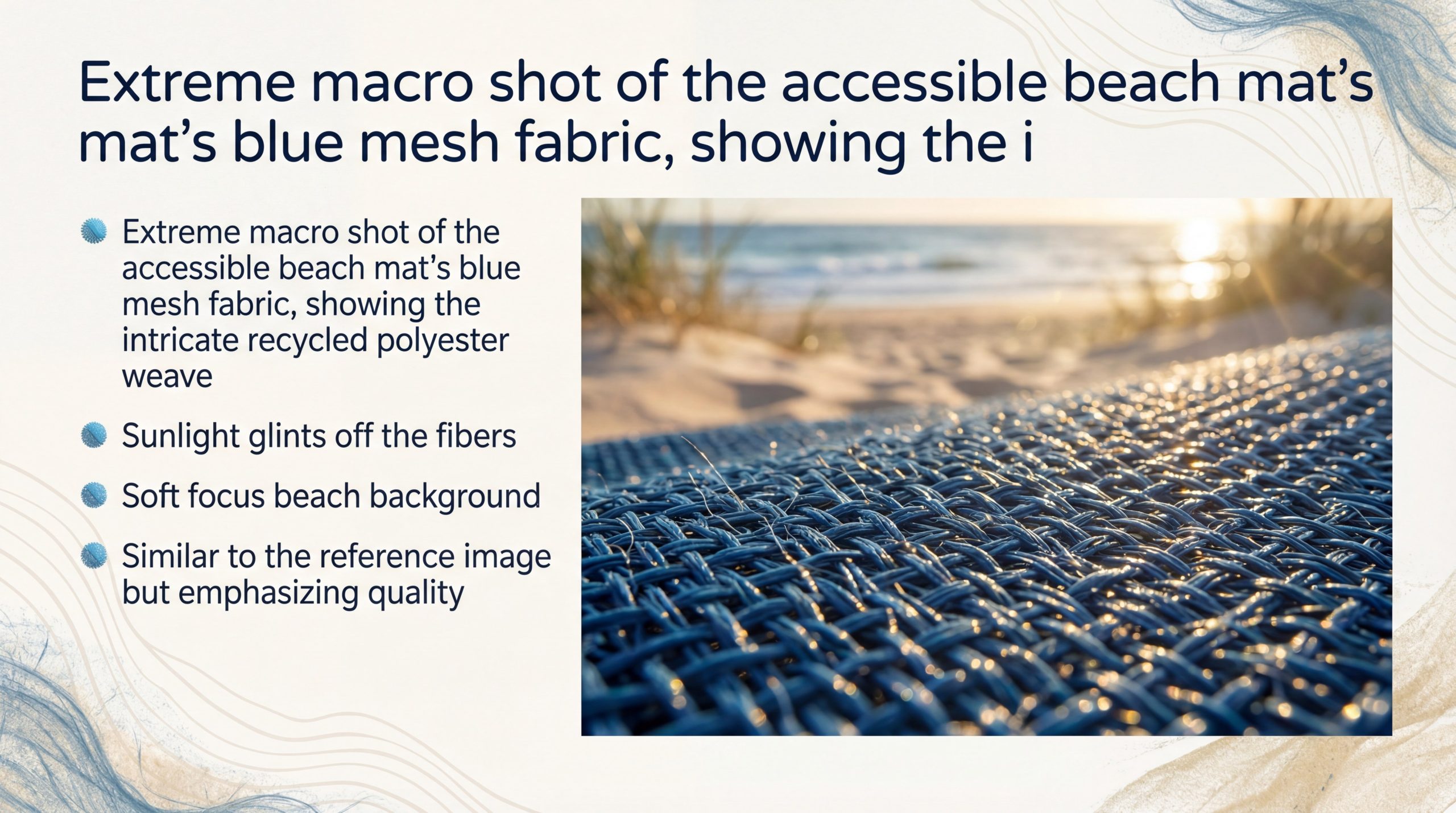
Yes, a high-quality accessible beach mat is constructed from 100% recycled polyester mesh to support environmental conservation while maintaining professional-grade durability. This commitment to sustainability ensures that you are protecting the very coastline you are making accessible.
Recycled materials and sustainability
How does using recycled polyester help the ocean? By utilizing repurposed plastics, these mats prevent waste from entering ecosystems and reduce the carbon footprint of your facility’s infrastructure.
- It transforms plastic waste into a long-term mobility solution.
- It aligns with “Go Green” initiatives for municipalities and resorts.
- It offers a sustainable alternative to wood or concrete paths.
The truth is: You are investing in a product that respects the earth as much as it respects human rights. The fabric is specifically woven to be tough enough for outdoor use while remaining entirely recyclable at the end of its life.
Is the fabric resistant to ultraviolet rays?
Will the sun degrade your path over time? The mesh is treated with high-grade UV stabilizers that prevent the blue color from fading and the fibers from becoming brittle under intense solar exposure.
- It maintains its structural integrity in extreme heat.
- It stays cool to the touch for barefoot users.
- It resists the “sun-bleached” look that ruins resort aesthetics.
You might be wondering: Does it hold up in the rain too? The material is naturally hydrophobic and mildew-resistant, meaning it won’t rot or smell after a coastal storm or high tide immersion.
Key Takeaway: Modern access mats utilize recycled polyester to protect the environment while offering high resistance to sun, water, and mildew.
| Material Property | Specification | Benefit |
|---|---|---|
| Composition | 100% Recycled Polyester | Environmental protection |
| UV Resistance | High-grade stabilization | Prevents fading/degradation |
| Weight | ~0.27 lbs/sqft | Easy manual handling |
The use of advanced recycled polymers creates a surface that is as kind to the planet as it is useful to people.
Does an accessible beach mat provide nonslip protection?
An accessible beach mat provides superior nonslip protection through a patented 3D mesh design that creates a high-traction surface for wheels and feet alike. This specialized texture is essential for preventing accidents in environments where sand and water create slippery conditions.
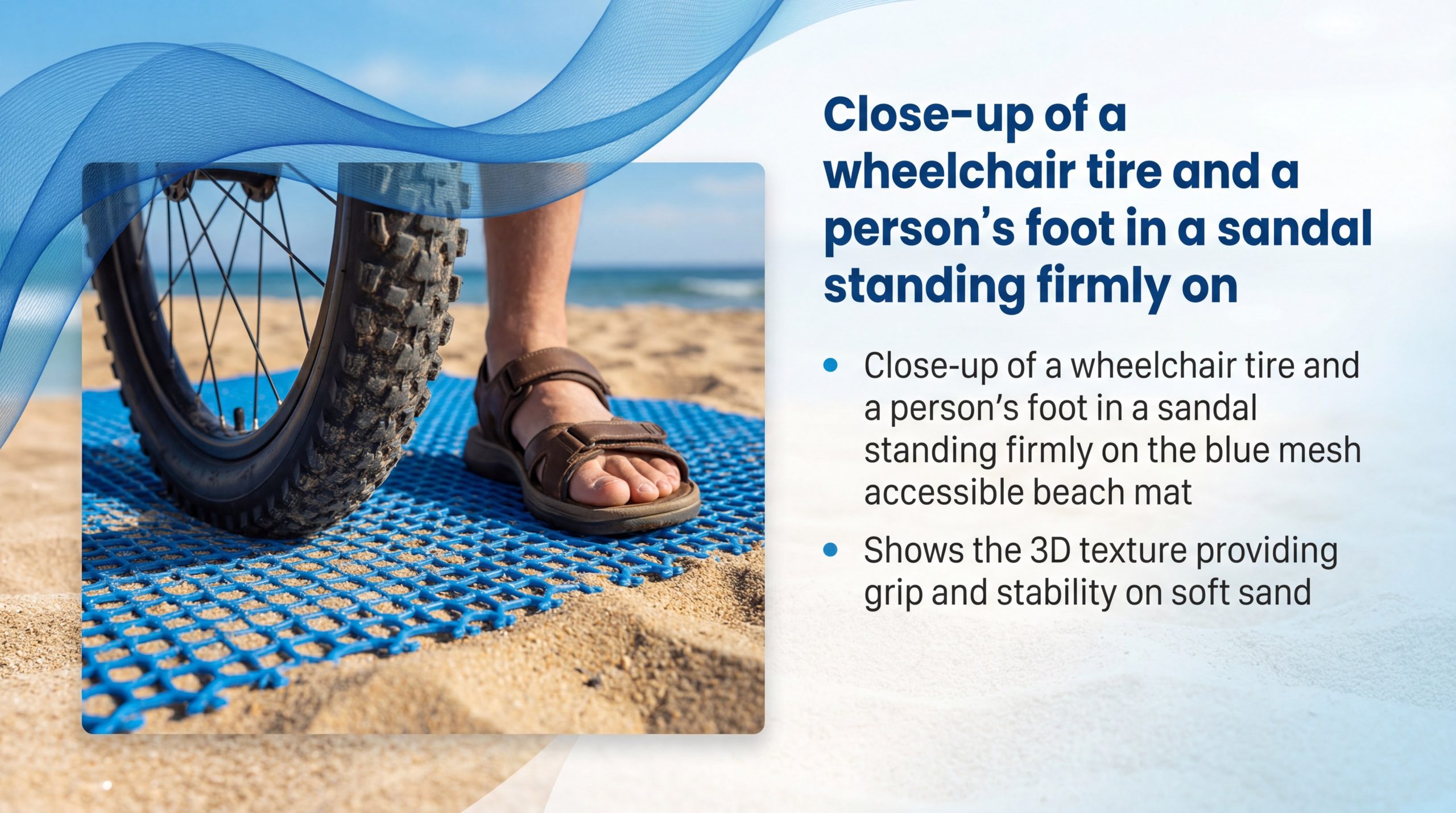
Patented 3D design for maximum stability
What makes the 3D surface different from a regular tarp? The weave features a raised, semi-rigid structure that allows tires to grip the mat without sinking or sliding, even when the surface is covered in loose grains.
- It provides essential traction for manual wheelchairs.
- It prevents the “slip-and-slide” effect of wet plastic.
- It offers a firm footing for seniors using walkers or canes.
Think about it: Safety is the most important feature of any public walkway. By choosing a surface with an engineered grip, you are actively reducing the risk of falls and liability at your beach.
Can it handle slopes and beach inclines?
Will the mat stay in place on a steep dune? The flexible nature of the roll-out material allows it to contour to the ground, while the high-friction underside prevents it from migrating down slopes.
- It remains stable on inclines up to 15 degrees.
- It conforms to the natural undulations of the sand.
- It provides a reliable climbing surface for strollers.
Here is the best part: You don’t need to level the beach before installation. The mat works with the existing topography to create a safe route that follows the natural flow of the land.
How does it perform in wet weather?
Does rain make the path dangerous? Because the mesh is permeable, water drains through the holes instantly, leaving the top surface dry and slip-resistant within minutes of a downpour.
- It eliminates puddling and standing water.
- It prevents the buildup of slippery algae or moss.
- It maintains high friction even when fully saturated.
The truth is: You get a path that is ready for use 365 days a year, regardless of the coastal weather patterns. This reliability is what makes professional-grade mats superior to DIY solutions.
Key Takeaway: A specialized 3D surface design provides essential traction for both manual wheelchairs and pedestrians, even on steep or wet terrain.
| Condition | Performance Level | Safety Feature |
|---|---|---|
| Dry Sand | Excellent | Semi-rigid stability |
| Wet/Rainy | High Traction | Nonslip surfacing |
| Inclines | Superior | Anti-slide properties |
Engineering a high-traction surface is the key to providing confidence and independence to every beach visitor.
Is an accessible beach mat durable enough for water?
Yes, an accessible beach mat is specifically engineered for marine environments, featuring salt-water resistance and military-grade durability that allows it to extend directly into the surf zone. Originally inspired by tactical vehicle recovery mats, this technology is built to survive the harshest coastal conditions.
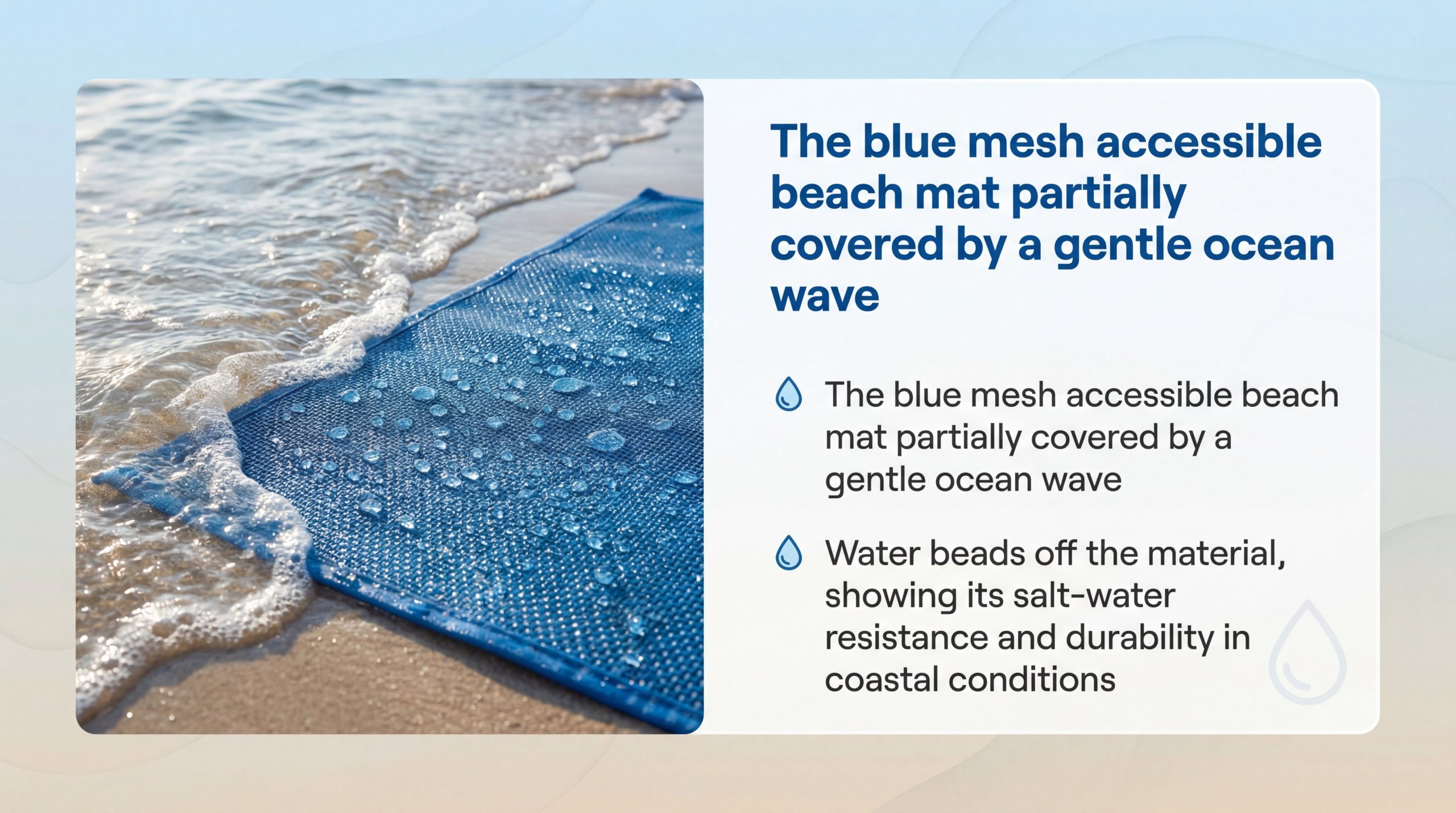
Resistance to salt water and tearing
How does the mat survive constant exposure to salt? The polyester fibers are non-corrosive and treated to resist the abrasive nature of moving sand and crashing waves.
- It will not rust, corrode, or weaken in salt air.
- It features high-tensile strength to prevent tearing.
- It handles the weight of heavy equipment without stretching.
Believe it or not: These mats are so tough they were originally tested for military landing operations. You are getting that same rugged technology for your public park or private resort.
How does it perform under vehicle traffic?
Can lifeguard trucks or utility vehicles drive over the path? While primarily designed for pedestrians, the semi-rigid structure can support the occasional crossing of light beach vehicles without collapsing.
- It prevents vehicles from rutting the sand.
- It protects the pedestrian path from damage.
- It serves as a dual-purpose access point for emergency staff.
But that’s not all. The mat’s ability to distribute weight means it protects the sensitive root systems of dune grasses if a vehicle must cross a protected area. It is a tool for both human access and environmental preservation.
Key Takeaway: Originally inspired by military-grade technology, these mats are built to withstand salt-water immersion and heavy repeated use.
| Durability Factor | Resistance Level | Impact |
|---|---|---|
| Corrosion | Salt-water proof | Long lifespan in coastal air |
| Mechanical | Tear-resistant | Supports light vehicles |
| Thermal | -40°C to +80°C | All-weather reliability |
Investing in marine-grade materials ensures that your accessibility project remains functional for years rather than months.
How easy is it to install an accessible beach mat?
An accessible beach mat is incredibly easy to install, as its lightweight roll-out design allows two people to deploy a 50-foot section in just a few minutes. You do not need heavy machinery or permanent foundations to create a professional-quality path on your beach.
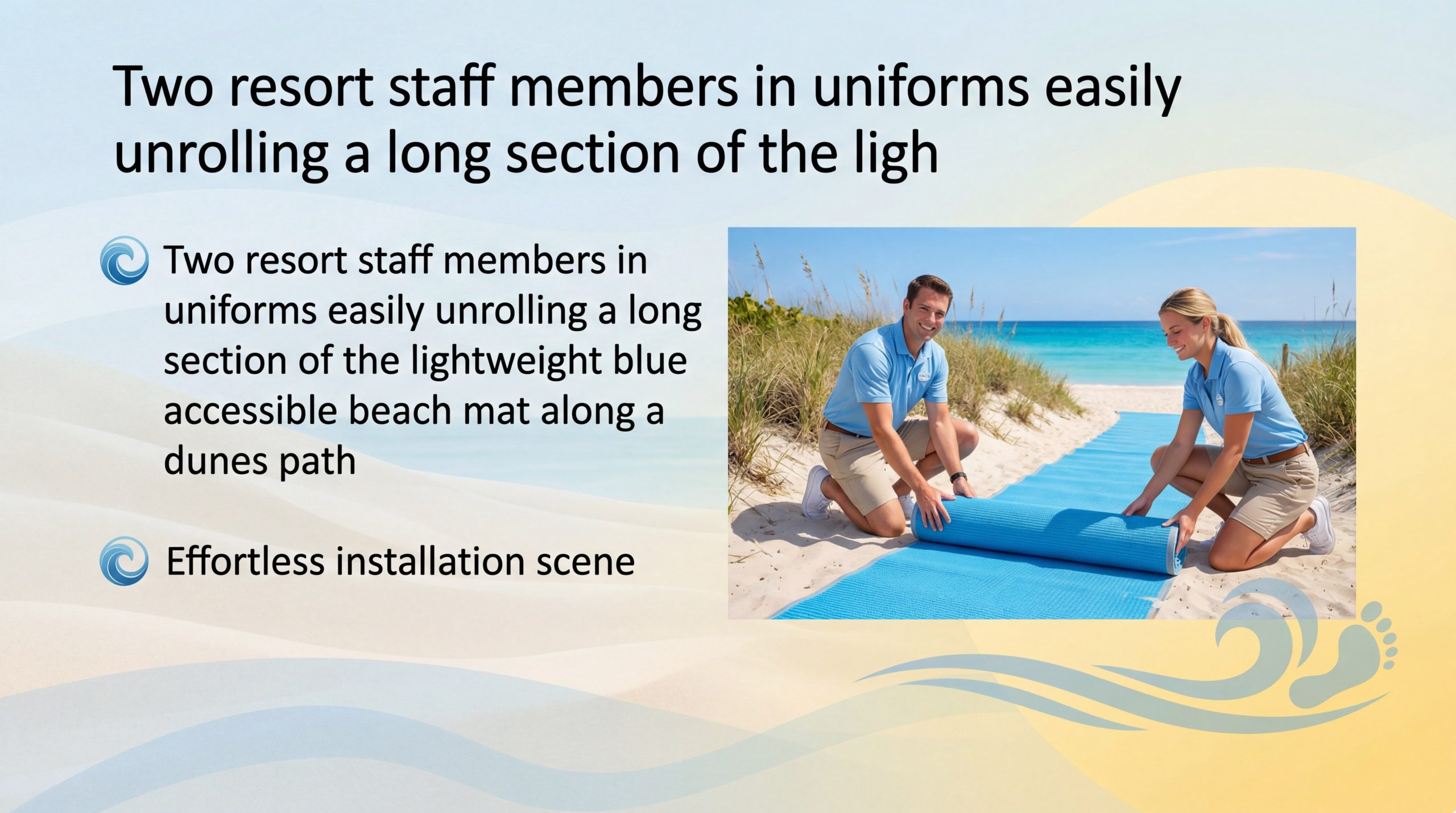
Lightweight design for quick deployment
Why is weight so important for beach staff? At only 0.27 lbs per square foot, these mats can be hand-carried to the shoreline without the need for trucks or trailers that might damage the dunes.
- It allows for rapid setup before a morning event.
- It makes seasonal storage a simple task for any crew.
- It reduces the labor costs associated with beach maintenance.
The best part? You can adjust the layout on the fly. If the tide line shifts or a new event requires a different path, you simply roll it up and reposition it in a matter of moments.
What tools are needed for setup?
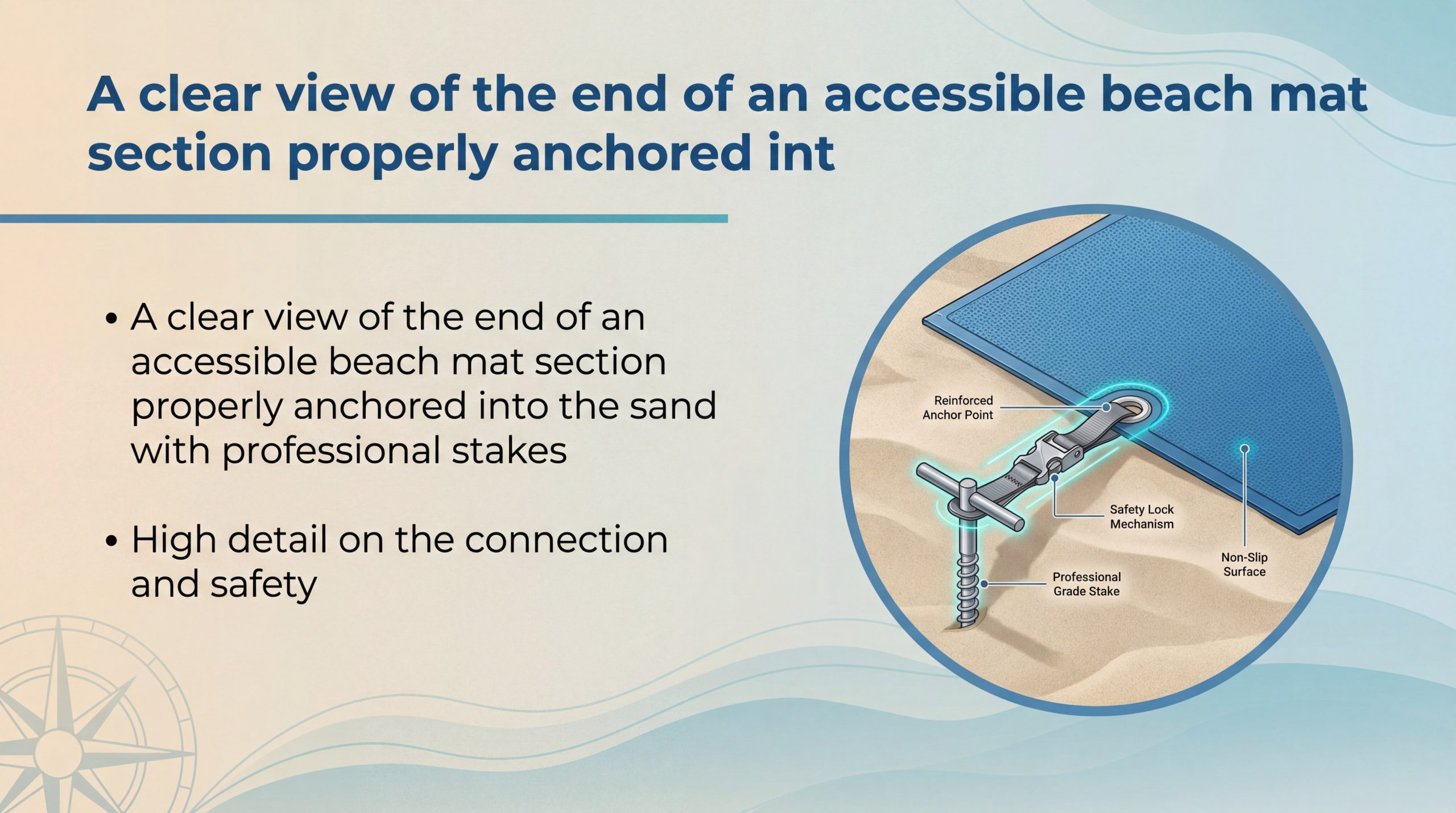
Are you worried about needing a toolbox for installation? The primary tools required are simple stakes and a mallet to secure the mat’s edges into the sand, ensuring it stays flat and safe.
- No power tools or professional contractors are needed.
- Anchor pins are designed to be flush with the surface.
- Connection kits allow you to snap sections together easily.
Think about it: If your staff can roll out a carpet, they can install this accessibility system. It is designed to be user-friendly so that you can focus on serving your guests instead of struggling with equipment.
Key Takeaway: The lightweight roll-out design allows for rapid installation and retrieval, often requiring only two people and a few minutes for a 50-foot section.
| Installation Step | Person Count | Time Est. (50′) |
|---|---|---|
| Unrolling | 1-2 | 2-3 Minutes |
| Securing/Anchoring | 1 | 5 Minutes |
| Retrieval | 1-2 | 4 Minutes |
A simple, tool-free installation process makes it easy for any facility to implement accessibility on short notice.
What maintenance does an accessible beach mat require?
The maintenance for an accessible beach mat is remarkably low, requiring only periodic sweeping or the use of a leaf blower to clear excess sand from the surface. Because the mesh is permeable, most sand falls through the holes naturally, keeping the path clear for users without constant intervention.
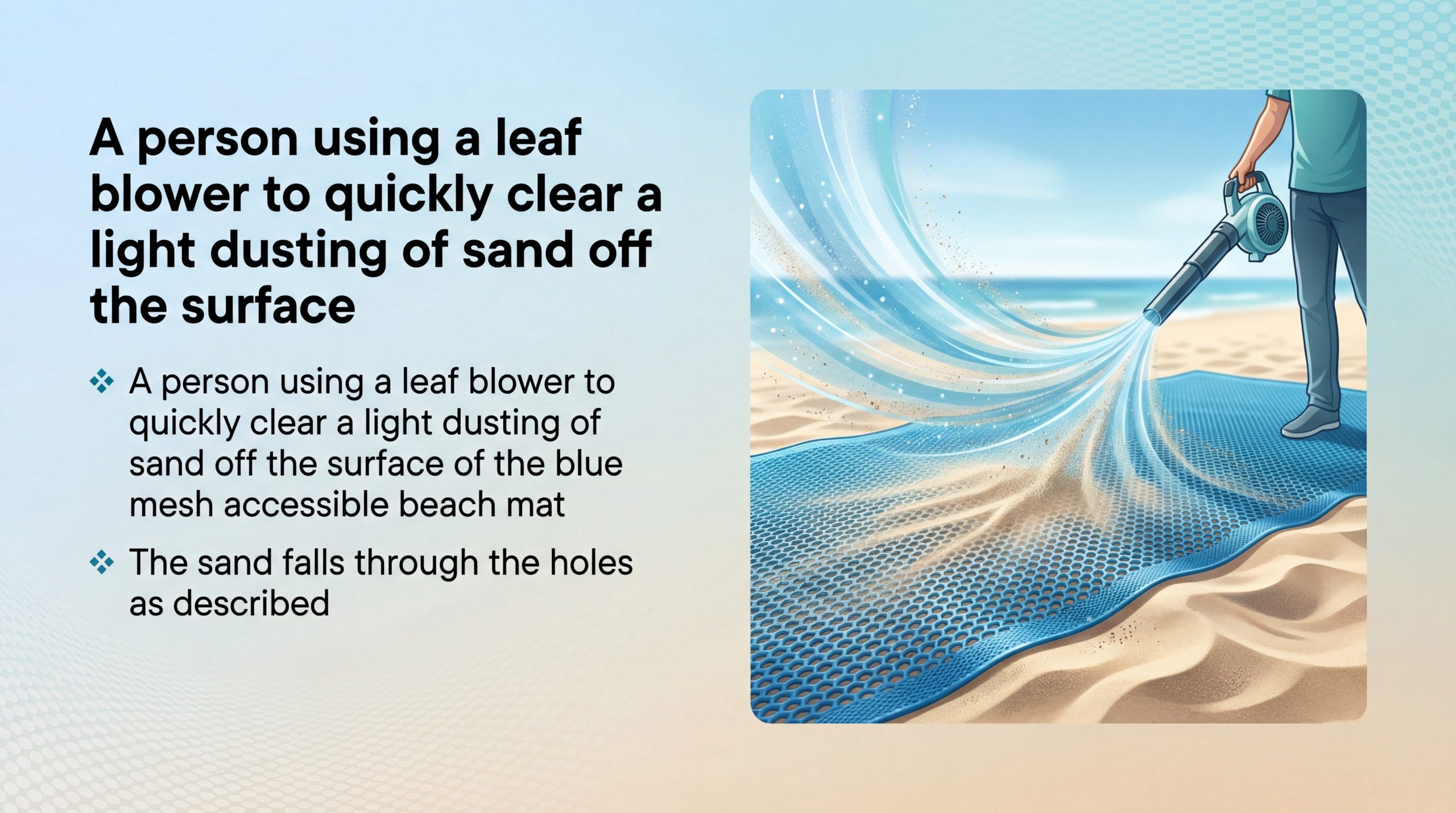
Permeable structures for sand drainage
How does the “self-cleaning” feature work? The mesh is designed with precise openings that allow wind-blown sand to pass through to the ground below rather than piling up on top.
- It prevents the path from becoming buried over time.
- It reduces the frequency of manual cleaning.
- It keeps the blue color visible for those with visual impairments.
The truth is: You spend less time maintaining the path and more time enjoying the beach. This design is a major advantage over solid plastic or wood paths that act as sand traps.
Can you use a leaf blower for cleaning?
What is the fastest way to clear the surface after a windy day? A standard leaf blower can clear a 100-foot section of mat in less than five minutes, making daily upkeep an effortless task for your maintenance team.
- It quickly removes light dustings of sand.
- It blows away organic debris like seaweed or leaves.
- It ensures the path remains high-traction and safe.
Here is the deal: You don’t need water or chemicals to keep the mat looking new. A quick blow-off is all it takes to maintain the “WOW” factor for your guests every morning.
Key Takeaway: High permeability allows sand to filter through the mat naturally, minimizing upkeep to simple sweeping or blowing off surface debris.
| Maintenance Task | Frequency | Method |
|---|---|---|
| Sand Removal | As needed | Broom or leaf blower |
| Debris Clearing | Weekly | Manual inspection |
| Storage | Seasonal | Roll up and store dry |
By minimizing the labor required for upkeep, these mats offer a cost-effective long-term solution for coastal accessibility.
Where can you use a portable accessible beach mat?
You can use a portable accessible beach mat in a wide variety of outdoor settings, including national parks, coastal resorts, snowy trails, and even outdoor event spaces like cemeteries or garden weddings. Their versatile design makes them the go-to solution for any terrain where wheeled equipment or pedestrians struggle with soft ground.
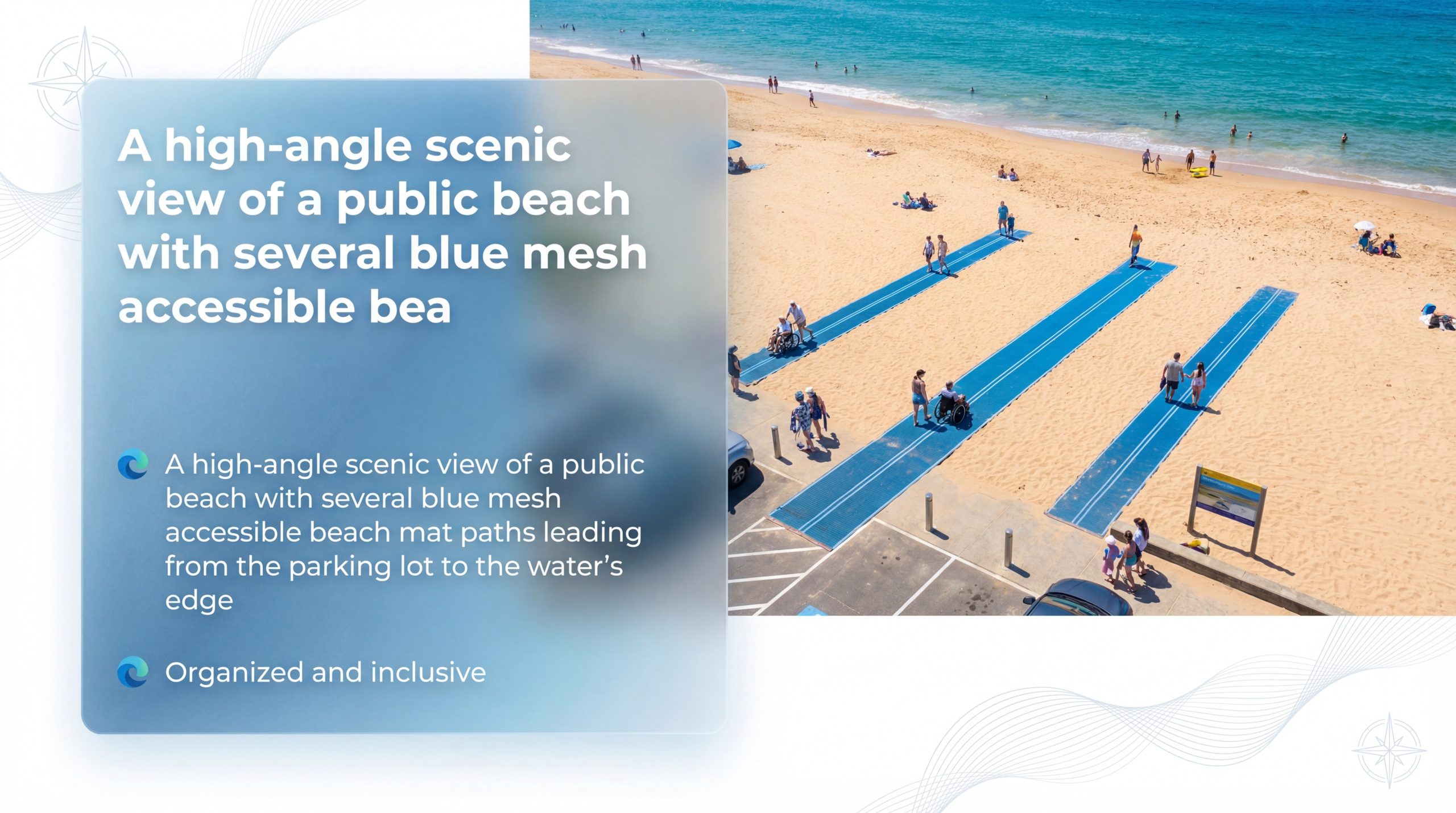
Creating ADA paths in national parks
How do you protect fragile ecosystems while allowing public access? These mats provide a stable path that prevents hikers and wheelchairs from crushing sensitive dune vegetation or eroding soil.
- They are perfect for designated nature trails.
- They allow for seasonal access without permanent construction.
- They meet federal requirements for park accessibility.
But that’s not all. Because they are removable, you can protect the land during the off-season or move the path if the environment changes. It is the ultimate tool for “Leave No Trace” accessibility.
Are they effective for snow and cemeteries?
Can you use the same mat in the winter? Yes, the nonslip mesh works excellently on snow and ice, providing a stable walkway for outdoor winter events or maintaining access to sensitive sites year-round.
- They prevent visitors from slipping on icy cemetery paths.
- They allow strollers and wheelchairs to move over packed snow.
- They provide a mud-free surface for outdoor spring weddings.
Believe it or not: One investment can solve your accessibility problems across all four seasons. Whether it’s sand, snow, or mud, the 3D mesh provides the firm foundation you need.
Key Takeaway: Beyond the shoreline, these mats provide versatile access solutions for parks, dunes, snowy paths, and outdoor event flooring.
| Application | Primary Benefit | User Group |
|---|---|---|
| National Parks | Trail protection | Hikers/Wheelchairs |
| Hotels | Premium guest service | Families with strollers |
| Events | Mud/Ground protection | All attendees |
The versatility of this surfacing means you can solve mobility challenges across your entire property with a single system.
Who benefits most from an accessible beach mat path?
The people who benefit most from an accessible beach mat path include wheelchair users, parents with strollers, seniors with walkers, and even barefoot guests who appreciate a cool, stable surface to walk on. It is a “universal” solution that improves the beach experience for every single person who visits your coast.
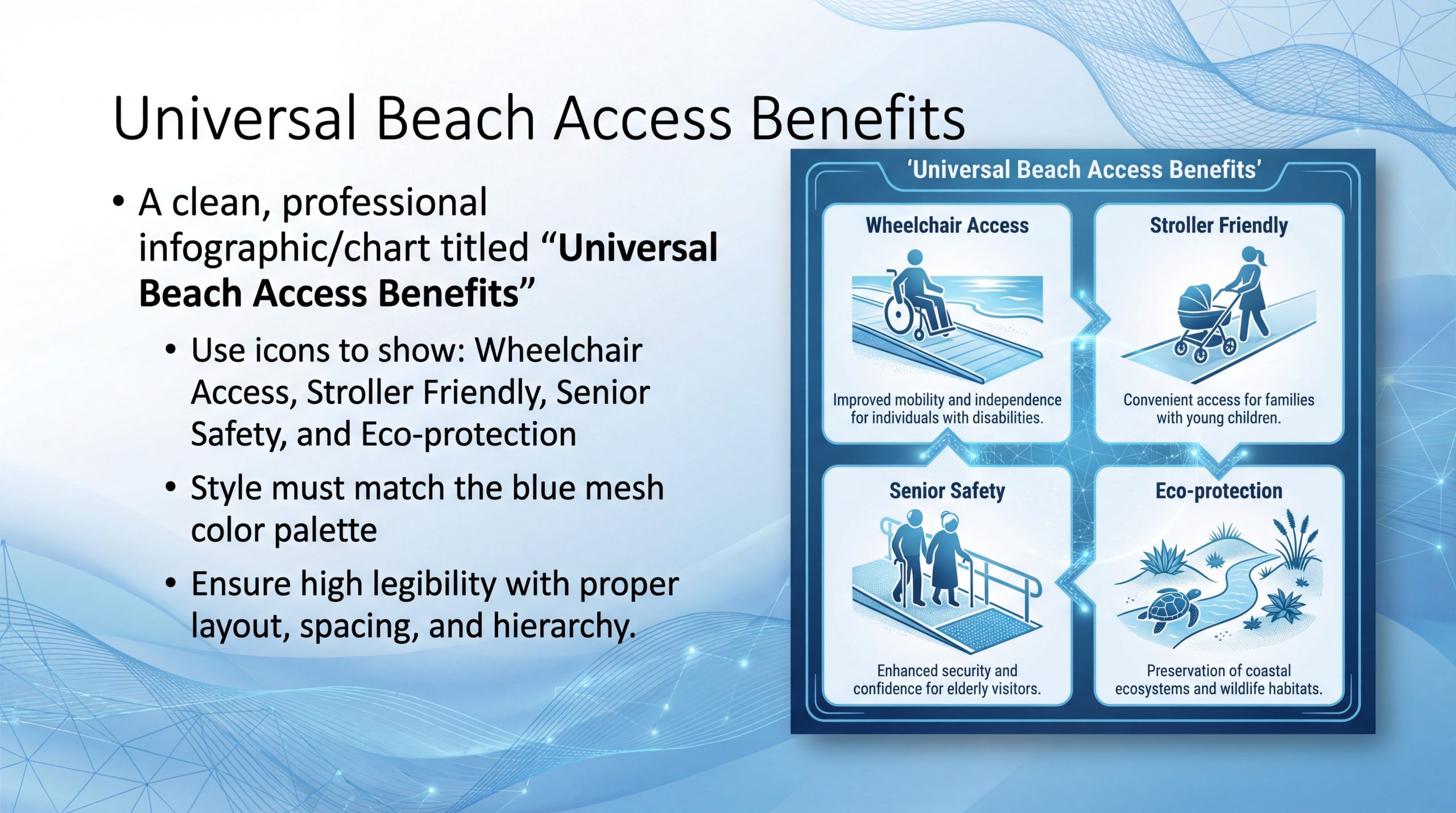
Support for wheelchairs and strollers
Have you ever tried to push a stroller through deep sand? It is an exhausting task that often leads to people giving up, but a roll-out path makes it as easy as walking on a sidewalk.
- It reduces rolling resistance for manual wheelchairs.
- It prevents stroller wheels from digging into the sand.
- It allows for independent movement without needing a pusher.
The best part? You are enabling parents and individuals with disabilities to be part of the group rather than watching from the sidelines. True inclusion means everyone arrives at the water together.
Improving safety for elderly visitors
Is the beach a fall risk for your older guests? A firm, level surface provides the confidence and stability that seniors need to enjoy the shore without the fear of losing their balance on uneven ground.
- It offers a predictable footing for those with balance issues.
- It serves as a visual guide for the safest route.
- It reduces the physical strain on joints and muscles.
Think about it: As our population ages, the demand for accessible tourism is growing. Providing a safe path is a simple way to show your elderly visitors that their safety and comfort are your priorities.
Key Takeaway: The mat creates a “universal” path that serves people with disabilities, parents with strollers, and seniors with walkers simultaneously.
| User Category | Main Benefit | Accessibility Need |
|---|---|---|
| Wheelchair Users | Reduced rolling resistance | ADA/ABA compliance |
| Parents | Stroller-friendly surface | Family inclusion |
| Seniors | Firm, level footing | Fall prevention |
Universal design principles ensure that by helping those with the most needs, you actually improve the experience for everyone.
How do I select the best accessible beach mat?
You select the best accessible beach mat by evaluating your beach’s typical traffic volume, the specific terrain characteristics, and the local ADA compliance requirements you must meet. Choosing a professional-grade blue mesh system ensures you get the patented 3D traction and durability needed for a long-term coastal investment.
Frequently asked questions about mats
What is the first step in the selection process? You should measure the distance from your primary access point to the high-tide line to determine the total length of the path required.
- Consider the 6.5-foot width for high-traffic resort areas.
- Opt for the 5-foot width for private or low-volume paths.
- Ensure the color provides enough contrast for visually impaired users.
Here is the deal: Quality matters more than price when it comes to safety. A cheaper, flat tarp will not provide the 3D grip necessary to prevent accidents on slopes or wet sand.
What is the ideal budget for beach access?
Are you wondering about the return on investment for accessibility? While professional surfacing is an upfront cost, the increase in guest satisfaction and the reduction in maintenance labor provide long-term financial benefits.
- It prevents costly permanent construction on the beach.
- It reduces the need for constant sand management.
- It opens your facility to a market of travelers with disabilities.
The truth is: You are not just buying a mat; you are buying an inclusive reputation. That value far outweighs the initial purchase price of the equipment.
Key Takeaway: Selecting the right mat involves evaluating the terrain, expected foot traffic, and specific local ADA compliance requirements.
Investing in a 5′ or 6.5′ roll-out access solution is a transformative step for any coastal or park facility. By prioritizing nonslip, eco-friendly, and durable surfacing, you ensure that the outdoors remains open to everyone. To learn more about implementing these solutions or to view our full range of mobility equipment, please contact us today.
FAQ
It is entirely possible to create a professional and inclusive beach environment using the right portable equipment.
Can I install the mat on dunes?Yes, the flexible roll-out design conforms to the natural contours of sand dunes while protecting the underlying vegetation from being crushed by foot traffic.
What’s the best way to clean the surface?A standard leaf blower or a stiff-bristled broom is the most effective way to clear sand and organic debris from the mesh surface daily.
How many people are needed for setup?While two people are ideal for speed and alignment, the lightweight nature of the material allows a single person to manage shorter sections easily.
Is an accessible beach mat salt-water safe?Absolutely; the materials are specifically engineered from non-corrosive recycled polyester to resist the effects of salt water and coastal humidity.
Can I leave the mat out during winter?Yes, these mats are designed to withstand extreme temperature ranges from -40°C to +80°C, though seasonal storage in a dry place can extend the product’s lifespan.