To choose the right floating beach wheelchair, you must prioritize marine-grade materials like aluminum and high-buoyancy armrests that ensure stability in the water. Many coastal destinations struggle with traditional mobility devices that sink into the sand, leaving guests or citizens feeling excluded and frustrated. This lack of accessibility can damage a resort’s reputation and lead to non-compliance with public safety laws. By investing in a high-quality floating beach wheelchair , you transform the coastline into a truly inclusive environment where the joy of the ocean is accessible to everyone. Our engineered solutions combine effortless sand navigation with safe aquatic immersion to meet the highest professional standards.
What is a floating beach wheelchair?
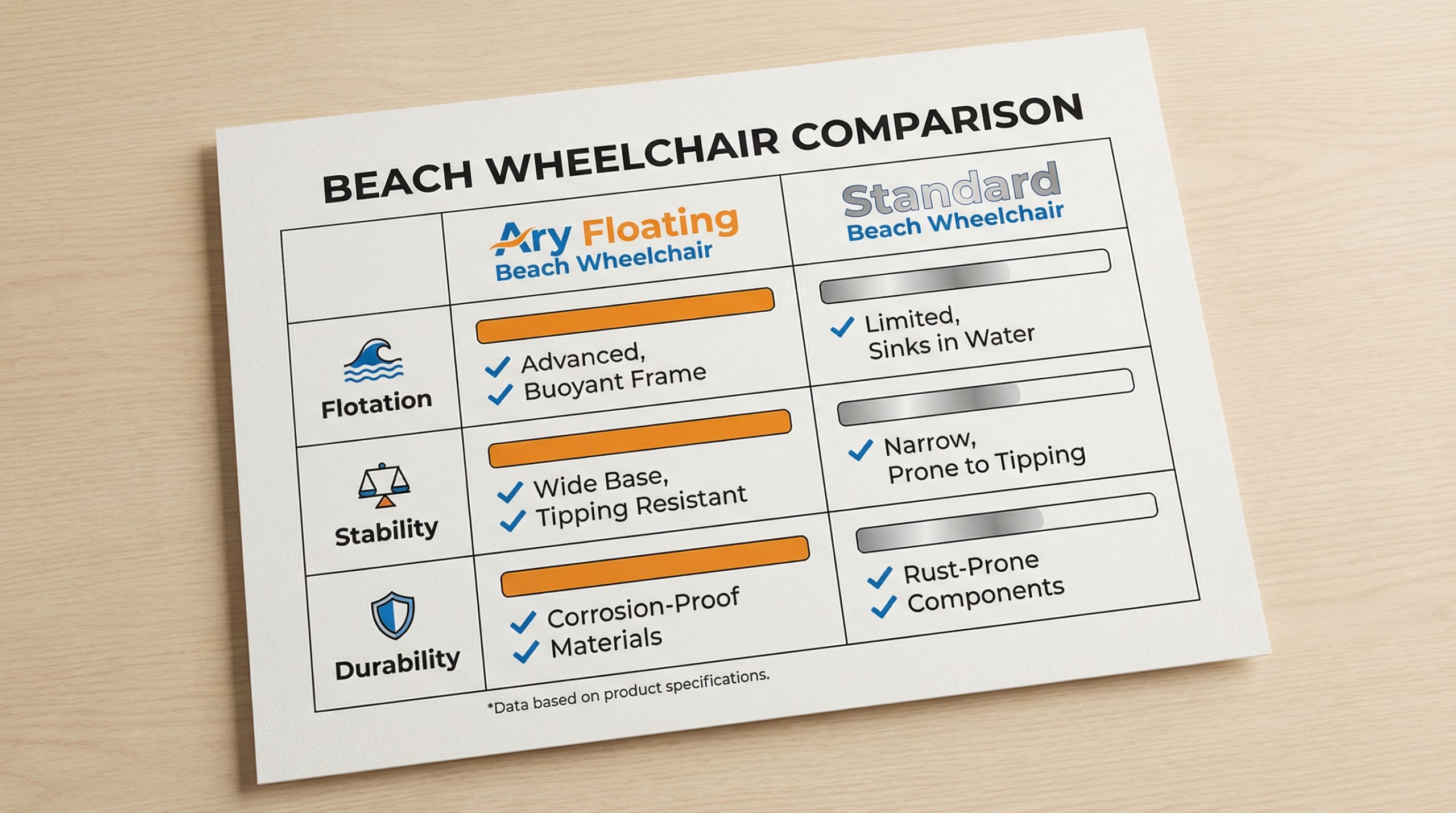
A floating beach wheelchair is a specialized mobility device designed with buoyant components that allow it to traverse soft sand and float safely in calm water. When you use a floating beach wheelchair, you are utilizing a machine engineered for transitions between land and sea.
Land vs. Water Capabilities
The primary function of this equipment is to bridge the gap between the shore and the surf without the user having to transfer out of the chair. Standard models often sink, but these buoyant versions stay on top of the waves.
- Low-pressure tires for sand.
- Buoyant armrests for water.
- Corrosion-resistant frame.
Here is the kicker: standard chairs simply cannot handle the buoyancy required for ocean entry.
Essential Components for Buoyancy
Every unit must feature high-density foam or air-filled pontoons to keep the user upright while in the water. You will find that the stability of the frame is just as important as the lift provided by the armrests.
Key Takeaway: Choosing a model with integrated flotation ensures that users can enjoy the water safely without the risk of the chair tipping or sinking.
| Feature | Requirement | Benefit |
|---|---|---|
| Pontoons | High-density foam | Lateral stability in water |
| Frame | Marine aluminum | Lightweight and buoyant |
| Tires | Low-pressure balloon | Glides over soft sand |
This analysis guide highlights why buoyancy is the non-negotiable factor for water-access chairs.
Why buy a floating beach wheelchair for resorts?
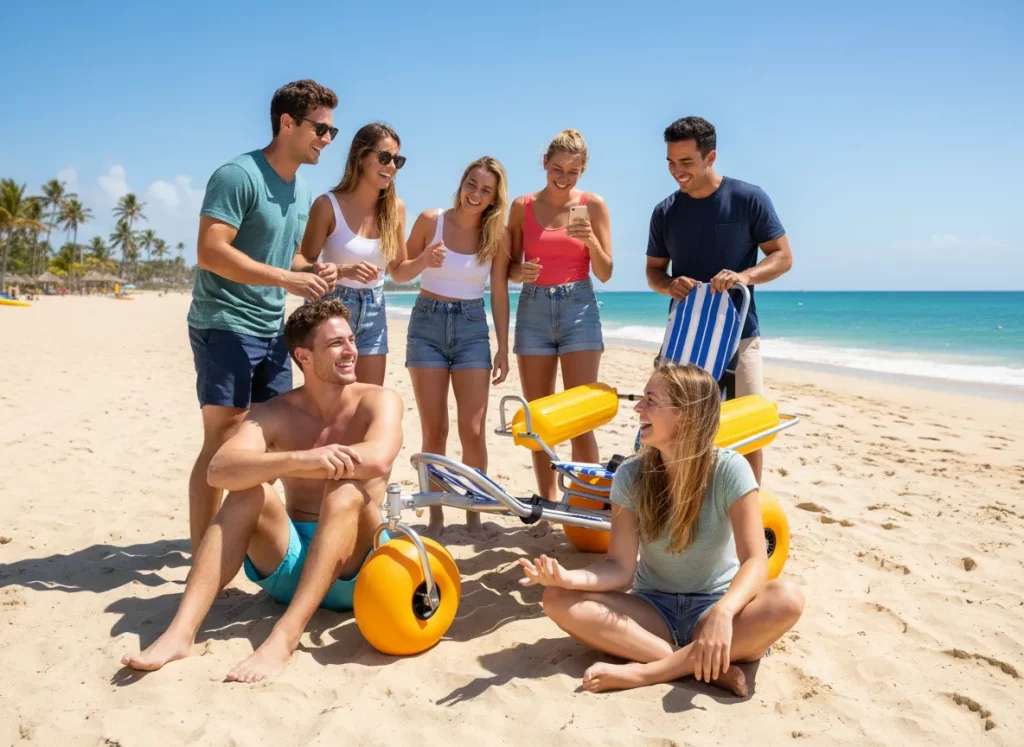
Buying a floating beach wheelchair for your resort enhances guest satisfaction and ensures your facility meets international accessibility standards. Providing a high-end floating beach wheelchair demonstrates a commitment to luxury and inclusivity that sets your property apart from competitors.
Enhancing the Guest Experience
You want every guest to have a memorable stay, regardless of their mobility levels or physical challenges. When families can visit the shoreline together, your resort becomes a preferred destination for inclusive travel.
- Improved guest loyalty.
- Positive online reviews.
- Accessible luxury branding.
But wait, there’s more. Inclusive facilities often see a significant increase in off-season bookings from senior travelers.
Legal Compliance and Safety
Public beaches and private resorts are increasingly required to provide reasonable accommodations for people with disabilities. You can avoid legal complications and fines by deploying certified equipment that prioritizes user safety in aquatic environments.
Key Takeaway: Investing in accessibility is both a moral choice and a strategic business decision that protects your resort’s reputation and legal standing.
| Metric | Impact | Strategic Value |
|---|---|---|
| Compliance | High | Avoids legal liability |
| ROI | Moderate | Increases booking rates |
| Maintenance | Low | Durable long-term asset |
Consult this table to understand the high strategic value of resort-based accessibility upgrades.
How do wheels impact a floating beach wheelchair?
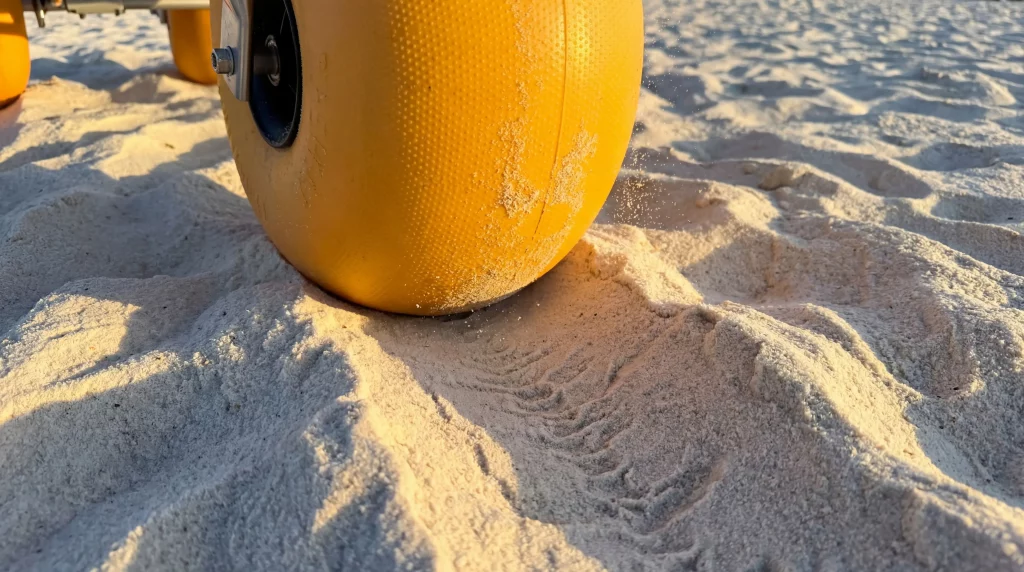
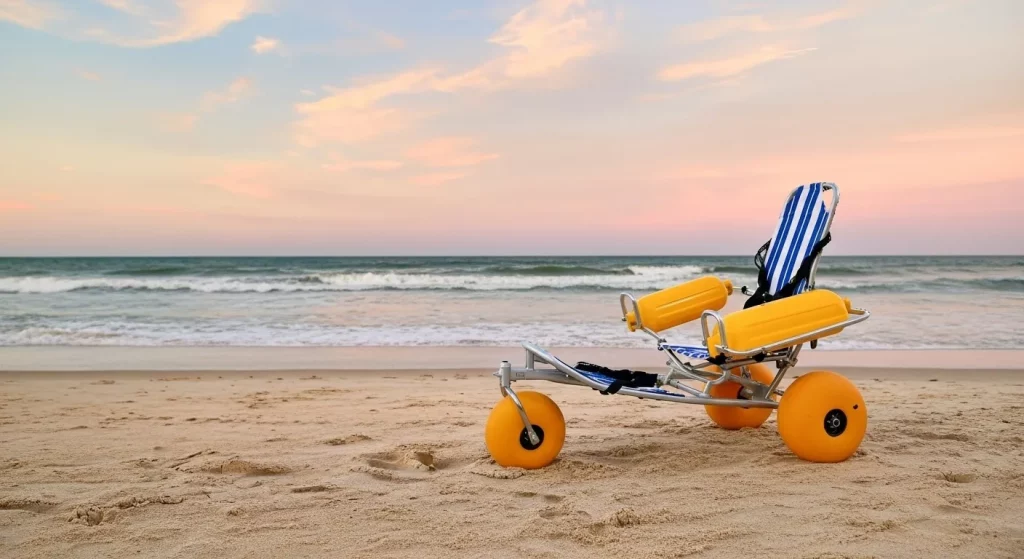
The wheels of a floating beach wheelchair determine its ability to glide over soft sand without digging in or requiring excessive force from the attendant. A high-quality floating beach wheelchair relies on low-pressure balloon tires to distribute weight across a larger surface area.
The Power of Balloon Tires
You will notice that large, orange balloon wheels are the industry standard for high-performance beach mobility. These tires operate at very low pressure, which allows them to deform slightly and “float” on top of fine grains.
- 2-4 PSI pressure range.
- Wide surface contact area.
- Shock-absorbing properties.
Think about this: narrow tires act like knives that cut into the sand, making the chair impossible to push.
Traction and Terrain Versatility
Beyond just sand, you need wheels that can handle gravel, grass, and mud during the transition from the parking lot to the beach. Professional-grade wheels ensure that the trip to the water is smooth and effortless for everyone involved.
Key Takeaway: Prioritize large-diameter balloon wheels to ensure the chair remains functional on the softest coastal terrains without sinking.
| Wheel Type | PSI Range | Best Terrain |
|---|---|---|
| Balloon | 2 – 5 PSI | Soft sand and mud |
| All-Terrain | 10 – 20 PSI | Gravel and dirt |
| Standard | 30+ PSI | Pavement only |
Use this terrain guide to select wheels that match your specific beach environment.
Are frames for a floating beach wheelchair durable?
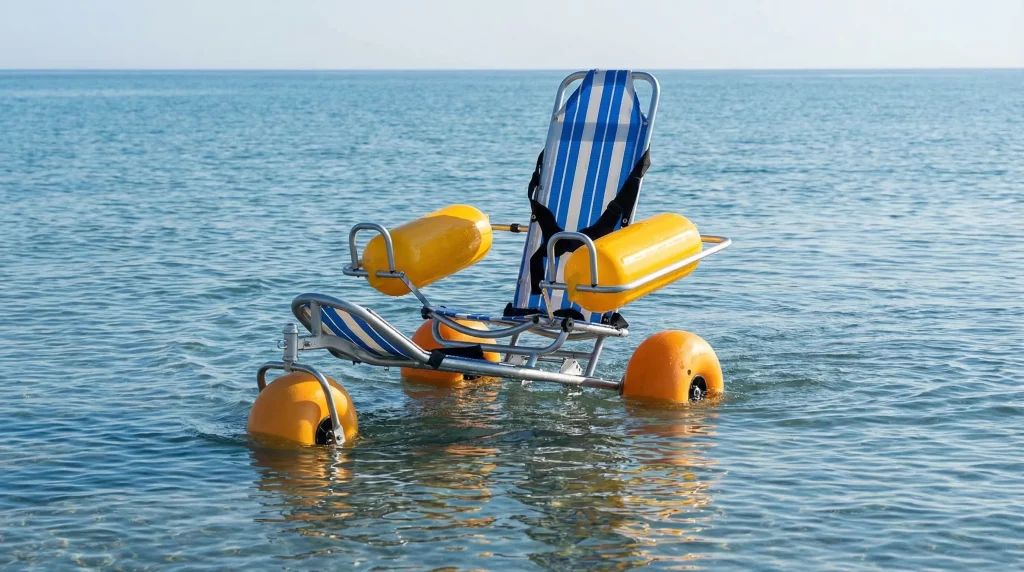
Frames for a professional floating beach wheelchair are exceptionally durable because they are constructed from marine-grade aluminum alloy. This material ensures that your floating beach wheelchair resists the corrosive effects of salt air and constant water immersion.
Marine-Grade Aluminum Benefits
You need a frame that is lightweight enough for staff to move but strong enough to support diverse user weights. Aluminum 6061 is often used because it offers the perfect balance of strength and corrosion resistance in coastal settings.
- Rust-proof properties.
- Lightweight for transport.
- High weight capacity.
The best part? You won’t have to worry about structural failure from rust even after years of heavy use.
Quality of the Welding
The integrity of the frame depends on the quality of the welds at the joints where the tubes meet. You should look for clean, professional welds that can withstand the stress of moving over uneven dunes and shifting tides.
Key Takeaway: Always verify that the frame is made of treated aluminum or stainless steel to prevent the rapid degradation caused by saltwater.
| Material | Durability | Weight |
|---|---|---|
| Aluminum | Very High | Light |
| Stainless Steel | High | Heavy |
| Painted Steel | Low | Heavy |
Check this comparison to see why aluminum is the superior choice for marine durability.
Does a floating beach wheelchair float in the ocean?
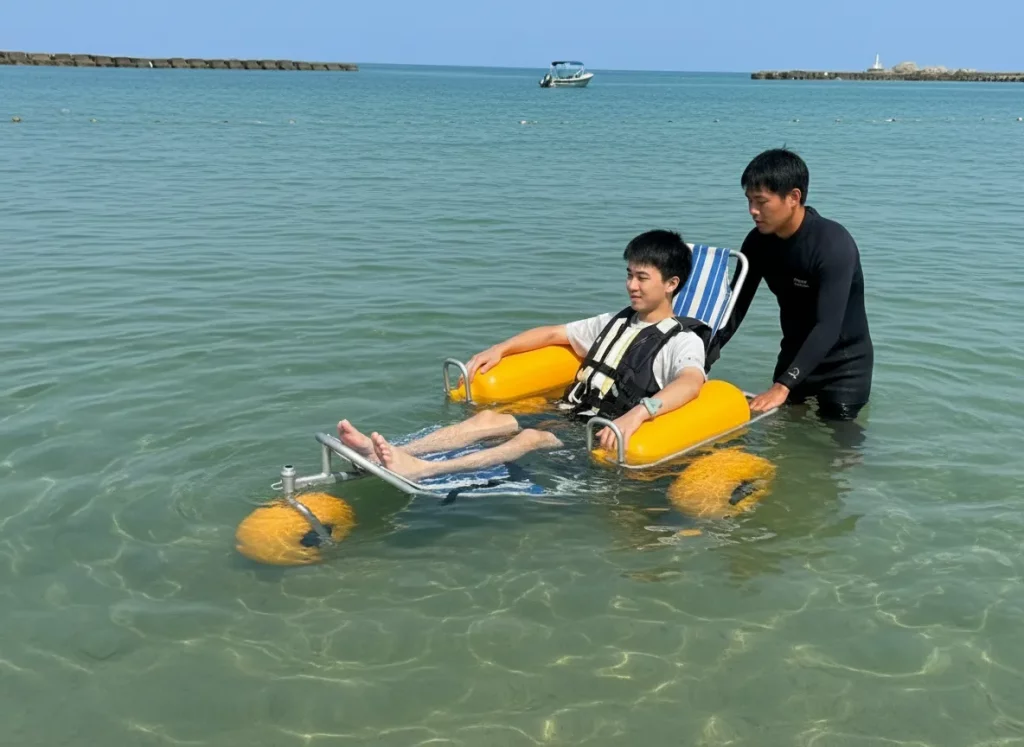
Yes, a floating beach wheelchair is specifically engineered to float in the ocean using buoyant armrests that keep the user stable in the water. When a floating beach wheelchair enters the surf, the pontoons provide enough lift to keep the seat at a safe, comfortable level.
Buoyancy and Lateral Stability
You will find that the armrests act as outriggers, preventing the chair from tipping over when small waves hit the side. This lateral stability is critical for user confidence and safety during the aquatic experience.
- Floatation-assisted seating.
- Anti-tip armrest design.
- Controlled water entry.
It gets better: the chair allows the user to feel the movement of the water while remaining securely seated.
Safety in Calm Waters
While these chairs float, they are intended for use in calm, shallow water under constant supervision. You must ensure that the water depth does not exceed the recommended limits to maintain a safe center of gravity.
Key Takeaway: Floating capabilities allow users to experience the ocean directly, but you must always use the chair in supervised, calm conditions.
| Zone | Float Level | Safety Requirement |
|---|---|---|
| Shoreline | Zero | No flotation needed |
| Knee-Deep | Partial | Attendant required |
| Waist-Deep | Full | Life jacket recommended |
This table outlines the necessary safety measures for different water depths.
Who can operate a floating beach wheelchair?
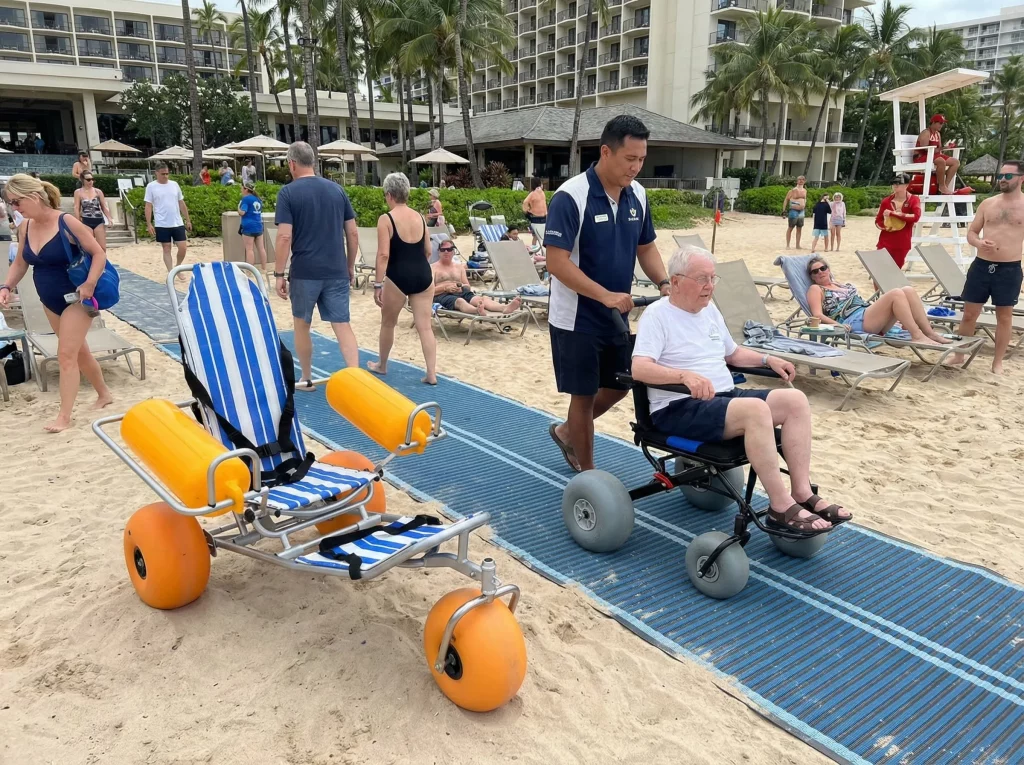
A floating beach wheelchair is typically operated by a trained staff member or a family caregiver who pushes the chair using ergonomic rear handles. Most floating beach wheelchair models are not self-propelled because the large wheels are designed for sand traction rather than manual turning by the user.
Ergonomic Handling for Staff
You will appreciate the design of the push bar, which is positioned to provide maximum leverage with minimal physical effort. This allows lifeguards or resort attendants to move users across the beach without straining their backs.
- High-leverage push bars.
- Front swivel wheels.
- Easy-grip handles.
Here’s the deal: even on steep dunes, the ergonomic design makes navigation surprisingly manageable for a single person.
Attendant Supervision Requirements
Because the chair floats, an attendant is mandatory to ensure the user doesn’t drift away with the current. You should provide brief training for your staff so they understand how to manage the chair during water entry and exit.
Key Takeaway: While easy to push, these chairs require an attendant to manage navigation and safety, especially when transitioning into the water.
| Operator | Role | Skill Level |
|---|---|---|
| Lifeguard | Professional Safety | High |
| Resort Staff | Guest Service | Moderate |
| Caregiver | Personal Assistance | Low |
Review this operator matrix to determine who should manage your beach mobility program.
Is a floating beach wheelchair safe in water?
A floating beach wheelchair is safe in water when it is equipped with a secure harness system and used within specified depth limits. Safety is the most important factor when choosing a floating beach wheelchair for public use or high-traffic resorts.
The Importance of Safety Straps
You must ensure that the seat includes a multi-point harness to keep the user from sliding forward as the chair begins to float. These straps are made from quick-dry nylon that resists salt and UV damage over time.
- Three-point safety belts.
- Adjustable chest straps.
- Quick-release buckles.
Believe it or not, the harness is what prevents the buoyant armrests from lifting the chair away from the user in deeper water.
Depth and Wave Limits
Safe operation usually occurs in water depths up to the user’s waist, ensuring the head remains well above the water line. You should avoid using the chair in high-surf zones or areas with strong rip currents to maintain total control.
Key Takeaway: Safety features like harnesses and depth restrictions are vital to ensuring a worry-free experience for the user and the attendant.
| Safety Item | Purpose | Maintenance |
|---|---|---|
| Harness | User retention | Check for fraying weekly |
| Pontoons | Lateral balance | Inspect for leaks daily |
| Brakes | Land parking | Test tension monthly |
Follow this maintenance checklist to keep your safety equipment in peak condition.
How to store a floating beach wheelchair fleet?
Storing a floating beach wheelchair fleet requires a dry, shaded area that protects the buoyant fabrics and tires from excessive UV exposure. Your floating beach wheelchair will last much longer if it is not left on the sand in the direct sun for months at a time.
Space-Saving Disassembly
You will find that many professional models feature quick-release pins that allow you to remove the wheels and armrests without tools. This modular design makes it easy to stack frames in a small storage shed or beach hut.
- Quick-release wheel axles.
- Removable buoyant armrests.
- Foldable frame options.
Here is a pro tip: store the balloon tires at lower pressure during the off-season to prevent the rubber from stretching.
Protecting Against UV Damage
While the fabrics are UV-resistant, the intense coastal sun can eventually fade colors and weaken the fibers of the seat mesh. You should use protective covers or indoor storage to maintain the vibrant look and structural integrity of the equipment.
Key Takeaway: Modular designs and shaded storage are the keys to maintaining a large fleet of chairs in a busy resort environment.
| Storage Type | Protection Level | Accessibility |
|---|---|---|
| Indoor Shed | Maximum | Moderate |
| Covered Rack | High | Fast |
| On-Sand Hut | Moderate | Immediate |
This storage analysis helps you decide which facility type fits your operational workflow.
Can you maintain a floating beach wheelchair easily?
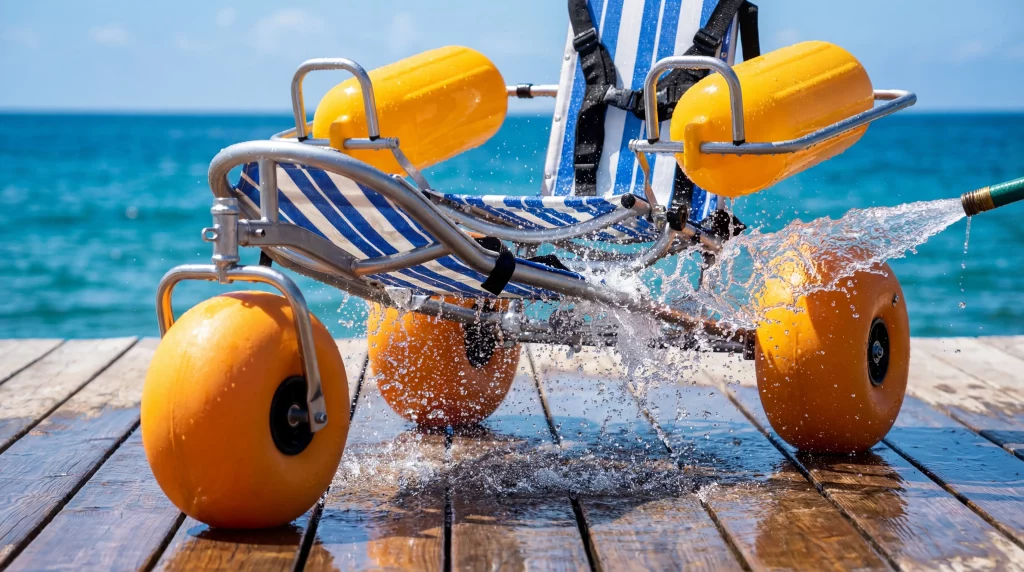
Yes, you can maintain a floating beach wheelchair easily by performing a daily freshwater rinse to remove sand and salt crystals from the moving parts. Maintaining a floating beach wheelchair takes only a few minutes but can add years to the lifespan of the device.
Daily Cleaning Protocols
You should instruct your staff to spray the entire chair with fresh water after every day of use. This simple action prevents salt from seizing the axles and keeps the mesh fabric from becoming stiff or abrasive.
- Freshwater hose rinse.
- Sand removal from axles.
- Fabric air-drying.
The best part? You don’t need expensive chemicals; clean water is the most effective tool for marine maintenance.
Periodic Hardware Checks
Every few weeks, you should check the tire pressure and ensure the harness buckles are clicking securely. Inspecting the pontoons for any punctures ensures that the chair will still provide maximum buoyancy when it enters the ocean.
Key Takeaway: Consistent cleaning and simple mechanical checks are the most effective ways to protect your investment in beach accessibility.
| Task | Frequency | Time Required |
|---|---|---|
| Water Rinse | Daily | 3 Minutes |
| Tire Check | Weekly | 1 Minute |
| Deep Clean | Monthly | 15 Minutes |
Refer to this schedule to maximize the operational life of your beach wheelchairs.
Where to buy a floating beach wheelchair today?
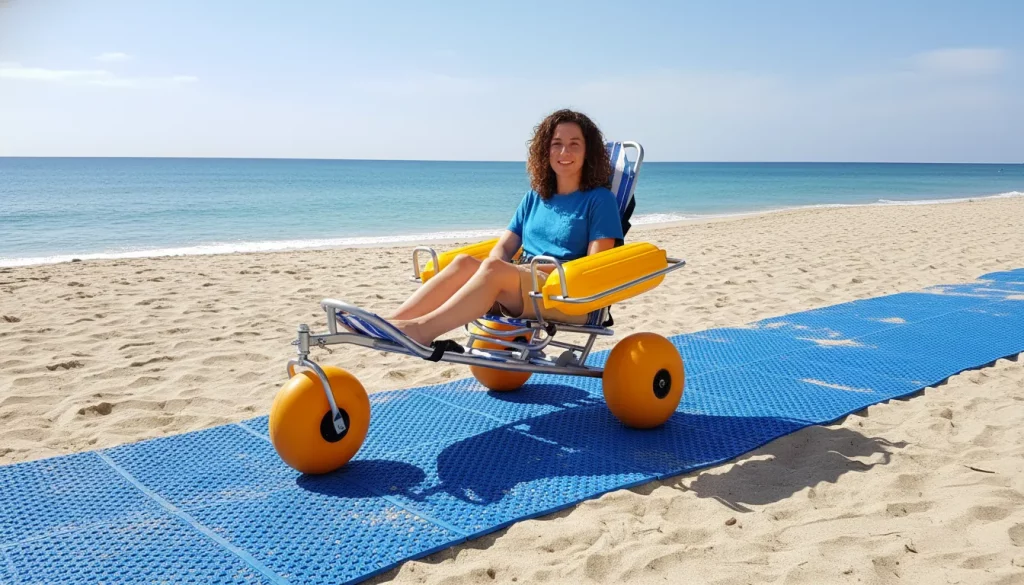
You can buy a professional floating beach wheelchair directly from specialized manufacturers to ensure you get the best pricing and factory support. Ordering a floating beach wheelchair from an established supplier like Ary Beach Accessibility Solutions ensures you receive a product engineered for high-traffic environments.
Factory Direct Advantages
You want to work with a supplier that offers volume discounts for resort fleets and municipal projects. Buying direct allows you to customize colors and branding to match your facility’s aesthetic while saving on middleman markups.
- Custom branding options.
- Wholesale fleet pricing.
- Global shipping support.
But wait, there’s a kicker: buying direct also gives you immediate access to spare parts and technical advice.
Getting a Professional Quote
Starting your project is as simple as requesting a detailed specification sheet to ensure the equipment meets your local safety codes. You can contact an expert who understands the nuances of coastal logistics to handle the delivery to your location.
Key Takeaway: Buying directly from a specialized manufacturer is the most cost-effective way to secure high-quality, durable beach accessibility equipment.
| Buying Path | Cost | Support Level |
|---|---|---|
| Factory Direct | Lowest | Technical Expert |
| Retailer | High | Generalist |
| Used Market | Variable | Minimal |
This purchase guide shows why direct manufacturing partnerships offer the best value for organizations.
Inclusive Coastal Solutions
Accessibility is the foundation of a modern, welcoming shoreline. By selecting the right equipment, you are not just buying a product; you are creating an environment where every individual can experience the freedom of the coast. Our vision is to eliminate mobility barriers through superior engineering and durable design.
If you are ready to transform your beach into an inclusive destination, contact us today to discuss your project requirements.
Frequently Asked Questions
Can I use the chair in high waves?No. These chairs are designed for calm water and should not be used in surf zones where waves exceed 0.3 meters.
Can one person move the chair on sand?Yes. The low-pressure balloon tires are specifically designed so a single adult can push the chair across soft sand without straining.
Is assembly required upon delivery?Minimal. Most chairs arrive nearly assembled, requiring only the wheels and armrests to be clicked into place via quick-release pins.
Can the fabric be replaced?Yes. High-quality manufacturers provide replacement mesh seats and harnesses if the original components become worn after several seasons of use.
Does it come with a warranty?Yes. Most professional-grade beach wheelchairs include at least a 12 to 24-month warranty on the frame and structural components.