A floating beach wheelchair is a specialized mobility device engineered to traverse soft sand and provide buoyant stability for users in aquatic environments.
Traditional beach outings often present an insurmountable barrier for those with limited mobility, turning a potentially joyous family event into a logistical nightmare. You witness how standard wheels sink into the sand, leaving the water frustratingly out of reach and deepening a sense of physical and social isolation for the user. Fortunately, a high-quality floating beach wheelchair solves this exclusion by transforming the shoreline into an inclusive playground where the transition from sand to sea is seamless.
1. What is a floating beach wheelchair exactly?
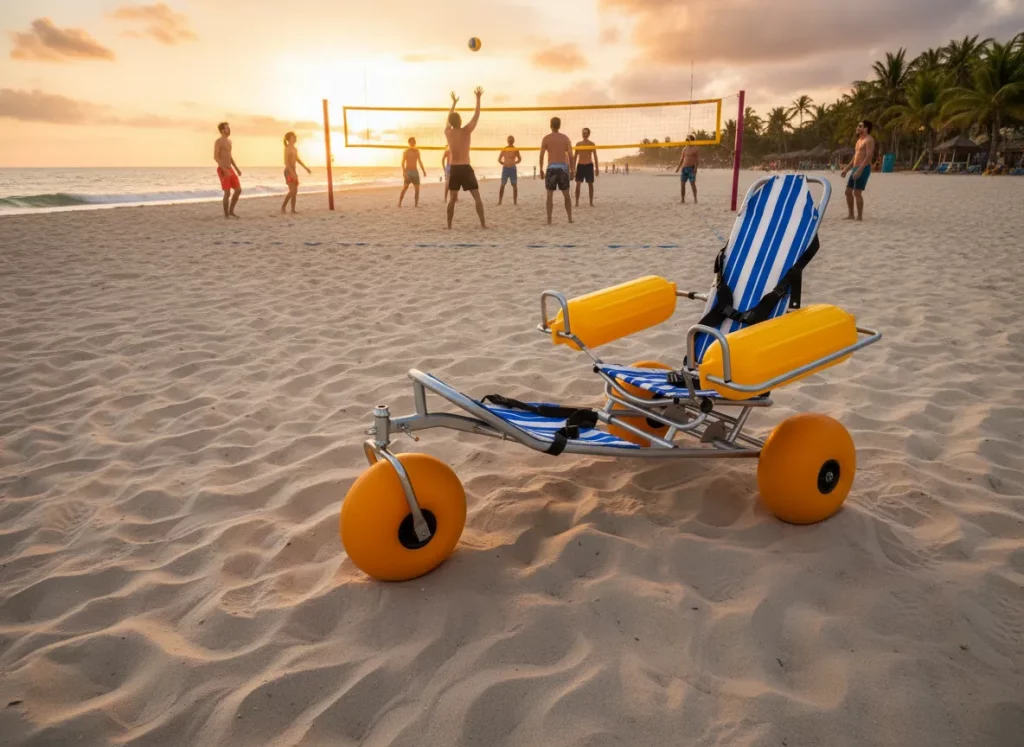
A floating beach wheelchair is an amphibious transport vehicle designed with marine-grade materials and flotation components to ensure total shoreline accessibility. This device serves as a critical bridge between the boardwalk and the surf, allowing users to navigate terrains that would otherwise immobilize standard mobility equipment. By utilizing a professional beach wheelchair , resort operators and municipal managers can provide a dignified, safe way for guests to enjoy the full coastal experience.
What are the core technical specifications?
These chairs are typically constructed from lightweight, corrosion-resistant aluminum or 316-grade stainless steel to survive harsh saltwater environments. The upholstery consists of antimicrobial, UV-resistant mesh that ensures the user stays cool and dry while preventing long-term mildew buildup. Furthermore, the integrated flotation is usually provided by closed-cell foam armrests and high-volume pneumatic tires.
But here is the kicker:
These materials aren’t just for show; they are chosen to withstand years of heavy commercial use at high-traffic resorts. When you invest in a unit with these specifications, you are significantly reducing the total cost of ownership by avoiding frequent part replacements.
Is the design truly amphibious?
The engineering of a floating beach wheelchair allows it to function as both a land vehicle and a personal flotation device. It glides over soft sand, pebbles, and mud before transitioning directly into the water without requiring any component changes. This dual-purpose design is what separates an amphibious chair from a standard all-terrain model that lacks buoyancy.
Key Takeaway: A floating beach wheelchair is a specialized amphibious device that enables mobility on sand and stability in water.
| Feature | Specification | User Benefit |
|---|---|---|
| Chassis | Marine-grade Aluminum | Rust-proof and lightweight |
| Seating | Quick-dry UV Mesh | Comfort and hygiene |
| Flotation | Foam Armrests | Stable water immersion |
Analysis: The combination of rust-proof frames and specialized upholstery ensures that the device remains a long-term asset for any coastal facility.
2. How does a floating beach wheelchair stay buoyant?
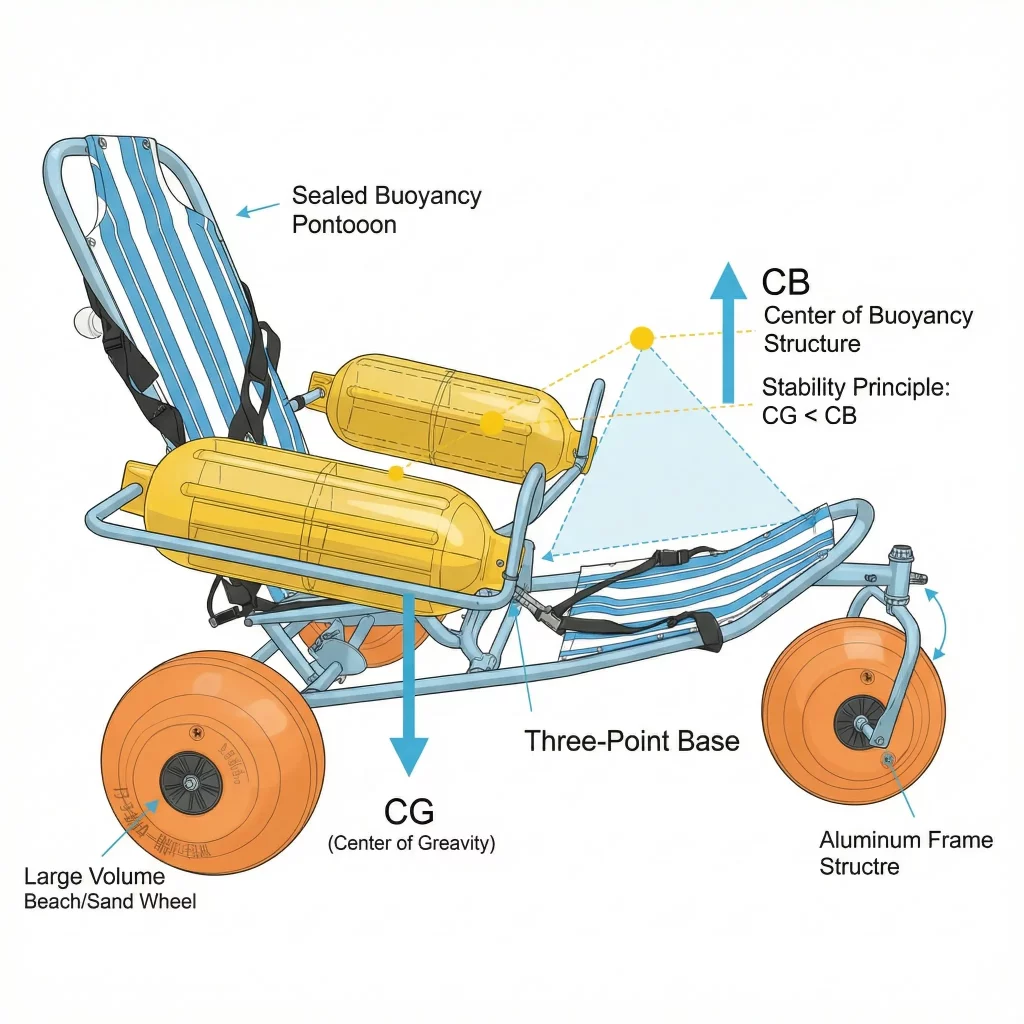
A floating beach wheelchair achieves buoyancy through the calculated displacement of water by its low-pressure balloon tires and high-density foam armrests. These components work in tandem to create a stable platform that remains upright even when the user is fully submerged in calm surf. Understanding the physics of this displacement is essential for ensuring the safety of your guests and the longevity of the equipment.
How do balloon tires facilitate flotation?
The oversized pneumatic tires are filled with low-pressure air, typically between 2 and 4 PSI, which provides significant upward force in water. On land, these wheels distribute the weight of the passenger over a massive surface area, preventing the chair from digging into soft dunes. Once in the water, the air volume inside the tires acts as the primary source of lift for the lower half of the chair.
Think about it this way:
The tires act like a set of independent rafts attached to the chassis. This keeps the center of gravity low, which is vital for preventing the chair from tipping over when it encounters ripples or small waves.
Why are the armrests critical for stability?
The armrests of a floating beach wheelchair are not merely for comfort; they are filled with closed-cell foam to provide lateral stability. These buoyant outriggers ensure that the user remains in a reclined, secure position while floating, preventing side-to-side rolling. This design allows for a relaxing experience where the user feels fully supported by the chair’s natural buoyancy.
Key Takeaway: Buoyancy is a result of synchronized air displacement in the tires and foam displacement in the armrests.
| Component | Mechanism | Result |
|---|---|---|
| Pneumatic Tires | Low-pressure air | High lift in water |
| Armrests | Closed-cell foam | Lateral stability |
| Chassis | Balanced geometry | Low center of gravity |
Analysis: The mechanical synergy between the tires and armrests creates a fail-safe flotation system that minimizes the risk of capsizing.
3. Is a floating beach wheelchair safe for aquatic use?
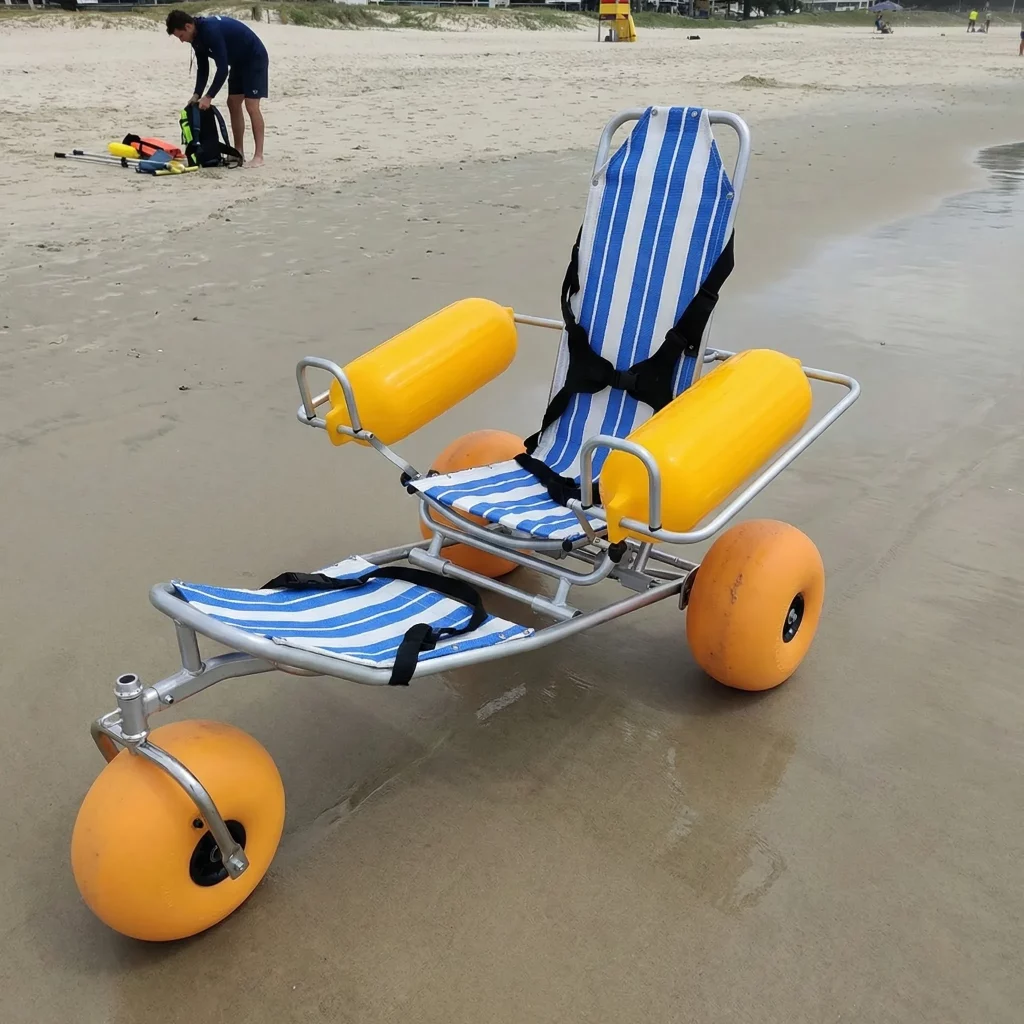
Safety is the primary consideration for a floating beach wheelchair, which is why high-end models include multi-point harness systems and strict weight capacity ratings. You must ensure that every user is properly secured before entering the water to prevent sliding or accidental exit during the transition from sand to surf. Using an all-terrain beach wheelchair with integrated safety features provides peace of mind for both the operator and the passenger.
What kind of harnesses are standard?
Most professional units are equipped with adjustable lap belts and chest harnesses made from marine-grade webbing and heavy-duty plastic buckles. These straps are designed to keep the user’s torso upright and centered within the flotation zone of the armrests. This is particularly important for users with limited upper-body strength who may struggle to stay positioned in a moving aquatic environment.
It gets better:
High-quality harnesses often feature quick-release mechanisms. This allows a support person to quickly evacuate the user in the event of an emergency or a sudden change in sea conditions.
What are the weight limitations?
A standard floating beach wheelchair is typically rated for a weight capacity between 250 lbs and 300 lbs to maintain optimal buoyancy levels. Exceeding these limits can compromise the displacement required for the chair to float safely, potentially causing the unit to sit too low in the water. It is vital for resort staff to verify that the user falls within the manufacturer’s specified range for every deployment.
Key Takeaway: Integrated safety harnesses and adherence to weight limits are the foundations of safe aquatic mobility.
| Safety Feature | Description | Importance |
|---|---|---|
| Lap/Chest Belts | Multi-point restraint | Prevents sliding in water |
| Quick-Release | Emergency buckle | Fast evacuation capability |
| Capacity Rating | 250-300 lbs | Ensures proper flotation |
Analysis: Safety hardware must be inspected weekly for salt-pitting or webbing fraying to ensure the continued protection of the user.
4. Who benefits from a floating beach wheelchair most?
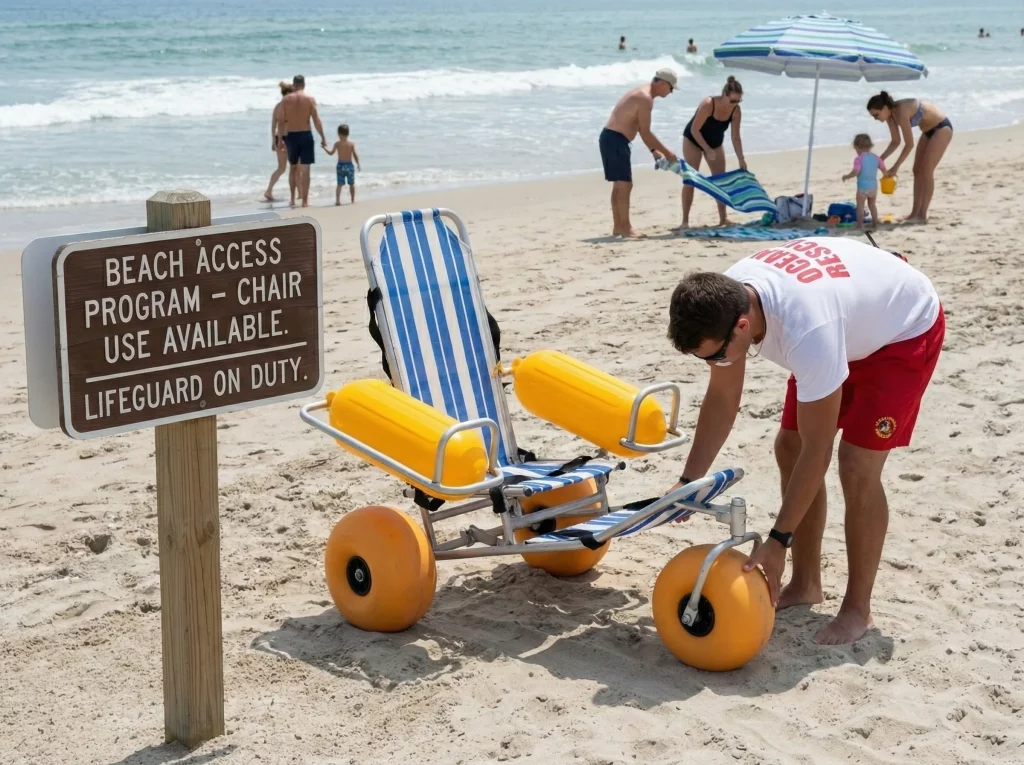
A floating beach wheelchair is a universal design solution that serves senior citizens, individuals with permanent disabilities, and those in temporary physical rehabilitation. By providing this equipment, you are catering to a demographic that frequently feels excluded from coastal tourism, thereby expanding your market reach. Whether for a grandparent wanting to join their grandchildren in the surf or a veteran in rehab, these chairs provide the freedom to reconnect with nature.
How do seniors use these chairs?
For the elderly, the beach can be a treacherous environment due to unstable sand and the physical exertion required to walk to the water’s edge. A floating beach wheelchair offers a stable, seated journey that eliminates the risk of falls or overexertion. This allows senior guests to participate in family outings rather than watching from the boardwalk or a distant hotel room.
But here is the kicker:
The therapeutic benefits of water immersion for seniors—such as joint relief and improved circulation—are only accessible if you provide the means to get there safely. This equipment turns a high-risk activity into a managed, enjoyable experience.
Are they useful for medical rehabilitation?
Physical therapists often use floating equipment to facilitate aquatic therapy in natural environments, which can be more mentally stimulating than a standard clinical pool. The buoyancy of the chair allows patients to perform movements with reduced weight-bearing stress on their joints. This makes the chair an invaluable tool for coastal clinics and specialized wellness resorts.
Key Takeaway: These chairs serve a wide user base, from aging populations to patients in professional rehabilitation programs.
| User Group | Primary Challenge | Solution Provided |
|---|---|---|
| Seniors | Fall risk / Low stamina | Stable sand/water transport |
| Rehab Patients | High joint stress | Buoyant weight reduction |
| Disabled Guests | Physical barriers | Full shoreline inclusion |
Analysis: Broadening the accessibility of your facility through specialized equipment directly translates to higher guest satisfaction and repeat bookings.
5. Where can you deploy a floating beach wheelchair?
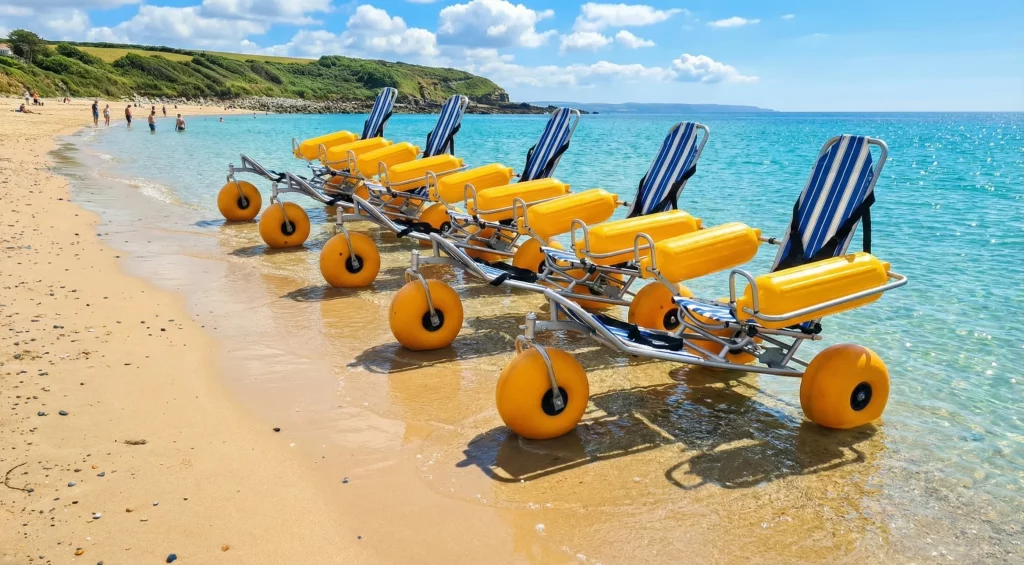
While primarily designed for the ocean, a floating beach wheelchair is equally effective in zero-entry swimming pools, calm lakes, and riverside parks. The versatility of the equipment means you can maximize your investment across various areas of a resort or municipality. You can find more implementation ideas by exploring our latest accessibility blog which covers diverse coastal and inland deployment strategies.
Can they be used in chlorinated pools?
Yes, the high-grade materials used in these chairs are resistant to both salt and chlorine, making them ideal for resort pool areas. Many luxury hotels use them to allow guests to enter the pool gracefully without the need for a mechanical lift. This creates a more natural and integrated experience for the user, as they can stay in the same chair from their room to the poolside.
Think about it.
A mechanical lift can feel clinical and stigmatizing for some guests. Providing a floating chair instead offers a more private, dignified way to enjoy the amenities alongside everyone else.
Are they safe for lake use?
Lakes and calm-water bays are actually the ideal environments for a floating beach wheelchair because they lack the unpredictable surf of the ocean. The flat water allows for maximum flotation enjoyment with minimal effort from the support person. However, you should always avoid areas with high boat traffic or strong currents to maintain total control of the unit.
Key Takeaway: The chair’s versatility allows for deployment in oceans, lakes, and high-end resort swimming pools.
| Environment | Suitability | Note |
|---|---|---|
| Ocean Surf | High | Best in gentle ripples |
| Resort Pool | Excellent | Use in zero-entry zones |
| Freshwater Lake | Very High | Ideal for calm floating |
Analysis: Multipurpose utility ensures that the equipment remains in constant use throughout the season, regardless of the specific water body.
6. How to choose a floating beach wheelchair for your site?
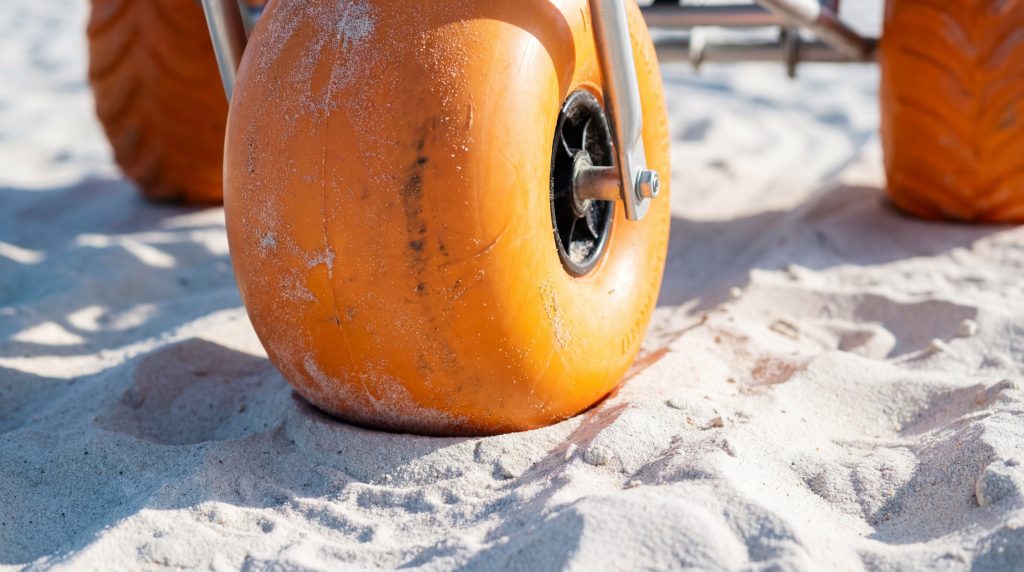
Choosing the right floating beach wheelchair requires an evaluation of your specific terrain, including sand density, slope gradient, and water conditions. You must decide between aluminum and stainless steel frames based on your portability needs and long-term durability goals. Furthermore, selecting the correct tire type—whether standard balloon or reinforced all-terrain—will dictate how easily your staff can move the unit across the facility.
Aluminum vs. Stainless Steel frames?
Aluminum frames are significantly lighter, making them easier for a single companion to push across soft dunes and into the car for transport. Stainless steel frames, specifically 316-grade, are heavier and more expensive but offer the highest possible resistance to saltwater corrosion over a 5 to 10-year period. Your choice should depend on whether your priority is easy maneuverability or extreme longevity in a high-salt environment.
It gets better:
Most high-end aluminum models are powder-coated to provide a secondary layer of protection that rivals stainless steel while keeping the weight manageable. This makes them the preferred choice for most resort operations managers.
Which tire configuration is best?
Low-pressure balloon tires are the gold standard for soft, fine sand because they provide the necessary displacement for both land mobility and water flotation. If your site features more gravel, grass, or paved paths, you might consider a unit with reinforced pneumatic tires that offer better puncture resistance. However, for true “floating” capability, the high-volume balloon tire remains the only viable option.
Key Takeaway: Material selection should balance the need for lightweight transport with the requirement for long-term corrosion resistance.
| Material | Pros | Cons |
|---|---|---|
| Aluminum | Lightweight, cost-effective | Easier to dent |
| 316 Stainless | Maximum durability | Heavy, premium cost |
| Reinforced Poly | Puncture resistant | Lower flotation |
Analysis: Matching the frame material and tire type to your local geography prevents premature equipment failure and user frustration.
7. Is maintaining a floating beach wheelchair difficult?
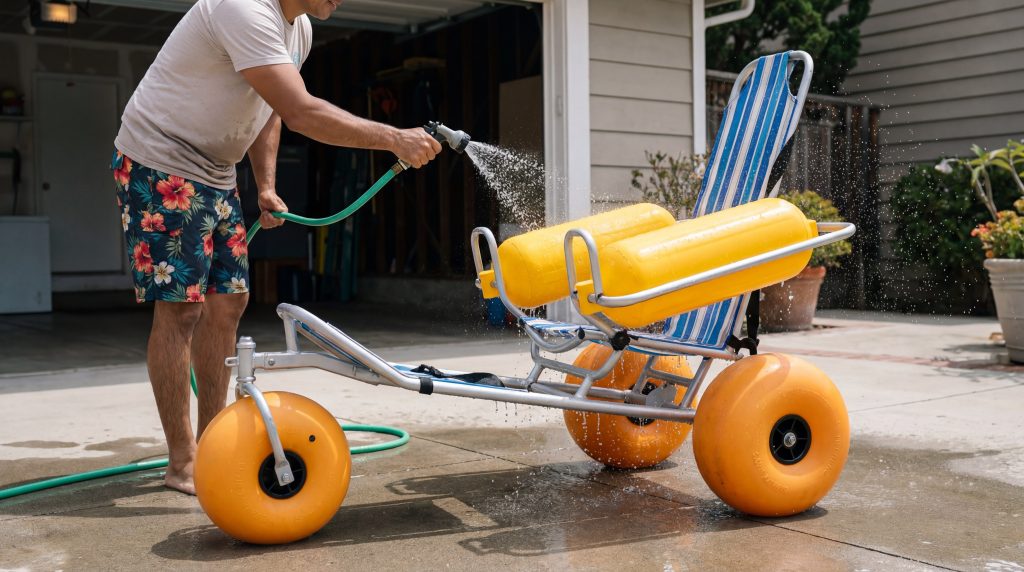
Maintaining a floating beach wheelchair is a straightforward process that primarily involves a fresh-water rinse after every single use in salt or chlorinated water. You should view this five-minute task as a critical investment in the unit’s five-year lifespan, as salt crystals can eventually seize the wheel axles if left to dry. Our about page details our commitment to providing low-maintenance designs that reduce the operational burden on your maintenance teams.
How do you perform a proper rinse?
The most effective method is using a standard garden hose to spray down the entire frame, paying close attention to the wheel hubs and the harness buckles. Salt is the enemy of all moving parts; it acts as an abrasive that can degrade even the highest-quality marine-grade hardware. You should also periodically wash the mesh seating with mild soap to remove skin oils and sunscreen residue that can attract grime. Think about it. A five-minute maintenance protocol can save you thousands of dollars in replacement costs over the life of the chair. It is the simplest way to protect your capital investment.
Where should the chair be stored?
When not in use, a floating beach wheelchair should be stored in a shaded, dry area to protect the plastic components and upholstery from constant UV exposure. While the fabrics are UV-treated, years of direct sunlight will eventually lead to color fading and a weakening of the mesh fibers. Many resorts use dedicated lockers or small sheds near the beach access point to keep the chairs ready for immediate deployment.
Key Takeaway: Daily fresh-water rinsing and shaded storage are the two most important steps for maximizing equipment life.
| Maintenance Task | Frequency | Purpose |
|---|---|---|
| Fresh Rinse | After every use | Removes salt and sand |
| Soap Wash | Monthly | Maintains upholstery |
| Axle Check | Weekly | Ensures smooth rotation |
Analysis: Standardizing a maintenance checklist for resort staff ensures that the equipment remains in showroom condition for every guest.
8. How does a floating beach wheelchair improve guest ROI?
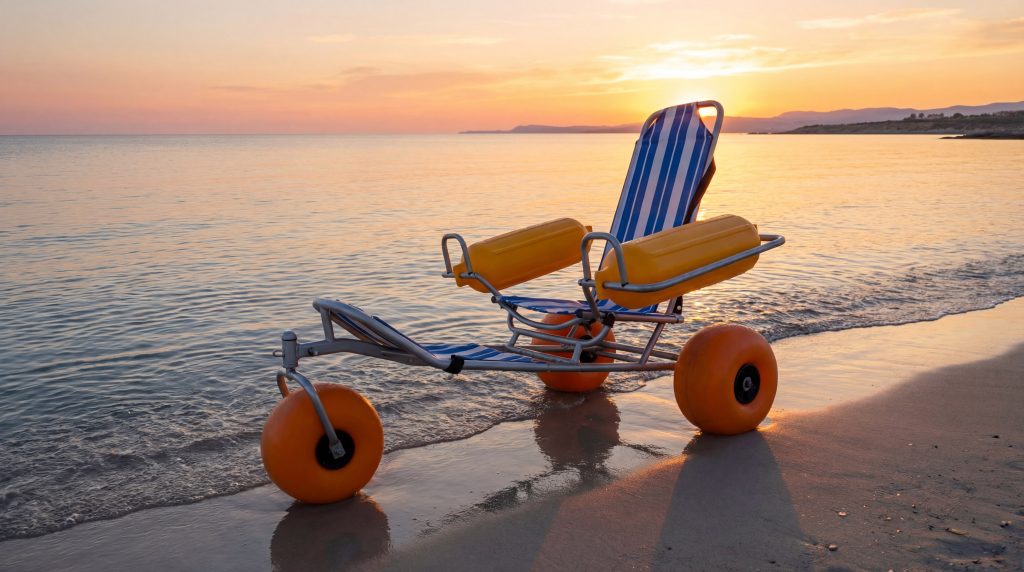
A floating beach wheelchair improves your return on investment by positioning your facility as a premier, inclusive destination that attracts high-spending demographics. You are not just buying a piece of equipment; you are purchasing the ability to host multi-generational family vacations where no member is left behind. This “social ROI” leads to glowing online reviews and word-of-mouth recommendations that are far more valuable than traditional advertising.
Does inclusivity drive bookings?
Travelers with mobility challenges, and their families, are some of the most loyal customer segments when they find a location that truly accommodates their needs. By prominently featuring your floating beach wheelchair in your marketing materials, you are signaling to these families that they are welcome and valued. This can lead to significant increases in off-season bookings, as this demographic often prioritizes accessibility over weather.
But here is the kicker:
In the era of social media, one photo of a guest enjoying the water for the first time in years can go viral, providing your brand with an authenticity that money cannot buy. It positions your resort as a leader in corporate social responsibility.
Can you charge for the service?
While many municipal programs offer these chairs for free, luxury resorts often include them as part of a “premium beach package” or as a complimentary perk for high-tier room categories. Regardless of whether you charge a direct fee, the indirect revenue generated by hosting larger groups who require accessibility is substantial. It turns your beach into a high-utility asset for every single guest.
Key Takeaway: Inclusion is a powerful marketing tool that drives brand loyalty and high-value group bookings.
| Value Driver | Impact | Long-term Result |
|---|---|---|
| Inclusivity | Market expansion | Higher occupancy rates |
| Social Proof | Viral marketing | Enhanced brand reputation |
| Multi-Gen Travel | Larger group sizes | Increased on-site spending |
Analysis: The intangible benefits of brand goodwill often outweigh the initial purchase price of the equipment within the first season.
9. Can you rent or lease a floating beach wheelchair?
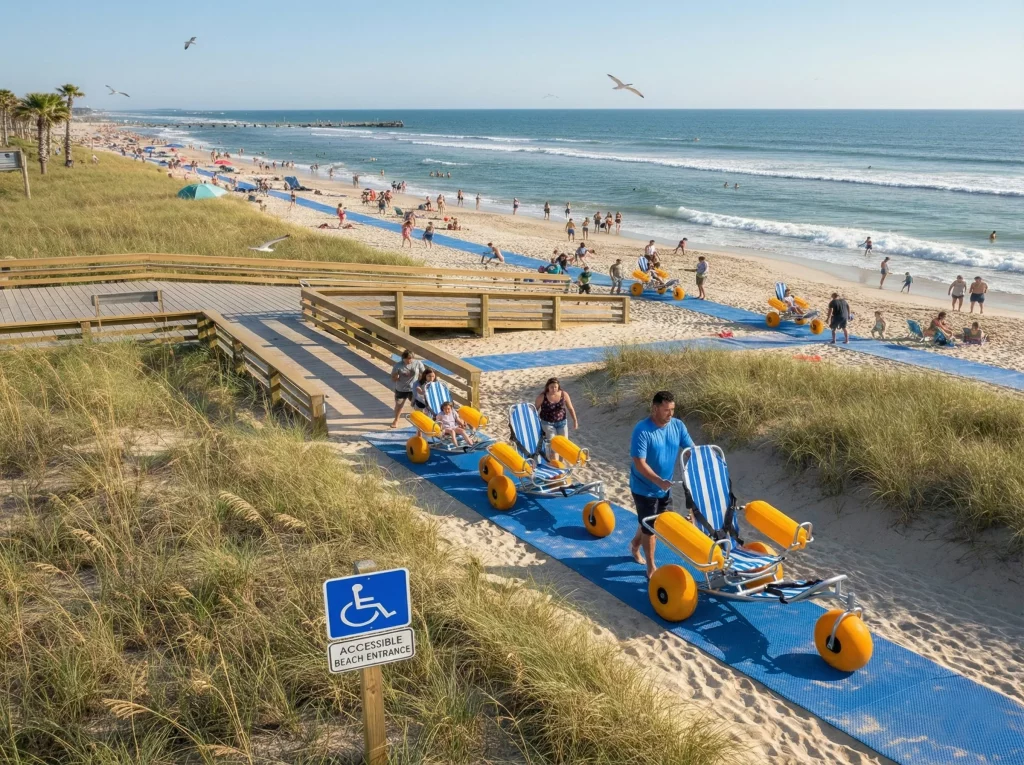
Many forward-thinking municipalities and private enterprises provide a floating beach wheelchair through rental programs to ensure that accessibility is not limited by personal ownership costs. You will often see these chairs lined up at “Free Accessibility Program” booths, which are frequently funded by local grants or community donations. Integrating these with accessible beach mats creates a complete mobility system from the parking lot to the shoreline.
Are municipal rentals common?
Yes, public beach programs are increasingly adopting “Mobi-Chair” initiatives to comply with modern accessibility standards and serve their local communities. These programs usually require an advance booking and the presence of a support person to ensure the user’s safety. It is a highly visible way for local governments to demonstrate their commitment to universal design and public welfare.
Think about it.
A rental booth isn’t just a service; it’s a beacon of inclusivity. When visitors see these chairs available, they perceive the entire beach as a safer and more welcoming environment.
What are the standard rental rules?
Rental agreements typically involve a liability waiver and a brief safety orientation for the user’s companion. Most programs limit the rental to 2-hour or 4-hour blocks to ensure that as many guests as possible can use the equipment throughout the day. It is essential to have a trained staff member on hand to help with the initial setup and to ensure the harness is properly fitted.
Key Takeaway: Rental programs make specialized mobility equipment available to a wider audience through structured booking systems.
| Rental Aspect | Requirement | Note |
|---|---|---|
| Booking | 24-48 hours notice | Prevents double-booking |
| Waiver | Liability release | Standard safety protocol |
| Companion | Mandatory helper | Essential for water safety |
Analysis: Providing rental equipment at the waterline reduces the physical burden on the user and encourages more frequent water entry.
10. Why buy a floating beach wheelchair factory direct?
Buying a floating beach wheelchair directly from a specialized manufacturer ensures you receive the most competitive pricing by eliminating third-party markups. You gain access to project-level support, including technical drawings for procurement and custom branding options that align with your resort’s aesthetic. Furthermore, factory-direct purchasing allows you to verify that the equipment meets international ISO safety standards before it ever reaches your shore.
Is factory pricing significantly better?
By removing the middleman, organizations can typically save between 30% and 60% on their initial procurement costs. This allows for a larger fleet of chairs or the purchase of additional accessories like beach mats and walkers. For large-scale resort groups or municipal departments, these savings are vital for staying within annual accessibility budgets.
It gets better:
Direct communication with the factory means you can request specific modifications, such as reinforced frames for high-weight capacity or custom colors to match your brand’s palette. You aren’t limited to “off-the-shelf” configurations.
How is quality control managed?
Professional manufacturers operate under strict ISO-9001 standards, involving rigorous load testing and salt-spray corrosion tests for every batch. When you buy direct, you can request the specific testing documentation and QC reports for your units. This transparency is crucial for high-liability environments like public beaches and commercial resorts where equipment failure is not an option.
Key Takeaway: Factory-direct procurement offers superior pricing, customization, and verifiable quality control.
| Advantage | Benefit | Impact |
|---|---|---|
| Direct Pricing | 30-60% savings | Better budget allocation |
| Customization | Brand matching | Unified resort aesthetic |
| QC Transparency | Load/Salt testing | Reduced liability risk |
Analysis: Establishing a direct relationship with the manufacturer simplifies the long-term supply of spare parts and technical support.
Investing in accessibility is no longer just a legal requirement; it is a strategic advantage that defines the modern, inclusive hospitality experience. By deploying high-quality floating chairs, you are removing the physical and emotional barriers that keep a significant portion of the population away from the water. We invite you to contact us today to learn how our engineering solutions can transform your coastline into a truly universal destination. Our vision is a world where every beach is open to everyone, and we are here to provide the technical expertise to make that a reality for your facility.
Frequently Asked Questions
1. Can I push the floating wheelchair by myself on the sand?Yes, but with caveats. While the low-pressure balloon tires make pushing significantly easier than a standard chair, steep dunes or very deep, soft sand may still require a second helper for safety and to avoid fatigue.
2. What’s the best way to prevent the metal frame from rusting?The most effective method is a fresh-water rinse after every salt-water immersion. Even marine-grade aluminum and stainless steel will eventually suffer from salt pitting if the corrosive residue is allowed to dry on the surface for extended periods.
3. Can I use the floating chair in rough ocean waves?No, this is not recommended. These chairs are designed for calm water, zero-entry pools, or very light surf; heavy waves can tip the chair or make it difficult for the companion to maintain control of the unit.
4. What’s the best way to transport the chair to a different beach?The best way is to utilize the quick-release pins to disassemble the wheels and armrests. Most professional models are designed to be broken down in under five minutes so they can fit into the trunk of a standard SUV or large car.
5. Can I leave the chair in the pool overnight?No, you should remove the chair after every use. Constant immersion in chlorinated or salt water without a fresh rinse can lead to premature degradation of the upholstery and unnecessary wear on the wheel axles.