Standard walkers are largely ineffective on the beach because their thin wheels sink into soft sand, creating a significant safety hazard for users. For many seniors and individuals with limited mobility, a trip to the beach feels impossible. Standard rollators are designed for flat, hard pavement, but the moment they hit soft sand, the narrow wheels create a frustrating “anchor” effect.
Missing out on family vacations and the therapeutic seaside breeze leads to unnecessary isolation. Struggling with the wrong equipment doesn’t just ruin the day; it causes physical strain on the body. Fortunately, modern engineering has bridged the gap between the boardwalk and the shoreline. By utilizing specialized walkers for beach use , you can reclaim independence and enjoy the water safely.
Can You Use Standard Walkers for Beach Use?
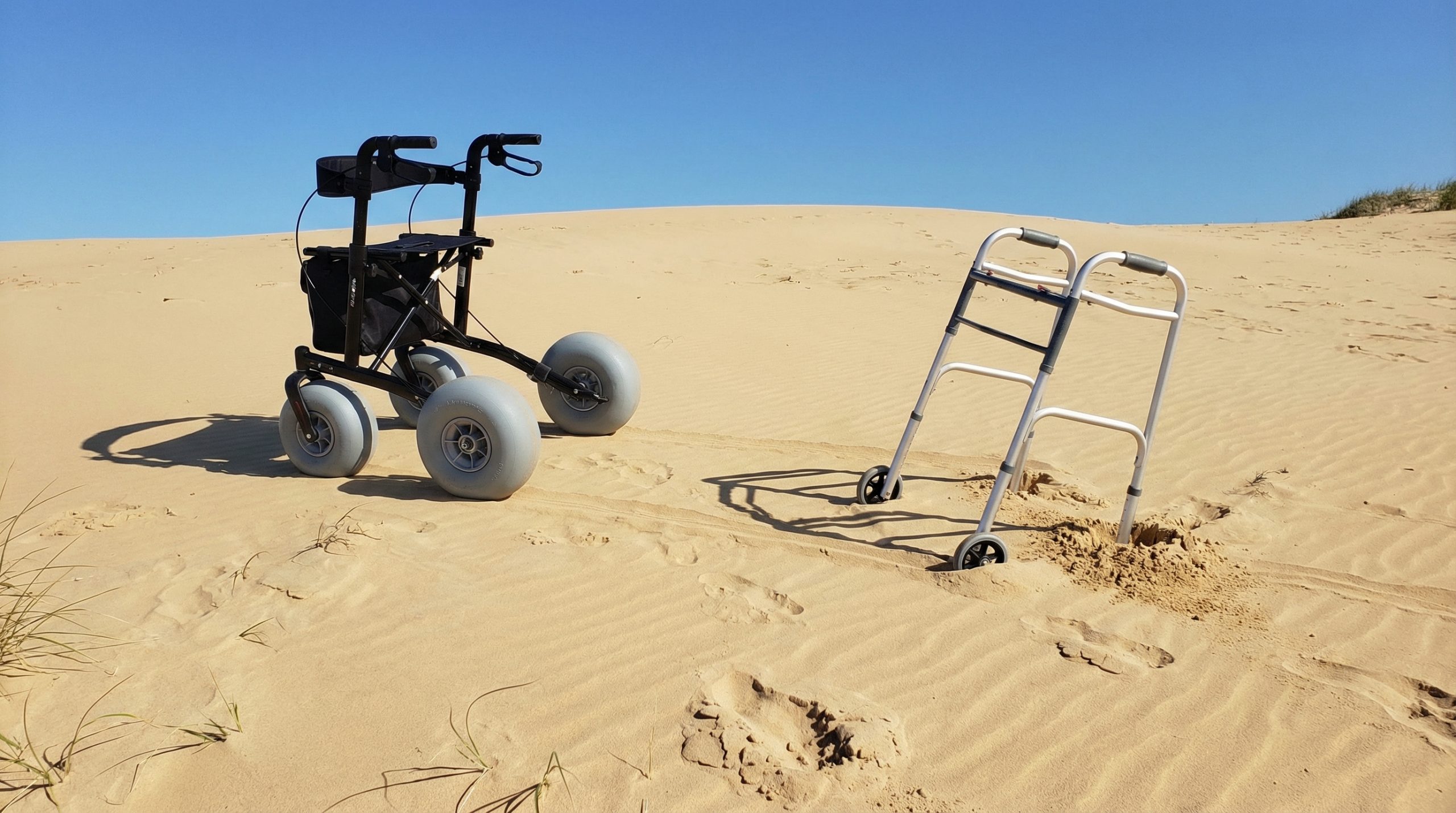
Standard walkers are not recommended for beach use because their narrow wheels concentrate weight and sink immediately into loose sand. This sinking effect makes it nearly impossible to push the device without extreme physical exertion. You might find that the salt and grit from the shoreline also damage the delicate bearings of an indoor walker. Using walkers for beach use specifically designed for sand is the only way to ensure a stable and safe experience.
Why Do Narrow Wheels Sink in Sand?
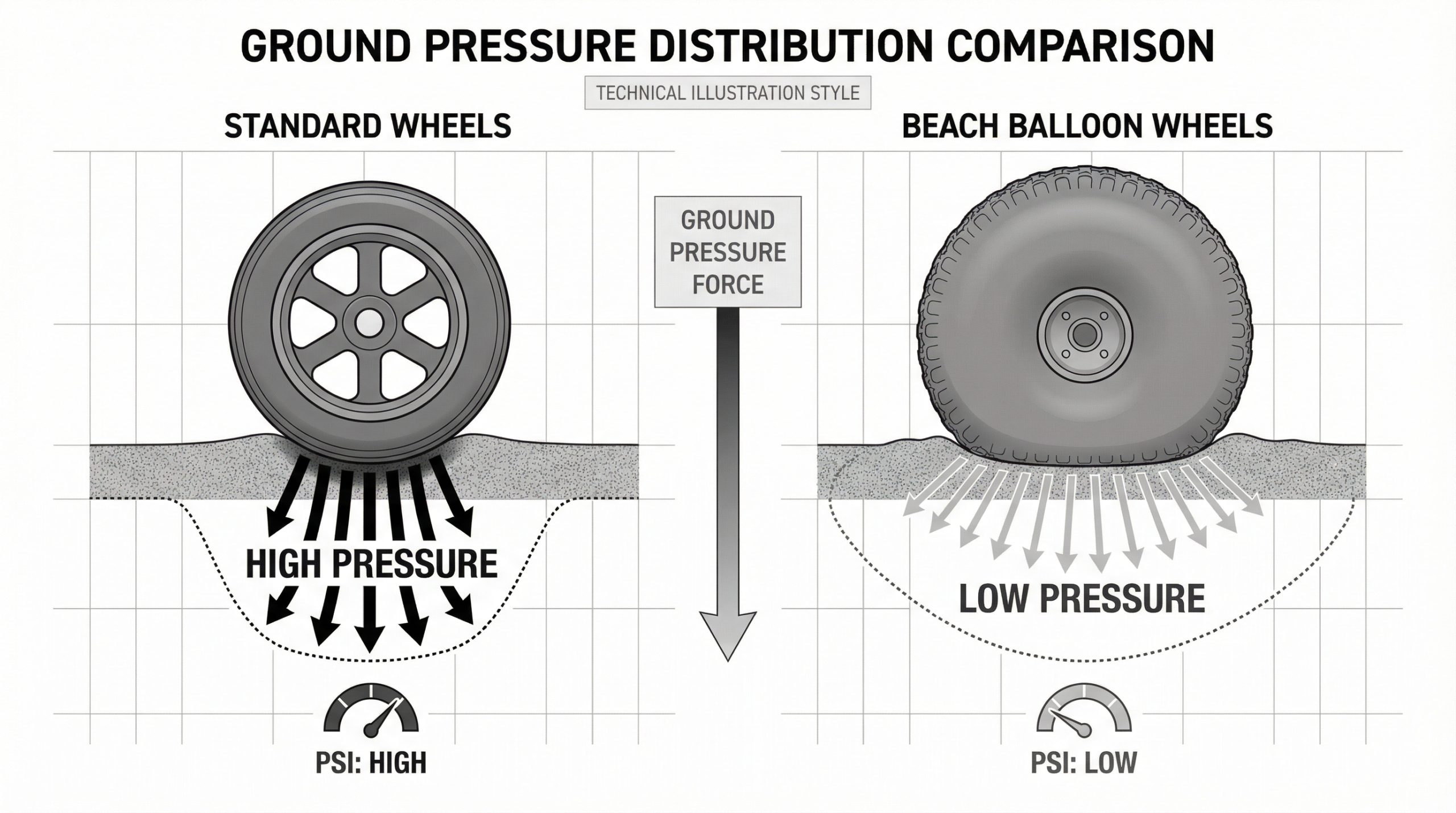
Narrow wheels sink because they exert high pressure on a small surface area, exceeding the support capacity of loose sand grains. When you apply downward force on a standard frame, the wheels act like blades cutting into the ground.
The best part?
- Weight is concentrated on a small point.
- Friction increases as the wheels submerge.
- Structural stability is lost on uneven dunes.
- Users face a high risk of tipping over.
Is Sand Damaging to Indoor Equipment?
Sand is highly damaging to indoor equipment because the fine particles act as an abrasive that wears down joints and wheel bearings. You will notice that salt air can also trigger rapid corrosion on standard aluminum frames.
Here is the kicker:
- Saltwater accelerates oxidation on metal parts.
- Grit clogs the folding mechanisms and brakes.
- Soft rubber tires on indoor models tear easily.
- Warranties often do not cover damage from sand.
Why is a Floating Beach Wheelchair Often Necessary?
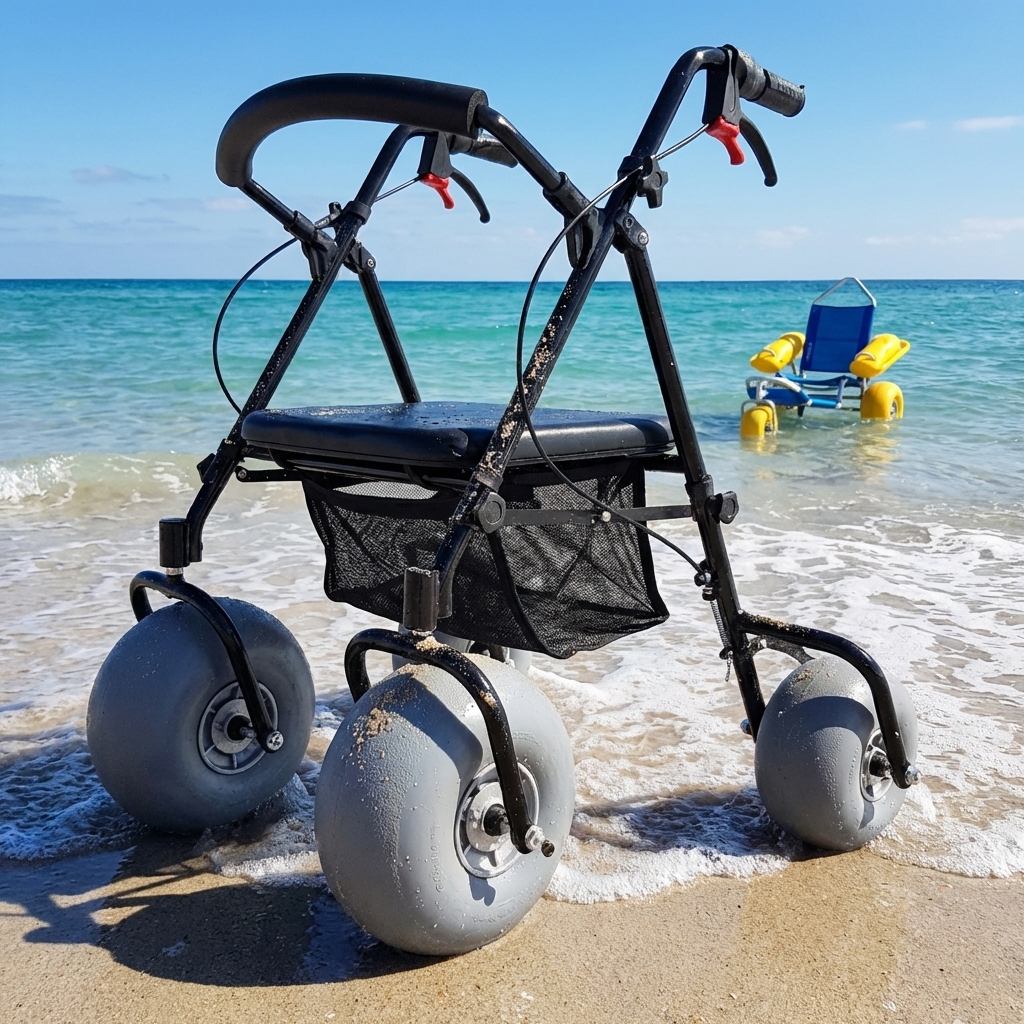
A floating beach wheelchair is often necessary because it allows users to transition from the shoreline directly into the water with buoyant support. While walkers for beach use provide mobility on the sand, they cannot be used for swimming or floating in the surf. These specialized chairs feature large, air-filled tires and armrests that act as flotation devices. You gain the ability to experience the waves safely with the help of an attendant.
How Does Buoyancy Improve the Experience?
Buoyancy improves the experience by reducing the effective weight of the user, making water entry effortless and relaxing. You can float comfortably while the chair stays stable against gentle waves.
The best part?
- Integrated floats provide balance in the water.
- Users remain seated while enjoying the ocean.
- The frame resists the corrosive effects of salt.
- It enables full participation in family water activities.
Can One Device Handle Both Sand and Sea?
Most high-end floating chairs can handle both terrain types, though they often require an attendant for movement on deep dunes. You will find that these devices offer a comprehensive solution for coastal vacations.
Believe it or not:
- Large tires glide over the softest dry sand.
- The wide wheelbase prevents tipping in the surf.
- Quick-drying fabrics prevent skin irritation after use.
- Modular designs allow for easy cleaning and transport.
Key TakeawayWhile walkers assist with shore mobility, a floating chair is the superior choice for users wanting to enter the water safely.
| Feature | Beach Walker | Floating Wheelchair |
|---|---|---|
| Water Entry | Not Recommended | Specialized for Surf |
| Independence | High (Self-Propelled) | Requires Attendant |
| Buoyancy | None | High Flotation |
This comparison shows that a floating chair provides a much deeper level of beach access for those wanting to immerse themselves in the water.
How Do Balloon Wheels Transform Beach Walkers?
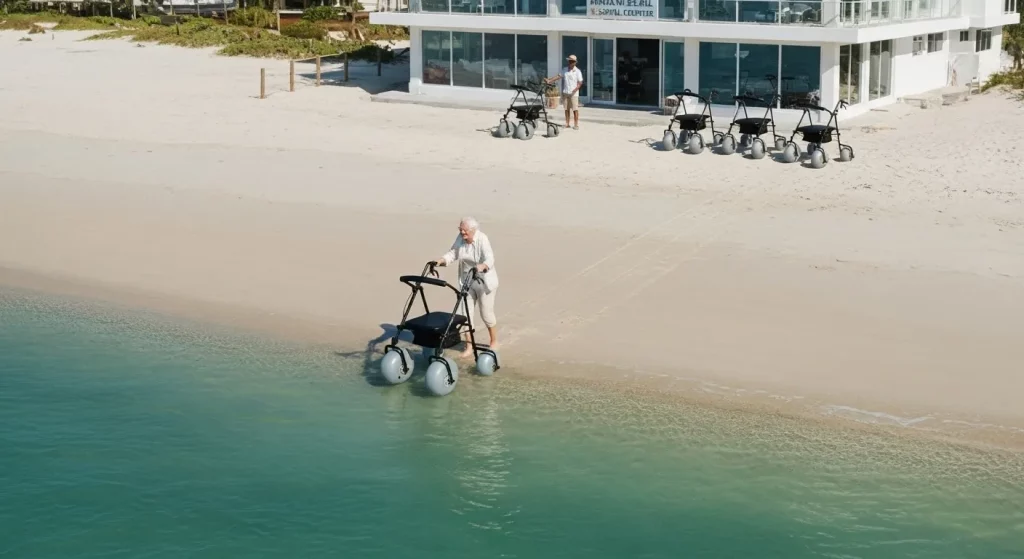
Balloon wheels transform beach walkers by distributing the user’s weight over a significantly larger surface area, preventing the device from sinking. By utilizing walkers for beach use with low-pressure tires, you can glide over surfaces that would trap standard wheels. These tires act like a cushion, absorbing the irregularities of shells and rocks. This technology turns a strenuous struggle into a smooth, manageable stroll along the coast.
Why is Tire Width Important for Sand?
Tire width is important because wider surfaces decrease the pressure exerted on the ground, allowing the walker to stay on top of the sand. You will find that a wider profile provides much better lateral stability on slopes.
The best part?
- Surface area increases weight distribution.
- Low PSI allows the tire to deform over obstacles.
- Puncture-proof materials ensure long-term reliability.
- Tracking is improved on loose or wet surfaces.
Do Balloon Tires Require Maintenance?
Balloon tires require minimal maintenance, usually only needing periodic pressure checks to ensure optimal performance on different terrains. You should keep the air pressure low to maximize the “float” effect on soft sand.
Here is the kicker:
- Low pressure is better for soft, dry dunes.
- Higher pressure works well on firm, wet sand.
- UV-resistant rubber prevents cracking in the sun.
- Sealed bearings keep sand out of the axles.
Key TakeawayBalloon wheels are the most critical feature for any mobility device intended for use on soft, coastal terrain.
| Wheel Type | Pressure Distribution | Sand Performance |
|---|---|---|
| Standard Wheel | High Concentration | Poor (Sinks) |
| Balloon Wheel | Evenly Distributed | Excellent (Floats) |
The transition to balloon wheels is the primary engineering factor that enables independent mobility on challenging beach surfaces.
What Features Define the Best Walkers for Beach Use?
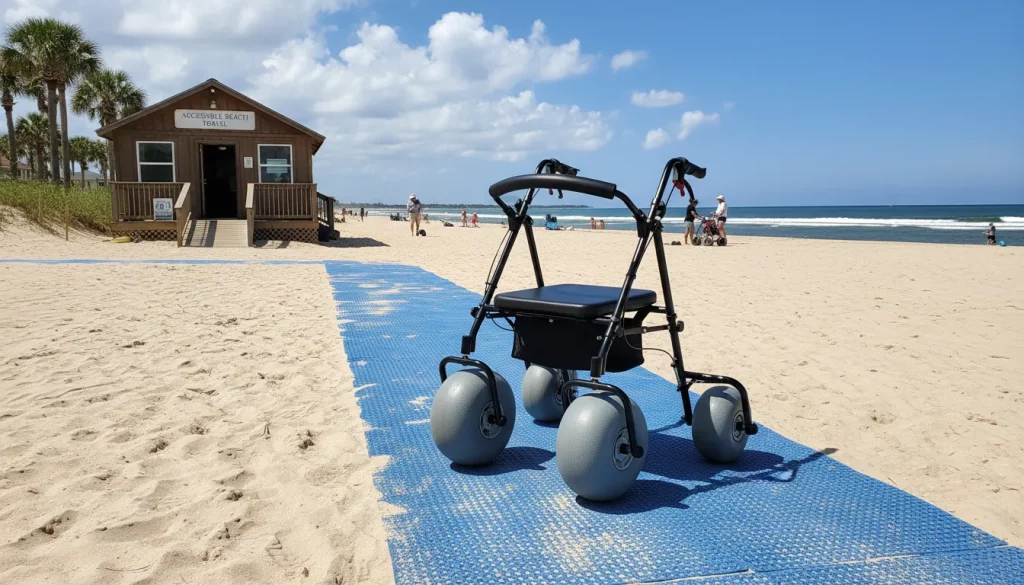
The best walkers for beach use are defined by a combination of marine-grade materials, wide-track stability, and specialized all-terrain wheel configurations. You should look for frames made of reinforced aluminum alloy that can withstand constant exposure to salt and moisture. Ergonomic handles and responsive braking systems are also essential for safety on uneven beach inclines. These features work together to provide a seamless experience from the parking lot to the water’s edge.
Why is a Flex-Frame Essential?
A flex-frame is essential because it allows all four wheels to maintain contact with the ground even when navigating bumpy dunes. You will experience less vibration and jarring in your shoulders and back with this design.
The best part?
- Suspension absorbs shocks from uneven ground.
- It maintains constant stability on coastal paths.
- Frame stress is reduced, extending device life.
- Steering becomes more predictable on soft slopes.
What Materials Prevent Saltwater Damage?
Materials like anodized aluminum and stainless steel prevent saltwater damage by creating a barrier against oxidation and rust. You should choose equipment with powder-coated finishes for an extra layer of protection.
Believe it or not:
- Anodized frames resist deep metal corrosion.
- Plastic components should be UV-stabilized.
- Nylon fabrics dry quickly and resist mold growth.
- Sealed hardware prevents salt from seizing joints.
Key TakeawayInvesting in a walker with a flexible frame and marine-grade materials ensures both user comfort and long-term durability.
| Component | Professional Standard | Benefit |
|---|---|---|
| Frame | Marine-Grade Alloy | Rust Resistance |
| Joints | Sealed Flex-Points | Terrain Adaptability |
| Seat | Mesh/Waterproof | Quick-Drying Comfort |
The integration of these professional-grade components is what separates a true beach walker from a standard all-terrain rollator.
Is Portability a Factor for Beach Mobility Aids?
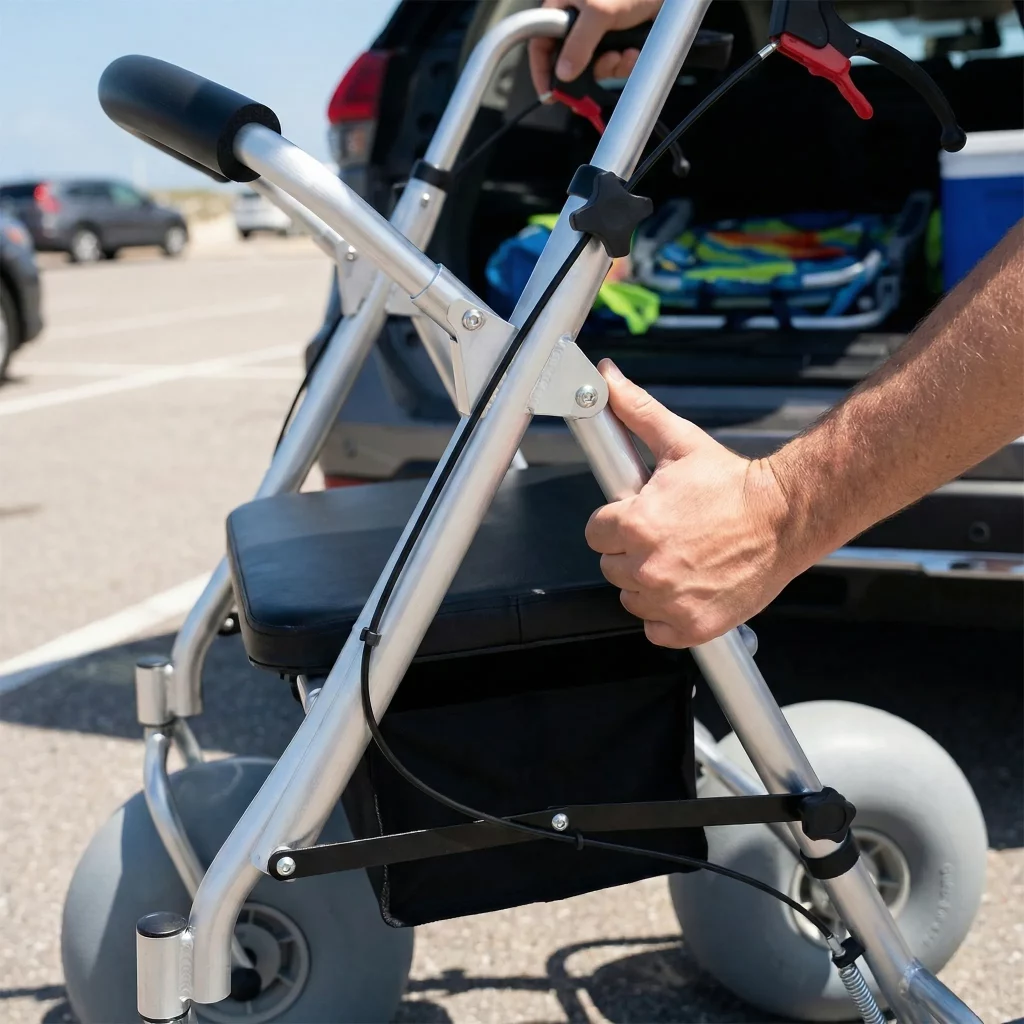
Portability is a major factor because most users must transport their walkers for beach use in standard vehicles to reach the shoreline. A device that is too heavy or bulky becomes a barrier rather than a solution for coastal access. You should look for models that feature a cross-folding design for compact storage in car trunks. Lightweight frames allow for easy lifting without sacrificing the structural integrity needed for sand mobility.
How Does a Folding Mechanism Work?
A folding mechanism works by using central pivot points that allow the frame to collapse horizontally or vertically into a slim profile. You can typically engage these locks with a single hand while holding the frame steady.
The best part?
- Collapsible designs fit into small SUV trunks.
- Locking clips keep the frame secure during transit.
- Tool-free assembly allows for quick beach setup.
- Compact footprints are easier to store off-season.
Are Lightweight Walkers Durable Enough?
Lightweight walkers are incredibly durable when constructed from reinforced aluminum alloys designed for industrial or medical use. You don’t have to sacrifice strength to enjoy a device that weighs under 25 pounds.
Here is the kicker:
- High-strength alloys provide a high weight capacity.
- Geometric frame designs distribute load effectively.
- Modular parts can be replaced if they wear out.
- Lighter frames are easier to maneuver on slopes.
Key TakeawayHigh portability ensures that your mobility aid actually gets used rather than staying in the garage due to transport difficulty.
| Transport Feature | Folded Width | Weight |
|---|---|---|
| Non-Folding | 24+ Inches | 35+ lbs |
| Compact Folding | 10-12 Inches | 18-24 lbs |
Choosing a compact, lightweight model maximizes the freedom of travel for both the user and their companions.
How Does Saltwater Resistance Benefit Your Investment?
Saltwater resistance benefits your investment by significantly extending the lifespan of the equipment in corrosive coastal environments. Without these protections, a standard walker can begin to rust and seize up within just a few weeks of beach use. You save money over time by purchasing a device that does not require frequent part replacements or repairs. A durable, corrosion-resistant frame ensures that your walker remains safe and functional for many seasons.
What is the Freshwater Rinse Protocol?
The freshwater rinse protocol involves spraying the entire walker with clean water after every visit to remove salt and sand. You should pay special attention to the brake cables and wheel axles where salt accumulates.
The best part?
- It prevents salt crystals from scratching the finish.
- Moving parts stay smooth and responsive.
- Corrosive buildup is stopped before it starts.
- It takes only five minutes to protect your gear.
Can Protective Coatings Fade Over Time?
Protective coatings like powder-coating or anodization are designed to be permanent, though they can chip if the frame is handled roughly. You can maintain the finish by avoiding abrasive cleaners during your post-beach maintenance.
Believe it or not:
- UV inhibitors prevent the color from bleaching.
- Powder coating is more durable than standard paint.
- Anodized layers are chemically bonded to the metal.
- Proper storage protects the finish from the elements.
Key TakeawaySaltwater resistance is not just a feature; it is a necessity for protecting the mechanical integrity of your beach equipment.
| Material | Corrosive Resistance | Maintenance Level |
|---|---|---|
| Standard Steel | Very Low | Extremely High |
| Anodized Aluminum | Very High | Minimal |
Investing in high-quality materials upfront prevents the frustration of early mechanical failure caused by coastal exposure.
Can You Manage Soft Sand Without Tipping Over?
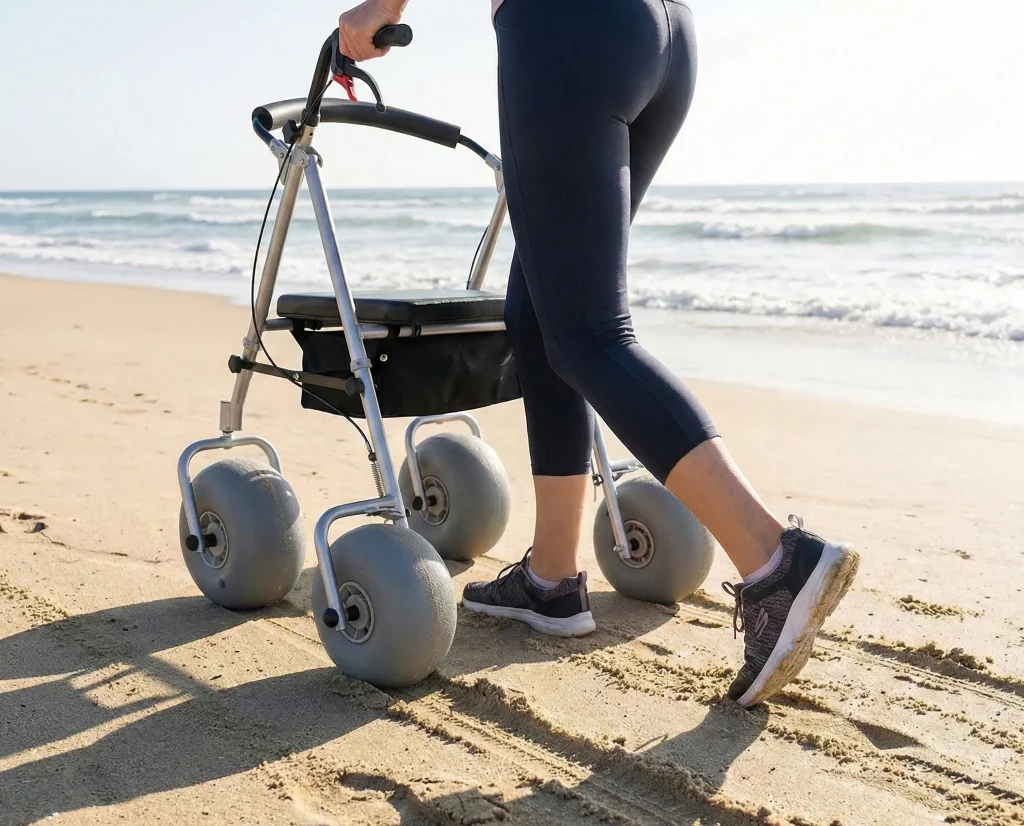
You can manage soft sand without tipping over by using walkers for beach use that feature a wide wheelbase and low center of gravity. These engineering choices provide the lateral stability necessary to navigate the shifting surface of a beach dune. You should always keep your weight centered over the frame and avoid sudden turns on steep inclines. Using equipment specifically designed for the terrain ensures a confident and steady walk along the shoreline.
How Does a Wide Base Improve Stability?
A wide base improves stability by broadening the support footprint, making it much harder for the device to lean or tip. You will notice that professional beach walkers have wheels set further apart than indoor models.
The best part?
- Lateral tipping risks are greatly reduced.
- The walker tracks straighter on uneven ground.
- Users feel more secure when leaning on handles.
- It accommodates the natural swaying of walking.
Should You Use Beach Access Mats?
Beach access mats are an excellent addition because they provide a firm, level pathway over the softest parts of the sand. You can combine these mats with your walker to create a “portable boardwalk” for the safest possible entry.
Here is the kicker:
- They eliminate the struggle of deep, dry sand.
- Mats are compatible with all types of wheels.
- They create a clear, accessible path for everyone.
- UV-stable materials withstand permanent installation.
Key TakeawayStability is achieved through a combination of wide-base engineering and proper navigation techniques on loose terrain.
| Surface Type | Tipping Risk | Best Equipment |
|---|---|---|
| Loose Dune | Moderate to High | Balloon Wheel Walker |
| Wet Shoreline | Low | Standard Beach Rollator |
Properly designed equipment allows you to focus on the view rather than worrying about your balance on the sand.
What Maintenance Do Beach Walkers Require?
Beach walkers require consistent cleaning and lubrication to ensure the salt and grit do not interfere with the mechanical moving parts. You must perform a thorough freshwater rinse after every beach outing to flush out salt crystals from the frame and wheels. Checking tire pressure and tightening hardware periodically will keep the walker in peak operational condition. These simple steps protect your mobility and ensure the device lasts for years of coastal adventures.
Which Parts Need Regular Lubrication?
The parts that need regular lubrication include the wheel axles, folding hinges, and the internal components of the braking system. You should use a silicone-based lubricant that does not attract sand or dust.
The best part?
- Brakes stay responsive and easy to engage.
- Folding action remains smooth and effortless.
- Squeaks and grinding noises are eliminated.
- Internal wear on metal joints is minimized.
How Should You Store Gear in the Off-Season?
You should store your gear in a dry, indoor environment after a final deep cleaning and complete drying of all metal surfaces. Placing a protective cover over the walker can prevent dust buildup and accidental scratches.
Believe it or not:
- Moisture in a garage can cause slow corrosion.
- Tires should be stored away from direct sunlight.
- Fabric seats should be fully dry to prevent mold.
- Checking the gear before spring prevents surprises.
Key TakeawayA dedicated maintenance routine is the most effective way to protect your equipment and ensure user safety.
| Task | Frequency | Purpose |
|---|---|---|
| Freshwater Rinse | After Every Use | Salt Removal |
| Lubrication | Monthly | Mechanical Smoothness |
| Tire Check | Before Each Use | Terrain Optimization |
Consistent care ensures that your investment in beach mobility continues to pay off season after season.
Who Benefits Most from Specialized Beach Walkers?
Seniors and individuals in physical rehabilitation benefit most from specialized walkers for beach use because they provide the balance support needed for outdoor activity. You might find that these devices allow guests to participate in family outings they would otherwise have to skip. Resort managers and municipal parks also benefit by providing an inclusive environment for all visitors. High-quality mobility aids transform the beach from a barrier into a welcoming destination for everyone.
Can Seniors Maintain Independence on Sand?
Seniors can maintain a high level of independence on the sand when they are equipped with a stable, easy-to-push all-terrain rollator. You will see an immediate boost in confidence as the fear of falling is replaced by stable support.
The best part?
- Exercise levels increase through beach walking.
- Social isolation is reduced by joining group trips.
- Users can rest on integrated seats whenever needed.
- Confidence grows with every successful beach visit.
Is This Equipment Suitable for Rehab Centers?
This equipment is highly suitable for rehab centers because it allows therapists to conduct balance training in natural, varied environments. You can use beach walkers to help patients regain mobility on challenging surfaces safely.
Here is the kicker:
- Natural terrain provides better sensory feedback.
- It prepares patients for real-world mobility.
- Equipment is durable enough for institutional use.
- It expands the range of available therapy activities.
Key TakeawaySpecialized beach mobility equipment is an essential investment for any facility committed to true accessibility and inclusion.
| Target User | Primary Benefit | Key Feature Used |
|---|---|---|
| Seniors | Social Inclusion | Integrated Resting Seat |
| Rehab Patients | Improved Balance | All-Terrain Stability |
Providing the right tools allows everyone to enjoy the physical and mental health benefits of the seaside.
Why Choose Our Innovative Beach Mobility Solutions?

Choosing our innovative beach mobility solutions ensures you receive factory-direct, professional-grade equipment designed for the world’s most demanding coastal environments. You benefit from over a decade of research and development focused exclusively on sand and water accessibility. We understand the specific needs of municipal procurement officers and resort managers who require durable, compliant gear. Don’t let limited mobility keep you or your guests away from the waves any longer.
Whether you need a rugged all-terrain walker for a sunset stroll or a floating chair for a dip in the ocean, the technology exists to make the beach accessible. Our comprehensive ecosystem of walkers, wheelchairs, and access mats provides a turnkey solution for any facility. Reclaim your freedom this summer and ensure everyone can put their toes in the sand. contact us today for a professional consultation and free quote on our specialized equipment.
Frequently Asked Questions (FAQ)
- Can I use my indoor walker on the beach?No. Indoor walkers have narrow wheels that sink instantly in sand, creating a fall risk and potentially damaging the frame with salt.
- Are beach walkers heavy to lift into a car?Most are surprisingly lightweight. Our professional models are crafted from high-strength aluminum and typically weigh under 25 lbs, making them easy to handle.
- Does a beach walker require special tires?Yes. Specialized balloon wheels or wide-profile tires are necessary to distribute weight and prevent the device from sinking into soft sand.
- How do I find beaches with access mats?Look for “ADA Accessible” or “Blue Flag” certifications. Many municipalities list these accessible features on their official websites or parks directories.
- Can a beach walker be used in the water?No. While they are moisture-resistant, walkers are for sand use only; you should use a floating beach wheelchair for entering the surf.