Handicap walkers for the beach are specialized mobility aids engineered with oversized balloon wheels to prevent sinking and provide stability on soft sand and uneven coastal terrain. Does the thought of navigating soft sand prevent you from enjoying the coastline with your family? For many, a standard walker is a liability on the beach, sinking instantly and creating a fall risk that turns a relaxing vacation into a source of anxiety.
You shouldn’t have to watch your loved ones from the boardwalk while the world moves on without you. The struggle of “digging in” with narrow wheels isn’t just exhausting; it’s a barrier to the mental and physical rejuvenation that only the ocean breeze provides. By choosing specialized handicap walkers for the beach , you restore your freedom using equipment designed specifically for the shore. These precision tools allow you to glide over shifting terrain with safety and confidence.
What are handicap walkers for the beach exactly?
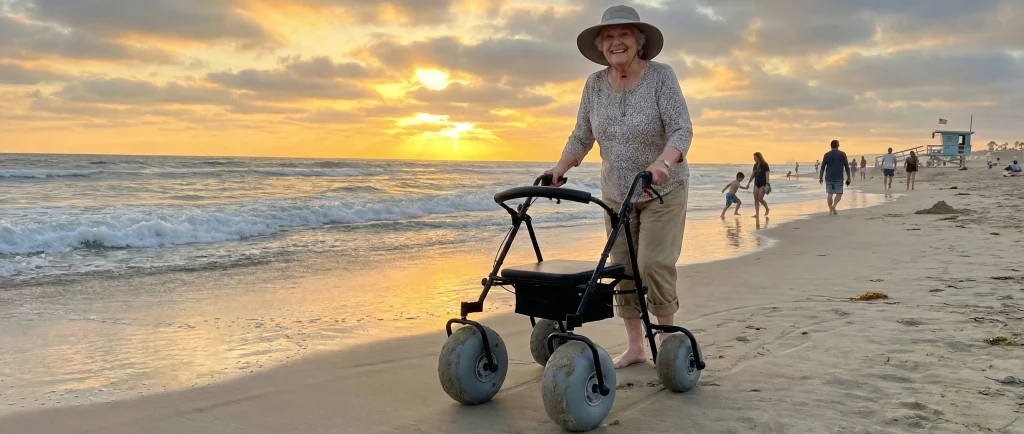
These devices are precision-engineered mobility tools designed for “sand flotation” rather than simple off-road navigation on hard dirt. Unlike standard rollators that rely on thin tires, handicap walkers for the beach utilize low-pressure technology to stay on top of the sand surface.
Designed for sand rather than adapted?
Look at it this way: a standard walker is like a narrow-tired bicycle trying to cross a desert. Specialized beach walker solutions are built from the ground up with marine-grade materials to survive the salt.
- Engineered specifically for shoreline environments.
- Corrosion-resistant frames prevent salt air damage.
- Lightweight construction for easier transport in vehicles.
Why are balloon wheels critical?
Physics dictates that a larger surface area reduces the pressure exerted on the ground. The oversized grey polyurethane balloon wheels found on the 3-wheel model distribute your weight across several inches of sand.
Key Takeaway: Beach walkers use wide-surface wheels to provide flotation on soft terrain where standard wheels would sink.
| Component | Standard Walker | Beach Walker |
|---|---|---|
| Wheel Type | Thin Hard Plastic | Grey Balloon Polyurethane |
| Frame | Steel/Standard Aluminum | Powder-Coated Marine Grade |
| Performance | Sinks in Sand | Floats on Sand |
The following data highlights the mechanical differences between traditional and coastal-specific mobility aids.
Where can you use handicap walkers for the beach?
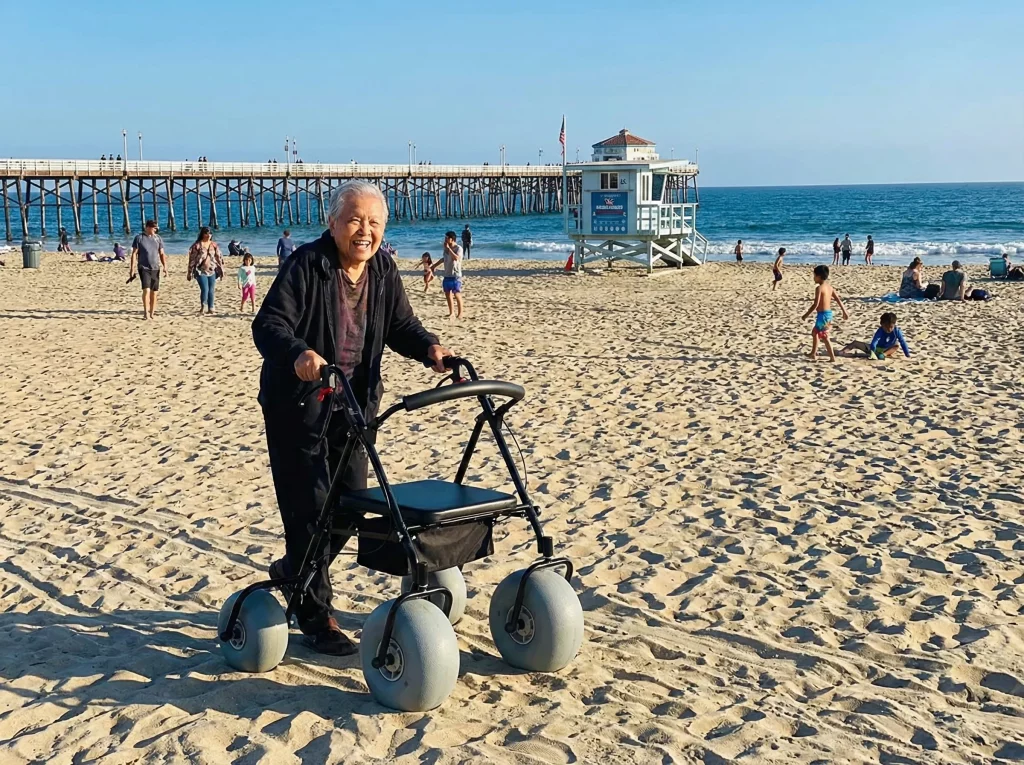
You can use these walkers across diverse coastal environments including soft sand, resort boardwalks, public beach access ramps, and uneven nature trails. They are designed to bridge the gap between paved hotel surfaces and the actual waterline. Handicap walkers for the beach provide the stability needed to transition between these varying surfaces without changing equipment.
Are they for coastal vacation adventures?
Navigating from hotel ramps to the shoreline is the primary use case for these versatile devices. Think about it: why stay confined to the pool deck when the entire beach is accessible?
- Family beach picnics on dry sand.
- Resort pool decks and transition zones.
- Public beach access points and ramps.
Can they be used for rehabilitation?
Using the beach as a low-impact environment for post-surgery recovery is becoming increasingly popular. The shifting sand provides a natural resistance that strengthens stabilizing muscles while the walker provides the necessary safety net.
Key Takeaway: These walkers are versatile enough for resort decks, sandy shorelines, and coastal rehabilitation paths.
| Usage Location | Stability Level | Recommended Wheel |
|---|---|---|
| Deep Soft Sand | High | Oversized Balloon |
| Packed Wet Sand | Very High | Standard or Balloon |
| Boardwalks | Excellent | All-Terrain or Balloon |
This breakdown illustrates the specific environments where specialized coastal mobility equipment excels.
Why choose a handicap walker for the beach?
These devices restore your personal independence by allowing you to navigate the shoreline without needing a family member to push you in a heavy wheelchair. They encourage active movement and provide a stable base for standing and walking at your own pace. Using handicap walkers for the beach ensures that you remain an active participant in all outdoor family activities.
Is restoring your independence possible?
The transition from being pushed in a chair to walking independently is a massive psychological victory. Here is the best part: you regain the ability to follow your own path along the water. Modern all-terrain beach wheelchair and walker advantages mean you are no longer a passive passenger.
Are there physical health benefits?
The impact of vitamin D and “blue space” on senior well-being is well-documented by medical professionals. Encouraging cardiovascular health through safe outdoor movement is essential for long-term mobility maintenance.
- Increased exposure to natural sunlight and fresh air.
- Lower impact on joints compared to hard pavement.
- Improved confidence in navigating outdoor spaces.
Key Takeaway: Choosing a beach walker promotes physical exercise and restores the mental joy of independent coastal access.
| Benefit Category | Impact on User | Long-term Value |
|---|---|---|
| Physical Health | Cardiovascular Strength | Muscle Maintenance |
| Mental Health | Increased Independence | Stress Reduction |
| Social Access | Better Family Inclusion | Enhanced Quality of Life |
These benefits demonstrate how the right mobility aid transforms a beach trip from a chore into a lifestyle improvement.
How do they compare to standard walkers?
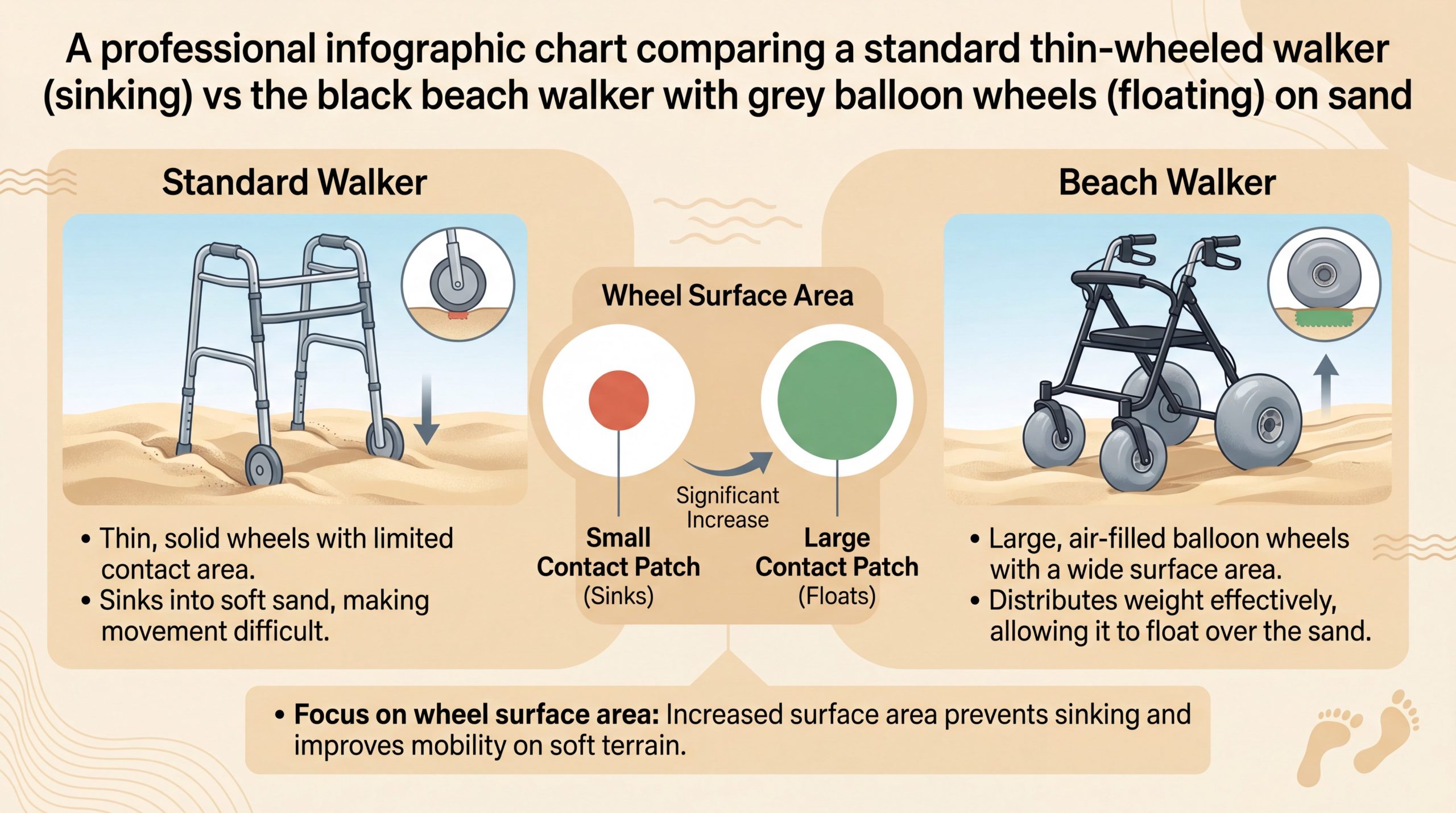
Standard walkers are built for flat pavement and indoor carpet, whereas beach models are specifically reinforced for the abrasive and corrosive nature of coastal sand. The difference in wheel width alone makes a standard rollator a hazard on a dune. Handicap walkers for the beach are the only safe choice for these specific environmental challenges.
What are the mobility mechanics?
Here is the kicker: a standard one-inch wheel acts like a knife, cutting into the sand and trapping the user. Beach walkers use wheels that are often four to seven inches wide to distribute the weight.
Is corrosion resistance a factor?
Salt air destroys standard steel equipment within months, causing rust in the bearings and structural joints. The necessity of marine-grade materials cannot be overstated for anyone living near the ocean.
- Anodized aluminum frames resist oxidation.
- Stainless steel hardware prevents joint seizing.
- UV-resistant seating prevents fabric degradation.
Key Takeaway: Standard walkers sink and rust, while beach-specific models float and resist the corrosive effects of salt air.
| Feature | Standard Rollator | Beach Walker |
|---|---|---|
| Surface Compatibility | Hard/Flat | Sand/Gravel/Grass |
| Corrosion Risk | High (Steel) | Low (Anodized Aluminum) |
| User Effort | High on Sand | Low on Sand |
Comparing these two classes of equipment reveals why specialized beach gear is a mandatory investment for coastal safety.
Which features define handicap walkers for the beach?
Key defining features include marine-grade aluminum frames, oversized grey balloon wheels, and integrated seating that allows you to rest while watching the waves. These elements combine to create a tool that is both durable and comfortable for long-term outdoor use. Handicap walkers for the beach often utilize lightweight materials to ensure they are easy to transport between locations.
Why use aluminum frames?
The black powder-coated aluminum frame of the 3-wheel model offers the perfect balance of weight and strength. Believe it or not: a lighter frame makes it much easier for seniors to lift the device in and out of a vehicle trunk. Professional beach wheelchairs often share this lightweight philosophy for maximum portability.
Is ergonomic seating essential?
Walking on sand requires more energy than walking on concrete, making frequent rest stops a necessity for safety. Integrated seating provides a reliable spot to recover your breath while enjoying the view.
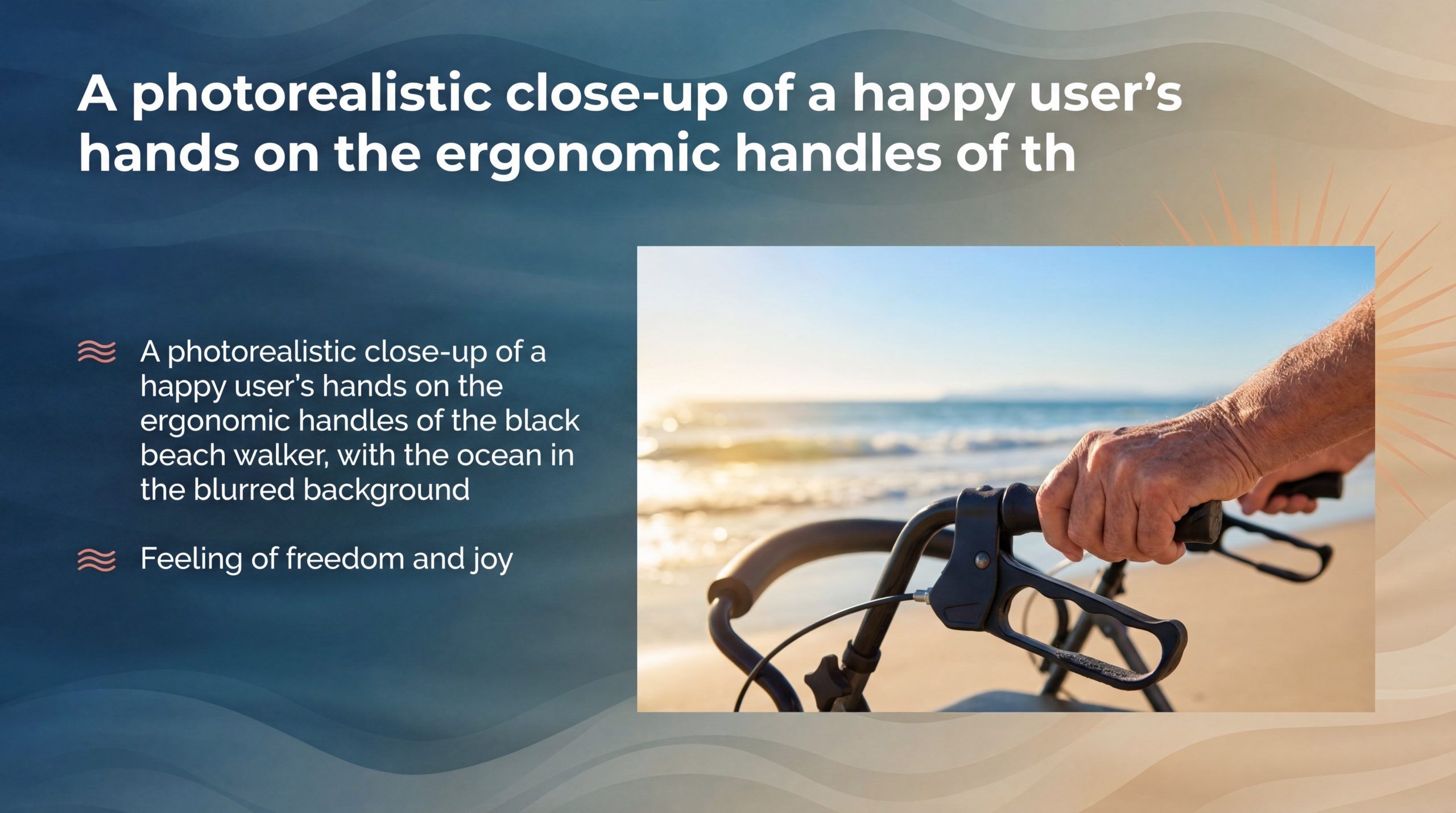
- Adjustable handle heights for proper posture.
- Hypoallergenic and quick-drying seat materials.
- Wide backrests for added support during rests.
Key Takeaway: Lightweight frames and ergonomic resting points are the hallmarks of a high-quality coastal mobility aid.
| Feature | Importance | Benefit |
|---|---|---|
| Adjustable Handles | High | Prevents back strain |
| Folding Mechanism | High | Easy travel transport |
| Integrated Seat | Critical | Safety during fatigue |
The integration of these features ensures that the walker serves as both a mobility tool and a mobile resting station.
Are 3-wheel handicap walkers for the beach stable?
Yes, the 3-wheel “tripod” design provides exceptional stability on uneven gradients while offering a much tighter turning radius than traditional 4-wheel models. This makes them the preferred choice for navigating tight boardwalks and hotel elevators. Handicap walkers for the beach with a 3-wheel configuration provide a unique balance of agility and support.
Is maneuverability better in tight spaces?
The reality is: a 3-wheel pivot point allows you to spin the walker on a dime, which is vital in crowded resort areas. This agility does not come at the cost of stability, as the wide wheelbase prevents tipping.
How does the 3-wheel model perform?
This specific model features a robust black frame paired with oversized grey balloon tires that provide the ultimate “sand flotation.” It is engineered to handle both dry “sugar sand” and wet, packed shorelines with ease.
- Front-wheel 360-degree rotation.
- Oversized tires for maximum ground contact.
- Wide rear stance to prevent lateral tipping.
Key Takeaway: The 3-wheel design offers a superior blend of agility and stable weight distribution for the sand.
| Design Aspect | 3-Wheel Model | Advantage |
|---|---|---|
| Turning Radius | Tight | Best for boardwalks |
| Surface Contact | High | Better flotation |
| Storage Size | Compact | Fits in small trunks |
This design analysis shows why the 3-wheel configuration is often favored by active coastal travelers.
How to clean handicap walkers for the beach?
Proper cleaning involves a freshwater rinse after every beach visit to remove salt, sand, and moisture from the moving parts and axles. Regular maintenance is the only way to ensure the longevity of the bearings and the smooth operation of the brakes. Keeping handicap walkers for the beach clean is the best way to protect your long-term investment.
What are the saltwater protection protocols?
For maximum ease, you can pair your device with an accessible beach mat to reduce sand exposure. However, direct sand contact still requires a specific cleaning sequence to prevent damage.
- Rinse the entire frame with a garden hose.
- Pay close attention to wheel axles and brake springs.
- Wipe down the seat and backrest with a damp cloth.
- Allow the unit to air dry completely before folding.
Is wheel and axle care important?
Don’t overlook this: salt crystals can act like sandpaper inside your wheel bearings if they aren’t flushed out. Applying a marine-grade lubricant every few weeks will keep the balloon wheels spinning silently and smoothly.
Key Takeaway: A simple freshwater rinse after every use is the most effective way to prevent salt-related corrosion.
| Cleaning Task | Frequency | Purpose |
|---|---|---|
| Freshwater Rinse | After every use | Removes salt/sand |
| Frame Wipe-down | Weekly | Prevents mildew |
| Axle Lubrication | Monthly | Ensures smooth rolling |
Following these maintenance steps will significantly extend the life of your coastal mobility investment.
Do handicap walkers for the beach work on soft sand?
Yes, specialized grey balloon wheels distribute weight effectively, allowing the walker to float over soft “sugar sand” instead of digging in. These wheels are designed to deform slightly under weight, creating a larger footprint that mimics the way a camel walks on desert dunes. Handicap walkers for the beach are the premier solution for overcoming high-resistance terrain.
How to navigate soft vs. packed sand?
It gets better: the low-pressure tires perform exceptionally well on the difficult dry sand found at the top of beach dunes. While standard walkers fail immediately in these conditions, balloon tires maintain traction and height.
Can you manage steep dune gradients?
Safety is paramount when ascending or descending beach entrance ramps which can often be steep or slippery. Using the handbrakes effectively allows for a controlled descent without the walker running away from the user.
- Keep your weight centered over the walker.
- Use short, controlled steps on inclines.
- Apply both handbrakes simultaneously when stopping.
Key Takeaway: Balloon tire technology allows for safe navigation through even the deepest and softest sand.
| Terrain Type | Performance Level | User Effort |
|---|---|---|
| Soft Dune Sand | High | Moderate |
| Wet Shoreline | Excellent | Low |
| Shell/Gravel Paths | Good | Low |
The terrain-specific performance proves that balloon tires are the gold standard for soft-surface mobility.
How to pick the best handicap walkers for the beach?
Selecting the best model requires matching the frame weight capacity and wheel size to your specific body type and typical beach terrain. You must ensure the walker is wide enough for stability but narrow enough to fit through standard ADA-compliant beach ramps. Quality handicap walkers for the beach should offer a balance of rugged durability and portable convenience.
What are the weight and dimension needs?
Before you buy, find the right equipment for your body type by checking the manufacturer’s specs. Most professional models support between 250 and 300 lbs while remaining relatively lightweight for the caregiver to handle.
- Check the maximum user weight limit.
- Verify the seat height for comfortable sitting.
- Ensure the width fits through your preferred beach gates.
Is ease of folding vital for travel?
Picture this: you arrive at the beach, and the walker takes ten minutes to assemble. The best models, like the black 3-wheel rollator, feature tool-free folding that allows them to collapse into standard SUVs in seconds.
Key Takeaway: Prioritize weight capacity, portability, and wheel size when selecting your ideal beach walker.
| Selection Factor | User Goal | Tip |
|---|---|---|
| Frame Weight | Portability | Choose aluminum |
| Wheel Diameter | Flotation | 10 inches or larger |
| Brake Type | Safety | Select locking brakes |
These criteria help ensure that your chosen device meets both your physical needs and your travel requirements.
Where to buy quality handicap walkers for the beach?
You should purchase from specialized manufacturers or dedicated medical distributors who offer factory-direct support and technical expertise. Buying handicap walkers for the beach from a specialist ensures that you receive a product designed for the elements, not a generic toy that will break in the salt.
How to take the first step back to sea?
The bottom line is: investing in quality equipment is an investment in your future coastal memories.
- Look for ISO-certified manufacturers.
- Ensure the product comes with a comprehensive warranty.
- Choose a supplier that provides accessible spare parts.
What are the factory direct benefits?
Purchasing directly from a specialized accessibility facility allows you to access wholesale pricing and custom specifications. This is particularly beneficial for resort managers or municipal procurement officers looking to equip public spaces with reliable mobility solutions.
Key Takeaway: Buying from a coastal mobility specialist guarantees the durability and technical support required for beach use.
| Provider Type | Expertise | Support Level |
|---|---|---|
| Specialist Mfr | High | Technical/Spares |
| General Retailer | Low | Basic Warranty |
| Medical Distributor | Medium | Local Service |
Choosing the right provider is just as important as choosing the right model for long-term success.
Don’t let the shoreline remain a distant memory from the boardwalk. By choosing a walker designed specifically for the elements, you are reclaiming your right to enjoy the sand and sea. Our vision is to make every beach accessible, one step at a time. To find the perfect mobility solution for your next coastal adventure, contact us today.
FAQ: Common Coastal Mobility Questions
1. Can I use these walkers in the actual seawater?It is best to stay at the waterline rather than submerging the unit completely. While the frames are rust-resistant and treated for coastal air, walkers are intended for stable navigation on the sand rather than full immersion.
2. What’s the best way to maintain the balloon tires?The best way is to check the air pressure on a monthly basis. Low-pressure balloon tires work most effectively when they are slightly “squishy” to maximize their surface area contact with the soft sand.
3. How do I know if the 3-wheel model is stable enough for me?If you have moderate balance and can use a standard rollator indoors, this model is likely suitable. Its wide rear wheelbase and tripod design are specifically engineered to prevent lateral tipping on uneven sand.
4. Can I fold the walker for transport in a small car?Yes, most professional beach walkers feature a tool-free folding mechanism for your convenience. They are designed to collapse into a compact shape that fits into the trunk of most standard SUVs and sedans.
5. How do I know if the wheels will work on very soft “sugar” sand?You can tell by checking the wheel width for a measurement of 4-7 inches. These oversized grey balloon wheels are specifically designed to “float” on top of fine, loose sand that would trap a standard mobility device.